
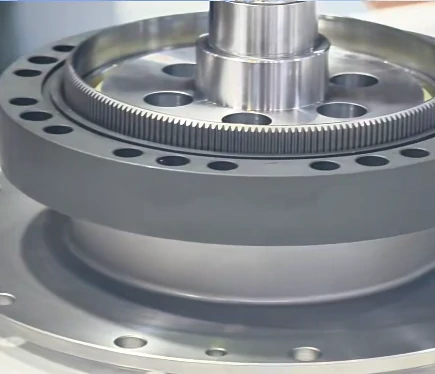
Welleshaft supports bespoke harmonic drive component manufacturing for humanoid robot joints and other robotic transmission applications. We manufacture non-standard Flexsplines, Circular Splines, and Wave Generators according to customer drawings, material specifications, and dimensional requirements.
As a China-based one-stop contract manufacturing partner, we coordinate thin-wall machining, internal and external gear machining, elliptical cam production, heat treatment, post-heat-treatment finishing, and component inspection. Bearing sourcing and assembly can also be arranged when required by the project. Our focus is on manufacturing the specified transmission components for OEM projects rather than supplying complete standard harmonic drive units.
Why Are Harmonic Drives Used in Humanoid Robots?
Humanoid robot joints need to fit motors and transmission components into limited installation spaces while maintaining controlled movement. This is particularly important in the shoulders, elbows, wrists, and other articulated joints, where the available space and motion requirements vary from one joint to another.
A harmonic drive, also known as a strain wave gear, is used in some robotic joints because it can provide a high reduction ratio in a compact structure. Its coaxial arrangement also makes it easier to integrate the transmission into certain joint designs. These characteristics are useful in humanoid robots, where reducing the size of the drive system without compromising the required motion control is an important design consideration.
The design of a harmonic drive also places specific demands on its components. The Flexspline must accommodate repeated elastic deformation, while the Circular Spline needs to maintain the specified internal gear geometry. The Wave Generator must provide the correct elliptical profile for the intended engagement between the two splines. Their dimensional accuracy and compatibility are therefore important to the operation of the complete transmission.
For OEM developers, these design requirements directly affect the specification and sourcing of custom harmonic drive components. Material selection, component geometry, machining accuracy, and assembly interfaces need to be defined according to the intended joint design.
What Is a Harmonic Drive and How Does It Work?
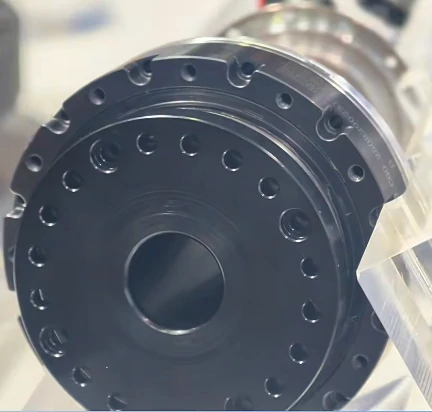
A harmonic drive is a mechanical speed reducer that uses the principle of strain wave gearing. Unlike conventional gear systems that rely on the direct rotation of rigid gears, it uses the controlled deformation of a flexible toothed component to produce a reduction in rotational speed.
A typical harmonic drive gearbox consists of three main components: the Flexspline, Circular Spline, and Wave Generator. Each has a different mechanical function, but their geometry and tooth engagement must be designed to work together.
How Does Strain Wave Gearing Work?
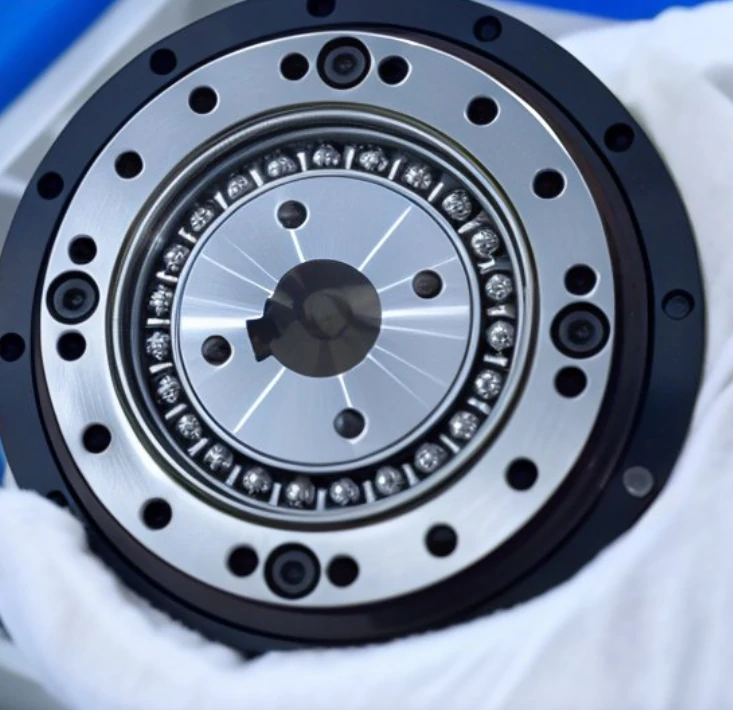
The Wave Generator contains an elliptical cam fitted with a bearing assembly. When it rotates inside the Flexspline, the bearing allows the flexible component to follow the elliptical profile of the cam.
This deformation brings the external teeth of the Flexspline into engagement with the internal teeth of the Circular Spline at two opposite areas. As the Wave Generator continues to rotate, these engagement areas move around the circumference. Because the Flexspline and Circular Spline have different tooth counts, their relative movement produces a much slower output rotation.
This is the operating principle behind strain wave gears, also referred to as harmonic gear drives. The reduction ratio is determined by the tooth-count difference and the configuration of the transmission.
What Are the Three Main Harmonic Drive Components?
Flexspline
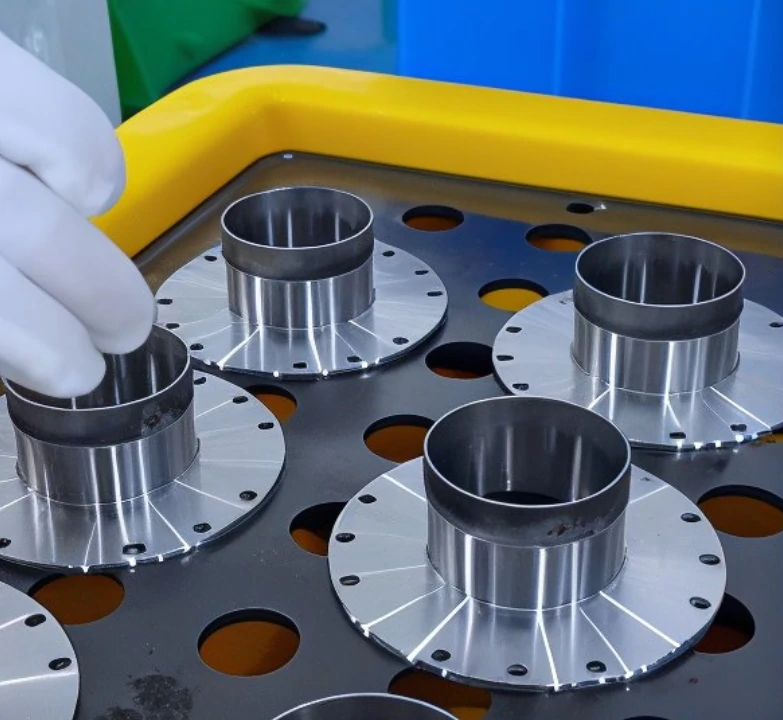
The Flexspline is a thin-walled cylindrical component with external gear teeth. During operation, it deforms elastically under the action of the Wave Generator while remaining engaged with the Circular Spline. Its wall thickness, material properties, external tooth geometry, and dimensional stability are therefore important to the component’s function.
Circular Spline
The Circular Spline is a rigid ring with internal gear teeth. It engages with the Flexspline and provides the corresponding toothed interface within the transmission. Internal gear geometry, tooth accuracy, and concentricity are important considerations when manufacturing this component.
Wave Generator
The Wave Generator consists of an elliptical cam and its associated bearing assembly. It creates the deformation that brings the Flexspline into engagement with the Circular Spline. The cam profile, bearing fit, and assembly alignment must follow the specified transmission design.
Although these three components have different structures, they cannot be treated as independent standard gears. Their dimensions, tooth geometry, and mating relationships need to be considered together. This is particularly important when developing custom harmonic drive components for robotic joints, where the parts must conform to the customer’s transmission design and installation requirements.
Harmonic Drive Component Manufacturing for OEM Projects
For OEM buyers sourcing harmonic drive components, each part needs to be evaluated according to its structure, material, dimensional requirements, and function within the transmission. Flexsplines, Circular Splines, and Wave Generators involve different manufacturing challenges and process requirements.
Welleshaft supports the manufacturing of all three component types according to customer drawings and technical specifications. The following sections explain the main considerations involved in producing each component.
Custom Flexspline Manufacturing
The Flexspline presents a particular manufacturing challenge because its thin-walled structure must retain the required geometry while allowing elastic deformation during operation. Material removal, workholding, and dimensional changes during heat treatment all need to be considered when planning the production route.
Welleshaft supports custom Flexspline manufacturing, including thin-wall machining, external gear tooth machining, heat treatment, and post-heat-treatment finishing. These processes are coordinated according to the component drawing, material, wall thickness, and required tolerances.
For OEM projects, material grade, wall thickness, tooth specifications, and dimensional tolerances are important inputs when assessing the manufacturing requirements of a custom Flexspline.
Custom Circular Spline Manufacturing
The Circular Spline is a rigid ring with internal gear teeth that engage with the Flexspline. Its manufacturing requirements focus on the internal gear geometry and the relationship between the gear features and the component’s reference surfaces.
Welleshaft supports custom Circular Spline manufacturing involving internal gear machining and inspection of key gear characteristics. Depending on the drawing, the inspection scope can include tooth profile, pitch, lead, concentricity, and radial runout.
For components designed to work with a specific Flexspline, the two parts’ drawings and relevant gear specifications should be reviewed together.
Custom Wave Generator Manufacturing
The Wave Generator uses an elliptical cam to deform the Flexspline and establish the required tooth engagement. Its cam profile must correspond to the transmission design, while the associated bearing needs to meet the specified fit and assembly requirements.
Welleshaft supports custom Wave Generator manufacturing, including elliptical cam machining, bearing sourcing, and bearing assembly when included in the project scope. Inspection can cover the cam’s critical dimensions, bearing fit, and assembly alignment.
For OEM buyers, the cam drawing, bearing configuration, and assembly requirements provide the basis for evaluating a custom Wave Generator project.
Key Manufacturing Processes for Harmonic Drive Components at Welleshaft
Manufacturing harmonic drive components involves more than individual machining operations. Thin-wall machining, gear cutting, heat treatment, post-heat-treatment finishing, and inspection need to be considered as parts of a coordinated production route.
At Welleshaft, the relevant processes are planned according to the component drawings, material specifications, critical dimensions, and agreed acceptance criteria. The following sections outline the main operations involved in these OEM manufacturing projects.
Thin-Wall Machining for Flexsplines
Machining a thin-walled Flexspline requires attention to material removal, workholding, and dimensional stability. The machining sequence needs to account for the component’s geometry and material properties, with checks on wall thickness and critical dimensions during production.
These considerations are important when planning custom Flexspline machining to meet the customer’s drawing requirements.
Internal and External Gear Machining
The Flexspline and Circular Spline require different gear machining operations because one has external teeth and the other has internal teeth. Both sets of gear features must correspond to the specified transmission design.
Welleshaft supports custom internal and external gear machining, with the relevant manufacturing and inspection arrangements determined by the gear drawings and required tolerances.
Elliptical Cam Machining and Bearing Assembly
The Wave Generator requires an elliptical cam manufactured to the specified profile and dimensions. Where included in the project scope, Welleshaft can also arrange bearing sourcing and assembly.
The manufacturing plan considers the cam drawing, bearing configuration, and specified assembly requirements.
Heat Treatment and Precision Finishing
Heat treatment may be required to achieve the material properties specified for certain components. However, it can also affect dimensions and gear geometry, particularly in thin-walled parts and components with critical gear features.
Welleshaft coordinates heat treatment and post-heat-treatment finishing where required by the project. The process sequence is planned around the material, component geometry, and final dimensional requirements.
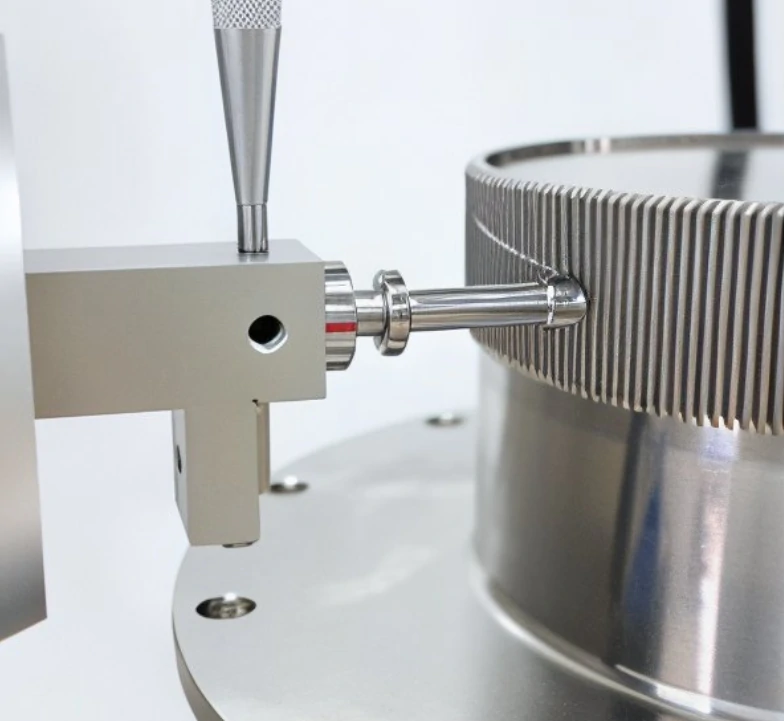
Dimensional and Gear Inspection
Inspection requirements are established from the component drawings and agreed acceptance criteria. Depending on the part, the manufacturing plan may include dimensional checks, gear geometry inspection, and verification of critical features at relevant production stages.
For harmonic drive component manufacturing projects, the inspection plan should identify which characteristics need to be measured and when. This helps ensure that the final inspection reflects the actual technical requirements rather than relying only on general dimensional checks.
Where Are Harmonic Drives Used in Humanoid Robots?
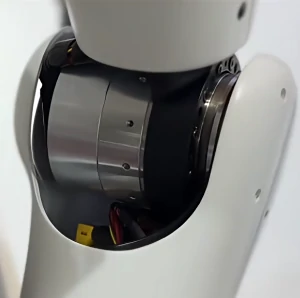
Humanoid robots use different transmission arrangements across their joints. The shoulder, wrist, hip, and knee each have distinct requirements for movement, load, installation space, and mechanical integration. A harmonic drive for humanoid robots may be selected for joints where a compact structure and high reduction ratio suit the overall design.
These different applications also influence the design of the Flexspline, Circular Spline, and Wave Generator. Their dimensions, gear geometry, and assembly configuration need to correspond to the mechanical requirements of the joint in which they will be installed.
Shoulder and Elbow Joints
Shoulder and elbow assemblies allow humanoid robots to perform lifting, reaching, and coordinated arm movements. Their transmission systems must fit within the joint structure while meeting the required range of motion and load conditions.
Where a harmonic drive is selected, the custom harmonic drive components need to match the available installation space and joint configuration. Flexspline geometry, Circular Spline dimensions, and Wave Generator arrangement are therefore considered as part of the transmission design, rather than specified independently.
Wrist and Dexterous Hand Mechanisms
Wrist joints and dexterous hand mechanisms often have tighter packaging constraints because they accommodate smaller articulated structures and multiple moving elements. Depending on the robot architecture, miniature harmonic drive components may be considered for compact rotary joints where this type of transmission is suitable.
Manufacturing these smaller parts still requires careful attention to wall thickness, gear geometry, cam dimensions, and bearing fit. For OEM projects involving custom miniature harmonic drive components, the component drawings and assembly requirements are important starting points for evaluating the manufacturing process.
Hip and Knee Joints
Hip and knee joints contribute to walking, standing, and changes in body posture. Their transmission requirements are influenced by robot weight, joint torque, movement speed, operating conditions, and the mechanical structure of the leg.
A harmonic drive may be suitable for certain hip or knee configurations, but it is not the only available solution. Planetary gearboxes and RV reducers may also be considered, depending on the required load capacity, stiffness, durability, and installation arrangement.
For OEM developers, selecting a transmission type should come before finalizing the component specifications. Once the joint architecture and reducer design are established, custom harmonic drive manufacturing can be planned around the required Flexspline, Circular Spline, and Wave Generator dimensions and interfaces.
Harmonic Drive vs. Planetary Gearbox vs. RV Reducer for Humanoid Robots
Harmonic drives, planetary gearboxes, and RV reducers use different mechanical principles to achieve speed reduction. Their suitability for humanoid robot joints depends on factors such as installation space, torque requirements, stiffness, and the intended movement of each joint.
Key Structural and Manufacturing Differences
The main difference between these transmission systems lies in how they transfer motion and how their components are constructed.
| Comparison | Harmonic Drive | Planetary Gearbox | RV Reducer |
| Main components | Flexspline, Circular Spline, Wave Generator | Sun Gear, Planet Gears, Ring Gear, Carrier | Cycloidal discs, pins, shafts, bearings |
| Transmission principle | Strain wave gearing | Planetary gear engagement | Cycloidal motion and gear engagement |
| Main manufacturing focus | Thin-wall machining, internal and external gear machining, elliptical cam production | Gear machining, shaft production, carrier and housing machining | Cycloidal profile machining, pin and bearing components, shaft and housing machining |
A harmonic drive uses a flexible toothed component that deforms under the action of an elliptical Wave Generator. This arrangement allows a high reduction ratio within a compact transmission structure. Its manufacturing requirements are closely related to the thin-walled Flexspline, the internal teeth of the Circular Spline, and the geometry of the Wave Generator.
A planetary gearbox transfers motion through the engagement of a central Sun Gear and surrounding Planet Gears. The Planet Carrier supports the gears as they rotate, while the Ring Gear forms the surrounding gear interface. Manufacturing therefore focuses on the accuracy of the gear components and the dimensional relationships between gears, shafts, carriers, and housings.
An RV reducer uses a cycloidal reduction mechanism supported by additional gear and bearing components. Its design is commonly considered for applications requiring substantial load capacity and torsional stiffness. The manufacturing work involves cycloidal profiles, pins, shafts, bearings, and supporting housings.
How Do These Reducers Fit Different Humanoid Robot Applications?
The choice of reducer depends on the mechanical demands of the joint rather than the robot’s overall design alone. A harmonic drive for humanoid robots may be suitable for compact articulated joints where a high reduction ratio and limited installation space are important.
Planetary gearboxes offer flexibility across different drive configurations and can be considered where load distribution and transmission arrangement are key design factors. RV reducers may be more appropriate for applications where load-bearing capacity and torsional stiffness are major considerations.
These options are not interchangeable in every application. Engineers need to evaluate torque, speed, stiffness, weight, durability, and available space before finalizing the transmission design.
Custom Component Manufacturing for Robotic Transmission Projects
Different transmission systems require different component manufacturing capabilities. A custom harmonic drive component project may involve thin-wall machining, internal and external gear machining, elliptical cam production, heat treatment, and precision inspection.
Planetary gearbox projects may involve custom planetary gear components for humanoid robots, including Sun Gears, Planet Gears, Ring Gears, and Planet Carriers. For OEM buyers looking for a manufacturing partner, custom planetary gearbox components also require consideration of gear machining, shaft production, carrier and housing machining, and dimensional inspection. RV reducer projects, by comparison, may require cycloidal discs, pins, shafts, bearings, and housings.
At Welleshaft, we provide custom mechanical component manufacturing and one-stop contract manufacturing for non-standard robotic transmission parts. Our manufacturing scope is based on customer drawings, materials, tolerances, and inspection requirements, with relevant machining, heat treatment, finishing, and quality checks coordinated for each project. We focus on manufacturing specified mechanical components rather than supplying complete standard reducer units.
China Harmonic Drive Components Manufacturer for OEM Projects
For overseas OEM buyers sourcing harmonic drive components from China, choosing a manufacturing partner involves more than comparing quotations. Buyers need to consider whether the supplier can coordinate the machining, heat treatment, finishing, and inspection processes required for each component while following the approved drawings and technical specifications.
Welleshaft is a China-based custom mechanical components manufacturer providing one-stop contract manufacturing for non-standard OEM projects. For harmonic drive applications, our manufacturing scope covers the three main components, including thin-wall machining and external gear machining for Flexsplines, internal gear machining for Circular Splines, and elliptical cam machining for Wave Generators.
Beyond machining, we coordinate heat treatment, post-heat-treatment finishing, and dimensional and gear geometry inspection where required. Bearing sourcing and assembly can also be included in the Wave Generator project scope. This allows buyers to coordinate multiple manufacturing stages through one contract manufacturing partner instead of managing separate suppliers for every process.
For engineering and procurement teams, the manufacturing arrangement can be adapted to the actual project requirements. We review component drawings, material specifications, critical dimensions, and inspection criteria before determining the appropriate process route and quotation scope. Inspection documentation can also be arranged according to the agreed quality requirements.
As a China harmonic drive components supplier for OEM manufacturing projects, Welleshaft focuses on the production and coordination of specified mechanical components. Our role is to manufacture Flexsplines, Circular Splines, Wave Generators, and other custom transmission parts based on the customer’s design, rather than position ourselves as a supplier of complete standard harmonic drive reducers.
Request a Custom Harmonic Drive Components Quotation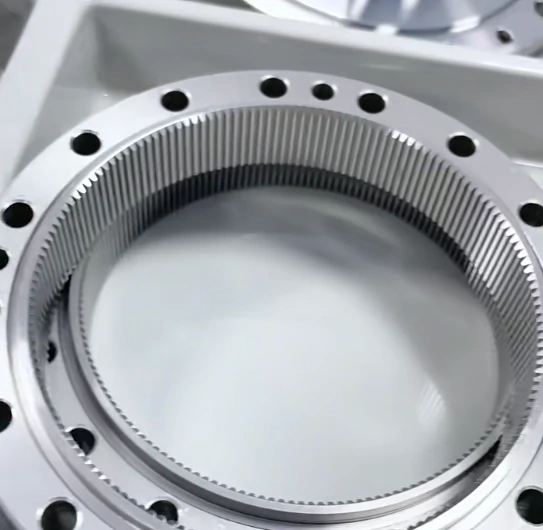
Custom Harmonic Drive Manufacturing and Quality Inspection at Welleshaft
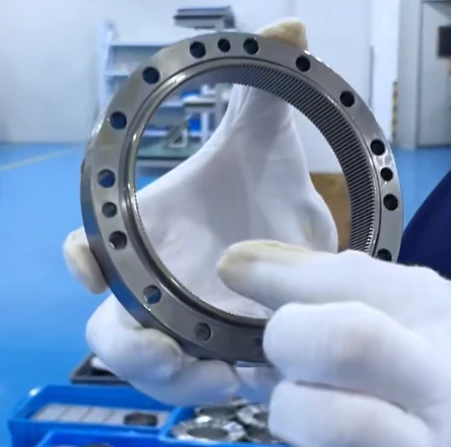
For OEM buyers, inspection records provide a basis for checking whether manufactured harmonic drive components conform to the approved drawings and agreed acceptance criteria. The inspection scope needs to reflect the critical dimensions, gear characteristics, and assembly features specified for each component.
At Welleshaft, dimensional and gear geometry inspection can be arranged for Flexsplines, Circular Splines, and Wave Generators according to project requirements. Where required, checks can also be arranged after heat treatment, finishing, and bearing assembly.
Flexspline Dimensional and Gear Inspection
A Flexspline requires particular attention to wall thickness and dimensional stability because of its thin-walled structure. Our inspection covers critical dimensions, wall thickness, and external gear characteristics. Where heat treatment and subsequent finishing are involved, dimensional checks can also be arranged at the relevant stages to assess changes before the component reaches final inspection.
For custom Flexspline manufacturing, checking only the finished outer dimensions is not sufficient. The external gear geometry and the dimensions of the flexible body must also be evaluated against the drawing. This gives OEM buyers a clearer basis for reviewing the manufactured part.
Circular Spline Internal Gear Inspection
The Circular Spline requires more than a basic diameter check. Its internal gear geometry and position relative to the reference surfaces are important inspection considerations.
Our Circular Spline inspection can cover internal tooth profile, pitch, and lead, together with concentricity and radial runout. These checks help evaluate the accuracy of the internal gear and its relationship with the component’s reference features. The actual inspection items are selected according to the gear drawing and specified tolerances.
For matched Flexspline and Circular Spline projects, we also consider the inspection requirements of both components together. This helps keep the manufacturing checks aligned with their intended gear engagement.
Wave Generator Cam and Assembly Inspection
For the Wave Generator, inspection focuses on the elliptical cam and its relationship with the bearing assembly. We check the cam’s critical dimensions against the drawing, while bearing fit and assembly alignment are included when bearing sourcing and assembly form part of the project.
This is particularly relevant to custom Wave Generator manufacturing, where checking the cam and bearing separately may not cover all the requirements of the completed assembly. The inspection scope can therefore include both individual component dimensions and specified assembled features.
Inspection Records and Quality Documentation
Inspection documentation should correspond to the characteristics and acceptance criteria agreed for each component. Depending on the project requirements, records can include dimensional inspection results, gear inspection findings, and checks related to bearing fit or assembly alignment.
For harmonic drive components, the required inspection items, inspection stages, and reporting format should be confirmed before production. Welleshaft can arrange project-specific quality documentation so that engineering and procurement teams can review the measured results against the approved drawings and agreed requirements.
How to Choose a Harmonic Drive Components Manufacturer or Supplier
When sourcing custom harmonic drive components, OEM buyers need to look beyond quotations and machining prices. The important question is whether a supplier can manufacture the required parts and manage the processes that affect their final quality.
Evaluate the Supplier’s Manufacturing Capabilities
A suitable harmonic drive components manufacturer should understand the different production requirements of Flexsplines, Circular Splines, and Wave Generators. These include thin-wall machining, internal and external gear machining, and elliptical cam production.
Rather than relying on general claims about precision machining, buyers should compare the supplier’s actual capabilities with the component drawings and required manufacturing processes.
Check Heat Treatment and Inspection Capabilities
Heat treatment can affect component dimensions and gear geometry, making subsequent finishing and inspection important parts of the manufacturing plan.
Buyers should also distinguish between basic dimensional inspection and gear geometry inspection. Depending on the component, the required checks may include wall thickness, tooth profile, pitch, lead, concentricity, and radial runout. The supplier should be able to confirm which characteristics can be measured and what inspection records can be provided.
Consider Process Coordination and Engineering Support
OEM projects may involve machining, heat treatment, finishing, and bearing assembly across different production stages. Working with a one-stop contract manufacturing partner can simplify supplier coordination, provided the responsibilities for each process are clearly defined.
Drawing review is equally important. Before production, the supplier should be able to discuss material specifications, critical dimensions, tolerances, and acceptance criteria. For overseas buyers working with a China harmonic drive components supplier, clear communication at this stage helps establish a realistic quotation and manufacturing scope.
Ultimately, the right custom harmonic drive components manufacturer is one whose production capabilities and quality inspection arrangements match the requirements of the project, not simply the supplier offering the lowest price.
What Information Is Needed for a Custom Harmonic Drive Components RFQ?
When requesting a quotation for custom harmonic drive components, buyers should provide the component drawings and basic project requirements so the manufacturer can assess the work involved.
Start by identifying the part — Flexspline, Circular Spline, or Wave Generator — and sharing the available 2D drawings or 3D CAD files. For gear components, include the relevant tooth specifications and critical dimensions. The material grade, tolerances, and any required heat treatment or surface finish should also be stated where known.
The quotation should reflect the expected order quantity, whether the project is for prototypes, samples, or production batches. Buyers should also mention any specific inspection or documentation requirements, such as gear measurement, dimensional reports, or material certificates.
If some details are not yet finalized, the initial inquiry can still be submitted with the available drawings and key specifications. Welleshaft can review the information, clarify the manufacturing scope, and discuss the next steps for your custom harmonic drive component project.
Submit Your Harmonic Drive Component Drawings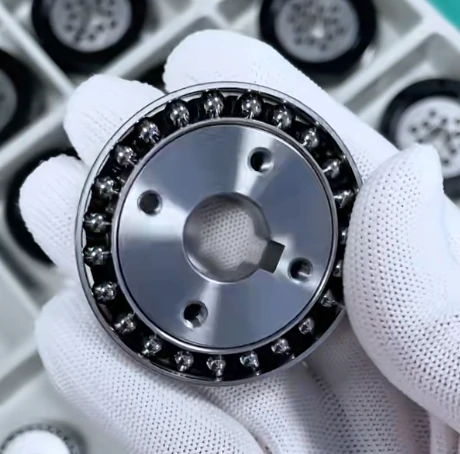
Frequently Asked Questions About Custom Harmonic Drive Components
What Is a Harmonic Drive?
A harmonic drive is a compact speed reducer that uses strain wave gearing to transmit motion. It consists of three main parts: a flexible externally toothed Flexspline, a rigid internally toothed Circular Spline, and a Wave Generator that creates the deformation needed for gear engagement.
Is a Harmonic Drive the Same as a Strain Wave Gear?
The terms are closely related. Strain wave gearing describes the transmission principle, while harmonic drive commonly refers to a reducer or transmission using that mechanism. Both terms are frequently used when discussing this type of robotic transmission.
What Is the Difference Between a Harmonic Drive and a Harmonic Gearbox?
A harmonic drive refers to the strain wave reduction mechanism, while a harmonic gearbox generally refers to the assembled reducer unit. When sourcing parts, buyers should clarify whether they need individual components such as Flexsplines and Circular Splines or a complete gearbox.
What Is the Difference Between a Harmonic Drive Motor and a Harmonic Reducer?
A harmonic reducer reduces rotational speed through a strain wave transmission mechanism. A harmonic drive motor typically refers to a motor combined with, or designed to work with, this reducer. The motor generates motion; the reducer changes its speed and torque characteristics.
Are Miniature Harmonic Drives Used in Humanoid Robots?
Yes. Miniature harmonic drives for humanoid robots may be used in compact rotary joints, including wrist mechanisms and other space-constrained articulated assemblies. Their dimensions and component configurations need to suit the robot’s joint design and available installation space.
What Affects the Price of Custom Harmonic Drive Components?
The cost of custom harmonic drive components depends on the material, part dimensions, gear geometry, machining difficulty, heat treatment, finishing, inspection requirements, and order quantity. Flexsplines, Circular Splines, and Wave Generators involve different manufacturing processes, so pricing is assessed separately for each component.
How Much Does a Harmonic Drive Gearbox Cost?
The price of a harmonic drive gearbox varies with its size, reduction ratio, torque rating, precision requirements, and overall configuration. A complete reducer also involves assembly and other components beyond the three main transmission parts. For OEM projects requiring individual components, drawings and technical specifications are needed to prepare an accurate quotation.
Can Welleshaft Manufacture Custom Harmonic Drive Components for OEM Projects?
Yes. Welleshaft supports custom harmonic drive component manufacturing for OEM projects, covering Flexsplines, Circular Splines, and Wave Generators. Our coordinated manufacturing scope can include thin-wall machining, internal and external gear machining, elliptical cam machining, heat treatment, and post-heat-treatment finishing. Bearing sourcing and assembly, along with dimensional and gear geometry inspection, can also be arranged according to the agreed project requirements.
Welleshaft is a China-based contract manufacturing partner for custom harmonic drive components used in humanoid robots. We manufacture Flexsplines, Circular Splines and Wave Generators to customer drawings, coordinating machining, gear cutting, heat treatment, precision finishing, bearing assembly and inspection for OEM projects.
