
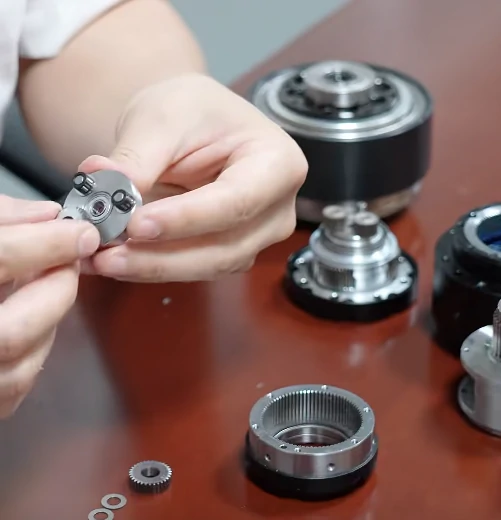
Why Does Humanoid Robot Transmission Require Precision Gear Components?
Humanoid robots rely on compact transmission systems to convert motor output into controlled movement across their joints. In applications such as hip and knee drives, shoulder mechanisms, and wrist assemblies, planetary gears for humanoid robots can provide a compact, coaxial transmission arrangement where space and torque requirements are important.
The performance of these systems depends on more than the gear design itself. Sun gears, planet gears, internal ring gears, and planet carriers must meet the specified requirements for tooth geometry, dimensions, material properties, and assembly fit. Variations between mating components can affect backlash, load distribution, and transmission consistency.
For engineering teams developing humanoid robot actuators, finding a manufacturing partner for custom planetary gear components involves more than locating a machining supplier. The project may require several manufacturing processes, different component suppliers, and coordinated inspection arrangements.
Welleshaft provides one-stop contract manufacturing for non-standard mechanical components in China. Working from customer drawings and engineering specifications, we coordinate suitable manufacturing resources for precision mechanical parts, including selected components used in robotic transmission systems.
What Makes Planetary Gears Suitable for Humanoid Robots?
A planetary gear system consists of a central sun gear, several planet gears, an internal ring gear, and a planet carrier. The sun gear drives the surrounding planet gears, which also mesh with the internal ring gear. Depending on the transmission design, one of these members remains stationary while the others serve as the input and output.
This arrangement allows planetary gears for humanoid robots to transmit motion through a compact, coaxial structure. Multiple planet gears engage with the sun and ring gears, providing several paths for torque transmission. By changing the input, output, and fixed members, engineers can also select different reduction ratios to suit the operating needs of a robotic joint.
A planetary gear arrangement can be suitable for humanoid robot actuators when the design requires a compact transmission layout and a specific reduction ratio. However, not every robotic joint uses planetary gears. The final transmission choice depends on the actuator’s torque, speed, installation space, and operating conditions.
For projects involving custom planetary gear components, the individual gears and carrier should be considered parts of one transmission assembly. Their geometry and mounting relationships need to be reviewed together before manufacturing begins.
Which Gear Components Are Required in Humanoid Robot Planetary Systems?
A planetary gear stage typically contains four main components: a sun gear, planet gears, an internal ring gear, and a planet carrier. Each part performs a different function, so its geometry and manufacturing considerations are not the same. For buyers sourcing custom planetary gear components for humanoid robots, identifying these differences helps define the manufacturing scope.
Sun Gear
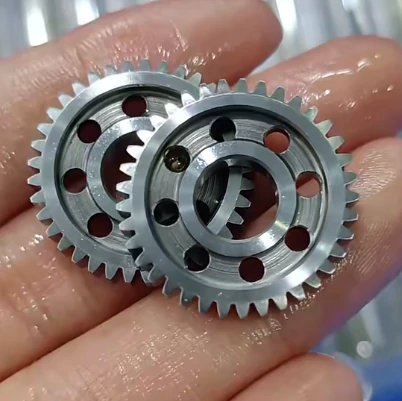
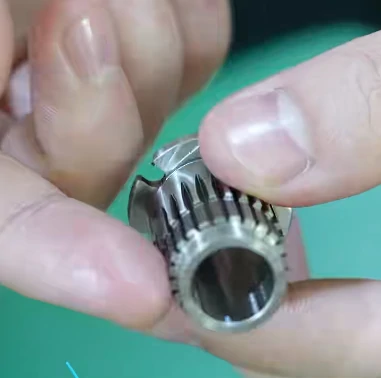
The sun gear sits at the center of the planetary arrangement and meshes with the surrounding planet gears. Its tooth geometry, bore, and concentricity are important to the engagement of the gear set. A custom sun gear for robotics is specified through parameters such as module, tooth count, pressure angle, material, and required tolerances. Heat treatment and subsequent finishing may also be necessary when the design specifies particular hardness or surface properties.
Planet Gear
Planet gears mesh with both the sun gear and the internal ring gear. Where several planet gears are used in one stage, consistency between individual gears is important. Differences in tooth thickness or geometry can affect contact and load sharing. Manufacturing attention therefore needs to cover the specified tooth accuracy, bore dimensions, and surface condition across the set.
Internal Ring Gear
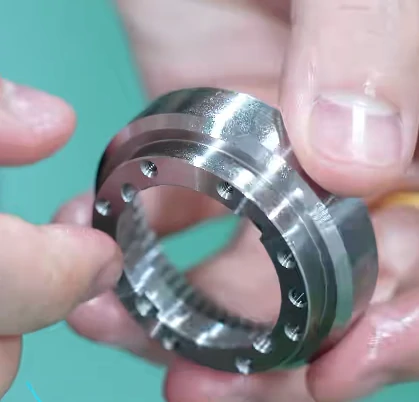
The internal ring gear has teeth cut on its inner circumference. This makes the internal tooth geometry and the selected machining method important considerations. For custom internal ring gear manufacturing, the drawing should identify the tooth parameters, reference dimensions, mounting features, and required concentricity. The manufacturing route also needs to suit the ring gear’s material, diameter, and specified accuracy.
Planet Carrier
The planet carrier holds the planet gears in their operating positions through pins, shafts, or mounting bores. The position and spacing of these features determine how the planet gears are arranged within the assembly. When manufacturing a custom planet carrier, particular attention should be given to hole location, bore dimensions, spacing, and the relationship between mounting features.
These components should not be evaluated as unrelated parts. The gears must match the specified tooth geometry, while the carrier must position them according to the assembly design. Reviewing individual drawings together with the assembly drawing gives the manufacturing team a clearer understanding of the parts and their interfaces.
How Do Gear Accuracy and Backlash Affect Humanoid Robot Joints?
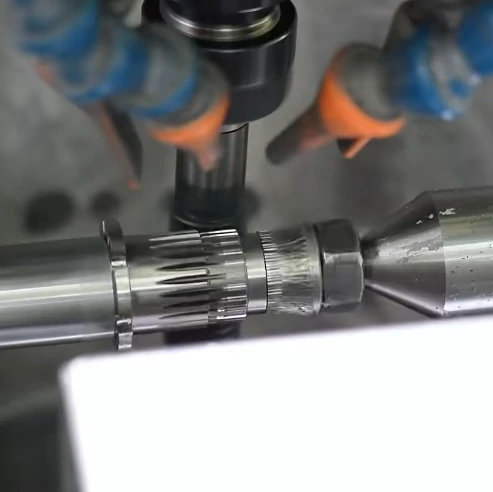
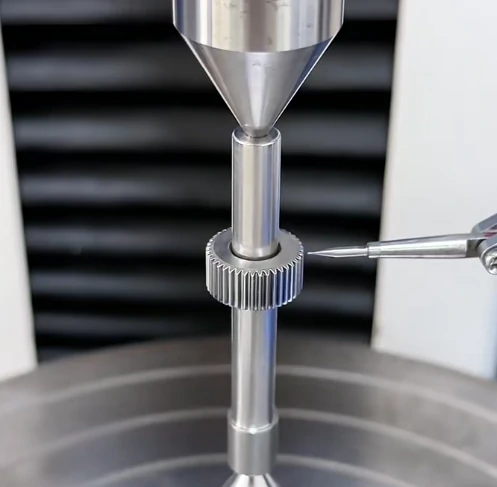
A humanoid robot joint needs to respond consistently when the motor starts, stops, or reverses direction. In a planetary transmission, backlash and tooth geometry influence how accurately movement is transferred between the gears. These factors are particularly relevant to precision planetary gears for robotics, where repeatable joint movement is part of the actuator’s operating requirements.
Backlash and Motion Control
Backlash is the clearance between mating gear teeth. Some clearance is necessary to avoid interference, but excessive backlash can introduce unwanted movement when the transmission changes direction. In a robotic joint, this may affect positioning accuracy and repeatability.
Low-backlash planetary gears therefore require attention to more than tooth thickness. Center distance, gear geometry, bearing arrangement, and planet gear positioning all influence the clearance in the assembled transmission. The specified backlash should be evaluated at the assembly level rather than inferred from the dimensions of an individual gear.
Tooth Geometry and Gear Contact
Tooth profile, lead, and pitch affect how mating gears engage during rotation. Deviations can change the contact pattern and contribute to uneven loading or inconsistent motion. The acceptable limits depend on the gear design, operating conditions, and applicable accuracy standard.
For precision planetary gear manufacturing, these characteristics need to be defined in the technical specification. The required accuracy should reflect the intended application rather than relying on a general claim that a gear is high precision.
Consistency Across Multiple Planet Gears
Several planet gears may operate between the sun gear and internal ring gear in one transmission stage. Their dimensions and tooth geometry need to be sufficiently consistent for the arrangement to function as designed. Significant differences can affect contact conditions and load distribution.
For high-torque planetary gears for robotics, this consideration works alongside material selection, heat treatment, and component geometry. A strong material alone does not guarantee suitable transmission performance if the mating gear dimensions and tooth accuracy are not controlled.
When requesting custom gear components, buyers should identify the required gear accuracy, backlash, material, and relevant assembly specifications. These details provide the basis for discussing manufacturing and inspection requirements.
Where Are Planetary Gear Components Used in Humanoid Robots?
Planetary gear arrangements may be used in different humanoid robot joints, depending on the actuator design, available space, torque requirements, and motion range. They are not used universally across every joint, but can be suitable where a compact coaxial reduction stage fits the mechanical layout.
Hip and Knee Joints
Hip and knee actuators support walking, standing, and changes in body posture. These joints experience changing loads during movement. Where a planetary reducer is selected, the gears and carrier need to be designed around the specified torque and operating conditions.
Shoulder and Elbow Joints
Shoulder and elbow mechanisms control arm movement, reaching, and object handling. Custom planetary gears for robotic arms may be used where the actuator requires a compact reduction stage. Their dimensions and mounting interfaces need to fit the available space and mechanical arrangement.
Wrist and Finger Mechanisms
Wrist and finger actuators have more restricted installation space. Small planetary gear sets may suit some compact designs, although torque, speed, and available space can also lead engineers to select other transmission types.
Neck and Torso Mechanisms
Neck and torso mechanisms control head orientation and upper-body movement. Planetary gears may be considered where their layout suits the actuator, but the final transmission architecture depends on the robot’s mechanical design.
For buyers sourcing custom gear components for humanoid robot actuators, the actuator layout and component drawings are the starting point for determining which parts need to be manufactured.
How Are Custom Planetary Gear Components Manufactured?
The manufacturing route for custom planetary gear components depends on the part geometry, material, dimensional tolerances, and required gear accuracy. Sun gears, planet gears, internal ring gears, and planet carriers have different structural features, so their production processes need to be planned individually.
Welleshaft reviews customer drawings and engineering specifications to determine the required manufacturing steps. Depending on the component, the process may involve material preparation, initial machining, dedicated gear cutting, heat treatment, and finishing. The actual route is confirmed according to the technical requirements of each project.
Material Preparation and Initial Machining
Gear blanks and other mechanical components can start from forged material, bar stock, or billets. The choice depends on the part design, material properties, dimensions, and production requirements. Forging may be appropriate for certain components, but it is not necessary for every gear or carrier.
Initial machining establishes the main dimensions and reference surfaces. Turning and milling operations prepare features such as bores, outside diameters, shoulders, mounting faces, and holes before subsequent manufacturing operations.
Gear Cutting and Tooth Processing
Sun gears and planet gears have external teeth, while internal ring gears require internal tooth machining. The selected gear cutting method must suit the tooth geometry, module, material, component size, and specified accuracy.
The mating relationship between the sun gear, planet gears, and ring gear also needs to be considered during production planning. Their specifications must be compatible with the intended planetary arrangement.
Heat Treatment and Finishing
Where the drawing specifies particular hardness or wear properties, heat treatment can be arranged as part of the manufacturing route. Since heat treatment may affect material properties as well as dimensional stability, the relationship between heat treatment and CNC machining accuracy should be considered when planning subsequent finishing operations. Sufficient machining allowance must be retained to accommodate potential dimensional changes where required.
Grinding may be specified for bores, outside diameters, bearing seats, or mounting surfaces that require tighter dimensional control or a particular surface finish. Gear tooth grinding is a separate requirement and should only be included when the specified gear accuracy calls for it.
Final Inspection Against the Drawings
Finished parts are checked against the approved drawings and purchase specifications. Inspection may cover critical dimensions, mounting features, bores, concentricity, and other functional characteristics. Where gear accuracy is specified, suitable gear measurement methods should be included in the inspection plan.
The manufacturing route is determined by the component’s functional requirements and approved drawings. Not every gear or mechanical part requires forging, heat treatment, or grinding. Selecting only the processes needed for the specified material, geometry, and accuracy helps avoid unnecessary manufacturing steps.
What CNC Machining Capabilities Support Custom Planetary Gear Components?
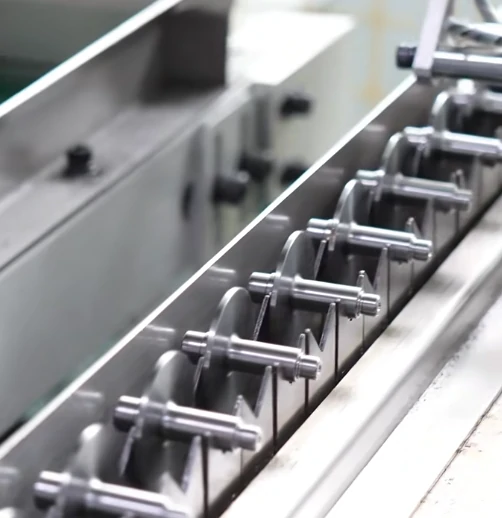
Custom planetary gear projects may include machined components such as planet carriers, gear shafts, housings, and mounting parts. These components can have different geometries, dimensional requirements, and machining references.
Welleshaft has access to 3-axis, 4-axis, and 5-axis CNC machining resources for non-standard mechanical components. The appropriate machining method is selected according to the component geometry, drawing requirements, and production quantity.
CNC Machining for Different Component Geometries
3-axis CNC machining is suitable for components with accessible surfaces and conventional milled features, such as holes, slots, pockets, and mounting faces. It can handle many straightforward machining tasks without the additional setup complexity of multi-axis equipment.
For parts with features arranged around a central axis, 4-axis CNC machining provides rotational positioning during machining. This can be useful for certain shafts and planet carriers, particularly when several features need to be machined in relation to one another.
5-axis CNC machining is suited to more complex geometries involving angled surfaces or features that require access from multiple directions. In planetary gear-related projects, it may be used for custom planet carriers, housings, and other precision mechanical components.
Using more machining axes does not automatically mean better accuracy or lower production costs. A straightforward component may be more efficiently produced on a 3-axis machine, while parts with complex geometries or multiple machining faces may benefit from 4-axis or 5-axis machining. The final choice depends on the drawing and required machining accuracy.
Turning and Grinding for Critical Dimensions
Not all features on a planetary gear assembly are produced by milling. CNC turning is used for cylindrical features such as shaft diameters, bores, shoulders, and end faces. These dimensions are particularly important on gear shafts and other components that connect with bearings or mating parts.
Where the drawing specifies tighter tolerances or a particular surface finish, precision grinding may be required for bearing seats, bores, outside diameters, or mounting surfaces. The need for grinding depends on the actual tolerance and surface finish requirements rather than the component name alone.
Coordinating CNC Machining and Other Production Resources
A planetary gear assembly may involve different manufacturing requirements. Planet carriers and housings can require CNC milling and turning, while toothed components need suitable gear cutting processes. Additional heat treatment or finishing may also be required according to the drawings.
Welleshaft coordinates suitable machining and production resources for these drawing-based projects. Its one-stop contract manufacturing approach allows overseas buyers to manage different component and process requirements through one manufacturing partner.
Submit Your Drawings for a Manufacturing ReviewHow Does Welleshaft Control the Quality of Custom Mechanical Components?
For custom planetary gear components, dimensional accuracy is only part of the quality requirement. A gear may meet its basic dimensions but still fail to mesh correctly if its tooth geometry is inaccurate. Likewise, an incorrectly positioned bore or mounting feature can affect the fit of a planet carrier or shaft within the assembly.
Welleshaft coordinates inspection arrangements according to each component’s function and the requirements specified in the engineering drawings. The inspection scope can cover critical dimensions, material properties, gear characteristics, and functional features, with suitable measurement methods selected for each requirement.
Dimensional Inspection of Machined Components
For shafts, carriers, and other machined parts, inspection focuses on the dimensions that determine fit and alignment. These may include bore diameters, shaft diameters, hole positions, mounting distances, and concentricity. A planet carrier, for example, requires particular attention to the position and spacing of its planet gear mounting holes, as these features affect the arrangement of the gears.
A Coordinate Measuring Machine (CMM) can verify suitable dimensions and geometric features against the drawing. Other measuring instruments are used where they are more appropriate for the feature or tolerance being checked. The inspection method should match the measurement task, rather than relying on one instrument for every characteristic.
Gear Tooth Accuracy Inspection
For custom planetary gear components, checking external dimensions is not enough to establish gear accuracy. Tooth profile, lead, pitch, tooth thickness, and radial runout can all be relevant to how gears engage.
These characteristics require suitable gear measurement methods and equipment. When a drawing specifies a gear accuracy grade, the inspection arrangement should be capable of verifying the corresponding parameters. A general CMM dimensional report cannot replace dedicated gear measurement where tooth accuracy verification is required.
This distinction is particularly important when inspecting sun gears, planet gears, and internal ring gears intended to work together. Their individual inspection results should be assessed against the specified gear requirements, not just their basic dimensions.
Material and Heat Treatment Verification
Material and heat treatment records provide additional evidence of component quality. Inspectors can compare material certificates with the specified grade and perform hardness tests to verify that heat-treated parts meet the required hardness values.
For case-hardened gears, inspectors can also measure case depth when the drawing or purchase documentation specifies this requirement. Buyers and suppliers should agree on the required tests and supporting records before production, especially when material properties form part of the component acceptance criteria.
Final Surface and Workmanship Inspection
Before delivery, finished parts are checked for visible defects that could affect their use or acceptance. Depending on the component, this may include burrs, corrosion, surface damage, and machining marks on functional or visible areas.
For overseas buyers sourcing precision planetary gear components and other custom mechanical parts, inspection records should reflect the checks agreed for the order. These may include dimensional inspection reports, gear measurement results, material certificates, and hardness records. Welleshaft coordinates the required inspection resources and documentation so that buyers can review the finished components against the specified acceptance requirements.
What Technical Information Is Needed for Custom Planetary Gear Manufacturing?
A quotation for custom planetary gear components requires more than overall dimensions. To evaluate manufacturing feasibility and estimate production costs, the manufacturing team needs information about the component geometry, material, critical tolerances, gear parameters, and assembly requirements.
The following information helps define the manufacturing and inspection scope:
| Information | Details to provide |
| Component type | Sun gear, planet gear, internal ring gear, planet carrier, shaft, or pinion |
| Gear parameters | Module, tooth count, pressure angle, and other specified geometry |
| Material | Material grade and applicable standard |
| Accuracy | Gear accuracy grade and dimensional tolerances |
| Backlash | Target value or assembly requirements, where applicable |
| Heat treatment | Required process, hardness, and case depth, if specified |
| Surface finish | Roughness requirements for functional surfaces |
| Component dimensions | Overall dimensions, bores, mounting features, and interfaces |
| Order quantity | Prototype, small-batch, and expected production quantities |
| Inspection | Dimensional, material, hardness, and gear measurement requirements |
Provide 2D Drawings and 3D Models
2D drawings should define dimensions, datums, tolerances, materials, and technical requirements. 3D models help clarify complex geometry and the relationship between different features. For planetary gear sets, an assembly drawing is also useful because it shows how the individual components fit together.
If the design is still under development, preliminary drawings can support an initial manufacturing discussion. Final production specifications should be approved before the order is released.
Specify Prototype and Production Quantities
The expected order quantity helps determine the manufacturing arrangement. Prototype orders may focus on checking dimensions and assembly fit, while repeat production requires an agreed process and inspection scope. Buyers should also indicate their expected delivery schedule and any documentation required with the parts.
Welleshaft can review the available drawings and project details to discuss the manufacturing scope and quotation requirements.
How Can Overseas Buyers Source Custom Planetary Gear Components from China?
For overseas buyers, sourcing custom planetary gear components in China involves more than comparing machining prices. When a project includes several gears and related mechanical parts, differences in manufacturing processes, supplier coordination, and inspection arrangements can affect the final result.
Welleshaft provides one-stop contract manufacturing for non-standard mechanical components, working from customer drawings and engineering specifications. The focus is on manufacturing individual components and coordinating the processes needed to complete a project.
Start with the Component Drawings
A planetary gear project may involve sun gears, planet gears, internal ring gears, planet carriers, shafts, and housings. These parts have different geometries and manufacturing requirements, so reviewing them as a complete project is more useful than evaluating each drawing in isolation.
Welleshaft reviews the drawings, material specifications, critical dimensions, and component interfaces to understand the manufacturing scope. For parts designed to work together, the assembly drawing also helps clarify how individual components relate to one another. This provides a basis for discussing manufacturing feasibility before an order is placed.
Manage Multiple Manufacturing Processes Through One Partner
A custom planetary gear project may involve CNC machining for planet carriers and shafts, dedicated gear cutting for toothed components, and additional finishing where the drawings require it. When these operations are handled by different suppliers, buyers may need to coordinate production schedules, technical communication, inspection requirements, and quality records across several parties.
Welleshaft’s one-stop contract manufacturing model coordinates suitable resources for these different requirements. Instead of managing each manufacturing process independently, overseas buyers can work with one project partner to discuss component specifications, production arrangements, and inspection scope.
Agree on Quality Requirements Before Production
Inspection arrangements should be clear before manufacturing starts. A dimensional report may be sufficient for some machined parts, while gears with specified accuracy grades may require dedicated tooth measurement. Material certificates and hardness reports can also be included when required by the purchase specification.
For components that form part of the same assembly, inspection should pay particular attention to the dimensions and interfaces that affect their fit. Agreeing on these checks in advance gives both the buyer and manufacturing team a common basis for evaluating the finished parts.
From Prototype Orders to Repeat Production
Some overseas buyers begin with prototype orders to check component dimensions, assembly fit, and manufacturing feasibility before moving to repeat production. Others already have approved drawings and need a coordinated manufacturing arrangement for ongoing procurement.
Welleshaft can evaluate both prototype and repeat production projects through its manufacturing network. The available processes, production quantities, and lead times are reviewed against the approved drawings and order requirements.
Request a Quote for Custom Planetary Gear ComponentsFrequently Asked Questions About Custom Planetary Gear Components
What Planetary Gear Components Can Be Made to Custom Drawings?
Welleshaft can evaluate drawings for custom sun gears, planet gears, internal ring gears, and planet carriers, as well as related shafts, pinions, and housings. The available manufacturing arrangement depends on the component geometry, material, dimensions, and required tolerances.
Do Custom Planetary Gears Require 5-Axis CNC Machining?
No. Many components can be machined using conventional CNC milling or turning. 4-axis and 5-axis CNC machining may be more suitable for parts with complex geometries or features across multiple faces. Toothed components may also require dedicated gear cutting processes.
Can Heat Treatment and Precision Grinding Be Arranged?
Yes. Heat treatment and precision grinding can be arranged when required by the material and drawing. The specified hardness, dimensional allowance, and finishing requirements should be considered together, particularly where heat treatment may affect final dimensions.
What Inspection Reports Can Be Provided for Custom Gear Components?
Depending on the agreed inspection scope, documentation may include dimensional inspection reports, applicable CMM results, material certificates, and hardness records. Gear measurement reports may also be required when the drawing specifies tooth accuracy parameters. The relevant inspection methods and equipment need to be confirmed for the project.
Does Welleshaft Accept Prototype and Small-Batch Orders?
Welleshaft can evaluate prototype manufacturing, small-batch production, and repeat orders for non-standard mechanical components. Prototype quantities can be used to check dimensions and assembly fit before larger orders. Production arrangements and lead times are reviewed according to the drawings and order requirements.
What Information Is Needed for a Custom Planetary Gear Quotation?
For a custom planetary gear manufacturing quotation, provide 2D drawings or 3D models, material specifications, gear parameters, critical tolerances, heat treatment requirements, and estimated quantities. An assembly drawing is useful when several components need to work together. Any required inspection documents should also be identified when requesting a quote.
Welleshaft is a China-based contract manufacturing partner for custom planetary gear components and non-standard mechanical parts. We coordinate CNC machining, gear cutting, heat treatment and inspection from customer drawings.

 English
 Português do Brasil
 Deutsch (Österreich)
 Deutsch (Schweiz)
 English (UK)
 English (Australia)
 English (New Zealand)
 Deutsch
 Français du Canada
 Français
 Français de Belgique
 Italiano
 English (South Africa)
 Português
 Español
 Español de México
 Español de Perú
 Español de Colombia
 العربية
 日本語
 Русский
 한국어
 Tiếng Việt
 ไทย