
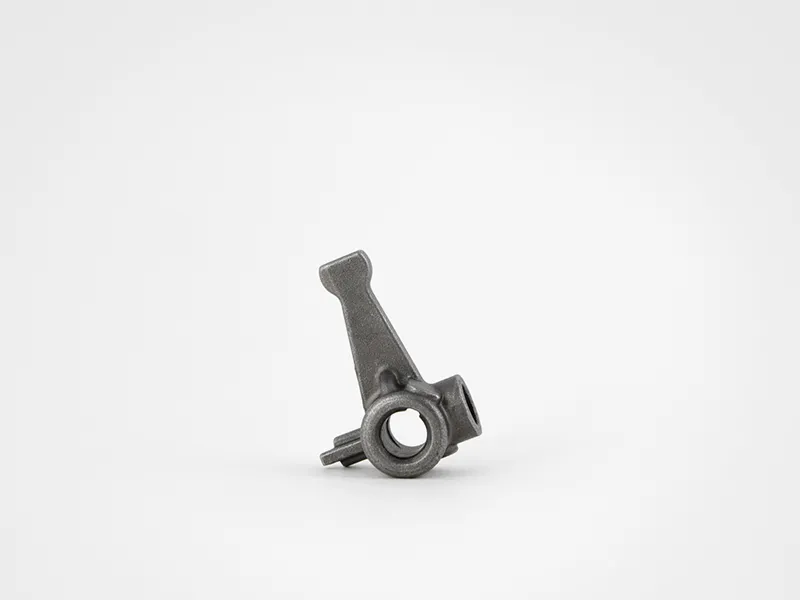
What is Investment Casting?
Investment casting, also known as precision casting or lost wax casting, is a highly precise metal casting process used to produce parts with complex shapes, tight tolerances, and smooth surfaces. The method starts with a wax or fusible prototype that replicates the desired component. We coat this model multiple times with refractory materials to form a strong shell. After the shell hardens, we melt and remove the wax inside to create a hollow cavity. We then pour molten metal into the cavity, and after it solidifies, we break the shell to reveal the final metal part.
The process is ideal for creating components that are difficult to achieve with conventional casting methods. It is widely applied in industries such as aerospace, automotive, medical devices, and precision instruments, where high dimensional accuracy, intricate designs, and finesurface finishes are required.
The term “investment” refers to encasing or surrounding the model with a protective layer. A wax pattern is slightly oversized to account for metal shrinkage during cooling, ensuring precise final dimensions. Compared to sand casting, investment casting delivers superior surface quality and works with a broad range of metals and alloys, including bronze, stainless steel, aluminium alloys, carbon steel, magnesium, and brass.
This process reduces material waste and minimizes post-processing, making it efficient for both prototyping and mass production. It is particularly suitable for parts with thin walls, internal cavities, and complex geometries.
Industries that require both precision and complexity, such as automotive, medical equipment, jewelry, and aerospace, rely on investment casting for components with tight tolerances, high-quality finishes, and consistent performance. Its versatility across different metals and alloys cements its role as a key precision manufacturing technology in modern industry.
What Is the Primary Purpose of Investment Casting?
The main goal of investment casting is to manufacture high-precision metal components that feature intricate geometries, fine details, and superior dimensional accuracy with excellent surface finish. The relative importance of these attributes depends largely on the specific requirements of the application.
This casting method is especially effective for producing parts that are geometrically complex or otherwise difficult to create using conventional single-step techniques. It excels at delivering components with thin sections, delicate features, and levels of precision and complexity that other manufacturing methods cannot achieve.
When Should You Choose Investment Casting parts?
Investment casting is an ideal manufacturing method when precision, complex geometry, and high-quality surface finishes are required. Understanding when to apply this technique ensures optimal results and cost efficiency for your projects. Here are key scenarios where investment casting delivers the best value:
Medium Weight Components
Investment casting is particularly effective for parts weighing from a few grams up to around 1,000 kg. Components heavier than this are generally better suited for sand casting, which handles large-scale products more efficiently.
Complex Geometries
For parts with intricate or challenging shapes, investment casting provides unmatched flexibility. Applications include turbine blades, dental and medical equipment, power generation components, and aerospace parts. Its ability to reproduce fine details makes it ideal for geometries that are difficult or impossible with other casting methods.
Higher Production Volumes
While investment casting may not be cost-effective for small batches due to tooling and setup costs, it becomes increasingly economical as production quantities rise. Beyond a certain threshold, the per-piece cost of investment casting can be lower than alternative processes, including sand casting.
Superior Surface Finish Requirements
Investment casting employs hard molds that allow for extremely fine surface finishes, often between 32–63 µin Ra. This precision makes it suitable for components that require smooth surfaces or minimal post-processing, such as decorative hardware or high-performance mechanical parts.
Precision Tolerances
With typical tolerances around ±0.003″, investment casting ensures high accuracy, making it suitable for components in demanding applications. Typical production volumes range from 500–5,000 parts, balancing cost efficiency and quality.
Considerations and Alternatives
Although investment casting offers excellent precision and versatility, it’s important to weigh your project requirements. For very high-volume production or faster cycle times, die casting might be more suitable. For small volumes, prototypes, or designs needing rapid iteration, CNC machining provides flexibility without incurring tooling costs.
Choosing the right process depends on the complexity, material requirements, and production scale. When precision metal parts with complex features are needed, investment casting often provides the ideal balance of quality, efficiency, and flexibility.
How Does Investment Casting Differ From Other Casting Methods?
Investment casting, sand casting and die casting are three widely used metal casting techniques, each with distinct characteristics in terms of casting process, surface finish, material compatibility, and production efficiency. The differences influence which method is most suitable for a given application. Below is a comparative overview:
| Casting Method | Investment Casting | Sand Casting | Die Casting |
| Model Material | Fusible materials (e.g., wax, plastic) | Sand | Metal molds |
| Mold Formation | Coated with refractory material to create a ceramic shell; original model melts away | Sand compacted around a pattern | Precision metal molds |
| Casting Size & Shape | Ideal for small and medium parts with complex geometries | Can produce parts of various sizes, less intricate | Usually limited to small/medium parts with moderate complexity |
| Surface Finish | High, up to Ra25–6.3 µm | Lower, often requires post-processing | High, Ra 0.8–3.2 µm |
| Dimensional Accuracy | High, generally grades 5–7 | Lower | High, tolerance IT10–IT12 |
| Alloy Type | Virtually unlimited: steel alloys, carbon steel, heat-resistant alloys | Steel, iron, non-ferrous alloys | Mainly aluminum, zinc, magnesium, copper alloys |
| Productivity | Moderate, complex process | High, suitable for mass production | High, semi-automated or automated |
| Manufacturing Cost | Usually high due to mold complexity | Relatively low | Mold cost high, but offset in large volume |
| Applications | Aerospace, medical, precision instruments | Automotive, construction, machinery | Automotive, electronics, instrumentation, defense |
Investment casting originally served jewelry and toolmaking but has evolved into a precision casting method that merges art and engineering, enabling intricate designs and tight tolerances. Unlike early practices relying on hand-carved wax, modern investment casting uses 3D printing and rapid prototyping with diverse materials, improving consistency, accuracy, and cost efficiency. Modern foundries employ automation and robotics to optimize throughput, reduce errors, and enhance detail. The use of high-performance alloys and sustainable methods further expands its capabilities.
Investment Casting vs. Centrifugal Casting
While both investment casting and centrifugal casting produce high-quality parts, they differ in mold usage and process mechanics. Investment casting uses single-use ceramic molds, whereas centrifugal casting employs reusable dies.
Centrifugal casting involves spinning a mold while pouring molten metal, creating centrifugal force that evenly distributes the metal and helps segregate impurities, which improves dimensional uniformity and reduces porosity.
Types of Centrifugal Casting
- Vertical: Best for cylindrical parts; mold rotates around a vertical axis.
- Horizontal: Ideal for long tubular components; requires high-speed rotation.
- Vacuum: Uses vacuum-assisted fillingto minimize oxidation and porosity.
Directional solidification in centrifugal casting ensures dense, void-free structures by solidifying from outer diameter (OD) to inner diameter (ID). This method eliminates the need for risers and gates, enhancing yield and reducing machining costs.
Precision and Versatility Comparison
| Casting Method | Surface Finish | Dimensional Accuracy | Complexity | Material Options | Tooling Cost | Volume Suitability |
| Investment Casting | Excellent (32–63 µin Ra) | ±0.005″–0.015″ | Very High | Extensive (steels, superalloys) | Medium | 500–5,000 parts |
| Die Casting | Good (60–120 µin Ra) | ±0.004″–0.010″ | High | Limited (Al, Zn, Mg) | High | 5,000–10,000+ parts |
| Sand Casting | Fair (125–500 µin Ra) | ±0.030″–0.125″ | Moderate | Extensive | Low | 1–1,000 parts |
| Permanent Mold Casting | Good (63–125 µin Ra) | ±0.010″–0.030″ | Moderate | Limited | Medium–High | 1,000–10,000 parts |
The primary difference lies in how the cavity is formed:
- Die casting: Precision steel molds.
- Sand casting: Sand molds around a reusable pattern.
- Investment casting: Refractory-coated sacrificial pattern.
Investment casting combines fine detail, tight tolerances, and wide material compatibility, while avoiding the high initial tooling costs of die casting. Sand casting provides flexibility but less precision, and die casting offers high-volume efficiency for suitable alloys.


What Are the Advantages of Investment Casting?
Investment casting offers a wide range of benefits, making it a preferred choice for manufacturing complex metal parts with high precision and superior surface quality. This process enables the production of components with intricate geometries, internal cavities, and thin walls, which are difficult to achieve with other casting methods. Key advantages include:
High Dimensional Accuracy
The process delivers exceptional dimensional precision and repeatability, allowing parts to meet exact design specifications. Investment casting can achieve tight tolerances, even for complex shapes, ensuring components fit seamlessly in assemblies.
Superior Surface Finish
By encasing a wax pattern in refractory material and carefully controlling the casting process, investment casting produces smooth surfaces with minimal parting lines or defects. This reduces the need for extensive post-processing, saving both time and costs.
Material Versatility
This method works with a broad range of metals and alloys, including stainless steel, aluminium alloys, bronze, carbon steel, magnesium, and specialty alloys like Inconel. The ability to cast multiple materials makes it suitable for diverse industrial applications.
Design Flexibility
Investment casting allows for remarkable design freedom, accommodating intricate details, undercuts, internal passages, and thin walls down to 0.040″. Complex assemblies can often be produced as a single casting, eliminating the need for downstream assembly and reducing potential failure points.
Reduced Waste and Cost Efficiency
The process minimizes material wastage since feed and sprue parts can often be reused. Low tooling costs and minimal post-processing make investment casting cost-effective, especially for medium-volume production runs (100–5,000 parts).
Consistency and Fewer Defects
With precise control over the wax patterns, ceramic shell formation, and metal pouring, investment casting minimizes defects, ensuring smoother production and consistent quality. This results in higher reliability and reduced labor for rework.
Environmental Advantages
By reusing wax, patterns, and metal runners, the process supports sustainable manufacturing practices. Less waste and lower energy consumption make investment casting more environmentally friendly compared to many other metal fabrication techniques.
Scalability
Investment casting is suitable for both small and large production volumes, from prototypes to thousands of parts, and can handle components ranging from tiny precision pieces to larger structures weighing hundreds of pounds.
What Are the Disadvantages of Investment Casting?
Despite its numerous advantages, investment casting has certain limitations that manufacturers must consider. The process can be more expensive than other casting methods, particularly for short-run production, due to the multiple steps involved. Each step—from creating the wax pattern to forming the ceramic shell and pouring molten metal—requires precision and care, leaving room for errors if not carefully managed.
Higher Production Costs
The cost per component in investment casting is generally higher than in sand casting or die casting, especially for single or small batches. While reduced post-processing can offset some expenses, the initial investment in wax patterns, molds, and tooling can make this method less economical for low-volume runs.
Longer Lead Times
Creating a wax pattern, drying ceramic shells, and producing cores can take several days, typically around a week from start to finish. Modifying designs can further extend production time, as new molds and patterns may be required.
Size and Weight Limitations
Investment casting has restrictions on the size and weight of single-piece castings, making it less suitable for very large components compared to processes like sand casting or centrifugal casting.
Complexity in Internal Features
Casting parts with internal cavities or complex cores adds to the process complexity. While feasible, such designs increase the potential for defects and require higher levels of process control to maintain dimensional accuracy and surface quality.
High Process Sensitivity
A large number of variables—including temperature, shell thickness, and metal flow—can affect the quality of the final part. Maintaining consistent standards demands meticulous oversight and skilled operators.
What Types of Investment Casting Are Available?
Investment casting, also known as lost wax casting, has a long history in producing high-precision metal components. Modern refinements have increased its efficiency, adaptability, and range of applications. At its core, investment casting is a form of evaporative pattern casting, where the pattern is removed or vaporized to form a mold cavity before molten metal is poured. Variations of the method differ mainly in pattern materials—from wax and foam to water glass binders—and in the techniques used to create them, providing unique advantages in surface finish, complexity, and cost.
Lost Foam Casting
Lost foam casting is recognized as a cost-effective alternative to traditional investment casting, particularly for mass production and automated processes. Instead of wax, this method uses polystyrene foam patterns to shape molds, making it ideal for automotive casting, engine blocks, and complex near-net-shape metal parts.
The process begins with an aluminum die, where polystyrene beads are injected and expanded to fill the cavity. Foam patterns are connected to a sprue system, coated with refractory ceramics, and placed in a vented flask stabilized with unbonded sand. Molten metals such as aluminum, cast iron, or steel are then poured into the mold. The foam evaporates immediately, leaving a highly accurate casting that captures intricate details and thin walls.
Lost foam casting also supports custom or prototype parts, as patterns can be carved manually or machined using CNC equipment. Its adaptability makes it suitable for rapid prototyping, limited runs, and large-scale manufacturing. The method offers excellent surface finish, reducing the need for secondary machining and making it widely used across industries like automotive, marine engineering, and aerospace.
Direct Investment Casting
Unlike indirect investment casting, which relies on wax models produced with metal dies and assembled around gating systems, direct investment casting is more suited for low-volume production, rapid prototyping, and design testing. Patterns can be hand-carved or machined directly from wax or alternative materials, bypassing dedicated dies and reducing setup costs.
CAD modeling and 3D printing further enhance direct investment casting by enabling precise digital designs and high-fidelity wax or polymer patterns. Additive manufacturing methods, including stereolithography (STL), build layers of photosensitive resin to form detailed patterns. This approach shortens lead times and facilitates production of customized cast components, particularly in industries where design flexibility and fast time-to-market are critical, such as medical devices, aerospace, and advanced engineering.
Water Glass Investment Casting
Water glass investment casting, also called sodium silicate investment casting, uses sodium silicate binders instead of more expensive ethyl silicate, making it a cost-efficient option for medium to large steel and iron castings. This method originated in Russia in the 1950s and is widely applied in heavy industry.
While the surface finish is slightly lower than premium silica sol techniques, water glass casting delivers consistent dimensional accuracy and minimal defects. Its straightforward process reduces labor intensity and requires less technical training, making it suitable for agricultural machinery, pump and valve bodies, mining equipment, and other industrial hardware. It is often chosen when production efficiency, scalability, and cost-effectiveness are prioritized over ultra-fine surface detail, providing robust metal components for general engineering and construction applications.
How Does the Investment Casting Process Work?
The investment casting process is celebrated for its ability to produce high-precision, intricate metal parts with exceptional surface finish. This method excels in creating components with complex geometries, tight tolerances, and minimal post-processing requirements. Despite its versatility, the process is relatively sophisticated and costly, making it ideal for applications demanding strict quality standards. The procedure follows several critical stages:
Creating the Wax Pattern
The process begins with fabricating a wax pattern that exactly mirrors the final metal part. Wax is injected, molded, or pressed into dies derived from a master pattern, which may be produced via 3D printing, CNC machining, or hand-carving. The dimensional precision and surface quality of the wax pattern are crucial for the final casting. Hollow cavities can be incorporated by adding wax cores.
Assembling Wax Patterns into a Tree
Multiple wax patterns are connected to a central wax sprue, forming a wax tree. This design allows several parts to be cast simultaneously, improving efficiency and lowering unit costs. Assembly can be performed manually or using robotic systems, and careful alignment ensures uniform metal flow and reduces casting defects.
Building the Ceramic Shell
The wax tree is repeatedly dipped into a ceramic slurry, followed by a layer of fine refractory material (stucco) to build a strong, heat-resistant shell. This cycle is repeated until the desired shell thickness is reached, typically 5–10 mm. Controlled drying between layers prevents cracking and ensures structural integrity.
Dewaxing the Mold
Once the shell is hardened, the wax is removed by heating, leaving a hollow cavity. This is why investment casting is also known as lost wax casting. Dewaxing is typically done using steam autoclaves or hot water baths, guaranteeing complete wax removal without damaging the ceramic mold.
Firing the Shell
The ceramic mold is fired at high temperatures to strengthen the shell and remove any residual wax or moisture. Proper firing ensures the mold withstands the thermal and mechanical stresses of molten metal pouring.
Pouring Molten Metal
Molten metals, including steel, aluminum, copper, or superalloys, are poured into the preheated mold. Various techniques—gravity pouring, vacuum-assisted filling, or centrifugal casting—can be applied to achieve uniform cavity filling, reduce porosity, and enhance material yield. Vacuum-assisted pouring can improve efficiency from 15–50% in gravity casting to up to 95%.
Removing the Ceramic Shell
After the metal solidifies, the ceramic shell is broken away using mechanical, waterjet, vibration, or chemical methods. The gating system, including sprues and runners, is separated and recycled. This reveals the raw casting ready for finishing.
Post-Processing and Surface Finishing
Most investment castings require minimal machining due to their high accuracy. Depending on the application, finishing processes may include:
- Grinding, trimming, or polishing to meet surface specifications
- CNC or EDM machining for tight tolerances
- Heat treatments (hardening, tempering, annealing) to improve mechanical properties
- Surface treatments like anodizing, electropolishing, or plating for corrosion resistance and aesthetics
Modern Enhancements
Advancements in investment casting include:
- 3D-printed master patternsfor improved CAD/CAM compatibility and rapid prototyping
- High-pressure wax injectionfor capturing fine features
- Consistent ceramic shell formation with superior thermal resistance
- Vacuum-assisted metal pouring to minimize oxidation and maximize material utilization
By combining these innovations with traditional craftsmanship, the investment casting process continues to produce complex, high-precision metal components efficiently and reliably.


What Materials Are Suitable for Investment Casting components?
Investment casting is a versatile manufacturing technique capable of producing components with complex geometries. This process supports a wide array of metals and alloys, each offering unique properties suited for specific applications. Commonly used materials include stainless steel, carbon steel, aluminum alloy, low alloy steel, superalloys, copper alloys, and cast iron. Here’s a closer look at their characteristics and uses:
Stainless Steel
Stainless steel is prized for its outstanding durability and corrosion resistance, making it ideal for parts exposed to harsh conditions. It finds applications in automotive transmission components, gears, camping equipment, and sports gear like golf club heads. Investment casting allows for precise shapes while maintaining the material’s strength and wear resistance.
Low Alloy Steel
Low alloy steel is a cost-effective choice for machinery manufacturing due to its mechanical performance and adaptability. Through targeted heat treatment, different sections of a component can be customized for properties like impact resistance or wear resistance, offering versatility in demanding applications.
Aluminum Alloy
Aluminum alloys are extensively used in aerospace, electronics, and military equipment. High-strength aluminum-silicon-magnesium alloys enable investment casting to meet stringent requirements, such as aircraft fuselage parts and engine components. The lightweight nature and corrosion resistance of aluminum make it a preferred material for high-performance castings.
Carbon Steel
Carbon steel offers an excellent combination of strength, toughness, and cost efficiency. Its ferromagnetic properties make it suitable for motors and electrical appliances. With proper heat treatment, its hardness and durability are enhanced, making it a widely adopted material in industrial investment castings
Superalloys
Nickel- and cobalt-based superalloys excel in high-temperature and corrosive environments, making them essential in aerospace, energy, medical, and marine industries. Their stiffness, wear resistance, and long service life make them increasingly favored for components previously made from sheet metals.
Copper Alloys
Copper-based alloys are well-regarded for corrosion resistance, low wear rate, and machinability. Common uses include ship propellers, pump parts, electrical components, and pipelines. Popular variants in investment casting include bronze, brass, and beryllium copper, which combines strength, durability, and corrosion resistance.
Cast Iron
Cast iron, particularly gray iron and ductile iron, provides precision at a reasonable cost. Ductile iron offers high strength, toughness, and heat resistance, though its manufacturing is more complex than that of steel, slightly increasing production costs.
Magnesium
Magnesium alloys are increasingly viable for investment casting due to advances in mold shell inhibitors. Known for their lightweight properties and high strength-to-weight ratio, magnesium alloys like AZ91D and AM60B are suitable for high-temperature applications and structural components in aerospace and automotive fields.
Glass
While less common, glass investment casting is employed for artistic and decorative objects. The process involves powdered glass melted in a kiln, ensuring complete filling of molds. Although similar in principle to metal casting, glass casting demands extra care in demolding and handling.
How Is Precision and Quality Control Achieved in Investment Casting?
Ensuring High Standards Through Non-Destructive Testing (NDT)
Non-destructive testing (NDT) encompasses techniques that assess the integrity and quality of investment cast components without causing damage. Radiography is commonly employed to reveal internal flaws such as voids or inclusions deep within the material, whereas dye penetrant testing is effective for detecting surface cracks and imperfections.
Detecting both surface and internal defects is particularly critical for components used in high-stakes applications, including medical and aerospace fields, where precision directly impacts performance and safety.
Additional NDT methods like ultrasonic testing, magnetic particle testing, and eddy current testing complement visual inspections, ensuring that potential defects are identified throughout the casting process. Employing multiple NDT techniques safeguards component reliability and strengthens the overall quality of the investment casting workflow.
Dimensional Accuracy and Surface Finish in Investment Casting
Modern investment casting delivers superior dimensional accuracy compared to sand casting or custom die casting, making it ideal for producing intricate, high-precision components. While large parts may not be practical due to mold limitations, investment casting excels in crafting small, detailed components with exceptionally smooth surfaces. Tight tolerances as low as 0.005 inches are achievable, exceeding what typical sand casting can provide.
Achieving this level of precision starts with highly accurate wax patterns, often fabricated using CNC machining or 3D printing. Maintaining dimensional accuracy requires careful control at every step—from mold creation to molten metal pouring—to ensure repeatable, high-quality outcomes. The smooth ceramic shells employed in investment casting also produce fine surface finishes, frequently eliminating the need for additional machining. This makes investment casting the method of choice for components requiring both precision and superior aesthetics.
Key Factors Affecting Investment Casting Precision
Casting Structure
The thickness of walls in a casting significantly affects dimensional accuracy. Excessive wall thickness can increase shrinkage and risk defects like voids or warping, while overly thin walls may compromise strength. Additionally, improper molten metal flow can disrupt shrinkage, leading to deviations from intended dimensions.
Casting Material
Material composition impacts shrinkage and stability. For example, low-carbon alloys reduce volumetric contraction, contributing to more consistent final dimensions in the cast part.
Wax Injection Temperature and Pressure
Controlled wax injection temperature and pressure are essential. Proper pressure ensures uniform mold filling, and optimal temperature supports smooth flow, both critical to preventing defects and achieving precise parts.
Shell Material and Heating
The choice of shell material, such as zircon sand with a low expansion coefficient, helps maintain dimensional accuracy. Inadequate shell heating can reduce expansion, affecting both the precision and quality of the casting.
Pouring or Injection Temperature
Maintaining consistent metal pouring temperatures is vital. High temperatures may cause coarse grains, while low temperatures reduce fluidity, compromising the integrity of the casting. Optimal and stable temperature control ensures accurate replication of the pattern without additional rework.
Achieving Accurate Reproduction of Patterns
The fidelity of the final casting depends heavily on wax pattern precision. Skilled flask preparation and attention to injection parameters can significantly reduce dimensional errors. For areas demanding higher precision, the pattern can be post-machined or coined using precise steel molds to achieve tight tolerances.
Overall, meticulous control of every stage—from pattern creation to molten metal pouring—is essential for producing investment cast parts that meet the highest standards of precision and surface finish.
What Are the Applications of Investment Casting?
Investment casting is a highly adaptable manufacturing method widely used across multiple industries due to its ability to create intricate shapes, maintain tight tolerances, and produce high-performance metal parts. Its versatility allows for both small precision components and large structural parts, making it an essential process in modern production.
Industry-Specific Applications
Aerospace
The aerospace sector relies heavily on investment casting for components that must endure extreme temperatures, fluctuating pressures, and operational stress. Inconel turbine blades with internal cooling passages, titanium brackets, and aluminum pressure vessels are typical examples. These parts demand high precision and material consistency, which investment casting reliably provides.
Automotive
In the automotive industry, investment casting enables the creation of stainless steel turbocharger housings, transmission gears, and other engine components with tight tolerances. This process allows smaller engines to deliver higher efficiency, reduce emissions, and maintain mechanical reliability, especially for low-volume and performance vehicles.
Medical
Medical applications include surgical tools, implantable devices, and components for hospital equipment. Investment casting ensures dimensional accuracy and biocompatibility, as seen in titanium hip implants and cobalt-chrome scalpels, where precision is crucial for patient safety.
Industrial Machinery
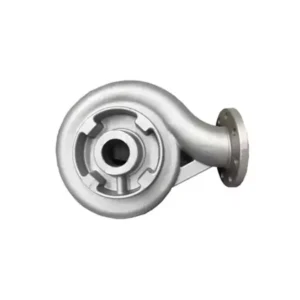
For industrial machinery, investment casting produces pump impellers, valve bodies, and other intricate parts. The process ensures complex internal geometries, corrosion resistance, and improved efficiency in hydraulic and mechanical systems.
Defense
The defense sector utilizes investment casting to manufacture high-strength weapon components and naval equipment. The process guarantees durability, uniformity, and reliability in critical applications.
Firearms
Firearm manufacturers depend on investment casting to achieve precise, net-shape components with minimal post-processing. Components such as triggers, hammers, and receivers are produced in various alloys to meet stringent safety and performance standards.
Food & Dairy Industry
In food production, equipment components must resist wear, maintain hygiene, and withstand operational stress. Investment casting provides durable stainless steel or specialty alloy parts for meat slicers, poultry processors, ice machines, and other food service machinery.
Hydraulics & Pneumatics
Fluid-power systems in hydraulic and pneumatic equipment rely on investment cast components like ball valves, needle valves, and impellers. Using stainless steel, aluminum, and other high-performance alloys, these parts achieve precision, durability, and efficiency.
How Do You Select the Right Investment Casting Manufacturer?
Finding the ideal partner for investment casting services is essential to ensure the success of your project. When evaluating potential manufacturers, several critical considerations should guide your decision:
- Experience and Certifications: Look for manufacturers with relevant certifications such as AS9100 (for aerospace) or ISO 13485 (for medical applications), along with proven expertise in the specific industry.
- Material Capabilities: Confirm that the supplier is proficient in handling the alloysyour project requires, such as titanium or Inconel.
- Quality Control: Verify that the manufacturer implements robust statistical process controland has advanced part inspection tools, including X-ray equipment and fully equipped metallurgical testing labs to ensure consistent quality.
- Lead Times and Production Capacity: Ensure the manufacturer can accommodate your volume requirements—ranging from 100 to 5,000 parts—without compromising delivery timelines.
- Technical Support: Give priority to manufacturers who provide design for manufacturability (DFM)services and support prototyping, including the use of 3D-printed patterns for validation before full production.
By carefully assessing these factors, you can select a reliable investment casting manufacturer capable of delivering high-quality components on schedule.
How Long Does Investment Casting Take?
The duration required to complete an investment casting project varies based on several key factors, including the material being cast, the complexity of the design, and the equipment used.
For smaller components weighing under 1 kg, the process to prepare a casting flask typically ranges from 2 to 5 days before it is ready for the actual casting operation. Larger or more intricate parts may require additional time due to extended processing steps or specialized finishing requirements.
How Long Does Investment Casting Take?
Modern metal manufacturing continues to evolve with technological advancements, and investment casting is set to benefit from innovations in automation, robotics, and material science. Emerging investment casting materials and novel techniques, including specialized alloys and advanced pattern materials, are enhancing the precision and versatility of investment casting processes.
Automation and Robotics in Investment Casting
Across the metal casting industry, automation and robotics are increasingly applied to optimize production. Robotic systems streamline key stages of investment casting, from pattern handling to pouring, reducing production time, minimizing human error, and increasing overall efficiency. This mechanization allows foundries to maintain consistent quality while handling repetitive or hazardous tasks.
Advanced Quality Control and Maintenance
Automated inspection systems offer higher accuracy in identifying defects in investment castings compared to manual observation. Early detection of imperfections minimizes material waste and ensures higher-quality cast components. Additionally, continuous monitoring of machinery and predictive maintenance practices help prevent unexpected downtime, ensuring smoother operations.
The Future Landscape of Investment Casting
As robotics technology progresses, the safety and precision of investment casting are further enhanced. Automation now assists in assembling patterns, building ceramic shells, pouring molten metals, and demolding. Many robotic setups are equipped with optical systems to detect defects in real time, ensuring each component meets strict quality standards.
The combination of traditional casting techniques with modern innovations ensures that investment casting remains indispensable in producing intricate and durable components.
Emerging Materials and Techniques
History shows that advancements in materials and casting techniques drive improvements in precision and component quality. Modern practices such as 3D-printed patterns using high-performance polymers and metals allow faster and more flexible production. This trend supports the adoption of new casting alloys, which enhance component durability while reducing costs and production cycles.
From its origins using gold, copper, bronze, and pewter, investment casting has incorporated aluminum, cobalt, and magnesium alloys over the past century, enabling parts to withstand extreme operating conditions.
3D Printing for Rapid Prototyping and Pattern Fabrication
The integration of additive manufacturing transforms pattern creation. Rapid prototyping accelerates the production of intricate wax patterns, reduces lead times, and eliminates costly tooling for low-volume runs. Customized patterns for complex designs are now achievable, opening possibilities for more flexible and precise investment casting projects.
Innovations in Ceramic Shell Materials
New formulations of ceramic shell materials provide improved thermal shock resistance, dimensional stability, and superior surface finish transfer. These advancements expand the variety of castable alloys and enhance reliability throughout the casting process.
Digitalization and Smart Foundries
Modern foundries increasingly use sensor networks, process monitoring, and automated handling systems to improve consistency, reduce labor requirements, and optimize production. Virtual process simulations allow fine-tuning of casting workflows before physical execution, further improving quality and efficiency.
Sustainable Practices and Waste Reduction
Environmental sustainability is shaping investment casting innovations. Recycled ceramic shell materials, energy-efficient melting, and low-emission techniques reduce the environmental footprint while lowering operational costs. Foundries are increasingly adopting practices that balance productivity with environmental responsibility.
Why Choose Welleshaft for Your Investment Casting Needs?
Choosing Welleshaft for investment casting ensures reliable quality, precision manufacturing, and professional engineering support for complex metal components.
- Extensive Precision Casting Experience
Strong expertise in producing complex investment cast partswith tight tolerances and excellent surface finish. - Strict Quality Control
Comprehensive inspection and quality assurance processes ensure consistent product performance and dimensional accuracy. - Custom Manufacturing Solutions
Support for customized metal parts based on specific material, structure, and application requirements. - Advanced Manufacturing Technology
Utilization of modern equipment, precision tooling, and efficient casting processes to improve quality and production efficiency. - Professional Technical Support
Dedicated engineering assistance from design optimization to final production and delivery.
With a focus on precision, reliability, and cost-effective manufacturing, Welleshaft delivers high-quality investment casting services for a wide range of industrial applications.
FAQs on Investment Casting
What is investment casting powder made of?
Investment casting powders, especially those for shell formation, are typically blends of high-melting inorganic materials with excellent chemical and thermal stability. The exact composition varies based on the alloy type, and the casting’s size and shape. Common refractory powders include silica sand, zircon sand, and corundum sand. After processing through mixing, grinding, and sieving, they form the durable shell powders essential for investment casting.
What types of wax are used in investment casting?
Various waxes are applied, including filled and non-filled pattern wax, runner wax, water-soluble wax, and sticky wax, selected based on their mechanical properties, flow characteristics, reclaimability, and intended application.
What post-casting treatments are available for investment cast parts?
Post-processing options include sandblasting, shot peening, vibro finishing, electropolishing, anodizing, passivation, powder coating, painting, and electroless nickel plating, depending on the alloy, surface finish, and intended use.
Why is water glass investment casting widely used in China?
In China, water glass (sodium silicate) investment casting is popular due to its lower material costs, faster shell-building process, and suitability for producing large steel and iron castings in high-volume industrial production.
How Durable Are Investment Casting Products?
The durability of investment casting products largely depends on the design, operational conditions, and materials selection. For instance, a bearing surface made of brass can last long when paired with a harder counterpart under proper lubrication. Components such as an automotive suspension knuckle can remain functional for decades if maintained correctly. Conversely, exposure to dry, abrasive conditions can significantly reduce service life.
Are Investment Casting Products Heat Resistant?
Yes, investment casting products exhibit strong heat resistance. The temperature tolerance of investment cast metal parts is determined by the chosen material. For example, components made from 316 stainless steel can safely withstand temperatures up to 900 °C. Careful materials selection and design specifications ensure reliable performance under high-temperature conditions.
This blog was provided by the Welleshaft Engineering Team led by Mr. Xu, specializing in precision investment casting, metal manufacturing, and quality control solutions. With extensive experience in complex metal components, Welleshaft supports global industries with reliable casting technology, strict inspection standards, and customized engineering services.
 English (Australia)
  English
  Português do Brasil
  Deutsch (Österreich)
  Deutsch (Schweiz)
  English (UK)
  English (New Zealand)
  Deutsch
  Français du Canada
  Français
  Français de Belgique
  Italiano
  English (South Africa)
  Português
  Español
  Español de México
  Español de Perú
  Español de Colombia
  العربية
  日本語
日本語  Русский
  한국어
한국어  Tiếng Việt
  ไทย
ไทย
Reviews
There are no reviews yet.