Introduction
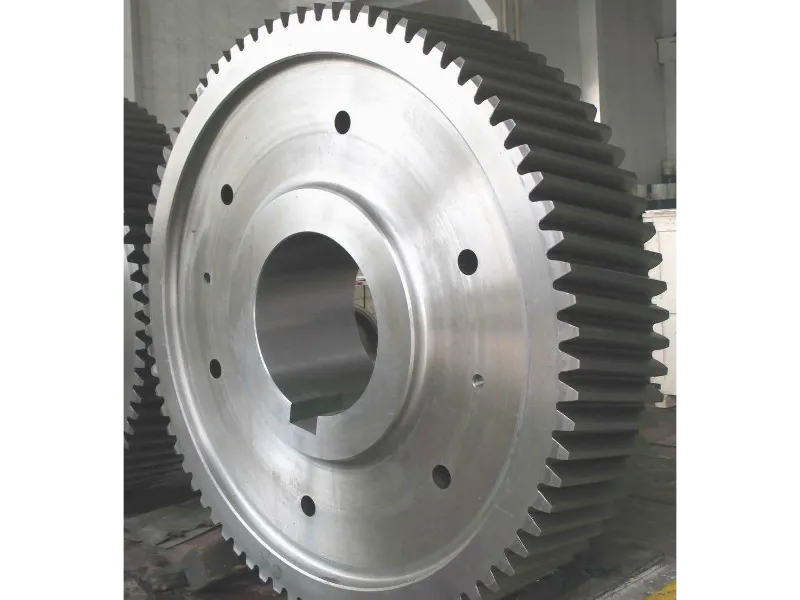
Forged gear components are widely used in automotive transmissions, industrial machinery, and heavy-duty equipment requiring high strength, fatigue resistance, and long service life. Their optimized grain flow improves structural integrity, making them suitable for continuous loads and impact applications.
Producing reliable forged gear components requires more than forging capability. OEM customers need a manufacturing partner with expertise in design evaluation, material selection, forging process development, precision machining, heat treatment, and quality inspection.
As a China custom forged gear manufacturer, Welleshaft provides complete forged gear solutions integrating forging, machining, heat treatment, and inspection for production-ready components.
Working as an OEM manufacturing partner, Welleshaft helps customers reduce supplier coordination, improve production consistency, and develop customized gear components based on application requirements and quality standards.
Need a Custom Forged Gear Manufacturing Partner?What Are Custom Forged Gear Components and Why Are They Used in Industrial Applications?
Custom forged gear components are produced through controlled forging processes, where heated metal is formed under high pressure into near-net-shape blanks. This process improves material efficiency and creates continuous grain flow, enhancing mechanical performance compared with conventionally machined gears.
The optimized structure of forged gear components improves fatigue resistance, impact strength, and load capacity, making them suitable for continuous operation, high torque, and demanding applications. With proper material selection, heat treatment, and precision machining, custom forged gears achieve the durability required for long-term industrial use.
Forged transmission components are commonly used in industries where transmission reliability is critical, including automotive transmission systems, industrial gear reducers, mining equipment, construction machinery, and heavy-duty power transmission systems.
How Does the Custom Forged Gear Manufacturing Process Work From Engineering Review to Final Delivery?
A reliable custom forged gear manufacturing process starts with engineering evaluation before production begins.
For OEM projects, Welleshaft manages the manufacturing process from initial engineering review through production delivery, helping customers maintain better control over quality, lead time, and component performance.
Welleshaft works with customers to review technical drawings, 3D CAD models, material specifications, operating conditions, and production requirements. Through this assessment, our engineering team determines the most suitable gear forging process, material selection, machining requirements, and heat treatment strategy for each project.
This early-stage evaluation helps optimize the manufacturing process, reduce potential production risks, and ensure that the final engineered forged components meet the required mechanical performance, dimensional accuracy, and application requirements.
Forging Process Development for Custom Forged Gear Components
The selection of the right forging method plays an important role in determining the strength, consistency, and manufacturing efficiency of custom forged gear components. Based on component size, geometry, material requirements, and production volume, Welleshaft develops suitable forging solutions for different industrial applications.
Closed die forging is commonly used for high-volume production where consistent dimensions, repeatable quality, and efficient material utilization are required. By forming heated metal inside precision dies, this process produces near-net-shape forged gear blanks, reducing machining requirements while maintaining excellent structural integrity.
For large components and demanding applications, open die forging provides flexibility to produce high-strength forged blanks. It is suitable for large forged gear blanks, heavy-duty transmission components, and industrial parts exposed to high loads and impact forces.
By combining engineering evaluation with forging process selection, Welleshaft helps customers choose a suitable manufacturing method based on component size, production volume, material requirements, and expected operating conditions.
Precision Machining After Forging for Final Component Requirements
After the forging stage, forged gear components usually require additional machining operations to achieve final dimensions, gear accuracy, and surface requirements. Welleshaft provides precision machining after forging to transform forged blanks into finished components that meet customer drawings and technical specifications.
Our machining capabilities include CNC turning, CNC milling, gear machining, grinding, and surface finishing processes. By combining forging and machining capabilities, Welleshaft supports OEM customers with complete forged gear manufacturing solutions instead of supplying only semi-finished forged parts.
This integrated approach helps improve production consistency, reduce supplier coordination, and provide customers with a more efficient manufacturing solution for customized industrial components.
Heat Treatment and Surface Hardening for Enhanced Gear Performance
The performance and service life of custom forged gears depend not only on the forging process but also on proper heat treatment processes for industrial components and surface hardening. Welleshaft supports customized heat treatment solutions for forged gears to improve hardness, wear resistance, fatigue strength, and core toughness.
Depending on application requirements, heat treatment processes may include carburizing, induction hardening, nitriding, and quenching and tempering. These processes optimize the balance between surface durability and internal strength, enabling forged gear components to perform reliably in automotive transmissions, industrial machinery, and heavy-duty power transmission systems.
Proper heat treatment is essential for achieving the required gear performance, including hardness, wear resistance, fatigue strength, and service life.
Discuss Your Forged Gear Component Requirements With Our Engineering TeamWhat Materials Are Commonly Used for Custom Forged Gears?
Material selection plays an important role in determining the strength, durability, and service reliability of custom forged gear components. The appropriate material choice depends on various factors, including load conditions, operating environment, required hardness, wear resistance, and heat treatment requirements.
During the forged gear manufacturing process, Welleshaft works with customers to evaluate application requirements and recommend suitable material solutions. By selecting the right material grade and combining it with optimized forging and heat treatment processes, forged gear components can achieve the mechanical performance required for automotive, industrial, and heavy-duty transmission applications.
Welleshaft does not simply select materials based on availability. Welleshaft evaluates material selection together with forging methods, heat treatment, machining conditions, and application requirements to ensure custom forged gear components achieve the required performance.
Common Materials Used for Custom Forged Gear Manufacturing
| Material Type | Typical Grades | Key Characteristics | Common Applications |
| Alloy Steel | 4140,4340,8620,SCM440 | High strength, fatigue resistance | Heavy-duty transmission |
| Carbon Steel | 1045,S45C | Good machinability and cost efficiency | General industrial machinery |
| Stainless Steel | Application-specific grades | Corrosion resistance | Harsh environments |
Alloy Steel for High-Performance Forged Gear Applications
Alloy steel is one of the most commonly selected materials for alloy steel forged gears because it provides a strong combination of mechanical strength, toughness, and fatigue resistance. These characteristics make alloy steel suitable for components exposed to repeated loading, high torque, and demanding operating conditions.
Common alloy steel grades used in custom forged gear components include AISI 4140, AISI 4340, AISI 8620, and SCM440. Through appropriate heat treatment, these materials can achieve improved surface hardness and wear resistance while maintaining sufficient core toughness.
Manufacturers use alloy steel for heavy-duty transmission components, industrial gear reducers, construction equipment, and power transmission applications requiring high strength and long service life.
Carbon Steel for Cost-Effective Industrial Gear Components
Carbon steel is often selected for custom forged gear components where reliable mechanical performance and production efficiency are both important. Compared with alloy steel, carbon steel provides good machinability and lower material costs while still meeting the requirements of many general industrial applications.
Common grades include AISI 1045 and S45C, which are widely used for machinery components operating under moderate loads. These materials provide a practical solution for customers seeking a balance between manufacturing cost, performance requirements, and production efficiency.
Typical applications include general industrial machinery, standard transmission components, and equipment where extreme wear resistance or high-load performance is not the primary requirement.
Stainless Steel for Corrosion-Resistant Forged Components
For applications exposed to moisture, chemicals, or corrosive environments, stainless steel forged components provide enhanced corrosion resistance and long-term durability.
Manufacturers select stainless steel for custom industrial components requiring corrosion resistance, surface integrity, and reliable performance in demanding environments. Specific grades are chosen based on application requirements, mechanical properties, and manufacturing needs.
Typical applications include food processing equipment, chemical processing machinery, outdoor industrial systems, and other environments requiring reliable corrosion-resistant components.
The final material selection depends on torque requirements, operating environment, required hardness, production volume, and heat treatment strategy. Welleshaft works with customers to evaluate these factors before production to ensure the selected material meets both performance and manufacturing requirements.
Why Are Forged Gear Components Stronger Than Cast or Fully Machined Alternatives?
The main performance advantage of forged gear components comes from the improved internal grain structure created during the forging process. Unlike casting, where molten metal solidifies into the final shape, forging applies controlled pressure to reshape the material, allowing the grain flow to follow the geometry of the component.
This optimized grain structure enables custom forged gears to withstand repeated loads, impact forces, and high-stress conditions. Combined with proper material selection, machining, and heat treatment, forged components provide improved fatigue resistance, reliability, and long-term performance for transmission applications.
Forged Gears vs Cast Gears
Compared with cast gears, forged gears typically provide improved mechanical integrity because the forging process reduces the risk of internal porosity and creates a more consistent material structure.
| Aspect | Forged Gears | Cast Gears |
| Material Structure | Continuous grain flow | Higher risk of internal defects |
| Strength | Higher fatigue resistance | Suitable for lower stress applications |
| Applications | Heavy-duty transmission | Complex shapes and general applications |
Key advantages of forged gear components include:
- Improved resistance to fatigue caused by repeated loading
- Higher structural reliability under impact and dynamic forces
- Better performance consistency in heavy-duty applications
For industries such as automotive, industrial machinery, and heavy equipment, these advantages make forged gear manufacturing a preferred solution for components requiring high strength and dependable service life.
Forged Components vs Fully Machined Components
Compared with components machined entirely from solid bar stock, forged gear components can offer better material utilization and improved structural performance. The forging process preserves the natural grain flow of the material, while reducing the amount of material removed during machining.
This provides several benefits:
- More efficient material usage during manufacturing
- Improved grain orientation for load-bearing applications
- Enhanced resistance to dynamic loads and repeated stress
For OEM customers requiring reliable custom forged gear components, selecting the appropriate forging process can help achieve a better balance between strength, durability, and manufacturing efficiency.
How Does Welleshaft Support OEM Customers With One-Stop Forged Gear Manufacturing Solutions?
Welleshaft is more than a forging supplier.As an OEM contract manufacturing partner, Welleshaft supports customers from engineering evaluation and process planning to final production and quality verification.
By integrating forging, precision machining, heat treatment, and inspection, we provide complete forged gear manufacturing solutions while helping customers simplify supplier management and meet specific application requirements.
Integrated Forged Gear Manufacturing Capabilities:
| Manufacturing Stage | Capabilities | Customer Benefits |
| Engineering Support | Drawing review, manufacturing feasibility analysis, process optimization | Reduce development risks and improve manufacturability |
| Forging Process | Closed die forging, open die forging, custom forged gear blanks | Improve strength and material efficiency |
| Machining | CNC turning, CNC milling, gear machining, grinding | Achieve final dimensions and specifications |
| Heat Treatment | Carburizing, induction hardening, nitriding, quenching and tempering | Improve hardness, wear resistance, and fatigue performance |
| Quality Control | Material verification, dimensional inspection, hardness testing, final inspection | Ensure consistent quality and production reliability |
Engineering Support for Custom Component Development
Successful OEM manufacturing starts with a clear understanding of component requirements.Welleshaft provides engineering support by reviewing technical drawings, evaluating manufacturing feasibility, optimizing production processes, and recommending suitable materials for each application.
Through early-stage engineering involvement, we help OEM customers identify potential manufacturing challenges, select appropriate processes, and establish a more efficient production approach for custom forged gear components
Integrated Forging Capabilities for Custom Gear Components
Welleshaft provides flexible forging solutions based on component size, geometry, material requirements, and production volume. Our capabilities include custom forged gear blanks, closed die forging, and open die forging processes developed according to component size, geometry, material requirements, and production volume.
By selecting the appropriate forging method, we help customers achieve the required balance between structural strength, material efficiency, production consistency, and overall manufacturing cost.
Precision Manufacturing and Secondary Processing
Forging provides the required material structure and mechanical performance, but additional processing is often required to achieve final component specifications. Welleshaft integrates precision machining services with forging capabilities to manufacture production-ready components according to customer drawings.
Our manufacturing support includes CNC machining, gear processing, grinding, and surface finishing processes, enabling customers to receive production-ready forged components instead of unfinished forged blanks.
Quality Control and Manufacturing Verification
Quality consistency is essential for OEM industrial components. Welleshaft applies inspection procedures throughout the manufacturing process, including material verification, dimensional inspection, hardness testing, and quality documentation support.
This quality-focused approach helps ensure that each custom forged gear component meets customer specifications and provides reliable performance in demanding operating environments.
Why Choose Welleshaft as Your Forged Gear Manufacturing Partner?
By integrating engineering support, forging, machining, heat treatment, and quality control, Welleshaft helps OEM customers reduce supplier coordination, improve consistency, and simplify supply chain management.
For companies seeking a reliable China custom forged gear manufacturer or OEM forged gear supplier, Welleshaft provides a complete manufacturing solution from concept evaluation to production delivery.
Manufacturing Capabilities and Quality Assurance Overview
| Capability | Support |
| Forging Process | Open die forging, closed die forging |
| Machining | CNC turning, milling, gear machining |
| Material Capability | Alloy steel, carbon steel, stainless steel |
| Quality Control | Material verification, dimensional inspection, hardness testing |
| Production Support | Prototype, low-volume, production manufacturing |
OEM Forged Gear Component Development and Manufacturing Support
OEM customers often require more than a forging supplier. A complete manufacturing solution needs to consider component design, material selection, forging method, machining requirements, heat treatment, and inspection procedures together.
As an OEM forged component manufacturer, Welleshaft supports customers from engineering review and process evaluation to production preparation.
By integrating forging, precision machining, heat treatment, and quality verification, Welleshaft delivers production-ready components while reducing supplier coordination and improving consistency.
What Quality Standards Are Available for Custom Forged Gear Manufacturing?
Reliable forged gear manufacturing quality control requires inspection and verification throughout the entire production process, not only after the final component is completed. For OEM applications, quality consistency depends on controlling material properties, manufacturing parameters, machining accuracy, and final component performance.
Welleshaft applies systematic quality control for custom forged gear components, ensuring each stage meets customer drawings, specifications, and application requirements. From incoming material verification to final inspection, our quality process helps identify potential issues early and maintain consistent manufacturing performance.
Quality Control Documentation and Inspection Support
Depending on project requirements, Welleshaft can support quality documentation including material certificates, inspection reports, dimensional verification records, and customer-specific quality requirements.
Material Verification and Process Quality Control
Material quality directly affects the mechanical performance and service life of forged gear components. Before production, Welleshaft verifies raw material specifications and supports material testing requirements to ensure the selected steel grade meets customer expectations.
Depending on project requirements, quality verification may include chemical composition analysis, material certification review, and hardness testing. These controls help confirm that materials provide the required strength, toughness, and heat treatment performance for demanding industrial applications.
Dimensional Inspection and Final Component Verification
After forging, machining, and heat treatment, finished components undergo inspection to confirm dimensional accuracy, surface quality, and functional requirements. Welleshaft supports forged gear quality inspection based on customer drawings, tolerances, and application specifications.
Inspection activities may include dimensional measurement, surface inspection, hardness verification, and final product validation. For OEM projects requiring detailed quality documentation, Welleshaft can support inspection reports and customer-specific quality records.
Supporting OEM Quality Requirements and Documentation
Different industries and OEM customers may have specific quality standards and documentation requirements. As a custom engineered components manufacturer, Welleshaft works with customers to establish suitable inspection procedures and quality controls based on project requirements.
By integrating manufacturing control with inspection support, Welleshaft helps customers reduce quality risks, improve production reliability, and maintain consistent performance across custom forged gear components.
Inspection requirements can be adapted according to customer specifications, industry requirements, and project quality standards.
What Industries Use Custom Forged Gear Components?
OEM manufacturers use custom forged gear components in applications requiring transmission reliability, load capacity, and long service life. Unlike standard gears, these components are designed for specific torque, operating conditions, installation space, and service requirements.
Welleshaft provides custom gear manufacturing solutions for OEM customers across automotive, industrial equipment, mining, and construction sectors, supporting the development of reliable transmission components through forging, machining, heat treatment, and quality control processes.
Automotive Applications Requiring Forged Gear Components
The automotive industry relies on high-performance forged gear components for automotive applications where components must withstand repeated loads, vibration, and continuous power transmission. Forged gears are commonly used in drivetrain systems that require high strength, fatigue resistance, and consistent performance over long operating cycles.
Typical applications include:
- Transmission components
- Differential system components
- Drivetrain parts
These applications require components with high fatigue resistance, dimensional stability, and reliable performance under repeated operating cycles.
Industrial Equipment and Machinery Applications
Industrial machinery often operates under continuous loads and demanding working conditions, requiring industrial forged gear components with reliable mechanical performance. Custom forged gears are commonly integrated into power transmission systems where strength, wear resistance, and operational stability are important.
Typical applications include:
- Industrial gear reducers
- Manufacturing machinery
- Heavy equipment transmission systems
Through integrated forged gear manufacturing solutions, Welleshaft supports industrial OEM projects requiring customized components designed for specific mechanical requirements.
Mining and Construction Equipment Applications
Mining and construction equipment operate in some of the most demanding environments, where components are exposed to heavy loads, impact forces, and frequent operating cycles. In these applications, heavy-duty transmission components require excellent structural strength and resistance to fatigue.
Custom forged gear components are commonly used in:
- High-load transmission systems
- Shock-load applications
- Heavy machinery power transmission systems</li>
For these industries, Welleshaft works as an OEM forged gear supplier, helping customers develop durable components that meet challenging operating conditions and long-term performance expectations.
How to Choose the Right Forged Gear Manufacturing Partner in China?
Selecting the right supplier for custom forged gear components requires more than evaluating basic production capability. OEM customers need a manufacturing partner that can understand engineering requirements, support product development, and provide consistent quality throughout the entire production process.
As a custom engineered components manufacturer, Welleshaft works closely with global customers from the early development stage through final production. Our support covers engineering collaboration, component development, manufacturing process optimization, and quality verification to help customers achieve reliable and production-ready forged components.
Engineering Collaboration and Custom Component Development
Successful forged gear production begins with a clear understanding of application requirements. Welleshaft supports OEM customers with technical evaluation, drawing review, manufacturing feasibility analysis, and process recommendations to develop suitable custom forged gear components.
By participating in the early engineering stage, we help customers select appropriate materials, forging methods, machining strategies, and heat treatment solutions based on performance requirements and production goals.
Integrated Forging, Machining, and Quality Support
Instead of managing multiple suppliers for different manufacturing stages, customers can work with Welleshaft as an integrated OEM manufacturing partner. Our capabilities combine forging development, precision machining, heat treatment coordination, and inspection support into a complete forged gear manufacturing solution.
This integrated approach improves production consistency, reduces supplier coordination challenges, and helps streamline the supply chain for demanding industrial applications.
Supporting Reliable Industrial Applications
With engineering expertise and manufacturing experience, Welleshaft helps global customers develop reliable forged gear components for automotive, industrial machinery, heavy equipment, and other applications requiring high strength and long-term durability.
For companies seeking a reliable China forged gear manufacturer or OEM forged gear supplier, Welleshaft provides flexible manufacturing support from initial concept evaluation to final component delivery.
Request a Custom Forged Gear Manufacturing SolutionFrequently Asked Questions About Custom Forged Gear Manufacturing
What Information Should Buyers Provide for Custom Forged Gear Manufacturing?
To develop reliable custom forged gear components, buyers typically need to provide key project information, including technical drawings, 3D CAD files, required materials, application conditions, production quantities, and performance expectations.
Based on these requirements, Welleshaft evaluates the component design, manufacturing feasibility, and suitable production approach before recommending the appropriate forged gear manufacturing solution. Early engineering communication helps ensure that the forging process, machining requirements, and final component performance align with the customer’s application needs.
Can Welleshaft Manufacture Forged Gear Components Based on Customer Drawings?
Yes. Welleshaft supports custom forged gear manufacturing based on customer drawings, CAD models, and technical specifications.
Our engineering team evaluates component requirements and recommends suitable forging methods, machining processes, heat treatment solutions, and inspection procedures.
Can Welleshaft Manufacture Low Volume and Production Quantity Forged Components?
Yes. Welleshaft supports flexible production requirements for different project stages, including prototype development, replacement components, small-batch production, and ongoing manufacturing programs.
For customers requiring low volume forged components, we can provide engineering evaluation and customized production support without limiting projects to only high-volume manufacturing. This flexibility allows OEM customers to validate designs, optimize performance, and transition smoothly into production when demand increases.
Does Welleshaft Support Prototype and Low Volume Forged Gear Production?
Yes. Welleshaft supports prototype development, replacement components, and low-volume production for OEM customers requiring customized forged gear solutions.
This flexible manufacturing approach allows customers to validate designs before moving into larger production programs.
Does Welleshaft Provide Machining After Forging?
Yes. Welleshaft provides integrated forged gear machining services by combining forging with CNC machining, gear processing, heat treatment coordination, and inspection support.
Instead of supplying only unfinished forged blanks, Welleshaft helps OEM customers complete the full manufacturing process from forged components to production-ready parts. This integrated approach reduces supplier coordination and provides better control over dimensional accuracy, quality consistency, and delivery requirements.
What Is the Difference Between Forged Gears and Cast Gears?
The main difference between forged gears and cast gears lies in their internal material structure and manufacturing process. During forging, controlled pressure improves grain flow and material integrity, which can enhance fatigue resistance, impact performance, and structural reliability.
Manufacturers use cast gears for complex designs or lower-stress applications, while selecting forged gear components for demanding conditions requiring high strength, durability, and long service life.
Welleshaft provides custom forged gear manufacturing solutions for OEM projects based on application requirements, material selection, and operating conditions.
How Can I Select a Reliable Forged Gear Manufacturer in China?
Selecting a reliable forged gear manufacturer in China requires evaluating engineering capability, forging experience, machining integration, quality control processes, and production support.
Welleshaft provides integrated manufacturing support from engineering review to final inspection, helping OEM customers reduce supplier risks and improve production reliability.
Key factors include forging experience, material expertise, machining capability, quality control systems, production flexibility, and communication support.
Welleshaft manufactures custom forged components in China, specializing in forged gears and industrial transmission parts. We integrate forging, machining, heat treatment, and inspection to support OEM production from engineering review to delivery.
<p>


Reviews
There are no reviews yet.