
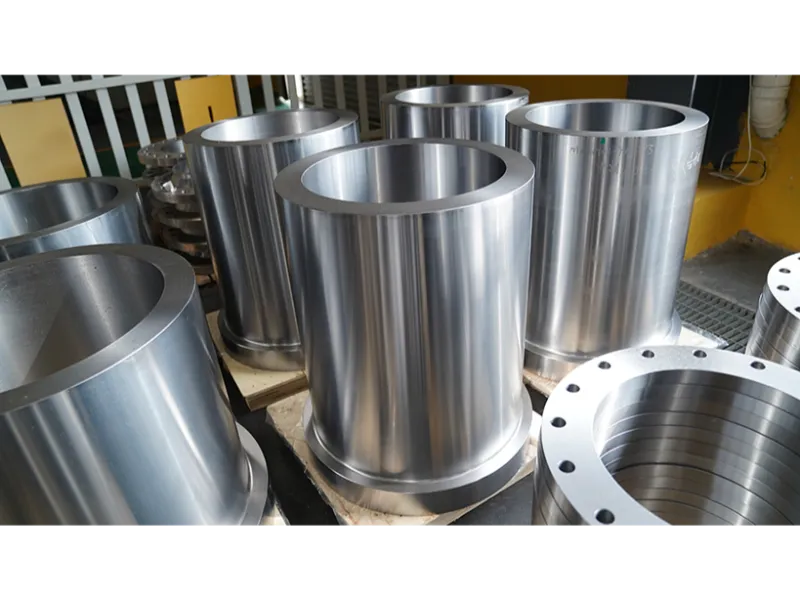
Why Is Custom Titanium Forging Important for OEM Components?
Custom titanium forging is commonly selected for OEM components that require high strength, lightweight performance, corrosion resistance, and long service life. However, producing reliable titanium forged parts requires more than selecting the right alloy. The forging method, machining process, heat treatment, and inspection requirements all affect the final component performance.
For OEM buyers sourcing custom titanium components, the supplier’s engineering capability is as important as its forging capacity. A qualified manufacturer should understand the application requirements, review part designs, select suitable manufacturing processes, and control quality throughout production.
Welleshaft is a China titanium forging manufacturer specializing in custom titanium forged components and non-standard OEM parts. We provide custom titanium forging services for global OEM customers, manufacturing titanium components based on customer drawings, 3D CAD models, technical specifications, and application requirements.
Our production capabilities cover titanium forging, CNC machining, heat treatment, and inspection, allowing OEM customers to source finished titanium components from one manufacturing partner instead of coordinating multiple suppliers.
From prototype development and small-batch production to repeat OEM manufacturing, Welleshaft works with customers throughout the process, including engineering review, manufacturing planning, production, and final inspection.
Why Choose Welleshaft for Custom Titanium Forging?
For custom titanium components, forging capability alone is not enough. OEM customers need a manufacturer that can manage material selection, production processes, machining requirements, and quality verification as one coordinated workflow.
Welleshaft focuses on non-standard titanium components manufactured according to customer requirements. Instead of supplying forged blanks only, we combine forging with CNC machining, heat treatment, inspection, and documentation to deliver finished components ready for assembly or further processing.
Our capabilities include:
| Capability | OEM Support |
| Titanium Forging | Open die and closed die forging for custom titanium components |
| Engineering Review | Drawing review, material evaluation, forging feasibility analysis |
| CNC Machining | Turning, milling, drilling, and precision machining after forging |
| Heat Treatment | Controlled heat treatment according to titanium alloy requirements |
| Quality Inspection | Dimensional inspection, material verification, mechanical testing, and NDT when required |
| Production Flexibility | Prototype, low-volume production, and repeat OEM manufacturing |
| Documentation | Material certificates, inspection reports, and production traceability records |
By combining multiple manufacturing stages within one production system, Welleshaft helps OEM customers reduce supplier coordination and maintain better control over component quality, delivery requirements, and technical specifications.
What Is Titanium Forging and Its Role in Custom Components?
Titanium forging is a metal-forming process where titanium alloy is heated and shaped under controlled pressure to achieve the required component geometry and material properties.
During forging, controlled deformation improves the internal grain structure of titanium, which can enhance mechanical consistency and fatigue performance. This makes forged titanium suitable for components exposed to repeated loading, vibration, and demanding operating environments.
For OEM applications, titanium forging is commonly selected when components require:
- High strength-to-weight ratio
- Corrosion resistance
- Fatigue resistance
- Long service life
- Reliable mechanical performance
Compared with machining a complete component from titanium billet, forging can reduce material waste and create a stronger material structure before final machining.
Compared with casting, titanium forging is often preferred for load-bearing components where mechanical properties and structural reliability are more important than complex shape formation.
For this reason, many aerospace, medical, energy, and industrial manufacturers combine titanium forging with CNC machining to produce finished precision components.
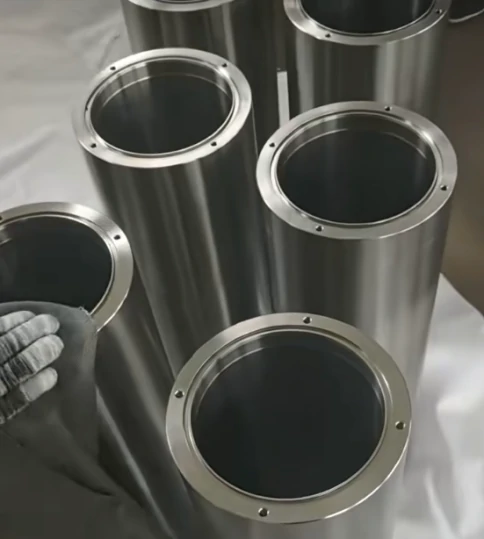
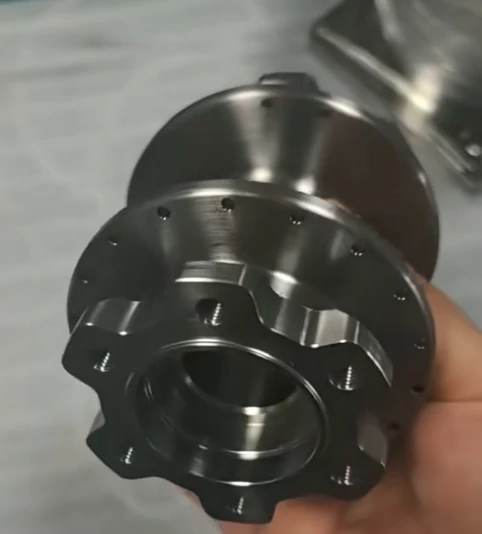
Why Choose Forged Titanium Components Over Cast or Machined Titanium Parts?
When developing titanium components, OEM engineers usually evaluate material performance, component geometry, production volume, and manufacturing cost.
The choice between forging, casting, and machining directly affects the final component’s strength, reliability, and production efficiency.
| Manufacturing Method | Suitable Applications | Key Considerations |
| Titanium Forging | High-strength structural parts, shafts, rings, discs, and load-bearing components | Requires controlled forging temperature, deformation process, and tooling |
| Titanium Casting | Complex geometries where shape complexity is the priority | Requires strict control of casting quality and internal defects |
| Machined Titanium | Prototypes, low-volume parts, and components requiring tight tolerances | Higher material removal and machining cost for large components |
For many OEM titanium parts, forging and machining are complementary processes rather than alternatives.
Forging provides the required material structure and near-net shape, while CNC machining creates final dimensions, holes, threads, sealing surfaces, and functional features according to engineering drawings.
What Titanium Alloy Forging Processes Are Available for OEM Components?
The suitable titanium forging process depends on component size, geometry, titanium grade, mechanical requirements, and production quantity.
Different forging methods provide different advantages. Selecting the correct process at the beginning of a project helps balance material performance, manufacturing cost, and production efficiency.
Open Die Titanium Forging for Large Custom Components
Open die titanium forging is commonly used for large components where strength and material integrity are critical.
During this process, titanium material is compressed between flat or simple-shaped dies, allowing controlled deformation while maintaining flexibility in component size and shape.
Typical applications include:
- Titanium shafts
- Large rings
- Discs
- Structural components
Open die forging is often suitable for prototypes, low-volume production, and heavy-duty components where mechanical performance is the priority.
Closed Die Titanium Forging for Complex Components
Closed die titanium forging uses specially designed dies to form titanium alloys into more precise near-net shapes.
Compared with open die forging, this process provides better control over component geometry and repeatability, making it suitable for complex parts requiring consistent dimensions.
Typical applications include:
- Aerospace titanium components
- Medical titanium parts
- Precision industrial components
Closed die forging is often combined with CNC machining to achieve final tolerances and functional requirements.
Hot Forging Process for Titanium Alloy Components
Hot forging titanium requires accurate temperature and process control because titanium alloys are sensitive to forging conditions.
Materials such as Ti-6Al-4V are commonly processed through hot forging because they provide excellent strength-to-weight performance and corrosion resistance.
Proper control of forging temperature, deformation rate, and cooling conditions helps achieve the required mechanical properties and component consistency.
What Titanium Grades Are Commonly Used for Forged Components?
Selecting the correct titanium alloy is an important step when developing forged components. The material grade affects not only the final mechanical properties, but also forging behavior, heat treatment requirements, corrosion resistance, and application suitability.
For OEM projects, titanium grade selection should be based on the component’s operating environment, load requirements, temperature conditions, and applicable standards.
Welleshaft works with customers to evaluate material requirements and select suitable titanium alloys for custom forged components.
| Titanium Grade | Characteristics | Typical Applications | OEM Consideration |
| Ti-6Al-4V (Grade 5) | High strength-to-weight ratio, good fatigue resistance, and excellent overall performance | Aerospace parts, medical components, industrial equipment | One of the most widely used titanium alloys for forged components |
| Grade 2 Titanium | Excellent corrosion resistance and good formability | Chemical equipment, marine applications, general industrial parts | Suitable when corrosion resistance is more important than maximum strength |
| Grade 12 Titanium | Higher strength than commercially pure titanium with improved corrosion resistance | Chemical processing equipment, heat exchangers | Selected based on service environment and mechanical requirements |
Ti-6Al-4V is widely used for titanium forging because it provides a good balance between strength, weight, and corrosion resistance. However, the final material selection should always match the component requirements rather than using a standard grade for every application.
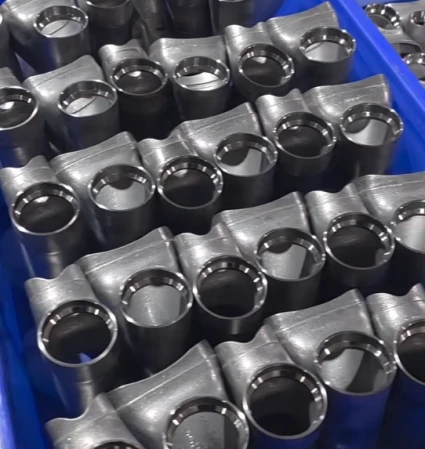
What Titanium Forged Components Can Welleshaft Manufacture?
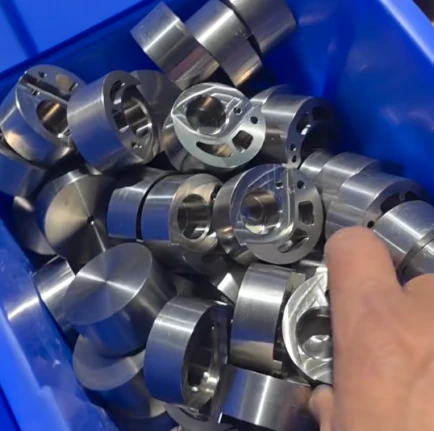
Welleshaft manufactures custom titanium forged components for OEM customers requiring non-standard parts produced according to engineering drawings, CAD models, and technical specifications.
Our focus is not standard catalog products. Each titanium component is evaluated according to material requirements, geometry, production volume, machining needs, and final application conditions.
By combining titanium forging, CNC machining, heat treatment, and inspection, Welleshaft supports customers from initial design review through finished component delivery.
Typical titanium forged components include:
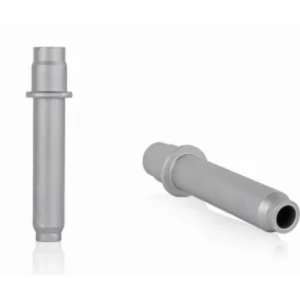
Titanium Forged Shafts
Titanium forged shafts are used in applications where weight reduction, mechanical strength, and fatigue resistance are important.
Compared with conventional machined titanium shafts, forged shafts can provide improved material consistency and better structural performance for demanding applications.
Welleshaft manufactures customized titanium shafts according to customer drawings, including required machining features, tolerances, surface requirements, and inspection specifications.
Typical applications include:
- Industrial machinery
- Transmission systems
- Engineered mechanical assemblies
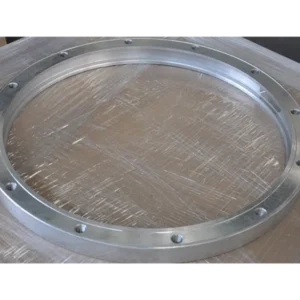
Titanium Forged Rings and Discs
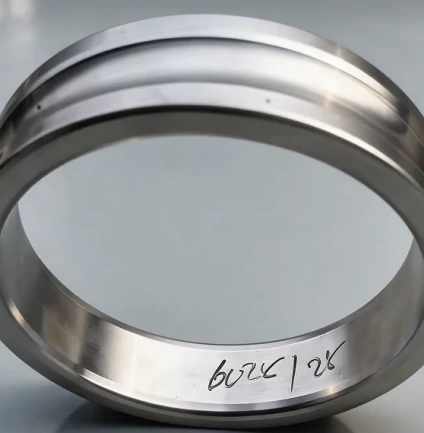
Titanium forged rings and discs are widely used for components requiring stable mechanical properties and reliable performance under continuous loading.
These parts are commonly found in aerospace structures, rotating equipment, energy systems, and other applications where material reliability is critical.
Welleshaft supports the production of titanium rings and discs with controlled forging processes, machining capability, and inspection according to customer requirements
Custom Titanium Flanges and Structural Components
Titanium flanges and structural components are selected for applications requiring corrosion resistance, lightweight performance, and long service life.
Welleshaft manufactures custom titanium forged parts including:
- Titanium flanges
- Structural brackets
- Connection components
- Engineered assemblies
Components are produced according to customer drawings and application requirements for industrial equipment, chemical processing systems, marine applications, and other demanding environments.
Titanium Forged Aerospace Components
Aerospace titanium components require strict control of material properties, dimensional accuracy, and production traceability.
Welleshaft supports aerospace-related OEM projects involving forged titanium parts and precision-machined titanium components, producing components according to customer specifications, material requirements, and inspection standards.
Titanium Forged Industrial Components
Titanium forged components are used in industrial applications where corrosion resistance, strength, and durability are required.
Welleshaft manufactures customized titanium parts for industrial equipment, energy systems, chemical processing applications, and engineered machinery.
From prototype development to repeat OEM production, Welleshaft provides titanium forging solutions based on customer drawings and technical requirements.
How Are Custom Titanium Forged Components Manufactured?
Manufacturing custom titanium forged components involves more than the forging process itself. The final component quality depends on the coordination between material selection, forging, CNC machining, heat treatment, and inspection.
Welleshaft manages the complete manufacturing process from engineering review to final delivery, helping customers develop reliable titanium components according to drawings, specifications, and application requirements.
Drawing Review and Engineering Evaluation
Before production, Welleshaft reviews:
- 2D drawings
- 3D CAD models
- Titanium grade requirements
- Critical dimensions and tolerances
- Application requirements
This evaluation helps identify potential manufacturing issues related to forging design, machining allowance, material selection, and inspection requirements before production begins.
Titanium Alloy and Forging Process Selection
The suitable titanium grade and forging method are selected according to:
- Component geometry
- Mechanical requirements
- Operating environment
- Production quantity
- Applicable standards
Welleshaft supports open die and closed die titanium forging processes for different OEM component requirements, including shafts, rings, discs, flanges, and structural parts.
CNC Machining After Forging
After forging, CNC machining is performed to achieve final dimensions and functional features required by engineering drawings.
Machining capabilities include:
- CNC turning
- CNC milling
- Drilling
- Thread machining
- Precision finishing
Combining forging and machining within one production process allows customers to obtain finished titanium components without coordinating multiple suppliers.
Heat Treatment and Quality Inspection
Heat treatment and inspection are critical steps in the manufacturing of custom titanium forged components. After forging and machining, the appropriate heat treatment process helps achieve the required mechanical properties, dimensional stability, and long-term performance of titanium alloy parts.
Because different titanium grades and applications require different material properties, heat treatment parameters must be controlled according to alloy specifications, customer requirements, and applicable standards.
Welleshaft supports quality verification throughout the manufacturing process, including:
- Dimensional inspection
- Material verification
- Mechanical testing
- Ultrasonic testing when required
We can provide material certificates, inspection reports, and traceability records to support OEM quality approval and supplier qualification requirements.
By combining titanium forging, CNC machining, heat treatment, and inspection within one production workflow, Welleshaft helps customers obtain finished titanium components with consistent quality and reliable performance.
Send Your Drawing or Contact Our Team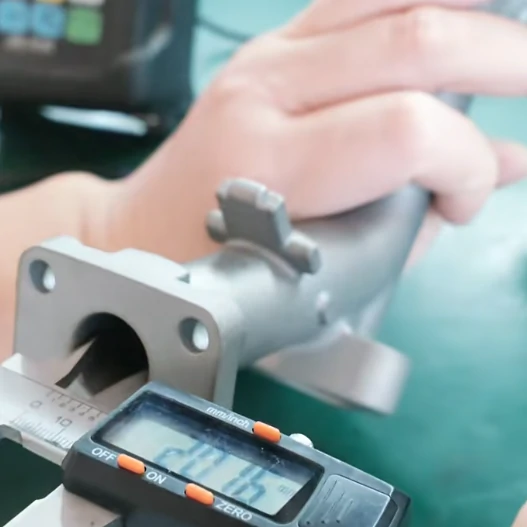
What Information Do You Need for a Titanium Forging RFQ?
To evaluate a custom titanium forging project, Welleshaft typically reviews the following information:
| RFQ Information | Examples |
| Part Drawing | 2D drawing, 3D CAD model, or existing sample |
| Titanium Grade | Ti-6Al-4V (Grade 5), Grade 2, Grade 12, or specified alloy |
| Part Dimensions | Overall dimensions, critical tolerances, and key features |
| Production Quantity | Prototype, small batch, annual volume, or repeat production |
| Forging Requirement | Open die forging, closed die forging, or near-net-shape requirements |
| Heat Treatment | Required condition or customer specifications |
| Machining Requirements | Finished dimensions, tolerances, threads, holes, and functional features |
| Inspection Requirements | Dimensional inspection, mechanical testing, UT/NDT, or customer-specific requirements |
| Documentation | Material certificates, inspection reports, and traceability records |
| Applicable Standards | ASTM, AMS, or customer-specific specifications |
If some technical information is not finalized, customers can still provide available drawings, CAD files, or samples. Welleshaft can review the requirements and recommend a suitable manufacturing approach before production.
What CNC Machining Services Are Available for Titanium Forged Parts?
Titanium forging is usually combined with precision CNC machining to produce finished OEM components. Forging provides the required material structure and near-net shape, while machining creates the final dimensions, tolerances, and functional features required by engineering drawings.
For many titanium components, the machining stage determines the final dimensional accuracy, assembly performance, and surface requirements.
Welleshaft provides custom CNC machining services for forged titanium parts, including:
- CNC turning
- CNC milling
- Drilling
- Precision finishing
- Complex machining operations
Our machining capabilities allow forged titanium components to achieve the required:
- Dimensional tolerances
- Thread features
- Holes and slots
- Sealing surfaces
- Assembly interfaces
By combining titanium forging and CNC machining within one production workflow, Welleshaft supports OEM customers who require finished titanium components instead of unfinished forged blanks. This integrated approach helps reduce supplier coordination and provides better control over component quality, machining accuracy, and final production requirements.
What Quality Inspection Is Required for Titanium Forged Components?
Quality verification is a critical part of titanium component manufacturing, especially for aerospace, medical, energy, and industrial applications where material performance and dimensional accuracy are essential.
For custom titanium forged components, inspection requirements are usually defined according to the component application, material grade, customer specifications, and applicable standards.
Welleshaft supports inspection processes including:
| Inspection Item | Purpose |
| Material Certificate Review | Verify titanium grade, material source, and chemical composition requirements |
| Dimensional Inspection | Confirm part dimensions, tolerances, and critical features meet drawing requirements |
| Mechanical Testing | Verify required mechanical properties after forging and heat treatment |
| Ultrasonic Testing (UT) | Check internal material integrity when required |
| Final Inspection Report | Provide production quality records according to customer requirements |
For OEM projects, Welleshaft can provide material documentation, inspection reports, and traceability records to support customer quality approval processes.
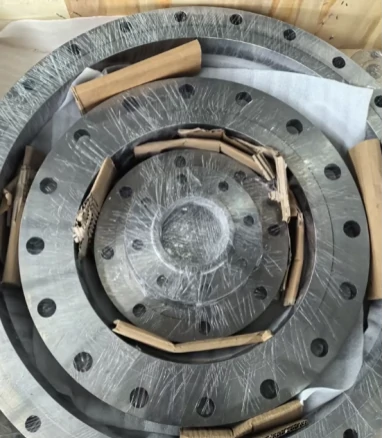
What Industries Use Custom Titanium Forged Components?
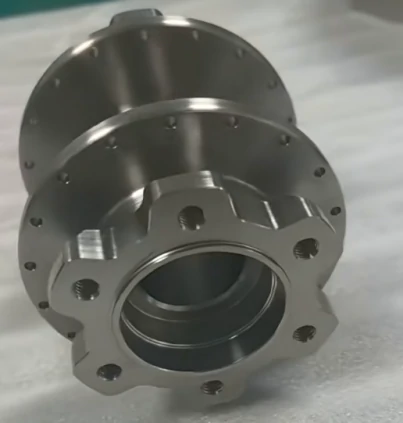
Titanium forged components are selected for applications where high strength, lightweight performance, corrosion resistance, and long service life are required.
Welleshaft manufactures custom titanium components for OEM customers in industries including aerospace, medical, energy, and industrial equipment.
Aerospace Titanium Components
Aerospace applications require materials that can withstand repeated loading, vibration, and demanding operating conditions while maintaining low weight.
Forged titanium components are commonly used for:
- Structural parts
- Brackets
- Engine-related components
- Precision fittings
Welleshaft supports aerospace-related titanium component projects involving forged and machined parts manufactured according to customer specifications and inspection requirements.
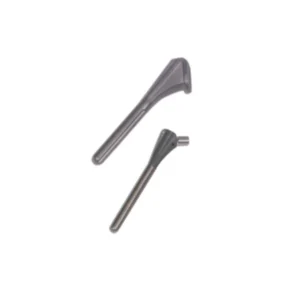
Medical Titanium Components
Titanium is widely selected for medical applications because of its corrosion resistance, biocompatibility, and mechanical performance.
Medical titanium components may require strict dimensional control, surface requirements, and material verification.
Welleshaft supports customized medical titanium parts produced according to customer drawings and technical requirements.
Energy and Industrial Titanium Components
In energy and industrial applications, titanium components are often selected for environments involving corrosion, chemicals, high loads, or long service requirements.
Typical applications include:
- Chemical processing equipment
- Valves and pumps
- Rotating equipment
- Industrial machinery
Welleshaft manufactures custom titanium forged parts for industrial applications where material performance and manufacturing consistency are required.
Why Is Titanium Difficult to Forge?
Titanium alloys provide excellent strength-to-weight performance and corrosion resistance, but they require stricter process control than many common metals such as steel and aluminum.
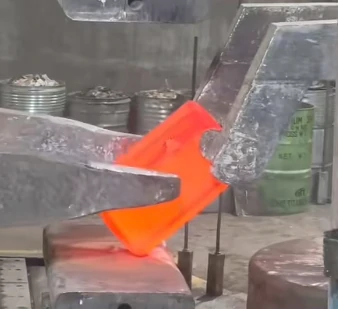
During titanium forging, temperature control is critical because forging conditions directly affect material flow, grain structure, and mechanical properties. Titanium also reacts easily with oxygen at elevated temperatures, requiring careful control of heating conditions and surface protection.
For this reason, producing reliable forged titanium components requires experience in forging parameters, tooling, heat treatment, machining, and inspection.
A capable titanium forging manufacturer must control these factors throughout production to maintain consistent quality and meet customer specifications.
How To Choose a Reliable Titanium Forging Manufacturer?
For OEM buyers, selecting a titanium forging manufacturer is not only about finding a supplier that can produce forged parts. The manufacturer’s engineering capability, process control, and quality management directly influence the performance, consistency, and delivery of the final components.
A suitable supplier should be able to understand the complete manufacturing requirements, including material selection, forging method, machining requirements, heat treatment, and inspection standards.
When evaluating a titanium forging manufacturer, buyers should first check whether the supplier can manage the complete production process instead of providing forged blanks only. A manufacturer with forging, CNC machining, heat treatment, and inspection capabilities can reduce communication between multiple suppliers and maintain better control over component quality.
Engineering support is another important factor for custom titanium components. Before production, the supplier should be able to review customer drawings, evaluate forging feasibility, recommend suitable titanium alloys, and identify potential manufacturing challenges.
For example, component geometry, machining allowance, forging direction, material condition, and required tolerances can all affect the final manufacturing process. Early engineering involvement helps avoid unnecessary modifications after production begins.
Quality control is also critical when sourcing custom titanium forged components. Depending on the application, OEM customers may require material certificates, dimensional inspection reports, mechanical testing records, ultrasonic testing, and full production traceability.
Production flexibility should also be considered, especially for custom projects. A qualified China titanium forging supplier should be able to support prototype development, small-batch manufacturing, and repeat production while maintaining consistent process control.
Welleshaft works with global OEM customers requiring customized titanium components. By combining titanium forging, CNC machining, heat treatment, and inspection capabilities, Welleshaft supports projects from initial drawing review to finished component delivery.
Why Choose a China Titanium Forging Supplier for OEM Components?
For overseas OEM buyers, China has become an important sourcing location for titanium components due to its manufacturing capabilities, engineering resources, and supply chain advantages.
However, choosing a China titanium forging supplier should not be based only on production cost. Titanium components require strict control of material quality, forging parameters, machining accuracy, and inspection processes.
A qualified supplier should be able to provide:
- Titanium alloy material control and traceability
- Suitable forging process selection based on component requirements
- CNC machining capability for final dimensions and features
- Heat treatment according to material specifications
- Inspection reports and quality documentation
For custom OEM projects, working with a supplier that can manage multiple manufacturing stages under one workflow can simplify communication and improve production consistency.
Welleshaft provides custom titanium forging and machining services for global manufacturers requiring non-standard titanium components. From engineering review and process planning to final inspection, Welleshaft works with customers to manufacture titanium parts according to drawings, specifications, and application requirements.
Request a Quote for Custom Titanium Forged ComponentsFrequently Asked Questions About Titanium Forging
Is forged titanium better than cast titanium?
In many high-performance applications, forged titanium provides better mechanical properties than cast titanium because the forging process improves grain flow, structural consistency, and fatigue resistance.
Compared with cast titanium, forged components generally have fewer internal defects and better reliability under repeated loading, making them suitable for safety-critical applications such as aerospace and medical components.
What titanium alloy is most commonly used for forging?
Ti-6Al-4V (Grade 5 titanium) is one of the most widely used materials for titanium forging due to its excellent balance of strength, lightweight performance, corrosion resistance, and processing capability.
Ti-6Al-4V forging is commonly used for aerospace components, medical parts, and industrial applications where high mechanical performance and long service life are required.
Can Welleshaft manufacture custom titanium forged parts?
Yes. Welleshaft manufactures custom titanium forged parts according to customer drawings, CAD models, and technical specifications.
Our production process covers titanium forging, CNC machining, heat treatment, and inspection for non-standard OEM components.
Customers can submit drawings or samples for manufacturing evaluation before production.
Welleshaft specializes in manufacturing custom forged and machined titanium components for global OEM customers. With integrated capabilities in forging, CNC machining, heat treatment, and quality inspection, we support complex component projects from engineering review to final production. Our focus is delivering reliable non-standard manufacturing solutions for industries requiring high-performance parts and consistent quality.

 English
 Português do Brasil
 Deutsch (Österreich)
 Deutsch (Schweiz)
 English (UK)
 English (Australia)
 English (New Zealand)
 Deutsch
 Français du Canada
 Français
 Français de Belgique
 Italiano
 English (South Africa)
 Português
 Español
 Español de México
 Español de Perú
 Español de Colombia
 العربية
 日本語
 Русский
 한국어
 Tiếng Việt
 ไทย
Reviews
There are no reviews yet.