
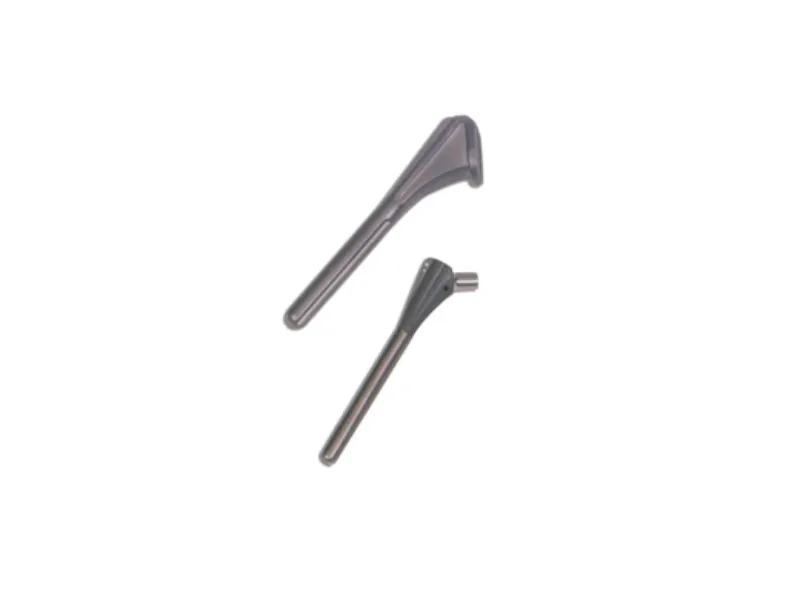
What Is Stainless Steel Forging?
Stainless steel is an iron alloy containing chromium and other elements, which gives it excellent corrosion resistance compared to regular steel or iron. It retains key steel properties while offering natural rust protection, making it a cost-effective choice among rust-resistant alloys.
The mechanical properties, heat resistance, and durability of stainless steel are determined by the ratio of iron to other alloying elements. Proper understanding of this composition is essential to ensure optimal performance of stainless steel products.
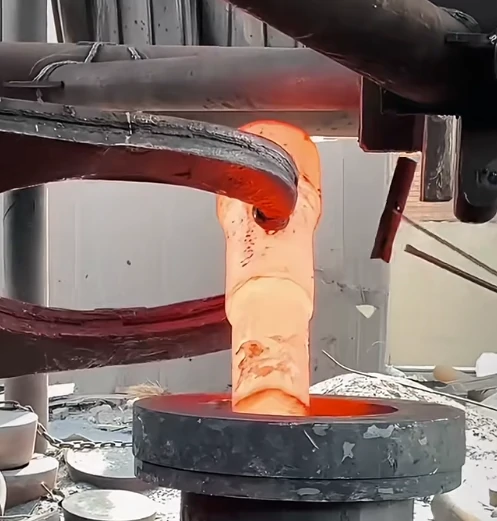
Stainless Steel Forging is a metalworking process in which stainless steel billets or bars are heated and shaped using compressive dies or hammers. This method produces components with a refined grain structure and superior mechanical performance, outperforming parts made by casting or machining from stock.
Why Should You Consider Stainless Steel Forging ?
Stainless steel is widely chosen for forging due to its outstanding corrosion resistance and heat resistance, making it a premium material for demanding applications.
- Enhanced Material Properties
Stainless Steel Forging, regardless of the grade, strengthens its inherent qualities. The process increases strengthand corrosion resistance, enabling components to endure harsher, more aggressive, and extreme environments. - Continuous Grain Flow
Unlike casting or machining, Stainless Steel Forgingproduces a continuous grain flow that follows the part’s geometry. This alignment ensures that strength is concentrated where it is most needed, improving performance under stress. - Improved Strength-to-Weight Ratio
The forging processenhances the mechanical properties of stainless steel, allowing for parts with higher strength-to-weight ratios, ultimately improving durability and functionality.
How Feasible Is Stainless Steel Forging?
Stainless steel, valued for its chromium content that provides excellent corrosion resistance, is suitable for forging, but its unique properties require special attention:
- Higher Forging Temperatures
Compared to carbon steels, stainless steelgenerally needs to reach elevated temperatures to become sufficiently malleable for effective Stainless Steel Forging. - Controlled Forging Environment
To minimize oxidation during forging, it is often necessary to work within a controlled atmosphere, such as an inert or reducing environment, or carefully manage the heating process.
By understanding these considerations, manufacturers can ensure successful Stainless Steel Forging while maintaining material integrity and performance.
What Are the Common Stainless Steel Grades for Forging?
300 Series
The 300 series is among the most commonly used stainless steel grades for forging. These are austenitic chromium-nickel alloys, known for their excellent corrosion resistance and toughness.
- Typ 304 Stainless Steel
Type 304is the most widely used steel grade for forging, offering high toughness at room temperature. It requires higher forging pressures than carbon steels but performs well in many applications, including shafts, valve bodies, valve trims, and food industry equipment. - Type 316 Stainless Steel
Type 316provides superior resistance to chloride corrosion, making it ideal for surgical instruments, cooking equipment, marine applications, and pharmaceutical equipment. 316L, the extra-low carbon variant, enhances weldability and allows for better electro-polishing.
Due to their low carbon content, 300 series stainless steels cannot be hardened by heat treatment, but mechanical properties improve with cold working during forming or forging. These steels are non-magnetic.
400 Series
The 400 series stainless steel is commonly used where strength and corrosion resistance need to be balanced. It includes martensitic and ferritic steels:
- Martensitic Stainless Steel
Martensitic grades such as 410, 416, and 431 respond to heat treatment, offering good hardness and strength. Grade 416has excellent machinability but lower corrosion resistance, while Grade 431 provides superior corrosion resistance but is more difficult to machine. These steels are magnetic and suitable for hot or cold forging. - Ferritic Stainless Steel
Ferritic grades, like Grade 430, are iron-chromium alloys. They are magnetic, cannot be hardened by heat treatment, and offer corrosion resistance between martensitic and austenitic steels. Ferritic steels forge reasonably well but may be harder to machine.
Austenitic-Ferritic (Duplex) Series
Duplex stainless steels, also known as Austenitic-Ferritic series, combine approximately 50% austenite and 50% ferrite.
- Duplex Grade 2205
This grade delivers a strong combination of high strengthand good corrosion resistance at a cost-effective price. Duplex steels are suitable for applications requiring both toughness and durability.
Other Stainless Steel Grades
Other commonly forged stainless steel grades include:
- Precipitation Hardening (PH) Stainless Steel– Strong, tough, and resistant to fatigue.
- 200 and 500 Series Stainless Steels– Used depending on required mechanical properties and forging processes.
Summary of Key Grades and Applications
| Grade | Series | Characteristics | Common Applications |
| 304(L) | 300 | Austenitic, corrosion-resistant, good toughness | Shafts, valve bodies, valve trims, food equipment |
| 316(L) | 300 | Austenitic, chloride corrosion-resistant, marine grade | Surgical instruments, marine applications, pharmaceutical equipment, textile machinery |
| 410 | 400 | Martensitic, heat-treatable, magnetic | Fasteners, structural components |
| 416 | 400 | Martensitic, excellent machinability, magnetic | Precision machined parts |
| 431 | 400 | Martensitic, high corrosion resistance, magnetic | Components requiring corrosion resistance |
| 430 | 400 | Ferritic, magnetic, moderate corrosion resistance | General-purpose forged parts |
| 2205 | Duplex | Austenitic-Ferritic, strong, corrosion-resistant | Structural and chemical applications |
Which Key Materials in Stainless Steel Forging parts?
Material Preparation
Before forging, raw stainless steel must be properly prepared, as the material quality directly impacts the final product. High-quality raw materials contribute to:
- Improved corrosion resistance
- Enhanced tensile strength
- Greater stability
- Higher stress resistance
Preparation involves cleaning the raw stainless steel to remove impurities and, if using plate material, rolling the steel ingots to the required profile. Proper attention to strength, toughness, and ductility ensures the material can withstand the high compressive forces applied during the forging process.
How Does the Stainless Steel Forging Process Work?
The Stainless Steel Forging process involves several critical steps to transform raw material into high-performance components with refined grain structure and superior mechanical properties.
- Material selection– Choose the suitable stainless steel grade based on the service environment, required mechanical properties, and post-forging machinability.
- Billet preparation– Cut the stainless steel billet to the appropriate size and weight, accounting for trimming losses and flash.
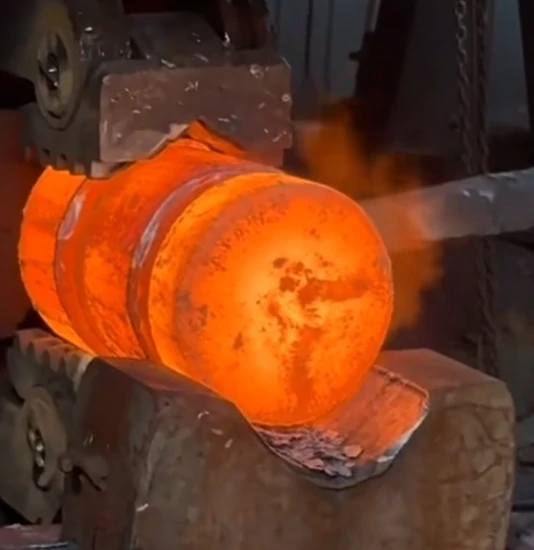
- Heating– Heat the billet to the correct forging temperature. For stainless steel, this typically ranges from 1,700°F to 2,300°F (927°C–1,260°C), depending on the grade.
- Forging– Apply compressive forces using dies or hammers to shape the heated billet. This can be done through:
- Impression-die (closed-die) forging: Produces near-net shapes by forcing the billet to fill the die cavity.
- Open-die forging: Suitable for larger or simpler geometries.
- Trimming– Remove excess material (flash) squeezed out during forging using trim dies.
- Inspection– Perform dimensional checks, non-destructive testing (NDT), and verify mechanical properties to ensure compliance with standards.
- CNC machining– Finish the forged component to its final dimensions and surface quality using CNC turning, milling, or Swiss lathe operations.
This Stainless Steel Forging process ensures that components achieve the desired shape, enhanced strength, and high durability, outperforming parts made by casting or simple machining from stock.
What Is the Role of Heat Treatment in Stainless Steel Forging component?
Heat treatment plays a critical role in the Stainless Steel Forgingprocess, as it directly affects the mechanical properties and overall performance of forged components. Different heat treatment methods can influence:
- Hardness and softness
- Strength and ductility
- Toughness
- Corrosion resistance
The process typically involves controlled heating and, in some cases, melting of the stainless steel or alloy in an electric furnace, preparing the material for subsequent shaping and mechanical refinement.
Common Heat Treatment Methods in Forging
Several techniques are applied during the Stainless Steel Forging process, including:
- Low-pressure carburizing
- Gas carburizing
- Carbon nitriding
- Recrystallization annealing(mainly for ferritic stainless steel)
- Quenching and tempering
- Hot and cold rolling
Achieving Desired Mechanical Properties
Heat treatment is essential for tailoring the mechanical properties of forged stainless steel. For example:
- Annealinguses controlled heating and cooling cycles to adjust hardness and strength. Higher annealing temperatures typically reduce hardness while improving ductility.
- Quenchingtransforms the molecular structure, producing a martensitic microstructure that enhances hardness, wear resistance, and tensile strength.
Preventing Carbide Precipitation
Controlling carbide precipitation during heat treatment is vital because excessive carbide formation can compromise corrosion resistance and toughness. Techniques like annealing and quenching effectively minimize carbide formation, ensuring that forged stainless steel components maintain their intended mechanical properties and high quality.
What Are the Finishing Techniques for Forged Stainless Steel?
After the forging process, forged stainless steel undergoes various finishing techniques to achieve the desired surface quality and mechanical performance. Common methods include:
- Acid or sand etching
- Sand blasting
- Belt grinding
- Belt buffing
- Belt polishing
Each technique delivers distinct results depending on the intended application, affecting both aesthetics and functional performance.
Impact of Surface Finishes
The type of surface finish significantly influences the performance of forged stainless steel. Smooth finishes achieved through grinding or polishing can:
- Improve fatigue strength
- Reduce stress concentration points
- Enhance corrosion resistance
- Increase overall reliability
Polishing, for example, minimizes microcracks and pores that are prone to pitting corrosion, thereby improving the rust resistance of forged stainless steel components.
Post-Forging Processes
Following finishing, additional post-forging processes further refine the material’s properties. These processes enhance the grain flow, leading to improved mechanical performance, strength, and corrosion resistance.
Machining plays a critical role in post-forging, where methods such as milling use hydraulic and mechanical machines to achieve precise final dimensions and surface quality. Proper post-forging finishing ensures that the Stainless Steel Forging meet both structural and functional requirements for their intended applications.
How Can You Ensure Quality in Forged Stainless Steel Products?
Quality control is a crucial part of the Stainless Steel Forging process, ensuring that each batch meets the required specifications for strength, mechanical properties, and corrosion resistance. Rigorous inspection and testing are essential to produce forged stainless steel products of superior quality.
Inspection and Testing
To maintain high standards, forged stainless steel undergoes multiple inspection and testing procedures, including:
- Ultrasonic testing (UT)
- Magnetic particle testing (MT)
- Metallurgical evaluation
- Hardness testing
- Non-destructive testing (NDT)such as visual inspection and liquid penetrant testing
These methods ensure accurate measurement of production parameters, verify elemental composition, and confirm alloy percentages, guaranteeing that the material meets industry specifications.
Certifications and Standards
Compliance with recognized standards and certifications is essential. Key standards for Stainless Steel Forging include:
- ASTM A182– Forged stainless steel and alloy components
- ASTM A788/A788M– Categorization of forging processes by temperature
- ASME B16.11– Stainless steel fittings and pressure components
- ABS certification– Ensures compliance for marine and industrial applications
Adherence to these standards confirms that forged stainless steel components achieve consistent mechanical performance and corrosion resistance.
Benefits of Effective Quality Control
- Ensures Customer Satisfaction– Products consistently meeting specifications increase trust and promote repeat business.
- Reduces Defects– In-process, material, and final inspections help identify issues early, preventing costly recalls.
- Improves Product Performance– Accurate adherence to specifications ensures components function as intended, which is critical in industries like aerospace, medical, and marine applications.
- Ensures Regulatory Compliance– Proper quality management ensures conformity with industry regulations, reducing legal and financial risks.
By implementing thorough quality control procedures, suppliers of forged stainless steel can guarantee product reliability, enhance performance, and maintain compliance, building a strong reputation for producing high-quality components.
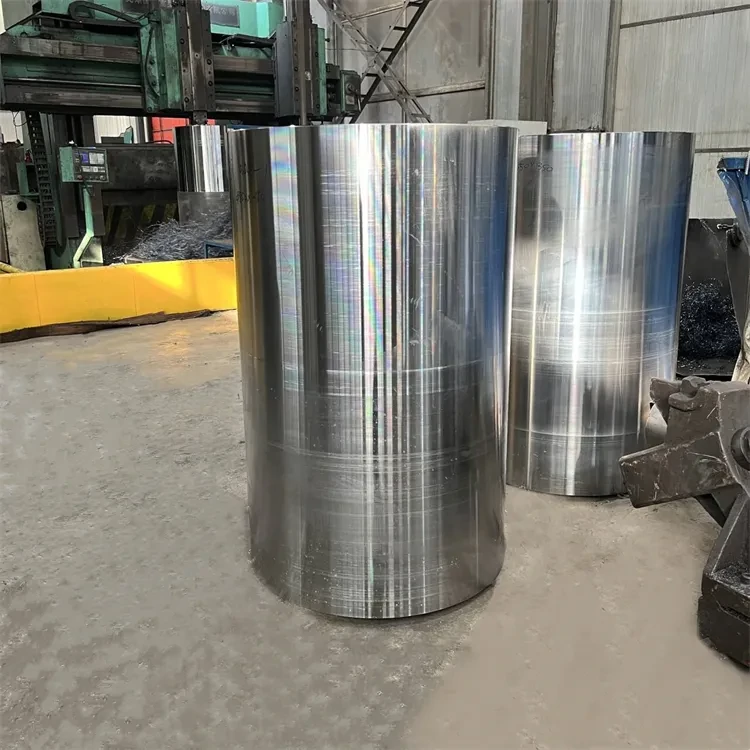
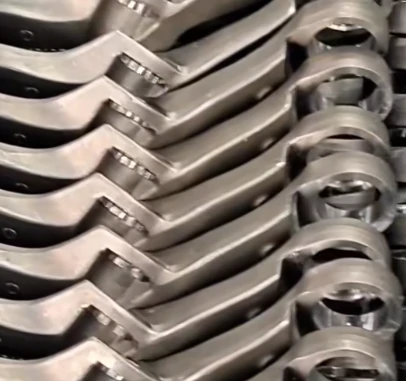
What Are the Advantages of Forged Stainless Steels components?
Forged stainless steel offers significant mechanical, structural, and practical benefits, making it ideal for high-performance components across demanding industries.
Mechanical and Structural Benefits
- Superior Strength– Refinement of the grain structure and elimination of internal voids result in higher tensile strength, toughness, and fatigue resistance.
- Enhanced Corrosion Resistance– Reduced porosity and inclusions improve durability in harsh environments.
- Optimized Grain Flow– Grain alignment follows the part’s contour, boosting impact toughness and crack resistance under cyclic loads.
- Reliable Mechanical Performance– Overall material properties surpass those of cast or machined parts, ensuring consistent component performance.
Economic and Production Advantages
- Extended Service Life– Stronger, denser components reduce failure rates, lowering maintenance and replacement costs.
- Near-Net-Shape Manufacturing– Closed-die forging minimizes material waste and reduces machining needs.
- Consistent Quality in Volume Production– Once dies are qualified, large batches achieve uniform performance.
Additional Functional Benefits
- Protective Surface Layer– Forging enhances corrosion resistance and prevents stress cracking, pitting, and deformation.
- High-Temperature Performance– Components maintain strength and stability in applications like furnaces and heat exchangers.
- Aesthetic Versatility– Surfaces can be polished or left matte for functional or decorative purposes.
Innovation and Future Trends
Ongoing advances in materials and forging techniques are producing stronger, more efficient, and environmentally conscious forged stainless steel components. Modern alloys, such as 13-8PH stainless steel, demonstrate improved strength, corrosion resistance, and reliability.
- Enhanced Performance– New alloys and forging methods result in more durable and resilient components.
- Sustainable Production– Efficient processes reduce waste and improve environmental impact.
- Expanded Applications– Research in alloy chemistry broadens use from precision engineering to industrial equipment.
The future of forged stainless steel emphasizes stronger, more reliable products with improved efficiency and sustainability, reflecting continuous technological progress.
What Are the Economic Benefits of Using Stainless Steel Forging ?
Stainless Steel Forging is a metal forming process that shapes stainless steel into precise components through the application of heat and pressure. Thanks to its corrosion resistance, strength, and durability, forged stainless steel finds extensive use across industries such as automotive, medical, and aerospace. Beyond performance advantages, Forging Stainless Steel also offers significant economic benefits.
Reduced Manufacturing Costs
Compared to other metal forming methods like casting, Stainless Steel Forging requires less material, leading to lower production costs. The process minimizes scrap and waste, and its precision reduces the need for extensive post-forging machining, which saves both time and money.
Improved Product Quality
The stable grain structure of forged stainless steel ensures consistent mechanical properties across components. This precision maintains tight dimensional tolerances, reducing the likelihood of defects and costly product recalls, and resulting in higher overall product quality.
Greater Durability
Forged stainless steel is highly durable and resistant to wear, cracking, or failure. This extended lifespan lowers maintenance and replacement costs for both manufacturers and end-users, enhancing the cost-effectiveness of the product over its lifetime.
Higher Strength-to-Weight Ratio
Stainless Steel Forging offer a superior strength-to-weight ratio compared to other metal forming techniques. This allows for lighter yet stronger components, improving fuel efficiency and overall performance in industries such as automotive and aerospace, while reducing energy consumption during operation.
What Are the Applications of Forged Stainless Steel products?
The versatility of forged stainless steel makes it suitable for a wide array of industries, thanks to its combination of strength, corrosion resistance, and durability.
Industrial and Energy Applications
- Power and energy plants– Components for solar-energy plants and conventional power generation.
- Offshore and marine operations– Shafts, propellers, and fittings for harsh marine environments.
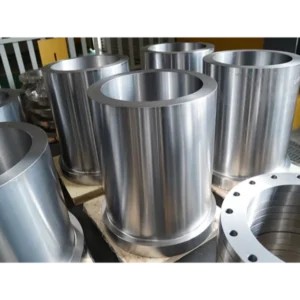
- Water and fluid handling– Parts for pumps, valves, and water meters.
Automotive and Transportation
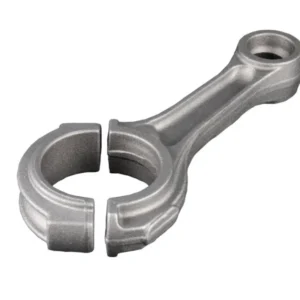
- Automotive components– Crankshafts, axles, bearings, exhaust systems, and brake parts.
- Rail and off-highway equipment– Forged parts that withstand heavy loads and outdoor conditions.
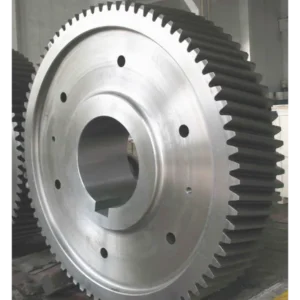
- Gearbox and mechanical parts– Durable stainless steel components for high-performance machinery.
Luft- und Raumfahrt und Verteidigung
- Aircraft components– Landing gear, frames, and other critical structural elements.
- Defense applications– Gun components, missile guidance systems, and other high-strength equipment.
Medical, Food, and Hygiene-Critical Uses
- Surgical instruments– Forged austenitic stainless steel maintains sterility and corrosion resistance.
- Food and beverage equipment– Resistant to repeated cleaning and chemical exposure, ensuring hygiene.
- Chemical processing– Components for dyeing or other corrosive processes where high durability is required.
Recreational and Hand Tools
- Sports and recreational equipment– Golf clubs, garden tools, and other durable items.
- Hand tools– Stronger and longer-lasting than cast alternatives.
Additional Marine Applications
- Fasteners such as nuts, bolts, and screws benefit from Stainless Steel Forging, offering excellent corrosion resistancein seawater and marine equipment.
Overall, the applications of forged stainless steel span multiple industries where strength, corrosion resistance, and reliability are essential, from automotive and aerospace to medical and marine sectors.
How Does Custom Stainless Steel Forging Work?
In industrial manufacturing, custom Stainless Steel Forging is widely used to achieve superior strength, corrosion resistance, and heat resistance.
- Austenitic Stainless Steel (300 Series)
The 300 seriesis the most commonly forged stainless steel alloy for sanitary and hygiene applications, thanks to its high corrosion resistance and ease of cleaning. - Martensitic (400 Series) and Duplex Stainless Steel
These forged stainless steelsoffer excellent stress corrosion cracking and pitting resistance, making them ideal for high-strength applications where durability is critical. - Bearbeitbarkeit
All grades of forged stainless steelprovide good machining capabilities, allowing components to be finished to precise specifications with minimal post-forging effort.
How Does Forged Stainless Steel Compare to Cast Stainless Steel?
Forged stainless steel exhibits higher strength, increased density, and superior fatigue resistance compared to cast stainless steel. In contrast, cast parts excel in achieving complex geometries that may be difficult or impossible to produce with forging.
Side-by-Side Performance Comparison
| Eigentum | Forged Stainless Steel | Cast Stainless Steel |
| Zugfestigkeit | Higher (grain structure aligned along the load) | Lower (random grain structure) |
| Fatigue Resistance | Excellent | Moderate |
| Porosity | Minimal to none | Common without HIP treatment |
| Korrosionsbeständigkeit | Superior (no inclusions or voids) | Good, but can be affected by porosity |
| Geometric Complexity | Limited by die capabilities | Highly complex shapes possible |
| Tooling Cost | Higher upfront (dies required) | Lower upfront (molds suffice) |
| Best For | High-stress, safety-critical components | Complex, lower-stress parts |
Forging improves both strength and ductility through compressive deformation, while casting may introduce internal voids or defects due to random solidification, potentially reducing performance under cyclic or impact loading.
When to Choose Forging Over Casting
Opt for forged stainless steel when:
- The component will endure cyclic or impact loads
- Corrosion resistancemust be uniform throughout the part
- The application is safety-critical(e.g., medical, pressure vessels)
- Production volume justifies the cost of dies
Opt for cast stainless steel when:
- The design requires highly intricate geometrythat is impractical to forge
- Production volumes are too low to offset forging tooling costs
In practice, many components combine both approaches: starting with a forged stainless steel blank that is then CNC-machined to achieve final tolerances, blending the mechanical advantages of forging with the geometric flexibility of casting.
What Are the Common Challenges in Stainless Steel Forging for 2026?
Stainless Steel Forging presents unique difficulties compared to carbon steel, including narrow working temperature ranges, accelerated die wear, sensitization risk, and stringent post-forging heat treatment requirements.
Material and Process Challenges
Stainless Steel Forging is more demanding than working with low-carbon steel. Austenitic grades, such as 304 and 316, exhibit high work-hardening rates, meaning the metal resists deformation and may crack if processed outside its optimal temperature window. Successful Stainless Steel Forging requires near-white heat and significantly higher force to shape the metal compared to mild steel.
Key Challenges in Schmieden von rostfreiem Stahl
- Sensitization
Heating austenitic stainless steels between 800°F–1,500°F (427°C–816°C) can cause chromium carbide precipitationat grain boundaries, which reduces corrosion resistance. Proper solution annealing after forging is crucial to restore material performance. - Die Wear
The high strength and abrasive nature of stainless steelaccelerate die wear more than in carbon steel forging. Selecting suitable die materials and applying effective lubrication are essential to prolong die life. - Toxic Byproducts
Grinding and finishing Stainless Steel Forginggenerates chromium oxide particles, requiring proper ventilation, PPE, and responsible waste handling according to safety regulations. - Scale Formation
Stainless steeldevelops a tenacious oxide scale during heating. Removing this scale before die contact is necessary to prevent surface defects. - Thermal Conductivity
Due to low thermal conductivity, large billets may heat unevenly. Careful furnace management is needed to avoid hot and cold spotsthat could compromise forging quality.
What Are the Best Practices for Stainless Steel Forging in 2026?
Successful Stainless Steel Forging in 2026 depends on precise temperature control, grade-specific die design, post-forging heat treatment, and CNC machining for achieving accurate final dimensions.
Process Optimization Guidelines
Effective temperature management is the most critical factor in Stainless Steel Forging. Maintaining consistent heat throughout the billet ensures uniform mechanical properties and prevents common defects.
Key Best Practices
- Grade Selection
Select the stainless steel gradebased on the service environment. For instance, 316L is suitable for welded assemblies due to its low carbon content, while 17-4 PH is preferred for high-strength applications. - Controlled Heating
Utilize calibrated induction or gas furnaces. Monitor billet temperature with contact pyrometersor thermal cameras to maintain proper heat before each forging stroke. - Die Design for Stainless Steel
Use larger draft angles and generous radii compared to carbon steel dies. This reduces die stressand minimizes the risk of cold shuts (surface folding defects). - Lubrication
Apply glass-based lubricants for temperatures above 2,000°F and graphite-in-water emulsions for lower forging temperatures to ensure smooth metal flow.Post-Forging Inspection
Perform dye penetrant testing (DPT)or fluorescent penetrant inspection (FPI) to detect surface-breaking defects before CNC machining. - CNC Finish Machining
Most Stainless Steel Forgingrequire precision CNC machining to meet final tolerances. Common methods include Swiss lathe and CNC turning, especially for small-diameter components.
Quality Standards and Certifications
High-quality forged stainless steel components are guided by internationally recognized standards:
- ISO 9001:2015– General quality management system for process control and traceability.
- ISO 13485:2016– Medical device standard, required for surgical instruments and implants.
- IATF 16949– Automotive quality standard ensuring zero-defect processes and full supply chain traceability.
- ASTM A668 / A181– Specifications for carbon and alloy steel forgings, often referenced alongside Stainless Steel Forging
Certifications such as ISO 13485 and IATF 16949 indicate robust process control, where each step is tracked, auditable, and verifiable, which is essential for medical, automotive, and other safety-critical applications.
Why Choose Welleshaft Stainless Steel Forging Parts?
Welleshaft is a trusted partner for high-quality Stainless Steel Forging, offering decades of experience across diverse industries. Our skilled team delivers precise, efficient, and durable solutions, from designing custom Stainless Steel Forging to producing forged steel threaded fittings and other complex components. We carefully select stainless steel grades such as 304 and 316 for austenitic types, or 410 and 420 for martensitic types, based on each part’s requirements. Stainless steel is heated between 1150°C and 1260°C to ensure optimal ductility without melting or burning. Using closed die forging, we shape parts with precise control and uniform grain flow, employing a hydraulic press for consistent force or a forging hammer for rapid impact-based shaping.
After forging, parts are often annealed to relieve internal stress and enhance ductility. Additional machining ensures dimensional accuracy, while surface treatments improve appearance and performance. Our services include shot blasting for standard finishes, pickling & passivation for smooth surfaces and corrosion resistance, mirror polishing for a reflective finish, and satin finishing for refined 240-grit surfaces. Each part undergoes rigorous inspection, including dimensional checks, hardness testing, and corrosion resistance assessment, guaranteeing that every custom Stainless Steel Forging meets the highest quality standards.
Beyond Stainless Steel Forging, Welleshaft also produces alloy steel forging and carbon steel forging. The forging process enhances the natural properties of stainless steel, improving corrosion resistance, strength, and durability, while creating continuous grain flow unique to the part. With a broad inventory of high-quality billets, we provide fast production and competitive lead times. Whether for automotive, industrial, or any application requiring corrosion-resistant, precision-forged components, Welleshaft delivers reliable, long-lasting solutions tailored to your project needs.
Frequently Asked Questions about Forged Stainless Steel?
Why is heat treatment important in Stainless Steel Forging?
Heat treatment is essential because it influences hardness, ductility, strength, and corrosion resistance. Processes such as solution annealing and age hardening restore properties altered during forging and prevent carbide precipitation.
What is the difference between forging and casting?
Stainless Steel Forging uses compressive force to shape heated billets, aligning grain flow and enhancing mechanical properties. In contrast, casting pours molten metal into molds, which can introduce porosity and random grain orientation. Forged components are stronger, more fatigue-resistant, and preferred for safety-critical applications.
How does CNC machining relate to Stainless Steel Forging?
After forging, CNC machining ensures precise dimensional tolerances and final surface finishes. Techniques like turning, milling, and Swiss lathe operations complement the strength of forged components with accuracy.
Is forging more expensive than machining from bar stock?
Costs depend on volume and part geometry. Forging involves higher initial die costs but reduces material waste and machining time at scale. For high-performance, safety-critical parts, the benefits of Stainless Steel Forging often outweigh the cost premium.
This blog is by the Welleshaft Ingenieurteam, led by Mr. Xu, specializing in high-quality stainless steel forging of grades 304, 316, 410, delivering strong, corrosion-resistant custom parts for automotive, medical, marine, and industrial applications through closed-die forging, heat treatment, CNC machining, and strict inspection.

 Deutsch (Österreich)
  English
  Português do Brasil
  Deutsch (Schweiz)
  English (UK)
  English (Australia)
  English (New Zealand)
  Deutsch
  Français du Canada
  Français
  Français de Belgique
  Italiano
  English (South Africa)
  Português
  Español
  Español de México
  Español de Perú
  Español de Colombia
  العربية
  日本語
日本語  Русский
  한국어
한국어  Tiếng Việt
  ไทย
ไทย
Reviews
There are no reviews yet.