
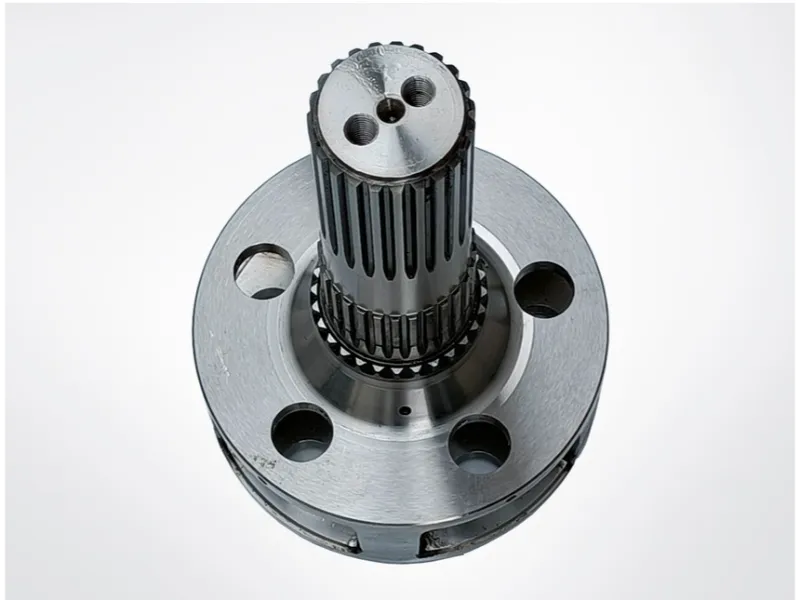
What is a Splined Shaft?
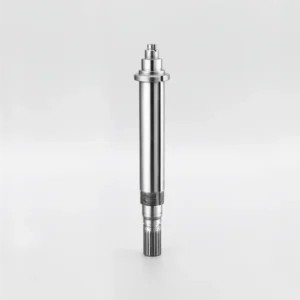
A splined shaft is a precision-engineered transmission element widely used in mechanical and automotive systems to achieve reliable power transfer. It features multiple longitudinal teeth—called splines—machined along the shaft surface, either externally or internally. These splines are designed to engage seamlessly with matching grooves in mating components such as hubs or gears, forming a secure and slip-resistant connection.
Unlike conventional keyed connections, splined shafts distribute torque across several contact surfaces rather than a single keyway. This structural advantage significantly improves load balance, minimizes localized stress, and enhances long-term wear resistance. As a result, systems using splined shaft torque transmission achieve higher efficiency and durability, especially under dynamic or high-load conditions.
From a functional standpoint, splines not only transmit rotational force but can also allow controlled axial movement in certain configurations. This makes splined shaft applications in mechanical systems particularly valuable where both alignment precision and flexibility are required.
Additionally, the geometry of splines can vary depending on performance requirements. Common profiles include involute, straight-sided, and serrated designs, each offering different benefits in terms of manufacturability and load capacity. Whether used in high-performance drivetrains or industrial assemblies, high torque spline shaft design ensures stable rotational synchronization and consistent mechanical performance.
Due to their strength, adaptability, and precision, splined shafts in automotive and industrial applications are considered essential components in systems that demand efficient torque transfer, accurate alignment, and long service life.
How do spline shafts work in power transmission?
The operation of spline shafts relies on a precise mechanical engagement between mating components. A series of evenly spaced teeth are machined along the shaft surface, which fit into corresponding grooves inside another part such as a hub, gear, or coupling. This interaction forms the basis of how spline shaft torque transmission works, enabling efficient power transfer without relying on friction alone.
When assembled, the spline teeth and internal grooves mesh tightly, creating a direct mechanical link. This design allows rotational force to pass smoothly from one component to another. Because the load is shared across multiple contact surfaces, multi tooth engagement in spline shaft working principle significantly reduces stress concentration and prevents slipping, even under high torque conditions.
In addition to transmitting power, spline shafts ensure accurate positioning between connected parts. The consistent tooth spacing maintains fixed angular orientation, making spline shaft rotational alignment and positioning critical in systems where timing and synchronization are required.
Some spline configurations are also designed to accommodate movement along the shaft axis. In these cases, the mating component can slide while remaining engaged, supporting axial sliding function in spline shaft applications. This feature is commonly used in telescopic assemblies or systems that must adapt to dimensional changes during operation.
What are the key functions of spline shafts?
In mechanical assemblies, spline shafts deliver multiple critical functions that support efficient motion control and long-term reliability across various applications.
- Torque Transfer Capability
The primary role of a spline shaft is to enable high torque transmission in spline shaft systemsby connecting driving and driven components such as motors, gears, or couplings. The multi-tooth engagement ensures strong contact without slippage, even under heavy loads. - Alignment and Position Accuracy
Through precise engagement, splines maintain consistent angular positioning between components. This makes spline shaft alignment and positioning accuracyessential in systems requiring synchronization, such as timing mechanisms or CNC equipment. - Enhanced Load Distribution
Compared to traditional keyed designs, splines spread forces across multiple contact points. This improves load distribution in spline shaft applications, reducing stress concentration and minimizing wear during continuous or variable load operation. - Axial Movement Flexibility
Certain spline configurations allow components to slide along the shaft while still transmitting torque. This feature supports axial movement capability of spline shafts, which is particularly useful in telescopic drives, steering systems, and shifting mechanisms. - Misalignment Compensation
Spline connections can tolerate slight positional deviations between mating parts. Incorporating axial and radial misalignment compensation in spline shaftshelps reduce mechanical stress and prolong component life in real-world operating conditions. - Compact and Efficient Structure
Spline shafts achieve high performance within limited space. Their geometry enables compact spline shaft design for high torque density, making them suitable for applications where space constraints are critical. - Controlled Phasing and Indexing
The arrangement of spline teeth ensures components engage in a defined orientation. This enables spline shaft phasing and indexing function, which is vital for systems that depend on precise timing or repeatable positioning. - Improved Service Life
By reducing backlash, wear, and uneven stress, splines contribute to extended lifespan of spline shaft components, lowering maintenance frequency and improving overall system reliability.
What should be considered in spline shaft design?
Before initiating machining or production, several critical parameters must be evaluated to ensure optimal performance and durability of spline components.
First, the geometry must support the intended load. A well-engineered spline shaft design for torque transmission should handle the required torque capacity without deformation or mechanical failure, especially under peak operating conditions.
In addition to torque, designers must account for external forces. Proper evaluation of axial and radial load considerations in spline design helps prevent uneven stress distribution, excessive wear, or early component breakdown during service.
Material selection is another key factor. Ensuring spline shaft material compatibility with hub and gear improves surface interaction, reduces friction, and enhances wear resistance, particularly in high-cycle or heavy-duty applications.
Precision also plays a decisive role. Maintaining tight tolerance control in spline shaft machining is essential for achieving accurate fitment, minimizing vibration, and ensuring consistent rotational alignment between mating parts.
Finally, lubrication should not be overlooked. An effective lubrication design for spline shaft systems reduces friction, limits heat generation, and significantly extends the service life of both the spline and its corresponding components.
What are the main types of splined shafts?
Spline shafts are manufactured in multiple configurations, each optimized for different performance requirements such as torque capacity, alignment precision, and ease of manufacturing. Understanding these variations is essential when selecting the right solution for specific mechanical systems.
Straight-Sided Splines
Straight-sided splines use parallel tooth flanks with a uniform width, forming a simple geometric profile. This structure makes straight sided spline shaft design for simple applications easier to produce and inspect compared to more complex profiles.
Typical Applications:
- Agricultural equipment
- Construction machinery
- Low-speed transmission systems
- Custom-built mechanical assemblies
Advantages:
- Cost-effective manufacturing process
- Simplified inspection and tooling
- Suitable for moderate torque levels
Limitations:
- Lower efficiency in load distribution
- Requires strict tolerance control for proper alignment
- Higher wear risk under heavy loads or misalignment conditions
Involute Splines
Involute splines adopt a curved tooth profile similar to involute gears, enabling smoother meshing and improved force distribution. This makes involute spline shaft for high torque transmission a preferred choice in high-performance applications.
Typical Applications:
- Automotive transmission systems
- Industrial gearboxes
- Heavy-duty machinery
- Precision drive systems
Advantages:
- Excellent load-carrying capability
- Self-centering characteristics improve alignment
- Standardized profiles support interchangeability
- Smooth engagement under dynamic loads
Limitations:
- More complex machining requirements
- Higher production cost, especially for small batches
- Requires precision tooling and inspection methods
Serrated Splines
Serrated splines feature angular or V-shaped teeth, typically with shallow engagement depth. These are mainly used where positioning accuracy is more critical than torque transmission, making them suitable for serrated spline shaft for positioning and indexing.
Typical Applications:
- Control knobs and adjustment systems
- Instrumentation assemblies
- Medical or precision devices
- Light-duty couplings
Advantages:
- High positioning accuracy
- Compact structure for limited space
- Efficient manufacturing through broaching or rolling
Limitations:
- Limited torque transmission capability
- Faster wear under repeated load cycles
- Reduced strength due to shallow tooth engagement
Helical Splines
Helical splines incorporate teeth cut at an angle relative to the shaft axis, allowing gradual engagement. This design enhances smoothness and supports combined motion, making helical spline shaft for smooth power transmission ideal for dynamic systems.
Typical Applications:
- Telescopic drive shafts
- Robotics and automation systems
- Linear motion assemblies
- High-precision actuators
Advantages:
- Reduced vibration and noise
- Improved load distribution across teeth
- Supports simultaneous axial and rotational motion
Limitations:
- Complex and costly manufacturing process
- Requires advanced CNC machining capabilities
- Inspection and measurement are more demanding
Internal and External Splines
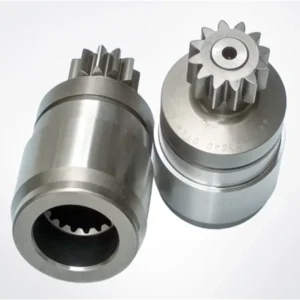
Spline systems typically consist of mating pairs: external splines on shafts and internal splines in hubs or bores. Proper matching is critical for internal and external spline shaft connection design, ensuring effective torque transfer and alignment.
Typical Applications:
- Gear couplings
- Motor-to-gearbox interfaces
- Torque transmission assemblies
- Hub-and-shaft systems
Advantages:
- Flexible design configurations
- Compact and efficient assembly
- Suitable for enclosed mechanical systems
Limitations:
- Internal spline machining is more complex
- Requires tight tolerance control
- Inspection can be challenging, especially for internal profiles
What materials are splined shafts made from?
Material selection plays a decisive role in determining the strength, durability, and cost-effectiveness of spline shafts. Since these components operate under torque, cyclic loads, and sometimes harsh environments, the chosen material must meet both mechanical and environmental demands.
Alloy Steels
Alloy steels are widely used in demanding applications due to their enhanced mechanical properties. Containing elements such as chromium, molybdenum, or nickel, they provide excellent strength and fatigue resistance. This makes alloy steel for high strength spline shaft applications a preferred option for heavy-duty systems.
Key Benefits:
- High load-bearing capacity
- wear and fatigue resistance
- Suitable for heat treatment processes to improve surface hardness
Carbon Steels
Carbon steels are commonly selected for general-purpose applications where cost and machinability are key considerations. Materials such as medium-carbon grades offer a good balance between strength and ductility, making carbon steel for cost-effective spline shaft manufacturing a practical solution.
Key Benefits:
- Good machinability for complex spline geometries
- Balanced mechanical performance
- Lower material and production cost
Stainless Steels
When corrosion resistance is critical, stainless steel becomes the material of choice. Its chromium content forms a protective layer that resists oxidation and chemical exposure. This makes stainless steel spline shafts for corrosion resistant environments ideal for challenging conditions.
Key Benefits:
- Strong resistance to rust and chemicals
- Reliable performance in humid or aggressive environments
- Good wear resistance and structural stability
Aluminum Alloys
Aluminum alloys are valued for their low density and good strength-to-weight ratio. They are often used in applications where reducing overall system weight is essential. As a result, aluminum alloy spline shaft for lightweight applications is widely adopted in portable or efficiency-focused designs.
Key Benefits:
- Lightweight with adequate strength
- Excellent corrosion resistance
- Easy to machine for intricate spline profiles
Engineering Plastics and Specialty Materials
In specific applications, non-metal materials such as engineered plastics or composites may be used. These include materials like nylon or PEEK, typically applied in low-load or specialized environments. This supports plastic spline shaft materials for low load applications where noise reduction or chemical resistance is required.
Key Benefits:
- Corrosion and chemical resistance
- Lightweight and low friction
- Suitable for non-metallic system requirements
Material Selection Considerations
Choosing the correct material depends on factors such as torque requirements, environmental exposure, wear conditions, and budget. A well-matched material selection for spline shaft performance and durability ensures optimal efficiency, reduced maintenance, and extended service life across various mechanical systems.
What machining processes are used for splined shafts?
Manufacturing spline shafts requires highly controlled machining methods to achieve accurate tooth geometry, smooth surface finish, and reliable torque transfer. The following are commonly used processes, each suited to different production needs and performance requirements.
Broaching (Linear & Rotary)
Broaching removes material using a multi-tooth cutting tool that progressively shapes the spline profile in one continuous stroke. This makes broaching process for internal spline shaft machining highly efficient for producing consistent and precise internal splines in large volumes.
Key Characteristics:
- Produces high dimensional accuracy and fine surface finish
- Ideal for mass production with excellent repeatability
- Capable of machining various spline profiles (straight, involute, serrated)
Limitations:
- High tooling cost and long lead time
- Less economical for low-volume or custom parts
- Requires pre-machined holes with strict setup accuracy
CNC Milling
CNC milling uses rotating cutters to remove material and form spline teeth one by one. Due to its flexibility, CNC milling for custom spline shaft manufacturing is widely applied in both prototyping and medium-scale production.
Key Characteristics:
- Suitable for complex spline geometries, including involute profiles
- Supports both internal and external spline machining
- Allows rapid design adjustments and customization
Limitations:
- Slower than dedicated spline-cutting methods
- May require secondary finishing for high precision
- Efficiency decreases for large batch production
Hobbing
Hobbing is a continuous generating process where a rotating hob tool cuts spline teeth in synchronization with the workpiece. This method is commonly used for hobbing process for external spline shaft production.
Key Characteristics:
- High production speed with stable accuracy
- Ideal for involute splines and gear-like profiles
- Cost-effective for medium to high-volume manufacturing
Limitations:
- Primarily used for external splines
- Requires precise machine setup and alignment
- Less adaptable for non-standard spline designs
Shaping
Shaping utilizes a reciprocating single-point cutting tool to gradually form each spline tooth. This makes shaping method for internal spline shaft machining suitable for complex or restricted geometries.
Key Characteristics:
- Capable of machining internal, external, and blind splines
- Flexible for small batch or custom production
- Effective in areas inaccessible to other tools
Limitations:
- Slower cycle time compared to broaching or hobbing
- Higher setup and operational effort
- May need additional finishing processes
Extrusion
Extrusion forms splines by forcing material through a die to create a fixed cross-sectional profile. In metal applications, extrusion process for internal spline shaft profiles is often combined with secondary machining for precision.
Key Characteristics:
- Produces uniform cross-sectional shapes
- Minimizes material waste
- Suitable for high-volume production
Limitations:
- Limited flexibility in profile variation
- Requires additional machining for tight tolerances
- Tooling design can be complex
Rolling / Forming
Rolling or forming creates splines by plastically deforming the material rather than cutting it. This makes cold forming process for spline shaft production highly efficient for large-scale manufacturing of external splines.
Key Characteristics:
- No material removal (chipless process)
- Improved surface strength due to work hardening
- High production speed with consistent quality
Limitations:
- Limited to ductile materials
- High initial tooling investment
- Not suitable for intricate or high-precision profiles
Grinding (Finishing Process)
Grinding is typically used as a secondary operation to refine spline geometry and surface quality. The spline shaft grinding process for high precision finishing ensures tight tolerances and superior surface integrity.
Key Characteristics:
- Achieves the highest level of accuracy and finish
- Ideal for hardened materials
- Corrects distortion from heat treatment or prior machining
Limitations:
- Higher cost and slower processing speed
- Requires specialized equipment
- Generally not used for primary material removal
How does heat treatment affect spline shafts?
Heat treatment is a critical step in optimizing the mechanical properties of spline shafts, especially in demanding environments involving high torque and repeated loading cycles. Selecting the right process ensures an ideal balance between hardness, strength, and durability.
Through Hardening (Quenching & Tempering)
This method involves heating the entire shaft to a high temperature followed by rapid cooling, then tempering to reduce brittleness. It is commonly applied in through hardening process for spline shaft strength improvement, where uniform hardness across the component is required.
Effect:
- Increases overall strength and toughness
- Enhances resistance to deformation under load
- Suitable for components subjected to high stress throughout the entire shaft
Case Hardening (Carburizing & Nitriding)
Case hardening modifies only the outer layer of the shaft while preserving a tougher inner core. This approach is widely used in case hardening for spline shaft wear resistance, especially where surface durability is critical.
Effect:
- Produces a hard, wear-resistant outer surface
- Maintains a ductile core for shock absorption
- Improves resistance to surface fatigue and contact stress
Induction Hardening
Induction hardening applies localized heating using electromagnetic induction, followed by rapid quenching. This technique is ideal for induction hardening for spline shaft localized treatment, as it targets only the spline teeth area.
Effect:
- Hardens only the working surfaces (splines)
- Minimizes distortion and preserves core properties
- Reduces processing time compared to full heat treatment methods
Overall Effect of Heat Treatment
Applying the correct thermal process significantly enhances heat treatment effect on spline shaft performance and lifespan. Properly treated spline shafts exhibit:
- Higher surface hardness for improved wear resistance
- Better fatigue strength under cyclic loading
- Increased durability in high-load and high-friction environments
Where are machined spline shafts used in industry?
Machined spline shafts are widely utilized across multiple industries due to their ability to deliver reliable torque transmission, accurate alignment, and stable performance under demanding conditions.
Automotive Systems
Spline shafts are essential in modern vehicles, supporting functions such as power delivery and motion control. Their use in splined shafts in automotive transmission and drive systems ensures efficient torque transfer from engines to wheels while maintaining smooth gear engagement.
Typical Uses:
- Drive axles for torque transfer
- Transmission shafts for gear synchronization
- Steering columns for controlled movement and safety
Aerospace Applications
In aerospace environments, components must perform under extreme stress and precision requirements. spline shafts in aerospace power transmission systems are commonly used to connect rotating elements in engines, turbines, and landing gear mechanisms.
Key Roles:
- Transmitting power in turbine and compressor systems
- Supporting alignment in rotor assemblies
- Maintaining stability under high-speed and high-load conditions
Industrial Machinery
Manufacturing and processing equipment depend on consistent motion and durability. The use of machined spline shafts in industrial machinery equipment enables accurate torque transfer and synchronized movement in complex systems.
Typical Uses:
- Gearboxes and reducers
- Conveyor drive systems
- CNC machines and production equipment
Marine Industry
Spline shafts play a critical role in marine environments where durability and corrosion resistance are essential. spline shafts in marine propulsion and steering systems ensure efficient power transfer from engines to propellers.
Key Roles:
- Propulsion shaft systems
- Marine winches and heavy-duty lifting equipment
- Steering mechanisms under harsh conditions
Agricultural Equipment
Heavy-duty farming machinery requires reliable power transmission under variable loads. spline shafts in agricultural machinery applications help transfer motion to implements such as pumps, harvesters, and plowing systems.
Typical Uses:
- Tractor power take-off (PTO) systems
- Harvesting and irrigation equipment
- Attachments requiring rotational power
Automation and Robotics
Precision and repeatability are critical in automated systems. The integration of spline shafts in robotics and automation systems enables accurate positioning and smooth rotational motion in high-speed operations.
Key Roles:
- Robotic arms and actuators
- Automated assembly lines
- Precision motion control systems
General Engineering and Heavy Equipment
Beyond specialized industries, spline shafts are also widely used in construction equipment, heavy machinery, and general engineering systems. Their versatility supports applications of spline shafts in heavy equipment and mechanical systems where high torque and reliability are required.
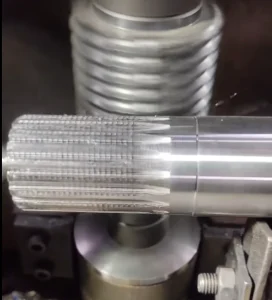
What is the difference between shaft splines and serrations?
Although Shaft Splines vs. Serrations both serve as mechanical interfaces between a shaft and a mating component, their engineering purpose, load capability, and application scope are fundamentally different.
Spline shafts are designed for power transmission in rotating systems. Their tooth geometry (straight-sided or involute profiles) ensures that torque is distributed across multiple contact points. This makes splined shaft torque transmission for high-load applications highly efficient, especially where strength, alignment, and durability are critical.
Serrations, in contrast, are intended for light-duty engagement and precise positioning rather than heavy torque transfer. Their V-shaped tooth form provides compact engagement, making serrated shaft design for positioning and indexing applications more suitable for adjustment mechanisms and control interfaces.
From a functional standpoint, splines are optimized for transmitting rotational force while maintaining alignment between components. Serrations are primarily used for angular positioning or locking in place, where load demand is minimal. This defines the core distinction in functional comparison of shaft splines and serrations in mechanical systems.
Splines also offer superior load distribution because multiple teeth share the transmitted force, reducing stress concentration and improving service life. Serrations, however, rely on fewer and shallower contact surfaces, limiting their torque capacity but improving simplicity and ease of assembly.
Some spline designs also allow axial movement while maintaining torque transfer, whereas serrated connections are typically fixed once engaged.
Shaft Splines vs. Serrations Comparison Table
| Merkmal | Shaft Splines | Serrations |
| Tooth Shape | Rectangular or involute profile | V-shaped angled teeth |
| Torque Capacity | High – suitable for power transmission | Low – suitable for positioning only |
| Primary Function | Torque transfer + alignment | Positioning / indexing |
| Typische Anwendungen | Drive shafts, gear hubs, PTO systems | Knobs, dials, adjustment controls |
| Manufacturing Precision | High precision, tight tolerances required | Moderate precision, simpler machining |
| Load Distribution | Distributed across multiple teeth | Limited contact area |
| Axial Movement | Possible in certain designs | Typically fixed connection |
What are the benefits of splined shafts?
The use of spline shafts in mechanical systems provides significant functional advantages, especially in applications requiring reliable torque transfer, precise alignment, and long service life. The main benefits of spline shafts in mechanical power transmission systems are outlined below.
High Strength and Reliable Load Capacity
Spline connections are engineered to withstand heavy mechanical loads while maintaining stable performance. Because torque is distributed across multiple tooth interfaces, stress concentration is greatly reduced. This makes high load capacity advantage of spline shafts in torque transmission a key reason they are widely used in demanding industrial and automotive systems.
Accurate Alignment and Stable Engagement
One of the core advantages of splines is their ability to maintain precise positioning between connected components. The interlocking tooth structure ensures consistent angular alignment without unwanted movement or play. This defines the spline shaft alignment accuracy and positioning benefit in rotating systems, which is critical for smooth and efficient operation.
Efficient Power Transmission Performance
Spline shafts provide reliable and continuous torque transfer in both high-speed and heavy-load environments. Their multi-tooth engagement ensures smooth force distribution, supporting precision power transmission capability of spline shafts in industrial applications such as automotive drivetrains, motion control systems, and machinery.
Ease of Assembly and Disassembly
Another important advantage is the simplified installation process. Spline connections can be assembled or separated without complex tools, making maintenance and replacement more efficient. This supports the ease of assembly and disassembly advantage of spline shaft connections, reducing downtime during servicing or system adjustments.
Flexible Design and Customization
Spline shafts can be manufactured in various profiles such as involute, straight-sided, or internal configurations, depending on application needs. This flexibility is summarized in the custom spline shaft design options for different industrial requirements, allowing engineers to optimize performance based on torque, space, and load conditions.
Consistent Quality and Long-Term Reliability
Advanced machining and inspection methods ensure stable dimensional accuracy and repeatable performance. This leads to consistent quality advantage of spline shafts in mass production environments, supporting reliability across automotive, industrial, and precision engineering applications.
How should spline shafts be maintained and serviced?
To ensure reliable performance and extended service life, proper upkeep of spline shaft systems is essential. Since these components operate under continuous torque and contact stress, even minor neglect can lead to wear or misalignment over time.
Effective maintenance and care for spline shaft lubrication practices plays a key role in reducing friction between mating surfaces. Adequate lubrication minimizes metal-to-metal contact, helping to control heat generation and slow down wear progression during operation.
Routine inspection is equally important. A structured spline shaft inspection for wear and misalignment detection helps identify early signs of surface damage, cracking, or improper engagement before they develop into serious mechanical failures.
When evaluating service condition, replacement should be considered if abnormal backlash appears, visible wear patterns develop, or corrosion begins to affect the tooth surfaces. These indicators are critical in spline shaft replacement criteria based on wear and damage conditions.
Preventive maintenance practices also contribute significantly to system reliability. Keeping contaminants such as dust, debris, or moisture away from the contact surfaces supports preventive care for spline shaft performance and load control, while ensuring the system remains within recommended torque limits helps avoid overloading and premature failure.
What spline shaft machining capabilities does welleshaft offer?
OEM Custom Spline Shaft Manufacturing Capability
welleshaft provides customized spline shaft production solutions for OEM and industrial customers in China, focusing on precision geometry, stable performance, and scalable production capacity. The welleshaft spline shafts machining ability services for OEM applications in China cover a wide dimensional range, supporting diverse engineering requirements.
We are capable of producing spline shafts with outer diameters from 0.25″ to 18″ and lengths from 0.50″ to 48″, with module specifications ranging from 0.5 to 12. This flexibility ensures compatibility with a wide range of mechanical systems, including power transmission units, axles, gearboxes, and motion control assemblies.
Advanced Manufacturing and Engineering Capacity
With strong machining infrastructure, welleshaft supports both high-volume production and customized small-batch orders. Our advanced spline shaft manufacturing capability for industrial applications in China ensures consistent accuracy, repeatability, and reliable mechanical performance.
Our production systems are designed to meet strict tolerance requirements for applications involving rotational force transmission, ensuring stable quality across different industries such as automotive, heavy equipment, and precision machinery.
Involute Spline Production and Quality Control
To ensure proper engagement and dimensional accuracy of involute profiles, inspection and gaging are recommended during the production stage. This forms part of the involute spline shaft manufacturing and quality assurance process in China.
For complex geometries, hardened materials, or small production batches where standard gaging is not practical, we can utilize mating components as reference standards or develop matched male-female assemblies to ensure compatibility and performance consistency.
Keyway Machining, Shaping, and Broaching Capability
welleshaft offers multiple machining methods for keyways and internal spline structures, maintaining strict dimensional control throughout production. The keyway and spline shaft shaping and broaching services in China manufacturing facility support both standard and customized requirements.
- Shaping Process:
Width range from 1/16″ to 3/8″, depth from 0.032″ to 0.5″, length up to 6″ - Broaching Process:
Width range from 0.063″ to 1″, depth from 0.031″ to 0.5″, length up to 5″
These processes ensure precise internal geometry and stable torque transmission performance.
Internal and Straight-Sided Spline Solutions
For internal straight-sided spline structures, production methods are selected based on order volume, component size, and design complexity. This is defined as internal and straight-sided spline shaft machining solutions in China by welleshaft.
Broaching is typically applied for high-volume production due to its efficiency and repeatability, while shaping is more suitable for low-volume or specialized components requiring flexible machining strategies.
What are precision shaft manufacturing solutions?
Custom-Engineered Shaft Production Capability
welleshaft specializes in delivering high-precision, application-specific shaft solutions for industrial and OEM customers. Through advanced engineering and manufacturing processes, precision shaft manufacturing solutions for industrial and OEM applications by welleshaft are developed to meet strict performance, durability, and dimensional accuracy requirements across multiple industries.
Comprehensive Shaft Manufacturing Capabilities
Our production system covers a wide range of shaft types, including custom shafts, forged shafts, gear shafts, motor shafts, spline shafts, welded shafts, and worm shafts. These are manufactured using forging, investment casting, die casting, and precision CNC machining technologies. This enables comprehensive precision shaft manufacturing capabilities for custom industrial applications with strong flexibility for both prototype development and mass production.
Industry Experience and Quality Assurance Standards
With over 10+years of engineering and manufacturing experience, welleshaft maintains strict quality control throughout every production stage. Certified management systems and standardized inspection procedures ensure stable output and consistent performance. This forms the foundation of high precision shaft manufacturing solutions with quality assurance and ISO standards compliance.
Global Supply Chain and On-Time Delivery Capability
A well-structured production and logistics network allows efficient coordination across multiple regions, ensuring reliable and timely delivery. This supports global precision shaft manufacturing supply chain solutions for OEM customers and industrial projects, helping clients maintain stable production schedules even under complex supply conditions.
Custom Engineering and Technical Collaboration
The engineering team works closely with clients to optimize shaft design based on application requirements, including material selection, structural design, and surface treatment processes. This approach enables custom precision shaft engineering and technical support solutions for industrial applications throughout the entire product development cycle.
What are the most frequently asked questions about spline shafts?
How do you identify a spline shaft?
A spline shaft can be recognized by the presence of evenly spaced longitudinal teeth or grooves running along its body. These features may appear on the external surface or inside a bore, forming a mechanical interface used for torque transfer and alignment in spline shaft identification based on toothed profile structure.
What is the importance of heat treatment for spline shafts?
Heat treatment improves mechanical properties such as hardness, fatigue resistance, and wear performance. This process is essential in heat treatment effects on spline shaft durability and strength enhancement, especially for high-load applications.
What Is the Difference Between a Gear and a Spline?
Although both components involve toothed geometries, their functions differ significantly:
- A gear is designed to mesh with another gear to transmit motion between parallel or intersecting shafts, often controlling speed and direction.
- A spline, however, connects a shaft to a mating component by locking them together rotationally while transmitting torque along the same axis.
This is commonly explained as difference between gear and spline shaft in torque transmission systems.
What Is the Difference Between a Spline Shaft and a Keyed Shaft?
Both systems transmit torque, but their load distribution and structural design differ:
- A keyed shaft uses a single key seated in a keyway, concentrating stress on one contact area.
- A spline shaft distributes torque across multiple teeth, improving load balance and alignment accuracy.
How Are Splines Cut on a Shaft?
Splines are produced using several machining methods depending on precision, geometry, and production volume. Common processes include:
- Broaching: Efficient for internal or external splines in mass production
- Hobbing: Continuous cutting method mainly for external profiles
- Shaping: Reciprocating tool suitable for internal and external forms
- Milling: Flexible approach for prototypes and custom designs
- Rolling/Forming: Chipless process that improves surface strength
- Grinding: Final finishing method for high-precision requirements.
What sizes of spline shafts can be manufactured?
Spline shafts can be produced in a wide dimensional range depending on application needs, typically covering small precision components to large industrial shafts. This falls under custom spline shaft size range and manufacturing capability.
What types of splines are available?
Common spline types include involute, straight-sided, serrated, and helical profiles, along with customized geometries. These options are categorized as types of spline shaft profiles for different engineering applications.
Can prototypes and design support be provided?
Yes, prototype development and engineering assistance are commonly available, including design validation and reverse engineering support. This is often referred to as spline shaft prototyping and design engineering support services.
Schlussfolgerung
Spline shafts are essential components in mechanical systems that require precise torque transmission and stable alignment, especially in high-load and high-speed applications. Their performance directly impacts system efficiency, durability, and reliability.
Understanding spline shaft types, machining processes, material selection, and application needs helps engineers choose the most suitable design. Proper selection improves load distribution, reduces wear, and enhances operational stability, making spline shaft design and manufacturing critical to long-term performance and cost efficiency.
 Deutsch (Österreich)
  English
  Português do Brasil
  Deutsch (Schweiz)
  English (UK)
  English (Australia)
  English (New Zealand)
  Deutsch
  Français du Canada
  Français
  Français de Belgique
  Italiano
  English (South Africa)
  Português
  Español
  Español de México
  Español de Perú
  Español de Colombia
  العربية
  日本語
日本語  Русский
  한국어
한국어  Tiếng Việt
  ไทย
ไทย
Reviews
There are no reviews yet.