
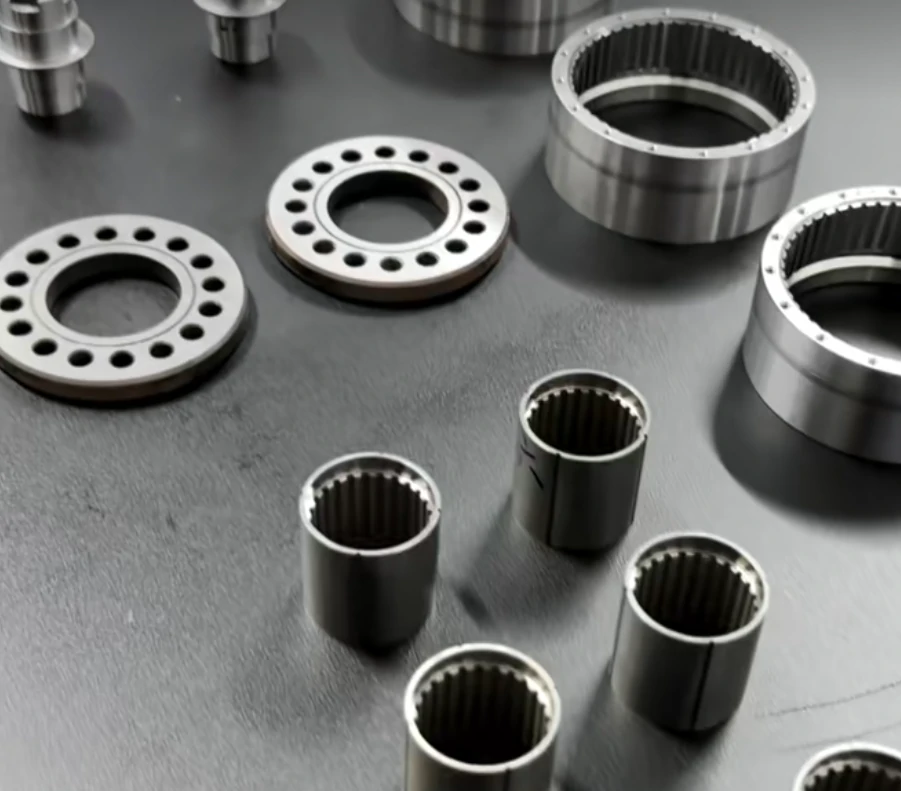
Custom Transmission Components for Humanoid Robot Joint Systems
Humanoid robot joints need transmission components that fit within limited installation space while meeting the mechanical requirements of the actuator. Shafts, discs and connecting parts must work together as designed, since dimensional deviations at their interfaces can affect assembly and motion transmission.
A cycloidal drive is one option for robotic joint transmission. Its eccentric mechanism drives the cycloidal disc against surrounding pins, while the output structure transfers the reduced motion. This arrangement places particular importance on the disc profile, eccentric dimensions and the positioning of mating components. For OEM developers, these features need to be considered when specifying custom cycloidal transmission components.
Welleshaft supports drawing-based manufacturing of non-standard mechanical parts for robotic transmission systems. We work with customer drawings, material specifications and dimensional tolerances, coordinating suitable manufacturing resources for projects that involve multiple related components.
Why Cycloidal Drives Are Used in Humanoid Robot Joints?
Humanoid robot joints rely on compact transmission systems to convert motor rotation into controlled movement. The choice of reducer depends on the joint’s mechanical design, available installation space and required motion characteristics. A cycloidal drive is one option used in robotic applications where a compact reduction mechanism is required.
In a typical cycloidal drive, an eccentric shaft moves the cycloidal disc against a series of surrounding pins. This interaction reduces the rotational speed, while the output pins transfer motion to the output mechanism. The arrangement and dimensions of these parts vary with the reducer design, making the accuracy of individual components important to their fit and function within the assembly.
For humanoid robot developers sourcing custom cycloidal drive components, the transmission design determines the geometry and interfaces of each part. The cycloidal disc, eccentric mechanism and output structure must be manufactured to match the specified assembly. This makes drawing accuracy and the relationship between mating components important considerations when selecting a manufacturing supplier.
How Does a Cycloidal Gear Reducer Work in Robotic Joint Systems?
A cycloidal gear reducer consists of an eccentric input mechanism, cycloidal discs, ring pins and an output mechanism. As the input shaft rotates, the eccentric shaft drives the disc through an eccentric bearing, causing it to engage with the surrounding ring pins. The difference between the disc profile and pin arrangement reduces rotational speed.
The eccentric shaft controls the disc’s orbital movement, while the output pins transfer motion through the disc holes to the output carrier or shaft. Although designs vary, this is the basic cycloidal gearbox working principle.
For custom manufacturing, the cycloidal disc profile, eccentric offset, shaft interfaces and output pin positions must match the assembly requirements. These dimensions directly affect fit and transmission performance, especially in robotic joint applications. Welleshaft manufactures custom cycloidal gear reducer components according to customer drawings and technical specifications.
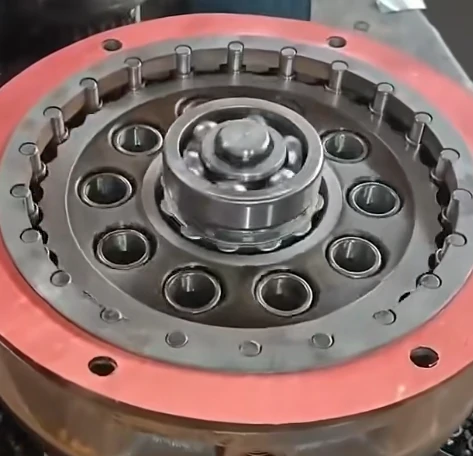
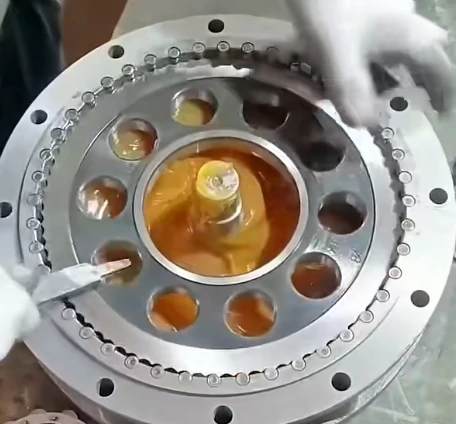
Custom Cycloidal Drive Components for Humanoid Robot Actuators
A cycloidal transmission requires several components to work together, with each part designed around the reducer’s geometry and connection interfaces. Welleshaft supports the custom manufacturing of seven component categories for these applications: cycloidal discs, eccentric shafts, eccentric cams, input shafts, output shafts, output pins and output pin carriers. Each part is produced according to the customer’s drawings, material specifications and dimensional requirements.
Custom Cycloidal Disc Manufacturing
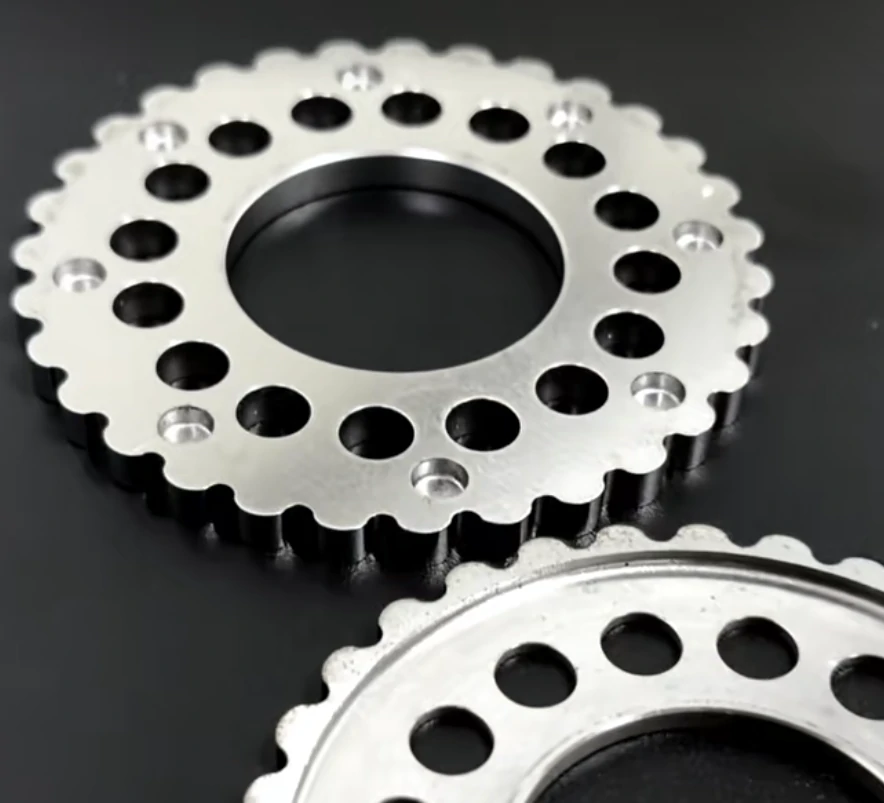
The cycloidal disc is the main working element in a cycloidal drive. Its specially shaped profile engages with the surrounding ring pins to generate the required motion. It is sometimes referred to as a cycloidal gear, although its profile and engagement mechanism differ from those of conventional gears.
The most important consideration in cycloidal disc manufacturing is the relationship between the disc profile and its mating features. The eccentric mounting hole determines the disc’s position during operation, while the output pin holes must align with the output mechanism. Disc thickness, flatness and material properties also need to meet the requirements of the intended assembly. Where heat treatment is specified, its potential effect on the finished geometry should be considered during process planning.
Custom Eccentric Shafts and Eccentric Cams
The eccentric shaft and eccentric cam create the offset movement that drives the cycloidal disc. Their dimensions must correspond to the bearing arrangement and the required eccentricity of the transmission.
For an eccentric shaft, important features include the eccentric offset, bearing seats, stepped diameters and the relationship between its functional surfaces. An eccentric cam has its own profile and mounting interfaces, which must match the associated components. These features require coordinated machining because errors in the eccentric geometry or bearing interfaces can affect the movement and fit of the assembled mechanism.
Custom Input Shafts and Output Shafts
The input and output shafts connect the reducer to the motor and the driven structure, respectively. Although both are shaft components, their functions and interface requirements are different.
A custom input shaft may incorporate bearing seats, eccentric sections, keyways or splines, depending on how the motor transfers motion into the reducer. The output shaft is designed around its connection to the driven mechanism and may include mounting shoulders, bearing positions and other specified features. For projects requiring further details on shaft geometry, machining considerations and dimensional requirements, explore our guide to custom output shaft manufacturing.
For both parts, shaft dimensions need to be considered alongside concentricity, runout, surface finish and mating fits.
Custom Output Pins and Output Pin Carriers
The output pins transfer motion from the cycloidal disc to the output mechanism, while the output pin carrier supports and positions these pins. Their dimensions are closely related because the pins must fit the carrier correctly and engage with the corresponding features of the cycloidal disc.
For custom output pins, diameter, length and surface condition depend on the design and contact requirements. On the carrier, the main considerations include pin-hole diameter, hole spacing, positional accuracy and mounting geometry. Checking these features as a related set is important when both components are manufactured for the same transmission assembly.
Discuss Your Cycloidal Component Requirements with Our TeamCycloidal Drive Design and Critical Manufacturing Requirements
The performance of a cycloidal transmission depends on how its main components are positioned and fitted together. In cycloidal drive design, the disc profile, eccentric offset and output pin arrangement are related features rather than independent dimensions. A change to one of these features may affect the geometry or fit of other mating parts.
For OEM projects requiring custom cycloidal drive components, these relationships need to be clearly defined in the engineering drawings before manufacturing begins.
Cycloidal Disc Profile and Geometry
The profile of a cycloidal disc determines how it engages with the surrounding ring pins. Its geometry, center position and relationship with the pin arrangement must follow the reducer design. Unlike a conventional involute gear, a cycloidal disc uses a different profile and engagement mechanism.
The term hypocycloidal gear is sometimes used in discussions of cycloidal geometry, but it should not be treated as a universal synonym for cycloidal gear. For manufacturing purposes, the profile definition in the customer’s drawing or technical specification should take precedence.
Eccentric Offset and Shaft Alignment
The eccentric offset controls the orbital movement of the cycloidal disc. It must match the specified bearing arrangement and the geometry of the eccentric shaft or cam. Bearing seat dimensions, concentricity and runout are therefore important where they affect the shaft’s positioning and rotation.
For custom eccentric shaft manufacturing, these features need to be considered together. Simply machining each diameter to its nominal size does not necessarily ensure that the eccentric section and bearing interfaces will work correctly in the assembled mechanism.
Output Pin Position and Assembly Fit
The output pin arrangement connects the cycloidal disc with the output mechanism. The diameter and position of the disc holes must correspond to the output pins and carrier. If the hole pattern does not match the mating components, assembly difficulties or unwanted clearance may result.
For cycloidal disc manufacturing, the hole pattern should therefore be checked against the corresponding output components, not treated as an independent machining feature. This is particularly important when the disc, pins and carrier are sourced as separately manufactured parts.
Materials and Manufacturing Processes for Custom Cycloidal Components
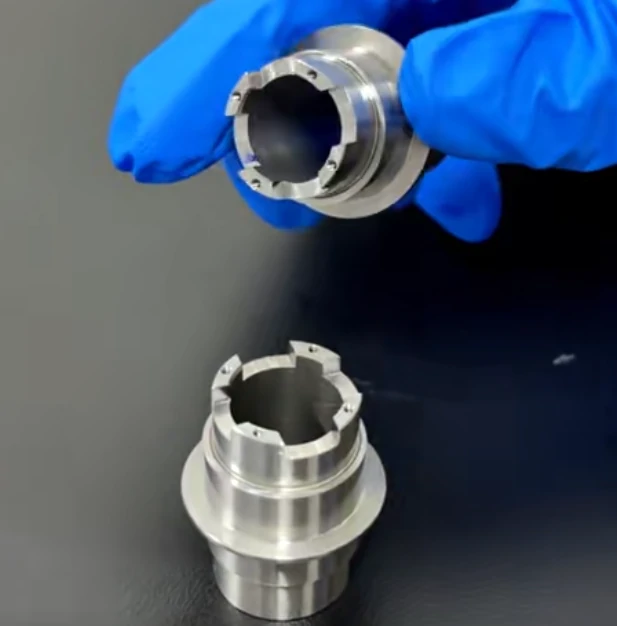
The manufacturing route for custom cycloidal components depends on the part geometry, material grade and specified tolerances. Shaft components commonly require CNC turning to establish their main dimensions, followed by additional machining or grinding where bearing seats and other functional surfaces need closer dimensional control. Cycloidal discs require profile machining and accurate positioning of the eccentric mounting and output pin holes, while pins and carriers are manufactured around their respective mating dimensions.
Material and heat treatment specifications also influence process planning. The required steel grade, hardness and surface condition should be confirmed before production. Where heat treatment is specified, potential dimensional changes need to be considered when setting machining allowances and deciding whether post-treatment grinding or finishing is necessary.
For projects involving several related parts, Welleshaft coordinates suitable manufacturing resources for CNC machining, grinding, heat treatment and other required operations. Each production route is arranged according to the component drawings and agreed project scope. This allows buyers to source different cycloidal drive components through one contract manufacturing partner without assuming that every process takes place in the same facility.
Dimensional Inspection and Quality Control for Robotic Drive Components
For humanoid robot transmission projects, dimensional inspection needs to cover both individual part specifications and the interfaces between mating components. A cycloidal disc, for example, may meet its specified dimensions, but its output pin holes must also correspond to the pin arrangement of the carrier. The same applies to eccentric shafts, bearing seats and connected shaft components. Inspection should focus on the features that affect assembly and mechanical operation.
The measurement points vary according to the component. A cycloidal disc may require checks of its profile, thickness, eccentric mounting hole and output pin hole positions. For eccentric shafts and cams, the eccentric offset and bearing seat dimensions are important. Input and output shafts need to meet their specified functional dimensions, while output pins and carriers must match their corresponding mating features.
Measurement methods should be selected according to the geometry and tolerance of each feature. Depending on the project, dimensional checks may involve calipers, micrometers, height gauges, dedicated gauges or coordinate measuring equipment. More detailed measurement records may be required for critical features and components manufactured as a matched set.
Welleshaft coordinates dimensional inspection and quality control for custom mechanical components according to customer drawings and agreed acceptance criteria. Critical dimensions, inspection methods and documentation requirements can be confirmed before production. Where included in the project scope, dimensional inspection reports and other agreed quality records can be provided for customer review and incoming inspection.
Submit Your Drawings for a QuoteCycloidal Reducer vs. RV Reducer for Humanoid Robots
A cycloidal reducer and an RV reducer both use cycloidal transmission technology, but their internal structures are different. A typical cycloidal gear reducer uses an eccentric input mechanism to drive one or more cycloidal discs against surrounding pins, with an output mechanism transferring the reduced motion. An RV reducer, by comparison, generally combines a planetary gear stage with a cycloidal reduction stage. This additional planetary stage changes the arrangement of the transmission components and their mechanical interfaces.
For humanoid robot manufacturers, the distinction affects how components are specified and sourced. A standalone cycloidal speed reducer requires parts that match its own eccentric mechanism, disc profile and output arrangement. An RV reducer project may also involve planetary gears, carriers and additional shaft interfaces. Therefore, the component list and manufacturing drawings should be based on the actual transmission architecture rather than a general product name.
Terms such as cycloidal pinwheel reducer and cycloidal gear reducer are commonly used when discussing cycloidal reduction systems, but they do not automatically describe an RV reducer. Similarly, a cyclo planetary gearbox should be evaluated according to its specific gear-stage configuration. For OEM buyers sourcing custom transmission parts, confirming whether the project uses a standalone cycloidal mechanism or an RV structure is an important first step before requesting manufacturing quotations.
How to Choose a Custom Cycloidal Drive Components Manufacturer in China
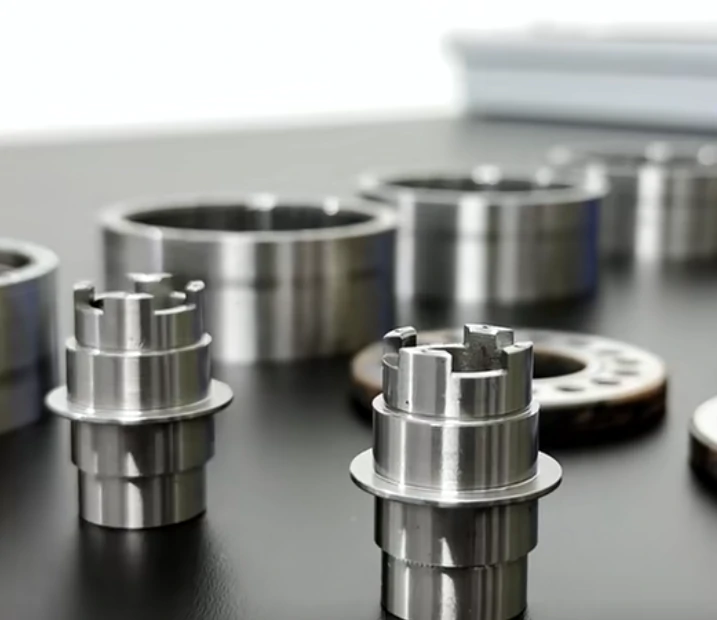
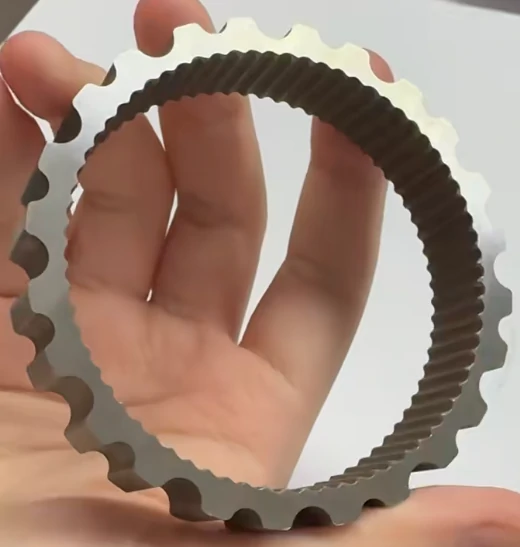
When sourcing custom cycloidal drive components in China, buyers should consider how well a manufacturer understands the engineering requirements behind the parts, not just the quoted unit price. Dimensions such as the disc profile, eccentric offset and output pin positions need to match the transmission design. Before requesting a quotation, buyers should confirm that the supplier can review the drawings and identify the critical dimensions and interfaces involved.
The manufacturing arrangement also deserves attention. Different parts may require turning, milling, grinding or heat treatment, and these operations do not necessarily take place at the same facility. Buyers should understand how the production route is organized, who is responsible for each operation and how inspection requirements are managed across the project.
For prototype and repeat orders, communication about drawing revisions is particularly important. A change to the material, eccentric dimensions or hole positions may affect both the manufacturing process and the inspection plan. The supplier should work from the latest approved drawings and clarify the impact of changes before a new batch is produced.
Welleshaft provides one-stop contract manufacturing for custom mechanical components, coordinating suitable manufacturing resources for projects involving multiple non-standard parts. Our work is based on customer drawings, material specifications, dimensional tolerances and agreed quality requirements. We focus on the manufacturing and coordination of individual components rather than supplying complete cycloidal gearboxes or humanoid robot actuators.
If you are developing a robotic joint transmission or sourcing replacement parts, send Welleshaft your drawings or 3D models. We can review the component scope, discuss the manufacturing arrangements and prepare a project-based quotation.
Request a Quote TodayFrequently Asked Questions About Custom Cycloidal Drive Components
What are the main components of a cycloidal drive?
A typical cycloidal drive consists of a cycloidal disc, an eccentric input mechanism, surrounding ring pins and an output mechanism. Depending on the transmission design, the assembly may also include an input shaft, output shaft, eccentric cam, output pins and an output pin carrier. Each part has a specific role in reducing speed and transferring motion, so its dimensions and interfaces need to match the overall design.
Can cycloidal drive components be custom manufactured?
Yes. Custom cycloidal drive components can be manufactured according to engineering drawings, material specifications and dimensional tolerances. This is useful for OEM projects where standard catalogue parts do not match the required transmission geometry or assembly interfaces. The manufacturing scope can be defined around individual components and the technical requirements of the complete project.
Are cycloidal drives used in humanoid robot joints?
Yes, cycloidal drives for humanoid robot joints are one possible transmission solution. They may be considered where the joint design requires a compact speed reduction mechanism and specific torque transmission characteristics. However, not every humanoid robot uses a cycloidal reducer. The final choice depends on the actuator structure, installation space, load conditions, motion requirements and the engineering team’s design decisions.
What is the difference between a cycloidal reducer and an RV reducer?
A typical cycloidal reducer uses an eccentric mechanism to drive a cycloidal disc against surrounding pins, creating speed reduction. An RV reducer generally combines a planetary gear stage with a cycloidal reduction stage. Although both involve cycloidal transmission technology, their internal structures and component requirements are different. Buyers should confirm the actual reducer architecture before sourcing custom parts or requesting a manufacturing quotation.
What information is needed for a custom cycloidal component quotation?
The most useful starting point is a 2D engineering drawing or 3D model showing the component geometry and critical dimensions. Buyers should also specify the material grade, tolerances, required heat or surface treatment, order quantity and any inspection or documentation requirements. If some details are still under development, the available drawings and technical information can be submitted first for an initial manufacturing review.
Can Welleshaft manufacture multiple cycloidal drive components for one project?
Yes. Welleshaft can coordinate the production of multiple related components under one project, based on the approved drawings, material specifications and agreed inspection requirements. This arrangement gives buyers one point of contact for manufacturing coordination and helps reduce the need to manage separate machining suppliers for each component.
Welleshaft is a China-based custom manufacturing partner for non-standard mechanical components, supporting humanoid robot joint projects with cycloidal discs, eccentric shafts, cams, pins and other transmission parts. We coordinate drawing-based production according to material, dimensional and quality requirements.
