
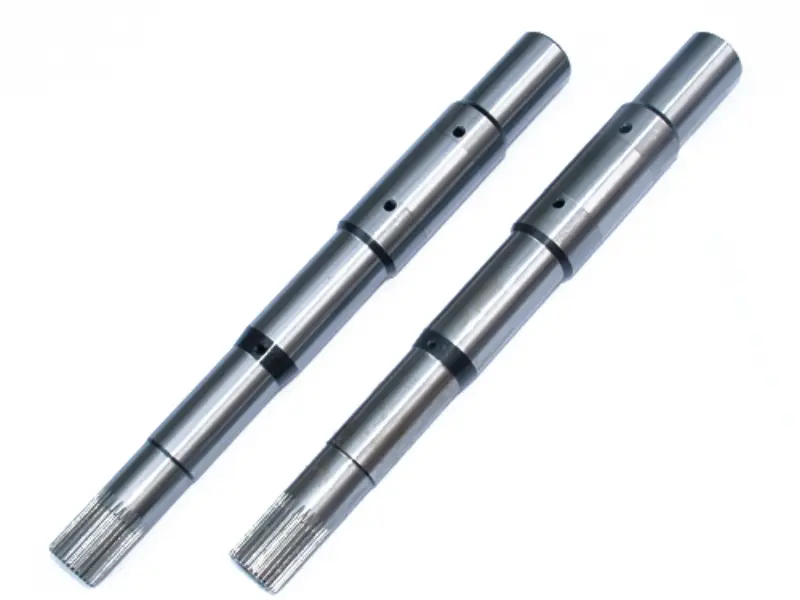
Custom Motor Shafts Manufacturer in China
What is a Motor Shaft?
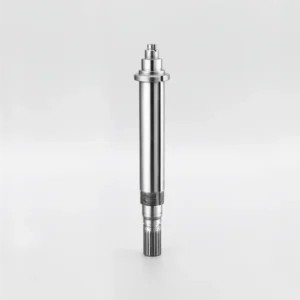
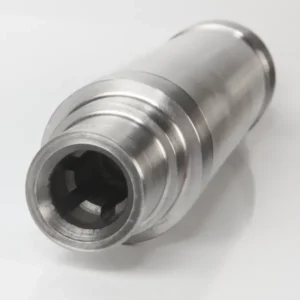
- Rotor Shaft – The rotor shaft is the core of an electric motor, acting as the carrier for the rotor and serving as the primary support for rotational motion.
- Spindle Shaft – Also known as a transmission shaft, the spindle shaft is a rotating machine element with a circular cross-section, designed to transfer torque efficiently within mechanical systems.
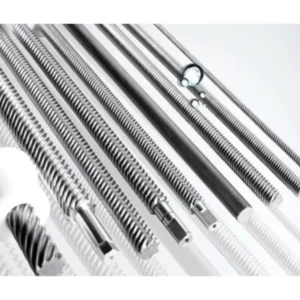
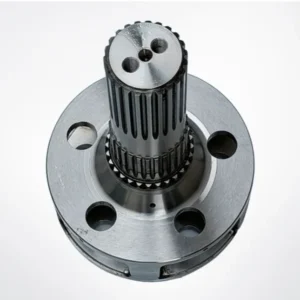
- Splined Shaft – A splined shaft features deep grooves or splines cut along its entire length, providing secure torque transmission and precise alignment in assembly applications.
The motor shaft supports the rotor and serves as the main power output, typically as a cylindrical component extending from the motor. It converts energy into mechanical motion, with design and material ensuring reliability and stability across applications such as automotive systems, appliances, and industrial machinery.
As the key transmission element, it converts electrical energy into rotational motion, directly affecting torque and speed. Designed to withstand high speeds and heavy loads, precision engineering and strong materials help reduce vibration, improve efficiency, and extend service life.
What is Motor Shaft Machining?
What Are the Key Characteristics of an Electric Motor Shaft?
- Electric motor shafts can feature lightweight constructions, such as hollow tubular designs or integrated one-piece configurations, to reduce overall mass without compromising strength.
- Engineers combine multiple materials in a single shaft to optimize performance, durability, and cost-efficiency for specific applications.
- Shafts can be supplied ready for direct installation or as semi-finished components, closely matching the final design requirements.
- Engineers design electric motor shafts for low weight and high torque transmission, ensuring efficient energy transfer while conserving resources.
- Manufacturers customize splines and other end features to meet specific application or assembly needs, ensuring compatibility and precision.
How Is a Motor Shaft Constructed?
Key steps in motor shaft construction include:
- Base Material Selection:Choosing a steel or alloy that meets strength, toughness, and wear requirements.
- Heat Treatment:Processes such as quenching or tempering enhance hardness and mechanical strength.
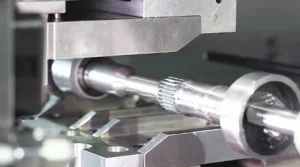
- Precision Machining:CNC turning and finishing ensure tight dimensional tolerances for seamless integration.
- Surface Finishing:Grinding, polishing, or coating improves surface quality, reduces friction, and provides corrosion resistance.
A well-constructed motor shaft is essential for consistent torque transmission, low vibration, and long service life, making material choice, machining precision, and finishing processes crucial factors in both standard and custom motor shaft solutions.
Which Materials Are Used for Motor Shafts?
Selecting the right material for a motor shaft is crucial for performance, durability, and application-specific requirements. Various metals and alloys are commonly used, each offering unique properties:
Carbon Steel
Widely used for motor shafts, carbon steel provides excellent machinability, tensile strength, and the ability to undergo heat treatment to enhance hardness. Grades such as 1045 carbon steel are common in medium-strength applications, including electric motors and pump shafts.
Stainless Steel
Ideal for environments requiring high corrosion resistance. Engineers frequently use grades like 304 and 316 in applications exposed to water, chemicals, or marine conditions, ensuring long-lasting performance in harsh environments.
Alloy Steel
Engineers prefer alloy steels such as 4140 or 4340 for shafts that demand high strength, toughness, and fatigue resistance, and they commonly use them in heavy-duty industrial motors and machinery.”
Brass
Provides good machinability and corrosion resistance while being easier to work with than high-strength steels. Brass shafts are suitable for appliances, light-duty machinery, and applications where extreme strength is not critical.
Aluminum
Lightweight, corrosion-resistant, and easy to machine, aluminum is ideal for motor shafts in applications where weight reduction is important, such as drones or portable equipment.
Titanium
Engineers often use titanium in high-performance and specialized applications, including aerospace motors, because it offers a high strength-to-weight ratio and superior corrosion resistance.
Nickel Alloys
Engineers use materials like Inconel in high-temperature or extreme environments to provide exceptional strength and corrosion resistance for turbine motors and other demanding applications.
By carefully choosing the appropriate motor shaft material, engineers can ensure optimal torque transmission, durability, and efficiency across a wide range of industrial and specialized applications.
What Are the Types of Electric Motor Shaft Misalignment?
Electric motor shaft misalignment can take several forms, each impacting machinery performance and longevity differently. Understanding these types is critical for maintenance and precision alignment.
Angular misalignment happens when the motor shaft mounts at an angle relative to the driven equipment. In this case, the centerlines of the motor shaft and the connected device intersect instead of aligning along a single straight line. The angular offset, measured as the difference in slope between coupling faces, can appear in the vertical direction, horizontal direction, or both. This type of misalignment can lead to excessive stress and significant damage to both the motor and the driven equipment.
Parallel Misalignment arises when the motor and driven shaft centerlines are parallel but not collinear. Manufacturers may offset shafts vertically (different heights), horizontally (lateral displacement), or in both directions. Parallel misalignment can cause uneven load distribution, vibration, and premature wear of bearings and couplings.
Combination Misalignment is a scenario where both angular and parallel misalignments occur simultaneously. Industrial systems most commonly experience this type of misalignment, which often causes compounded mechanical stress and accelerates component failure if not corrected.
Identifying the type of electric motor shaft misalignment is essential for implementing effective corrective measures, ensuring smooth operation, and extending the service life of motors and connected machinery.
Why Is Electric Motor Shaft Alignment Important?
Properly aligning an electric motor shaft maximizes performance, reliability, and service life. Correctly positioned shafts and driven components reduce mechanical failures and ensure each part operates within its design limits. Even minor misalignment can increase vibration, noise, and wear, while accurate alignment ensures smooth energy transfer from the motor to the driven equipment. Excessive heat in couplings and bearings is also a common consequence of poor alignment.
Key benefits of proper motor shaft alignment include:
- Reduced Wear and Tear:Correct alignment prevents unnecessary stress on bearings and mechanical components.
- Enhanced Efficiency:Properly aligned shafts transmit power more effectively, improving overall system performance.
- Vibration Prevention:Misaligned shafts often cause vibrations that can lead to equipment damage and operational noise.
- Extended Motor Life:Accurate alignment lowers mechanical stress, contributing to longer-lasting motors and reduced maintenance costs.
Maintaining precise electric motor shaft alignment is therefore critical for ensuring smooth operation, energy efficiency, and long-term reliability of industrial machinery.
How Are Electric Motor Shafts Manufactured?
In electric motor shaft manufacturing, material selection plays a crucial role in balancing cost, strength, and machinability. SAE 1045 steel is commonly used, available in either cold-rolled steel (CRS) or hot-rolled steel (HRS) forms. While hot-rolled carbon steel is generally more cost-effective on a per-pound basis, it presents certain trade-offs, such as dimensional variability during the rolling process.
Engineers must assess whether the larger, lower-cost hot-rolled bar stock provides a better overall solution compared to cold-rolled material. Hot-rolled steel naturally contains residual stresses, hard and soft zones, voids, and other material inconsistencies, which can complicate machining. Additionally, some high-strength steels have the hardest layer only on the outer surface, meaning that machining deeper into the shaft can reduce overall strength.
Manufacturing trials help select the optimal material between CRS, HRS, and other steels. Proper material selection and controlled machining ensure precision motor shafts with reliable performance and long service life.
What Are the Surface Finishing Processes in Motor Shaft Machining?
Surface finishing is a critical step in motor shaft machining, enhancing durability, corrosion resistance, and overall performance. Different finishing methods are selected based on shaft material, application requirements, and desired surface properties.
Passivating
Commonly applied to stainless steel shafts, passivating involves treating the surface with an acid solution to remove free iron and contaminants. This process forms a passive chromium oxide layer, improving corrosion resistance and extending service life.
Carburizing
This heat treatment enriches the surface layer of low-carbon steel with carbon, increasing hardness while retaining a ductile core. Carburized shafts exhibit improved wear resistance and are ideal for medium- to high-load applications.
Nitriding
Nitrogen is diffused into the steel surface, producing a hard, wear-resistant layer. Nitrided shafts are preferred when high surface hardness, fatigue resistance, and long-term durability are required.
Induction hardening uses electromagnetic induction to heat the shaft surface, then rapidly cools it to boost wear resistance and strength in high-stress areas
Electroplating
A thin metallic layer, such as nickel or zinc, is deposited onto the shaft surface. This improves corrosion protection and, in some cases, enhances wear resistance.
Anodizing
Mainly for aluminum shafts, anodizing forms a hard, corrosion-resistant oxide layer, which can also be dyed for aesthetic purposes while maintaining surface durability.
Phosphating
A crystalline phosphate layer is created on the shaft surface, providing corrosion protection and an excellent base for additional coatings or paint.
Thermal Spraying
Coating materials are heated and sprayed onto the shaft, offering enhanced corrosion resistance, wear protection, and thermal insulation.
Polishing and Coating
Polishing produces smooth, reflective surfaces that reduce friction, while coatings such as powder coating or paint add extra protection against wear and corrosion. Plating processes, including chrome plating, further improve wear resistance and extend the service life of the motor shaft.
By carefully selecting the appropriate surface finishing process, manufacturers can optimize motor shaft performance, reduce maintenance, and increase longevity across industrial and specialized applications.
How Is Quality Controlled in Motor Shaft Machining?
Maintaining high standards in motor shaft machining requires comprehensive quality control procedures to ensure reliability, precision, and long-term performance. Key aspects include:
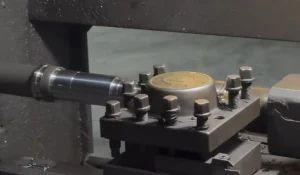
- Dimensional Inspections – Precision measuring instruments, such as micrometers and coordinate measuring machines (CMM), are used to verify that motor shafts meet exact dimensional tolerances and fit accurately within assemblies.
- Material Testing – The selected materials are rigorously tested to confirm their mechanical properties, including hardness, tensile strength, and fatigue resistance, ensuring they comply with engineering specifications.
- Surface Quality Checks – The shaft’s surface finish is examined for imperfections, roughness, or inconsistencies. Proper surface quality is essential to minimize friction, wear, and corrosion in operational environments.
- Functional Testing – Motor shafts undergo functional evaluation to ensure they perform as intended in real-world applications, transmitting torque efficiently and reliably without excessive vibration or noise.
Implementing strict quality control in motor shaft machining guarantees that each shaft meets performance requirements, enhances durability, and reduces the risk of premature failure in industrial or specialized applications.
What Are the Cost Considerations in Motor Shaft CNC Machining?
Several factors influence the overall cost of motor shaft CNC machining, from material selection to production processes. Understanding these elements helps engineers balance performance requirements with budget constraints.
- Material Costs-The choice of material plays a major role in determining the expense of a motor shaft. Standard carbon steel is cost-effective, while high-performance metals like titanium or nickel alloys raise costs due to greater strength, corrosion resistance, and heat tolerance. Selecting the right material requires balancing performance needs against budget limitations.
- Machining Complexity – The intricacy of CNC operations affects cost. Advanced processes like EDM, laser machining, or multi-axis milling cost more than conventional turning or milling due to specialized equipment and longer processing times.
- Tooling Costs – Cutting tools wear out during production, and harder or more abrasive materials accelerate this wear. Replacing worn tools, particularly for precision machining of high-strength shafts, adds to the overall manufacturing cost.
- Labor Costs – More complex shaft designs require skilled operators and potentially manual finishing work, increasing labor expenses. Training staff for advanced machining techniques can further add to the cost.
- Quality Control – Ensuring precise tolerances and reliable performance requires rigorous inspection and testing. Investment in measurement equipment and dedicated inspection time contributes to higher production costs but is essential for achieving consistent quality in precision motor shafts.
- Production Volume – Economies of scale can reduce the per-unit cost when producing larger quantities, while low-volume or prototype runs tend to be more expensive.
- Surface Finishing – Additional finishing processes such as grinding, polishing, or coating enhance performance and durability but also add to the overall manufacturing cost.
By carefully evaluating material selection, machining complexity, and quality control requirements, manufacturers can optimize both the cost and performance of CNC-machined motor shafts.
What Custom Motor Shafts Solutions Are Available?
Welleshaft in China specializes in providing custom motor shafts solutions for modern mechanical transmission systems and electric motors. These high-performance, reliable motor shafts are widely applied across industries such as robotics, industrial automation, automotive systems, and specialized machinery.
Comprehensive Manufacturing Capabilities – Leveraging advanced production equipment and precision machining technologies, Welleshaft can produce a wide range of motor shaft types tailored to client requirements.
Variety of Product Options – Motor shafts are available in both standard and custom sizes, with scalable production capacity to handle small prototype runs as well as large-volume orders efficiently.
Precision Machining Excellence – Cutting-edge CNC and precision machining techniques ensure that each motor shaft meets exact dimensional specifications, geometric tolerances, and surface quality standards, guaranteeing reliable performance in demanding applications.
Tailored Customization Services – Welleshaft offers personalized motor shaft customization, including special diameters, lengths, material selection, and surface treatments, to satisfy specific application needs.
With its combination of precision manufacturing, material expertise, and scalable production, Welleshaft in China delivers custom motor shafts solutions that meet the highest standards of performance, durability, and industrial reliability.
Why Choose Welleshaft as a Custom Motor Shafts Manufacturer in China?
Welleshaft leverages advanced CNC machining, heat treatment, and precision engineering capabilities in China to deliver custom motor shafts that satisfy both rigorous industry standards and the unique demands of each client.
Tailored Motor Shafts for Every Application
Our motor shafts are designed to meet specific torque, speed, and operational requirements for a wide range of motors, including AC and DC servo motors and large industrial electric machines. Every shaft is crafted with tight tolerances and precise alignment, ensuring reliable integration and long-lasting performance across electric motors, pumps, fans, conveyors, and various industrial equipment.
Durable, High-Quality Materials
We manufacture shafts from hardened steel, stainless steel, aluminum, titanium, and specialty alloys, guaranteeing durability, strength, and consistent performance in demanding environments.
Precision Machining and Balancing
Through precision grinding, balancing, and advanced machining processes, Welleshaft minimizes vibration, maintains accurate tolerances (from D10 to D600mm, Class 5–7), and extends service life for industrial applications.
Flexible and Scalable Production
Whether your project requires prototypes, small batches, or high-volume production, Welleshaft provides scalable manufacturing solutions to adapt to diverse project demands while maintaining quality and efficiency.
Comprehensive Quality Control
Every stage of the motor shaft production is subject to rigorous inspection and testing, ensuring consistent dimensions, optimal surface finish, and dependable performance.
Reliable Supply Chain and Production Capacity
With a robust supply network across China and large-scale production facilities, Welleshaft can handle bulk orders efficiently, maintain stable material suppl
y, and deliver finished shafts on schedule, supporting continuous OEM operations.
Choosing Welleshaft as yourcustom motor shafts manufacturer in China means partnering with a trusted supplier capable of providing tailored solutions, advanced machining expertise, and reliable support, e
nsuring your OEM projects achieve maximum performance, precision, and durability.
FAQs
What sizes of simple motor shafts are available?
Simple motor shafts are offered in diameters ranging from 0.25″ to 12″ and lengths from 0.50″ to 48″, allowing precise adaptation to various motor assemblies and application requirements.
Which materials can be used for motor shafts?
Motor shafts can be manufactured from stainless steel, carbon steel, alloy steel, and other specialty metals to suit performance needs and environmental conditions.
Can additional features like keyways, threads, or splines be included?
Yes, shafts can be customized with keyways, threads, tapers, splines, and other specialized features to match specific design and assembly requirements.
Which industries utilize simple motor shafts?
These shafts are commonly applied in electric motors, pumps, fans, conveyors, water treatment equipment, and a wide range of industrial machinery.
How is the quality and precision of motor shafts ensured?
Each shaft is produced using CNC turning and finishing processes, followe
d by thorough inspection and testing to maintain tight tolerances and high surface quality.
Is design support or prototyping available for motor shafts?
Yes, engineering support is available, including design consultation, CAD modeling, and rapid prototyping to validate your application before production.
Do you handle both low-volume and high-volume production?
Simple motor shafts can be produced for single prototypes, small batches, or large-scale manufacturing runs, adapting to different project requirements.
How can I request a quote for simple motor shafts?
To get a detailed proposal, provide your specifications through a quote request form or by contacting the supplier directly.
This blog is provided by the Welleshaft Engineering Team, led by Mr. Zhang, with over 10 years of experience in precision motor shaft design and manufacturing. Welleshaft in China provides custom and standard motor shafts with advanced CNC machining for industrial, automotive, and automation OEMs, ensuring quality, reliability, and global technical support.
 Русский
  English
  Português do Brasil
  Deutsch (Österreich)
  Deutsch (Schweiz)
  English (UK)
  English (Australia)
  English (New Zealand)
  Deutsch
  Français du Canada
  Français
  Français de Belgique
  Italiano
  English (South Africa)
  Português
  Español
  Español de México
  Español de Perú
  Español de Colombia
  العربية
  日本語
日本語  한국어
한국어  Tiếng Việt
  ไทย
ไทย
Отзывы
Отзывов пока нет.