
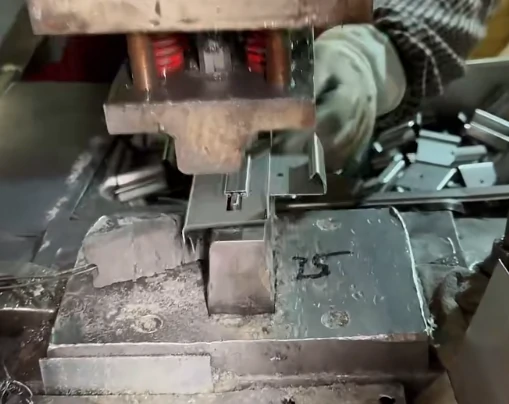
What is a custom metal bracket?
A custom bracket is engineered according to load requirements, environmental conditions, interface connections, and service workflows. It may appear as a simple angle or gusset, but in reality it is precisely shaped, slotted, reinforced, coated, and fastened to match the equipment it supports and its maintenance needs.
Typical customization includes:
- Application-specific geometry such as flanges, ribs, standoffs, and bosses
- Accurate hole patterns and slot layouts for datum-controlled mounting
- Integration of captive fasteners, threaded inserts, or weld nuts to improve service efficiency
- Built-in cable or hose management features
- Selection of corrosion-appropriate alloys and surface finishes
- Serviceability features such as lifting points, tool clearance areas, and finger access
- Identification markings such as etched part numbers, flow direction indicators, or QR codes
Brackets, also referred to as hangers, are widely used across different fields. They are applied in high-rise construction, automotive manufacturing, precision electronic components, electrical equipment systems, as well as aerospace and machinery industries. Their applications include load support, lifting assistance, pressure resistance, part fixation, and structural connection.
In various industries, structural integrity is critical for achieving stable performance. If a bracket lacks stability in application, it may lead to equipment failure and safety risks, affecting the normal operation of the entire system.
Custom metal brackets are essential connectors used to hold components together, provide structural support, or securely mount parts. While they can be made from different materials, custom sheet metal brackets are most commonly produced from steel. Their functions range from reinforcing building structures and stabilizing industrial equipment to securing key components in automotive and electronic assemblies.
What are the main types of custom metal brackets?
A custom metal bracket is not a single standard product but comes in different forms depending on its application. The way it is designed, the material used, and the manufacturing method all play a role in how well it performs in a specific environment.
Steel is often used when strength and load capacity are the main concerns. A custom sheet metal bracket made from steel is typically selected for heavy-duty applications where stability and resistance to deformation are important. These are commonly found in construction work, automotive systems, and industrial machinery where the structure is under constant stress.
Aluminum brackets are chosen when weight reduction becomes a priority. A metal mounting bracket made from aluminum provides a good balance between strength and lightness, and its natural resistance to corrosion makes it suitable for outdoor or moisture-exposed environments. It is often used in aerospace-related systems, electronic products, and consumer applications where both performance and appearance matter.
Stainless steel is used in situations where both durability and corrosion resistance are required. A custom metal bracket made from stainless steel is frequently applied in environments where long service life and hygiene are important, such as medical equipment and food processing systems.
Beyond industrial applications, a custom sheet metal bracket can also be used in interior and furniture design. In shelving systems, for example, metal brackets are not only functional but also part of the visual design. They are tailored to specific dimensions and styles to support both structural needs and aesthetic requirements in homes and office environments.
Where are metal brackets commonly used in industry applications?
Applications Across Industries: Metal Bracket Applications span a wide range of sectors where strength, stability, and precise load support are required. These components are engineered to reinforce structures, connect assemblies, and ensure long-term operational reliability.
- Construction: Metal brackets are widely used in building frameworks, supporting beams, wall systems, shelving units, and architectural structures. They help maintain load distribution and overall structural stability in both residential and industrial projects.
- Automotive: In vehicles, brackets are essential for securing exhaust systems, brake lines, wiring harnesses, and electronic modules. They are designed to withstand vibration, heat exposure, and long-term mechanical stress.
- Electronics: Within electronic systems, metal brackets provide mounting and grounding support for circuit boards, transformers, power supplies, and server assemblies, ensuring safe and stable operation.
- Furniture: In modern furniture design, brackets are used to reinforce joints and connections in tables, cabinets, and shelving systems, combining structural strength with clean, functional design.
Advanced manufacturing processes such as stamping, CNC machining, bending, and welding are widely applied to produce durable brackets that meet the demands of different industries. These processes ensure consistent precision, high load capacity, and adaptability for complex engineering requirements across sectors such as industrial machinery, renewable energy systems, construction equipment, and heavy-duty mechanical assemblies.
Different applications require different material selections, load capacities, and surface treatments. Engineers typically evaluate working conditions such as stress levels, environmental exposure, and assembly requirements before recommending the most suitable configuration of metal brackets or custom metal brackets.
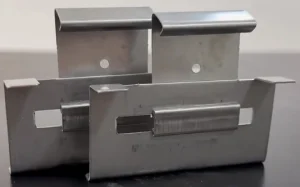
What are the benefits of choosing custom metal brackets?
Benefits of Choosing Custom Metal Brackets over standard options are driven by performance, precision, and long-term efficiency. In industrial applications, customized brackets improve reliability and reduce lifecycle costs.
- Precision Fit: Designed to exact dimensions, load, and mounting needs for perfect compatibility.
- Higher Strength & Durability: Optimized materials and structure resist fatigue, corrosion, and vibration.
- Design Flexibility: Supports complex geometries and multifunctional integration.
- Cost Efficiency: Lower maintenance and fewer replacements reduce long-term costs.
- Easy Integration: Fits existing systems without modification, improving alignment and installation.
- Standards Compliance: Meets strict safety and quality requirements.
- Sustainable Manufacturing: Uses recyclable materials and efficient production methods.
How are metal brackets produced in manufacturing processes?
The Metal Brackets Production Process involves a highly controlled sequence of engineering, fabrication, and inspection steps designed to ensure precision, strength, and consistent performance. Each stage is carefully managed to meet functional requirements across different industrial applications.
Requirement Analysis and Engineering Design
The Metal Brackets Production Process begins with a structured evaluation of application needs, including load conditions, installation environment, and functional constraints. Engineers then use CAD modeling tools to develop accurate technical drawings that define geometry, tolerances, and structural specifications.
Material Planning and Selection
A critical step in the Metal Brackets Production Process is choosing the appropriate raw material. Common options include carbon steel, stainless steel, and aluminum alloys, selected based on strength requirements, corrosion resistance, weight considerations, and cost efficiency.
Precision Cutting and Forming
Once the design is finalized, raw materials are processed using advanced manufacturing methods such as laser cutting, CNC punching, and precision bending. These techniques ensure accurate dimensions and repeatable consistency across production batches.
Structural Assembly and Joining
For multi-part designs, components are assembled and permanently joined using welding or mechanical fastening methods. This stage ensures that the final bracket structure maintains rigidity, alignment, and load-bearing capability under operational stress.
Surface Finishing and Protection
To improve durability and resistance to environmental factors, surface treatment processes are applied. Options such as powder coating, galvanizing, and anodizing help enhance corrosion resistance while also improving surface appearance and longevity.
Dimensional and Performance Inspection
Quality assurance is a key phase in the Metal Brackets Production Process. Each component undergoes strict inspection for dimensional accuracy, mechanical strength, surface quality, and compliance with technical specifications to ensure consistent reliability.
Protective Packaging and Logistics Coordination
After passing inspection, finished products are securely packaged to prevent damage during handling and transportation. Logistics planning ensures efficient delivery aligned with project timelines and customer requirements.
Ongoing Technical Support
Beyond production and delivery, technical support is provided to address installation guidance, application questions, and performance feedback, ensuring continuous usability and satisfaction.
What manufacturing techniques are used for brackets?
The Bracket Manufacturing Techniques used in industrial production rely on a combination of precision forming, cutting, machining, and finishing methods to ensure consistent quality and structural reliability. Process selection is determined by design complexity, material type, tolerance requirements, and production volume.
Stamping
Uses precision dies to form metal sheets into brackets with consistent shapes
Suitable for large-scale production of standardized components such as mounting brackets, support brackets, and connection brackets. Stable tooling systems ensure repeatable accuracy and efficiency.
Laser Cutting
High-energy laser systems are used to cut detailed bracket profiles from various sheet materials Applied in designs requiring tight tolerances and complex geometries, especially in precision engineering and high-performance applications.
CNC Bending
Computer-controlled press brakes are used to form precise angles and structural shapes Ensures dimensional consistency and accurate bending results for different bracket configurations.
CNC Machining
Computer-guided machining processes produce high-precision features and complex structural details Used when brackets require intricate geometry or strict tolerance control.
Welding
Advanced welding techniques are applied to assemble multi-component bracket structures Provides strong joints and improves overall structural integrity.
Surface Treatment
Includes processes such as powder coating, plating, and anodizing
Enhances corrosion resistance, durability, and surface appearance.
The Bracket Manufacturing Techniques are supported by digital engineering tools such as 3D modeling and process simulation to ensure accuracy before production begins. Tooling design and mold development are also integrated to maintain production stability and repeatability.
Additional capabilities include:
- High-speed laser cutting for improved precision and efficiency
- Progressive die stamping and high-speed stamping for different production scales
- Tool and die design and manufacturing for stable production support
- Rapid prototyping for fast sample development and shortened product cycles
Through a structured combination of forming, machining, and finishing methods, the Bracket Manufacturing Techniques ensure reliable installation performance, dimensional accuracy, and functional stability across a wide range of industrial applications.
How do manufacturing options impact maintenance performance?
| Failure Mode | Maintenance Pain | Custom Design Response | Effect On Maintenance |
| Fasteners Backing Out | Repeated retorquing and vibration warnings from equipment | Use of captive serrated flange nuts, thread-locking screws, keyhole hang features combined with final datum holes | Reduces inspection frequency and speeds up reassembly |
| Crevice Corrosion | Screws seize, leading to drilling or forced removal during maintenance | Hemmed edges, sealed lap joints, and corrosion-resistant materials such as 316 stainless | Minimizes rework and eliminates torch or drill-out operations |
| Sensor Drift | Extended troubleshooting and repeated calibration work | Addition of datum tabs, dowel-friendly holes, and reinforcing ribs in a custom sheet metal bracket | Maintains alignment stability and reduces callback frequency |
| Chafed Cables | Intermittent electrical faults that are difficult to trace | Integrated cable saddles with smooth, large-radius routing in a metal mounting bracket | Converts reactive repair into preventive maintenance |
| Mis-Reassembly | Repeated failures caused by incorrect installation orientation | Laser-etched markings and asymmetric locator features in a custom metal bracket | Ensures correct first-time installation and reduces rework |
Why do brackets significantly affect maintenance costs?
A custom metal bracket itself might not be expensive, but once it starts causing issues, maintenance teams usually feel it pretty quickly. It’s rarely the bracket alone—it’s what happens around it: alignment drifts, parts start vibrating, access becomes awkward, and suddenly small tasks take longer than expected.
Misalignment and Vibration
This usually starts quietly. A slightly oversized hole here, a thinner section there. Over time, things begin to shift. Sensors stop sitting exactly where they should. A panel that used to be solid now has a faint rattle. Bearings don’t feel as stable as they used to.
And once that happens, maintenance turns repetitive. Technicians go back in, tighten things again, check alignment, and then come back a few weeks later to do the same thing. Nearby components also start wearing faster, which makes the whole issue spread.
Corrosion and Wear
In real environments, brackets don’t stay clean or dry. Washdowns, chemicals, humidity, dust—it all builds up. If a custom sheet metal bracket isn’t really matched to that environment, corrosion starts showing up sooner than expected.
The trouble comes when fasteners lock up. At that point, you’re no longer just doing maintenance—you’re removing stuck hardware, drilling, cutting, sometimes even replacing more than you planned. What should be a quick job turns into a shutdown that lasts much longer.
Access and Serviceability
This one is often overlooked. A metal mounting bracket can be structurally perfect but still annoying to work around. If it blocks a grease point or hides a filter, technicians usually have no choice but to remove it.
The problem is, reassembly isn’t always perfect. It might go back slightly off, just enough to matter later. When this repeats across multiple maintenance cycles, those small inefficiencies start stacking up.
Thermal and Electrical Issues
Heat changes things. In higher-temperature zones, thinner brackets can slowly lose stiffness or clamping force without anyone noticing right away. It’s gradual.
Inside electrical enclosures, it’s a different story—poor grounding or contact can create EMI problems. These don’t always show up immediately either. They usually appear later as intermittent faults, and tracking them down takes time.
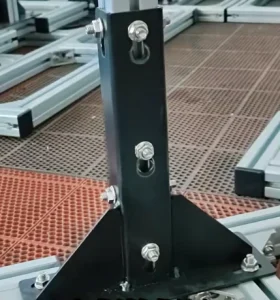
What design features help reduce maintenance time for brackets?
When it comes to a custom metal bracket, the small design decisions made early on usually decide how much time you’ll spend later on maintenance. It’s rarely one big factor—it’s a collection of small details that either make servicing smooth or turn it into repeated effort.
Material and Finish Choices
The environment matters more than people sometimes expect. A custom sheet metal bracket that works fine in a dry setting may behave very differently once chemicals, moisture, or salt are involved.
- 304 / 316 Stainless Steel: Handles washdown and chemical exposure well, with 316 performing better in chloride-rich environments
- Aluminum 5052 / 6061: Lightweight and corrosion resistant, usually anodized when abrasion is a concern
- Carbon Steel: Cost-effective and strong, but typically needs zinc-nickel, e-coat, or powder coating for protection
- Duplex Stainless or Hard Coatings: Used in harsher conditions like abrasive flow or coastal exposure
The key is simple: match the finish to the environment. Otherwise, you end up dealing with stuck fasteners or galling that slows everything down.
Geometry and Reinforcement
Sometimes the fastest maintenance improvements come from geometry, not material.
Adding ribs or gussets can stiffen a structure without making it overly heavy. In sheet metal designs, embossing or hemming helps remove play and improves rigidity without adding much cost.
Small locating features like datum tabs or alignment guides also make a big difference. With a well-designed custom metal bracket, technicians don’t have to “guess” alignment during reassembly—it naturally goes back where it should.
Fastening and Adjustability
This is where a lot of maintenance time is either saved or wasted.
Slotted primary holes combined with precise secondary holes allow a bit of flexibility during installation, then lock everything into final position. Captive hardware helps even more by preventing dropped nuts or lost parts, especially in tight or guarded spaces.
Keyhole slot designs are another simple trick—they let technicians hang the part first and then tighten it without awkward handling.
Built-In Cable and Hose Management
Instead of adding separate clamps later, some metal mounting bracket designs include stamped saddles, smooth routing edges, or built-in tie points.
This keeps cables and hoses from rubbing against sharp edges or vibrating loose over time. It also reduces the number of extra components that can fail or need tightening during maintenance cycles.
Identification and Visual Cues
Clear marking might seem minor, but it saves a surprising amount of time in the field.
Laser-etched part numbers, torque values, or flow direction marks help technicians avoid second-guessing. When a custom sheet metal bracket is clearly labeled, rework drops simply because fewer mistakes happen during reassembly.
Common Material Options Used in Brackets
Different applications rely on different material groups depending on strength, weight, and environment:
- Steel Brackets: Q235, 1020, 1045, S45C
- Stainless Steel: 304, 316, 430, 201
- Alloy Steel: 4140, 4340, 20CrMnTi
- Aluminum Brackets:
- 5000 Series: 5052, 5083, 5754
- 6000 Series: 6061, 6063, 6082
- 7000 Series: 7075, 7050
- Specialty Materials:
- Titanium: Grade 2, Grade 5, Grade 9
- Brass: C3600, C2600, C2800
- Bronze: QAl9-4, QAl10-4-4
- Composite Materials:
- Carbon fiber (various weaves and thicknesses)
- Engineering plastics such as MC901, POM, PA66+GF30
How do standardization and kitting reduce mean time to repair (MTTR)?
When working with a custom metal bracket, maintenance time is often influenced less by the part itself and more by how standardized and organized the supporting system is. Small improvements in consistency and preparation can noticeably reduce repair time in the field.
Part Number Consolidation
Instead of keeping multiple slightly different versions of brackets that “almost fit,” it is usually more efficient to consolidate them into a smaller set of well-defined designs.
A streamlined custom sheet metal bracket range reduces confusion during replacement and makes spare parts management much simpler. It also shortens training time because technicians only need to recognize fewer variations during maintenance work.
Kitting and Visual Management
Maintenance becomes much smoother when parts arrive as a complete set rather than individual components.
A metal mounting bracket can be packaged with captive hardware, torque labels, and QR codes that link directly to installation instructions. This reduces time spent searching for missing bolts or checking unclear documentation.
In practice, technicians focus on actual assembly work instead of spending time locating parts or confirming procedures.
Spares Strategy
A structured spare parts approach also plays a key role in reducing downtime.
For critical equipment, keeping one complete spare kit per machine cell helps ensure quick replacement when needed. For less critical areas, shared or pooled spare inventory is often enough.
With a standardized custom metal bracket design, this approach becomes practical because parts are interchangeable, reducing delays caused by mismatch or rework during emergency repairs.
What industry-specific factors affect bracket design and selection?
Different operating environments place very different demands on a custom metal bracket. What works in one industry may fail quickly in another, so design choices usually need to follow the real service conditions rather than a generic standard.
Alimentation et boissons
In hygiene-driven environments, the priority is easy cleaning and no dirt traps. A custom sheet metal bracket is typically designed with smooth, continuous welds or fully sealed joints to avoid crevices where residue can accumulate.
Tool-less captive fasteners are often used so technicians can remove and reinstall parts quickly during short sanitation windows, without extra tools slowing the process down.
Mining and Aggregates
Here, the main challenge is constant abrasive dust and mechanical wear. Brackets need to be more robust, often with increased thickness or protective wear elements.
A metal mounting bracket in this environment may include hardfaced wear strips or replaceable liners. Serrated hardware and generous radii are also used to reduce stress concentration and help prevent cracking over time.
Oil, Gas, and Chemical
Exposure to chemicals, UV, and harsh outdoor conditions requires stronger corrosion resistance and stable electrical performance.
A custom metal bracket in this sector often uses duplex stainless or coated carbon steel paired with compatible fasteners to avoid galvanic issues. Bonding features are added to maintain electrical continuity, and etched identification marks are used to support maintenance during shutdown turnarounds.
Renewable Energy and Battery Plants
These environments are sensitive to both cleanliness and electromagnetic interference. A custom sheet metal bracket is usually designed with rigid datum control to keep sensors stable and predictable.
Materials like anodized aluminum or stainless steel are commonly used. Cable management features are often integrated directly into the bracket to support cleaner layouts and reduce clutter in controlled environments.
Warehousing and Parcel Handling
In logistics systems, vibration and frequent light impacts are part of daily operation. Over time, this can loosen or stress poorly designed components.
A metal mounting bracket here typically includes rolled edges and hemmed flanges to improve durability while still allowing slight flexibility without losing alignment. Quick-release features are also used to reduce downtime, especially on high-throughput sorting lines where every minute matters.
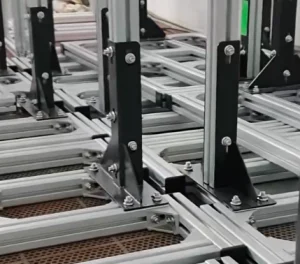
What should be included in a bracket implementation checklist?
Rolling out a custom metal bracket successfully is less about a single design decision and more about making sure every step is controlled—from failure understanding to maintenance feedback. A structured checklist helps avoid gaps that usually show up later in the field.
Define the Failure Modes
Start by clearly listing where problems typically occur—such as fasteners loosening, corrosion points forming, or access becoming restricted. For a custom sheet metal bracket, each of these issues should be connected to real maintenance impact, including labor time and downtime cost, so priorities are based on actual operational loss rather than assumptions.
Capture Interfaces
Before finalizing the design, it is important to record all interface conditions. This includes hole positions, datum surfaces, cable routing paths, required clearances, and tool movement space.
A well-defined metal mounting bracket depends heavily on this step, since even small measurement errors can lead to alignment issues during installation or maintenance.
Select Materials and Finishes
Material and surface selection should always match the working environment. It is also important to ensure fastener compatibility to avoid corrosion or seizure problems later.
A properly specified custom metal bracket reduces unexpected wear and helps maintain consistent performance under real operating conditions.
Engineer Serviceability
Maintenance efficiency should be designed in from the start. Features like captive hardware, keyhole mounting, datum locators, defined torque windows, and QR codes linking to single-page work instructions all help reduce service time.
With a well-designed custom sheet metal bracket, technicians can complete tasks faster without relying on trial-and-error during reassembly.
Prototype Quickly
Early validation is critical. Laser cutting and bending are often used for first prototypes to quickly test fit, stiffness, and actual maintenance workflow with technicians.
A metal mounting bracket should not only fit on paper but also perform smoothly in real installation and servicing conditions before mass production.
Standardize and Kit
Once the design stabilizes, it is better to freeze a limited number of standard variants. Including hardware and labels in kits helps reduce confusion during maintenance.
A standardized custom metal bracket system simplifies BOM management and ensures spare parts are easier to control and deploy.
Document and Train
Clear visual work instructions are essential. Photos, torque values, and tightening sequences should be included so technicians have a consistent reference during work.
This ensures every custom sheet metal bracket is installed the same way, reducing variation between operators
Measure Results
After implementation, performance should be tracked using real metrics such as MTBF, MTTR, unplanned downtime, and preventive maintenance time per asset.
For a metal mounting bracket, these indicators help confirm whether design improvements are actually reducing maintenance effort or just shifting it elsewhere.
What does a complete bracket solution from design to delivery include?
The Comprehensive Bracket Solutions,From Design to Delivery process covers the full development cycle, from initial engineering to final validation, ensuring each component meets functional and structural expectations.
Design & Engineering
- CAD/CAM design support is used to convert requirements into precise technical drawings
- Structural optimization is carried out through simulation analysis such as FEA to improve performance
- DFM (Design for Manufacturing) guidance is applied to improve production efficiency and reduce complexity
- Prototype development and testing are conducted to verify design feasibility before mass production
Quality Assurance
- Dimensional inspection ensures all parts meet required tolerances
- Material certification is verified to confirm compliance with specified grades and standards
- Load testing and validation are performed to assess strength and performance under working conditions
- Surface quality control checks appearance, coating consistency, and corrosion resistance
Industries Served
- Automotive and transportation systems requiring stable structural support components
- Aerospace and defense applications with strict precision and safety requirements
- Industrial machinery assemblies needing durable load-bearing brackets
- Renewable energy systems such as solar and wind structures
- Telecommunications equipment installations requiring stable mounting solutions
- Construction equipment where structural reinforcement and reliability are essential
The Comprehensive Bracket Solutions,From Design to Delivery process ensures that each stage—from engineering design to final inspection—is aligned with application requirements, supporting consistent performance across multiple industries.
Why choose welleshaft for your custom metal bracket needs?
In today’s highly competitive global supply chain, selecting a reliable partner for custom metal bracket solutions is a critical decision that directly affects product performance, cost efficiency, and long-term stability. Based in China, welleshaft stands out as a trusted manufacturing partner by combining strong engineering expertise, advanced production capability, and a client-focused service model. With extensive experience in custom metal bracket manufacturing, our engineering team supports not only production but also design optimization, material selection, and structural improvement to ensure every solution achieves higher durability and manufacturability. Equipped with advanced CNC machining centers, precision welding systems, and automated fabrication equipment, we deliver high-accuracy metal bracket manufacturing with stable tolerances and consistent batch quality, even for complex and large-scale projects.
Our cost-efficient production system helps customers optimize budgets without compromising performance, while our strict quality control process ensures every component meets international standards through detailed inspection and verification at each stage.
Serving global industries including automotive, construction, and industrial machinery, welleshaft in China adapts custom metal bracket solutions to different regional and application requirements. We also specialize in fully customized engineering support, from simple L-brackets to complex structural assemblies, ensuring every product aligns precisely with customer specifications. With sustainable manufacturing practices, scalable production capacity, and proven project experience, welleshaft is more than a supplier—we are a long-term partner committed to delivering reliable, cost-effective, and high-performance custom metal bracket solutions from China to global markets.
What are the most frequently asked questions about metal brackets?
Why should I opt for custom metal brackets instead of standard ones?
Choosing Benefits of Choosing Custom Metal Brackets allows components to be designed around exact application requirements. Compared with standard options, they provide better fitting accuracy, improved performance, and more flexibility in geometry, material, and load handling.
How do I ensure the quality of custom metal brackets sourced from China?
Quality assurance depends on selecting suppliers that follow strict production standards. It is important to verify certifications, review inspection systems, request samples, and evaluate manufacturing capabilities before bulk orders.
Are aluminum brackets as durable as steel ones?
Aluminum offers a lightweight structure with good corrosion resistance, while steel provides higher overall strength. The choice depends on working conditions such as load demand, environmental exposure, and weight limitations.
How do I determine the right material for my custom bracket?
Material selection in Metal Brackets Applications is based on usage environment, stress levels, and functional requirements. Steel, stainless steel, and aluminum are commonly selected depending on whether strength, corrosion resistance, or weight reduction is prioritized.
How do I ensure the sustainability of the products I source?
Sustainability in Metal Brackets Applications can be improved by selecting materials with recyclable properties and manufacturing processes that reduce waste and energy consumption.
This blog was provided by the Welleshaft Engineering Team, led by Mr. Xu, a specialist in custom metal bracket design and manufacturing. With extensive experience in industrial engineering and quality control, Welleshaft delivers reliable, cost-effective, and high-performance bracket solutions for global industries.

 Français de Belgique
  English
  Português do Brasil
  Deutsch (Österreich)
  Deutsch (Schweiz)
  English (UK)
  English (Australia)
  English (New Zealand)
  Deutsch
  Français du Canada
  Français
  Italiano
  English (South Africa)
  Português
  Español
  Español de México
  Español de Perú
  Español de Colombia
  العربية
  日本語
日本語  Русский
  한국어
한국어  Tiếng Việt
  ไทย
ไทย