
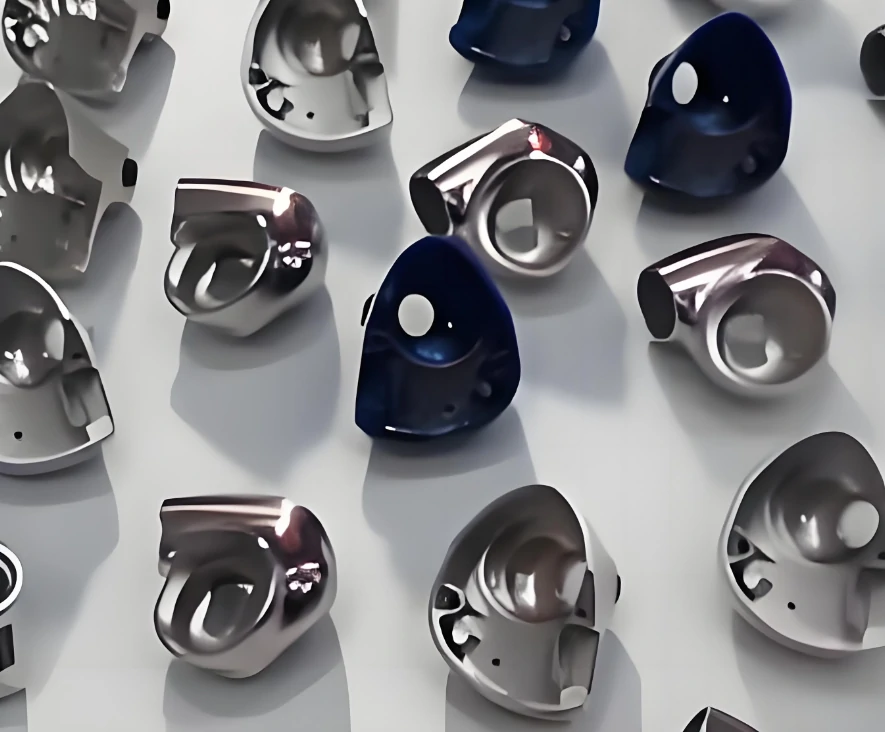
What is Metal Injection Molding (MIM)?
Metal Injection Molding (MIM) is an advanced manufacturing technique widely used for producing custom metal parts with high precision and efficiency. This process merges the adaptability of plastic injection molding with the strength and functionality of metals, making it ideal for complex and detailed components. By enabling intricate designs and exceptional precision, MIM offers significant advantages in industries that require compact, high-performance parts.
The process begins with mixing fine metal powders with a binding polymer to form a moldable feedstock. This feedstock is then injected into precision molds to create the desired shape. After molding, the component undergoes a debinding phase to remove the polymer, followed by sintering at elevated temperatures, resulting in a fully densified metal part with strong metallurgical bonds.
One of the key benefits of MIM is its ability to achieve tight tolerances, sometimes as precise as ±0.003 inches. This makes it particularly suitable for medical devices, electronics, and automotive components, where exact dimensions and intricate geometries are critical.
Additionally, the MIM process improves manufacturing efficiency by producing multiple components in a single cycle, reducing lead times and boosting overall productivity. Its combination of precision, complexity, and scalability makes MIM a preferred method for high-quality custom metal parts manufacturing.
What are the Advantages of Metal Injection Molding (MIM) in Consumer Electronics?
Precision and Tolerance
One of the most significant advantages of Metal Injection Molding (MIM) in the consumer electronics industry is its ability to manufacture highly detailed components with exceptional dimensional accuracy. As electronic products continue to become smaller and more sophisticated, manufacturers require production methods capable of delivering consistent results across large volumes.
The MIM process can routinely achieve tolerance levels as tight as ±0.003 inches, making it well-suited for miniature components used in smartphones, wearable devices, wireless earbuds, cameras, and other compact electronics. Such precision helps ensure proper alignment between mating parts, reducing assembly challenges and improving overall product reliability.
In applications such as connectors, switches, sensor housings, and micro-mechanical assemblies, precise dimensions directly influence performance. The high accuracy offered by Metal Injection Molding supports stable electrical connections, improved signal transmission, and enhanced long-term durability. As a result, manufacturers can produce increasingly compact products without sacrificing quality or functionality.
Material Variety
Another key benefit of Metal Injection Molding (MIM) is the broad selection of engineering metals available for component production. This flexibility allows designers to choose materials based on specific mechanical, thermal, electrical, or corrosion-resistance requirements.
Common MIM materials include:
| Material | Key Benefits | Typical Electronics Applications |
| Acero inoxidable | Corrosion resistance, strength | Connectors, housings, brackets |
| Titanio | Lightweight, high strength | Wearables, portable devices |
| Copper Alloys | Excellent conductivity | Electrical contacts and connectors |
| Nickel Alloys | Heat and wear resistance | Precision electronic assemblies |
| Soft Magnetic Alloys | Magnetic performance | Sensors and electromagnetic components |
This extensive material compatibility enables manufacturers to optimize both performance and product lifespan. For example, stainless steel is often selected for components exposed to moisture or corrosive environments, while titanium is favored for premium portable electronics where weight reduction is critical.
Surface Treatment
In addition to precision manufacturing, Metal Injection Molding (MIM) offers excellent compatibility with a wide range of finishing processes. The uniform surface structure of sintered MIM components provides an ideal foundation for decorative and functional surface enhancements.
Common MIM Surface Finishes include:
- PVD (Physical Vapor Deposition)
- Polishing
- Brushing
- Sandblasting
- Painting
- Electroplating
- Heat Treatment
Because MIM components are produced with consistent surface quality, manufacturers can achieve highly attractive cosmetic finishes that meet the aesthetic demands of modern consumer electronics.
Painting allows color customization and brand differentiation, while sandblasting creates textured surfaces that improve grip and tactile feel. For premium products, polishing can generate a mirror-like appearance that enhances perceived value.
PVD coatings are particularly popular in electronics due to their combination of decorative appeal and wear resistance. Coatings such as titanium nitride (TiN) and chromium nitride (CrN) improve scratch resistance while offering a range of metallic colors, including gold, black, silver, and rose gold finishes.
Meanwhile, brushing creates a sophisticated matte texture frequently seen on high-end electronic enclosures. When additional mechanical performance is required, heat treatment can improve hardness, strength, and dimensional stability.
Complex Geometries and Design Freedom
The growing demand for compact electronic devices has increased the need for manufacturing technologies capable of producing intricate shapes without excessive production complexity. Metal Injection Molding (MIM) excels in this area by enabling the fabrication of highly detailed and complex geometries that would be difficult or costly to achieve through conventional machining.
One of the primary advantages of MIM Design Guidelines is the ability to integrate multiple design features into a single component. Internal channels, undercuts, thin walls, fine threads, logos, and micro-features can often be incorporated directly into the molded part.
Benefits of this design flexibility include:
- Reduced part count
- Simplified assembly processes
- Lower production costs
- Improved dimensional consistency
- Enhanced product reliability
By eliminating the need to assemble multiple small parts, manufacturers can reduce potential failure points and streamline production workflows. This capability is particularly valuable in smartphones, wearable technology, gaming devices, and other miniaturized electronics where space is limited.
Furthermore, Metal Injection Molding produces near-net-shape components, minimizing secondary machining operations and helping manufacturers bring innovative product designs to market more efficiently.
Reduced Waste and Material Utilization
Sustainability and manufacturing efficiency have become increasingly important in modern electronics production. Compared with traditional subtractive manufacturing methods, Metal Injection Molding (MIM) offers superior material utilization and significantly lower waste generation.
The process begins with carefully controlled metal powders blended with a binder system to create feedstock. During molding, material is injected only where needed, reducing unnecessary scrap and maximizing resource efficiency.
Key advantages include:
- Material utilization rates often exceeding 95%
- Minimal machining waste
- Lower raw material consumption
- Reduced production costs
- Improved environmental sustainability
Unlike CNC machining, where substantial material may be removed during processing, Metal Injection Molding converts most of the feedstock into finished products. This efficiency not only lowers manufacturing costs but also supports environmentally responsible production practices.
As demand for greener manufacturing continues to grow, the ability of MIM to reduce waste while maintaining high-volume production capability makes it an attractive solution for the evolving consumer electronics sector.
Why do Consumer Electronics Teams Evaluate MIM?
Miniature Geometry
Consumer electronics teams often favor Metal Injection Molding (MIM) for components with miniature geometry, including small mechanical features, internal support structures, and compact device hardware. Compared with larger, simpler housings, these intricate parts benefit most from MIM’s precision and complex forming capabilities.
Appearance and Function
In electronics, both appearance and functionality are critical. MIM parts provide superior surface finish, edge quality, and cosmetic consistency, ensuring that components not only perform mechanically but also meet the aesthetic expectations of consumer-facing devices.
High-Repeat Production
When consumer electronics components are produced in high volumes, Metal Injection Molding becomes especially advantageous. Its ability to maintain tight tolerances and repeatable quality across many cycles makes it an efficient and cost-effective choice for mass production.
Feature Consolidation
A key benefit of MIM lies in feature consolidation. By integrating multiple functional elements into a single MIM part, manufacturers can reduce the number of small machined pieces, simplify assembly, and improve overall production efficiency.
This consolidation is particularly valuable in consumer electronics, where space is limited and assembly complexity must be minimized.
What do electronics buyers usually want to see beyond basic manufacturability?
In many electronics buyers want to see beyond basic manufacturability evaluations, the first checkpoint is how well the product separates appearance-critical and non-visible areas. A clear cosmetic zone definition ensures that visible surfaces, internal structures, and post-finishing requirements are evaluated under the correct acceptance criteria. This helps avoid unnecessary rejections caused by inconsistent visual standards.
Another key expectation is the clarity of assembly fit logic. Buyers typically look for well-defined critical mating structures, including snap-fit regions, hinge interfaces, precision contact points, and alignment features. When these details are clarified before tooling approval, it reduces downstream assembly issues and improves overall product reliability in high-volume electronics applications.
Attention to surface finish planning also plays a major role in buyer decision-making. Processes such as polishing, blasting, electroplating, coating, or decorative finishing directly influence how a consumer electronics component is perceived and evaluated. Proper planning ensures that the final surface quality aligns with both functional requirements and aesthetic expectations.
Finally, many programs depend on strong repeat production stability, where consistency matters more than a single approved sample. For electronics components, maintaining uniform appearance, dimensional accuracy, and fit across mass production runs is essential. Stable output across batches helps ensure long-term reliability and reduces variation-related risks in large-scale assembly operations.
What are the MIM Parts Consumer Electronics Application Examples?
Watches and Accessories
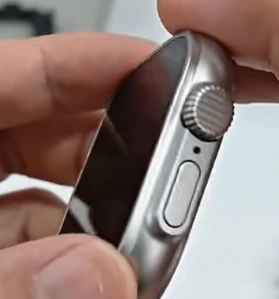
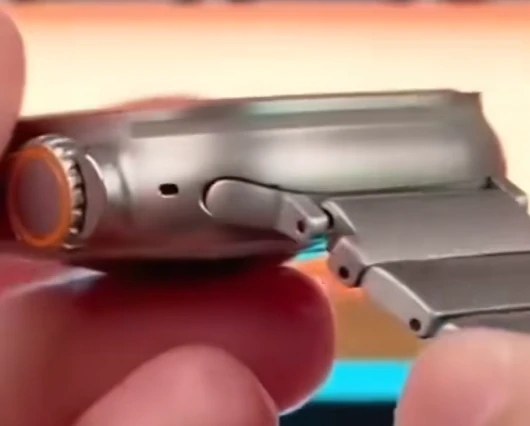
Metal Injection Molding (MIM) has become an essential manufacturing method for watches and accessories, offering a precise and cost-efficient solution for producing components with intricate designs. Examples include watch frames, buckles, and connectors, which often involve complex geometries challenging for traditional production methods.
The MIM process enables tight tolerances—often within ±0.3%—ensuring that buckles and other mechanisms function seamlessly and securely. Its precision allows multiple features to be integrated into a single component, reducing assembly steps and improving overall production efficiency.
Material versatility is another advantage. MIM materials, such as stainless steel, titanium, and various alloys, deliver wear resistance, corrosion protection, and long-term durability—qualities essential for accessories subjected to daily use. The repeatable accuracy of MIM ensures that each part in a production batch maintains consistent performance and quality, making it a reliable choice for large-scale watch component manufacturing.
Smartphone Components
MIM parts are widely used in smartphone components, where precision and material performance are critical. The MIM process produces small, intricate parts with extremely tight tolerances, enhancing device reliability and functionality.
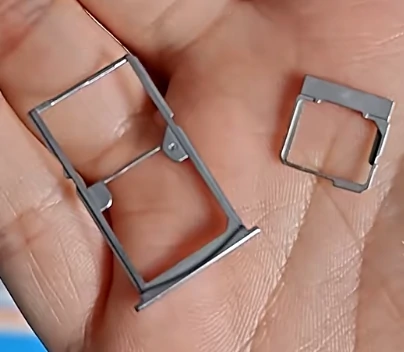
Key components such as SIM card slots, phone frames, and keys benefit from MIM because it achieves high strength, durability, and corrosion resistance. Tolerances as low as ±0.02 mm can be maintained, ensuring precise fit and robust mechanical performance for frequently handled parts.
In addition, Metal Injection Molding supports high-volume production with short cycle times, offering cost-effective solutions without compromising quality. For keys or buttons, MIM parts can achieve Rockwell hardness of 45–70, balancing mechanical strength with tactile responsiveness. This combination of precision, material integrity, and production efficiency makes MIM ideal for smartphone manufacturing.
Earbuds and Audio Devices
For earbuds and other audio devices, MIM enables the creation of:
- Earbud frame structures
- Miniature acoustic supports
- Decorative and structural metal details
- Compact internal hardware for wearable devices
These components require fine features and durability in a compact form factor, making MIM the preferred solution for small, high-precision audio parts.
Tablets, Laptops, and Wearables
MIM parts are extensively applied in phones, tablets, laptops, and wearable devices, including:
- SIM-related metal parts
- Mini hinges or pivot mechanisms
- Buttons and support hardware
- Small structural inserts
- Compact hinge components
- Locking or retention details
- Precision motion supports
- Watch or band-adjacent hardware
- Miniature connector supports
- Small cosmetic metal features
In all cases, MIM allows complex features to be combined in a single part, reducing assembly requirements while maintaining tight tolerances and consistent quality.
Connector and Module Hardware
In connector and module hardware, MIM is ideal for producing:
- Small brackets and retainers
- Module support parts
- Feature-dense connector components
- Fine geometries in repeatable volumes
The MIM process ensures these components are precise, durable, and suitable for high-volume production, addressing both structural and functional requirements.
Custom Precision Electronics Parts
For highly specialized custom precision electronics parts, MIM enables:
- Thin-wall, complex metal details
- Hybrid decorative and structural features
- Assembly simplification opportunities
- High-quantity custom part production
This versatility makes Metal Injection Molding a critical technology in producing small, intricate, and high-quality components for a wide range of consumer electronics applications.
How are Wearables Accessories using MIM technology?
Metal Injection Molding (MIM) provides clear advantages in manufacturing wearable accessories, including massagers, fascial guns, and Bluetooth headsets. Its combination of precision, material flexibility, and design freedom makes it particularly suitable for producing small, ergonomic, and functional components.
Precision and Tolerance
The MIM process delivers high precision with tight tolerances, ensuring that parts fit together seamlessly and operate reliably. For intricate components in devices such as Bluetooth headsets, tolerance levels as low as ±0.002 inches can be consistently achieved, supporting both functionality and assembly accuracy.
Material Variety
MIM supports a wide range of materials, offering tailored properties to meet the demands of different wearable devices. Stainless steel is commonly used for its durability and corrosion resistance, while custom metal alloys can be formulated to enhance performance for devices like massagers and fascial guns, providing the strength, flexibility, and longevity required for repeated use.
Complex Geometries
The flexibility of MIM enables the creation of complex and intricate geometries, essential for the ergonomic design of wearable accessories. Components with intricate shapes can be produced with high repeatability, ensuring consistent quality across production batches. This capability allows designers to incorporate detailed features that improve comfort, usability, and performance without the need for extensive assembly.
Surface Finish and Aesthetics
Metal Injection Molding produces parts with a smooth surface finish, enhancing the visual appeal of consumer-facing wearable devices. Cosmetic elements can be integrated during the molding process, resulting in polished, professional-quality components that support both functionality and attractive design.
Weight Reduction
For Bluetooth headsets and other portable wearables, MIM allows for producing lightweight yet robust components. Weight reduction is achieved without compromising structural integrity, contributing to user comfort and meeting the market demand for ergonomic and portable devices.
Metal Injection Molding is an effective and versatile solution for wearables accessories, combining precision, material versatility, intricate design capability, and cost-efficiency. These attributes make MIM a strategic choice for manufacturing high-quality, innovative wearable devices that satisfy both functional and aesthetic requirements.
How are Bluetooth Headset Accessories benefiting from MIM?
Metal Injection Molding (MIM) is widely used in producing Bluetooth headset accessories, especially where compact size, precision fit, and long-term durability are required. The process supports the creation of small, functional components that must perform reliably in daily-use consumer electronics.
Precision Engineering
A key strength of Metal Injection Molding (MIM) lies in its ability to achieve high-precision component manufacturing for Bluetooth headset accessories. With dimensional tolerances reaching ±0.002 inches, the process ensures that each part aligns accurately within tight assembly spaces.
This level of accuracy is essential for maintaining stable performance in compact audio devices, where even minor deviations can affect fit, comfort, or acoustic stability.
Material Selection and Customization
MIM materials offer strong adaptability for different performance needs in Bluetooth headset accessories. Common choices include stainless steel, titanium, and engineered alloys, each providing distinct advantages such as corrosion resistance, mechanical strength, or reduced weight.
This flexibility allows designers to match material properties with functional requirements, ensuring durability while maintaining comfort for long-term wear.
Complex Geometries
One of the defining advantages of Metal Injection Molding is its ability to produce complex geometries in a single forming step. For Bluetooth headset accessories, this enables the integration of fine structural details, internal supports, and compact design features without additional assembly processes.
As a result, manufacturers can achieve both aesthetic refinement and functional optimization within extremely small component spaces.
Relación coste-eficacia
The MIM process supports efficient mass production of Bluetooth headset accessories, helping reduce overall manufacturing costs. By minimizing material waste and combining multiple features into single components, production becomes more streamlined and economically efficient.
This cost structure is particularly valuable in the competitive consumer electronics market, where pricing pressure and production volume are both critical factors.
Batch Consistency and Reproducibility
A major advantage of Metal Injection Molding (MIM) is its strong batch-to-batch consistency. For Bluetooth headset accessories, this ensures that each production run maintains uniform dimensional accuracy and mechanical performance.
Such reproducibility is essential for maintaining product reliability across large-scale manufacturing, especially in devices requiring consistent user experience.
Reduced Lead Times
The MIM process supports efficient production cycles, helping reduce lead times for Bluetooth headset accessories. Rapid mold preparation and high-efficiency forming allow faster transitions from design to mass production.
This responsiveness is particularly important in the fast-moving consumer electronics sector, where product updates and market demand shift quickly.
Lightweight and Durable Designs
Metal Injection Molding enables the creation of lightweight yet durable components for Bluetooth headset accessories. This balance improves wearing comfort while maintaining structural strength needed for repeated daily use.
By optimizing material distribution and structural design, MIM supports long-lasting performance without adding unnecessary weight.
What usually decides success in Consumer Electronics MIM?
In consumer electronics manufacturing, the success of Metal Injection Molding (MIM) is rarely determined by geometry alone. Instead, it depends on how well design intent, appearance requirements, and production strategy are aligned from the early stage of MIM parts development.
Thin-wall Sections vs. Dense Local Features
One common risk in Metal Injection Molding (MIM) is the combination of thin-wall sections next to dense structural areas. In consumer electronics components, this mix often appears when cosmetic outer shells meet reinforced internal zones.
If not properly balanced, these transitions can lead to distortion, uneven shrinkage, or visible surface inconsistencies after sintering.
Visible Surfaces Treated Like Hidden Surfaces
A frequent issue in MIM parts design is when cosmetic surfaces are not clearly defined at the early stage. In consumer electronics, some areas require high visual quality, while others are purely functional.
When this distinction is ignored, a component may meet functional requirements but still fail appearance standards due to unexpected surface marks or texture variation.
Assembly Fit Defined Too Late
In consumer electronics applications, small functional interfaces such as snap fits, hinge joints, or mating connectors require precise tolerance planning. However, in many Metal Injection Molding (MIM) projects, these requirements are only fully considered after initial design release.
Late definition of assembly fit requirements can lead to redesigns, tolerance conflicts, or unstable fitting performance in final MIM parts.
Short Product Cycles vs. Tooling-Heavy Design
Another key factor influencing MIM success in consumer electronics is the relationship between product lifecycle timing and tooling investment.
Even when a design is technically suitable for Metal Injection Molding (MIM), very short product cycles may not justify complex tooling costs unless production volume is high enough to balance the investment.
Post-Finish Route and Material Alignment
The selection of post-processing methods—such as polishing, coating, plating, or decorative finishing—must be considered together with MIM materials from the beginning.
In consumer electronics, surface treatment can significantly influence both appearance stability and perceived quality. If finishing routes are not aligned with material choice, the final MIM parts may show unexpected cosmetic variation.
Practical Engineering Observations
A typical challenge in consumer electronics MIM design involves components that combine a visible cosmetic surface with a dense internal structure. While the part may be manufacturable, mismatch between geometry and finishing strategy often leads to inconsistent appearance outcomes.
Another common sourcing issue occurs when Metal Injection Molding (MIM) is evaluated only against machining piece cost. Without considering assembly simplification, feature consolidation, post-finish stability, and total production volume, the real system-level advantage of MIM parts may be underestimated.
How does the process go from part review to mass production in MIM?
Transitioning from initial evaluation to full-scale manufacturing requires careful planning to ensure consistent quality and efficiency, which is at the heart of From Part Review to Mass Production Logic. This process goes beyond checking feasibility—it ensures that each part can meet repeatable production standards.
The first step, Part Screening, involves analyzing part geometry, production cycle, and process selection. It is essential to confirm whether MIM is truly the optimal manufacturing route compared with machining or alternative methods, considering precision, cost, and batch volume.
Next, Material Review evaluates alloy compatibility, cosmetic sensitivity, and finishing requirements. Decisions here also cover whether the component needs decorative surfaces or functional wear-resistant treatments, ensuring materials support both performance and visual expectations.
Tolerance Split separates features controlled by molding and sintering from those requiring secondary operations. This ensures critical dimensions are preserved while avoiding over-constraining production processes.
Appearance Planning defines treatment for visible versus hidden surfaces, aligning finishing processes such as polishing, coating, or plating with product expectations. Early planning guarantees the final look meets quality and consumer standards.
Finally, Mass Production Preparation coordinates tooling, inspection logic, finishing paths, and assembly-fit checks to support repeat production stability. By focusing on scalable, consistent output rather than prototype-level validation, manufacturers can achieve reliable performance across large production runs.
What are the Challenges and Solutions in MIM for Consumer Electronics?
Metal Injection Molding (MIM) is widely applied in producing intricate parts used in consumer electronics, but the process also brings a set of technical challenges that must be carefully controlled to ensure stable quality and performance.
Dimensional Accuracy and Tolerances
One of the main difficulties in Metal Injection Molding (MIM) is maintaining tight tolerances (often within ±0.1 mm or better) for consumer electronics components. During sintering, material shrinkage and complex mold geometry can cause dimensional deviations, especially in miniature and high-precision parts.
To overcome this, process control must account for shrinkage prediction, mold compensation design, and stable thermal profiles. Without these controls, achieving consistent accuracy in MIM parts becomes difficult in mass production.
Surface Finish
For consumer electronics, appearance and tactile quality are just as important as function. However, MIM parts typically exhibit a certain level of surface roughness after sintering, making it difficult to meet the required cosmetic standards directly from the process.
Post-treatment is often required to reach a smooth finish level of around Ra 0.8 microns or better, depending on product requirements.
Finishing methods such as polishing, coating, and blasting are commonly applied to improve both visual quality and user-facing performance in Metal Injection Molding (MIM) components.
Material Selection
Another challenge in MIM for consumer electronics lies in selecting suitable MIM materials with the right balance of conductivity, magnetic response, corrosion resistance, and mechanical strength. At the same time, maintaining high sintered density is essential for reliable performance.
Material behavior during debinding and sintering must also be carefully evaluated, since not all alloys perform consistently in micro-scale geometries used in MIM parts.
Proper material matching is critical to ensure functional stability in electronic applications.
Tooling and Mold Complexity
The increasing miniaturization of electronic products leads to highly complex part structures, which in turn increases tooling and mold complexity in Metal Injection Molding (MIM).
Designing molds for thin walls, micro-features, and multi-functional integration requires precise engineering. If not properly optimized, tooling cost rises and production efficiency may decrease.
Successful mold design must balance manufacturability, cost control, and long-term stability for high-volume production of consumer electronics components.
Consistency and Batch-to-Batch Variability
Maintaining stable quality across large production volumes is a core requirement in consumer electronics manufacturing. However, MIM parts may experience variability due to fluctuations in powder characteristics, injection parameters, or sintering conditions.
Even small inconsistencies can affect mechanical strength, dimensional accuracy, or functional performance.
To address this, strict process monitoring, standardized feedstock control, and continuous quality inspection are required to ensure reliable batch-to-batch consistency in Metal Injection Molding (MIM) production.
Why choose Welleshaft for MIM Solutions in Consumer Electronics?
Welleshaft specializes in delivering high-precision Metal Injection Molding (MIM) solutions tailored to the unique demands of consumer electronics. By integrating material versatility, intricate design capability, and rigorous quality control, we help manufacturers transform complex ideas into reliable, mass-producible components.
Our expertise enables the production of miniature and feature-dense parts, including connectors, housings, buttons, and internal structural elements, all with tight tolerances and consistent batch-to-batch performance. Welleshaft leverages a broad range of engineering metals, from stainless steel and titanium to specialized alloys, ensuring each component meets specific functional, mechanical, and aesthetic requirements.
Beyond manufacturing precision parts, Welleshaft provides guidance throughout the entire production process, from design evaluation and material selection to surface finishing and assembly fit planning. This holistic approach reduces secondary operations, optimizes production efficiency, and ensures that components are both durable and visually refined for the end consumer.
By combining advanced MIM technology with engineering insight, Welleshaft empowers electronics manufacturers to accelerate product development, streamline assembly, and maintain high-quality standards, even for the most compact and complex components.
Consumer Electronics MIM FAQs
Which consumer electronics parts are the best fit for MIM?
Parts that are small, precise, and geometrically complex, produced in repeat volumes, tend to be ideal candidates. Typical examples include earbud frame components, miniature hinges, SIM-related parts, structural inserts, and hardware for wearables. These parts benefit most from the precision and scalability offered by MIM manufacturing.
Is MIM suitable for all electronics metal parts?
Not necessarily. Large, simple, low-complexity, or low-volume parts often remain more efficient when produced via machining, stamping, die casting, or other conventional methods, depending on the part geometry and the overall product cycle. Choosing the right process ensures both cost-effectiveness and functional reliability.
Why is surface finish so important for electronics MIM parts?
Because these parts are evaluated not only for performance but also for appearance. Visible surfaces, edge quality, polishing, coatings, and other finishing details can heavily influence the manufacturing approach and final part approval. Early attention to finish requirements helps prevent costly rework.
Some critical dimensions can be achieved directly through the molding and sintering process, but assembly-critical features often require a planned tolerance split and selective secondary operations to ensure proper fit and function.
What needs to be checked before tooling approval for an electronics MIM part?
Before releasing tooling, it is important to review geometry fit, cosmetic zones, finish routes, assembly-critical dimensions, material selection, product cycle, and production volume logic. Addressing these factors early helps guarantee a smooth transition from prototyping to mass production.
This blog was provided by the Welleshaft Engineering Team, led by Mr. Xu. Welleshaft specializes in Metal Injection Molding (MIM) solutions for consumer electronics, offering precision manufacturing, material expertise, and full-process engineering support from design to mass production.

 Español de México
  English
  Português do Brasil
  Deutsch (Österreich)
  Deutsch (Schweiz)
  English (UK)
  English (Australia)
  English (New Zealand)
  Deutsch
  Français du Canada
  Français
  Français de Belgique
  Italiano
  English (South Africa)
  Português
  Español
  Español de Perú
  Español de Colombia
  العربية
  日本語
日本語  Русский
  한국어
한국어  Tiếng Việt
  ไทย
ไทย