
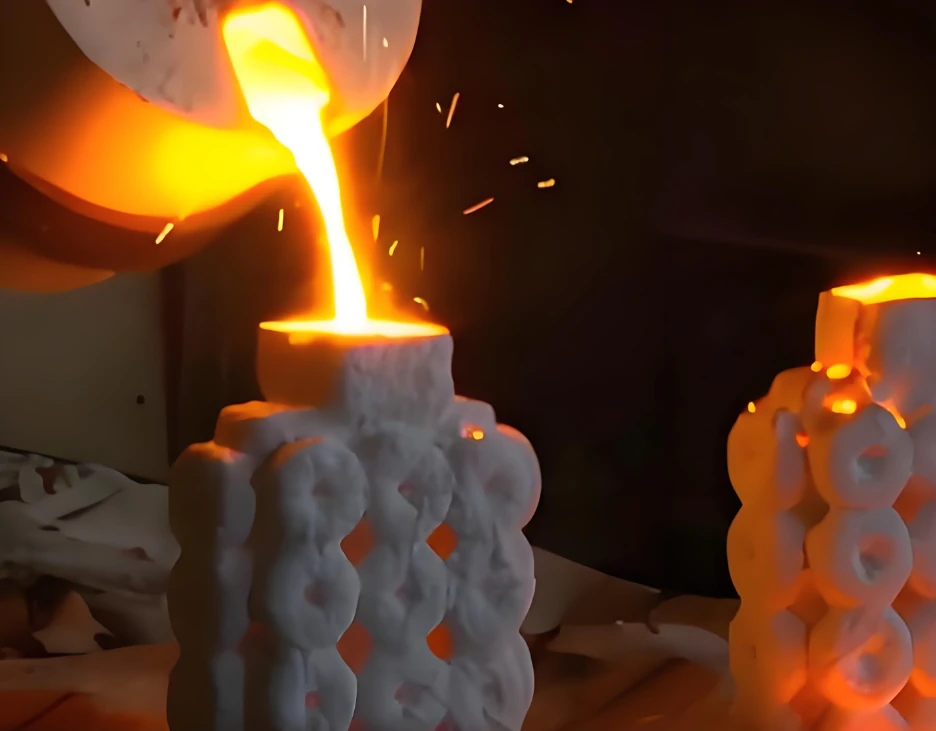
Why Should You Choose Investment Casting for Vacuum Pump Parts?
Vacuum pumps are widely used in industries like semiconductors, medical devices, chemical processing, and precision manufacturing. In these applications, even a small issue with sealing or dimensional accuracy can affect the whole system’s performance. That’s why the way vacuum pump parts are made really matters.
One of the most practical manufacturing methods here is investment casting (lost-wax casting). It’s especially suitable when you need complex shapes, stable dimensions, and a smooth surface finish without too much extra machining.
Compared with traditional casting methods, investment casting allows tighter tolerances and better control over material structure. For vacuum pump parts, this means better leak resistance and more consistent performance over time. It also helps reduce internal defects, which is important when the part needs to handle vacuum pressure reliably.
In real production, this process is often chosen when parts need both precision and repeatability, especially for components where sealing performance is a key requirement.
What Are the Advantages of Investment Castings for Vacuum Pump Parts?
When you look at how investment castings for vacuum pump parts are actually used in production, the main advantage is pretty straightforward—it helps achieve precision and sealing performance without making the process overly complicated.
Vacuum pumps are sensitive equipment. If the parts are not accurate enough or the surface is rough, even tiny imperfections can turn into leakage problems. That’s why investment casting is often chosen for these components.
Key Advantages of Investment Castings for Vacuum Pump Parts
| Advantage | What it Means in Practice | Why It Matters for Vacuum Pumps |
| High dimensional accuracy | Parts come out closer to final dimensions | Less machining, better fit between components |
| Excellent surface finish | Smoother surface straight from casting | Reduces micro-leak risk and improves sealing |
| Complex geometry capability | Can form integrated and detailed shapes | Fewer assembled parts, lower failure risk |
| Material flexibility | Supports stainless steel, aluminum, nickel alloys | Fits different pressure and corrosion environments |
| Reduced assembly requirements | Fewer welds and joints needed | Improves vacuum integrity and reliability |
In real manufacturing, high dimensional accuracy helps reduce a lot of secondary machining work. This not only saves time but also keeps tolerances more consistent across batches.
En smooth surface finish is another big plus. In vacuum systems, surface roughness can directly affect sealing performance, so having a naturally smoother casting surface helps lower leakage risk from the start.
With complex geometry capability, designers can integrate multiple features into one part instead of relying on several welded pieces. That usually means fewer weak points in the final assembly.
Material flexibility also plays a big role. Depending on the working condition—like corrosion exposure or temperature—you can choose stainless steel or nickel-based alloys to match performance needs.
Finally, reducing assembly steps means fewer joints and weld seams. In vacuum applications, every joint is a potential leakage path, so simplifying the structure usually improves overall system reliability.
Overall, the combination of near-net-shape forming and stable surface quality makes investment casting a practical choice for improving both performance and consistency in vacuum pump components.
How Are Investment Castings Applied in Vacuum Pump Parts Manufacturing?
In real production, investment castings in vacuum pump parts manufacturing are used quite broadly, especially for components that need both structural strength and complex internal shapes. Many of these parts are hard to machine from solid blocks, so casting becomes a more practical option.
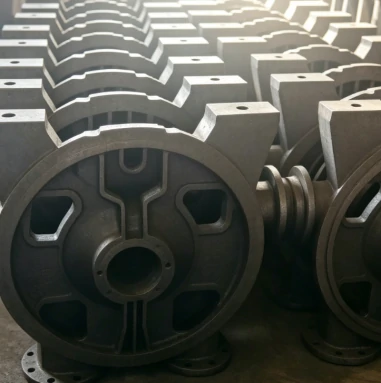
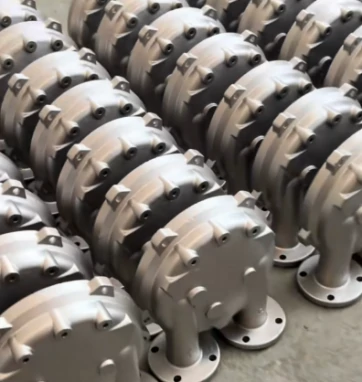
Typical vacuum pump components made using this process include pump housings, impellers, valve bodies, diffuser components, connection flanges, and internal flow channel structures.
Common Vacuum Pump Parts Made by Investment Casting
| Component | Function | Why Investment Casting Is Used |
| Pump housings | Main structural body of the pump | Requires strength + dimensional stability |
| Impellers | Drives gas flow inside the system | Needs complex shape and balance control |
| Valve bodies | Controls pressure and flow direction | Requires sealing precision and durability |
| Diffuser components | Helps stabilize airflow | Complex internal geometry is needed |
| Connection flanges | Joins different system sections | Needs flatness and tight sealing surfaces |
| Internal flow channels | Guides gas movement inside pump | Difficult to machine as one-piece structure |
What makes investment casting especially useful here is its ability to handle complex internal geometries. Instead of machining everything from solid billets—which can be expensive and time-consuming—casting allows these shapes to be formed directly.
In practice, this means engineers have more freedom when designing flow paths and internal structures. You can create smoother and more efficient channels, which helps improve gas movement inside the pump.
At the same time, the process supports lighter structural designs without sacrificing strength. That’s important in vacuum systems where both stability and efficiency matter.
Overall, using investment casting in these vacuum pump components makes it easier to balance performance, cost, and manufacturability in real-world applications.
Get Engineering SupportWhat Capabilities Do Vacuum Pump Investment Castings Offer?
When it comes to vacuum pump parts, investment casting is often chosen because it naturally fits the kind of precision and durability these components need in real working conditions.
One of the main advantages is tight dimensional control. In most cases, you can expect tolerances around ±0.1–0.2 mm, depending on how large or complex the part is. That level of consistency helps reduce fitting issues later in assembly, especially for pump housings and internal flow components.
Another practical benefit is thin-wall casting capability. Vacuum pump components often need to be lightweight but still strong enough to handle continuous operation. Investment casting makes it possible to produce thin yet stable structures without compromising integrity.
Material flexibility is also a key point. Common options include stainless steel grades like 304 and 316, as well as duplex stainless steel and aluminum alloys. This gives engineers room to choose materials based on corrosion resistance, strength requirements, and operating environment.
Surface quality is another area where investment casting performs well. Typical finishes can reach around Ra 1.6–3.2 μm, which means fewer rough surfaces and less need for heavy polishing or secondary finishing work.
You also get the benefit of structural integration. Instead of splitting a design into multiple separate parts, investment casting allows several functions to be combined into a single component. This simplifies the overall structure and reduces potential weak points.
In real production terms, these capabilities usually lead to lessCNC machining, simpler assembly steps, and lower overall manufacturing cost, while still keeping the part reliable in demanding vacuum applications.
How Can Quality Be Ensured with Rigorous Testing of Vacuum Pump Investment Castings?
Vacuum pump components often run in demanding environments—high vacuum conditions, continuous operation, and sometimes exposure to heat or mild corrosion. Because of this, quality control isn’t just a final step; it’s built into the whole inspection process from casting to finished part.
Common Inspection Methods
In real production, several inspection methods are typically combined to make sure vacuum pump investment castings meet performance requirements:
Dimensional inspection (CMM)
This is used to verify geometric accuracy against engineering drawings. It’s especially important for sealing surfaces, mounting points, and internal alignment features where even small deviations can affect pump performance.
X-ray inspection
Used to check internal quality of the casting. It helps detect hidden issues such as porosity, shrinkage, or internal voids that could weaken the part during long-term operation.
Dye penetrant testing (PT)
A simple but effective method for surface crack detection. It highlights fine cracks or surface defects that are not visible to the naked eye, especially in critical stress areas.
Pressure/leak testing
This step focuses on real working conditions. It ensures the casting can maintain proper sealing performance and meet vacuum tightness requirements without leakage.
Material analysis (spectrometry)
Used to confirm alloy composition. It verifies that materials such as stainless steel or duplex steel actually meet the specified grade and chemical balance required for the application.
| Inspection Type | Purpose |
| Dimensional inspection (CMM) | Ensure geometric accuracy |
| X-ray inspection | Detect internal porosity or shrinkage |
| Dye penetrant testing (PT) | Surface crack detection |
| Pressure/leak testing | Ensure vacuum sealing performance |
| Material analysis (spectrometry) | Verify alloy composition |
Quality Control in Real Production Practice
In actual manufacturing, reliable quality doesn’t come from a single inspection point. A stable process usually includes 100% critical dimension inspection, especially for sealing and functional surfaces, combined with batch-level non-destructive testing (NDT).
This layered approach helps catch issues early, keeps variation under control, and ensures each batch of vacuum pump investment castings performs consistently once it goes into real operating systems.
What Are the Challenges and Considerations of Vacuum Pump Investment Casting?
Even though vacuum pump investment casting offers a lot of advantages in precision and design flexibility, it’s not without its own set of challenges. In real production, a few key factors need to be managed carefully to keep performance stable and costs under control.
Key Considerations
One of the main concerns is porosity control. Small internal voids can form during the casting process, and while they might look minor, they can directly affect vacuum sealing performance. For pump parts that rely on airtight conditions, this is something that has to be tightly controlled.
Another common issue is shrinkage during solidification. As the metal cools and forms, uneven shrinkage can lead to dimensional variation. That’s why process stability and temperature control play a big role in getting consistent results.
For high-vacuum applications, surface cleanliness and contamination control is also important. Any residue, inclusions, or unwanted particles on the surface can interfere with sealing performance or long-term reliability.
In many cases, post-machining is still required, especially on critical sealing faces. Even with good casting quality, CNC finishing is often used to achieve the final precision and surface flatness needed for proper assembly.
There’s also the practical issue of cost versus complexity. More complex part designs usually mean more complicated tooling and higher initial investment. This needs to be balanced against production volume and performance requirements.
In the end, engineers usually have to find a middle ground between design complexity and manufacturability. The goal is simple: keep the part functional and reliable in vacuum conditions, while still making sure the manufacturing process stays efficient and cost-effective.
How Does Welleshaft Support Precision Manufacturing of Vacuum Pump Components?
Integrated Manufacturing + Quality Control Approach
Instead of treating casting, machining, and inspection as separate steps, Welleshaft integrates them into a controlled end-to-end process to minimize variation and improve reliability.
Investment casting is used to produce near-net-shape geometries with complex structures, enabling efficient design integration while reducing structural weak points. However, since casting alone cannot guarantee sealing accuracy, all critical functional surfaces are refined through precision CNC machining, especially sealing interfaces and mating areas.
This ensures tight dimensional control and reduces leakage risks caused by tolerance stack-up or casting deviations.
After machining, surface treatments such as polishing and passivation are applied to enhance surface stability, corrosion resistance, and long-term sealing performance in vacuum environments.
Material traceability is strictly controlled, with verified stainless steels such as 304, 316, and duplex grades used to eliminate performance variation from inconsistent raw materials.
Finally, each component undergoes multi-stage inspection, including CMM dimensional verification, surface quality assessment, and leak or pressure testing under simulated working conditions. This ensures components meet not only drawing requirements but also real vacuum performance standards.
Stable, Leak-Resistant Vacuum Performance
By integrating casting, machining, material control, and inspection into one system, Welleshaft delivers:
- Reduced risk of leakage from porosity or surface defects
- Improved batch-to-batch dimensional consistency
- Higher sealing reliability in continuous operation
- Lower assembly failure rates
- More stable long-term vacuum performance
This integrated approach shifts manufacturing from basic part production to performance-driven vacuum system reliability assurance.
Contact Welleshaft for custom vacuum pump investment casting solutionsWhat Are the Most Common Questions About Vacuum Pump Investment Casting Parts?
Can investment casting meet high-vacuum requirements?
Yes, it can, but in real applications, it’s rarely just the casting alone. For high-vacuum requirements, the key sealing areas are usually finished with CNC machining. That extra step helps ensure airtight contact surfaces and stable sealing performance during operation.
Which materials are best for vacuum pump parts?
Material choice depends a lot on where the pump is used. In most cases, stainless steel 304 and 316 are common because of their corrosion resistance. Duplex stainless steel is often selected when higher strength is needed, while aluminum alloys are used when weight reduction is a priority.
Is investment casting suitable for high-precision components?
Yes, especially for parts with complex shapes. Vacuum pump investment casting parts are often chosen when the geometry is too complicated or too costly to machine directly. It works well for integrating multiple features into a single component without losing structural stability.
What is the typical lead time?
Lead time usually depends on tooling and order size. In most cases, mold development takes around 3–6 weeks. After that, production speed varies depending on batch quantity and whether additional processes like heat treatment or machining are required.
How is leakage prevented in cast vacuum components?
Leakage control comes down to a combination of factors. It starts with managing porosity during casting, followed by possible heat treatment and precision machining on sealing surfaces. Finally, pressure and leak testing are used to make sure each part can maintain stable vacuum performance before it goes into use.
This blog was provided by the Welleshaft Engineering Team, led by Mr. Xu, specializing in precision investment casting and vacuum pump component manufacturing. With strong expertise in quality control, dimensional inspection, and material engineering, the team focuses on delivering stable, leak-resistant, and high-performance cast parts for demanding industrial applications.

 Español de Colombia
  English
  Português do Brasil
  Deutsch (Österreich)
  Deutsch (Schweiz)
  English (UK)
  English (Australia)
  English (New Zealand)
  Deutsch
  Français du Canada
  Français
  Français de Belgique
  Italiano
  English (South Africa)
  Português
  Español
  Español de México
  Español de Perú
  العربية
  日本語
日本語  Русский
  한국어
한국어  Tiếng Việt
  ไทย
ไทย