
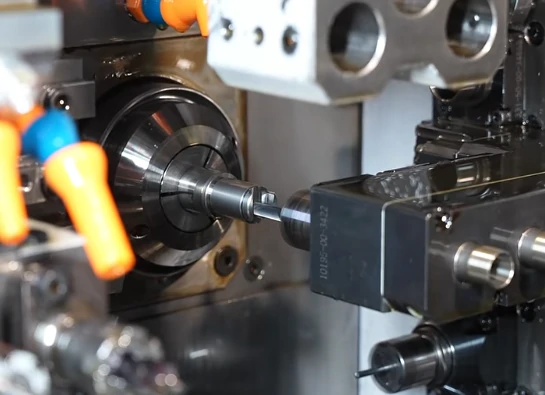
Precision CNC Machining of Precision Machined Shafts: Design, Materials, Processes & Applications
What Are Machined Shafts?
A machined shaft is a cylindrical mechanical component used to transmit torque and rotational motion between different machine parts. Typically made from metals such as steel, stainless steel, aluminum, or titanium, these shafts are manufactured using precision CNC machining shafts techniques to achieve the required dimensions, tight tolerances, and surface finishes for high-performance applications. Solid shafts are uniform, high-strength, and rigid components ideal for heavy-load applications, while hollow shafts are lightweight alternatives designed to reduce weight without compromising strength, making them suitable for applications where efficiency and weight savings are critical.
What Are the Different Types of Machined Shafts?
A shaft is a rotating machine element that transmits power and torque between components, ensuring efficient and reliable operation in mechanical systems. There are several types of machined shafts, each designed for specific applications and load requirements:
Based on Function:
- Transmission Shafts:Transfer power between the source and the machine absorbing power, such as counter shafts or line shafts, requiring high torsional strength and rigidity.
- Drive Shafts:Transfer power from one location to another, often at an angle, like automotive drive shafts connecting transmissions to differentials.
- Machine Shafts:Integral to machines, forming part of the equipment itself, such as engine crankshafts.
- Spindle Shafts:Commonly found in machine tools, they rotate cutting tools or workpieces, where precision and minimal runout are critical.
- Axle Shafts:Support rotating elements like wheels, bearing loads while transmitting torque.
Based on Shape and Design:
- Solid Shafts:Uniform in diameter throughout their length, providing high strength and rigidity for heavy-load applications.
- Hollow Shafts:Tubular construction reduces weight without compromising strength, suitable for applications requiring efficiency or weight savings.
- Stepped Shafts:Multiple diameter sections to accommodate different components or gear assemblies.
- Splined Shafts:External or internal grooves allow connection with gears, couplings, or other components.
- Tapered Shafts:Gradual reduction in diameter for secure mounting, commonly used in automotive wheel hubs or precision assemblies.
Selecting the right shaft type is crucial, as improper choice can lead to system inefficiencies, reduced performance, or costly failures. Understanding both function and design helps engineers choose the optimal shaft for each application.
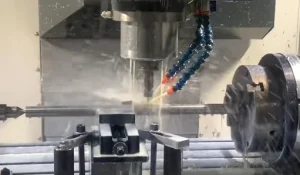
What Are the Main Applications of Machined Shafts?
Industry Applications of Machined Shafts
Machined shafts find applications across a wide range of industries, each requiring specific characteristics, designs, and performance standards to meet operational demands.
Automotive Industry
- Applications:Drive shafts, camshafts, crankshafts, axles, and steering components.
- Design Considerations:High-speed operation, durability under varying loads, strict balance requirements, and torsional rigidity.
- Characteristics:Cost-effective solutions suitable for mass production, while ensuring high performance and long service life.
- Notes:Shafts transmit motion from engines to wheels, control valve timing, and ensure reliable drivetrain operation.
Aerospace Industry
- Applications:Aircraft engines, turbines, landing gear systems, actuation systems, and control surfaces.
- Design Considerations:Lightweight materials, high strength-to-weight ratio, strict precision and quality requirements, minimal vibration, and exotic materials like titanium alloys.
- Characteristics:Components must maintain accuracy, balance, and reliability under extreme conditions.
Industrial Machinery
- Applications:Pumps, compressors, conveyors, industrial mixers, power transmission equipment, and heavy-duty machinery.
- Design Considerations:Continuous operation, heavy load capacity, maintenance accessibility, and environmental considerations.
- Characteristics:Shafts require long service life, precise dimensional tolerances, and material properties suitable for demanding operational conditions.
Marine Industry
- Applications:Propeller shafts, rudder mechanisms, and other high-strength rotating systems.
- Design Considerations:Durability in harsh environments, corrosion resistance, and load-bearing capacity.
Power Generation / Energy Sector
- Applications:Turbines, generators, wind turbines, hydroelectric plants, and thermal power systems.
- Design Considerations:Extremely high precision, perfect balance and alignment, and the ability to handle high-speed rotation and heavy loads.
Precision Equipment / Medical Devices
- Applications:Surgical tools, precision instruments, and high-accuracy machining equipment.
- Design Considerations:High precision, minimal vibration, critical surface finish, and specialized material requirements.
Through these comprehensive classifications and considerations, engineers and manufacturers can better understand and select the appropriate shaft type for each application, ensuring optimal performance, durability, and reliability across different industries.
Which Materials Are Commonly Used for Machined Shafts?
Shaft Material Selection and Performance
The choice of shaft material significantly impacts performance, durability, corrosion resistance, and suitability for specific applications. Selecting the appropriate material ensures that shafts can withstand operational stresses, fatigue, and environmental conditions. Common shaft materials include carbon steel, alloy steel, stainless steel, aluminum, titanium, brass, and bronze, each offering unique advantages:
| Material Type | Key Properties & Advantages | Best Applications | Machinability | Cost Factor |
| Carbon Steel | Good strength, cost-effective, widely available | General-purpose machinery, moderate-strength shafts | High | Low |
| Alloy Steel | Higher strength, better wear resistance, tough | Heavy-duty equipment, high-stress shafts | Medium-High | Medium-High |
| Stainless Steel | Corrosion resistant, clean operation | Food processing, chemical, medical, marine | Medium | Medium |
| Aluminum | Lightweight, corrosion-resistant | Light-duty shafts, applications requiring weight reduction | Very High | Low-Medium |
| Titanium | High strength-to-weight ratio, corrosion-resistant | Aerospace, precision, and lightweight applications | Medium | High |
| Brass / Bronze | Low friction, good corrosion resistance | Low-load shafts, marine fittings, decorative components | Medium | Medium |
| Tool Steel | Excellent wear resistance | High-precision machinery, cutting tools | Medium | High |
Key Performance Properties to Consider:
- Tensile Strength:High, typically 350–1000 MPa depending on application.
- Fatigue Resistance:Critical, often >10⁷ cycles for rotating machinery.
- Hardness:Moderate, generally 150–300 HB.
- Machinability:Important for cost and manufacturing efficiency; varies by material.
Choosing the right material for precision CNC machining shafts ensures they meet load requirements, resist wear and corrosion, and perform reliably in environments ranging from heavy industrial machinery to medical devices, marine systems, and aerospace applications.

What Are the Manufacturing Processes for Machined Shafts?
Creating a high-precision machined shaft involves multiple carefully controlled processes to achieve the required dimensions, tolerances, surface finish, and mechanical properties. The main manufacturing processes include:
CNC Turning
CNC turning is the foundation of shaft manufacturing. The shaft is rotated against precision cutting tools to remove excess material, allowing for:
- Tight diameter control, often within ±0.001″
- Excellent surface finish
- Complex feature integration, including tapers, grooves, and stepped sections
- High production efficiency for both small and large batches
Grinding
Grinding is typically performed after turning and heat treatment to achieve superior precision:
- Refines surface finish and improves roundness
- Ensures tight tolerances for diameter and geometric accuracy
- Enhances wear resistance and overall component longevity
Milling
Milling operations create specific features on the shaft, such as:
- Flat surfaces, keyways, and splines
- Slots and other complex profiles required for assembly or functional purposes
Drilling and Tapping
Holes are drilled and threaded as needed to accommodate fasteners, pins, or other assembly components, ensuring proper integration into larger mechanical systems.
Heat Treatment
Heat treatment processes, including induction hardening, quenching, and tempering, enhance the mechanical properties of shafts:
- Surface hardness improvement for wear resistance
- Core strength enhancement to withstand torque and bending
- Increased toughness and overall durability for demanding applications
By combining these processes, manufacturers can produce shafts that meet stringent requirements for precision, durability, and performance across industries such as automotive, aerospace, industrial machinery, and marine equipment.
What Are Standard Shaft Sizes, Tolerances & Fit for Machined Shafts?
Standard shaft sizes for precision CNC machining shafts typically follow ISO and ANSI standards, defining length, diameter, and tolerance classes to ensure compatibility and interchangeability across mechanical systems. While standardized dimensions simplify design and assembly, custom shaft dimensions are often specified for specialized applications requiring unique fits or performance characteristics.
Understanding hole-shaft fit is critical in CNC machining, as improper fits can lead to assembly issues, premature wear, vibration, or even component failure. A correct fit depends on selecting the appropriate tolerance class and ensuring precise dimensioning, allowing mating parts to function reliably under real operating conditions.
Common Tolerance Classes
Typical Tolerance Classes for Holes
| Tolerance Class | Typical Application | Accuracy Level |
| H7 | General machinery | Standard precision |
| H6 | Precision equipment | High precision |
| H5 | Instrument components | Very high precision |
Typical Tolerance Classes for Shafts
| Tolerance Class | Typical Application | Fit Characteristics |
| f7 | Sliding fits | Clearance fit |
| h6 | Location fits | Accurate positioning |
| k6 | Light press fits | Interference fit |
Types of Fits and Their Applications
| Fit Type | Characteristics | Common Applications |
| Clearance Fit | Space between shaft and hole for free movement | Bearings, bushings, lubricated parts |
| Transition Fit | Minimal clearance or slight interference | Locating pins, semi-permanent assemblies |
| Interference Fit | Tight press fit with no clearance | Gears, hubs, permanent assemblies |
Critical Factors Affecting Fit Quality
Surface Finish Requirements
Surface finish plays a vital role in fit performance and longevity:
- Sliding fits: Ra 0.8–1.6 µm
- Interference fits: Ra 0.4–0.8 µm
- Proper surface pattern orientation improves wear behavior and load distribution
Material Considerations
Material properties directly influence fit stability and performance:
- Thermal expansion coefficients affecting dimensional stability
- Material hardness and wear resistance
- Environmental factors such as temperature, corrosion, and vibration
By combining standardized sizing for precision CNC machining shafts, proper tolerance selection, and careful consideration of surface finish and material behavior, engineers can achieve reliable hole-shaft fits that ensure smooth assembly, long service life, and consistent mechanical performance.
What Should Be Considered in Machined Shaft Design?
A shaft is a rotating machine element designed to transmit power and torque between mechanical components while supporting gears, pulleys, flywheels, and other rotating elements. Many unexpected mechanical failures and costly downtime can often be traced back to inadequate design of precision CNC machining shafts, where load conditions, material selection, or dimensional accuracy were underestimated. A well-designed machined shaft must balance strength, rigidity, durability, and manufacturability to ensure long-term reliable operation.
Fundamental Shaft Functions and Loads
The primary function of precision CNC machining shafts is power transmission, which requires them to withstand multiple load types during operation, including torsional loads from rotary motion, bending loads from attached components, axial loads from thrust forces, and combined dynamic loads. In addition to transmitting power, these shafts must maintain proper alignment, rotational stability, minimal deflection, and overall structural integrity under continuous service.
Key Design Parameters
Effective shaft design begins with accurately calculating loads and stresses to determine the appropriate shaft diameter and safety factors. Shaft length and diameter must be optimized to prevent excessive deflection, vibration, and critical speed issues. Operating speed, natural frequency, vibration characteristics, and dynamic balance are all essential considerations, especially in high-speed or precision applications.
Geometric and Functional Features
Shaft geometry significantly affects performance and reliability. Design elements typically include stepped sections for component mounting, gradual diameter transitions to reduce stress concentration, and carefully sized shoulders and fillets. Functional surface features such as keyways, splines, and threaded sections are incorporated to transmit torque, secure components, and enable assembly, but they must be designed carefully to avoid localized stress risers.
Critical Speed and Vibration Control
Designing shafts requires careful evaluation of critical speeds to avoid resonance during operation. This involves considering operating speed ranges, dynamic balancing requirements, and vibration dampening to ensure smooth and safe performance.
Application-Specific Design Considerations
- Industrial Machinery:Emphasis on rigidity, environmental resistance, maintenance accessibility, and cost efficiency.
- Precision Equipment:Focus on dimensional stability, tight tolerances, superior surface finish, controlled thermal expansion, and minimal vibration.
Design Optimization Guidelines
To enhance shaft performance and service life, engineers should optimize stress distribution, apply adequate safety factors, account for lubrication requirements, and incorporate dynamic balancing where necessary. Attention to stress concentration areas—such as keyways, splines, grooves, and threaded sections—is essential to prevent fatigue failure and extend operational life.
How Are Surface Finishing & Treatments Applied to Machined Shafts?
Surface treatment and surface finish play a critical role in determining the performance, wear resistance, fit quality, and service life of precision CNC machining shafts. Proper surface engineering not only enhances mechanical strength but also ensures reliable interaction with bearings, seals, and mating components.
Surface Treatment Methods
Surface treatment is often applied to improve durability and environmental resistance:
- Heat treatmentto enhance overall strength and fatigue resistance
- Surface hardeningto improve wear resistance on critical contact areas
- Protective coatingsto meet specific environmental requirements such as corrosion or chemical exposure
Functional Surface Finish Considerations
Different shaft surfaces serve different functions and therefore require tailored finishes:
- Running surfaces require controlled roughness to reduce friction and wear
- Bearing seats demand precise dimensional control and high roundness
- Sealing areas often require polished surfaces to prevent leakage
- Slightly rougher finishes may be preferred in some zones to enhance lubrication retention
Surface Roughness Guidelines
Surface roughness is typically specified by Ra values and varies by fit type and application:
| Application / Fit Type | Typical Ra Value (µm) | Common Usage |
| General-purpose shafts | 1.6 – 3.2 | Basic power transmission |
| Sliding fits | 0.8 – 1.6 | Bearings and bushings |
| Interference fits | 0.4 – 0.8 | Press-fit assemblies |
| Precision shafts | 0.4 – 1.6 | Motor shafts |
| High-precision shafts | 0.1 – 0.4 | Aerospace and precision equipment |
In addition to Ra values, surface pattern orientation is also important, as it influences lubrication behavior, contact stress distribution, and overall operational stability. By combining appropriate surface treatments with carefully specified surface finishes, precision CNC machining shafts can achieve optimal performance, reduced wear, and extended service life across a wide range of applications.
How Is Quality Control & Precision Assurance Ensured for Machined Shafts?
Quality control is critical to ensuring precision CNC machining shafts meet dimensional, mechanical, and functional requirements while maintaining consistent performance in service. Effective inspection begins with dimensional accuracy, where typical tolerances for critical features are controlled within ±0.001 inch, roundness is maintained within 0.0005 inch, and surface finish is commonly specified between 32–63 microinches depending on application needs.
Inspection Methods and Quality Checks
Comprehensive quality inspection for shafts typically includes:
- Dimensional verification of diameters, lengths, and critical features
- Roundness and straightness measurement
- Runout measurements for rotational accuracy
- Surface finish inspection and roughness measurement
- Material certification verification
- Hardness testing at multiple locations
- Non-destructive testing when required for critical applications
Quality Control Procedures
A structured quality control process ensures consistency throughout production:
- First article inspection to validate initial setup and tooling
- Regular in-process inspections to monitor dimensional stability and tool wear
- Surface roughness monitoring and geometric tolerance verification
- Final dimensional verification and fit testing when applicable
In-Process and Advanced Verification
During machining, in-process inspections help prevent defects and rework by performing automated diameter checks, roundness measurements, and real-time data collection. Additional verification methods may include surface hardness testing, case depth measurement, and microstructure analysis for heat-treated shafts.
What Are the Advantages of Using Machined Shafts?
Machined shafts offer several performance and design advantages that make them essential components in modern mechanical systems. High precision ensures tight tolerances for critical applications, supporting accurate alignment and reliable operation. Durability is achieved through the use of robust materials capable of withstanding heavy loads and demanding working conditions. Customizability allows shaft designs to be tailored to specific functional requirements, including geometry, material selection, and surface treatment. Well-designed shafts also enable efficient power transmission, minimizing energy losses and improving overall system efficiency. In addition, ease of maintenance is enhanced through modular or standardized designs that simplify inspection, replacement, and repair.
Advantages of Hollow Shafts
Hollow shafts provide additional benefits where weight and efficiency are critical. Their reduced mass lowers rotational inertia, resulting in improved energy efficiency and dynamic response. Despite their lighter structure, hollow shafts maintain sufficient strength for many applications, making them ideal for lightweight designs in industries where performance optimization and energy savings are priorities.
What Are the Disadvantages and Challenges of Machined Shafts
Shafts are complex mechanical components, and material selection must be based on application-specific requirements, with load, operating speed, and environmental conditions being the primary factors. Common materials include carbon steel, alloy steel, stainless steel, and, when necessary, specialized composites—each involving different machining methods, performance characteristics, and cost implications. In addition to material choice, machining accuracy, dimensional tolerances, and surface finish are critical to shaft performance. Even minor deviations or imbalance can result in vibration, accelerated wear, reduced service life, and compromised system reliability.
As industries increasingly demand customized shaft designs, manufacturers face additional challenges that require advanced machining capabilities and high technical expertise. Precision manufacturing often leads to higher costs, particularly when tight tolerances and complex geometries are involved. Improper installation or alignment introduces misalignment risks, which can cause vibration and premature wear. Material sensitivity further increases requirements for quality control, while weight concerns—especially with solid shafts—may affect system efficiency, portability, and dynamic performance.
What Are the Cost Considerations in Machined Shafts?
When evaluating production and material choices, both upfront costs and long-term value should be considered. Pricing is influenced by material selection, machining time, setup costs, order volume, and logistics. Suppliers that provide value-added services—such as design optimization, material guidance, assembly support, and inventory management—can significantly improve overall cost efficiency. Ongoing cost reviews, strong supplier partnerships, waste reduction, and energy-efficient processes help maintain profitability as production scales.
For materials and surface treatments, cost-benefit analysis is essential. While direct costs include processing, equipment, materials, and labor, long-term benefits often outweigh them through extended service life, reduced maintenance, improved performance, and fewer replacements. Effective cost optimization—such as selecting appropriate tolerances, using standard sizes, optimizing machining sequences, and evaluating alternative manufacturing methods—helps control expenses without sacrificing quality or reliability.
How to Choose the Right Supplier for Machined Shafts?
Selecting a Reliable Supplier for Custom Shaft Machining
Receiving precision shafts that fail to meet specifications can lead to production delays, budget overruns, and operational headaches. Choosing a dependable supplier requires evaluating technical capabilities, quality control systems, communication efficiency, and track record. An ideal partner demonstrates expertise in precision machining, maintains consistent quality standards, and provides responsive customer service.
Evaluating Technical Capabilities
A supplier’s machinery and material processing expertise directly affect the quality of custom shafts. Modern CNC machines with volumetric compensation, grinding machines, CMM equipment, and material testing instruments are essential for achieving tight tolerances and reliable component performance. Key considerations include:
| Equipment Type | Importance | Impact on Quality |
| CNC Lathes | Critical | Dimensional accuracy |
| Grinding Machines | High | Surface finish |
| CMM Equipment | Essential | Quality verification |
| Material Testing | Important | Material integrity |
Material knowledge is equally important, with suppliers expected to handle stainless steel, carbon steel, alloy steel, and aluminum alloys.
Quality Control Systems
A robust quality control framework should include ISO 9001:2015 or industry-specific certifications, documented procedures, regular audits, first article inspections, in-process checks, final dimensional verification, surface finish measurement, and material certification.
Communication and Response Time
Effective project management requires dedicated managers, regular progress updates, technical consultation, and rapid response to inquiries. Digital infrastructure such as online ordering, real-time production tracking, digital documentation, and CAD/CAM capabilities enhances communication and efficiency.
Cost and Value Assessment
Pricing should account for material costs, manufacturing time, setup charges, quantity discounts, and shipping options. Value-added services, including design optimization, material selection guidance, assembly support, and inventory management, improve overall cost-effectiveness. Production planning should consider varying order volumes, machine availability, backup production, standard and rush lead times, on-time delivery performance, and scheduling efficiency.
Sample and Prototype Services
Suppliers should provide rapid prototyping, design feedback, material alternatives, free or low-cost samples, quick turnaround, detailed inspection reports, and performance testing to ensure product quality before full-scale production.
Post-Production Support
Reliable suppliers offer clear warranty terms, defect resolution processes, replacement policies, and quality documentation. Technical support should include installation guidance, troubleshooting, performance optimization, and maintenance recommendations.
Geographic Location and Logistics
International shipping capabilities, packaging methods, transportation partners, and customs clearance expertise are critical. Location considerations include time zone differences, communication barriers, cultural understanding, and knowledge of local regulations.
Industry Experience and References
Evaluate suppliers based on years in business, market recognition, client testimonials, project portfolio, past project success, customer satisfaction, problem resolution, and long-term relationships.
Financial Stability
Assess credit ratings, financial statements, investment in equipment, and growth trajectory to ensure supplier reliability and long-term partnership viability.
Your Trusted Partner for Machined Shafts
Producing high-quality machined shafts requires a combination of technical expertise, precision engineering, and a customer-focused approach. Years of experience in shaft manufacturing have proven that consistent quality, customization, and timely delivery are essential to meet diverse industry needs.
Quality Assurance
Maintaining rigorous quality control throughout the production process ensures each machined shaft meets or exceeds industry standards. Every component undergoes meticulous inspection for dimensional accuracy, surface finish, and mechanical properties, guaranteeing reliable performance in demanding applications.
Customization and Design Flexibility
Each application has unique requirements, and tailored solutions are critical. Engineering teams collaborate with clients to design shafts that precisely match specifications, including material selection, dimensions, and surface treatments. This approach ensures optimal performance for every custom application.
Advanced Manufacturing Capabilities
Modern manufacturing facilities equipped with CNC turning, milling, and grinding machines enable exceptional precision and tight tolerances. Continuous investment in advanced machinery and technology ensures consistent production quality and keeps operations at the forefront of the industry.
Material Expertise
The choice of material significantly impacts shaft performance and longevity. Extensive knowledge of metals—including stainless steel, carbon steel, alloy steel, aluminum, and titanium—allows guidance in selecting materials that provide the ideal balance of strength, durability, and corrosion resistance for each application.
Timely Delivery and Efficient Production
Efficient production planning and scheduling are essential for meeting tight deadlines. Streamlined manufacturing operations and proactive workflow management help ensure that machined shafts are delivered on time, supporting smooth operations in fast-paced industries.
Competitive and Transparent Pricing
High-quality shafts do not need to come at a premium. A transparent pricing structure provides cost-effective solutions without compromising quality, allowing clients to achieve desired performance within budget constraints.
Customer Satisfaction and Support
Long-term partnerships are built on trust, reliability, and exceptional service. Dedicated support teams provide technical guidance, promptly address inquiries, and ensure overall satisfaction throughout the production and delivery process.
Why Choose Welleshaft for Your Machined Shaft Needs?
When it comes to machined shafts, Welleshaft is a trusted and experienced manufacturer known for delivering precision, reliability, and performance. With a strong focus on quality, customization, and advanced manufacturing capabilities, Welleshaft provides tailored solutions to meet the unique requirements of every application. Our customer-centric approach ensures seamless communication, timely delivery, and expert guidance throughout the process, helping clients achieve optimal efficiency and longevity in their machinery. Contact Welleshaft today to discuss your specific needs and discover the benefits of working with a precision engineering partner committed to excellence.
FAQs
What Are the Common Tolerances for Machined Shafts?
The tolerances of machined shafts depend on their intended application and design specifications. In general, standard diameter tolerances fall between ±0.01 mm and ±0.05 mm, while length tolerances typically range from ±0.1 mm to ±0.2 mm. For applications requiring higher precision, advanced machining methods and specialized processes can achieve even tighter tolerances to ensure optimal performance and fit.
Can Welleshaft Provide Machined Shafts with Custom Surface Finishes?
Yes, Welleshaft can deliver machined shafts with a variety of surface finishes tailored to your specific requirements. Whether you need smooth, polished, blasted, or coated surfaces, our expertise and advanced manufacturing capabilities ensure that each shaft meets the desired finish and performs optimally in its intended application.
This blog was provided by the Welleshaft Engineering Team. Mr. Xu, with 10+ years of experience in precision shaft manufacturing, leads our team in delivering high-quality, custom CNC machined shafts for automotive, industrial, and energy applications.

 English (Australia)
  English
  Português do Brasil
  Deutsch (Österreich)
  Deutsch (Schweiz)
  English (UK)
  English (New Zealand)
  Deutsch
  Français du Canada
  Français
  Français de Belgique
  Italiano
  English (South Africa)
  Português
  Español
  Español de México
  Español de Perú
  Español de Colombia
  العربية
  日本語
日本語  Русский
  한국어
한국어  Tiếng Việt
  ไทย
ไทย