
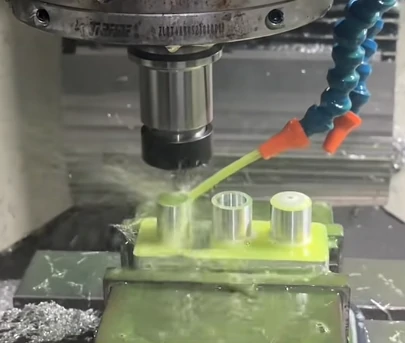
Why is aluminum widely used for CNC machining?
Compared to other lightweight metals such as magnesium and titanium alloys, aluminum is widely preferred for CNC machining due to its exceptional combination of characteristics:
- Lightweight yet strong: Perfect for applications where minimizing weight is crucial without sacrificing durability.
- Highly formable: Ensures outstanding machinability, allowing for intricate and complex designs.
- Easy to cut: Lowers machining time and improves cost efficiency.
Because of these properties, aluminum has become one of the most commonly used materials across multiple industries. Its excellent machinability, durability, and cost-effectiveness make it a top choice for manufacturers who rely on CNC machining to produce precise parts. The result is components and products that match the intended design with high accuracy.
The versatility of aluminum is significantly enhanced by CNC machining. For instance, in the aerospace industry, aluminum is selected for making parts that are both lightweight and feature highly complex geometries. CNC machining allows these detailed designs to be manufactured efficiently and accurately.
What are the benefits of choosing aluminum for CNC machining?
Aluminum is widely recognized in CNC machining for its unique combination of mechanical performance, machinability, and cost efficiency. Compared to many other metals, aluminum offers a versatile solution suitable for both prototyping and large-scale production.
Lightweight Yet Strong
Aluminum delivers an excellent strength-to-weight ratio, making it strong enough to handle demanding applications while remaining light. This advantage is particularly valuable in industries such as aerospace, automotive, and robotics, where reducing weight directly enhances efficiency and performance. Compared to steel, aluminum components can provide similar structural integrity at a fraction of the mass.
Excellent Thermal and Electrical Conductivity
Many aluminum alloys efficiently transfer heat and electricity, making them ideal for heat sinks, electronic housings, and other components where temperature management or electrical conduction is critical. This ensures CNC aluminum parts operate reliably under demanding conditions.
Corrosion Resistance
Aluminum naturally forms a protective oxide layer that resists corrosion. For applications exposed to harsh environments, additional treatments such as anodizing or powder coating can further enhance durability and surface aesthetics, ensuring long-lasting performance.
Easy to Machine and Finish
Thanks to its superior machinability, aluminum can be cut and shaped quickly without excessive tool wear. This reduces production time, energy consumption, and costs while delivering smooth, ready-to-use surfaces. Its compatibility with surface finishing methods like anodizing, polishing, powder coating, and sandblasting allows both functional and aesthetic quality to be achieved with ease.
Cost-Effective and Scalable
Due to its availability and ease of machining, aluminum is generally more affordable than metals such as titanium or stainless steel. Faster machining speeds, lower tooling wear, and the ability to scale production from small batches to high-volume manufacturing make aluminum CNC machining a practical choice for projects with tight budgets.
Versatility and Reliability
Different aluminum grades cater to specific requirements:
- 7075for high-strength applications
- 6061for general-purpose machining
- 5052 and 5083for excellent corrosion resistance
This flexibility allows manufacturers to produce complex CNC aluminum parts that meet precise functional, structural, and aesthetic demands. Additionally, heat-treated aluminum can handle repeated stress cycles, is weldable using TIG or MIG, and remains non-magnetic, making it suitable for precision components.
Technical Highlights
- Machinability: Low cutting forces allow faster cycles and longer tool life.
- Strength-to-Weight Ratio: Tensile strengths range from 200–570 MPa at 2.7–2.8 g/cm³ density.
- Corrosion Resistance: Suitable for marine and outdoor applications, further enhanced with coatings.
- Thermal & Electrical Conductivity: Keeps parts cool and conducts electricity efficiently.
- Fatigue & Weldability: Heat-treated aluminum withstands millions of cycles and is easy to weld.
How does aluminum compare to other metals in CNC machining?
When comparing aluminum to metals like brass, steel, and titanium in CNC machining, several advantages make it a preferred choice:
- Weight:Aluminumis significantly lighter than both steel and titanium, making it ideal for applications where reducing weight is critical without compromising performance.
- Machinability:Aluminum alloysare easier to machine than harder metals such as steel and titanium. This excellent machinability reduces tool wear, shortens production time, and increases efficiency—especially important in mass production
- Corrosion Resistance:Aluminumnaturally resists corrosion better than many other metals. When combined with processes like anodizing, it becomes highly resistant to chemicals, saltwater, and humidity, extending the lifespan of parts in harsh environments.
While titanium and steel may surpass aluminum in terms of raw strength and tensile performance, especially under high-stress conditions, aluminum remains the material of choice for components where lightweight, ease of machining, and corrosion resistance are top priorities.
Which aluminum alloys are best for CNC machining?
Choosing the right aluminum alloy is essential for CNC aluminum machining to achieve an optimal balance of strength, machinability, and corrosion resistance. Each alloy series offers unique properties suited to specific applications, from structural and automotive components to aerospace and marine parts.
6061 Aluminum – Versatile and Corrosion-Resistant
6061 aluminum belongs to the 6000 series, alloyed with magnesium and silicon, and heat-treated to T651. It provides a tensile strength of 310 MPa, excellent corrosion protection, and good fatigue resistance. Its machinability makes it suitable for CNC fabrication of brackets, window frames, and lightweight structural components. Electrical conductivity of 40% IACS supports heat dissipation applications.
Applications: Structural parts, automotive components, general-purpose CNC parts.
Machining Notes: Easy to machine with minimal burrs; coolant and proper feed rates (approx. 200 m/min) ensure optimal surface finish.
7075 Aluminum – High-Strength Alloy
7075 aluminum is a 7000 series alloy primarily composed of zinc, with optional copper, magnesium, and chromium. T651 heat treatment delivers ultimate tensile strength up to 572 MPa and yield strength of 503 MPa. Its high strength-to-weight ratio is ideal for aerospace structures and precision instruments.
Applications: Aerospace frames, high-load machinery, sports equipment, precision instruments.
Machining Notes: Requires robust tooling and coolant (approx. 150 m/min). Limited weldability favors riveted assembly; non-magnetic and lightweight for high-precision manufacturing.
2024 Aluminum – Fatigue-Resistant Alloy
2024 aluminum is a 2000 series alloy, copper-based and heat-treated to T3, with tensile strength of 483 MPa. Its excellent fatigue resistance makes it suitable for cyclic-loading components in aerospace and automotive industries.
Applications: Aircraft fuselage, wings, military vehicles, high-stress structural parts.
Machining Notes: Medium machinability; sharp tools, controlled feed rates, and lubrication are necessary. Corrosion protection can be enhanced with cladding or coatings.
5052 Aluminum – Marine-Grade Corrosion-Resistant Alloy
5052 aluminum is a 5000 series alloy alloyed with magnesium, offering 228 MPa tensile strength, high ductility, and exceptional marine corrosion resistance. Its non-heat-treatable nature ensures uniform properties post-machining.
Applications: Fuel tanks, marine hardware, coastal architectural panels, chemical equipment.
Machining Notes: Easy to machine; deep drawing and sheet forming are possible. Surface finishes of Ra 1.6 µm achievable.
5083 Aluminum – Extreme Corrosion Resistance
5083 aluminum provides outstanding corrosion resistance and good weldability, making it ideal for offshore structures and shipbuilding. Its tensile strength of 317 MPa ensures structural reliability under harsh conditions.
Applications: Ship components, pressure vessels, offshore platforms.
Machining Notes: Maintains precision during CNC operations; high corrosion resistance reduces the need for post-processing.
Other Common CNC Aluminum Alloys
- 6060 Aluminum:Excellent formability and weldability; used in extrusions and construction components.
- 6082 Aluminum:Combines strength and corrosion resistance; ideal for trusses, bridges, and cranes.
- 3003 Aluminum:Manganese-based, highly formable; used in radiators, HVAC systems, and chemical equipment.
- MIC6 Aluminum:Non-heat-treatable, stress-relieved, ideal for precision molds and tooling.
- 2000 & 7000 Series:High-strength options (2024, 2014, 2017, 7050) for aerospace and defense.
- 5000 Series:Marine-grade (5052, 5754) with corrosion resistance and good formability.
Key Considerations in Alloy Selection
- Strength:7075 and 2024 for high-strength applications; 6061 for balanced performance; 5052 and 1100 prioritize corrosion resistance.
- Machinability:2011, 6061, and MIC6 offer easy machining; 7075 and 2024 require precise tooling.
- Corrosion Resistance:1100, 5052, and 6061 excel in marine and outdoor applications; 2024 and 7075 benefit from coatings or anodizing.
Selecting the right aluminum alloy ensures efficient CNC machining, cost-effective production, and components that meet mechanical, environmental, and precision requirements.
How should you design aluminum CNC parts for machining?
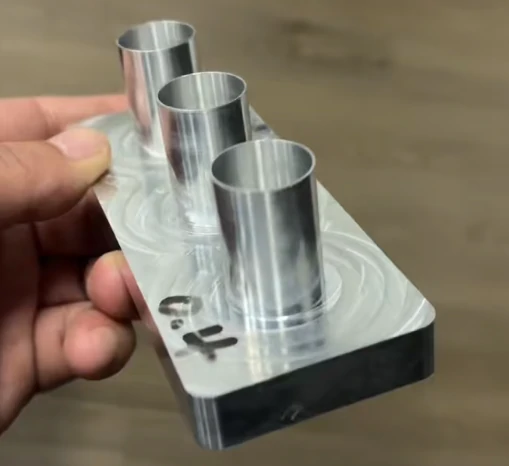
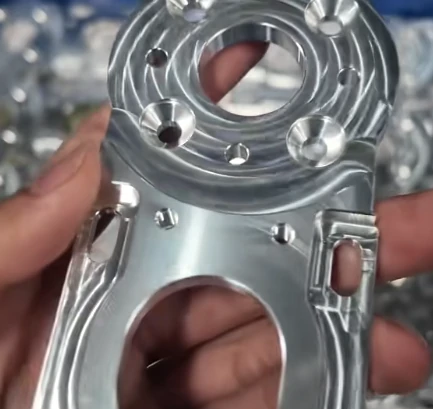
Designing aluminum CNC parts requires careful attention to geometric accuracy and tolerance standards, as these factors directly influence both production efficiency and final part performance. Reducing unnecessary material in the design stage not only enhances machining efficiency but also promotes sustainability by limiting scrap. These recommendations follow CNC machining principles for aluminum, emphasizing tool accessibility, stress distribution, and material behavior under machining forces.
Fillet and Radius Guidelines
Significance of Fillets in Aluminum Pockets
Applying fillets with a minimum radius of 0.5 mm at internal corners mitigates stress concentration, lowering the risk of cracks during CNC milling. For improved chip evacuation and tool stability in aluminum alloys, internal radii between 1–2 mm are preferred during high-speed operations. External radii should match or exceed internal radii to reduce burr formation.
Hole Drilling and Threading Considerations
Designing Aluminum Enclosures with Holes and Threads
For through-holes in CNC-machined aluminum parts, maintain a depth-to-diameter ratio below 3:1 to preserve straightness and prevent tool breakage. Blind holes should be drilled to a depth of 1.5 times the hole diameter using peck drilling to effectively remove chips. When threading, ensure a thread depth of 1.5 times the major diameter. For flat-head screws with 82° countersinks, this ensures proper load distribution and reliable fastening.
Wall Thickness and Feature Optimization
Maintaining structural integrity in aluminum components requires a minimum wall thickness of 0.8 mm, while load-bearing sections should be at least 1.5 mm thick. Walls thinner than 0.5 mm may increase vibration and part deflection. Combining features where possible reduces the number of setup changes, minimizes material removal, and lowers production costs.
What are the most common aluminum CNC machining techniques?
Aluminum CNC machining employs various techniques to produce precise and complex components. The most frequently used methods include CNC milling, CNC drilling, and CNC turning:
CNC Milling
In CNC milling, the aluminum workpiece stays fixed while cutting tools move to remove material. Different types of CNC milling machines are available, ranging from simple three-axis machines to advanced models with five or six axes. While three-axis machines handle basic shapes, multi-axis machines can create intricate and complex geometries. This technique is widely used for manufacturing engine components, surgical instruments, and rapid prototypes, providing both precision and efficiency.
CNC Drilling
CNC drilling is a method for producing precise holes in aluminum workpieces. While conventional drilling can create holes, it often lacks the accuracy required for high-precision manufacturing. CNC drilling machines follow programmed instructions to control the exact size and depth of each hole. This precision is critical for assemblies where even minor deviations can affect component fit. Additionally, CNC drilling allows multiple holes to be produced rapidly, improving production speed and maintaining consistency across parts.
CNC Turning
CNC turning is ideal for shaping cylindrical or rotationally symmetric parts. In this process, the aluminum workpiece is mounted on a rotating chuck while cutting tools move along its surface to remove material according to the programmed design. This technique is suitable for creating threads, grooves, and other complex shapes. CNC turning of aluminum is both cost-effective and fast, delivering accurate parts for a wide range of applications.
These common aluminum CNC machining techniques allow manufacturers to achieve high precision, repeatability, and efficiency, making them essential for industries requiring complex aluminum components with reliable performance.
How is the aluminum CNC part machining process carried out?
When it comes to Aluminum CNC Part Machining, the process starts with material preparation and setup. Choosing the right aluminum alloy—like cast billets or extruded bars—is essential to make sure your parts have consistent mechanical properties. The workpieces are placed on precision machine tables with soft jaws to avoid leaving marks. CAD models are converted into G-code, setting feed rates typically from 100–300 mm/min and spindle speeds between 5000–10,000 RPM depending on the hardness of the aluminum.
CNC Milling Aluminum Parts
CNC milling is all about removing material precisely. Multi-axis machines with carbide end mills—often coated to prevent chip sticking—do the heavy lifting. Using the right milling strategy and coolant, especially with alloys like 6061, keeps tools from overheating and prevents build-up. You can get tolerances better than 0.01 mm and surface finishes around Ra 1.6 µm with climb milling.
Types of Milling Machines:
- 3-Axis CNC Milling– Perfect for most flat or simple parts at low cost.
- 4-Axis CNC Milling– Handles multi-surface or curved parts, slightly pricier but flexible.
- 5-Axis CNC Milling– Best for complex shapes and 3D geometries; more expensive but incredibly versatile.
Key Milling Specs:
- Materials: 6061, 7075, 2024, 5083, 5052, 6082
- Max size: 4000 × 1500 × 800 mm
- Min wall thickness: ≤0.5 mm
- Threaded holes: min 0.8 mm, depth ≤4× diameter
- Tolerance: thicker walls improve strength; internal radius ≥1/3 cavity depth
CNC Turning Aluminum Parts
CNC turning is where the workpiece spins while a single-point tool shapes it. This method is ideal for shafts, cylindrical components, and threaded features. For tougher alloys like 7075, gentle cutting prevents work hardening, and live tooling can handle cross-drilling in one go. Concentricity can reach below 0.005 mm, which is excellent for high-precision parts.
Common Turning Operations:
- Grooving– Cuts precise slots
- Threading– Makes internal and external threads
- Knurling– Adds grip textures
- Taper Turning– Forms conical parts
- Spherical Generation– Perfect for ball joints or bearings
- Cylindrical Turning– Ensures uniform diameter along the part
Turning Specs:
- Max part: Ø500 mm × 1500 mm length
- Min wall: ≤0.5 mm
- Min hole: ≥0.5 mm
- Tolerance: ±0.01 mm; internal radius ≥0.5 mm
Secondary Operations and Finishing
After machining, finishes not only improve looks but also enhance durability. Popular options include:
- Anodizing– Boosts corrosion and wear resistance, plus color options
- Powder Coating– Uniform and decorative
- Sandblasting– Creates a matte finish, and preps surfaces for coating
Other processes like deburring remove sharp edges, heat treatment adjusts hardness, and nickel plating adds extra corrosion protection.
Step-by-Step CNC Aluminum Workflow
Here’s a simple breakdown of the Aluminum CNC Part Machining Process:
- Material Selection– Pick an aluminum alloy that fits your strength, corrosion, and machinability needs.
- Design & Programming– Make the CAD model and turn it into a CAM program for tool paths.
- Tool Setup– Prep all drills, cutters, and finishing tools.
- Machine Operations– Carry out milling, turning, drilling, tapping, and finishing.
- Inspection– Check tolerances, dimensions, and surface finish.
- Post-Processing– Apply anodizing, powder coating, or polishing as needed.
What CNC machining surface finishes are available for aluminum?
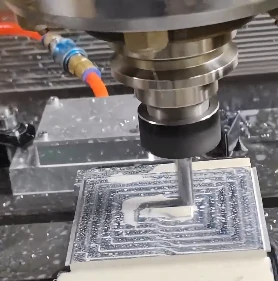
CNC machining surface finishes play a crucial role in enhancing the corrosion resistance, durability, and visual appeal of aluminum CNC parts. Below are some of the most widely used surface finishing methods and their defining features:
- As-Machined:The part surface directly from the CNC machineretains visible tool marks. This method is cost-effective and suitable for components where surface aesthetics are not critical.
- Polishing:Mechanical polishing improves surface smoothness and is ideal for aluminum partsthat require a refined finish and high-quality appearance.
- Anodizing:An electrochemical treatment that forms a protective oxide layer on aluminum surfaces, boosting corrosion resistanceand hardness. It also allows coloring in multiple shades for enhanced visual appeal.
- Sandblasting:High-speed abrasive particles are projected onto the part surface to remove burrs and imperfections, resulting in a uniform satin texture.
- Powder Coating:An electrostatically applied polymer powder creates a consistent, long-lasting protective layer. This finish is available in a wide range of colors and adds both durability and aesthetic value.
- Electroplating:A thin metal coating is applied to the CNC aluminum part, enhancing wear resistance, corrosion protection, and surface conductivity.
Each surface finish offers distinct benefits depending on the functional and visual requirements of the CNC machined aluminum components, making it an essential consideration in precision manufacturing.
What are the CNC machining tolerances of aluminum profiles?
Aluminum profiles are machined to achieve precise tolerances, ensuring that each part fits accurately within assemblies. The ability to control the machinability and dimensional properties of aluminum is critical for maintaining the performance and integrity of complex systems. Even minor deviations can impact the long-term quality and functionality of the final product.
Typical CNC machining tolerances for aluminum alloys range from ±0.001 in for aerospace components to ±0.010 in for general applications. Industries that demand high precision—such as aerospace, electronics, and automotive—require tight tolerances to guarantee safety, optimal performance, and reliability.
Achieving these stringent tolerances relies on advanced CNC machining techniques. For ultra-precise components, additional high-accuracy processes like laser cutting and EDM (Electrical Discharge Machining) are often employed.
Equally important are inspection and testing methods throughout the manufacturing process. Ensuring that aluminum profiles meet exact specifications supports long-term objectives such as improved corrosion resistance, enhanced machinability, and mechanical strength. Consistently maintaining these standards is essential for producing high-quality CNC machined aluminum parts.
Which finishing options are recommended for CNC machined aluminum parts?
Anodizing remains one of the most popular finishing options for CNC machined aluminum parts, offering enhanced corrosion resistance and improving the overall visual appeal. There are several types of aluminum anodizing, each suited for different applications:
- Type I – Chromic Acid Anodizing
This process produces a very thin yet durable protective layer. It is commonly applied to welded components and assemblies or used as a primer prior to painting. Like all anodized aluminum surfaces, it is non-conductive. - Type II – Sulfuric Acid Anodizing
Harder than Type I, this anodizing method delivers a robust and wear-resistant finish. Typical applications include carabiner hooks, flashlight handles, motorcycle components, and hydraulic valve bodies, where both durabilityand appearance are important. - Type III – Hard Anodize (Hardcoat)
The thickest and most durable anodized finish, Type III offers superior hardnessand corrosion protection. It is widely used in demanding sectors such as automotive, aerospace, heavy machinery, marine equipment, general manufacturing, and military or law enforcement applications.
Selecting the right finishing option for CNC aluminum parts is crucial to ensure that the components meet performance, durability, and aesthetic requirements, while also extending service life in challenging environments.
What factors affect aluminum CNC machining cost?
The cost of aluminum CNC machining can vary widely depending on multiple elements, including part design, aluminum grade selection, tolerance requirements, and production volume. Since CNC machined parts are fully customized, pricing is always project-specific. Understanding the primary cost drivers helps evaluate quotes more accurately and optimize your project budget.
Part Complexity & Design
Parts with intricate geometries, tight internal features, or multi-surface machining require longer programming and additional machining cycles. Components needing multiple setups or secondary operations naturally incur higher costs. Simplifying designs where possible can significantly reduce machining time and overall expenses.
Material Selection (Aluminum Grade)
Different aluminum alloys exhibit distinct machining properties:
- 6061→ cost-effective and easy to machine
- 7075→ high strength but more challenging to machine
- 2024→ strong but lower corrosion resistance
- 5052 / 5083→ excellent corrosion resistance with slightly different machining behavior
Choosing the right aluminum grade affects not only performance but also machining efficiency and overall cost.
Tolerance Requirements
Tighter tolerances demand slower cutting speeds, additional inspections, and higher precision machining:
- Standard tolerance→ lower cost
- High precision (±0.005 mm or tighter)→ higher machining and inspection cost
Balancing tolerance requirements with functional needs is key to controlling production expenses.
Production Volume
Production quantity heavily influences cost:
- Low-volume / prototypes→ higher unit cost due to setup time
- Medium batches→ optimized pricing
- High-volume production→ significantly reduced unit cost
Combining rapid prototyping with scalable high-volume manufacturing can help lower the total lifecycle cost.
Surface Finishing & Secondary Operations
Additional operations such as anodizing, polishing, sandblasting, or coating increase overall cost. However, these processes are often necessary to improve corrosion resistance, appearance, or functional performance. Limiting finishing processes to only those required helps manage the budget effectively.
Lead Time & Urgency
Shorter turnaround times may require priority scheduling, overtime machining, or adjusted production planning, which can increase costs. Planning production timelines in advance helps minimize unnecessary expenses.
What are the most common aluminum products for CNC machining?
In CNC aluminum machining, different aluminum products are chosen depending on their mechanical properties and the intended application. Here’s a rundown of the most common aluminum parts and materials used in CNC processes:
Brackets and Mounts
Support structures like brackets often use aluminum 6061 for its tensile strength (310 MPa) and excellent machinability. CNC milling creates precise hole patterns with ±0.05 mm accuracy, ideal for sensor mounting in automotive assemblies or window frame panels. These parts can reduce weight by up to 50% compared to steel equivalents.
Enclosures and Housings
Protective cases for electronics typically use aluminum 5052 because of its corrosion resistance and formability. CNC milling and turning can achieve wall thicknesses as thin as 1 mm, producing parts that shield components from EMI while keeping conductivity for consumer electronics or marine applications.
Heat Sinks and Thermal Components
Aluminum 6061 has thermal conductivity around 167 W/m·K, while pure aluminum like 1050–1060 exceeds 220 W/m·K, making them perfect for heat dissipation in LED lights, CPU coolers, and power electronics. High-speed CNC milling with ball-end tools allows for complex fin designs spaced as tightly as 0.5 mm, keeping temperatures below 80°C.
Valve Bodies and Fluid Control Parts
Hydraulic and pneumatic systems often rely on aluminum 5083 for its corrosion resistance. Multi-axis CNC turning, combined with channel drilling, produces complex ported structures with depth ratios of up to 4:1, able to handle operational pressures of 300 bar in fuel or fluid systems.
Gears and Transmission Components
Lightweight torque transmission parts often use heat-treated aluminum 7075, which provides tensile strength up to 572 MPa and excellent fatigue resistance. CNC hobbing or milling produces AGMA Class 8 gears, suitable for bicycles, robotic drives, and other applications needing low inertia.
Fittings, Connectors, Shafts, and Spindles
Aluminum 6061 and 2024 are widely used for threaded connectors, shafts, and spindles. CNC turning ensures tight tolerances, concentricity within 0.01 mm, and the ability to handle dynamic loads. Live tooling can create undercuts for leak-proof seals, and anodized finishes improve durability in high-pressure applications.
Flanges, Adapters, and Structural Components
Cast aluminum 356 is commonly CNC-finished into flanges and adapters for assembly connections, achieving bolt circle tolerances of ±0.03 mm. Aluminum 6063 extrusions are used for chassis subframes and structural beams, with pocket milling reducing weight while maintaining strength.
Prototypes, Jigs, Pulleys, and Belt Drives
Tooling and jig plates made from specialized aluminum allow flatness tolerances of 0.005 mm. CNC milling ensures accurate alignment, speeding up assembly setups. Pulleys and belt drives from aluminum 6061 are CNC-turned into V or timing belt profiles and balanced to G6.3 standards, ideal for conveyors and lightweight machinery.
Optical Mounts and Impellers
Aluminum 7075 is perfect for high-precision optical mounts, with ±0.005 mm tolerances using 5-axis CNC milling. Aluminum 6061 is commonly used for CNC-milled impellers and pump rotors, with ISO 1940 balancing for smooth operation in marine or industrial pumps.
Handles, Levers, and Heat Exchanger Plates
Ergonomic controls and grips use aluminum 5052 for ductility, CNC-turned into precise shapes and often powder-coated for durability. Heat exchanger plates made from aluminum 3003 are laser-cut and CNC-milled, enabling brazing for HVAC and automotive radiator applications.
Common Aluminum Workpiece Materials
| Material | CNC Applications | Benefits |
| Aluminum Blocks | CNC milling, cavity machining, CNC turning | Quick and precise creation of flat surfaces, cavities, or complex geometries |
| Aluminum Plates | CNC milling, drilling | Large flat parts, heat sinks, structural frameworks |
| Aluminum Bars | CNC turning, milling | Shafts, threaded components, cylindrical parts |
| Aluminum Tubes | CNC milling, drilling | Pipes, telescoping systems, structural supports |
| Aluminum Sheets | CNC milling, cutting | Lightweight structural parts, electronic enclosures, automotive panels |
| Aluminum Wires | CNC drilling, cutting | Electrical connections, electronic components, medical device parts |
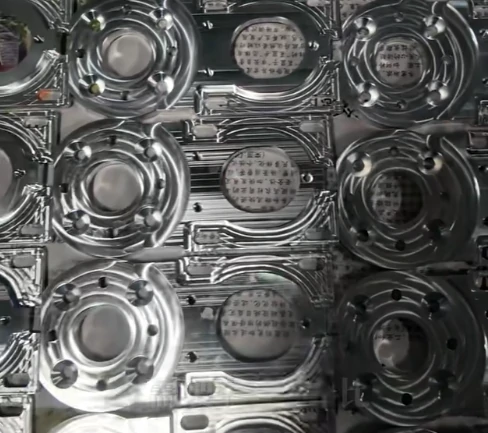
What are the typical applications of aluminum CNC machined parts?
Aluminum CNC machined parts are widely used across industries thanks to their lightweight properties, high strength, and excellent machinability. They provide solutions ranging from structural components to precision enclosures. Here’s a clear overview of the main applications:
Aerospace Industry
In aerospace, aluminum CNC parts are essential for fuselage frames, wing spars, landing gear components, and structural brackets. Using aluminum 7075 allows designers to reduce weight by up to 40% while maintaining the strength needed for high-stress applications. CNC machining ensures components meet tight tolerances, critical for performance and safety.
Automotive and Transportation
The automotive sector leverages CNC aluminum machining to create engine components, transmission housings, suspension parts, custom brackets, window frames, and chassis mounts. Aluminum’s lightweight nature improves fuel efficiency and lowers the vehicle’s center of gravity, while its strength and weldability enhance crash energy absorption.
Marine and Harsh Environments
For marine applications, aluminum 5083 is preferred due to its corrosion resistance in saltwater. CNC processes, often combined with laser cutting, produce propeller shafts, hull fittings, engine components, and deck mounts that withstand harsh environments without sacrificing durability.
Consumer Electronics
CNC aluminum machining is widely applied in electronics for laptop cases, heat sinks, camera housings, and device panels. Aluminum offers excellent thermal conductivity, lightweight protection, and premium surface finishes, making it ideal for functional and aesthetically appealing products.
Medical and Food Equipment
Aluminum is non-toxic and corrosion-resistant, which makes it suitable for food processing and medical applications. CNC-machined trays, blades, dosing equipment, and measuring devices are durable and safe, ensuring long-term reliability.
High-Performance and Sporting Components
Aluminum CNC parts are perfect for high-performance applications like racing car brackets, suspension arms, and intake manifolds. Sporting equipment, including bicycle frames, baseball bats, and mountaineering gear, benefits from aluminum’s high strength-to-weight ratio and fatigue resistance.
Energy Sector
In energy applications, precision aluminum CNC parts produce turbine blades, reactor chambers, and heat exchangers. Aluminum’s accuracy, corrosion resistance, and machinability ensure efficient, long-lasting operation in turbines and other power systems.
Construction and Industrial Applications
CNC aluminum parts are also used in construction and industrial equipment, including window frames, structural beams, curtain walls, handrails, machine fixtures, jigs, and housings. Aluminum offers a strong yet cost-effective solution for components that need to be both durable and lightweight.
How to overcome challenges in CNC aluminum machining?
Managing Aluminum’s Stickiness
One challenge when working with aluminum in CNC machining is that the metal tends to stick to cutting tools. This “stickiness” can cause material to weld onto the tool, especially at higher speeds. To prevent this, use properly coated tools, such as titanium carbonitride (TiCN), and ensure efficient coolant flow to manage heat and reduce material buildup.
Maintaining Precision and Minimizing Tool Wear
Because aluminum is adhesive, tools can wear out faster, which may affect precision during longer production runs. Opting for carbide or diamond-tipped tools can extend tool life and help keep parts dimensionally accurate. Regularly checking tool condition also prevents defects and maintains consistent quality.
Handling Aluminum’s Softness and Malleability
Aluminum’s soft and malleable nature makes it easy to machine, but it also means parts can deform if clamped incorrectly. Using the right work-holding fixtures and avoiding excessive clamping force ensures the structural integrity of the machined components.
What quality control and certifications apply to aluminum parts?
Ensuring the performance and reliability of aluminum parts relies on strict quality control and certification processes. Here’s a detailed look at the main steps and standards involved:
Dimensional and Geometric Verification
CMMs (Coordinate Measuring Machines) are used to check dimensions with a precision of ±0.002 mm. GD&T analysis confirms positional tolerances, while thread gauges ensure proper fit between mating parts. Since aluminum expands with temperature, all measurements account for thermal expansion at 20°C, with a standard expansion coefficient of 23 µm/m·K.
Surface Finish and Integrity Assessment
In CNC aluminum components, achieving the right surface quality is essential. Profilometers are used to measure Ra values, ensuring finishes fall within the 0.8–3.2 µm range. Additional surface inspections include dye penetrant testing for detecting cracks and ultrasonic testing to uncover internal voids, especially in cast aluminum alloy stock.
Material Composition and Property Testing
Verifying alloy composition is essential to guarantee mechanical performance. Spectrometry confirms the correct alloying elements, ensuring tensile strength and elongation meet ASTM B209 standards. Hardness is checked using the Brinell 95 test, which validates the effectiveness of heat treatment, such as 6061-T6 processing.
Certification Standards
Compliance with industry standards is part of robust quality management. For example:
- ISO 9001: General quality management
- AS9100: Aerospace-grade aluminum parts
- ISO 13485: Traceability and quality control for medical components
Each material batch comes with mill certificates that provide verified property information supplied by the manufacturer.
Traceability and Documentation
Complete product traceability links the original CAD files to final inspection results through batch records. A well-maintained non-conformance reporting system identifies root causes of defects, helping keep rejection rates below 1%. This ensures accountability and supports continuous improvement in aluminum machining processes.
What defines a top aluminum CNC machining company?
Selecting the right aluminum CNC machining company involves more than just basic machining capability. For high-precision components and scalable production, a leading manufacturer must demonstrate not only technical expertise but also process control, consistency, and strong engineering support. The following factors distinguish a truly reliable aluminum CNC machining partner:
Precision & Tolerance Capability
High-quality CNC aluminum machining relies on stable precision across both prototypes and production batches. Top manufacturers achieve tight tolerances with excellent repeatability, even for complex geometries and critical dimensions. Advanced CNC services combined with optimized tooling strategies ensure consistent dimensional accuracy throughout the production cycle.
Advanced CNC Milling & Turning Capabilities
Many aluminum parts require both milling and turning operations. A leading provider should offer multi-axis CNC milling and high-efficiency CNC turning to handle intricate features in fewer setups. This capability improves accuracy while reducing production time and cost.
Surface Finish Control & Post-Processing
The surface quality of CNC aluminum parts is essential for both function and aesthetics. Reliable manufacturers provide comprehensive finishing solutions, including anodizing, polishing, sandblasting, and coating. Consistent post-processing ensures parts meet both visual and performance expectations.
Engineering Support & Design Optimization
Top aluminum CNC machining companies do more than follow drawings—they assist in design optimization. Skilled engineering teams offer design for manufacturability (DFM) feedback to reduce unnecessary complexity, enhance machining efficiency, and lower costs. This support is particularly valuable during rapid prototyping, where multiple design iterations must be validated quickly.
Scalability from Prototype to Production
A capable manufacturer allows seamless transition from low-volume prototypes to large-scale production. Providers that offer both prototyping and high-volume manufacturing ensure consistent quality, material performance, and process control throughout all production stages.
Material Expertise in Aluminum Alloys
Not all aluminum alloys behave identically during machining. A top manufacturer understands the characteristics of grades like 6061, 7075, 5052, and 2024 and can recommend the best option based on strength, corrosion resistance, and cost. This knowledge directly impacts both machining efficiency and final part performance.
Quality Control & Process Stability
Consistent results require strict quality control and standardized production workflows. Leading manufacturers implement in-process inspections, final part verification, and thorough documentation to ensure all components meet specifications. Stable processes are especially critical for long production runs and precision applications.
Why choose Welleshaft for CNC aluminum machining?
Choosing the right CNC aluminum machining partner is essential for project success. Welleshaft offers advanced 5-axis CNC machines, precise measurement tools, and a skilled engineering team to ensure high-quality, accurate, and efficient production. With in-house aluminum stock, consistent material quality is guaranteed.
Strict quality control and ISO9001/IATF16949 certifications ensure every stage, from raw materials to finished parts, meets exact standards. Welleshaft has extensive experience in aerospace, automotive, and electronics, delivering reliable CNC aluminum parts for complex and critical applications.
The welleshaft company provides rapid prototyping and high-volume CNC aluminum machining, allowing fast validation of designs and scalable production without compromising quality. Processes like multi-axis CNC milling, CNC turning, and Swiss-style machining handle complex, cylindrical, and micro aluminum components with tight tolerances.
Aluminum is ideal for CNC machining due to its strength, corrosion resistance, and machinability. Alloys like 6061 and 5052 optimize durability and cost-efficiency, while CNC machining enables precise, intricate designs and smooth finishes.
Welleshaft delivers high precision, fast turnaround, custom solutions, and surface finishing options like anodizing, polishing, and coating. Optimized workflows reduce tooling wear and cost, while professional support ensures projects are completed accurately and efficiently.
What are FAQs about aluminum CNC machining?
What are the challenges in aluminum CNC machining?
Certain aluminum alloys are softer, which can make cutting more delicate and prone to material breakage. Other challenges include aluminum’s high thermal conductivity and tendency to form burrs. Advanced machining strategies and proper tooling can overcome these issues.
Why is aluminum commonly used in CNC machining?
Aluminum offers superior machinability, low weight, and good corrosion resistance, enabling faster machining speeds, lower tooling wear, and cost-effective production. These properties make it widely used for both prototyping and mass production.
Is aluminum suitable for high-volume production?
Yes, aluminum’s consistent machinability and stable performance make it ideal for high-volume CNC machining, widely used across various industries for scalable production.
What are the limitations of aluminum CNC machining?
Compared to steel or titanium, aluminum has lower strength and wear resistance. It may not be suitable for applications requiring extreme load-bearing capacity or high-temperature tolerance.
How does aluminum CNC machining compare to casting?
CNC machining provides superior precision and surface finish, while casting is better suited for very large volumes or complex internal geometries. For high-precision parts, CNC machining of aluminum is usually preferred.
Welleshaft provides professional aluminum CNC machining services, delivering precise parts from various aluminum alloys with advanced finishing, catering to aerospace, marine, and high-performance applications.

 English (Australia)
  English
  Português do Brasil
  Deutsch (Österreich)
  Deutsch (Schweiz)
  English (UK)
  English (New Zealand)
  Deutsch
  Français du Canada
  Français
  Français de Belgique
  Italiano
  English (South Africa)
  Português
  Español
  Español de México
  Español de Perú
  Español de Colombia
  العربية
  日本語
日本語  Русский
  한국어
한국어  Tiếng Việt
  ไทย
ไทย