
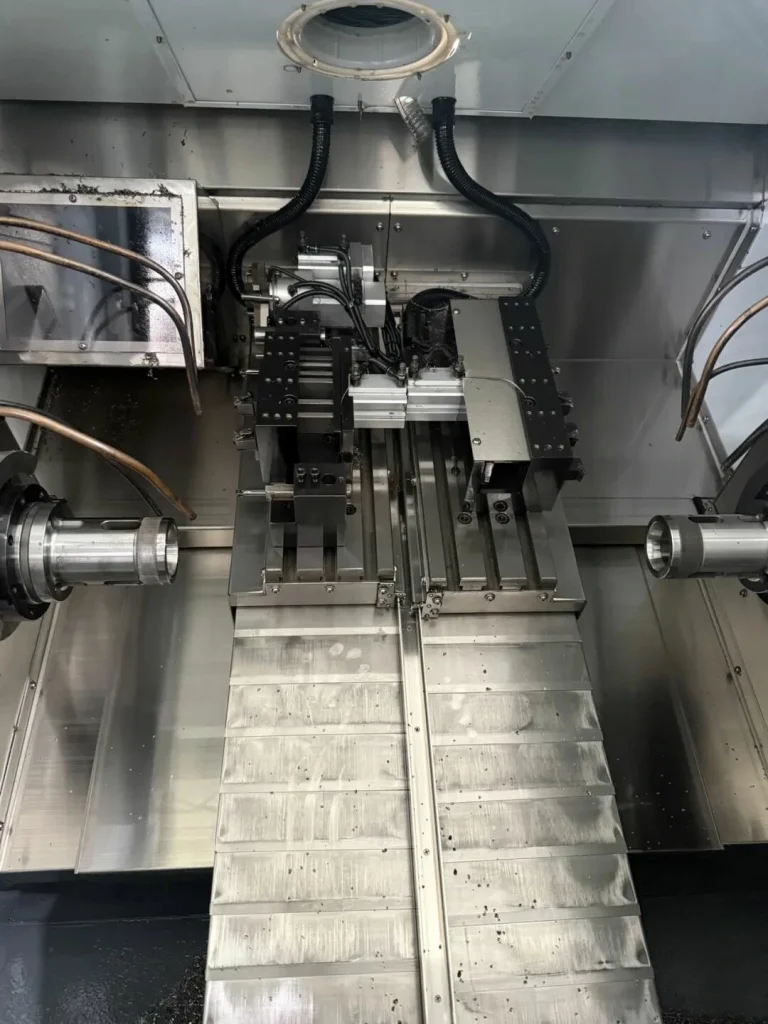
What is Precision Manufacturing?
Precision manufacturing is essential for producing components with tight tolerances and exact specifications, ensuring every part meets strict standards for size, shape, and performance. Using advanced tools like CNC machines and professional CNC Machining Services, this process reduces human error and delivers consistent results from prototypes to mass production, enhancing product quality and reliability.
The demand for precision manufacturing keeps growing. New products across industries often require small, highly precise components that can only be produced through meticulous machining and specialized CNC Machining Services. This trend highlights the increasing importance of high-precision parts for modern manufacturing.
In industries where safety, performance, and reliability are critical, precision is non-negotiable. In aerospace, turbine blades and structural fasteners must meet exact specifications to prevent inefficiencies or safety risks. Even slight deviations can compromise performance.
The medical device sector relies on precision for implants, surgical tools, and diagnostic equipment. A fraction-of-a-millimeter difference can determine success, making high accuracy essential for patient safety and regulatory compliance.
Automotive manufacturing also depends on precision. Engine parts, gear systems, and electronic assemblies must fit perfectly to ensure performance, safety, and efficiency. With electric vehicles and autonomous driving technologies, precise components are even more critical to support next-generation innovations.
Overall, precision manufacturing drives modern industry, improving reliability, efficiency, and business success. Integrating automation further enhances the process, maintaining strict standards while boosting productivity. Investing in precision is no longer optional—it’s a strategic advantage for competitive businesses.
How Does The Technology Behind CNC Automation Enhance Precision Manufacturing?
For successful precision manufacturing, job shops must have the right tools and technologies in place. Leveraging advanced smart manufacturing solutions enhances accuracy, consistency, and efficiency in CNC machining, giving manufacturers a competitive edge.
Advanced Sensors for Precision Control
Modern CNC machines now feature sensors that monitor variables such as temperature, vibration, tool wear, and spindle speed in real time. This feedback allows immediate adjustments during machining. For instance, if excessive tool wear is detected, the system can modify cutting speeds or replace the tool, maintaining precision while reducing defects and downtime.
AI and Machine Learning in CNC Automation
Artificial intelligence (AI) and machine learning are revolutionizing CNC automation by enabling predictive maintenance and adaptive machining. Data collected by automated systems identifies patterns, predicts potential issues, and refines tool paths and cutting parameters. This continuous optimization improves precision, efficiency, and allows machines to handle complex geometries and rapid production changes, which are essential for modern precision manufacturing.
Robotic Machine Tending
Robotic machine tending automates the loading and unloading of parts in CNC machines, reducing cycle times and ensuring consistent handling. Robots equipped with vision systems position raw materials and finished components with pinpoint accuracy, enhancing precision at every step.
By combining advanced sensors, AI and machine learning, and robotic machine tending, modern CNC automation delivers unprecedented precision and efficiency. For job shops, adopting these innovations is not just a technological upgrade—it’s a strategic necessity to stay competitive in industries where accuracy, adaptability, and speed define success.
3.How Can CNC Automation Assist in Achieving High-Precision Manufacturing?
Precision manufacturing today has evolved dramatically thanks to CNC automation, which integrates advanced robotics and automated systems directly into CNC machines. Leveraging professional CNC Machining Services, this transformative technology reduces human error, boosts production speed, and ensures consistent quality, allowing manufacturers to meet the strict tolerances demanded across industries.
Accuracy
In precision manufacturing, accuracy is non-negotiable. CNC automation delivers unparalleled precision by minimizing manual intervention and using sophisticated software and sensors. Automated systems execute complex machining operations with micron-level precision, ensuring every component meets exact specifications.
Efficiency
Automation streamlines repetitive tasks and optimizes workflows, significantly improving production efficiency. Robots operate continuously, reduce downtime, and enable faster setup and smoother transitions between runs. This allows job shops to meet tight deadlines without compromising quality.
Scalability
CNC automation provides the flexibility to scale production efficiently. Machines can be programmed for diverse tasks with minimal reconfiguration, making it easy to adapt to changing demands in dynamic industries such as automotive and consumer electronics.
Safety
Automation enhances workplace safety by reducing operator exposure to hazardous tasks like handling sharp tools, high-heat environments, or heavy machinery. Robots take on these risks, protecting workers and ensuring a safer manufacturing environment.
Cost Savings
Automated precision machining through professional CNC Machining Services optimizes material usage, reduces scrap, and prevents defects through real-time error detection. This lowers material costs, improves sustainability, and increases overall operational efficiency.
In short, CNC Machining Services and CNC automation bridge the gap between precision and productivity, enabling manufacturers to achieve highly accurate, efficient, scalable, and safe production. By integrating these technologies, businesses not only enhance quality but also save on costs and maintain a competitive edge in today’s fast-paced manufacturing landscape.
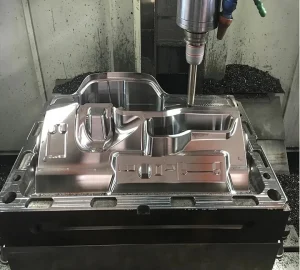
What Are the Fundamentals of CNC Machining for Precision Manufacturing?
How CNC Machines Work
At the heart of CNC machining lies the ability to convert digital design files into highly precise mechanical movements. This sophisticated process relies on several critical components working seamlessly together:
- Computer and Software– Acting as the operation’s brain, this is where designs are developed and translated into detailed machine instructions.
- Machine Control Unit (MCU)– This component interprets the computer’s commands and directs the machine’s movements with precision.
- Machine Tools– These are the physical elements that carry out cutting, drilling, shaping, and other operations, directly shaping the final component.
- Servo Motors– Provide accurate movement control across all machine axes, ensuring every motion aligns with the design.
- Feedback System– Continuously monitors position and movement, guaranteeing high accuracy and maintaining tight tolerances throughout the process.
To coordinate all these elements, CNC machines rely on a specialized programming language called G-code, which specifies every movement and operation required for production. Together, these technologies enable manufacturers to achieve consistent precision, reduce errors, and scale operations efficiently across complex
Types of CNC Machines
Different CNC machines serve specific purposes in precision manufacturing, depending on the material, design complexity, and production requirements. Each machine type offers unique capabilities that help manufacturers achieve accuracy, speed, and consistency across various applications. Below are 12 of the most common CNC machines used across industries:
| Machine Type | Description |
|---|---|
| Milling Machine | Uses rotating multi-point cutting tools to remove material. Ideal for shaping complex 3D parts with high precision. |
| Lathe | Spins the workpiece against a fixed cutting tool, perfect for cylindrical or symmetrical components. |
| Plasma Cutter | Cuts electrically conductive materials using high-velocity ionized gas (plasma) for fast, precise cuts. |
| Laser Cutter | Uses a focused laser beam to cut metal, wood, plastic, or acrylic with exceptional accuracy. |
| Electric Discharge Machine (EDM) | Removes material with electrical sparks, ideal for hard metals and tight tolerances. |
| Router | Similar to milling machines but optimized for softer materials like wood, foam, and plastics. |
| Pick and Place Machine | Common in electronics manufacturing; places small components such as microchips onto PCBs. |
| Drilling Machine | Performs high-speed, precise hole drilling, often for metals or circuit boards. |
| Grinding Machine | Uses an abrasive wheel to create ultra-smooth surfaces, essential during finishing stages. |
| Bending Machine | Bends metal sheets into specific shapes without cutting or welding, crucial in sheet metal fabrication. |
| Cutting Machine | General-purpose CNC for cutting materials into pre-defined shapes and sizes. |
| 3D Printer (Additive CNC) | Builds parts layer by layer using thermoplastics or resin, enabling complex 3D designs with additive manufacturing. |
Each type of CNC machine empowers manufacturers to handle diverse production challenges, whether it’s cutting hardened steel, assembling delicate electronics, or producing intricate 3D forms. Adopting the right combination of these machines allows manufacturers to maintain precision, efficiency, and scalability, meeting the demands of modern production environments.
6 Advantages of CNC Machining
Precision and Accuracy
Achieving extremely tight tolerances—often down to ±0.001 inches—is essential for industries where even minor deviations can lead to costly failures. High-precision machining ensures every component meets strict quality standards, maintaining reliability and product integrity.
Efficiency
High-speed operations combined with minimal human supervision streamline workflows and significantly reduce production time. This allows manufacturers to accelerate project turnaround, meet tight deadlines, and bring products to market faster.
Complexity
Intricate shapes and detailed geometries that are difficult or impossible to produce manually can now be realized with advanced machining techniques. This capability empowers designers to innovate and develop products with more complex features without compromising quality.
Repeatability
Once a process is programmed, it can reproduce the same component thousands of times with exact consistency. This repeatability guarantees uniform quality across large production runs and protects both brand reputation and product standards.
Reduced Waste
Optimized material usage through precise cutting minimizes scrap and lowers production costs. Sustainable manufacturing practices are supported by reducing excess material consumption while maintaining strict dimensional accuracy.
Flexibility
Processes can be quickly reprogrammed to produce different components, making them ideal for custom jobs, prototypes, or shifting production demands. Manufacturers can adapt rapidly without investing in new equipment, ensuring scalability and responsiveness.
In today’s fast-paced, innovation-driven manufacturing landscape, CNC machining is no longer just a tool—it’s a strategic advantage. By combining precision, efficiency, and flexibility, manufacturers can stay competitive, deliver higher-quality products, and scale production with confidence.
Why CNC Machines Are the Backbone of Modern Manufacturing
CNC machines are more than just tools—they represent the future of digital manufacturing. By combining speed, precision, and adaptability, these machines have become essential for modern engineering. From automotive components to complex aerospace parts, professional CNC Machining Services form the backbone of today’s high-performance production processes.
Leveraging the full potential of CNC Machining Services requires the right expertise. With proper guidance, manufacturers can streamline production, minimize downtime, and achieve consistent, high-quality results from the very first run. Adopting these solutions not only enhances efficiency but also strengthens competitiveness in fast-paced, innovation-driven industries.
How Do Precision Machining Components Improve Efficiency and Accuracy?
CNC Machining Part: Enhancing Efficiency and Accuracy
CNC machining leverages advanced technology to automate manufacturing processes and boost production efficiency. By using CNC machines, manufacturers can access professional CNC Machining Services to operate complex equipment such as grinders, lathes, mills, and routers with precision. These machines follow numerical codes that guide every cut and shape according to digital 3D designs, ensuring that every component matches its intended specifications.
Eliminating manual intervention, CNC Machining Services significantly reduce the risk of human error. They also enable three-dimensional cutting tasks to be completed in a single program run, accelerating production and improving workflow efficiency.
Additionally, complex designs that would be difficult or impossible to create with traditional methods can now be produced with ease through CNC Machining Services, opening the door to more innovative product development and allowing manufacturers to meet higher standards of precision and quality.
Precision Machining Part: Unmatched Precision and Consistency
Precision is one of the most significant advantages of CNC Machining Services. No matter the production volume, CNC machines provided through these services deliver exact dimensions for every component. By using pre-programmed software, manufacturers achieve consistent results on every run, eliminating variability and ensuring high-quality output.
Beyond precision, CNC machines operated via CNC Machining Services run continuously, unlike human workers who face limitations in work hours. This capability dramatically boosts productivity, allowing production to run uninterrupted and meeting tight deadlines more efficiently.
In addition to accuracy and consistency, CNC machining minimizes material waste by reducing errors common in manual processes. The automated control ensures that each part aligns with specifications, preventing the need for rework or scrap and supporting cost-effective, sustainable manufacturing.
How Does Automation in CNC Machining Transform Precision Manufacturing?
CNC Machine Automation
When CNC machines were first introduced, they relied on punched or perforated paper tape for data input. Today, they operate using digital instructions from computer-aided design (CAD) and computer-aided manufacturing (CAM) software.
Guided by a skilled CNC machinist, these machines interpret designs through G-code, automating machine tools to streamline production while reducing manual labor. CNC machining is widely applied in metal and plastic part manufacturing, delivering significant benefits for modern production.
Efficiency
With unmatched precision, CNC machines minimize material waste and reduce production costs. They operate continuously, day or night, without constant human supervision, boosting overall manufacturing efficiency.
Speed
By combining multiple machining steps into automated processes, CNC machines accelerate production far beyond human capabilities. Faster operation directly improves project turnaround and throughput.
Consistency and Capacity
CNC machining ensures identical results across large production runs. Machines reproduce parts with the same accuracy and quality repeatedly, supporting high-volume manufacturing while maintaining product consistency.
Safety and Simplicity
Once programmed, CNC machines perform tasks independently, requiring only minimal oversight from operators. This reduces the need for direct human interaction with hazardous materials or high-temperature processes, keeping employees safe and simplifying complex production workflows.
By leveraging CNC automation, manufacturers can achieve faster, safer, and more cost-effective production while maintaining high precision and consistent quality.
Automation in CNC Precision Machining
CNC machines integrated with automation technologies dramatically enhance precision, efficiency, and productivity in modern manufacturing. By combining CNC Machining Services with automation, manufacturers achieve higher accuracy and repeatability, ensuring every part meets stringent quality standards.
Precision and Consistency
Automated CNC precision machining is essential for industries that demand exact measurements, such as aerospace, medical devices, and automotive manufacturing. Automation ensures components are produced with consistent quality, reducing errors and maintaining tight tolerances throughout production runs.
Increased Productivity and Efficiency
Automation enables CNC machines to operate continuously, minimizing downtime and eliminating human error. This uninterrupted workflow allows manufacturers to maximize output, accelerate production schedules, and create opportunities to expand customer bases and increase revenue.
Rapid Prototyping and Innovation
Automation also turns CNC machining into a powerful tool for prototyping. Digital designs can be quickly converted into functional prototypes, allowing manufacturers to test concepts, identify design flaws, and validate products faster. Industries focused on innovation, such as robotics and consumer electronics, benefit most from the ability to rapidly produce and iterate designs.
Enhanced Workplace Safety
By reducing direct human involvement, automated CNC machines minimize exposure to moving parts, hot surfaces, and sharp tools. This improves workplace safety, enhances job quality, and boosts employee satisfaction, while maintaining high production standards.
Driving the Fourth Industrial Revolution
Integrating automation technologies into CNC machining represents a key advancement in modern manufacturing. These innovations increase productivity, maintain precision, and help manufacturers stay competitive in a rapidly evolving industrial landscape. Automation has become a cornerstone of CNC precision machining, pushing manufacturing into the fourth industrial revolution.
How Automation is Transforming Precision Machining
Improving Accuracy and Repeatability
In precision machining, tolerances are often measured in microns, leaving almost no room for error. Automated CNC systems equipped with robotics, as part of advanced CNC Machining Services, consistently achieve these tight tolerances. Unlike manual machining, which can fluctuate due to human error, automation ensures every component meets exact specifications. These systems can reproduce the same operation thousands of times without deviation, which is critical for industries like automotive and defense, where identical parts must perform reliably under high-stress conditions.
Increasing Efficiency and Throughput
Automation dramatically enhances production efficiency by allowing machines to run continuously with minimal human intervention. Robots manage repetitive tasks such as loading and unloading workpieces, enabling operations to run overnight or across multiple shifts. Advanced systems monitor tool wear, track machine performance, and adjust parameters in real time, reducing downtime and extending equipment life. These optimizations keep production flowing smoothly and allow manufacturers to deliver high-quality parts faster, maintaining a competitive edge.
Supporting Complex Designs
Modern products often require intricate designs that traditional methods cannot achieve. Advanced CNC Machining Services, particularly using 5-axis CNC machines, enable manufacturers to produce components with complex geometries and precise surface finishes. This capability is essential in sectors like medical technology, where reliability and detail are crucial, and aerospace, where strong yet lightweight designs are required.
By integrating automation with advanced CAD/CAM software, manufacturers can transition seamlessly from digital models to physical components. This streamlined workflow reduces lead times, enhances accuracy, and ensures that the final product matches the original design intent.
Maintaining Competitiveness in Precision Manufacturing
Adopting automated CNC machining provides a significant advantage in today’s competitive manufacturing landscape. By combining high accuracy, repeatability, and efficiency, businesses can meet demanding production standards, accelerate innovation, and deliver high-quality components consistently. Investing in automation technologies is no longer optional—it’s a strategic move to maintain precision, speed, and reliability in modern manufacturing.
What Can Automated CNC Machines Do?
Automated CNC machines come in a variety of types, each offering different capabilities and levels of automation, from simple to highly complex. Choosing the right machine depends on the job requirements, required precision, budget, and production timelines. Here are some of the most common CNC machines and their applications:
CNC Milling Machines
Among the most popular automated machines, CNC milling machines deliver exceptional precision, repeatability, and the ability to produce complex shapes with tight tolerances. They perform multiple operations such as drilling, boring, slotting, and contouring, making them essential in industries like automotive, aerospace, electronics, and prototyping. Common variants include hand, plain, universal, and omniversal milling machines, capable of tasks ranging from tapping and turning to face milling and machining hard metals.
CNC Plasma Cutters
Plasma cutters provide highly accurate cuts by using electrical discharge arcs to ionize air and melt the material at the point of contact. These machines excel in cutting metal for applications in industrial construction, restoration, and salvage operations, offering speed and precision that manual cutting cannot achieve.
CNC Lathe Machines
CNC lathes are ideal for producing cylindrical, conical, or flat components. By rotating the workpiece around a central axis and applying cutting tools, these machines efficiently shape metals, plastics, and wood into products such as automobile parts, musical instruments, furniture legs, and more. They combine speed, accuracy, and consistency across high-volume production runs.
CNC Waterjet Cutters
Waterjet cutters use high-pressure streams of water, often combined with abrasives, to cut through a wide range of materials. From stone and tiles to metal, glass, ceramics, plastics, foam, and rubber, these machines offer versatility and precision, making them ideal for industries that require complex or delicate cuts.
CNC Drilling Machines
Automated CNC drilling machines provide precise holes for screws, assemblies, or aesthetic features. Using rotating drill bits, these machines handle metals, composites, and wood, serving industries such as automotive, shipbuilding, aerospace, mold-making, and engineering.
The level of automation and complexity required for any CNC machine depends on the task, desired accuracy, production volume, and timeframe. Skilled CNC operators assess these factors and implement solutions that ensure efficient, innovative, and high-quality production. By leveraging these machines, manufacturers can achieve precision, consistency, and scalability across a wide range of applications.
How to Improve Manufacturing Processes with CNC Automation
Ultimately, precision manufacturing relies on advanced technologies. Without these tools, achieving high precision can be both time-consuming and costly. By integrating CNC automation and robotic machine tending, manufacturers can ensure repeatable, consistent runs while increasing throughput without compromising product quality.
For job shops, adopting these innovations in CNC Machining Services is more than an upgrade—it’s a strategic necessity in an era where accuracy and adaptability define competitiveness. Improving precision does not require a complete equipment overhaul. By leveraging modern automation solutions, manufacturers can enhance the performance of their existing machines, streamline production, and achieve higher efficiency and reliability across every project.
What Role Do Automated CNC Machines Play in Multi-Axis and Advanced Technologies?
Multi-Axis Precision Machining
Multi-axis CNC machines offer advanced capabilities that enable the production of intricate and complex designs. In multi-axis machining, several axes move simultaneously, providing enhanced control over the machining process. To qualify as multi-axis, a CNC machine must have at least three axes, and some models extend up to twelve. This versatility allows manufacturers to create sophisticated components such as turbine blades, detailed molds, and articulated joints with unmatched precision.
When combined with automation, multi-axis machining establishes CNC machines as a cornerstone of advanced manufacturing technology. While these machines may require higher up-front investment, the benefits are substantial. Their high-precision technology reduces machining time, increases production throughput, lowers operational costs, and minimizes material waste.
For modern CNC machine shops, investing in multi-axis precision machining is essential to maintain competitiveness, drive innovation, and meet the growing demand for complex, high-quality components across industries.
Versatility Across Industries
Precision CNC machining serves a vital role across diverse industries, including aerospace, automotive, medical, and electronics. Its versatility allows manufacturers to produce intricate designs and complex geometries with exceptional accuracy and consistency.
In the aerospace industry, CNC machining fabricates turbine blades with precise aerodynamic profiles, ensuring optimal performance and safety. Within the medical sector, it enables the production of customized implants and surgical instruments tailored to individual patient requirements, improving outcomes and compliance with regulatory standards.
In electronics manufacturing, precision CNC machining is essential for creating intricate circuit boards, connectors, and other components that demand micron-level accuracy. By combining advanced CNC technology with skilled operators, manufacturers can consistently deliver high-quality, complex parts across multiple sectors.
How Do Automated CNC Machines Aid Mass Production in Modern Manufacturing?
CNC technology enables machine shops to produce precision parts faster, at higher volumes, and with improved quality and consistency. By leveraging automated CNC machining, manufacturers can scale production efficiently, producing more components in less time than conventional methods allow.
Reducing fabrication time not only accelerates manufacturing but also supports high-volume production, a key driver of cost efficiency. Faster operations lower the price per unit, increase throughput, and enhance overall manufacturing productivity.
When CNC machines automate tasks previously performed manually, they deliver superior accuracy, require minimal supervision, and reduce the risk of human error. This combination of speed, precision, and scalability makes CNC technology indispensable for modern manufacturers seeking to stay competitive and meet growing market demands.
What Are the Key Ways CNC Machining Augments High-Volume Production?
Automated CNC machines have become the preferred method for producing precision parts across modern manufacturing. By leveraging CNC Machining Services and advanced CNC technology, machine shops can efficiently fabricate components with micron-level accuracy, converting CAD designs into exact toolpaths. These machines are used in mills, lathes, turning centers, EDMs, laser cutters, waterjet cutters, and other equipment programmed to produce complex components with tight tolerances.
Using preprogrammed cutting paths, automated CNC machines incrementally remove material until the part reaches its final form. While standard tolerances of ±0.127 mm are common, advanced CNC machines can achieve tolerances in the micron range, making them indispensable for high-precision industries. Machine shops must pair these systems with high-quality tooling to maximize accuracy and performance. In addition, CNC machining complements additive manufacturing by finishing 3D-printed parts and producing molds for injection or industrial molding.
Optimizing Efficiency
Automation enhances manufacturing efficiency by reducing energy use, minimizing scrap, and optimizing workflows. Automated CNC machines enable:
- Increased uptime and lights-out production
- Just-in-time manufacturing
- Secondary operations such as deburring, gauging, and washing
- Rapid tooling changeoversand seamless integration with other equipment
Compact, robotic CNC machines also maximize workspace utilization while maintaining high throughput.
Consistent Results
Consistency is crucial in precision manufacturing, and automated CNC machines outperform manual processes by eliminating human variability. Integrated software ensures every toolpath follows the exact programmed movement, producing identical components at scale and reducing lead times.
Cost-Effectiveness
The combination of speed, precision, and automation makes CNC machining highly cost-effective. Automated machines can perform the work of multiple operators, reduce labor costs, and lower energy consumption per unit. Continuous operation allows machine shops to produce high-quality components around the clock, reduce cycle times, and achieve lower per-unit costs, improving competitiveness and profitability.
Lower Labor Requirements
Automation reduces the need for a large workforce while allowing machine shops to handle multiple projects simultaneously. Employees can focus on higher-value tasks like design and innovation, while CNC machines maintain accuracy, speed, and productivity, boosting overall output and profitability.
Enhanced Quality Control
Automated CNC machines simplify quality control by minimizing human error and ensuring compliance with industry standards. Integrated systems enable:
- Data analyticsto improve product quality and efficiency
- Tool condition monitoringfor predictive maintenance
- On-machine inspectionsfor real-time corrections
- Real-time monitoringof cutting force, spindle speed, and tooling wear
Automation also prioritizes production schedules, enabling faster turnarounds and reliable order fulfillment. By combining CNC technology with advanced automation and monitoring, manufacturers achieve unmatched precision, efficiency, and consistency, making automated CNC machining a strategic asset in modern production.
Why Is the Human Factor Still Critical in CNC Automation?
Role of CNC Operators and Programmers
Even with highly automated CNC machines, skilled professionals remain essential for ensuring smooth, precise, and efficient operations. Their technical expertise, hands-on experience, and problem-solving abilities are critical to maximizing the performance of modern CNC machining.
Operators
CNC operators manage machine setup, load raw materials, and oversee production. They continuously monitor operations in real time, making adjustments as needed to maintain consistent quality and ensure every component meets exact specifications.
Programmers
CNC programmers are responsible for creating and optimizing G-code, the programming language that controls machine movements. By interpreting technical drawings and fine-tuning code, they ensure maximum efficiency, precision, and repeatability throughout the production process.
Maintenance Technicians
Maintenance technicians keep CNC machines in peak condition through routine maintenance and diagnostics. They identify signs of wear or potential failures before they affect production, ensuring machines operate reliably and minimizing downtime.
These roles demand a combination of technical knowledge, attention to detail, and critical thinking. As CNC technology continues to advance, the skills required for these positions evolve, emphasizing the importance of continuous learning and expertise in precision manufacturing.
Where Do CNC Operators Fit into the Evolving CNC Automation Field?
CNC machine automation is designed to streamline manufacturing processes and enhance productivity. By integrating advanced robotics, manufacturers are moving closer to fully automated production lines, reducing reliance on manual operation while maintaining high precision.
However, skilled machinists remain essential to implement, verify, and adjust the generated G-code. They correct errors, resolve system breakdowns, and monitor machines for wear, thermal expansion, and tolerance deviations, ensuring optimal performance at all times.
With advancements in solid modeling, CAM/CAD systems, and computer integration, investing in trained machinists and robotic technicians has become a strategic necessity. Their expertise ensures that automated CNC machines operate efficiently, safely, and at peak performance, delivering consistent, high-quality components while maximizing throughput.
How Does Precision CNC Machining Demonstrate Versatility Across Industries?
CNC machines have transformed manufacturing across numerous industries, enabling faster, more precise, and scalable production. Their versatility allows manufacturers to meet complex design requirements while maintaining high quality and efficiency. Key sectors leveraging CNC technology include:
- Aerospace:Producing complex aircraft components with exacting precision to meet strict safety and performance standards.
- Automotive:Fabricating engine parts, chassis components, and custom automotive accessories with consistent accuracy.
- Medical:Creating prosthetics, implants, and surgical instruments tailored to patient-specific needs.
- Electronics:Manufacturing circuit boards, device housings, and other intricate components with micron-level precision.
- Defence:Producing specialized military equipment and vehicle components that demand reliability under high-stress conditions.
- Consumer Goods:Enabling high-quality production of household appliances, sports equipment, and other everyday products.
These applications demonstrate how CNC machining drives innovation and efficiency, allowing manufacturers to adapt to evolving demands, optimize production workflows, and consistently deliver high-quality products across diverse industries.
How Is Precision CNC Machining for Automation Shaping Future Trends?
Future Trends in CNC Technology
The world of CNC machining continues to evolve, with emerging trends driving efficiency, precision, and versatility to new levels. Manufacturers leveraging these advancements can stay competitive and deliver higher-quality products faster. Key trends shaping the future of CNC technology include:
Artificial Intelligence Integration
AI is revolutionizing CNC machining by enabling smarter decision-making and real-time toolpath optimization. This reduces machining errors, shortens cycle times, and enhances overall productivity. Beyond programming, AI monitors machine health, predicts potential component failures, and allows for preventive maintenance, minimizing costly downtime.
Internet of Things (IoT) Connectivity
IoT-enabled CNC machines provide real-time monitoring of performance, energy consumption, and productivity. Access to live data allows operators and engineers to make informed decisions quickly, supports remote diagnostics, and enables centralized control across multiple facilities.
Hybrid Manufacturing
Hybrid CNC systems combine subtractive machining with additive 3D printing, offering design flexibility and reducing material waste. Manufacturers can machine a base component and then 3D print intricate features directly onto it. This approach is especially valuable in aerospace, tooling, and rapid prototyping.
Increased Automation
The adoption of robotics in CNC environments continues to grow. Robots assist with material loading, unloading, and inspection, reducing human intervention while increasing throughput. Automation ensures consistent output, lowers labor costs, and enables around-the-clock manufacturing without sacrificing precision.
Sustainable Practices
Sustainability is becoming a priority in CNC technology. New machines incorporate energy-efficient motors and components, while manufacturers adopt biodegradable cutting fluids and recycle metal chips. These practices reduce waste, lower operational costs, and align with global green manufacturing goals.
By embracing these trends, manufacturers can leverage advanced CNC machining to achieve higher efficiency, reduced costs, and superior product quality, positioning themselves at the forefront of modern manufacturing innovation.
7 Tips for Choosing the Right CNC Machine
Choosing the right CNC machine goes beyond technical specifications. It’s about selecting equipment that aligns with your operational demands, production goals, and long-term growth. Here are the key factors to guide your decision:
Type of Work
The nature of your machining tasks directly impacts the type of CNC machine you need. Whether your operations focus on milling, turning, or multi-axis machining, each requires specific capabilities.
- Define your primary tasks: milling, turning, routing, cutting, or multi-axis operations.
- Consider whether you need 3-axis, 4-axis, or 5-axis capability.
- Match the machine to the shapes, sizes, and complexityof the parts you produce regularly.
Material Requirements
Not all CNC machines perform equally across different materials. Choosing the right machine ensures efficiency, accuracy, and tool longevity.
- Identify the materials you use most, such as aluminium, steel, plastics, or wood.
- Select machines with appropriate spindle speed, torque, and rigidityfor your materials.
- Confirm compatibility with required tooling and coolant systems.
Production Volume
Your production goals must match the CNC machine’s capacity. High-volume operations demand different features than low-volume or prototyping runs.
- Determine if your workflow is high-volume, low-volume, or custom batch production.
- Consider automated features like tool changers or bar feedersfor large-scale operations.
- For smaller runs, prioritize fast setup timesand flexible programming.
Precision Requirements
Industries such as aerospace, medical, and electronics require exacting tolerances. Even minor errors can lead to costly consequences.
- Evaluate the accuracy standardsfor your sector.
- Look for machines with thermal stabilityand high-resolution feedback systems.
- Consider features like backlash elimination, linear scales,or granite bases for consistent precision.
Budget and ROI
Investing in a CNC machine is a strategic decision. Beyond purchase cost, consider total cost of ownership and the return on investment.
- Factor in machine price, tooling, maintenance, software, and energy consumption.
- Balance upfront investment with long-term performance and reliability.
- Estimate how quickly productivity gains will offset the initial cost.
Space Constraints
Floor space and shop layout are critical yet often overlooked. Ensure your CNC machine fits seamlessly without disrupting operations.
- Measure available floor space and plan for machine clearancefor maintenance and material handling.
- Consider utility requirements such as power, air, ventilation, and potential expansion.
Partner with the Right Experts
Collaborating with CNC specialists can simplify equipment selection and enhance long-term results.
- Receive tailored machine recommendationsaligned with your operations.
- Avoid costly errors from misaligned equipment choices.
- Benefit from training, technical support, and after-sales serviceto maximize uptime.
Selecting the right CNC machine ensures your operations are more efficient, precise, and scalable. By considering work type, material, volume, precision, budget, space, and expert guidance, manufacturers can make informed decisions that drive productivity, reduce costs, and deliver high-quality components consistently.
Why Choose Welleshaft for Precision CNC Machining for Automation?
Precision CNC machining has redefined modern manufacturing, offering manufacturers unparalleled accuracy, efficiency, and quality. By combining high-speed operations, automated processes, and advanced tooling, Welleshaft delivers precise components with consistent performance, reduced material waste, and faster production cycles.
As a leading precision CNC manufacturer, Welleshaft integrates automation, artificial intelligence (AI), and machine learning into its production lines. These technologies allow us to achieve higher precision, streamline workflows, and lower production costs, all while shortening lead times. The continuous advancement of CNC machining technology ensures that Welleshaft remains at the forefront of modern manufacturing.
At Welleshaft, our manufacturing facilities are equipped with highly automated CNC machines that minimize manual intervention and maximize output. This enables us to produce complex components across a wide range of industries, including automotive, aerospace, medical, and electronics. By leveraging our in-house expertise, manufacturers benefit from:
- Consistent high-quality partsthat meet exact tolerances
- Efficient productionwith optimized cycle times
- Scalable solutionsfor low-volume prototypes and high-volume manufacturing
- Reduced waste and operational coststhrough precise material usage
Choosing Welleshaft as your manufacturing partner ensures access to advanced precision CNC machining solutions that drive productivity, reliability, and profitability. By combining innovation, automation, and engineering expertise, Welleshaft helps manufacturers achieve their production goals faster and maintain a competitive edge in an increasingly demanding market.
FAQ
What Materials Can CNC Machines Work With?
CNC machines handle a wide range of materials, including metals like aluminium and steel, plastics, wood, foam, and composites. By selecting the right tools and machine type, manufacturers can efficiently produce precise components across diverse applications.
Is CNC Machining Expensive?
Investing in CNC machining requires an initial outlay, but the long-term benefits are significant. By improving efficiency, reducing material waste, and enabling consistent high-volume production, CNC technology quickly delivers cost savings and a strong return on investment for manufacturers.
This blog was provided by the Welleshaft Engineering Team. Led by Mr. Zhang, our experts specialize in precision CNC machining, automation, and advanced manufacturing solutions. Welleshaft delivers high-quality components with exceptional accuracy, efficiency, and scalability across automotive, medical, aerospace, and electronics industries, helping clients achieve reliable, cost-effective production.

 English (Australia)
  English
  Português do Brasil
  Deutsch (Österreich)
  Deutsch (Schweiz)
  English (UK)
  English (New Zealand)
  Deutsch
  Français du Canada
  Français
  Français de Belgique
  Italiano
  English (South Africa)
  Português
  Español
  Español de México
  Español de Perú
  Español de Colombia
  العربية
  日本語
日本語  Русский
  한국어
한국어  Tiếng Việt
  ไทย
ไทย