
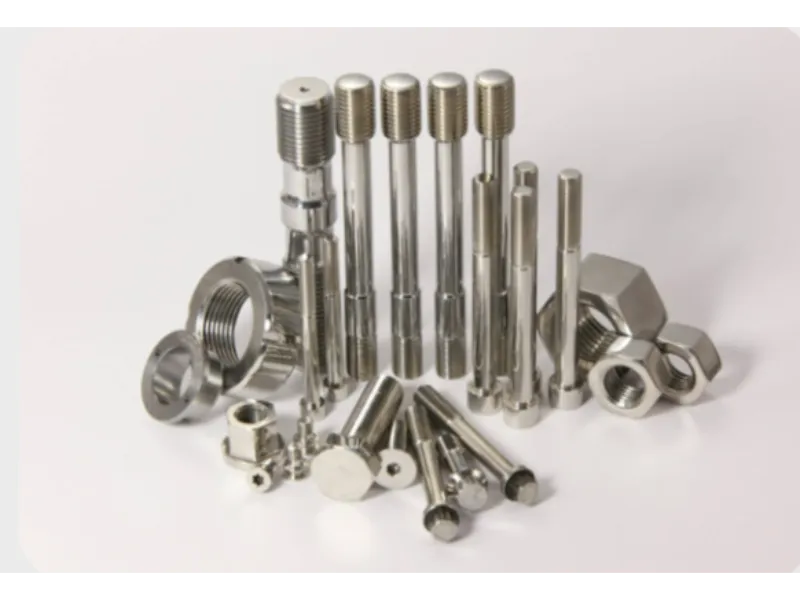
What is Cold Heading?
Cold heading is an advanced cold forging technique, involving multiple steps to shape metal components at room temperature. Unlike traditional metalworking methods, this process relies on high-speed hammers, punches, and dies to form metal without the need for heating.
Manufacturers widely use cold heading to create the heads of fasteners, such as bolts, screws, rivets, and nails. Its strength lies in the efficiency and precision it brings to high-volume manufacturing.
In essence, cold heading progressively shapes metal wire into a specific form without adding heat. Wire is fed into a machine, cut into required lengths, and then struck repeatedly by punches and dies to achieve the intended shape. This approach is not only highly efficient but also cost-effective, especially when producing large quantities.
The process is essential for manufacturing small, precise components used across multiple industries, including automotive, electronics, construction, and aerospace. Cold heading ensures that fasteners, screws, and bolts maintain strict dimensional tolerances and mechanical strength, while also minimizing material waste—making it a more economical and sustainable solution than traditional machining.
What Are the Advantages of Cold Heading?
Cold heading is a highly efficient cold forming technique that offers numerous benefits for manufacturing fasteners, screws, bolts, and other small components. By shaping metal at room temperature rather than cutting it, this process maximizes material usage and minimizes waste compared to traditional machining methods, where scrap rates can exceed 70%.
Key Benefits of Cold Heading
- Minimal Material Waste:Shapes metal without scrap, conserving raw materials.
- Faster Production:Room-temperature forming enables high-speed, large-volume output.
- Enhanced Strength:Work hardening increases tensile strength and wear resistance.
- Cost-Effective:Reduces material waste and secondary operations for lower costs.
- Precision & Consistency:Produces near net-shape parts with tight tolerances.
- Simplified Designs:Single parts can replace assemblies, saving time and cost.
- Versatile Configurations:Supports various diameters, head shapes, and custom operations.
- Sustainable:Low energy use and minimal emissions reduce carbon footprint.
- Surface Finish Quality:Smooth surfaces often require no further finishing.
- High-Volume Capability:Automated feeding and efficient tooling ensure consistent mass production.
What Are the Disadvantages of Cold Heading?
Manufacturers must consider certain limitations when using cold heading, despite its numerous advantages for producing fasteners, screws, and bolts.
Key Challenges of Cold Heading
- Material Restrictions
Not all metals are suitable for cold heading. Materials need sufficient ductility and malleability to deform without cracking. Harder metals may require multiple strikes, and some materials are entirely incompatible with cold forming machinery. - Limitations on Part Size
Cold headingis most effective for small to medium-sized components. Producing larger parts can be difficult due to the mechanical limits of hammers and dies, which can only exert so much force to shape the metal. - Complex Shapes Require Secondary Operations
While cold headingexcels at forming simple to moderately complex geometries, highly intricate designs often require additional processing. Operations such as rolling, bending, or stamping cannot be performed solely by cold heading machines. - High Tooling and Equipment Costs
Although dies themselves can be relatively affordable, the machinery needed for cold formingis generally large and expensive. Initial setup and tooling costs can be significant, making the process less economical for small production runs or highly customized components. - Work Hardening Effects
The work-hardening effect inherent in cold headingstrengthens metal parts, but it can also make subsequent forming or machining operations more challenging. As the material becomes harder, it may resist further deformation or require specialized tooling. - Design Constraints
Due to force and material limitations, the thickness and shape of components produced via cold headingare restricted. Designers must account for these constraints to ensure successful manufacturing outcomes.
How Does the Cold Heading Process Work?
Cold heading is a cold forming method that shapes metal wire into precise components without heating. This process is widely used for manufacturing fasteners, screws, bolts, and other small metal parts due to its efficiency, high precision, and material-saving advantages. Below is a detailed breakdown of the cold heading process.
Material Selection and Preparation
The process begins with selecting the right metal. Common materials include carbon steel, alloy steel, stainless steel, aluminum, brass, and copper. The material must possess sufficient ductility and malleability to undergo deformation without cracking.
Operators often lubricate the wire or billet before feeding it into the cold heading machine to reduce friction and prevent tool wear. They may also coil or straighten the material to ensure accurate feeding.
Feeding and Cutting
The prepared wire is cut into specific lengths, forming blanks for the cold heading process. Precision cutting ensures consistency and prepares each piece for the subsequent forming steps. Automated feeders and straightening mechanisms align the blanks accurately in front of the dies.
High-Pressure Forming
Once positioned, the blanks are struck by punches that force the metal into die cavities. This high-pressure deformation occurs at room temperature, allowing the metal to flow and take the desired shape without material removal.
Depending on part complexity, the metal may pass through several dies, progressively shaping it into the final form. Techniques include:
- Upsetting: Increasing the diameter of part sections
- Extrusion: Forming complex profiles by forcing metal through a shaped die
Trimming and Secondary Operations
After forming, excess material or flash may remain. Trimming and piercing remove unwanted sections to achieve precise dimensions. For more complex parts, additional operations may include:
- Thread rolling
- Drilling or tapping
- Knurling or grooving
- Stamping
- Heat treating or plating
- Surface finishing, grinding, or polishing
- CNC milling or flattening
These secondary processes ensure fasteners, screws, and bolts meet functional and aesthetic requirements.
Quality Control and Inspection
Quality checks are integrated at every stage. Measuring tools, visual inspections, sensors, and advanced vision systems ensure parts meet tight tolerances and specifications. Automated inspection technologies, including high-resolution cameras and AI algorithms, detect even micro-level imperfections, guaranteeing high reliability for precision-critical industries.
Finishing and Packaging
After inspection, parts may undergo finishing treatments such as coating for corrosion resistance, heat treatment for strength, or surface polishing for enhanced aesthetics. After approval, the production team packages the components and prepares them for distribution to manufacturers, suppliers, or end-users.
What Are the Cold Heading Techniques?
The cold heading process employs several cold forming techniques to shape fasteners, screws, bolts, and other metal components at room temperature. The two primary categories are cold heading upsetting and cold heading extrusion, each offering unique ways to manipulate metal blanks into precise forms.
Cold Heading Upsetting
Cold heading upsetting increases the diameter of a metal blank or wire without significantly changing its length. A metal slug, cut from coiled wire, is fed into the cold heading machine, where it is struck between a die and a punch. This compressive force reshapes the material efficiently, producing heads for fasteners, screws, and bolts that are larger than the original shaft.
Upsetting is particularly valued for:
- High-volume production with minimal material waste
- Maintaining uniform structural integrity
- Producing parts with tight dimensional tolerances
Cold Heading Extrusion
Cold heading extrusion involves forcing metal into or through a die to create elongated or intricate shapes while preserving strength and precision. Engineers divide this technique into forward extrusion and backward (reverse) extrusion.
Forward Extrusion
During forward extrusion, the machine compresses the metal slug as it pushes it through a die with a smaller cavity than the blank, forming consistent cross-sectional parts such as pins, shafts, or small rods. Forward extrusion can be classified into:
- Open Extrusion: The die has an open end, allowing the metal to flow freely and form uniform shapes.
- In trapped extrusion, the machine forces the metal into a confined die cavity, producing precise and complex geometries suitable for detailed fasteners and components.
Backward (Reverse) Extrusion
In backward extrusion, a punch forces the metal to flow opposite to its original direction, forming features such as heads, flanges, or hollow cavities. Manufacturers commonly use this method to create the heads of bolts, screws, and other fasteners with specialized shapes.
Materials Used in Cold Heading
The success of cold heading relies heavily on selecting suitable metals capable of withstanding high-pressure deformation:
- Steel: Carbon and alloy steels are preferred for their strength and durability, ideal for automotive and construction applications.
- Aluminum: Lightweight and corrosion-resistant, used where strength-to-weight ratio is critical.
- Copper Alloys: Chosen for electrical conductivity and corrosion resistance, perfect for electronic components.
- Stainless Steel: Offers both corrosion resistance and mechanical strength, suited for long-lasting, high-performance parts.
Advantages of These Techniques
Both upsetting and extrusion allow manufacturers to produce large quantities of strong, precise fasteners, screws, and bolts with minimal material waste. By shaping metal rather than cutting it, cold heading maintains structural integrity while enabling complex forms that would be difficult or costly to achieve through traditional machining.
Which Materials Are Common in Cold Heading?
Materials used in cold heading are selected for their excellent formability and ability to be shaped into precise fasteners, screws, bolts, and other components without the application of heat. Their unique mechanical properties allow manufacturers to produce intricate parts while maintaining strength and consistency.
Softer metals generally require less force to form, while harder metals may need multiple strokes to achieve the desired shape. Common materials employed in cold forming include:
- Steel and Stainless Steel: Widely used for their strength, durability, and corrosion resistance, making them ideal for fastenersin automotive, construction, and industrial applications.
- Aluminum: Lightweight and corrosion-resistant, suitable for applications where weight reduction is critical.
- Brass and Bronze: Offer good corrosion resistance and are often used for decorative or electrically conductive parts.
- Alloys and Specialty Metals: Materials such as nickel alloys, Inconel, and custom blends are selected for high-strength or temperature-resistant applications.
The choice of material directly influences the performance of the final cold headed product. Components produced through cold forming are typically dense, retain their mechanical strength, and exhibit improved surface finish due to the high-pressure deformation process. Design considerations, such as head style—hexagonal, round, square, slotted, or multi-diameter—also play a critical role in ensuring the part meets both functional and aesthetic requirements.
What Are the Applications of Cold Heading?
Cold heading is widely used for manufacturing high-strength fasteners, screws, bolts, and other metal components, ranging from simple hardware to highly specialized parts. Thanks to continuous advancements in cold heading technology, this process now enables the production of components for demanding industries such as automotive, electronics, construction, and specialty engineering.
Common Cold Headed Parts
- Screws and Bolts: The cold headingprocess produces various sizes and types of screws, bolts, and studs used in sectors like construction, agriculture, and industrial machinery.
- Nuts: Hex nuts, lock nuts, flange nuts, and other variations can be efficiently manufactured through cold heading.
- Rivets: Custom rivetsused in assembly, construction, and heavy-duty applications are often produced with cold forming for durability and precision.
- Pins and Fasteners: Cotter pins, dowel pins, and other precision fastenersbenefit from the strength and consistency provided by cold heading.
- Electrical Contacts: Small, precise components such as electrical contacts in devices are frequently made through cold heading, ensuring high tolerance and reliability.
- Metal Components for Consumer Goods: Items like furniture hardware, appliance components, and other small metal parts are increasingly manufactured using cold forming
Industry Applications
Originally developed for fasteners, cold heading has evolved into a versatile manufacturing process capable of producing a broad range of components used globally. Key industries include:
- Automotive: High-strength parts like engine components, drive shafts, and specialized boltsare commonly produced via cold heading.
- Electronics: Connectors, pins, and micro-components requiring precise dimensions are manufactured using cold forming.
- Construction: Structural fastenersand heavy-duty bolts benefit from the strength and uniformity provided by cold heading.
- Medical Devices: Surgical instruments, implants, and other high-precision tools increasingly rely on cold headed
Which Industries Leverage Cold Heading Methods?
Cold heading has become a cornerstone technique in modern metal manufacturing, valued for its precision, efficiency, and ability to produce durable components. Numerous industries depend on cold heading to create high-quality fasteners, connectors, bolts, and other metal parts with consistent strength and accuracy.
- Construction and Infrastructure: High-strength bolts, screws, and anchors for buildings, bridges, and structural frameworks are commonly produced using cold heading, ensuring reliable performance under heavy loads.
- Automotive and Transportation: Engine components, drive shafts, and specialized fastenersbenefit from the high precision and work-hardened strength offered by cold heading.
- Electronics: Connectors, pins, and micro-components with tight tolerances are manufactured using cold forming, supporting high-performance electronic devices.
- Medical Devices: Surgical instruments, implants, and miniature components rely on cold headingfor precision and repeatability.
- Industrial Machinery and Agriculture: Mechanical fittings, shafts, and other hardware are produced with cold forming, meeting the rigorous demands of manufacturing equipment and agricultural machinery.
- Marine Applications: Corrosion-resistant fastenersand components are made using cold heading techniques, ensuring reliability in harsh environments.
The versatility of cold heading allows manufacturers to produce specialized components for any industry where quality, durability, and precision are critical. Material selection is equally important, as the properties of steel, aluminum, copper alloys, and stainless steel directly influence the performance, strength, and longevity of the final parts.
How Does Cold Heading Relate to Cold Forming?
Both cold heading and cold forming are metalworking processes that shape components at or near room temperature, yet they serve distinct purposes and follow different methods. Cold heading is a specialized form of cold forming, primarily focused on producing parts with defined heads, such as screws, bolts, rivets, and other fasteners.
In contrast, cold forming is a broader term encompassing a variety of processes performed without heat. These include extrusion, forging, rolling, blanking, wire drawing, and more. Essentially, any method that deforms metal at room temperature falls under the umbrella of cold forming.
Cold heading is highly versatile and finds applications across multiple industries. It is particularly effective where precision, strength, and material efficiency are critical. Examples include:
- High-strength fastenersfor automotive and construction sectors
- Precision screwsand bolts for electronics and machinery
- Custom rivetsand components requiring consistent dimensional accuracy
By understanding the relationship between cold heading and the broader cold forming techniques, manufacturers can select the most appropriate process for each application, balancing production volume, part complexity, and material performance.
How Does Cold Heading Compare with Other Manufacturing Processes?
When comparing cold heading to traditional manufacturing methods, several advantages become clear in terms of efficiency, material use, and part quality.
Machining
- Material Efficiency: Unlike machining, which removes material and generates significant scrap, cold headingshapes parts by deforming the metal, preserving nearly all raw material. This reduces waste and production costs.
- Production Speed: For high-volume production, cold headingis much faster than conventional machining. Once dies and tooling are prepared, large quantities of fasteners, screws, and bolts can be produced quickly and consistently.
- Cost Considerations: Although initial tooling costs for cold headingmay be higher, the overall cost per part is typically lower due to minimal material waste and rapid throughput.
Hot Forging
- Temperature Requirements: Cold headingis performed at room temperature, eliminating the need for heating. Hot forging requires heating the metal, which consumes more energy and extends production cycles.
- Part Strength: Work hardening during cold headingenhances tensile strength and durability. Hot-forged parts can also be strong but may require additional heat treatment to achieve similar properties.
- Surface Finish: Cold headingoften produces smoother surfaces without extra finishing, whereas hot forging frequently needs secondary machining or polishing.
Stamping
- Design Complexity: Cold headingcan produce 3D shapes and components with variable thicknesses, which are difficult to achieve through stamping. Stamping is generally suited for flat or simple shapes.
- Material Thickness: Thicker parts requiring significant deformation are more efficiently produced via cold heading, while stamping is typically limited to thinner materials.
- Tooling Requirements: Both methods require precise dies, but cold headingtooling is engineered to endure higher pressures and repeated use in forming dense parts.
Casting
- Material Conservation: Cold headinguses nearly all of the raw metal, whereas casting can result in excess or unusable material.
- Strength and Durability: Cold-headed components are work-hardened during forming, providing superior strength. Cast parts may need additional processing to achieve similar performance.
- Production Efficiency: For high-volume manufacturing, cold headingis faster since it avoids cooling and solidification steps required in casting.
What Are the Differences Between Hot Heading and Cold Heading?
Hot heading and cold heading are two primary techniques used to form the head of bolts and similar fasteners. While both processes shape metal into heads, they differ in temperature, tooling requirements, speed, and suitability for different production scales. Understanding these differences is crucial when selecting the most appropriate method for a project.
Hot Heading
Hot heading involves heating a round metal bar in a furnace before forming the head in a die. This elevated temperature makes the material more malleable, reducing the number of strikes needed to shape the head. Hot heading is particularly advantageous for larger diameter bolts, typically over 1 1/8”, and for materials that are harder or less ductile at room temperature.
Key characteristics of hot heading include:
- Material Flexibility: Virtually all grades of steel, including stainless steel, can be hot headed.
- Tooling Costs: Initial tooling is generally lower than that for cold heading.
- Production Speed: For smaller diameter bolts or high-volume runs, hot heading is slower compared to cold heading, making it more suitable for low-quantity or specialized orders.
- Head Formation: Fewer die strikes are required, making it easier to form certain head styles.
Cold Heading
Cold heading, on the other hand, is performed at room temperature, using high-pressure dies to form the head of the bolt directly from a metal bar or wire. This method relies on metal deformation rather than heat, allowing precise dimensional control and the formation of more complex shapes.
Key advantages of cold heading include:
- Dimensional Accuracy: Tight tolerances can be achieved, making it ideal for custom fastenersand components requiring high precision.
- Production Efficiency: Extremely fast and cost-effective for high-volume manufacturing, particularly for bolts under 1 1/8” diameter.
- Complex Head Shapes: Multiple die strikes allow for intricate head designs.
- Material Considerations: Most steel grades, aluminum, copper alloys, and stainless steelcan be cold headed, though extremely hard or brittle metals may require special handling.
Comparison Summary:
| Feature | Hot Heading | Cold Heading |
| Temperature | Heated | Room temperature |
| Speed | Slower for small diameters | Very fast, ideal for high volume |
| Tooling Cost | Lower | Higher initial cost |
| Part Size | Large diameter bolts (>1 1/8”) | Small to medium bolts (<1 1/8”) |
| Tolerance | Mäßig | Very precise |
| Head Complexity | Simple to moderate | Complex shapes possible |
| Production Scale | Low to medium | High-volume runs |
What Are the Challenges of Cold Heading?
Even though cold heading is a highly efficient and cost-effective manufacturing technique, several challenges must be considered when implementing the process.
High Initial Tooling Costs
The dies and punches used in cold heading must be custom-designed and precisely manufactured. These components can be costly, particularly for small production runs or parts with complex geometries. The upfront investment in tooling and machine setup can be a barrier for manufacturers looking to produce low volumes or unique parts.
Material Limitations
Not all metals are ideal for cold heading. The process performs best with materials that exhibit good ductility and can tolerate substantial deformation without cracking. Harder or brittle metals may need pre-treatment or may be unsuitable, which limits the selection of materials for certain applications.
Maintaining Precision Over Time
High pressures applied during cold heading can result in gradual tool wear. This wear affects part accuracy and consistency, making regular inspection, maintenance, and die replacement critical for ensuring quality. Extended production runs demand careful monitoring to maintain tight tolerances.
Volume and Flexibility Constraints
Due to the high setup costs and specialized tooling, cold heading is best suited for large-volume manufacturing. Producing smaller batches or highly customized components can be less economical. Additionally, any design changes typically require new tooling, which increases both lead time and production costs.
Skilled Workforce Requirements
Executing cold heading effectively requires skilled engineers and operators who understand the machinery, tooling design, and process optimization. Recruiting and training personnel with the necessary expertise can be a significant challenge for manufacturers.
How Is Sustainability Applied in Cold Heading?
Cold heading is recognized as a sustainable manufacturing process due to its ability to minimize environmental impact while maintaining production efficiency.
Minimized Material Waste
Unlike traditional machining, which removes metal and generates significant scrap, cold heading forms parts by reshaping the material. This method preserves nearly all of the metal, resulting in substantially less waste and improved material efficiency.
Lower Energy Consumption
The cold heading process operates at room temperature, unlike hot forging or casting, which require heating. This reduces energy requirements, decreases operational costs, and lowers the overall carbon footprint.
Reduced Need for Secondary Operations
Parts produced via cold heading often require minimal secondary machining or finishing. By avoiding extra steps such as cutting, grinding, or heat treatment, energy use is further minimized, and material handling is simplified.
Durable and Long-Lasting Components
The cold heading method produces parts with enhanced strength and durability due to work hardening. Components have longer service life, reducing the frequency of replacement and supporting sustainable manufacturing practices.
Eco-Friendly Manufacturing Choice
As more industries prioritize environmentally responsible practices, cold heading offers an effective solution for producing high-strength fasteners, custom screws, bolts, and other parts while minimizing waste and energy consumption. Its combination of efficiency and durability makes it a preferred choice for sustainable manufacturing.
Which Standards Are Relevant to Cold Heading Wire?
Ensuring the quality and consistency of cold heading wire requires adherence to recognized standards for materials, mechanical properties, and inspection procedures. The following standards are commonly referenced in the industry:
- ISO 898-1– Specifies the mechanical properties of carbon steel and alloy steel fasteners, including tensile strength and hardness, which are essential for reliable cold-headed fasteners.
- ASTM A29/A29M– Defines general requirements for steel bars, both carbon and alloy, hot-wrought, often used as starting material for cold heading wire.
- ASTM A108– Covers cold-finished steel bars, applicable to materials used directly in cold heading processes.
- ASTM F2282– Sets quality assurance requirements for carbon and alloy steel wire, rods, and bars, ensuring the material meets the standards necessary for mechanical fasteners.
- SAE J403– Details the chemical compositions of SAE carbon steels, helping manufacturers select the right grade for cold heading wire.
- ISO 4954– Specifies technical delivery conditions for steels intended for cold heading and cold extrusion, ensuring consistent material performance.
- EN 10263– European standard for steel rods, bars, and wire used in cold heading and cold extrusion, covering mechanical and dimensional requirements.
- JIS G 3507-2– Japanese standard for carbon steel wire rods suitable for cold heading, ensuring compatibility with industrial forming processes.
- DIN EN 10204– Defines types of inspection documents for metallic products, which are critical for verifying material quality in cold heading wire production.
- ISO 16120– Covers non-alloy steel wire rods intended for conversion to wire, which can then be used in cold heading operations.
Adhering to these standards helps manufacturers produce cold heading wire that meets strict performance, safety, and quality requirements, providing confidence in the reliability of fasteners and components produced.
What Are the Specifications of Cold Heading Parts?
The following table outlines typical specifications for cold heading parts, covering dimensions, materials, mechanical grades, surface finishes, and common applications:
| Product Name | Cold heading parts |
| Diameter | Metric: M0.8–M24Imperial: 2# to 1″ |
| Length | Metric: up to 200 mmImperial: up to 8″ |
| Class | 4.8 / 6.8 / 8.8 / 10.9 / 12.9A2-70, A2-80, A4-70, A4-80 |
| Grade | SAE J429 GR.2 / 5 / 8 |
| Material | Steel / Stainless steel / Brass / Aluminum |
| Surface Treatment | Black oxide coating, zinc plating (electroplating), hot-dip galvanizing, mechanical galvanizing, Dacromet coating, painting, or powder coating |
| Application Industry | Construction, agricultural machinery, industrial structures, equipment and machinery, infrastructure |
These specifications provide a clear framework for selecting cold heading parts that meet requirements for strength, durability, corrosion resistance, and dimensional precision across various industries.
What Is the Role of Technology in Cold Heading?
Technology plays a critical role in improving the efficiency, accuracy, and versatility of cold heading as a metal forming process.
Advanced Automation and CNC Systems
Modern cold heading machines incorporate advanced automation, including robotics and CNC technology. These systems enable high-speed production with consistent output, reducing reliance on manual labor while ensuring uniform part quality and shorter production cycles.
Real-Time Monitoring and Quality Control
Integration of sensor technology and monitoring systems allows manufacturers to track the cold heading process in real time. Deviations or defects can be identified immediately, maintaining precise tolerances. This level of control is essential for critical applications in industries such as automotive, electronics, and medical devices.
Enhanced Die Materials and Coatings
The development of high-performance die alloys and specialized coatings increases the lifespan and reliability of tooling. Dies can endure repeated high-pressure impacts, reducing maintenance frequency, machine downtime, and operational costs.
Expanded Material and Design Capabilities
Modern technology enables cold heading to handle a wider range of materials, including tougher alloys and specialty metals. Advanced CAD and simulation software allow engineers to design and test complex shapes virtually before production, supporting the creation of intricate components for sectors such as medical instruments, electronics, and precision fasteners.
Driving Innovation and Productivity
Overall, technological advancements in cold heading machines and tooling improve throughput, consistency, and component complexity. This has made cold heading a more adaptable and reliable solution for manufacturers aiming to produce high-quality, cost-effective, and precise metal parts at scale.
How Do Advancements in Material Science Drive Cold Heading Innovation?
To satisfy industries demanding superior strength, wear resistance, and temperature performance, material scientists continue to innovate new alloys. Recent progress in metallurgy has significantly enhanced cold heading, enabling the use of tougher metals, including advanced titanium and nickel alloys, in high-precision fasteners, screws, and bolts.
Cutting-edge technologies such as smart metals, superalloys, and nanostructured materials are further expanding the potential of cold heading. These advancements improve the durability, tensile strength, and performance of components while maintaining the efficiency and precision inherent to cold forming processes.
With these innovations, manufacturers can now produce fasteners, screws, and bolts that meet the increasingly stringent requirements of automotive, aerospace, electronics, and industrial applications. The integration of advanced materials ensures that cold heading remains a highly competitive method for producing high-strength, high-performance components at scale.
Considering these developments, selecting cold heading over alternative manufacturing methods depends on the required material properties, production volume, and precision specifications of your components.
What Innovations Are Shaping the Future of Cold Heading?
The evolution of cold heading is increasingly driven by advances in automation and artificial intelligence (AI). Modern production lines leverage robotic systems and automated machinery to enhance speed, precision, and consistency in creating fasteners, screws, bolts, and other metal components.
With smart manufacturing technologies, human error is minimized, resulting in more uniform and reliable outputs. AI systems are being applied to monitor cold heading equipment, predicting maintenance needs before breakdowns occur, which reduces unplanned downtime and keeps production running smoothly.
Moreover, AI-driven analytics can optimize the cold heading process itself, adjusting factors such as pressure, feed rate, and stroke speed to maintain high precision while minimizing material waste. Beyond the production floor, these technologies extend to supply chain management, energy efficiency, and overall resource optimization.
As these innovations continue to develop, cold heading is set to become even more efficient, precise, and sustainable, supporting the production of high-performance fasteners and specialized components across diverse industries.
When Should You Choose Cold Heading for Your Parts?
Choosing the right manufacturing method depends on your part requirements, production volume, and material properties. Cold heading, as a cold forming process, offers distinct advantages over traditional machining methods like screw machining. While screw machines can produce parts without dies, they often generate higher scrap rates and may require additional secondary operations. In contrast, cold heading uses dies to shape components, allowing for consistent dimensions and precise head forms, though this may increase initial tooling setup time.
Ideal Scenarios for Using Cold Heading
- High-Volume Production
When large quantities of fasteners, screws, or boltsare needed, cold heading is highly efficient. The process allows rapid mass production while maintaining dimensional accuracy, making it ideal for bulk manufacturing. - Reducing Secondary Operations
If your existing components require multiple machining steps, switching to cold headingcan consolidate operations. Many complex parts can be produced near net-shape, minimizing the need for additional processes like threading, grinding, or trimming. - Strength-Critical Applications
Since cold headingis performed at room temperature, the metal undergoes work hardening, improving grain flow and resulting in stronger, more durable parts. This makes it suitable for applications where part strength and reliability are essential. - Custom Fasteners and Specialized Shapes
Cold headingis particularly well-suited for creating custom screws, bolts, and other specialized fasteners from round metal stock. The process accommodates a variety of head styles, diameters, and configurations while maintaining tight tolerances. - When Heat Should Be Avoided
For components where heat could negatively affect material properties, cold headingoffers a significant advantage, as it shapes metal without thermal exposure, preserving mechanical strength and surface integrity.
How Does Welleshaft Help Engineers Source Cold-Headed Parts?
Welleshaft, an ISO-certified fastener supplier in China, provides engineers with reliable solutions for sourcing high-quality cold-headed parts. We combine material expertise, precision manufacturing, and rigorous quality control to ensure components meet both industry standards and project-specific requirements.
Our services include selecting the right materials—such as carbon steel, alloy steel, and stainless steel—for optimal performance, and sourcing custom cold-headed parts tailored to exact specifications. By partnering with advanced manufacturers in China, we ensure parts are produced with high precision, reducing the need for additional machining.
In addition, Welleshaft offers engineering support and inspection documentation to guarantee quality and traceability. Our efficient supply chain management ensures timely delivery and consistent availability of materials across China, helping engineers meet project timelines without compromise.
FAQ about Cold Heading
What quality control measures are applied to cold heading parts?
Quality control for cold heading parts typically involves dimensional inspections, material testing, and thorough checks to ensure that components meet specified tolerances and performance standards.
Is cold heading suitable for both small and large production runs?
Cold heading is ideal for high-volume production, though it can also accommodate smaller runs depending on tooling setup and material availability. Delivery times vary based on production scheduling, heat treatment, and surface finishing requirements.
Which specifications are critical for cold heading parts?
Important specifications include material type, part diameter, length, head style (if applicable), thread type and pitch (for threaded components), tolerances, surface finish, hardness, quantity, and any special features.
Are cold heading parts suitable for international standards and export?
Parts manufactured via cold heading can comply with global standards, such as ASTM and ISO, ensuring mechanical properties and performance are reliable for various industries worldwide.
Can samples of cold heading components be provided?
standard-sized samples of cold heading parts can often be supplied for evaluation. Freight is usually borne by the recipient.
Is there a minimum order quantity for cold heading parts?
due to the setup and tooling involved, a typical MOQ for cold heading parts is around one ton, although it can vary depending on the part design and production capabilities.
This blog was provided by the Welleshaft Engineering Team. Mr. Xu, with 10+ years of experience in fastener exports, leads our team to provide ISO-certified, custom cold-headed parts with engineering support and quality assurance.
 Deutsch
  English
  Português do Brasil
  Deutsch (Österreich)
  Deutsch (Schweiz)
  English (UK)
  English (Australia)
  English (New Zealand)
  Français du Canada
  Français
  Français de Belgique
  Italiano
  English (South Africa)
  Português
  Español
  Español de México
  Español de Perú
  Español de Colombia
  العربية
  日本語
日本語  Русский
  한국어
한국어  Tiếng Việt
  ไทย
ไทย
Bewertungen
Es gibt noch keine Bewertungen.