
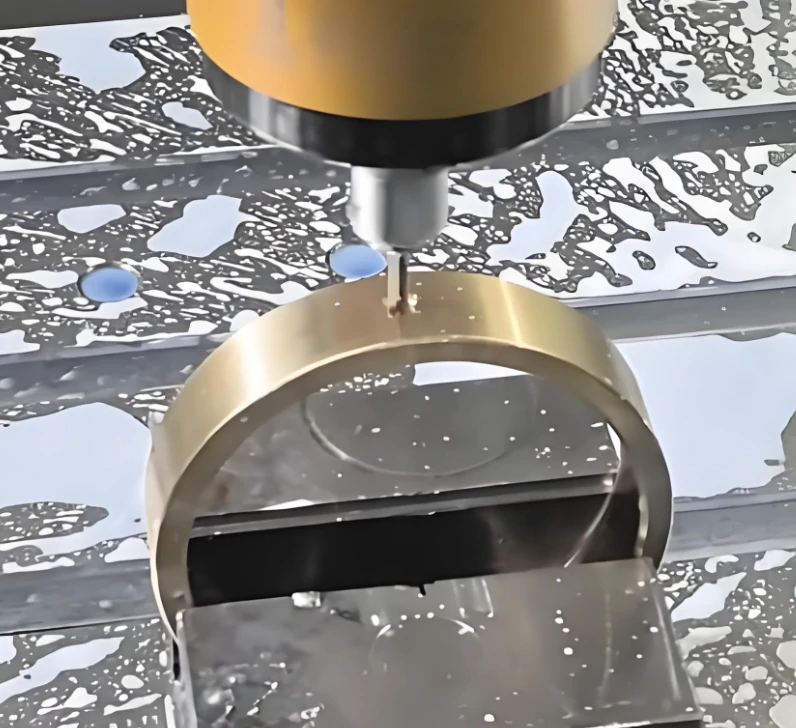
How Does the Bronze CNC Machining Process Work?
The Bronze CNC Machining Process involves a series of controlled steps to manufacture accurate and reliable bronze parts. From selecting suitable bronze alloys to final inspection, each stage influences machining accuracy, surface quality, and component performance. The following sections explain the main steps involved in machining bronze components.
Choosing the Suitable Bronze Alloy
The first stage of the bronze machining process is selecting the proper bronze alloy according to the application requirements. Different bronze materials provide different performance advantages.
Manufacturers consider material properties such as hardness, wear resistance, corrosion resistance, and operating conditions to ensure bronze parts deliver stable performance during service.
Preparing the Bronze Workpiece and Part Design
Before CNC machining begins, the component design is developed according to required dimensions, tolerances, and surface finish specifications. CAD models help define the geometry and machining requirements of the bronze component.
The bronze stock is then prepared and securely fixed on the CNC machine. Proper workholding is essential because any movement during machining can affect dimensional accuracy and lead to defects in CNC machined parts.
Selecting Suitable Cutting Tools
Suitable cutting tools and machining settings are important for achieving precision during the Bronze CNC Machining Process. Manufacturers use carbide tools to machine bronze alloys, including phosphor bronze and tin bronze, because they offer durability and wear resistance. Proper tool selection improves tool life, machining efficiency, and surface finish quality.
Performing CNC Machining Operations
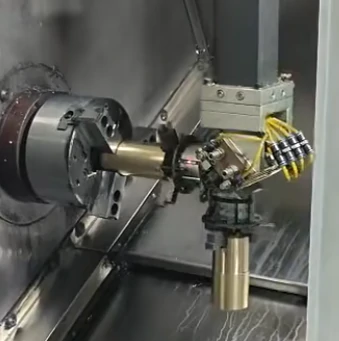
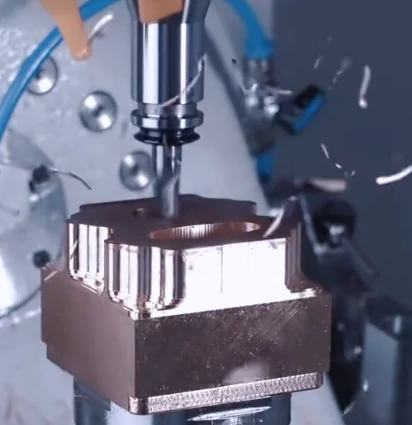
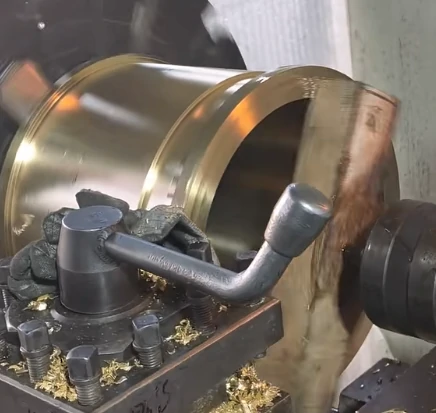
The machining stage uses different CNC processes based on the design and function of the bronze component. Common operations include CNC milling, turning, drilling, and grinding.
During machining, cutting tools remove material from the bronze workpiece to achieve the required geometry. Coolants are applied when necessary to control heat generation and maintain machining quality.
Finishing and Inspection of Bronze Parts
The completed bronze parts are inspected using precision measuring equipment to verify dimensions, tolerances, and surface quality. Inspection methods such as calipers and coordinate measuring machines ensure the final components meet the required specifications.
Does Bronze Have Good Machinability for CNC Machining?
Bronze generally has good machinability, but the machining performance depends on alloy composition, hardness, ductility, and the specific application requirements. Different bronze alloys respond differently to cutting tools, with some providing easier machining while others require more controlled machining conditions.
Factors Affecting Bronze Machinability
The alloy composition plays an important role in determining bronze machinability.Manufacturers use copper and tin as the primary elements in bronze and add other elements to improve properties such as strength, corrosion resistance, and wear performance.These alloying elements also affect cutting performance.
Leaded bronzes, such as C83600 and C93200, are among the easiest bronze alloys to machine. The lead content helps reduce friction between the cutting tool and workpiece, improving chip breaking, surface finish, and tool life. In comparison, aluminum bronzes offer higher strength and corrosion resistance but are more difficult to machine because of their hardness and work-hardening characteristics.
The balance between hardness and ductility also affects machining performance. Bronze alloys with suitable hardness maintain dimensional stability during machining while avoiding excessive brittleness. Generally, bronze alloys with a Brinell hardness range of 60-90 provide good machinability while maintaining sufficient mechanical properties.
Machinability Comparison of Different Bronze Alloys
Different bronze alloys provide different machining characteristics depending on their composition and intended applications.
Tin Bronze (Phosphor Bronze)
Tin bronzes, including C51000 and C52100 phosphor bronze, provide moderate machinability with good wear resistance and elasticity. Their machining characteristics include:
- Moderate cutting forces
- Good surface finish capability
- Medium chip formation
- Moderate tool wear
These alloys may produce continuous chips during CNC machining, requiring proper cutting parameters or chip control methods.
Leaded Bronze
Leaded bronzes, including C83600 and C93200, provide excellent machinability among bronze alloys. The addition of lead improves cutting performance by reducing friction and improving chip control.
Key machining advantages include:
- Lower cutting forces
- Better chip breaking
- Reduced tool edge buildup
- Longer tool life
- Improved surface finishes
Due to their free-machining properties, leaded bronzes are suitable for precision components requiring tight tolerances. However, lead content may limit usage in some applications due to environmental considerations.
Aluminum Bronze
Aluminum bronzes, such as C95400 and C95500, provide excellent strength and corrosion resistance but are more challenging to machine. Their machining characteristics include:
- Higher cutting forces
- Increased risk of work hardening
- Greater tool wear
- More difficult chip control
With suitable cutting tools and optimized machining parameters, aluminum bronze can still achieve accurate CNC machining results for demanding applications.
Optimizing Bronze Machining Parameters
Proper machining parameters are important for achieving efficient bronze machining performance. Cutting speed, feed rate, depth of cut, tooling selection, and cooling methods should be adjusted according to the specific bronze alloy.
| Bronze Type | Cutting Speed (SFM) | Feed Rate (in/rev) | Depth of Cut (in) |
| Leaded Bronze | 300-600 | 0.005-0.020 | 0.050-0.250 |
| Tin Bronze | 200-450 | 0.004-0.015 | 0.040-0.200 |
| Aluminum Bronze | 150-350 | 0.003-0.012 | 0.030-0.150 |
These values provide general guidance and may require adjustment based on tooling, equipment, and machining conditions.
Tool Selection for Bronze Machining
Selecting suitable cutting tools helps improve bronze machining quality and tool performance. Common recommendations include:
- Carbide tools for general bronze machining
- High-speed steel (HSS) tools for specific applications
- Positive rake angles to improve cutting efficiency
- Proper relief angles to reduce friction
- Polished tool surfaces to minimize built-up edges
Coolant and lubrication also contribute to better machining results by controlling heat and improving surface quality during CNC machining.
Common Bronze Machining Challenges
Although bronze is generally considered a machinable material, certain issues can affect machining results.
Surface Finish Problems
Poor surface finish may result from:
- Built-up edge on cutting tools
- Incorrect cutting speeds
- Worn cutting tools
- Insufficient coolant
Maintaining sharp tools, applying proper coolant flow, optimizing cutting parameters, and using additional finishing processes when needed can improve surface quality.
Tool Wear Control
Tool wear varies depending on the bronze alloy. Aluminum bronze tends to cause more abrasive tool wear due to its strength and hardness, while leaded bronze is easier on cutting tools. Proper tool selection, cooling, and parameter optimization help extend tool life and maintain machining accuracy.
Bronze Alloy Machinability Ratings
Bronze machinability varies according to alloy composition and application requirements. Aluminum bronze provides excellent corrosion resistance for marine applications but requires more careful machining due to its hardness. Bearing bronze, such as SAE 660 (C93200), offers excellent machinability and is widely used for bushings and bearings.
| Bronze Alloy | Machinability Rating | Key Characteristics | Applications |
| Aluminum Bronze (C95400) | 60 | High strength, excellent corrosion resistance | Valve components, marine fittings |
| Tin Bronze (C90500) | 70 | Good wear resistance, moderate machinability | Gears, bearings |
| Phosphor Bronze (C51000) | 80 | Fine grain, high elasticity, low friction | Electrical connectors, springs |
| Silicon Bronze (C65500) | 75 | Corrosion resistance, good weldability | Architectural elements, fasteners |
| Bearing Bronze (C93200) | 85 | Excellent machinability, low friction properties | Bushings, bearings |
Proper cutting tools and optimized machining parameters can further improve the machinability of bronze alloys. For example, carbide tools with suitable feed rates help extend tool life, improve surface finish, and achieve the tight tolerances required for CNC-machined parts.
Why Is Bronze an Ideal Material for CNC Machining and Bronze Components?
Bronze is a copper-based alloy mainly composed of copper and tin, with different alloying elements added to achieve specific performance characteristics. As a versatile CNC machining material, bronze is available in various grades, ranging from high-strength aluminum bronze to free-machining leaded bronze, allowing it to meet different application requirements.
The following properties make bronze a preferred choice for CNC machining and bronze components:
- Excellent Machinability:Leaded bronze grades such as C93200 and C93700 provide improved chip control and efficient machining performance, making them suitable for precision components requiring good machinability.
- Low Friction Performance:Bronze offers low friction against steel, making it ideal for applications such as sleeve bearings, bushings, and worm gears.
- Corrosion Resistance:Aluminum bronze and phosphor bronze provide better corrosion resistance compared with leaded bronze, especially in demanding environments.
- High Durability:Bronze components maintain reliable performance under repeated loading conditions due to their wear resistance and mechanical stability.
- Self-Lubricating Properties:Certain bronze materials provide natural lubrication characteristics, helping reduce maintenance requirements in moving components.
Compared with stainless steel, bronze is easier to machine and can achieve precise tolerances with efficient processing. Its combination of machinability, wear resistance, and reliable performance makes bronze a suitable material for CNC machined parts such as sleeve bearings, worm gears, and pump components.
Why Is Bronze Different from Other Metals in CNC Machining?
Compared with other commonly used machining metals, bronze provides several unique advantages that make it suitable for demanding CNC machining applications:
- Excellent Corrosion Resistance:Bronze offers significantly better corrosion resistance than iron and steel, especially in marine environments where exposure to moisture and saltwater is common.
- Non-Sparking Characteristics:Bronze does not produce sparks when impacted, making it suitable for applications where spark prevention is important.
- Good Machinability: Manufacturers can machine most bronze alloys efficiently to produce precision components with reliable dimensional accuracy.
- High Wear Resistance:Bronze alloys provide excellent resistance to wear, making them widely used for components such as gears, bushings, and bearings that require long service life.
What Are the Key Properties of Machined Bronze Parts?
Machined bronze offers a combination of mechanical and physical properties that make it suitable for demanding industrial applications. Its low friction characteristics and excellent wear resistance allow bronze components to perform reliably in bearings, bushings, and other moving machinery parts. Bronze also provides strong corrosion resistance, especially in marine environments and harsh operating conditions, helping extend component service life.
Some bronze alloys, including phosphor bronze, feature a fine grain structure that improves strength, elasticity, and fatigue performance. These characteristics, along with bronze’s ability to develop a protective surface layer against saltwater corrosion, make it suitable for marine applications. The attractive appearance and durable finish of bronze also support its use in architectural components and musical instruments.
How to Select the Right Bronze Alloy for CNC Machining?
Selecting the appropriate bronze alloy for CNC machining requires evaluating material properties, machining performance, corrosion resistance, wear characteristics, and the final application requirements. The right bronze material should match the operating environment, component function, and required balance between strength, durability, and manufacturing efficiency.
Bearbeitbarkeit
Machinability is an important factor when choosing bronze alloys for bronze CNC machining, as it affects tool life, production efficiency, and surface quality.
- C93200 bearing bronze offers excellent machinability and is commonly used for bearings, bushings, and wear components.
- Phosphor bronzeprovides balanced machinability with good strength and fatigue resistance.
- Aluminum bronze has higher strength and wear resistance but requires more controlled machining conditions.
Selecting a bronze alloy with suitable machinability helps reduce tool wear and maintain stable CNC machining performance.
Mechanical Properties
The mechanical requirements of the bronze component determine which alloy is most suitable.
Important properties include:
- Tensile strength
- Yield strength
- Hardness
- Fatigue resistance
- Elasticity
High-strength bronze alloys are suitable for heavy-load applications, while standard bronze grades are often selected for general mechanical components.
Korrosionsbeständigkeit
Corrosion resistance plays a critical role when selecting bronze alloys for marine, outdoor, and chemical environments.
- Aluminum bronzeand tin bronze are commonly used in seawater applications because of their corrosion resistance.
- Silicon bronzeand phosphor bronze perform well in industrial and atmospheric environments.
- Many bronze alloys provide reliable performance in freshwater conditions.
Choosing the correct alloy helps ensure long-term durability in different operating environments.
Wear Resistance and Low Friction
For components exposed to continuous movement, friction, or heavy loads, wear resistance is a key selection factor.
Manufacturers widely use bearing bronze (C93200) for bearings and bushings because it provides low friction and good wear performance. They select other bronze alloys based on load conditions and required service life.
Strength and Elasticity
Some applications require bronze alloys with high strength and the ability to withstand repeated stress.
Phosphor bronze provides good elasticity, fatigue resistance, and mechanical stability, making it suitable for electrical contacts, springs, and precision components with repeated movement.
Cost and Performance Considerations
Bronze alloy selection should consider both material cost and long-term performance. Higher-performance bronze alloys may require greater initial investment but can provide:
- Longer component service life
- Reduced maintenance requirements
- Improved corrosion resistance
- Better reliability in demanding applications
Selecting the proper bronze material can improve overall component performance and reduce long-term operating costs.
Machining Process Requirements
Different bronze alloys require specific machining methods and cutting conditions to achieve high-quality CNC machined parts.
Cutting Speed Selection
The recommended cutting speed varies depending on the bronze alloy:
- Leaded bronzecan be machined at higher speeds due to its excellent machinability.
- Aluminum bronzerequires controlled cutting speeds because of its higher hardness.
- Tin bronze is typically machined at moderate speeds for stable performance.
Tool Selection
Tool selection also affects machining quality and efficiency:
- Carbide cutting tools are often recommended for harder alloys such as aluminum bronze.
- Sharp tools with suitable cutting geometry improve results when machining silicon bronze.
- Standard tooling can usually handle easier-to-machine leaded bronze grades.
Choosing the right bronze alloy for CNC machining requires balancing machinability, mechanical performance, corrosion resistance, wear resistance, and application needs. Proper material selection helps achieve accurate, reliable, and durable bronze components.
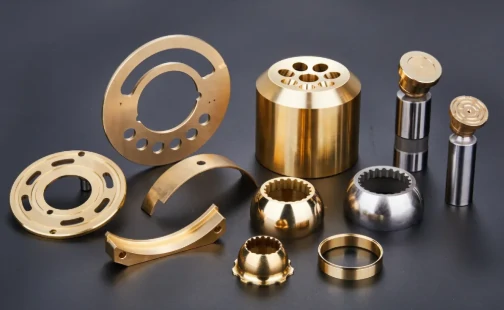
What Are the Top Bronze Alloys for CNC Machining, Grades, and Applications?
CNC machining widely uses bronze materials because they offer excellent mechanical properties, corrosion resistance, wear performance, and thermal conductivity. Different bronze alloys provide unique advantages for specific machining requirements. The following are common bronze alloys selected for CNC machining applications.
C932 Bearing Bronze (SAE 660)
C932 Bearing Bronze, also known as SAE 660, is one of the most commonly used bronze alloys for CNC machining. It provides excellent wear resistance and reliable performance under heavy loads. The alloy offers good machinability, allowing efficient cutting operations while maintaining dimensional accuracy. Its low-friction characteristics help reduce component wear and extend service life, making C932 bronze a dependable choice for mechanical applications.
C932 bronze is widely used for manufacturing bushings, thrust washers, gears, bearings, and valve components. Its combination of strength, wear resistance, and anti-friction performance makes it suitable for parts operating under continuous load conditions. In bearing and bushing applications, C932 bronze helps reduce maintenance requirements, while its smooth operating characteristics support reliable gear and valve performance.
Machining C932 bronze can create long, stringy chips that affect production efficiency. Using sharp cutting tools with optimized speeds and feeds helps improve chip control and maintain stable machining conditions. Proper tool selection and parameter adjustments are essential for achieving consistent results. C932 bronze is ideal for applications requiring durability, load capacity, and long-term wear resistance.
C954 Aluminum Bronze
C954 Aluminum Bronze is a high-strength bronze alloy widely used in CNC machining for demanding industrial applications. It provides excellent mechanical strength, corrosion resistance, and wear resistance, allowing components to perform reliably in harsh environments. The alloy is especially suitable for applications requiring durability and resistance to heavy loads.
Common applications for C954 aluminum bronze include marine components, pump shafts, wear plates, and heavy-duty bearings. Its corrosion resistance makes it suitable for marine environments exposed to saltwater, while its strength supports continuous operation in pump shafts and industrial equipment. Wear plates made from C954 aluminum bronze can withstand friction and erosion, and heavy-load bearings benefit from its stable performance.
Due to its high strength, machining C954 aluminum bronze requires careful process control. Manufacturers recommend carbide cutting tools to maintain cutting performance and reduce cutting speeds to minimize tool wear and heat generation.Proper machining methods can improve tool life and production efficiency. C954 aluminum bronze is a preferred choice for applications requiring high strength, wear resistance, and corrosion protection.
C260 Cartridge Brass (Brass-Bronze Alloy)
Manufacturers widely use C260 Cartridge Brass for its excellent ductility, corrosion resistance, and machinability. The material allows manufacturers to form it easily without cracking, while its corrosion resistance ensures reliable performance in various environments. The alloy’s machining efficiency makes it suitable for both functional and decorative components.
C260 brass is commonly applied in connectors, fasteners, electrical terminals, and decorative fittings. Its combination of strength, conductivity, and corrosion resistance makes it effective for electrical applications, while its appearance and durability benefit decorative components. Fasteners produced from C260 brass provide reliable strength and easy installation, making the alloy suitable for multiple industries.
During CNC machining, C260 brass may generate burrs along machined edges. Using sharp cutting tools and optimized feed rates helps reduce burr formation and improves surface quality. Proper cutting parameter control minimizes additional finishing processes. C260 brass remains a popular material where durability, machinability, and visual appearance are important.
C510 Phosphor Bronze
C510 Phosphor Bronze is a high-performance bronze alloy recognized for its strength, elasticity, and fatigue resistance. It can withstand repeated stress cycles while maintaining structural integrity. The alloy provides excellent spring properties along with moderate wear resistance, making it suitable for precision components requiring flexibility and durability.
C510 Phosphor Bronze (also known as Ramstejn G15) is commonly used for electrical contacts, springs, bushings, and fasteners. Electrical contacts benefit from its corrosion resistance and stable conductivity, while C510 bronze springs maintain elasticity during repeated operation. Its wear resistance also supports smooth performance in bushing applications. Fasteners made from C510 phosphor bronze provide reliable strength and flexibility in demanding environments.
Machining C510 phosphor bronze requires proper tool and cooling management to prevent work hardening and excessive heat generation. Sharp carbide tools combined with suitable coolant control help extend tool life and improve machining accuracy. With appropriate machining techniques, C510 bronze delivers efficient processing for elastic, wear-resistant, and precision components.
What Are the Top Bronze Alloys for Machining Applications?
C93200 (SAE 660) Bearing Bronze
Manufacturers widely use C93200 bearing bronze for CNC machining because it delivers a balanced combination of machinability, wear resistance, and bearing performance.
- Contains lead content that improves chip control
- Provides moderate hardness for efficient material removal
- Offers excellent sliding and bearing properties
- Machinability rating: approximately 80%
C54400 Phosphor Bronze
C54400 phosphor bronze is selected when higher strength and fatigue resistan
ce are required while maintaining good machining performance.
- Contains phosphorus to improve mechanical strength
- Provides good machinability with suitable tooling
- Offers excellent elasticity and fatigue resistance
- Machinability rating: approximately 65%
This bronze alloy is widely used for springs, electrical contacts, and precision components.
C95400
Aluminum Bronze C95400 aluminum bronze is preferred for applications requiring high strength and excellent corrosion resistance.
- Contains aluminum content for increased hardness and strength
- Requires lower cutting speeds compared with softer bronze alloys
- Provides excellent wear resistance in finished components
- Machinability rating: approximately 50%
C90300 Tin Bronze
C90300 tin bronze provides good dimensional stability and reliable machining performance.
- Contains tin for improved strength and durability
- Provides good machinability with proper feeds and speeds
- Suitable for pressure-tight components
- Machinability rating: approximately 60%
It is often used in applications requiring stable dimensions and corrosion resistance.
C64200 Silicon Bronze
C64200 silicon bronze is selected for applications where corrosion resistance is a priority.
- Contains silicon to improve strength and corrosion resistance
- Requires optimized machining parameters due to higher hardness
- Provides excellent surface finish quality
- Machinability rating: approximately 40%
Silicon bronze is commonly used in marine environments and architectural applications.
Optimizing Machining Parameters for Bronze
Proper machining parameters are essential for achieving efficient bronze CNC machining and maintaining surface quality.
| Bronze Type | Cutting Speed (SFM) | Feed Rate (IPR) | Depth of Cut (inches) |
| Leaded Bronze | 300-500 | 0.005-0.015 | 0.050-0.250 |
| Phosphor Bronze | 200-350 | 0.003-0.010 | 0.030-0.200 |
| Aluminum Bronze | 150-250 | 0.002-0.008 | 0.020-0.150 |
| Silicon Bronze | 150-300 | 0.002-0.008 | 0.020-0.150 |
These values should be adjusted according to the specific bronze alloy, cutting tools, machine capability, and part requirements.
Coolant Selection and Tool Geometry
For effective bronze machining, proper coolant and tool selection help improve tool life and surface finish.
- Coolant:Sulfurized mineral oil-based cutting fluids perform well for bronze machining. Water-soluble coolants can also be used with suitable concentration control.
- Tool Geometry:
HSS tools generally perform well with rake angles of 5-10 degrees.
Carbide tools with positive rake angles of 5-8 degrees are suitable for many bronze alloys.
Larger tool nose radii can improve surface finish.
- Chip Control:Bronze may produce long, stringy chips, so chip breakers designed for non-ferrous materials help improve machining stability.
For harder bronze alloys such as silicon bronze and aluminum bronze, reducing cutting speed and using appropriate positive rake tooling can improve tool life and machining quality.
How Do Different Bronze Materials Compare for CNC Machining?
Different bronze materials provide varying levels of strength, wear resistance, corrosion resistance, and machinability, making them suitable for different CNC machining applications. C932 Bearing Bronze offers medium to high strength with excellent wear resistance, making it a reliable option for bearings and gears. It provides moderate corrosion resistance and good machinability, allowing efficient machining while maintaining long-term durability and stable friction performance.
C954 Aluminum Bronze delivers higher strength and superior wear resistance compared with many other bronze alloys.Manufacturers use it for marine applications because it provides excellent corrosion resistance and withstands seawater exposure. Its high wear performance makes it suitable for pump shafts, marine components, and heavy-duty bearings. Due to its higher hardness, C954 Aluminum Bronze requires carbide tools and controlled cutting speeds during CNC machining to maintain tool life and machining quality.
C260 Cartridge Brass provides excellent machinability and good corrosion resistance, making it suitable for fasteners, connectors, and decorative fittings. Compared with C510 Phosphor Bronze, C260 brass has lower strength and wear resistance but offers easier processing performance. C510 Phosphor Bronze provides a balanced combination of strength, durability, flexibility, and corrosion resistance. It is commonly selected for springs and bushings due to its fatigue resistance and elastic properties. Machining C510 bronze requires sharp cutting tools and proper coolant control to reduce work hardening and improve machining efficiency.
Each bronze alloy has different advantages in CNC machining applications. Material selection depends on required strength, wear resistance, corrosion protection, machinability, and final component requirements.
| Bronze Alloy / Metal | Strength | Wear Resistance | Korrosionsbeständigkeit | Bearbeitbarkeit | Applications |
| C932 Bearing Bronze | Medium | Hoch | Mäßig | Gut | Bearings, gears |
| C954 Aluminum Bronze | Hoch | Sehr hoch | Ausgezeichnet | Mäßig | Marine components |
| C260 Cartridge Brass | Low | Low | Gut | Ausgezeichnet | Fasteners, fittings |
| C510 Phosphor Bronze | Medium | Medium | Hoch | Mäßig | Springs, bushings |
How Does Bronze Compare with Other Metals in CNC Machining?
Bronze provides a balanced combination of hardness, machinability, wear resistance, and corrosion resistance, making it suitable for a wide range of CNC machining applications. Its moderate hardness allows efficient machining while maintaining excellent durability, especially for components such as bearings, bushings, and gears.Manufacturers use bronze in marine and industrial environments because its high wear resistance and corrosion resistance support long service life.
Compared with low-carbon steel, bronze offers better wear resistance and corrosion protection. Although low-carbon steel has excellent machinability due to its softness, its limited resistance to wear and corrosion reduces its suitability for harsh operating conditions.
Stainless steel provides higher hardness and excellent corrosion resistance, making it suitable for applications such as medical equipment, food processing systems, and structural components. However, its moderate machinability generally requires more demanding cutting conditions compared with bronze and aluminum.
Aluminum is lightweight and offers excellent machinability because of its low hardness. However, its lower wear resistance makes it less suitable for high-load and high-friction applications.Manufacturers use aluminum in aerospace, automotive, and electronic applications because it provides good corrosion resistance, while they choose bronze for demanding CNC machined parts because it offers a better balance of durability, machinability, wear resistance, and corrosion resistance.
| Material | Hardness | Bearbeitbarkeit | Wear Resistance | Korrosionsbeständigkeit |
| Bronze | Medium | Gut | Hoch | Hoch |
| Low Carbon Steel | Low | Ausgezeichnet | Low | Arm |
| Stainless Steel | Hoch | Mäßig | Hoch | Ausgezeichnet |
| Aluminum | Low | Ausgezeichnet | Low | Mäßig |
Is Brass or Bronze Better for Machining Applications?
Brass is generally considered easier to machine than bronze because it provides better machinability, lower material cost, and excellent surface finish performance. However, bronze offers higher strength, wear resistance, and corrosion resistance, making it a better choice for demanding applications where durability is more important than machining efficiency.
Brass and Bronze Composition Differences
Brass Composition
- Alpha brass: Contains up to 37% zincand provides good cold-working performance
- Alpha-beta brass: Contains 37-45% zinc and is suitable for hot working Free-cutting brass: Contains lead to improve machinability
C360 free-cutting brass is one of the most commonly machined brass alloys. Its lead content improves chip breaking, reduces cutting resistance, and enhances machining efficiency.
Bronze Composition
Bronze is traditionally a copper-tin alloy, but modern bronze alloys may also contain aluminum, silicon, or phosphorus to improve specific properties. Common bronze types include:
- Tin bronze: Contains approximately 10-12% tin
- Aluminum bronze: Contains approximately 5-12% aluminum
- Silicon bronze: Contains approximately 3-4% silicon
- Phosphor bronze: Contains phosphorus and tin for improved strength and elasticity
The additional alloying elements increase hardness, strength, and wear resistance compared with brass, but they also make bronze more challenging to machine.
Brass vs Bronze Machinability Comparison
When comparing brass and bronze for machining, several factors affect the final material selection.
| Factor | Brass | Bronze |
| Bearbeitbarkeit | Ausgezeichnet | Mäßig |
| Cutting Speed | Higher cutting speeds possible | Lower cutting speeds required |
| Tool Life | Longer tool life | More tool wear |
| Chip Formation | Short, easy-to-control chips | Longer, stringy chips |
| Surface Finish | Excellent finish with less effort | Good finish with optimized parameters |
Brass produces short and brittle chips that are easier to remove during CNC machining. Bronze, especially tin bronze, tends to generate longer chips that require better chip control and proper cutting parameters.
Surface Finish Performance
Both brass and bronze can achieve high-quality surface finishes, but brass generally requires fewer machining adjustments. Due to its excellent machinability, brass can produce smooth surfaces more easily. Bronze can also achieve good finishes, but it often requires optimized tooling and machining conditions.
Cost Comparison Between Brass and Bronze
Material cost and machining efficiency are important considerations when selecting between brass and bronze.
Brass is usually more affordable than bronze, making it suitable for high-volume production where cost control is important. Its higher cutting speeds, lower tool wear, and reduced machining time also help decrease overall manufacturing costs.
Bronze has a higher machining cost because of its greater hardness and lower machinability. However, the additional cost can be justified when improved wear resistance, strength, or corrosion resistance is required.
Application Considerations
Although brass is easier to machine, bronze provides advantages in applications requiring higher performance.
Strength and Wear Resistance
Bronze, especially aluminum bronze, provides higher tensile strength and wear resistance than brass. It is commonly used for components exposed to heavy loads, friction, and mechanical stress, including bearings, bushings, and marine components.
Korrosionsbeständigkeit
Bronze generally provides better corrosion resistance than brass, particularly in marine environments. Aluminum bronze and silicon bronze offer enhanced protection against seawater corrosion, making them suitable for harsh operating conditions.
Electrical and Thermal Properties
Brass typically provides better electrical conductivity than many bronze alloys, making it suitable for electrical components. Certain bronze alloys provide advantages in thermal performance and are selected for applications requiring specific heat management properties.
Choosing Between Brass and Bronze for Machining
The choice between brass and bronze depends on the required balance between machinability, cost, strength, wear resistance, and corrosion resistance.
Choose brass when:
- Excellent machinability is required
- Lower production costs are important
- High-volume CNC machining is needed
- Extreme wear or corrosion resistance is not the main requirement
Choose bronze when:
- High wear resistance is required
- Corrosion resistance is important, especially in marine environments
- Components must withstand heavy mechanical loads
- Performance requirements justify higher machining costs
What Lasts Longer, Brass or Bronze Components?
Bronze generally provides a longer service life than brass because of its superior corrosion resistance, wear resistance, and durability in harsh environments. While brass offers good machinability, lower cost, and better formability, bronze performs better in applications exposed to moisture, seawater, friction, and long-term mechanical stress.
Factors Affecting the Lifespan of Brass and Bronze
Brass and bronze are both copper alloys, but their different compositions influence their durability, corrosion performance, and resistance to wear. The service life of each material depends on environmental conditions, mechanical loads, and application requirements.
Korrosionsbeständigkeit
Bronze has better corrosion resistance than brass, especially in marine environments. Its copper and tin composition provides stronger protection against seawater and other corrosive conditions compared with brass, which contains copper and zinc.
In saltwater applications, bronze components typically maintain performance for longer periods because the protective patina formed on the surface helps slow further corrosion. This makes bronze a preferred material for marine components and outdoor applications exposed to harsh environments.
Environmental Performance Comparison
| Environment | Brass Performance | Bronze Performance |
| Marine / Saltwater | Poor to Moderate | Ausgezeichnet |
| Fresh Water | Gut | Very Good |
| Outdoor Applications | Mäßig | Gut |
| Indoor Applications | Ausgezeichnet | Ausgezeichnet |
| Chemical Environments | Arm | Mäßig |
Temperature changes and humidity can also affect material durability. Bronze generally maintains better dimensional stability under changing conditions, while brass may experience greater property changes over long-term exposure.
Wear Resistance and Mechanical Durability
Bronze typically provides better wear resistance than brass, making it suitable for components exposed to continuous friction and mechanical loads. Its excellent wear properties make bronze commonly used for bearings, bushings, and gears where long service life is required.
Brass is softer than bronze and is suitable for applications where machinability and flexibility are more important. In some cases, brass can reduce wear on mating components because of its ability to deform slightly under load.
Composition Differences and Long-Term Performance
The main difference between brass and bronze comes from their alloy composition:
- Brass:Mainly copper and zinc, typically containing 60-70% copper and 30-40% zinc
- Bronze:Mainly copper and tin, typically containing 88-95% copper and 5-12% tin
These composition differences directly affect corrosion resistance and durability.
Dezincification in Brass
A common durability concern with brass is dezincification. This occurs when zinc is removed from the alloy under certain conditions, especially in acidic or chloride-rich environments. The process can create a weakened porous structure that reduces mechanical strength and may lead to premature failure.
Bronze does not typically experience this type of degradation, which contributes to its longer lifespan in demanding environments.
Effect of Alloying Elements
Additional alloying elements can further change the performance of brass and bronze:
- Lead in brass improves machinability but may reduce corrosion resistance
- Aluminum in bronze creates aluminum bronze with higher strength and wear resistance
- Silicon in bronze improves casting performance while maintaining good corrosion resistance
Brass and Bronze Applications for Long Service Life
Marine Applications
Bronze is widely preferred for marine applications because of its excellent resistance to seawater corrosion. Components such as propellers, rudder fittings, and underwater hardware benefit from bronze’s ability to maintain performance over decades.
Architectural Applications
Bronze performs well in outdoor architectural applications due to its weather resistance and protective patina. The surface layer helps preserve the material while providing a distinctive appearance. Brass may require more maintenance when exposed to coastal or industrial environments.
Mechanical Components
For mechanical components exposed to friction and wear, bronze usually provides longer operational life due to its hardness and wear resistance. Bearings, bushings, and gears commonly use bronze where durability and reliability are critical.
What Is the Best Bronze for Machining?
The best bronze for machining depends on the required balance between machinability, strength, wear resistance, and corrosion resistance. While C36000 free-cutting brass is often used as the 100% machinability reference standard, C93200 (SAE 660) bearing bronze and C54400 phosphor bronze are commonly selected when true bronze materials are required for industrial applications.
Key Factors That Affect Bronze Machinability
Several material characteristics determine the machining performance of bronze alloys. Understanding these factors helps select the right bronze material for specific CNC machining requirements.
Chemical Composition and Machining Performance
The alloy composition of bronze directly influences cutting performance. Traditional bronze mainly consists of copper and tin, while additional elements are added to improve specific properties:
- Lead (Pb):Improves chip breaking and reduces cutting friction, enhancing machinability.
- Zinc (Zn):Improves material fluidity and supports smoother cutting operations.
- Phosphorus (P):Increases strength and wear resistance but may reduce machinability.
- Silicon (Si):Enhances hardness and corrosion resistance while requiring adjusted machining parameters.
Leaded bronze alloys such as C93200 (SAE 660) provide excellent machinability because lead particles help interrupt chip formation, resulting in easier cutting and improved tool performance.
Hardness and Machinability Balance
Bronze machining performance is closely related to hardness. Softer bronze alloys generally provide better machinability, while harder alloys offer improved strength and wear resistance but require more controlled machining conditions.
| Bronze Type | Brinell Hardness | Relative Machinability | Common Applications |
| Leaded Bronze | 60-80 BHN | Excellent (80-100%) | Bearings, bushings, low-pressure components |
| Phosphor Bronze | 80-120 BHN | Good (60-70%) | Gears, springs, electrical components |
| Aluminum Bronze | 110-180 BHN | Fair (40-50%) | Marine hardware, wear plates, pump components |
| Silicon Bronze | 90-140 BHN | Poor to Fair (30-45%) | Architectural parts, corrosive environments |
The machinability rating of bronze alloys is usually compared with C36000 free-cutting brass, which is assigned a 100% machinability rating.
What Are the Common Bronze Machining Techniques?
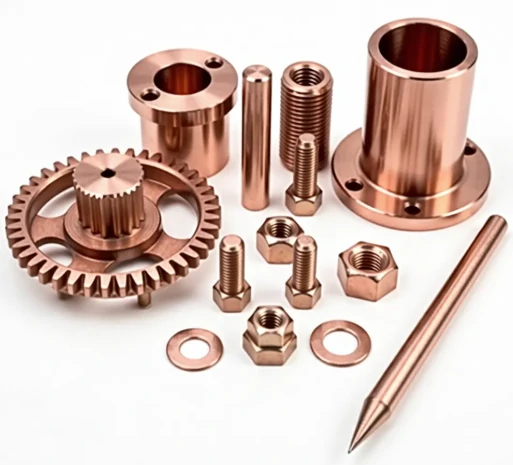
Various Bronze Machining Techniques are used to manufacture bronze components with different shapes, tolerances, and surface requirements. The selection of machining methods depends on the bronze alloy, part design, and application needs. Common processes include CNC milling, CNC turning, drilling, grinding, tapping, EDM, waterjet cutting, and 5-axis CNC machining.
CNC Milling Bronze
CNC milling bronze is a flexible machining method that uses rotating cutting tools to remove material from a bronze workpiece. It is suitable for producing complex geometries, slots, and irregular features while maintaining tight tolerances and good surface finishes.
Materials such as aluminum bronze and bearing bronze are commonly processed through CNC milling because of their strength, durability, and low friction characteristics. This technique is widely used for manufacturing bronze parts such as bearings, bushings, valve components, and precision mechanical components.
CNC Turning Bronze
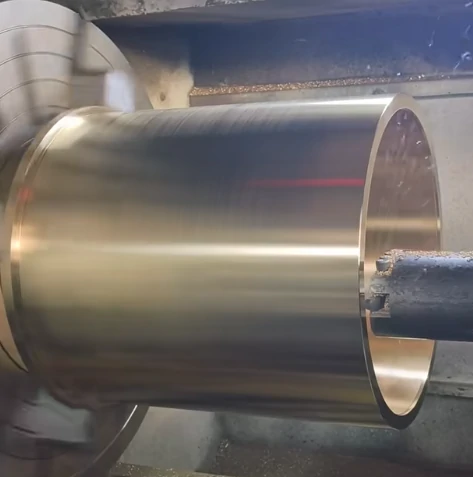
CNC turning bronze is mainly used for producing cylindrical bronze components. During the process, the bronze workpiece rotates against a fixed cutting tool to create accurate round profiles with smooth surface finishes.
This machining technique is suitable for parts including shafts, bushings, bearings, and valve components. Bronze alloys such as tin bronze and silicon bronze are often selected for turning applications due to their machinability, wear resistance, and stable performance under demanding operating conditions.
Drilling Bronze
Drilling bronze is used to create accurate holes and internal passages required for assembly, fastening, or fluid flow applications. Proper selection of drill geometry, cutting speed, and feed rate is important because some bronze alloys may experience work hardening during machining.
For materials such as phosphor bronze, controlled drilling parameters and coolant use help reduce heat buildup, improve tool life, and maintain hole accuracy in bronze components.
Grinding Bronze
Grinding is a finishing technique used to achieve precise dimensions and improved surface quality on bronze parts. The process uses abrasive wheels to remove small amounts of material and improve surface smoothness.
Grinding bronze is commonly applied to components requiring high accuracy and low friction, such as bearings and precision mechanical parts. Phosphor bronze and other wear-resistant bronze alloys can benefit from grinding when tight tolerances and fine surface finishes are required.
Sawing Bronze
Sawing is generally performed during the early stage of the bronze machining process to cut large bronze bars, plates, or blocks into smaller workpieces.
Using tools such as band saws or circular saws, the bronze material is divided into manageable sizes before further machining operations like milling or turning. This method improves machining efficiency by preparing the material for subsequent processes.
Broaching Bronze
Broaching bronze uses a multi-tooth cutting tool to remove material and create specific internal or external profiles. It is effective for producing keyways, splines, and complex shapes that may require multiple machining steps with conventional methods.
This technique is suitable for bronze components used in industrial machinery, gears, and connection parts where accurate profiles and consistent production quality are required.
Tapping Bronze
Tapping bronze is a machining method used to create internal threads in bronze parts. It is commonly applied to components such as fasteners, valve parts, and mechanical assemblies.
Bronze alloys including silicon bronze and bearing bronze offer good machinability for threading operations. Proper lubrication and suitable cutting tools help produce clean threads while reducing tool wear.
Electrical Discharge Machining (EDM) Bronze
EDM bronze machining is used for producing complex shapes, fine features, and intricate internal geometries that are difficult to achieve through traditional cutting methods.
This non-contact machining process removes material from the bronze workpiece through controlled electrical sparks. It is suitable for precision components made from difficult-to-machine bronze alloys, including aluminum bronze and phosphor bronze, where tight tolerances and detailed features are required.
Waterjet Cutting Bronze
Waterjet cutting uses a high-pressure water stream, sometimes combined with abrasive particles, to cut bronze materials without generating significant heat.
Compared with thermal cutting methods, waterjet cutting bronze helps prevent heat distortion and preserves the original properties of bronze alloys. It is especially useful for cutting thin bronze sheets and aluminum bronze materials used in applications requiring strength and corrosion resistance.
5-Axis CNC Machining Bronze
5-axis CNC machining bronze allows complex bronze components to be manufactured with fewer setups compared with traditional machining methods. The process enables simultaneous movement along multiple axes, improving accuracy for parts with complex surfaces and features on different planes.
This technique is commonly used for producing bronze valve bodies, housings, impellers, and other precision components where tight tolerances between multiple features are required.
What Are the Common Challenges in Bronze Machining?
The bronze machining process can involve several difficulties that affect machining accuracy, tool performance, and final part quality. Common challenges include tool wear, hardness differences between bronze alloys, chip control, heat management, surface finish issues, and work hardening. Understanding these factors helps improve machining efficiency and maintain consistent results when producing bronze components.
Material Hardness Variations
One common challenge in bronze machining is the variation in material hardness between different bronze alloys. The addition of elements such as tin, aluminum, silicon, and phosphorus changes the mechanical properties of bronze, resulting in different machining behaviors.
For example, tin bronze and aluminum bronze may require different cutting parameters because of their differences in hardness, strength, and wear resistance. Any variation in material composition can influence tool selection, cutting speed, and machining stability.
Proper material verification and hardness testing help determine suitable machining conditions. Common testing methods include Brinell hardness testing, Rockwell hardness testing, and portable hardness testing for larger bronze workpieces.
Tool Wear and Cutting Tool Selection
Tool wear is another major issue during bronze machining. Some bronze alloys, especially those containing aluminum or silicon, can be abrasive and accelerate cutting tool degradation.
Excessive tool wear may reduce dimensional accuracy, affect surface quality, and increase production costs. Selecting suitable cutting tools, such as carbide tools with proper coatings, can improve tool durability and maintain machining performance.
Regular tool inspection and optimized cutting parameters are important for extending tool life when machining bronze alloys.
Chip Control Problems
Chip formation can create difficulties during the machining of bronze parts. Certain bronze materials may produce long or irregular chips that can wrap around cutting tools or interfere with the machining process.
Poor chip control may result in:
- Surface scratches on finished bronze components
- Reduced coolant effectiveness
- Unstable cutting conditions
- Increased operator safety risks
Thermal Management Issues
Heat control is an important consideration in the bronze machining process because different bronze alloys have different thermal conductivity characteristics.
Although bronze generally transfers heat better than many steels, heat generated during machining can still affect dimensional accuracy due to thermal expansion. This is especially important when manufacturing precision bronze components with tight tolerances.
Surface Finish Difficulties
Achieving a smooth and consistent surface finish can be challenging when machining bronze. Due to its relatively soft structure compared with steel, bronze may experience material smearing instead of clean cutting if machining conditions are not properly controlled.
To improve surface quality, machining operations may require:
- Sharp cutting tools with suitable geometry
- Proper finishing passes
- Appropriate cutting fluids
- Stable feed rates
These adjustments help produce bronze parts with improved surface finish and dimensional accuracy.
Work Hardening During Machining
Some bronze alloys are prone to work hardening, where the material surface becomes harder after machining. This can make additional cutting operations more difficult and increase the risk of tool damage.
Galvanic Corrosion Considerations
Although galvanic corrosion is not directly a machining issue, it should be considered when designing and using machined bronze components. When bronze contacts dissimilar metals in the presence of moisture or electrolytes, corrosion risks may increase.
Proper material selection, surface protection, and post-machining cleaning can help reduce potential corrosion problems in the final application.
Post-Machining Treatment Requirements
After machining, additional processes may be required to improve the performance and durability of bronze components. Common post-processing methods include stress relief treatment, surface protection, coating application, and cleaning to remove machining residues.
How Can I Optimize Bronze Machining Cutting Conditions?
Optimizing cutting conditions is essential for achieving stable performance, accurate dimensions, and high-quality finishes during bronze CNC machining. Proper adjustment of cutting speed, feed rate, depth of cut, toolpath strategy, and coolant application helps control cutting forces, reduce tool wear, and improve machining efficiency.
Selecting Suitable Cutting Speeds
Selecting an appropriate cutting speed helps maintain tool life while achieving a clean cutting process.
A higher cutting speed can improve material removal efficiency and help transfer heat away through chip evacuation. However, the cutting speed should be adjusted according to the specific bronze alloy, tooling material, and required surface finish to avoid excessive heat generation and tool wear.
Adjusting Feed Rates for Different Bronze Alloys
The correct feed rate is important for maintaining machining stability and surface quality. Feed settings should be selected based on the hardness and characteristics of the bronze material.
An appropriate feed rate allows the cutting edge to remove material effectively instead of rubbing against the workpiece, which helps reduce premature tool wear.
Controlling Depth of Cut During Finishing
For finishing operations, a suitable depth of cut helps achieve accurate dimensions and improved surface quality. A smaller finishing cut reduces cutting pressure, minimizes tool deflection, and prevents vibration during machining.
Maintaining stable cutting conditions during the final passes is especially important for producing precision bronze parts with tight tolerances and smooth surface finishes.
Optimizing CNC Toolpath Strategies
Advanced CAM programming methods can improve the efficiency of bronze CNC processing by controlling cutting loads and maintaining consistent tool engagement.
Strategies such as dynamic milling and trochoidal milling help reduce sudden changes in cutting forces and heat accumulation. These optimized toolpaths are beneficial for machining complex bronze components, thin-walled parts, and applications requiring high dimensional accuracy.
Using Coolants Properly
Coolant selection depends on the bronze alloy, machining operation, and surface finish requirements.
Proper coolant use helps control temperature, improve surface finish, and extend tool life. For example, when machining phosphor bronze, suitable combinations of cutting speed, feed rate, and emulsion coolant can improve both machining efficiency and final surface quality.
How Does Bronze Machining Affect Part Tolerances?
The accuracy of bronze machined parts is influenced by several factors, including material characteristics, thermal expansion, tool wear, machining methods, and cutting conditions. Maintaining tight tolerances during bronze machining requires proper process control, suitable tooling, and optimized machining parameters.
Material Properties Affecting Bronze Machining Tolerances
Bronze alloys have different physical properties that directly affect dimensional accuracy. Factors such as hardness, thermal behavior, and material stability determine how accurately a bronze component can be machined.
Understanding these characteristics is important when producing precision bronze parts with strict tolerance requirements.
Thermal Expansion and Dimensional Accuracy
During machining, friction between the cutting tool and bronze workpiece generates heat. Because bronze has a relatively high thermal expansion rate, temperature changes can cause the material to expand and influence final dimensions.
For precision bronze CNC machining, controlling heat generation is important. Coolant application, stable machining environments, and allowing parts to reach temperature equilibrium before measurement help reduce dimensional variation.
Tool Wear and Its Impact on Tolerances
Tool wear is another important factor affecting tolerance consistency in bronze machining. Different bronze alloys create different levels of tool wear depending on their hardness and composition.
Softer bronze materials may cause material buildup on cutting edges, while harder alloys such as aluminum bronze can accelerate cutting tool wear. As tools become worn, machining dimensions may gradually shift and affect part accuracy.
To maintain consistent tolerances, common practices include:
- Regular tool inspection
- Timely tool replacement
- In-process dimensional checks
- Tool path adjustments based on wear conditions
Machining Methods for Achieving Tight Tolerances
The selected machining process has a direct influence on achievable tolerances for bronze components.
- CNC milling bronze is suitable for complex geometries, flat surfaces, and detailed features.
- CNC turning bronze is commonly used for cylindrical components, shafts, bushings, and threaded features.
- Grinding bronze provides higher precision for finishing operations and tight surface requirements.
- EDM machining is useful for intricate shapes and difficult-to-machine bronze alloys.
For parts requiring higher accuracy, rough machining is often followed by finishing operations to achieve improved dimensional control.
Cutting Parameters and Tolerance Control
Cutting speed, feed rate, and depth of cut all influence the accuracy of bronze machined parts.
Proper parameter selection helps reduce heat generation, tool deflection, and work hardening effects. In many cases, bronze machining requires:
- Higher cutting speeds compared with steel machining
- Moderate feed rates to maintain stability
- Smaller finishing depths of cut for better dimensional control
Optimized cutting conditions help maintain consistent tolerances throughout the machining process.
Common Tolerance Challenges in Bronze Machining
Several issues can affect tolerance achievement during bronze machining, including internal stress, distortion, and surface finish variations.
Internal Stress and Machining Deformation
Bronze materials, especially cast or formed components, may contain residual internal stresses. During machining, material removal can release these stresses and cause deformation such as bending or twisting.
To reduce these effects, machining strategies may include:
- Stress relief treatment before precision machining
- Balanced material removal during rough machining
- Step-by-step machining processes to improve stability
Surface Finish and Dimensional Tolerances
Surface finish quality is closely related to dimensional accuracy. Rough surfaces can affect measurement results and reduce the functional performance of bronze components.
Different applications require different surface finish levels:
- General mechanical parts: 32-63 μin Ra
- Bearing surfaces: 16-32 μin Ra
- Sealing surfaces: 8-16 μin Ra
- Precision mounting surfaces: 4-8 μin Ra
Achieving these finishes often requires proper tooling, controlled machining conditions, and additional finishing processes.
Advanced Methods for Tight-Tolerance Bronze Machining
For applications requiring extremely high precision, additional methods may be needed beyond standard machining.
Temperature-controlled machining helps reduce dimensional changes caused by thermal expansion. Monitoring temperature conditions and adjusting machining parameters can improve accuracy for precision bronze components.
When machining alone cannot meet the required tolerance levels, secondary processes such as grinding, lapping, honing, or precision fitting may be used to achieve final specifications.
Standard bronze CNC machining tolerances are generally affected by part complexity, machining method, material properties, and finishing requirements. Simple bronze parts may allow larger variations, while precision components such as bronze bushings and gears often require tolerances below ±0.001″.
Achieving consistent tolerances in bronze machining depends on controlling tool wear, selecting suitable machining parameters, managing heat, and maintaining stable production conditions. Proper process control ensures reliable dimensional accuracy and performance of bronze components.
What Surface Finishes Are Available for Bronze Machined Parts?
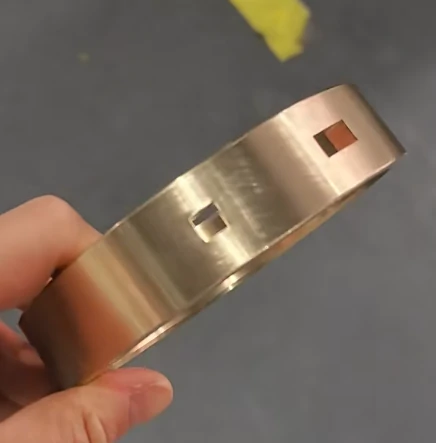
The available surface finishes for bronze machined parts depend on the bronze alloy, machining method, surface requirements, and final application. Different finishing processes can improve the appearance, corrosion resistance, wear performance, and functional properties of bronze components.
Bronze parts can achieve various surface conditions, from standard CNC machined textures to highly smooth polished finishes. Common options include as-machined finish, precision grinding, polishing, sanding, brushing, bead blasting, chemical coating, anodizing, patination, and electroplating.
As-Machined Finish
The as-machined finish is the original surface condition after CNC machining. Tool marks from cutting operations may remain visible, making this finish suitable for bronze components where appearance is not the primary requirement.
This surface finish is commonly used for functional bronze parts that require accurate dimensions without additional cosmetic treatment.
Precision Ground Finish
Precision grinding bronze parts improves surface uniformity, smoothness, and dimensional accuracy. During the grinding process, abrasive tools remove small amounts of material to achieve tighter surface control.
This finish is suitable for applications requiring low surface roughness, consistent texture, and precise mechanical performance.
Polishing Bronze Parts
Polishing bronze parts creates a smooth and reflective surface by removing small surface imperfections. It is often applied to decorative bronze components, architectural elements, and visible parts where appearance is important.
Besides improving aesthetics, polishing can also reduce surface roughness and provide better corrosion resistance.
Sanding Bronze Parts
Sanding bronze parts is used to eliminate minor machining marks and surface irregularities. The final texture depends on the abrasive grade selected during the process.
Using coarse abrasives produces a more textured surface, while finer abrasives create a smoother finish.
Brushing Bronze Surface Finish
Brushing bronze surface finish creates a uniform matte appearance through controlled brushing with abrasive materials. The process forms fine directional lines and reduces surface reflection.
This finish is commonly used for architectural bronze components that require a decorative texture with a less glossy appearance.
Bead Blasting Bronze Parts
Bead blasting bronze parts uses high-pressure glass or ceramic media to treat the bronze surface. This process produces an even matte finish and helps cover visible tool marks or minor surface defects.
It is suitable for applications requiring consistent surface appearance and improved texture uniformity.
Chemical Coating for Bronze
Chemical coating for bronze involves applying chemical solutions that react with the bronze surface to create a protective layer.
This treatment can improve corrosion resistance, modify surface appearance, and provide additional protection for bronze components exposed to environmental conditions.
Anodizing Bronze
Although anodizing is more commonly used for aluminum, certain bronze alloys can also receive anodizing treatments. This process can enhance surface protection and provide decorative color effects.
The effectiveness of anodizing depends on the bronze alloy type and the required surface performance.
Patination of Bronze
Bronze patination uses chemical treatments to create controlled oxidation on the surface, producing an aged appearance.
This finishing method is widely used for sculptures, artwork, and architectural bronze parts. The resulting colors may range from green and brown tones to other decorative finishes.
Electroplating Bronze Parts
Electroplating bronze parts applies a thin metal coating, such as nickel, silver, or gold, through an electrochemical process.
This treatment enhances the appearance of bronze components while improving surface hardness, wear resistance, and corrosion protection.
Choosing the appropriate surface finishes for bronze machined parts depends on the required combination of appearance, durability, corrosion resistance, and functional performance. Proper finishing processes help improve the quality and service life of bronze components in different applications.
What Are the Best Practices for Bronze Machining?
Bronze machining requires proper process control and machining experience to achieve accurate dimensions, good surface finish, and stable tool performance. The selection of cutting tools, machining parameters, coolant methods, and workpiece handling directly affects the quality of CNC machined bronze parts.
Tool Selection and Machining Parameters
- Tool Selection:Carbide cutting tools are commonly used for bronze machining because they provide better wear resistance, higher cutting speeds, and longer tool life.
- Speed Control:Appropriate cutting speeds help prevent work hardening and maintain machining stability. The recommended speed depends on the specific bronze alloy.
- Feed Rates:Proper feed rate adjustment helps reduce tool wear and improve surface finish. Softer bronze alloys generally allow higher feed rates, while harder alloys require more controlled settings.
- Coolant Application:Sufficient coolant helps control cutting temperature, reduce tool wear, and prevent thermal deformation during machining.
Tool Maintenance and Workpiece Handling
- Regular Tool Inspection:Cutting tools should be checked frequently for wear and replaced before machining quality is affected.
- Clean Machining Environment:Removing chips and maintaining a clean workspace prevents interference during machining and protects both tools and workpieces.
- Proper Lubrication:Suitable lubrication reduces friction between the tool and bronze material, improving cutting efficiency and surface quality.
- Secure Workholding:Reliable clamping prevents workpiece movement during machining and helps maintain dimensional accuracy.
Optimizing Cutting Conditions for Bronze Machining
Optimizing cutting conditions is essential for improving efficiency and achieving consistent results when machining bronze alloys.
- Cutting Speed:Higher cutting speeds can help reduce work hardening and improve tool performance when suitable for the bronze grade.
- Feed Rate Adjustment:Feed rates should be selected according to alloy hardness and part requirements. Softer bronze materials can support faster feeds, while harder alloys need slower machining conditions.
- Coolant Selection:Coolants reduce heat generation during cutting, extend tool life, and help maintain part accuracy by minimizing thermal effects.
For example, phosphor bronze machining can achieve improved efficiency and surface finish by using optimized cutting speeds, feed rates, and suitable emulsion coolants based on the material condition.
What Safety Considerations Should Be Followed When Machining Bronze?
Proper safety practices are important during bronze machining to reduce risks from chips, dust, and machining operations.
- Ventilation:Maintain sufficient airflow in the machining area to control fine metal particles generated during cutting.
- Protective Equipment:Operators should use suitable safety equipment, including protective glasses, gloves, and hearing protection.
- Machine Maintenance:Regular inspection and maintenance of CNC machines help prevent equipment issues and improve operational safety.
- Fire Prevention:Keep proper fire safety measures available because machining operations may generate sparks and hot particles.
Safety Considerations When Machining Bronze
Proper safety practices are important during bronze machining to reduce risks from chips, dust, and machining operations.
- Ventilation:Maintain sufficient airflow in the machining area to control fine metal particles generated during cutting.
- Protective Equipment:Operators should use suitable safety equipment, including protective glasses, gloves, and hearing protection.
- Machine Maintenance:Regular inspection and maintenance of CNC machines help prevent equipment issues and improve operational safety.
- Fire Prevention:Keep proper fire safety measures available because machining operations may generate sparks and hot particles.
What Are the Applications of Bronze CNC Machined Parts and Gears?
Bronze CNC machined parts and gears are widely used across industries because of their excellent durability, corrosion resistance, low friction properties, and long service life. These components provide reliable performance in applications involving heavy loads, continuous movement, fluid systems, and harsh operating environments.
Marine Applications
Aluminum bronze is commonly used for marine applications such as propellers, fittings, valve components, and underwater hardware due to its excellent saltwater corrosion resistance. Its high strength and wear resistance allow bronze CNC machined parts to maintain stable performance in demanding marine conditions.
Marine bronze components, including propeller shaft bearings, rudder bushings, through-hull fittings, and seacock valves, often use C95400 aluminum bronze and C93200 bearing bronze. These bronze alloys provide a combination of strength, corrosion resistance, and wear performance required for long-term marine operation.
Industrial Machinery
Bearing bronze, especially C93200 bronze, is widely applied in industrial machinery because of its excellent machinability, low friction, and wear resistance. Bronze bushings, bearings, thrust components, and gears help reduce friction and support smooth operation under heavy-duty working conditions.
CNC machined bronze parts are frequently selected for wear components because their durability and self-lubricating properties help extend maintenance cycles compared with some steel alternatives.
Electrical Components
Phosphor bronze is commonly used for electrical components, including connectors, terminals, and springs, due to its fine grain structure, elasticity, corrosion resistance, and fatigue performance. These properties make phosphor bronze suitable for precision CNC machined parts used in electronic applications.
Its flexibility and ability to withstand repeated cycles allow electrical components to maintain stable performance over extended service periods.
Architectural and Decorative Applications
Silicon bronze is widely selected for architectural applications such as railings, fasteners, and decorative structures because of its corrosion resistance and attractive surface appearance. Bronze CNC machined parts can maintain durability and visual quality when exposed to outdoor environments.
The ability of silicon bronze to resist environmental effects and form a protective patina makes it suitable for both functional and aesthetic applications.
Musical Instrument Applications
Phosphor bronze is used in musical instruments such as strings and cymbals because of its acoustic properties, elasticity, and fine-grain structure. These characteristics help provide consistent sound performance while maintaining corrosion resistance and durability.
The combination of mechanical properties and appearance makes phosphor bronze a suitable material for high-quality instrument components.
Oil and Gas Applications
Bronze CNC machined parts are used in the oil and gas industry for components such as valve seats, pump wear rings, and stem guides. Their corrosion resistance allows them to withstand exposure to sour gases, seawater, and offshore operating conditions.
CNC-machined bronze components are commonly used in offshore drilling and subsea equipment, where parts must handle high pressure, repeated stress, and demanding environments.
Aerospace and Defense Applications
Bronze components used in aerospace and defense applications require high dimensional accuracy, surface quality, strength, and wear resistance. Precision machining is used to produce bronze parts that meet strict performance requirements.
Nickel-aluminum bronze alloys are commonly selected for high-load applications such as landing gear bushings, bearings, and gear components because of their impact resistance and ability to withstand high compressive forces.
Worm Gear Applications
Bronze gears are widely used in worm gear applications because of their low sliding friction, wear resistance, and ability to handle high reduction ratios. Bronze worm gears provide smooth torque transmission and reliable operation in elevators, lifts, conveyors, packaging equipment, and movable bridge systems.
The non-reversible characteristics of worm gears can also provide additional safety by preventing reverse movement in certain applications. Bronze materials help improve gear durability by reducing friction and wear during continuous operation.
Marine and Offshore Gear Applications
Bronze gears are used in marine and offshore applications for corrosion resistance. Bronze bevel gears fit propeller systems, steering mechanisms, and winches, while bronze alloys support marine gears, bearings, propellers, and underwater parts.Their resistance to dezincification makes them reliable choices for propeller shafts, rudder shafts, and bearings operating in corrosive environments.
Heavy Industrial Machinery
Bronze gears play an important role in heavy industrial machinery, including steel mills, mining equipment, and high-load mechanical systems. C91700 nickel gear bronze provides high compressive strength and is suitable for heavy-duty bushings and thrust washers.
Aluminum bronze gear components are selected for applications requiring high strength, corrosion resistance, and wear resistance under continuous pressure and heavy loads.
Construction and Agricultural Equipment
Bronze gear components are widely used in construction and agricultural machinery because they can withstand heavy loads, abrasive conditions, and repeated metal-to-metal contact. Their wear resistance and durability support reliable operation in demanding working environments.
Bronze CNC machined parts and gears provide long service life and stable performance for equipment exposed to frequent operation, mechanical stress, and harsh field conditions.
What Are the Key Properties of Bronze Gear Materials?
Bronze is a copper-based alloy commonly used in gear manufacturing because of its strength, wear resistance, corrosion resistance, and low friction characteristics. Different bronze gear materials are selected according to operating conditions, including load capacity, speed requirements, and environmental exposure.
Phosphor Bronze (Tin Bronze)
Phosphor bronze is one of the most commonly used bronze gear materials, offering a balanced combination of strength, wear resistance, and corrosion resistance. The addition of phosphorus improves deoxidation, castability, and mechanical performance.
C90700 tin bronze is a widely used gear bronze alloy containing copper, tin, and small amounts of zinc and lead. With good hardness and tensile strength, this material is suitable for heavily loaded worm gears and applications requiring reliable performance under high stress conditions.
Aluminum Bronze
Aluminum bronze is known for its high strength, excellent mechanical properties, and strong performance in demanding environments. These alloys provide high hardness and tensile strength, especially when enhanced through heat treatment.
Due to their superior fatigue strength and corrosion resistance, aluminum bronze gear materials are commonly selected for applications involving high loads, low operating speeds, and exposure to corrosive conditions.
Manganese Bronze
Manganese bronze provides a strong combination of mechanical strength, wear resistance, and durability. With additions of manganese, iron, and aluminum, these alloys achieve higher strength compared with many tin bronze materials.
Manganese bronze is commonly used for cast gears, bearings, propellers, and marine hardware where reliable performance and resistance to mechanical stress are required.
Silicon Bronze
Silicon bronze is often used for lightly loaded gears and electrical applications because of its good strength, corrosion resistance, and non-magnetic properties. The addition of silicon improves material strength through work hardening.
Its combination of corrosion resistance and cost efficiency makes silicon bronze suitable for specific gear applications requiring stable performance and easy manufacturing.
Key Performance Characteristics of Bronze Gear Materials
Bronze alloys provide several important properties that make them suitable for gear applications. Their good ductility supports manufacturing processes such as casting, forging, and machining.
Bronze gear materials also offer excellent corrosion resistance in both saltwater and freshwater environments due to the protective oxide layer formed by alloying elements such as tin and phosphorus. Their low friction coefficient helps reduce wear between mating components, while effective heat dissipation contributes to longer service life for bronze gears and related parts.
How Is Bronze Gear Manufacturing Done from Casting to Finished Components?
Bronze gear manufacturing involves multiple processes, including casting, gear blank production, CNC machining, and finishing operations. Different manufacturing methods are selected based on gear size, load requirements, material performance, and final application needs.
Casting Methods
Bronze gears can be produced using various casting methods, with each process providing different advantages.
Centrifugal casting uses rotational force to remove impurities and create a dense, uniform bronze structure. This process improves grain consistency and alloy distribution, making it suitable for heavily loaded worm gears that require high wear resistance and low friction performance.
Continuous casting provides better material utilization by reducing machining allowance. It helps improve machining efficiency, increase cutting speeds, reduce tool wear, and maintain consistent mechanical properties.
Sand casting is commonly used for producing robust bronze gears with good dimensional stability and reliable structural performance.
Gear Blank Production
Precision bronze gear blanks can be manufactured through processes such as chill casting, centrifugal casting, and spun casting. These methods support the production of different gear sizes and weights while maintaining material consistency.
Composite gear blank technology combines a steel hub with a bronze rim to reduce material costs while maintaining the required gear performance. Fully machined bronze gear blanks can be produced according to specific dimensional and application requirements before final gear cutting operations.
Machining and Finishing
Bronze alloys provide good machinability, allowing accurate gear tooth production through hobbing, shaping, and other conventional machining processes. CNC machining technology enables precise tolerances, complex gear geometries, and improved compatibility between bronze gears and mating components.
Proper machining and finishing processes ensure dimensional accuracy, surface quality, and reliable performance of finished bronze gear components.
What Is the Critical Role of Bushings in Bronze Gear Systems?
Bushings are essential components in bronze gear systems, acting as the connection between rotating shafts and fixed housings. They help improve gear system reliability by reducing friction, supporting loads, and extending component service life.
Primary Functions of Gear Bushings
The main function of gear bushings is to support smooth gear rotation while preventing direct metal-to-metal contact between shafts, gears, and housings. Bronze bushings reduce friction and wear, maintain proper alignment, and absorb radial loads during operation.
With a precisely machined bearing surface, bushings allow shafts to rotate smoothly with reduced resistance while maintaining accurate positioning within the gear system.
Why Bronze is the Preferred Bushing Material
Bronze bushings are widely used in gear systems because they provide excellent wear resistance, corrosion resistance, and machinability. Bronze alloys such as C91700 nickel gear bronze offer high compressive strength, making them suitable for heavy-duty applications including steel mill equipment and marine systems.
The combination of low friction against steel shafts, effective heat dissipation, and natural corrosion resistance makes bronze a reliable material choice for demanding gear bushing applications.
Self-Lubricating Bronze Bushings
Sintered bronze bushings produced through powder metallurgy feature a porous structure that can absorb and retain lubricating oil. During operation, heat and pressure release the stored oil to form a lubrication film between the shaft and bushing surface.
When the system stops operating, the oil returns to the pores, allowing continuous lubrication performance. This self-lubricating capability helps reduce maintenance requirements and extend bushing service life.
Applications of Bronze Bushings in Gear Systems
Bronze bushings are commonly installed in gear housings and gearboxes, providing durable bearing surfaces that allow gears to operate smoothly without direct contact with surrounding components.
They are widely used in automotive transmissions, wind turbine gearboxes, aerospace landing gear systems, steel mill equipment, and other applications requiring reliable power transmission and long-term operating stability.
How Does Quality Control Improve CNC Machined Bronze Parts Sourcing?
Quality control is an essential part of CNC machined bronze parts manufacturing to ensure components meet required dimensional accuracy, material standards, and performance requirements. Proper inspection and verification are especially important for bronze parts used in industries where reliability and service life are critical.
Inspection and Testing Methods
Quality inspection for CNC machined bronze parts typically includes the following methods:
- Visual Inspection:Checks surface defects, machining marks, and overall part condition.
- Dimensional Measurement:Uses calipers, micrometers, bore gauges, CMMs, and optical comparators to verify critical dimensions and tolerances.
- Material Testing:Includes hardness testing and spectroscopy analysis to confirm alloy composition and material properties.
Quality Control Steps
A complete quality control process for bronze machining includes several stages:
- Initial Material Inspection:Verify that the selected bronze alloy meets required specifications before machining begins.
- In-Process Monitoring:Check machining conditions during production to identify issues and maintain consistent quality.
- Post-Machining Inspection:Inspect final dimensions, surface finish, and mechanical properties after machining.
- Documentation:Maintain inspection records, test reports, and process documentation to support traceability.
Material certification ensures CNC machined bronze parts meet ASTM or SAE standards. Material Test Reports (MTRs) verify bronze alloy composition.
For applications requiring strict traceability, such as aerospace and defense components, material records must track the bronze material from the original mill source through the finished part.
Dimensional Inspection
Dimensional inspection ensures bronze components meet specified tolerances. Common inspection equipment includes micrometers, bore gauges, coordinate measuring machines (CMMs), and optical measurement systems.
Air gauging is often used for precision bore measurement when extremely tight tolerances are required, providing accurate clearance verification while reducing measurement errors.
Surface Finish Verification
Surface finish inspection is performed using contact profilometers to measure surface roughness on critical machined areas. These measurements help verify machining consistency and ensure bearing surfaces meet application requirements.
Material identification can also be confirmed through hardness testing, including Rockwell B and Brinell hardness tests, when complete material certification is unavailable.
Sourcing CNC Machined Bronze Parts
When sourcing CNC machined bronze parts, several factors affect manufacturing selection, including material type, part complexity, production volume, and delivery requirements.
Prototypes and Small Quantities
For prototype production and small batches, bronze bar stock is commonly used as the starting material. Materials such as SAE 660 and C95400 aluminum bronze are available in various shapes, including round, rectangular, and hexagonal stock. These materials allow quick machining for low-volume requirements.
Production Volumes
For larger production quantities, near-net-shape bronze castings can reduce machining requirements and material waste. Processes such as sand casting and centrifugal casting help lower production costs for bronze bearing components by minimizing the amount of material removed during CNC machining.
Information Required for CNC Bronze Machining RFQ
To receive an accurate quote for CNC machined bronze parts, provide complete technical information, including:
- 3D CAD files and 2D drawings
- Dimensional tolerances
- Surface finish requirements
- Bronze alloy specifications or UNS numbers
- Required testing and certifications, such as material certificates, hardness reports, and inspection reports
Providing complete specifications helps reduce communication delays and ensures accurate pricing.
Selecting a Bronze Machining Supplier
Choosing a supplier with bronze machining experience is important because different bronze alloys require different machining parameters. Tool selection, cutting speeds, feed rates, and coolant methods vary depending on the bronze grade.
Specialized machining capabilities and alloy-specific knowledge help achieve better quality, shorter production cycles, and reliable performance for CNC machined bronze parts.
What Are the Best Design Tips for CNC-Machined Bronze Parts?
Proper design plays an important role in improving the performance and efficiency of CNC-machined bronze parts. Optimized part designs can reduce machining time, control manufacturing costs, and improve the reliability of finished bronze components.
Wall Thickness
Maintaining a consistent wall thickness helps prevent deformation during CNC machining. Thin sections may deflect under cutting forces, even when machining softer bronze alloys.
For most bronze grades, a minimum wall thickness of 0.060″ is recommended. C95400 Aluminum Bronze can support thinner walls around 0.040″, but proper fixture support is required to maintain machining accuracy.
Tolerance Strategy
Tolerances should be applied only to features that directly affect part function. Excessively tight tolerances increase machining time and inspection costs without providing additional performance benefits.
For example, bearing bores may require precision tolerances around ±0.0005″, while non-critical clearance holes for fasteners can typically use looser tolerances around ±0.010″.
Internal Corner Radius
Sharp internal corners should be avoided in CNC-machined bronze parts. Using an internal radius of at least 0.030″ is recommended because it matches common end mill geometries and simplifies machining.
If sharp corners are required, additional processes such as EDM or broaching may be needed. Adding fillets where possible can reduce machining complexity and cost.
Thread Standards
Using standard thread specifications helps improve cost efficiency during bronze machining. Custom threads can increase tooling requirements and extend lead times.
UNC and UNF thread standards are commonly used for CNC-machined bronze parts because they are widely available and easier to manufacture.
| Design Feature | Standard Practice | Notes |
| Minimum wall thickness | 0.060″ (general) | Fixture support may allow 0.040″ machining |
| Internal corner radius | 0.030″ minimum | Matches standard end mill geometry |
| Bore tolerance | ±0.0005″ to ±0.001″ | Requires in-process gauging |
| General tolerance | ±0.005″ | Suitable for non-critical features |
| Thread standard | UNC/UNF preferred | Custom threads increase cost and lead time |
| Surface finish (bearing hole) | 32-63 Ra | 16 Ra for high-speed applications |
| Chamfer entry features | 0.015″ at 45° | Improves assembly and reduces burrs |
What Are the Cost Considerations for Bronze CNC Machining?
The cost of bronze CNC machining depends on several factors, including material grade, part complexity, production volume, and machining requirements. Although bronze has a higher material cost compared with steel or aluminum, its excellent durability, wear resistance, and performance advantages can justify the additional expense in specific applications.
Material Costs
Material cost varies depending on the bronze alloy selected. C93200 bronze is typically more expensive than common aluminum alloys such as 6061 aluminum due to its improved wear resistance and mechanical properties. C95400 aluminum bronze has a higher cost because of its additional alloying elements and enhanced strength.
In many applications, the higher material investment can be justified by the extended service life of bronze components. For example, bronze bushings may provide significantly longer durability compared with alternative materials such as nylon.
Machining Time and Cost
A major portion of bronze CNC machining cost comes from machining time. The selected bronze grade directly affects processing efficiency. Leaded bronze alloys generally provide better machinability, allowing faster machining operations and reducing overall production time.
Proper tool selection and optimized machining parameters also help control costs by improving tool life and machining efficiency.
Volume Considerations
Production volume has a significant impact on CNC machining costs. As order quantities increase, setup costs, tooling expenses, and programming costs are distributed across more parts, reducing the cost per component.
For example, a low-volume bronze bushing order may have a much higher unit cost compared with a larger production run. Requesting production volume pricing is an effective way to reduce CNC machining costs while maintaining consistent quality.
Why Choose Welleshaft for Bronze Machining Solutions?
Choosing the right partner for bronze machining means ensuring reliable production, consistent quality, and reduced manufacturing risks. Welleshaft provides precision CNC machining solutions for bronze materials, combining alloy knowledge, machining experience, process control, and quality management to support complex bronze component requirements.
Welleshaft specializes in custom manufacturing solutions, including high-precision CNC machining and bronze component production. With advanced machining capabilities and strict quality control processes, Welleshaft supports both prototype development and production manufacturing for customers requiring accurate and reliable parts.
The machining of bronze materials delivers components with excellent durability, wear resistance, and corrosion resistance for demanding operating environments. For custom bronze bushings, bronze gears, and aluminum bronze structural components, selecting the correct bronze alloy, optimizing part design, and applying suitable machining parameters are essential for achieving stable performance.
Welleshaft has experience in precision CNC machining of various bronze alloys, including SAE 660 bearing bronze, aluminum bronze, and phosphor bronze. By understanding the characteristics of different bronze materials, Welleshaft helps ensure tight tolerances, efficient machining processes, and consistent part quality.
The advantages of bronze CNC machining come from its combination of wear resistance, corrosion resistance, low friction performance, and reliable mechanical properties. Proper bronze material selection and optimized machining methods allow bronze components to outperform steel and stainless steel in applications where durability and corrosion protection are required.
What Are the Frequently Asked Questions About Bronze CNC Machining?
Why choose bronze gears over steel gears?
Bronze gears provide excellent corrosion resistance, low friction, and effective heat dissipation compared with steel gears. Although bronze is softer than steel, its consistent material structure provides predictable wear performance. In many applications, bronze gears can extend service life while reducing wear on mating steel components such as worms and shafts.
How do bushings improve gear system performance?
Gear bushings reduce friction between rotating shafts and stationary housings while supporting alignment and absorbing radial loads. Proper bronze bushings help prevent direct metal-to-metal contact, reducing vibration, wear, and potential gear system failures.
What is the best machinable bronze?
C93200 bearing bronze is considered one of the most machinable bronze alloys. It offers excellent machinability, low friction properties, and good wear resistance, making it suitable for CNC machined bearings, bushings, and other precision components.
Do different bronze grades require different machining parameters?
Yes. Bronze grades require different machining conditions depending on their hardness, strength, and composition. For example, aluminum bronze has higher strength and work-hardening characteristics than tin bronze, requiring more wear-resistant tools and adjusted cutting speeds and feed rates.
Can CNC machined bronze parts achieve tight tolerances?
Yes. With appropriate CNC machining equipment, inspection methods, and process control, bronze components can achieve tight dimensional tolerances required for precision applications. Detailed inspection reports can also be provided to verify part accuracy.
How do prototype and production costs differ for bronze CNC machining?
Prototype and low-volume bronze CNC machining usually have higher unit costs because setup, programming, and tooling expenses are distributed across fewer parts. Larger production quantities can reduce unit costs through improved process efficiency and optimized manufacturing methods.
This blog was provided by the Welleshaft Engineering Team, sharing professional insights into bronze materials, CNC machining processes, component design, and manufacturing practices. Welleshaft supports global customers with precision machining expertise and customized metal component solutions.

 Deutsch (Schweiz)
  English
  Português do Brasil
  Deutsch (Österreich)
  English (UK)
  English (Australia)
  English (New Zealand)
  Deutsch
  Français du Canada
  Français
  Français de Belgique
  Italiano
  English (South Africa)
  Português
  Español
  Español de México
  Español de Perú
  Español de Colombia
  العربية
  日本語
日本語  Русский
  한국어
한국어  Tiếng Việt
  ไทย
ไทย