
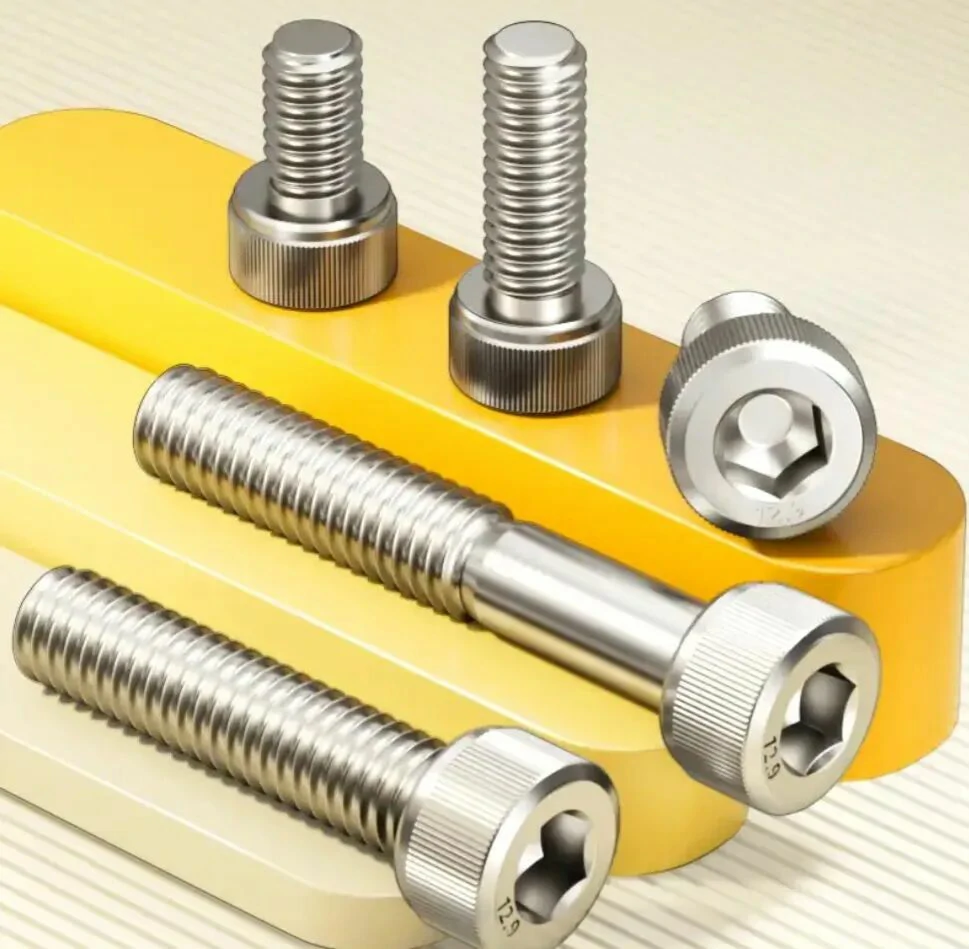
How Are Screws Manufactured?
How Are Screws Made from Raw Material to Finished Product?
The journey of making screws starts with raw materials, typically steel or stainless steel, which are melted, alloyed, and processed into the desired shape. The process of how screws are manufactured begins with the raw material, which is then cut, heated, and shaped through various techniques like threading and coating. After the screw takes shape, it undergoes strict quality checks to ensure precision, durability, and reliability. Manufacturing processes can vary based on the screw type, such as machine screws, wood screws, or specialty screws for industrial uses, each tailored for a specific application.
What Are the 3 General Methods for Making Screws?
Screw manufacturing involves three primary methods: cold forming, hot forging, and machining.In cold forming, also known as cold heading, we shape the steel at room temperature by pressing or impacting the material within a mold.. This process is ideal for materials like alloy and carbon steel, as it strengthens the metal through “work hardening.” Thread rolling is used after cold forming to add precise threads, ensuring the screw has a firm grip for various applications.
Hot forging, on the other hand, involves heating the steel to a high temperature to make it pliable, then shaping it with a die.This method works best for producing screws that require high strength and are used in demanding environments. Meanwhile, we often employ machining for custom screws, precisely removing material to achieve the required dimensions and features, such as a flat end or hexagonal head.
Each method serves its purpose: cold forming excels in mass production efficiency, hot forging is ideal for high-strength applications, and machining offers the precision needed for specialized or custom screws. Depending on your project’s needs—whether it’s material durability, thread precision, or custom features—you can select the most appropriate method for manufacturing screws to ensure optimal performance.
How Does the Screw Manufacturing Process Work? Step-by-Step Guide
Screw manufacturing is a precise and detailed process that’s crucial for ensuring quality in industrial applications. Let’s break it down with a real-world example of a cold-formed screw made from alloy steel.
Cutoff
The process of how screws are manufactured begins by cutting raw material into manageable pieces. Our team cuts alloy steel to the required length, laying the foundation for shaping the screw to precise specifications.
Slug with Coating
After cutting the metal pieces, we form them into slugs and coat them to prevent rust and improve durability. We use a special coating on the slugs to provide lubrication, making it easier to cold form them in the next stages. This coating ensures smooth processing and enhances the longevity of the finished screw.
Upset
This is our first hit, where we strike the slug with a large press to enlarge one end, forming the screw’s head. This crucial step ensures the screw has a strong, durable head ready for the next stages of manufacturing.
Heading
In the second hit, we further shape the metal into the final form of the screw. including the threads. This stage, done within the press, fully forms the screw’s head and ensures that it’s ready for the next steps. The result is a screw that’s taking shape with both precision and durability.
Trimming
In the third hit, we trim the excess material to ensure a clean finish and precise dimensions. This step, done in a trimming press, shapes the screw’s head to its exact specifications. It’s crucial for achieving the perfect fit and ensuring the screw meets the required standards for quality and performance.
Pointing
In the fourth and final hit, we form the screw tip to fit perfectly into its intended hole.While it’s not a true point, it creates an angled tip that ensures a precise fit. This crucial step prepares the screw for easy insertion, making it ready for use in its intended application.
Thread Rolling
Next, we roll the screw’s threads onto its body using a Reed roller, whereas other manufacturers cut threads.we prefer rolling because it creates a more accurate, durable finish. This step ensures that the screw grips securely in any material, improving both performance and longevity.
Quality Assurance – Part 1
After rolling the threads, we almost complete the screw—what we call “dimensionally done.” However, before it’s ready for use, it must pass a series of inspections. The first stage of quality assurance focuses on checking the screw’s strength, dimensions, and surface finish, ensuring it meets all tolerances and guarantees consistency in performance.
Finishing
After we pass the screw through the initial QA checks, we send it off for its final finishes.This includes coatings or galvanizing, like zinc electroplating, to protect the screw from corrosion. While we don’t handle finishing or plating in-house, we partner with experts to ensure the highest quality and durability for each screw.
Quality Assurance – Part 2
Once the screw returns from plating, we conduct a second round of QA to ensure it meets all requirements, including dimensions, material, hardness, and coating thickness. If there are any imperfections, like nicks or burrs on the threads, we re-roll them to ensure the screw gauges properly. After this final inspection, the screw is ready to ship, fully meeting industry standards for quality and performance.
How Can You Ensure Screw Quality and Consistency in Manufacturing?
To ensure high-quality screws, manufacturers must follow strict quality control measures. The materials used must meet industry standards, and each production stage—like thread rolling and heat treatment—needs precise calibration. Regular inspections are crucial to detect defects early in the process. For custom screws, additional tests like stress tests or corrosion resistance tests are essential. Working with experienced manufacturers ensures that all screws meet your specifications and perform reliably in your application.
Why Should You Choose Welleshaft for Your Screw Manufacturing Needs?
Choosing Колодезный вал for your screw manufacturing needs means partnering with a company that delivers precision, reliability, and expertise.
Our commitment to quality ensures that every screw we manufacture meets the highest standards.
About Screw Manufacturing FAQ’S
How Are Screws Manufactured?
How to Manufacture Screws?
Quality assurance is crucial throughout the process to ensure durability, reliability, and accuracy in dimensions.
This blog was provided by the Колодезный вал Engineering Team, led by Mr. Xu, an expert in screw manufacturing and custom fasteners. With years of industry experience, Welleshaft delivers precision-engineered products tailored to meet the unique needs of our clients.

 Русский
  English
  Português do Brasil
  Deutsch (Österreich)
  Deutsch (Schweiz)
  English (UK)
  English (Australia)
  English (New Zealand)
  Deutsch
  Français du Canada
  Français
  Français de Belgique
  Italiano
  English (South Africa)
  Português
  Español
  Español de México
  Español de Perú
  Español de Colombia
  العربية
  日本語
日本語  한국어
한국어  Tiếng Việt
  ไทย
ไทย