
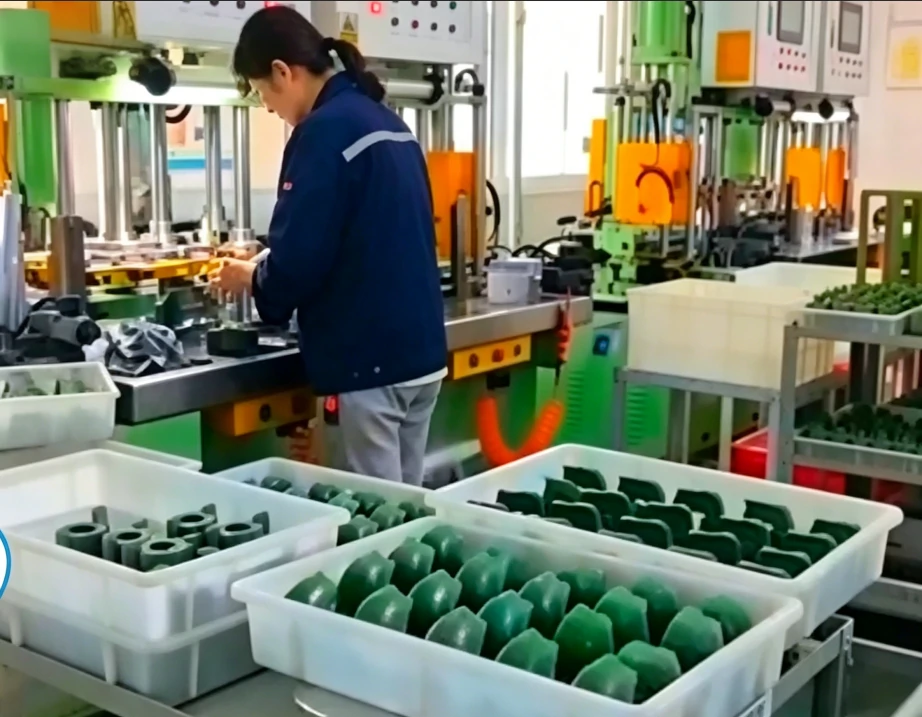
Why Choose Investment Casting for Medical Devices?
Investment casting has become increasingly favored in the medical device industry for several important reasons.
Precision and Complexity: A primary benefit of investment casting is its ability to produce complex geometries and intricate details with tight tolerances. This level of precision is essential for medical devices, ensuring they operate correctly and maintain patient safety.
Material Options: The investment casting process can work with a variety of biocompatible materials that meet strict medical standards. This flexibility allows manufacturers to select the most suitable material for each component, guaranteeing both performance and compliance with regulations.
Surface Finish and Reduced Machining: Investment casting naturally provides a smooth surface finish, which reduces the need for extensive post-processing. For medical devices, this quality helps minimize contamination risks and enhances overall reliability.
Overall, investment casting is highly regarded for its ability to deliver high precision, offer diverse material options, and enable efficient production. These strengths make it a preferred method for manufacturers focused on improving medical device performance and innovation.
Investment casting, also called lost-wax casting, involves creating a wax model of the part and covering it with a ceramic shell. Once the wax is melted out, a cavity remains for molten metal to be poured, forming the final component. This approach is particularly suitable for intricate designs and complex shapes, making it ideal for medical device applications.
High Accuracy and Intricate Geometry
Components for medical devices often require complex geometrical designs with narrow tolerances. Investment castings provide the highest precision accuracy among casting methods, allowing manufacturers to achieve designs that other processes cannot. This ensures that each part fits correctly, supporting both functionality and dependability.
Biocompatibility for Patient Safety
Biocompatibility is a critical factor for any material used in medical devices, especially implants in direct contact with the human body. Investment casting supports biocompatible metals such as stainless steel, titanium, and cobalt-chrome alloys, chosen for their strength, durability, and tissue compatibility, reducing the risk of adverse reactions.
Consistency and Repeatability
Consistency is crucial in medical manufacturing. Every part must meet strict quality standards to ensure patient safety and proper device function. The investment casting process provides excellent repeatability, which is essential for producing reliable medical components.
What Are the Advantages of Investment Castings of Medical Devices?
Precision and Consistency
The process consistently achieves strict dimensional requirements, which is essential for regulatory control in healthcare manufacturing. Its stable forming behavior ensures every component maintains close alignment with design specifications, reducing dimensional variation across batches.
Propriedades do material
The use of high-strength, corrosion-resistant materials supports demanding medical environments where long-term durability and biocompatibility are required. Materials such as stainless steel, titanium, and specialized alloys provide reliable mechanical performance for implants and surgical components.
Cost-Effectiveness
Although upfront tooling and setup costs may be higher, investment casting reduces overall expenses by minimizing machining work and limiting material waste. It also improves production efficiency, helping reduce cycle time and supporting faster product introduction.
Economical Manufacturing
While the process involves wax patterns and ceramic mold creation, it significantly reduces the need for extensive secondary machining. This makes investment casting more cost-efficient, especially for geometrically complex medical components that would otherwise require expensive processing.
Superior Surface Finish
One key advantage of medical investment castings is the naturally smooth surface quality, which is critical for reducing contamination risk and improving sterilization performance. Smooth surfaces are particularly important for surgical tools and implant components that contact human tissue.
Material Flexibility
The process supports a wide range of materials used in medical applications, including stainless steel, titanium, and other biocompatible alloys. This flexibility allows manufacturers to match material selection precisely to functional and clinical requirements.
Reduced Lead Times
Compared with traditional manufacturing methods, investment casting shortens production cycles through efficient tooling and repeatable forming processes. This enables faster prototyping and quicker transition from design to market-ready medical devices.
High Repeatability & Complex Geometry Capability
medical investment castings offer stable repeatability from mold-based production, ensuring consistent part quality. The process also enables the production of complex geometries that are difficult or impossible to achieve through conventional metal forming methods, while maintaining tight dimensional tolerances and minimal post-processing requirements.
How are investment castings used in medical device applications?
Investment castings are widely used across different medical devices and equipment where precision, stability, and safety are required.
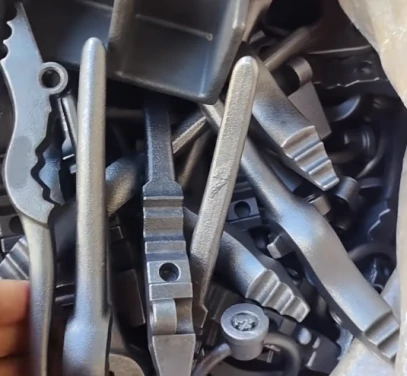
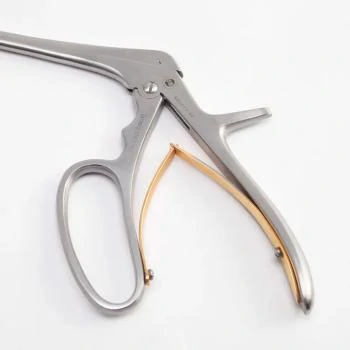
Surgical instruments, such as forceps and scalpels, commonly use components produced by investment casting because these tools depend on high precision accuracy to function properly. They must meet strict medical requirements to ensure safe and reliable operation during procedures.
Orthopedic implants, including hip and knee replacements, rely on investment casting to achieve complex shapes that closely replicate natural bone structures. These implants typically use biocompatible materials, selected for strength, durability, and compatibility with the human body, ensuring long-term performance and patient safety.
In dentistry, products such as crowns and bridges benefit from the dimensional control of investment casting. The required level of precision accuracy ensures a proper fit in dental applications, which is critical for comfort and functionality.
Diagnostic equipment, including imaging systems like MRI and X-ray devices, also depends on precision components made through investment casting. High accuracy is essential to maintain equipment reliability and ensure consistent diagnostic performance.
Medical Applications of Investment Castings
| Categoria | Typical Applications |
| Surgical Instruments | Forceps, scalpels, clamps, scissors |
| Orthopedic Implants | Hip replacements, knee replacements, joint components |
| Dental Applications | Crowns, bridges, dental precision parts |
| Diagnostic Equipment | MRI systems, X-ray machines, ultrasound devices |
| Medical Equipment | Operating tables, stretchers, wheelchairs |
| Supporting Components | Pump housings, shields, connectors |
Investment casting applications in the medical field cover a wide range of critical products, including:Knee implants、Tibial trays、Surgical instruments、Keel punches、Patella sizers、Elbow, shoulder, and wrist components、Dental tools、Injury stabilizing devices、Operating tables and surgical room equipment.
From surgical tools to implant systems and diagnostic devices, investment castings provide the dimensional accuracy and material reliability required in modern medical device manufacturing.
What Capabilities Do Medical Investment Castings Offer?
The capability of producing precision investment castings for the medical industry covers a wide range of component sizes, typically from small intricate parts to larger structural medical components. This flexibility allows investment casting to support diverse application requirements in healthcare manufacturing.
A broad selection of materials is supported, including more than 200 ferrous and non-ferrous alloys such as nickel-based alloys, cobalt alloys, stainless steel, and aluminum. Within medical investment castings, commonly used materials like CoCrMo (F-75) and medical-grade stainless steels ensure strength, corrosion resistance, and biocompatibility.
Beyond core casting capability, integrated processes are available across the full production chain, including material selection, mold and component design, high-precision machining, welding, assembly, non-destructive testing, validation, surface treatments such as plating and painting, barcode labeling, and supply chain coordination. This integrated workflow improves consistency in investment casting production while reducing external handling and delays.
Quality systems supporting medical investment casting capabilities are aligned with strict industry certifications, including ISO 13485, ISO 9001, AS 9100, and NADCAP-certified processes for welding and non-destructive testing (NDT) such as Computed Radiography, liquid penetrant inspection (LPI), and magnetic particle inspection (MPI), ensuring controlled and traceable production quality.
Production capacity supports both prototype development and large-scale manufacturing, with the ability to handle small precision runs as well as high-volume orders exceeding 10,000 units. This scalability makes investment casting suitable for both early-stage validation and mass production.
Advanced technologies, including 3D printing for rapid prototyping and CAD-driven modeling, enhance design efficiency and reduce development cycles. In addition, patient-specific component manufacturing based on 3D CAD data enables customized medical solutions such as orthopedic implants, improving adaptability within medical investment castings production.
How Can Quality Be Ensured with Rigorous Testing of Medical Investment Castings?
Medical components produced through investment casting require strict quality assurance because they are often used in critical healthcare applications. As a result, manufacturers implement thorough inspection systems to ensure each part consistently meets defined specifications.
A strong focus is placed on medical investment castings, where every stage of production is closely monitored through inspection, testing, and material analysis. This reduces the risk of defects and ensures that final components meet both dimensional and functional requirements.
To maintain reliability, parts undergo multiple layers of verification within the investment casting process, including detailed checks for surface integrity, structural consistency, and performance stability. These measures help ensure that each component remains suitable for high-risk medical applications, including life-supporting devices where precision and reliability are essential.
What Are the Challenges and Considerations of Medical Investment Casting?
Complexity of Regulatory Compliance: Meeting strict medical requirements such as ISO 13485 is critical for product safety and performance. However, compliance often involves extensive documentation, validation steps, and continuous quality control, which increases process complexity during investment casting production.
Cost and Lead Time: While investment casting can deliver long-term cost advantages, the initial setup cost is relatively high compared with other manufacturing methods. Tooling preparation and mold development may also extend lead times, which can affect overall project scheduling.
Design Considerations: Successful outcomes depend heavily on early-stage engineering decisions. Proper design for investment casting requires specialized knowledge of process limitations and geometry control to prevent defects and ensure manufacturability.
Despite these considerations, investment casting remains widely used in medical manufacturing due to its ability to produce high-quality, precise components with consistent performance.
How Does Welleshaft Provide Precision Investment Casting for the Medical Device Industry?
Welleshaft delivers high-precision investment casting solutions for medical device applications through a fully integrated manufacturing system that combines investment casting,CNC machining, surface finishing, strict quality inspection, and advanced production control to ensure every component meets medical-grade requirements.
Our process begins with precision investment casting, enabling the production of complex geometries with tight dimensional tolerances and excellent repeatability. This is essential for critical medical components such as surgical instruments and implant systems, where accuracy and structural integrity directly impact performance and patient safety.
After casting, parts undergo multi-axis CNC machining to achieve final critical dimensions, functional interfaces, and high-precision fits. This ensures every component meets strict tolerance requirements and is compatible with assembly or implantation conditions.
To enhance performance and usability, Welleshaft applies advanced surface finishing processes, including polishing, deburring, and controlled surface treatment. These steps improve corrosion resistance, reduce surface roughness, and ensure a clean, smooth appearance suitable for medical environments where hygiene and contamination control are essential.
Every component is then subjected to rigorous quality inspection, including dimensional measurement, visual appearance checks, and non-destructive testing where required. This guarantees consistency in size, structural integrity, and compliance with medical industry standards such as ISO 13485.
In terms of materials, Welleshaft works with a wide range of medical-grade alloys, including stainless steel, titanium, and cobalt-chromium alloys, ensuring biocompatibility, strength, and long-term durability for demanding medical applications.
Finally, through controlled manufacturing systems and supply chain coordination, Welleshaft ensures stable production capacity, reliable lead times, and consistent delivery performance, supporting both prototype development and large-scale production of medical device components.
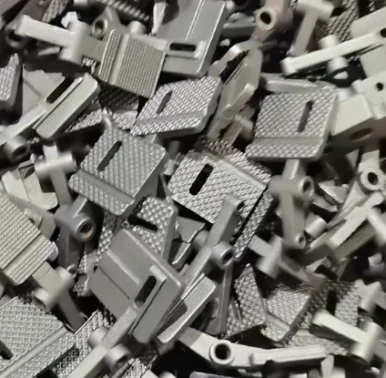
What Are the Most Common Questions About Medical Investment Casting Parts?
What are medical investment casting parts used for?
Medical investment casting parts are used in precision medical applications such as surgical instruments, orthopedic implants, dental tools, and minimally invasive surgical devices. These components require tight tolerances, smooth surface finish, and high reliability to ensure patient safety and device performance.
Why is investment casting widely used in the medical industry?
Investment casting is preferred in medical manufacturing because it delivers high dimensional accuracy, complex geometry capability, and excellent surface quality. It also supports biocompatible materials for medical components such as stainless steel, cobalt-chrome alloys, and titanium, which are essential for implants and surgical tools.
Which materials are commonly used for medical investment casting parts?
Common materials include:
- Stainless steel (e.g., 304, 316L)
- Cobalt-chromium alloys
- Titanium alloys
These materials are chosen for their corrosion resistance, biocompatibility, and mechanical strengthin medical environments.
What are the advantages of investment casting compared to machining for medical parts?
Compared with machining, investment casting offers:
- Better cost efficiency for complex geometries
- Reduced material waste
- Ability to produce near-net-shape components
It is especially beneficial for complex medical device casting solution srequiring intricate internal or external structures.
This article is brought to you by the Welleshaft Engineering Team, led by Mr. Xu, offering advanced solutions in medical investment casting for surgical instruments, implants, and precision healthcare components.

 Português
  English
  Português do Brasil
  Deutsch (Österreich)
  Deutsch (Schweiz)
  English (UK)
  English (Australia)
  English (New Zealand)
  Deutsch
  Français du Canada
  Français
  Français de Belgique
  Italiano
  English (South Africa)
  Español
  Español de México
  Español de Perú
  Español de Colombia
  العربية
  日本語
日本語  Русский
  한국어
한국어  Tiếng Việt
  ไทย
ไทย