
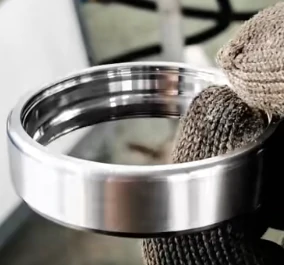
What Is bearing rings in mechanical engineering? A bearing ring refers to the inner or outer race of a bearing that supports rolling elements and enables low-friction rotational movement. Bearing rings are fundamental components of a bearing structure, serving as key elements that support and guide rotational motion in mechanical systems. These rings are essential for ensuring stable operation, smooth performance, and consistent reliability under working loads. In operation, bearing rings are responsible for carrying radial and axial loads, maintaining alignment, and ensuring stable movement between rotating components. By controlling contact between moving parts, they help reduce friction and minimize wear, which directly improves the efficiency and service life of […]
月別アーカイブ: 5月 2026
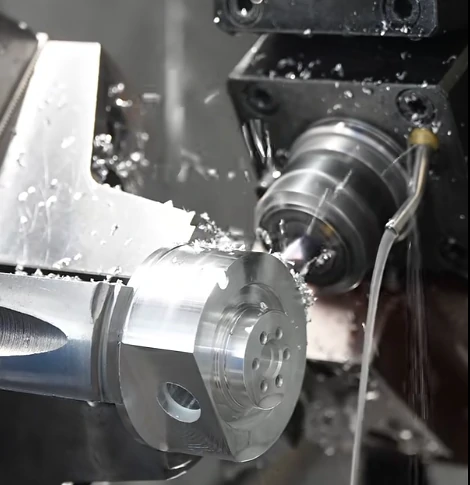
What Are Tight Tolerance Parts in Manufacturing? Tight tolerance parts are precision-manufactured components produced within extremely small allowable dimensional variations. These parts must closely match their intended design specifications to ensure proper fit, reliable operation, and consistent performance in demanding applications. In many precision machining projects, the acceptable dimensional variation may be as small as ±0.001 inches or even tighter. Maintaining such strict limits helps ensure that every component functions correctly within an assembly while minimizing performance deviations. Manufacturing tight tolerance parts requires advanced machining processes, stable production conditions, and accurate inspection methods. These components are commonly used in industries where precision, repeatability, and reliability are critical. The advantages of using tight […]
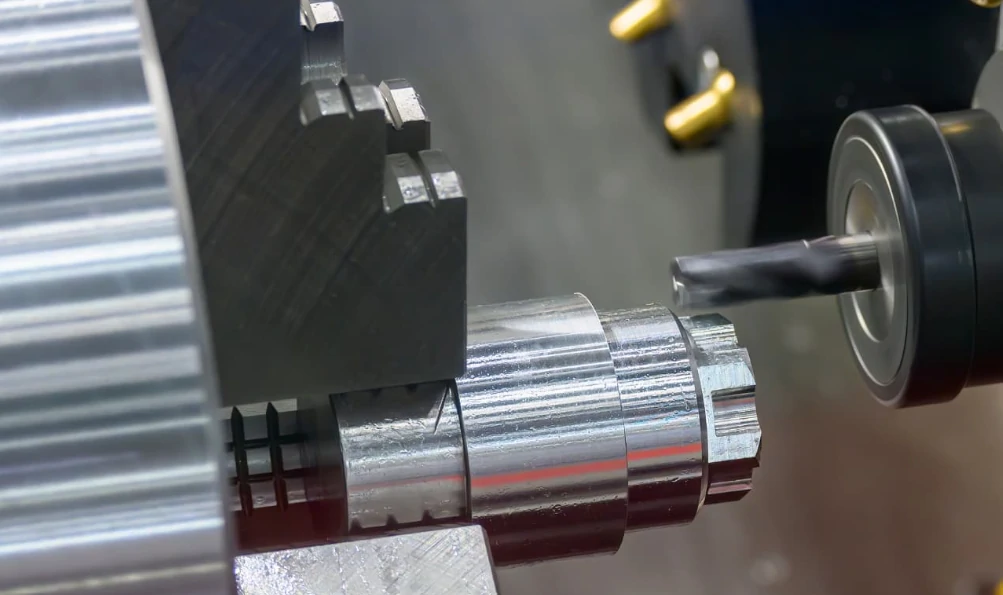
What Is CNC Precision Machining? CNC precision machining is a manufacturing method controlled by computer programs that precisely remove material from a workpiece according to a digital design. By automating the movement of cutting tools, this process achieves far tighter tolerances than traditional machining techniques. Typically, precision machining maintains tolerances within ±0.1 to 0.2 mm. Achieving this level of accuracy relies on advanced machinery, fine-tuned machining parameters, and skilled operators. The main purpose of CNC precision machining is to produce consistent, high-accuracy components for industries such as automotive, medical, and defense. Production often involves multiple types of equipment, including milling machines, lathes, and EDM setups, to manufacture high-quality precision machined parts. Additionally, […]
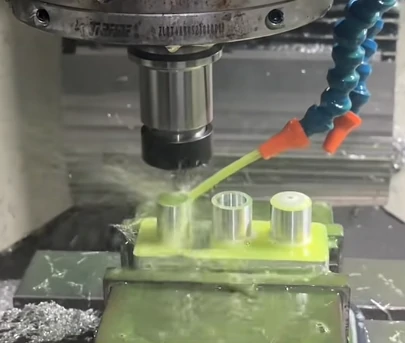
Why is aluminum widely used for CNC machining? Compared to other lightweight metals such as magnesium and titanium alloys, aluminum is widely preferred for CNC machining due to its exceptional combination of characteristics: Lightweight yet strong: Perfect for applications where minimizing weight is crucial without sacrificing durability. Highly formable: Ensures outstanding machinability, allowing for intricate and complex designs. Easy to cut: Lowers machining time and improves cost efficiency. Because of these properties, aluminum has become one of the most commonly used materials across multiple industries. Its excellent machinability, durability, and cost-effectiveness make it a top choice for manufacturers who rely on CNC machining to produce precise parts. The result is components and products that […]
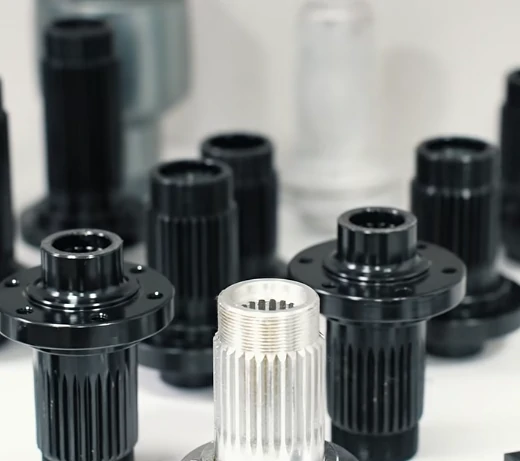
What Is Aluminium Forging? Aluminium forging is a metalworking process that shapes aluminum alloys by applying compressive forces to solid metal. Unlike casting, the metal is not melted; instead, it is plastically deformed, producing forged aluminum parts with superior strength, durability, and lightweight characteristics. These properties make aluminum forging ideal for components that require high performance under demanding conditions. The advantages of forged aluminum include its low density, excellent strength-to-weight ratio, corrosion resistance, and ability to withstand elevated temperatures. These qualities make aluminum material suitable for a wide range of industries, including automotive, aerospace, and industrial applications. During aluminum forging, a heated aluminum billet is pressed, pounded, or squeezed under high pressure. This process refines the internal […]
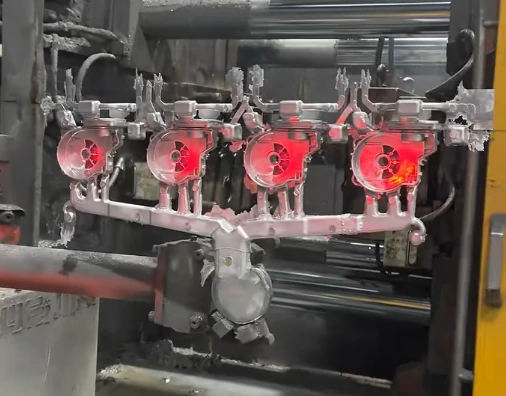
What Is High-Strength Aluminum Die Casting Alloys? Manufacturers inject molten aluminum into molds under high pressure in the aluminum die casting process.This method takes advantage of aluminum’s excellent casting properties and low density, making it suitable for producing structural and functional components in industries such as automotive, aerospace, electronics, and construction. High Production Speed: The aluminum die casting methodsupports mass production, including parts with complex geometries. Material Efficiency: High-pressure molding minimizes material waste by ensuring almost all molten aluminum enters the mold. Mechanical Properties: Parts made through this process have high strengthand hardness. Surface Finish: Components generally have a smooth surface, often reducing the need for additional finishing. Durability: Despite […]
 日本語
日本語  English
  Português do Brasil
  Deutsch (Österreich)
  Deutsch (Schweiz)
  English (UK)
  English (Australia)
  English (New Zealand)
  Deutsch
  Français du Canada
  Français
  Français de Belgique
  Italiano
  English (South Africa)
  Português
  Español
  Español de México
  Español de Perú
  Español de Colombia
  العربية
  Русский
  한국어
한국어  Tiếng Việt
  ไทย
ไทย