
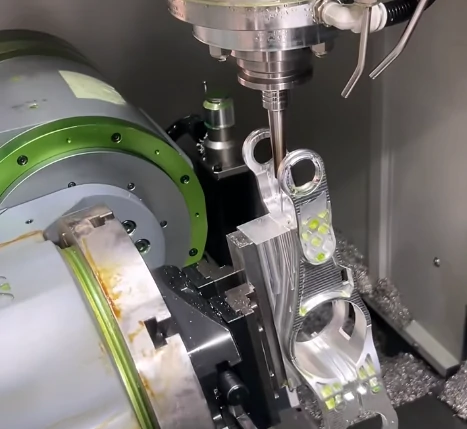
Robotics Components CNC Machining and Manufacturing Services What is Custom Robotics Parts CNC Machining Manufacturing? Custom robotics parts CNC machining manufacturing focuses on producing highly accurate and performance-oriented components using advanced subtractive manufacturing technologies. Manufacturers fabricate complex robotic parts with tight tolerances and consistent repeatability through processes such as milling, turning, drilling, boring, grinding, and EDM. Modern production often integrates multi-axis machining and electrical discharge machining (EDM) to handle intricate geometries and hard-to-machine materials. These technologies enable components that meet strict dimensional and functional requirements, ensuring stability, durability, and reliable operation in demanding automation environments. CNC Machining Processes and Their Advantages Machining Process Key Advantages CNC Machining High automation, repeatability, […]
月別アーカイブ: 3月 2026
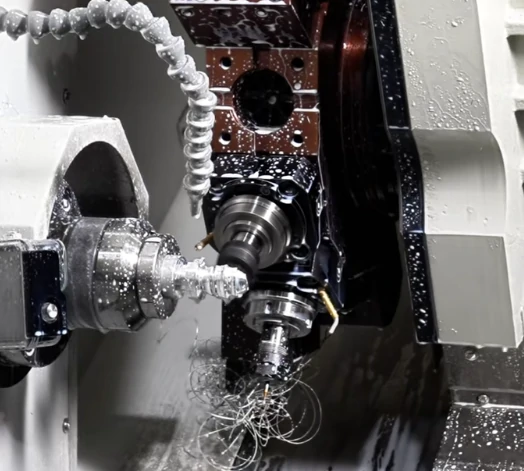
CNC Machining and High-Mix Low-Volume Manufacturing Services What Are Welleshaft’s Precision Machining Capabilities? From single prototypes to large-scale production, Welleshaft’s precision CNC machining capabilities deliver speed, consistency, and exacting dimensional accuracy. Our advanced milling and turning centers are equipped to handle intricate geometries, tight tolerances, and critical surface finish requirements. 3,4,5-Axis Milling We produce brackets, housings, and flat or prismatic components with sharp edges, uniform surfaces, and reliable repeatability across batches. Turning & Lathe Operations Precision-turned parts, shafts, and bushings are crafted with tight concentricity control and superior surface finishes. Multi-Face Machining & Scrap Reduction By machining multiple faces in a single setup, we minimize handling, reduce scrap, and enhance dimensional accuracy. Rapid […]
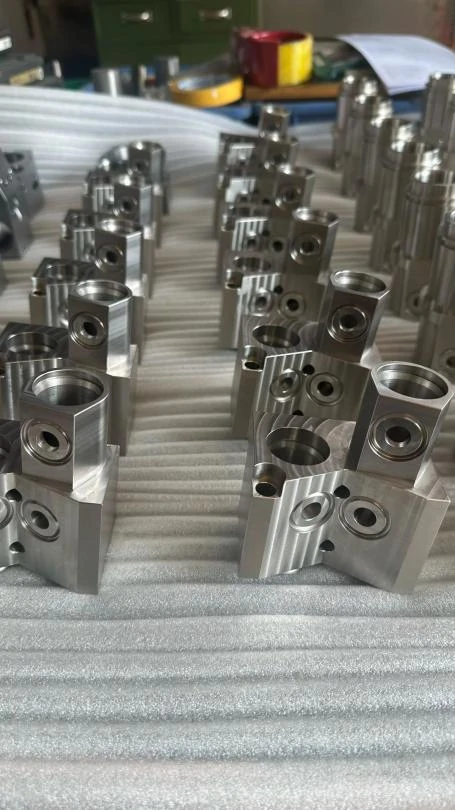
High-Mix Low-Volume (HMLV) Manufacturing: Strategies for Optimized Production, Supply Chains, and Custom Machining What Is High-Mix Low-Volume Manufacturing? High-mix low-volume (HMLV) manufacturing describes a production model where a wide range of different parts or products are produced in relatively small quantities. Typically, annual output per item can range from single units to several thousand pieces, and in some cases may extend to tens of thousands. This approach is especially common in industries that rely on CNC machining and customized component production. In real-world manufacturing environments, companies often manage extensive product portfolios containing hundreds or even thousands of unique part numbers. Individual batch sizes are usually small—often from one piece to a few […]
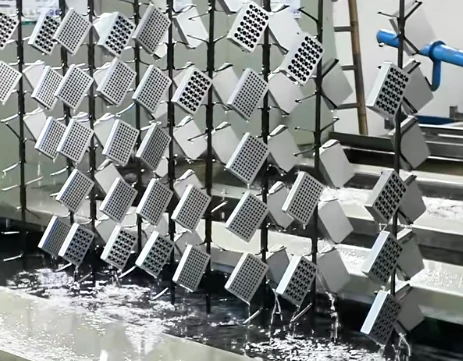
Anodized Aluminum for CNC Machined Parts: Process, Benefits, Types and Applications What Is Anodizing for CNC Machined Parts? Anodizing is an electrochemical treatment that strengthens the naturally occurring oxide layer on aluminum surfaces. This process is particularly beneficial for CNC machined parts, including CNC Milled parts and CNC Turned parts, because it delivers: Enhanced Longevity:Improves resistance to wear, corrosion, and environmental stress. Visual Appeal:Enables a variety of customizable finishes and vibrant color options. Increased Surface Hardness:Protects against scratches, dents, and mechanical damage. For manufacturers in the automotive, industrial machinery, and automation sectors, anodizing provides a harmonious balance between functional performance and aesthetic quality. In challenging conditions—such as high humidity, chemical exposure, or extreme […]
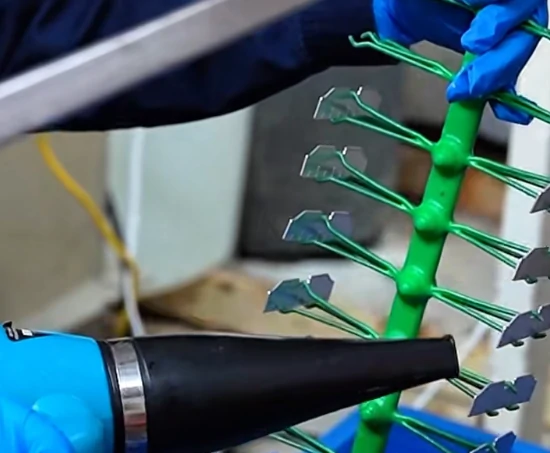
How Can Surface Treatment Improve the Performance, Durability, and Appearance of parts components? What Is a Surface Treatment Process in Precision Machining Services? Surface treatment processess services use mechanical, chemical, electrochemical, or physical methods to enhance a material’s surface performance, appearance, and durability.In manufacturing and precision machining services, surface treatment processess services play a crucial role in achieving multiple objectives, such as: Removing contaminants and surface defects Improving corrosion resistance and durability Enhancing product appearance and texture Providing functional properties such as wear resistance or electrical insulation In simple terms, surface finishing can be compared to refining or enhancing the outer layer of a material, transforming a raw component surface […]
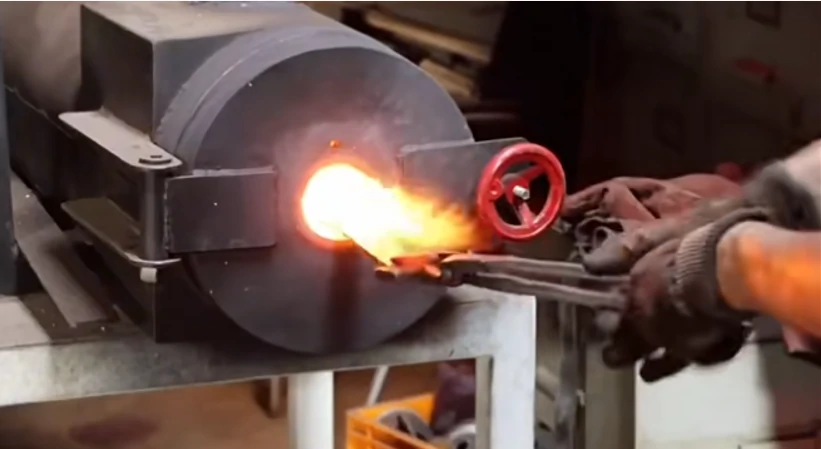
How Does Heat Treatment Improve CNC-Machined Parts? What Is Heat Treatment and Why Is It Important for Metal Parts? Heat treatments for CNC machined parts are a carefully controlled process in which a material is heated to a specific temperature and then cooled in a regulated manner. This process modifies the material’s physical and mechanical properties, such as hardness, toughness, and ductility, without altering the part’s original shape. By adjusting heating and cooling parameters, manufacturers can tailor the metal or alloy to meet specific performance requirements, making heat treatments for CNC machined parts a critical step in producing durable and high-performance components for CNC machining, automotive, aerospace, and industrial applications. […]

How CNC Grinding Services Enhance Precision and Finish Complex Parts in welleshaft Manufacturing? What is CNC grinding and when should CNC grinding be used in precision manufacturing? CNC grinding is a precision machining process controlled by a computer numerical control (CNC) system, where a rotating abrasive wheel or belt gradually removes material from a workpiece. Unlike processes focused on high material removal rates, Precision CNC Grinding Services emphasize geometric accuracy—including size, roundness, and flatness—as well as surface quality, ensuring smooth finishes, minimal damage, and reliable part performance. The essence of CNC grinding lies in using a carefully managed grinding operation to shape and refine the workpiece. Its distinct advantage is automation: […]
 日本語
日本語  English
  Português do Brasil
  Deutsch (Österreich)
  Deutsch (Schweiz)
  English (UK)
  English (Australia)
  English (New Zealand)
  Deutsch
  Français du Canada
  Français
  Français de Belgique
  Italiano
  English (South Africa)
  Português
  Español
  Español de México
  Español de Perú
  Español de Colombia
  العربية
  Русский
  한국어
한국어  Tiếng Việt
  ไทย
ไทย