
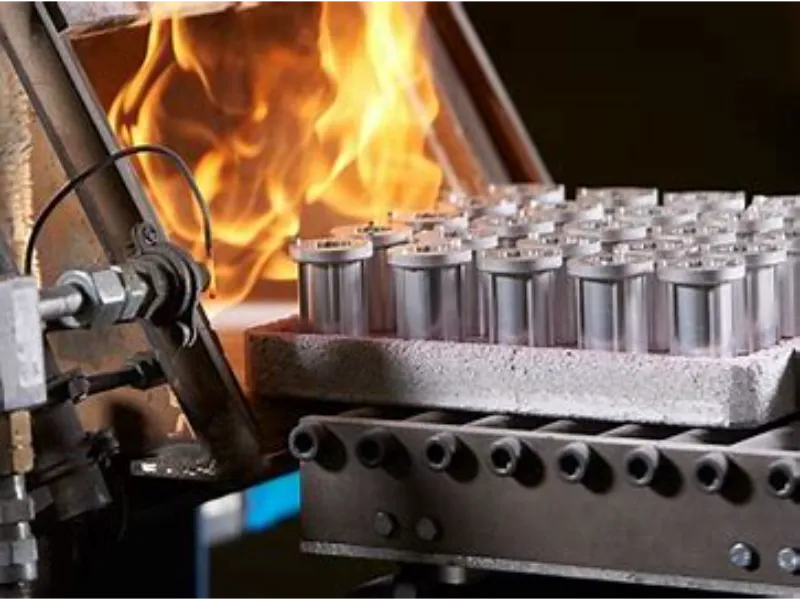
What Is a Sintered Metal Part?
A sintered metal part is a component produced through the powder metal sintering process, where metal powders are first compacted into shape and then heated to bond the particles without fully melting them. This method forms a solid structure by fusing particles at a temperature below the metal’s melting point.
Sintered metal products typically include structural components, bushings, filters, ceramic-metal parts, and MIM (Metal Injection Molding) components. Many of these are also categorized as powdered metal parts, widely used in precision and mass production industries.
In powder metallurgy manufacturing, metal powders are shaped under pressure first, but this step alone is not enough to create a fully functional part. The compacted shape still lacks full strength and stability at this stage.
To achieve final performance, heat is applied during sintering. This process allows particles to bond at a microscopic level, improving density and mechanical strength without melting the base material.
While compaction provides the initial form, sintering completes the transformation by turning the pressed powder into a rigid and durable metal component suitable for engineering applications.
What Materials Are Used in Sintered Metal Parts?
The materials of sintered metal parts used in the powder metal sintering process cover a wide range of metals and alloys, each selected based on required strength, corrosion resistance, conductivity, or weight reduction needs. Different materials directly influence the final performance of sintered components.
Iron-Based Materials
Sintered iron is one of the most commonly used materials due to its low cost and balanced mechanical performance. It also provides good magnetic properties, making it suitable for structural and functional components in mechanical systems.
Stainless Steel Materials
Sintered stainless steel offers strong corrosion resistance because of its chromium content. Common grades include 300 and 400 series stainless steels. These materials are widely used in environments where moisture, chemicals, or oxidation resistance is required.
Copper-Based Materials
Sintered copper and copper alloys provide excellent electrical and thermal conductivity, along with good corrosion resistance. They are frequently used in applications such as self-lubricating bearings and components requiring efficient heat transfer.
Nickel-Based Materials
We often select nickel for applications that require high-temperature stability and corrosion resistance. We commonly use it in demanding environments such as engine-related or high-heat mechanical systems.
Titanium Materials
Sintered titanium and its alloys are known for their lightweight structure, strong mechanical performance, and excellent biocompatibility. These characteristics make them suitable for applications where strength-to-weight ratio and corrosion resistance are critical.
Other Common Metals
In addition to the main material groups, sintered metal parts can also be manufactured using:
Aluminum、Brass、Bronze、Copper、Nickel、Stainless steel、Titanium
These materials are widely used in powdered metal parts production where different mechanical or functional properties are required.
High-Melting-Point Metals
Some metals with extremely high melting points are difficult to process using conventional machining methods. Powder metallurgy provides a practical alternative for shaping these materials.
Examples include:
Tungsten、Molybdenum、Tantalum、Rhenium、Osmium、Carbon-based materials
We typically use these materials in specialized engineering applications where extreme temperature resistance or wear performance is required.
What Are the Types of Sintering Processes?
Beyond traditional metal sintering, Welleshaft applies several alternative sintering methods in advanced powder metallurgy to meet different material and performance requirements. These techniques support the production of powdered metal parts and other powder metal components, depending on target density, structural design, and manufacturing efficiency goals.
Common types of sintering include:
- Liquid Phase Sintering– A process where a small portion of the material melts during heating, helping particles rearrange and densify more effectively
- Electric Current Assisted Sintering– Uses electrical current combined with pressure or heat to accelerate densification and reduce processing time
- Electro Sinter Forging– A rapid sintering method that applies electrical energy and mechanical force simultaneously to form dense structures
- Spark Plasma Sintering– A high-speed technique that uses pulsed electric current to generate localized heating and fast bonding between particles
- Plastics Sintering– Applied to polymer powders, where particles fuse together without reaching a full melt state
- Pressureless Sintering– Relies solely on thermal energy without external pressure to achieve particle bonding and densification
- Microwave Sintering– Uses microwave energy to heat materials internally, leading to faster and more uniform sintering results
Each method offers different advantages in terms of speed, energy efficiency, and final material properties, allowing manufacturers to select the most suitable approach for specific engineering requirements.
How Does the Powder Metal Sintering Process Work?
The powder metal sintering process is a manufacturing route that transforms loose metal powders into solid functional components through controlled compaction and thermal treatment. It typically consists of several key stages, including powder preparation, pressing, sintering, and post-processing. This method is widely used to produce powdered metal parts and other powder metal components with stable performance and repeatable quality
Powder Preparation and Composition
The process begins with selecting the appropriate metal powder formulation according to the required mechanical and functional properties. Common base materials include iron, copper, nickel, and molybdenum.
To improve die filling behavior and reduce friction during pressing, we often blend lubricants into the powder. We remove these additives during the early heating stages, ensuring they do not remain in the final structure.
Compacting the Powder
In this step, the prepared powder is loaded into a rigid die and compressed under high pressure, typically in the range of 400–800 MPa. This forms a shaped but fragile component known as a green compact.
Although it holds its geometry, the green compact has not yet developed full metallurgical bonding and cannot function as a finished part.
Sintering Process (Core Stage)
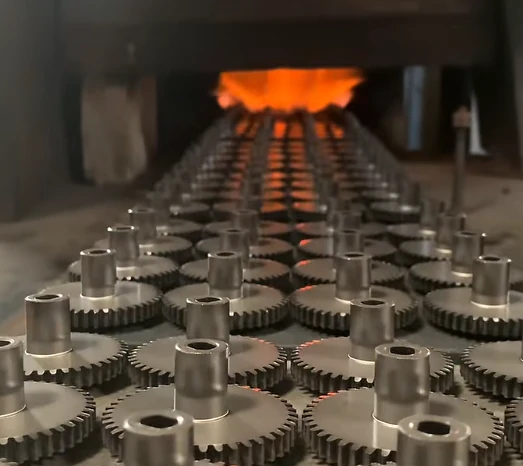
Sintering is the central phase of the powder metal sintering process. The compact is heated in a controlled atmosphere furnace to a temperature below the melting point of the base metal, allowing particles to bond through diffusion and gradually form a dense structure.
This stage is generally divided into three sub-processes:
Pre-Sintering
Binders and lubricants are removed while surface oxides are reduced. This stage typically occurs between 500°C and 900°C, preparing the structure for effective bonding in later phases.
High-Temperature Sintering
At this stage, atomic diffusion becomes more active. Particle boundaries shrink, porosity decreases, and overall density and mechanical strength improve significantly—key factors in producing reliable powdered metal parts.
Controlled Cooling
After sintering, the parts are cooled gradually to below 100°C. This controlled cooling reduces internal stress and helps prevent distortion, cracking, or dimensional instability.
Post-Sintering Finishing
Additional finishing operations may be required depending on application requirements. Common processes include heat treatment, CNC machining, grinding, surface coating, and oil or resin impregnation.
These steps help refine dimensional accuracy, enhance mechanical performance, and improve surface quality for demanding engineering applications.
Powder Production Methods
We produce metal powders using several techniques such as atomization, chemical reduction, centrifugal disintegration, and mechanical grinding.
Among these, we most widely use atomization, where we break molten metal into fine droplets that solidify into powder particles. This produces consistent particle size distribution and stable material properties, which are essential for reliable sintering of powder metal components.
Secondary Processing
Depending on functional requirements, sintered parts may undergo additional treatments such as sizing, machining, deburring, heat treatment, or impregnation.
For precision parts like bushings and bearings, secondary sizing is often necessary to achieve tighter tolerances and improved assembly performance in complex powdered metal parts applications.
High-Temperature Sintering (Process Enhancement)
We view high-temperature sintering as an intensified version of conventional sintering, and we carry out the process at elevated thermal levels to improve material performance.For iron-based systems, this typically means operating about 100–250°F above standard sintering ranges, often reaching around 2050°F.
While this approach requires more advanced equipment and higher energy input—leading to increased production cost—it enables performance improvements that are difficult to achieve through standard processing of powdered metal parts and other powder metal components.
In practical applications, high-temperature sintering can deliver notable property enhancements, including:
- Tensile strength improvements of approximately 30%
- Bending fatigue strength increases of around 15%
- Impact energy absorption improvements of up to 50%
However, this process also introduces several considerations:
- Higher equipment investment due to specialized furnace requirements
- Increased dimensional shrinkage, requiring careful design compensation and tooling control
What Is the Sintering Temperature for Sintered Metal Products?
We control the sintering temperature rather than treating it as a single fixed value, and we adjust it depending on the material system and the required performance of the final component. In powder metallurgy, controlling the heating profile is essential to ensure proper bonding, density development, and mechanical stability of powdered metal parts and other powder metal components.
Different base materials require different temperature schedules, including staged pre-sintering, peak sintering, and controlled cooling.
Sintered Iron-Based Parts
Iron-based materials typically follow a gradual heating curve before reaching the main sintering stage.
- Pre-sintering stages: 600°C → 720°C → 900°C (approximately 45 minutes total)
- Main sintering temperature: around 1120°C (held for about 45 minutes)
- Cooling phase: about 120 minutes
Sintered Copper-Based Parts
Copper-based materials require relatively lower temperatures compared to iron systems.
- Pre-sintering stages: 500°C → 600°C → 700°C (around 60 minutes total)
- Main sintering temperature: approximately 800°C (held for about 60 minutes)
- Cooling phase: about 120 minutes
Sintered Stainless Steel Parts
Stainless steel requires higher thermal energy to achieve sufficient diffusion and densification.
- Pre-sintering stages: 600°C → 720°C → 900°C (around 60 minutes total)
- Main sintering temperature: approximately 1250°C (held for about 60 minutes)
- Cooling phase: about 120 minutes
Sintered Copper-Iron Alloy Parts
Copper-iron alloys fall between copper and iron systems in terms of thermal requirements.
- Pre-sintering stages: 500°C → 600°C → 700°C (around 60 minutes total)
- Main sintering temperature: approximately 900°C (held for about 60 minutes)
- Cooling phase: about 120 minutes
We carefully design these temperature profiles to balance diffusion, pore reduction, and structural stability, ensuring consistent quality in sintered metal products used across various industrial applications.
What Are the Benefits of Metal Sintering?
The advantages of metal sintering in the powder metal sintering process come from its balance of efficiency, precision, and adaptability. Compared with conventional machining or casting, it enables the production of powdered metal parts and other powder metal components with greater design freedom, stable quality, and improved material utilization.
Near Net Shape Capability
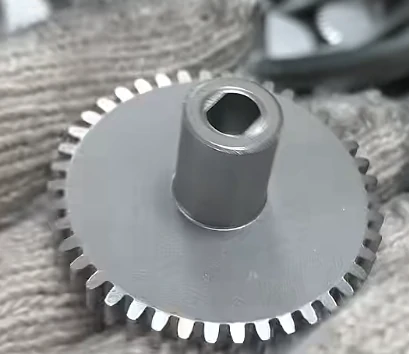
One of the most notable benefits is the ability to form near net shape parts directly during compaction. We produce complex structures such as gears, splines, and toothed profiles in a single pressing stage, minimizing the need for extensive secondary machining. This shortens production cycles and reduces overall manufacturing costs.
High Dimensional Accuracy
We achieve stable dimensional control in sintered parts across large production runs. We typically maintain standard tolerances within IT8–IT9, and we can further refine them to IT5–IT7 through sizing operations.This level of precision supports applications that require tight assembly fits and consistent batch-to-batch repeatability.
Self-Lubricating Performance
We control porosity as a key feature of the sintering process. After processing, we fill these pores with lubricating oil, allowing continuous self-lubrication during operation.This reduces friction, wear, and maintenance requirements. It is especially common in bushings and bearings used in mechanical systems and long-life powdered metal parts applications.
Green and Efficient Manufacturing
Powder metallurgy is widely recognized as an efficient and resource-conscious manufacturing method. Material usage can exceed 95%, with minimal scrap generation. In addition, energy consumption is lower than traditional melting-based processes, making it a more sustainable solution for high-volume production.
Additional Functional Advantages
Metal sintering also provides several performance-related benefits that enhance real-world application value:
- Capability to form complex geometries that are difficult to machine
- High repeatability in mass production environments
- Consistent material behavior in multiple directions (near-isotropic properties)
- Natural vibration and noise damping due to internal porosity
- Strong cost efficiency for large-scale manufacturing
- Reduced waste throughout the production cycle
These combined features make sintered components suitable for both structural and functional engineering uses.
Material Efficiency and Reliability
We retain a large proportion of the original metal powder in the final product, and we achieve utilization rates of up to 97% in many cases. This high efficiency reduces material loss while improving cost control.
In addition, sintered components offer strong production repeatability, making them reliable for continuous manufacturing. Their balanced combination of strength, controlled porosity, and structural stability ensures consistent performance in demanding industrial environments.
Industrial Value of Sintered Components
The overall advantages of sintering make it a practical choice for producing durable and cost-effective components across industries. Whether used in mechanical assemblies or precision systems, sintered parts deliver a balance of performance, consistency, and manufacturing efficiency.
For many engineering applications involving powder metal and powdered metal parts, the process remains a reliable solution for achieving both technical performance and economic efficiency in large-scale production.
What Are the Applications of Metal Sintering?
The metal sintering applications of the powder metal sintering process cover a wide range of industries due to its ability to produce precise, durable, and cost-efficient components. We commonly use sintered parts in high-volume manufacturing where we require consistency, wear resistance, and material efficiency.
Automotive Applications
The automotive industry is the largest application area for sintered components. The process is widely used in engines, transmissions, and braking systems due to its stability and near-net-shape capability.
Typical parts include gears, bushings, splines, housings, bearings, valve seats, oil pump rotors, camshaft phasers, timing sprockets, and ABS sensor rings. Components such as valve guides help maintain valve alignment and assist in heat transfer, while main bearing caps support crankshaft rotation and distribute combustion loads.
Transmission systems also rely heavily on powdered metal parts, including synchronizer hubs, sleeves, and blocking rings, which ensure accurate torque transfer and smooth gear engagement.
Motorcycle Applications
In motorcycles, sintered components are commonly found in shock absorber systems, including valves, pistons, and guiding elements. These parts benefit from the wear resistance and dimensional stability provided by the sintering process.
Industrial Machinery Applications
In industrial equipment and automation systems, sintered metal parts are used for sprockets, valve seats, clutches, pulleys, rotors, and structural components. Their high dimensional accuracy and stable performance make them suitable for continuous mechanical operation and load-bearing conditions.
Home Appliance Applications
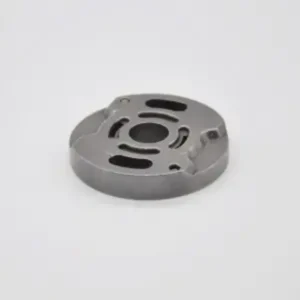
Sintered components are widely applied in household appliances due to their cost efficiency and suitability for mass production. Common examples include compressor valve plates, pistons, connecting rods, and oil-impregnated bushings used in fans, refrigerators, and washing machines.
Power Tools Applications
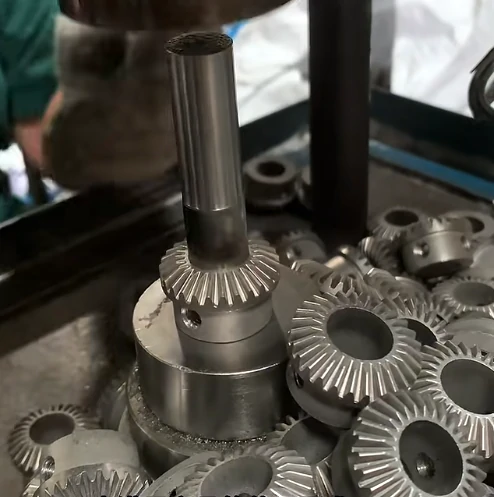
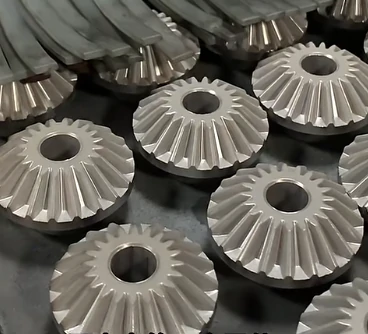
Power tools require components with high strength and wear resistance.We use the powder metal sintering process to manufacture gears such as bevel gears, helical gears, and planetary gears, which we commonly find in angle grinders, chainsaws, and nail guns.
These parts require tight tolerances and reliable torque transmission performance.
Filtration Systems
Sintered metal is also widely used in filtration applications. The controlled pore structure formed during sintering creates uniform porosity, allowing efficient filtration and stable flow control.
A typical example is the sintered metal filter, which offers micron-level filtration accuracy and long service life, making it suitable for gas and liquid filtration systems.
Broader Industrial and Technical Applications
Beyond traditional mechanical industries, sintered metal parts are used across multiple sectors:
- Automotive engineering:engine, braking, and transmission components
- Industrial machinery:robotic systems, automation equipment, and wear-resistant parts
- Home appliances:compressor systems, motors, and gear assemblies
- Aerospace:lightweight structural parts and bearing systems
- Medical applications:porous implants, surgical tools, and corrosion-resistant components
- Filtration and fluid control:porous metal structures for gas diffusion and pressure regulation
Materials such as stainless steel, bronze, titanium, nickel alloys, and aluminum are commonly used to meet different functional requirements.
Functional Applications of Metal Sintering
The metal sintering applications also extend into electrical, mechanical, and advanced manufacturing fields. Sintering can enhance material properties such as strength, conductivity, and controlled porosity.
It is widely used to produce electrical contacts, magnetic components, tungsten wires, self-lubricating bearings, and cutting tools. The process also supports additive manufacturing methods such as metal 3D printing, where complex geometries are built layer by layer with high precision and repeatability.
Compared with traditional melting processes, sintering generally requires lower energy consumption and allows better control over final part properties, making it suitable for efficient and sustainable manufacturing of industrial components, including various powdered metal parts used in precision engineering systems.
What Are Examples of Sintered Metal Parts in Industry?
Sintered metal technology is widely used to manufacture precision components with stable performance and repeatable quality. Through powder metallurgy, a variety of functional powdered metal parts and powder metal components can be produced efficiently in large volumes.
Typical application examples include:
- Bearings, commonly used in rotating machinery to reduce friction and wear
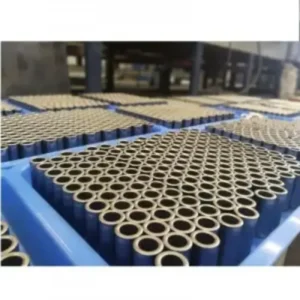
- Bushings, designed to support shafts and maintain alignment under load
- Frangible shotgun shells or “breaching rounds,” engineered to break apart under specific conditions
- Steam filters, used for filtration in high-temperature and high-pressure environments
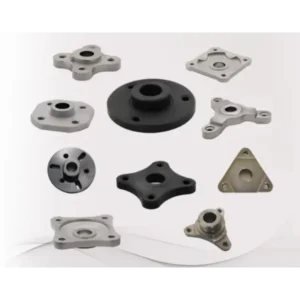
- Structural parts, applied in mechanical assemblies where strength and dimensional accuracy are required
These components benefit from sintering because the process allows complex geometries, controlled porosity, and consistent mechanical properties without excessive machining.
What Is the Difference Between Sintering and Melting?
Although both processes involve the application of heat, sintering and melting operate on completely different principles and lead to very different material behaviors, especially in the production of powdered metal parts and other powder metal components.
Temperature Range
Sintering takes place at a controlled temperature below the material’s melting point, typically around 60%–90% of that point. The metal remains in a solid state throughout the process, which helps preserve dimensional stability.
Melting, on the other hand, requires heating the metal beyond its melting point, turning it into a fully liquid state before it is later solidified into shape.
How Bonding Occurs
In sintering, particles bond through atomic diffusion and the formation of “necks” between adjacent powder particles. In some cases, a small amount of liquid phase may appear to assist densification, but the bulk structure remains solid.
Melting relies on a complete phase change. The material is fully liquefied and then bonds form again only after it cools and solidifies.
Because sintering does not require full liquefaction, it becomes especially effective for processing metals with high melting points, where full melting would be energy-intensive or impractical.
It is common to confuse the two processes, but their differences are fundamental. Melting transforms a solid into a liquid state, while sintering strengthens a compacted powder structure through controlled heat exposure without crossing the melting threshold. This controlled heating approach is what allows sintering to deliver improved material properties while maintaining shape integrity.
In powder metallurgy applications, sintering enables several key improvements, including:
- Removal of residual lubricants from compacted powder structures
- Reduction of surface oxides on metal particles
- Formation and growth of sintered necks, which reduce porosity and enhance mechanical strength
- Diffusion of alloying elements such as nickel, copper, and graphite throughout the structure
The last two mechanisms are particularly important because they directly influence density, strength, and overall performance of the final powder metal component.
Why Choose Welleshaft for Metal Sintering Services?
Welleshaft provides end-to-end powder metallurgy manufacturing solutions, helping customers reduce development risk, improve production consistency, and achieve cost-efficient mass production of sintered metal components.
With extensive engineering experience and stable production systems, we ensure every powder metal part meets strict dimensional and performance requirements for industrial applications.
Quality assurance is embedded throughout the entire production process to minimize defect risk and ensure long-term performance stability.
Our inspection system includes
- Density and porosity control for structural reliability
- Hardness testing to verify mechanical strength
- Dimensional inspection for tight-tolerance applications
- Metallographic analysis for microstructure consistency
This ensures every sintered component meets engineering-grade quality standards before shipment.
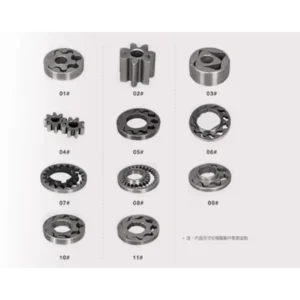
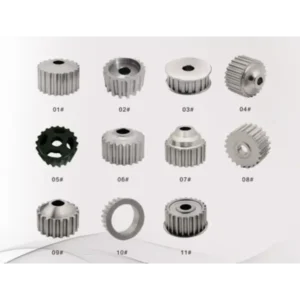
We offer a wide range of standard sintered components, including oil pump rotors, gears, shock absorber parts, timing sprockets, and water pump pulleys.
Many standard designs are available without additional tooling costs, helping customers reduce upfront investment and shorten development cycles.
Powder metallurgy is a highly efficient manufacturing method for high-volume production, offering fast cycle times, stable dimensional accuracy, and excellent cost control.
What Are the Most Common FAQs About Metal Sintering?
What is Sintered Steel?
Sintered steel is a solid material formed through powder metallurgy, where steel powder is first compacted under high pressure and then heated in a controlled atmosphere at a temperature below its melting point.
During the sintering stage, individual metal particles bond through atomic diffusion, gradually forming a cohesive structure. This process allows for a certain level of controlled porosity while still achieving sufficient density and strength. It is widely used for producing powdered metal parts and other precision powder metal components that require complex shapes and consistent tolerances.
One of the main advantages of sintered steel is its ability to produce near-net-shape parts with minimal machining. This significantly reduces material waste and supports efficient mass production, making it suitable for high-volume industrial applications.
What are Sintering Atmospheres?
The atmosphere inside a sintering furnace plays a critical role in determining the final quality of the product. It directly influences mechanical performance, surface condition, and corrosion resistance of sintered components.
Key functions of the sintering atmosphere include:
- Preventing oxygen from entering the furnace, which helps avoid oxidation of the metal powder
- Supporting the removal of binders and lubricants used during powder compaction
- Reducing surface oxides on compacted particles to improve bonding efficiency
- Regulating carbon levels within the material to achieve desired mechanical properties
Careful control of the furnace atmosphere ensures stable microstructure development and consistent performance in sintered steel and related powder metal products.
This blog was provided by the Welleshaft Engineering Team, led by Mr. Xu, a senior manufacturing engineer with over 10 years of experience in powder metallurgy and precision sintered component development. Welleshaft focuses on delivering reliable powder metal solutions through advanced sintering processes, strict quality control, and stable mass production capability for industrial applications worldwide.
 Français de Belgique
  English
  Português do Brasil
  Deutsch (Österreich)
  Deutsch (Schweiz)
  English (UK)
  English (Australia)
  English (New Zealand)
  Deutsch
  Français du Canada
  Français
  Italiano
  English (South Africa)
  Português
  Español
  Español de México
  Español de Perú
  Español de Colombia
  العربية
  日本語
日本語  Русский
  한국어
한국어  Tiếng Việt
  ไทย
ไทย
Avis
Il n’y a pas encore d’avis.