
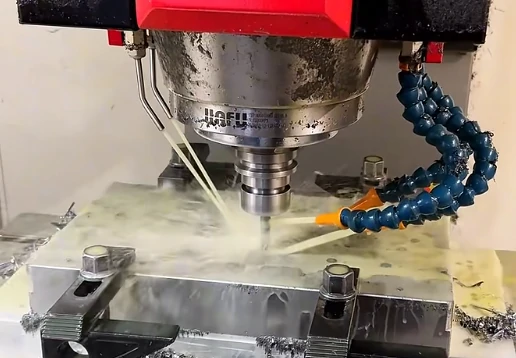
CNC Machining With Steel: Materials, Applications, and Custom Manufacturing Solutions
What Is CNC Machining With Steel?
Manufacturers across industries rely on CNC Machining With Steel for its high strength, durability, and wide availability, while CNC processes ensure consistent precision, fast turnaround, and reliable repeatability.
Modern CNC technology leverages advanced computerized controls and precision cutting tools to produce components with tight tolerances and stable quality across large production runs. This makes it highly suitable for both complex geometries and high-volume manufacturing.
Modern CNC capabilities, including milling, turning, and surface finishing, support workflows from prototyping to mass production, enabling manufacturers to produce precise, durable parts from steel and other materials like aluminum, brass, bronze, copper, and plastics.
Why Steel Is Used for CNC Machining?
Manufacturers widely recognize steel for its strong mechanical properties and toughness across many alloy grades. Although machining speeds are generally slower than with materials like brass or aluminum, steel provides performance advantages that make it essential in applications where reliability and strength take priority over cycle time.
In the context of Why Steel Is Used for CNC Machining, its key advantages include:
- High strength and load-bearing capability
- Excellent resistance to wear and impact
- Stable dimensional performance under heat and mechanical stress
- A wide range of alloy options tailored to specific engineering requirements
- Long service life even in demanding or harsh environments
Manufacturers widely use steel for its strength, durability, machinability, and adaptability, applying it across low-carbon, alloy, and stainless grades for parts exposed to mechanical loads, temperature changes, and corrosive environments.
When Steel Is the Right Material Choice?
Engineers and manufacturers frequently choose steel as an alternative to aluminum in situations where long-term performance and structural integrity are essential. It is particularly suitable for applications that involve continuous stress, harsh operating conditions, or environments where component failure could lead to significant consequences.
In the context of “When Steel Is the Right Material Choice,” engineers and manufacturers typically select steel when parts must endure:
- High static or dynamic load
- Repeated impact or fatigue cycles
- Abrasion or sliding wear
- Elevated temperatures
- Extended service life requirements
These properties make steel a reliable option for demanding, high-duty-cycle components and mission-critical applications where strength, durability, and consistent performance are key considerations.
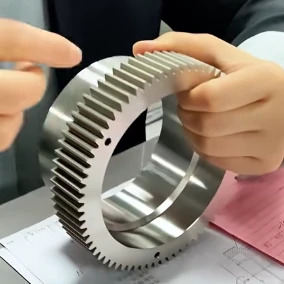
How Steel Machining Ensures Strength, Accuracy & Reliability?
In the context of Steel Machining Built for Strength, Accuracy & Reliability, manufacturers focus on achieving tight dimensional tolerances and consistent output across production batches. CNC processes enable the fabrication of steel components that meet strict design requirements while maintaining repeatability and structural integrity.
To support these outcomes, steel machining workflows typically emphasize controlled process parameters, thorough engineering review, and quality assurance at every stage—from initial design validation to final production. This approach helps ensure that finished parts deliver reliable performance, maintain dimensional accuracy, and withstand long-term operational demands in various industrial environments.
What Are Benefits of Alloy Steel CNC Machined Parts?
- Stainless Steel Corrosion resistance.Alloy and stainless variants provide improved resistance to rust and environmental degradation, making them suitable for demanding operating conditions.
- Steel alloys can be efficiently processed with optimized CNC parameters, enabling higher machining productivity.
- A lower cost than denser metals.Compared to certain high-density materials, alloy steel offers a more economical balance between cost and mechanical performance.
- Minimal wear on cutting tools.Properly selected steel grades can reduce excessive tool degradation, helping maintain consistent machining quality over time.
- Smooth surface finishes.CNC machining of alloy steel allows for refined surface quality, reducing the need for extensive post-processing in many applications.
What Are Advantages of Machining Tool Steel Parts?
Tool steels are a specialized category of carbon and alloy steels designed for manufacturing tools and precision components such as cutters, reamers, drill bits, and dies used in shaping metals, plastics, and wood. Manufacturers produce these materials through controlled melting and heat treatment to achieve the mechanical properties required for high-performance tooling and industrial applications. In machining tool steel parts, engineers value them for their balanced hardness, durability, and resistance to deformation under demanding conditions.
Key characteristics include:
- High hardness
- Strong abrasion resistance
- Excellent ability to maintain shape under load
- Superior wear resistance
- Enhanced toughness
- Capability to withstand heavy mechanical loads
These properties make tool steel a reliable choice for components that must endure repeated stress, friction, and impact while maintaining precision and structural integrity over extended periods of use.
What Are Tool Steel Alloys?
In machining and tooling applications, continuous motion and repeated contact cause wear over time. Engineers design tool steel alloys with carbide-forming elements to increase hardness, improve wear resistance, and reduce cracking, chipping, and failure under stress.
Manufacturers develop different grades of tool steel to meet specific performance requirements in high-speed, hot-work, and cold-work environments. Each alloy offers distinct characteristics that make it suitable for particular manufacturing processes and operational conditions.
A2 Tool Steel
An air-hardening grade known for its balanced toughness and strong dimensional stability.
D2 Tool Steel
This air-hardening alloy contains high levels of carbon and chromium, resulting in excellent wear resistance and deep hardening capability. It experiences minimal dimensional change after heat treatment and is widely applied in high-volume production and cold-work tooling, including cutting blades, forming dies, and gauges.
O1 Tool Steel
An oil-hardening grade recognized for its ability to retain shape with minimal distortion. With improved abrasion resistance due to its alloy composition, it is often used in applications requiring a combination of hardness, strength, and wear resistance, such as dies, gauges, and precision forming tools.
S7 Tool Steel
Designed for high-impact and shock-resistant applications, this air- or oil-hardening steel maintains strength even under repeated stress and moderate heat. Its toughness makes it suitable for tools and components exposed to удар loads, including punches, chisels, shear blades, and dies used in forming and breaking operations.
DC53 Tool Steel
A cold-work die steel offering enhanced toughness, fatigue resistance, and wear performance. It is commonly used in tooling applications where resistance to cracking and chipping is critical, such as punches, molds, rolling dies, and forming dies.
H13 Tool Steel
A chromium-based hot-work tool steel that per
forms well under elevated temperatures. It provides strong resistance to thermal fatigue and cracking, while remaining relatively machinable. This makes it suitable for applications involving repeated heating and cooling cycles, such as molds and hot forming tools.
Tool steel materials are available in multiple stock forms, including round bars, flat bars, square bars, precision-ground stock, and plates. This flexibility allows manufacturers to machine Tool Steel Alloys into a wide variety of high-performance components tailored to specific industrial requirements and production needs.
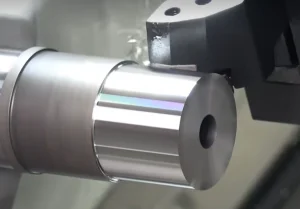
What Are Machining Applications for Low- and High-Carbon CNC Machined Parts?
In manufacturing, different grades of steel are selected based on the balance between machinability and mechanical performance. Low-carbon steel is often chosen for large-scale production due to its easier cutting characteristics and faster machining cycles. This makes it suitable for high-volume output where efficiency and consistency are critical. In contrast, medium- and high-carbon steels are typically used in applications that demand greater strength, hardness, and structural integrity, even though they may require more controlled machining conditions and slower processing speeds.
The applications of Machining Applications for Low- and High-Carbon CNC Machined Parts span a wide range of industries, including agriculture, automotive, and heavy equipment sectors, where both durability and reliability are essential.
Typical components manufactured from these materials include:
- High-strength screws and bolts
- Bearings
- Spindles
- Tie rods
- Anchor pins
- Bushings
- Axles
These parts benefit from the adaptability of carbon steel grades, allowing manufacturers to select the appropriate material composition based on load requirements, wear resistance, and operating environment.
Which Industries Use Tool Steel Parts?
Tool steels are widely applied across multiple sectors due to their high strength, wear resistance, and ability to maintain precise dimensions under demanding conditions. These characteristics make them suitable for manufacturing components used in both heavy-duty equipment and high-precision applications. These industries rely on tool steel mainly for high wear resistance and dimensional stability, especially in environments where consistent performance and long service life are critical.
In the context of Industries for Tool Steel Parts, these materials are commonly integrated into systems and products that require durability and consistent performance over time. They support the production of everyday industrial and consumer goods, as well as specialized components used in critical environments.
Typical industries that utilize tool steel components include:
1.Oil and gas
2.Petrochemicals
3.Heavy equipment
4.Catering
5.Food processing
6.Medical
7.Agriculture
8.Automotive
9.Architectural
10.Construction
11.Electronics
12.Renewable energy
13.Mining
14.Furniture
Across these sectors, tool steel parts are valued for their ability to withstand repetitive stress, friction, and operational wear while maintaining structural integrity and precision, making them suitable for both high-volume manufacturing and specialized engineering applications.
What Is Welleshaft Steel Processing Service Capability?
At Welleshaft, steel machining solutions are developed to support OEMs and manufacturers that require reliable performance, structural integrity, and consistent precision. Our Welleshaft steel processing service capability covers a wide range of industries where components must perform under demanding operating conditions.
Application industries include
- Industrial equipment – shafts, housings, and wear-resistant parts
- Automotive & transportation – structural and functional mechanical components
- Defense-related and heavy-duty applications – precision assemblies and critical parts
- Tooling & fixtures – hardened tools and high-strength fixtures
- Energy & heavy machinery – components designed for extreme environments
Each project undergoes a structured evaluation process, including material selection, tolerance analysis, and manufacturability assessment prior to production to ensure stable and efficient machining outcomes.
Selecting the appropriate steel grade is essential to achieving both performance and machinability. Commonly processed materials include:
- 1018 / 1020 – general-purpose low-carbon steels
- 4140 / 4340 – high-strength alloy steels for load-bearing applications
- 12L14 – free-machining steel optimized for efficiency and cost-effectiveness
- 1215 (non-leaded) – machinable steel without lead content
- Tool steels – for wear-resistant and heat-treated applications
- Stainless steels – corrosion-resistant grades for demanding environments
If material selection is uncertain, engineering support can evaluate requirements and recommend suitable steel grades based on application needs.
Machining steel requires control of heat, cutting forces, and tool wear, especially with hardened or high-strength alloys. CNC processes are configured to maintain stability and precision while minimizing distortion and tool wear.
Core capabilities include
- CNC milling and turning of steel components
- Tight-tolerance machining for critical parts
- Complex geometries and detailed features
- Prototype, low-volume, and high-volume production runs
- Coordination of heat treatment and secondary processes
All production follows documented procedures to ensure repeatability from initial samples through full-scale manufacturing.
Additional service strengths
- Multi-material capability: processing of steels such as 1018, 1045, 4140, 4340, 8620, 12L14, and stainless steel grades
- Precision tolerance control supported by in-process inspection systems
- Heat treatment and surface finishing coordination (hardening, tempering, nitriding, plating) via qualified partners
- Scalable production from prototypes to mass manufacturing with full traceability
Typical machined components include shafts, axles, spindles, gearbox elements, structural supports, brackets, and hardened tooling parts. Each program is tailored to meet specific dimensional, mechanical, and performance requirements across varying production volumes.
Quality is integrated throughout the machining workflow rather than relying solely on final inspection. A structured quality management system ensures consistency and traceability at every stage.
Quality practices include
- Defined inspection and machining procedures
- In-process and final quality checks
- Material and process traceability where required
- Continuous improvement driven by production data
- Close collaboration with engineering and procurement teams
Manufacturing processes are aligned with recognized quality standards to ensure compliance and reliability for international projects. Documentation such as material certificates and quality records is maintained to support audits and export requirements.
Manufacturing and production flexibility
Steel components are produced from cast, forged, and bar stock materials, covering a broad size range from small precision parts to large industrial components. Production systems combine automated machining cells with CNC equipment and production-grade fixturing to maintain accuracy and repeatability.
For long-term supply programs, contract manufacturing streamlines workflows from design optimization to final inspection, ensuring stable supply chains and consistent part quality.
Why Choose Welleshaft for CNC Steel Parts?
Steel machining requires a combination of technical expertise, controlled processes, and consistent execution. At welleshaft in China, support is provided to OEMs that need robust, load-bearing components designed for durability and long-term performance under demanding operating conditions.
Clients select our services because of several key advantages:
- Extensive experience in machining a wide range of steel alloys
- Direct and efficient communication with experienced machining engineers
- Stable product quality with reliable and on-time delivery performance
- Scalable production capacity to support projects from initial prototypes to mass production
From early-stage design evaluation through to full-scale manufacturing, guidance is provided to ensure steel components meet real-world application requirements and maintain consistent performance throughout their service life.
Advanced Equipment & Manufacturing Capability
Multi-axis CNC machining centers from brands such as HAAS and DOOSAN are utilized to ensure repeatability, precision, and stable production output.
Flexible Production Volumes
Manufacturing capacity supports batch sizes from small runs to large orders (100 to 50,000+ units) based on project needs.</p>
Whether for complex components, precision assemblies, or long-term contract manufacturing, Welleshaft in China delivers integrated machining solutions backed by engineering expertise and controlled processes.
Tool steel and other engineering materials are widely used, but consistent results require strong process control. Partnering with an experienced machining provider helps reduce risks, avoid delays, and maintain cost efficiency.
Our approach combines engineering consultation with precision CNC machining to meet performance, accuracy, service life, and safety requirements.
With advanced technologies and skilled teams, parts are produced to tight tolerances and assembled efficiently when needed. Materials are sourced from qualified suppliers, with incoming inspection verifying compliance before production. Multi-stage quality control ensures each part meets specifications prior to shipment.
For organizations seeking reliable CNC steel parts manufacturing in China, welleshaft CNC Steel Parts services provide the capability, consistency, and process control needed to support demanding industrial applications.
FAQs
Is steel suitable for tight-tolerance CNC machining?
Yes. Steel is well-suited for precision machining when processed with appropriate tooling and parameters. It can achieve tight tolerances while maintaining dimensional stability, even under mechanical load and operational stress.
What makes steel machining more challenging than aluminum?
Compared to aluminum, steel typically requires more controlled machining conditions. It generates higher cutting temperatures, accelerates tool wear, and requires slower feed rates with optimized cutting strategies to maintain accuracy and surface quality.
Can you machine hardened or heat-treated steel?
Yes. Hardened and heat-treated steels can be machined using specialized techniques and tooling. In many cases, machining is coordinated with post-heat treatment processes to achieve the desired mechanical properties and final dimensions.
Do you provide design for manufacturability (DFM) feedback?
Yes. Design drawings are reviewed to improve manufacturability, machining efficiency, reduce risks, and optimize cost while meeting functional requirements.
Welleshaft is a China-based CNC machining manufacturerspecializing in custom steel components for OEM and industrial applications.With expertise in material selection, tight-tolerance machining, and scalable production, we deliver reliable quality, engineering support, and consistent on-time delivery from prototype to mass production.

 Español de Perú
  English
  Português do Brasil
  Deutsch (Österreich)
  Deutsch (Schweiz)
  English (UK)
  English (Australia)
  English (New Zealand)
  Deutsch
  Français du Canada
  Français
  Français de Belgique
  Italiano
  English (South Africa)
  Português
  Español
  Español de México
  Español de Colombia
  العربية
  日本語
日本語  Русский
  한국어
한국어  Tiếng Việt
  ไทย
ไทย