

How CNC Grinding Services Enhance Precision and Finish Complex Parts in welleshaft Manufacturing?
What is CNC grinding and when should CNC grinding be used in precision manufacturing?
CNC grinding is a precision machining process controlled by a computer numerical control (CNC) system, where a rotating abrasive wheel or belt gradually removes material from a workpiece. Unlike processes focused on high material removal rates, Precision CNC Grinding Services emphasize geometric accuracy—including size, roundness, and flatness—as well as surface quality, ensuring smooth finishes, minimal damage, and reliable part performance.
The essence of CNC grinding lies in using a carefully managed grinding operation to shape and refine the workpiece. Its distinct advantage is automation: every movement—whether positioning the wheel, adjusting the feed, or following a specific tool path—is directed by the CNC system. The abrasive wheel itself, made from high-precision materials, ensures consistent, repeatable cutting, even for components with intricate geometries. In this way, CNC grinding blends computer-controlled precision with the mechanical force of the grinding wheel, producing parts that meet stringent quality and performance standards.
As a subtractive manufacturing method, CNC grinding is particularly effective for achieving tight tolerances and exceptional surface finishes, which are difficult to obtain through milling or turning alone. It is especially valuable when working with hardened materials like steel or ceramics, where conventional cutting tools wear out quickly.
Typically, CNC grinding is applied after a part has already been roughly shaped by milling or turning. It becomes essential when components require strict tolerances or superior surface finishes, particularly after heat treatment or in situations demanding precise assembly. Examples include bearing seats, precision holes, or sealing surfaces, where both shape accuracy and surface smoothness directly impact functional performance.
Understanding CNC grinding means recognizing when the process is necessary: whenever high precision, repeatable surface quality, or tight dimensional control is required—conditions that standard machining may not reliably achieve.
CNC grinding vs. milling/turning for finishing work
A common question in sourcing and precision manufacturing isn’t just whether a part can be made accurate, but whether CNC grinding is the optimal final step—or if the same results can be achieved with CNC milling or turning, combined with careful inspection. The following table provides guidance for selecting the right finishing process for typical applications:
| Process | Best Applications | Typical Finishing Use Cases | Trade-offs & Considerations |
| CNC Milling | Prismatic components, pockets, complex 3D shapes | Finishing flat faces, profiles, or moderate surface finish requirements | Possible tool deflection and cutter marks; challenging flatness/parallelism on thin walls; heat treatment may shift reference points after milling |
| CNC Turning | Rotationally symmetric parts | Finishing diameters and end faces prior to heat treatment or for non-critical tolerances | Roundness and taper depend on machine rigidity and tool wear; post-heat-treatment dimensional changes can affect fits |
| CNC Grinding (surface, cylindrical, centerless) | Final sizing, geometric control, precision surfaces | High-precision fits, bearing seats, tight runout, flatness/parallelism, controlled surface finishes on hardened metals | Requires additional setup and inspection; improper parameters or coolant management can cause burn or distortion; stock allowance must be planned in advance |
Many engineers follow a simple rule: use Precision CNC Grinding Services for critical fit, sealing, fatigue resistance, or smooth-motion components—such as bearings, guideways, spools, shafts, or valves—to reduce risk. For parts where complex geometry matters more than surface finish, CNC milling or turning usually serves as the final process.
Using Precision CNC Grinding Services versus milling or turning ensures parts meet functional requirements while optimizing production efficiency.
Key CNC grinding outcomes: tight tolerances + surface finish requirements
Buyers typically request CNC grinding when one or more critical outcomes are essential to part function:
- Precision geometry after heat treatment: Many alloys experience dimensional changes during hardening. Even parts milled or turned accurately in the soft state can shift in size or straightness after heat treatment. CNC grinding provides a controlled method to restore critical dimensions and align the part with the intended datum scheme.
- Surface finish linked to wear, sealing, or friction: The texture of a surface influences lubrication, leak prevention, and contact stress. Often, surface finish specifications are expressed in standardized roughness metrics, such as Ra, in accordance with surface texture standards. CNC grinding allows these requirements to be met consistently.
- Surface integrity and durability: A well-controlled grinding process enhances surface integrity, avoiding thermal damage, excessive residual stresses, or microcracks. Poorly managed grinding, however, can cause burns or tensile residual stresses that compromise fatigue life. This highlights the importance of process monitoring and inspection over simply relying on the type of machine.
CNC grinding smooths minor tool marks and creates a uniform surface texture superior to most conventional cutting methods. Because it concentrates energy at the contact zone, proper thermal management is essential.
These outcomes help parts achieve tight tolerances and exact surface finishes, especially for critical components such as bearings, sealing surfaces, and precision mechanical assemblies.
What is CNC grinding used for?
CNC grinding is a precision machining method that employs rotating abrasive tools to carefully remove small amounts of material from a workpiece. Precision CNC Grinding Services are primarily applied when components demand extremely tight tolerances, consistent surface finish, or precise geometric control, particularly after heat treatment.
This process excels in applications where roundness, taper, or runout requirements exceed what can be reliably achieved with milling or turning alone. Typical uses include polishing bearing seats, finishing precision holes, refining crankshafts, or preparing flat reference surfaces, where the geometry directly impacts part performance.
Common targets for CNC grinding include:
- Bearing fits on shafts
- Precision holes and bores
- Flat reference or datum surfaces
- Parts made from hardened steel or other high-strength metals
Precision CNC Grinding Services achieve precise dimensions and uniform surface smoothness—sometimes down to 0.0002 inches—beyond what milling or turning can deliver. They also correct minor deformations from prior machining or heat treatment and prepare parts for subsequent precision processes.
By keeping the workpiece stable, these services deliver repeatable accuracy, offering a cost-effective and reliable solution for applications where quality and functionality are critical. Industries that benefit most include automotive, medical devices, tool and die, and high-precision mechanical components.
Where grinding fits in the production workflow
In most manufacturing setups, grinding serves as the critical step that finalizes a part’s precise geometry after initial shaping processes. Typically, parts are first roughly formed through milling or turning, then may undergo stress relief or heat treatment depending on material requirements. Once these upstream steps are complete, the part proceeds to the appropriate grinding operation—whether surface, cylindrical (OD/ID), centerless, or creep-feed grinding—to achieve the exact dimensions, flatness, or roundness required.
After grinding, comprehensive inspection is performed using tools such as CMMs, roundness gauges, profilometers, or in-process measurement systems to verify that tolerances and surface finish meet specifications. Only then does the workflow move to downstream processes, including coating, assembly, or final quality assurance checks.
The essential role of grinding in the workflow is to bridge metallurgical considerations—particularly the effects of heat treatment—with metrology, ensuring that the part satisfies its final acceptance criteria. Without clearly defined datums, stock allowances, or inspection methods, quoting and production can slow down, and the likelihood of errors or rework rises.
Understanding where grinding fits in the production workflow helps manufacturers plan efficient sequences, maintain high precision, and reduce risk in complex or heat-treated components.
Why is CNC grinding so effective for high-precision parts and tight tolerances?
CNC grinding stands out in precision manufacturing for several compelling reasons:
Exceptional Accuracy
Modern CNC grinding machines can achieve tolerances at the micron level, making them ideal for components where every fraction of a millimeter matters.
High Repeatability
Once the CNC program is configured, the system can produce multiple identical parts with consistent quality, minimizing variation and reducing inspection overhead.
Operational Flexibility
Advanced grinding machines can perform a variety of operations—such as OD, ID, and surface grinding—within a single setup, streamlining production and reducing handling.
Seamless Automation Integration
CNC grinders are designed to work with automated loaders, tool changers, and in-process measurement systems, enabling real-time feedback and further improving efficiency.
These advantages explain why CNC grinding is so effective in applications requiring tight tolerances, consistent surface finishes, and efficient production of high-precision parts.
Why does CNC grinding matter more than ever in modern manufacturing?
In today’s manufacturing environment, where tighter tolerances, accelerated production schedules, and automation dominate, Precision CNC Grinding Services have become more critical than ever. They are no longer just a finishing step—it is a strategic process that helps manufacturers reduce cycle times while ensuring high-quality, precision parts.
Modern technologies are enhancing the effectiveness and accessibility of CNC grinding. Tools such as conversational programming interfaces (like iGrind), automatic tool changers, and AI-driven parameter optimization make it possible to achieve precise, consistent results even for operators without extensive grinding experience.
These advancements demonstrate why CNC grinding matters more than ever: it combines speed, accuracy, and automation to meet the increasingly demanding requirements of today’s production workflows.
What are the main types and processes of CNC grinding and CNC grinding machines?
CNC grinding is not a one-size-fits-all process. The choice of grinding type, machine, and technique depends on part geometry, material properties, and required surface finish. Modern workshops often employ multiple grinding methods to meet precise dimensional and surface requirements.
External Cylindrical (OD) Grinding
When the outer surface of cylindrical parts requires precise shaping or finishing, OD (outer diameter) grinding is applied. The workpiece rotates as the grinding wheel moves along or towards the surface. This method is ideal for shafts, rollers, and similar components that demand strict diameter control and surface integrity.
Internal (ID) Grinding
ID grinding targets the inner surfaces of hollow components, such as bushings or bearing races. The grinding wheel enters the bore and carefully removes material to achieve high-precision diameters and smooth finishes. This process is commonly used for parts where roundness, concentricity, and internal surface finish are critical.
Universal Internal Grinding
Universal internal grinders offer flexibility to machine a variety of internal geometries, including steps, tapers, or multiple diameters within a single workpiece. This makes them well-suited for parts with complex internal profiles that cannot be achieved with standard ID grinding alone.
Surface Grinding
Surface grinders produce flat, smooth surfaces on components such as toolboards, reference planes, and precision fixtures. Both horizontal and vertical spindle configurations are available, allowing for control of parallelism, flatness, and surface finish across large or irregular parts.
Cylindrical Grinding
Cylindrical grinding machines are used for shafts, rods, and tubes, capable of handling both OD and ID surfaces. This method is widely used in automotive, aerospace, and industrial applications, providing precise diameter control, roundness, and taper correction.
Centerless (Heartless) Grinding
Centerless grinding eliminates the need for centers or chucks by supporting the workpiece between the grinding wheel and the regulating wheel. It is highly effective for high-volume production of cylindrical parts, such as bearings, pins, and rollers, where consistent diameter and surface finish are required across many pieces.
Vertical Grinding
Vertical grinders position the spindle vertically with a rotating table. Gravity assists in stabilizing the workpiece, making this configuration ideal for large, heavy parts or grinding end faces, ID, and OD surfaces with minimal deflection.
Fixture Grinding
Fixture grinding is designed for precision holes, complex contours, and intricate geometries, often required in tooling, molds, and dies. This method achieves micrometer-level accuracy on critical surfaces.
Specialized CNC Grinding
Some applications demand highly specialized machines, such as gear grinders or thread grinders, which can handle specific shapes with extremely tight tolerances. These machines combine unique wheel geometries and precise CNC control for precision-critical parts.
Hybrid and Mixed Methods
Advanced manufacturing sometimes integrates grinding with complementary processes, such as electrical discharge machining (EDM). Hybrid setups reduce setup time, improve accuracy, and allow machining of complex geometries in a single operation, enhancing both efficiency and part functionality.
What CNC grinding services and grinding processes can manufacturers buy today?
CNC grinding services encompass a variety of specialized methods, selected based on part geometry, critical surfaces, and how the component will be held and referenced during machining.
Surface Grinding for Flatness and Parallelism
Surface grinding focuses on achieving precise flat faces and parallelism. Precision CNC Grinding Services are commonly used for tooling, machine ways, fixtures, or any component requiring tightly controlled surfaces. Early planning ensures proper fixturing without distortion and correct alignment with the part’s datum scheme. Thin plates or long, slender parts may “relax” once unclamped, affecting flatness. During grinding, the abrasive wheel removes material from a securely held workpiece using magnetic chucks, clamps, or fixtures. Key factors affecting feasibility include material removal amount, interrupted cuts, and special workholding needs, which influence cycle time and the risk of thermal damage.
Cylindrical Grinding (OD/ID) for Shafts, Bores, and Bearing Fits
Cylindrical grinding precisely controls round parts and is divided into:
- OD (outside diameter) grindingfor external surfaces such as shafts, journals, and bearing seats, typically driven by needs for bearing fits, runout control, and smooth finishes on hardened metals.
- ID (internal diameter) grindingfor bores that must maintain roundness, straightness, and stability for press fits, slip fits, or sealing functions.
For hardened materials, grinding offers better control of taper and roundness when fixturing is correct. Grinding the functional reference first—such as a bore—helps maintain OD concentricity.
| Type | Features Ground | Typical Drivers | Considerations |
| OD Cylindrical | External surfaces (shafts, journals, tapers) | Bearing fits, runout control | Straightness, fixturing, slenderness ratio, shoulder access |
| ID Cylindrical | Internal bores and features | Precision fits, concentricity, sealing | Wheel access, bore depth-to-diameter ratio, rigidity, coolant delivery, measurement access |
Centerless Grinding for High-Volume Round Parts
Centerless grinding is ideal for high-volume production of cylindrical parts without using centers. Precision CNC Grinding Services support parts between wheels rather than clamped setups, providing consistent geometry for components like pins, bushings, and small shafts. While high throughput is achievable once the process is stabilized, setup and optimization are sensitive to part geometry, lead-in/out conditions, and feed methods. Features like grooves, large shoulders, or thin sections may require special adjustments. Compared to other methods, Precision CNC Grinding Services excel in productivity, whereas cylindrical OD/ID grinding offers moderate throughput, and surface grinding throughput depends heavily on surface area and setup complexity.
Specialty Processes: Creep-Feed and Hybrid Approaches</strong>
Two advanced methods are increasingly requested:
- Creep-feed grindingenables deeper cuts at slower feeds, ideal for complex slots or profiles in hard metals. Success depends on wheel selection, dressing strategy, and thermal control.
- Hybrid routes with additive manufacturingcombine near-net shapes built additively with CNC grinding on critical surfaces. This allows complex shapes from additive processes while achieving precise datums, fits, and surface finishes. Effective implementation requires careful planning of stock allowance and datum locations to avoid chasing unstable geometry.
In all cases, feasibility goes beyond “Can it be ground?” The true question is whether the shop can reliably manage heat, measurement, and surface control on the areas that determine part function.
What precision, tolerances, and surface finish specifications should you define for CNC grinding?
When sourcing CNC grinding services, part precision depends on how clearly the drawing and inspection plan define requirements. Grinding achieves high accuracy only when specifications match the process and measurement methods.
Key Specifications Buyers Should Define
A clear specification checklist helps prevent ambiguity and quoting delays. According to ASME standards, the following items are critical:
| Item to Define | How It Guides Quoting & Process Planning | Why It Matters |
| GD&T callouts on critical features | Specifies flatness, parallelism, cylindricity, runout, or positional tolerances | Geometry control depends on how the part is fixtured and measured during grinding |
| Surface finish parameter & location | Ra or other roughness metrics with precise surface identification | Surface quality is influenced by wheel selection, dressing, feed, and spark-out; the shop needs clear targets |
| Datum strategy (primary/secondary/tertiary) | Datums linked to functional surfaces in assembly | Grinding references real surfaces; unclear datums can cause rework loops |
| Material condition | Heat treatment, hardness, coating notes | Grindability and risk of thermal damage vary with material properties |
| Stock allowance | Sufficient material remaining for grinding cleanup | Too little stock may lead to incomplete removal of scale or distortion errors |
| Inspection plan | Methods to verify size, geometry, and roughness | Determines fixturing, process choice, and measurement strategy |
Aligning your drawings with GD&T and surface texture standards helps avoid disputes over terms like “flat” or “smooth” after parts are delivered.
How Precise Can CNC Grinding Be?
CNC grinding is applied when parts require tight tolerances and controlled surface finishes, especially following heat treatment. The achievable precision is influenced by the grinding method, part rigidity, wheel choice, and measurement approach. Precision is not a single number; it is the outcome of a system that includes datums, stock allowance, and metrology.
Inspection and Metrology for Grinding
Acceptance checks often combine size/form verification with surface finish assessment:
- Profilometersmeasure surface roughness (Ra) on specified surfaces.
- CMMsverify geometry relative to datums; roundness and cylindricity may require specialized instruments.
- In-process gaugingcan adjust the grind in real time to reduce variation, aligned with tolerance requirements.
The workflow typically starts with machine setup, followed by in-process measurements and parameter adjustments, then post-grind inspection using CMMs, form gauges, or profilometers. Parts are then accepted, sorted, or reworked depending on the inspection results.
Common Tolerance and Surface Finish Issues
Failures are often more than simple size errors—they usually involve geometry, surface integrity, or thermal effects. Typical problems and mitigations include:
| Issue | Root Cause | Mitigation |
| Size drift during production | Wheel wear, thermal expansion, unstable fixturing | Controlled dressing, in-process gauging, stable coolant, warm-up routines |
| Poor roundness/taper | Part deflection, insufficient support, wheel condition | Adjust fixturing, parameter tuning, verify centers, dress wheel properly |
| Flatness/parallelism fails after unclamping | Internal stresses, thin geometry, clamping distortion | Early stress relief, redesigned fixtures, stepwise grinding, balanced stock removal |
| Surface finish too rough | Incorrect wheel grit/bond, dressing method, aggressive feed | Adjust wheel selection, dressing, and feed parameters |
| Grinding burn or surface damage | Excessive heat, poor coolant, dull wheel | Improve coolant delivery, adjust energy per pass, optimize wheel and dress, verify material state |
Buyers can prevent most issues by designing parts for grindability and aligning inspection methods with specified tolerances and surface finishes.
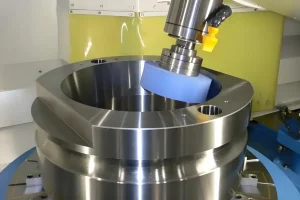
What materials can be processed with CNC grinding and how does part design affect grindability?
What Materials Can Be Processed with CNC Grinding?
CNC grinding excels at machining challenging materials that cause tool wear, heat issues, or poor finishes in other methods.
- Metals: Both ferrous and non-ferrous metals are widely ground. Hardened steels, stainless steels, titanium alloys, and aluminum are common in aerospace, automotive, and high-precision parts. Superalloys like Inconelare also processed efficiently.
- Ceramics: Advanced, hard, and brittle ceramics are machined for aerospace, biomedical, and semiconductor applications without cracking, yielding smooth surfaces for seals, sensors, and substrates.
- Plastics: High-performance plastics like PEEK, PTFE, and acrylicsare ground with precision without heat-induced deformation, ideal for medical devices and electronics.
- Composites: Fiber-reinforced composites (carbon fiber, fiberglass) are ground with accurate, clean edges for lightweight, high-strength aerospace and automotive components.
- Precious Metals: Gold, silver, platinum, and other valuable materials are processed with minimal waste, maintaining precision in electronics, medical, and luxury applications.
CNC grinding is ideal for components that must resist stress, heat, wear, or corrosion.
Materials & Part Design for Grindability
CNC grinding depends not only on machine capability but also on how the material responds to abrasive contact, heat, and geometry. Precision CNC Grinding Services consider these factors along with part clamping and thermal effects to ensure feasibility and quality.
Material Compatibility for CNC Grinding
The table below highlights commonly ground materials, typical applications, and considerations to manage risk:
| Material Group | Why Grinding Is Used | Key Challenges |
| Hardened Steels | Corrects size after heat treatment, controls bearing fits | Risk of burn if heat is unmanaged; distortion may require additional stock |
| Stainless Steels | Finishes critical sealing or wear surfaces | Wheel loading depends on grade; thermal sensitivity varies |
| Tool Steels | High-precision grinding for dies, punches, and wear surfaces | Hardness requires careful wheel selection and dressing; thermal damage can be costly |
| Carbides | Provides wear resistance | Brittle; risk of chipping; requires precise wheel and process control |
| Ceramics | High wear/temperature applications | Very brittle; edge chipping and subsurface damage possible; specialized approach needed |
| Aluminum Alloys | Flatness or fine finish on lightweight parts | Risk of wheel loading or smearing; careful coolant and wheel selection required |
| Titanium & Nickel Alloys | Aerospace or high-performance components | Heat management critical; surface integrity dictates conservative parameters |
When sourcing parts, confirm material condition—soft, hardened, or stress-relieved—as this impacts grindability as much as the alloy itself.
Heat, Burn, and Distortion Management
Grinding concentrates energy at the contact zone, creating two primary risks:
- Thermal damage (burn): Excess heat can alter the microstructure near the surface, affecting fatigue and wear resistance.
- Part distortion: Thin sections, long shafts, or asymmetrical parts may deform due to clamping forces, thermal gradients, or residual stresses.
Material and geometry interact: hard metals resist cutting but are heat-sensitive, while ductile metals may smear or load the wheel. Slender or asymmetric parts can spring back, causing taper or lobing, but aligning stock allowance, stable datums, and grinding sequence early can reduce these risks.
What Materials Are Best for Precision Grinding?
Materials for Precision CNC Grinding Services include hardened and tool steels, which allow post-heat-treatment sizing and fit control. Carbides and ceramics can be ground for wear or heat resistance, requiring specialized wheels and careful inspection. Aluminum, titanium, and nickel-based superalloys are also suitable when surface integrity and geometry are critical.
Design Considerations for Grindability
Proper part design reduces cost, lead time, and process complexity. Key design-for-grinding considerations include:
| Design Item | Recommendation | Why It Helps |
| Stock Allowance | Leave enough material for cleanup | Insufficient stock may require repeated passes or leave scale/errors |
| Edge Condition & Radii | Add gentle radii on sharp edges | Reduces burrs, chipping, and localized heating |
| Accessibility | Ensure wheel and gauge can reach all surfaces | Facilitates internal grinding and measurement |
| Datum Selection | Align datums with functional assembly surfaces | Minimizes rework due to referencing the wrong surfaces |
| Interrupted Surfaces | Limit slots or holes on key ground surfaces | Prevents vibration and unstable finishes |
| Specify Only Functional Finish | Apply surface finish calls only where required | Avoids extra time without functional benefit |
Small drawing decisions can make grinding efficient or require repeated passes with extra inspection.
What industries and applications benefit most from CNC grinding technology?
Precision CNC Grinding Services are vital where tight tolerances and surface quality affect safety, performance, or lifespan.
Industries choose these services when geometry and surface condition cannot be compromised.
Automotive Industry: High-Volume Precision Components
In automotive manufacturing, repetitive, high-volume parts demand consistent dimensional accuracy and reliable wear performance. CNC grinding is essential for components such as shafts, bearing necks, transmission parts, and rotational features that must function smoothly over extended cycles.
The challenge in automotive grinding is not whether a single part can meet specs, but whether grinding processes remain stable across long production runs, while minimizing scrap and rework. This drives the adoption of centerless grinding, in-process measurement, and automated handling/inspection to maintain consistent part geometry.
Aerospace and Defense: Compliance and Critical Fit
Aerospace and defense components often require extreme precision and regulatory compliance, including traceability, documentation, and adherence to controlled manufacturing processes. CNC grinding is used for turbine components, actuators, landing gear parts, and other precision assemblies, where fit, runout, and surface integrity are vital for operational reliability.
Feasibility in these sectors also depends on supplier capability to maintain consistent quality systems and adhere to export or defense procurement regulations, which influence delivery schedules and supplier qualification.
Medical Components: Surface Integrity First
Medical devices and implants rely heavily on CNC grinding to ensure surface smoothness and biocompatibility. Even when geometric complexity is moderate, the surface finish can dictate functional performance, such as interaction with tissue, fluids, or moving interfaces.
Procurement risks arise when surface finish specifications are ambiguous, potentially leading to improper process selection. Early alignment on measurement methods and functional requirements ensures predictable outcomes.
Other Key Industries
- Electrical and Electronics:Components like micro connectors, chips, and high-precision contacts depend on CNC grinding for tight tolerances and smooth finishes.
- Gear and Motor Manufacturing:Grinding is crucial for gear teeth, rotors, stators, and related assemblies, ensuring efficiency and durability.
- Tool and Mold Production:CNC grinding provides micrometer-level accuracy for punches, dies, and molds, critical for consistent mass production.
- Defense and National Security:Precision-ground components for vehicles, weapons, and mission-critical equipment require zero tolerance for failure.
- Energy Sector:Wind turbines, nuclear equipment, and power plant components benefit from grinding to achieve long-term reliability under stress.
- Precision Engineering:Custom machinery, robotics, and specialized equipment gain from grinding’s accuracy, repeatability, and surface integrity.
Why CNC Grinding Is Chosen
Across all these industries, CNC grinding is selected whenever functional performance is tied directly to geometry or surface quality. Whether it’s bearing fits, sealing surfaces, or wear-critical planes, grinding ensures consistent precision, reliability, and long-term performance where other machining methods may fall short.
Industries Using CNC Grinding Most Frequently:
Automoción
Aerospace & Defense
Medical Devices
Tooling and Industrial Equipment
Electronics & Semiconductors
Energy and Power Systems
The common thread is clear: when tolerances and surface conditions are critical to part function, CNC grinding delivers unmatched value.
How are automation, AI, and Industry 4.0 transforming CNC grinding technology?
Grinding is often grouped under CNC machining trends, but CNC grinding services focus on reducing manual steps, enhancing sensing, and expanding closed-loop process control.
Automation and Robotics: Reducing Reliance on Skilled Labor
One growing trend is the use of collaborative robots for loading, unloading, and simple inspection tasks around CNC grinding machines. This approach addresses the industry-wide shortage of experienced machinists.
Grinding automation stabilizes intermediate handling—moving parts between fixtures, gauges, or inspection stations—without replacing expertise. For buyers, this improves consistency, reduces errors, and aids production planning. For sensitive parts, automated handling ensures repeatable quality when tooling and part presentation are well-designed.
AI-Powered Parameter Optimization and Predictive Maintenance
Another key development is the integration of AI-driven models for optimizing grinding parameters and predicting maintenance needs.Precision CNC Grinding Services use AI to optimize wheel speeds, feeds, and dressing schedules, and to flag spindle or axis conditions that may cause deviations—without claiming “perfect parts automatically.”
From a feasibility perspective, AI within Precision CNC Grinding Services enables earlier detection of process instability, reducing scrap and rework. Buyers should ask which inputs are tracked and how alerts are handled; without actionable links, AI alone cannot reduce risk.
Industry 4.0 and IoT: Real-Time Quality Monitoring
Industry 4.0 adoption in grinding services connects sensors on grinders, coolant systems, spindles, and environmental conditions to centralized dashboards. This setup provides real-time visibility into part quality and process health.
In high-volume production, condition monitoring lets operators adjust offsets, dress wheels, or maintain equipment proactively, while inspection ensures success. Such feedback loops are critical for maintaining lot-to-lot stability, preventing grinding burn, and controlling dimensional drift.
Sustainability and Energy-Efficient Grinding
Sustainability is no longer just a corporate priority—it directly impacts operating efficiency and cost control. Energy-efficient grinding arises naturally when process stability reduces scrap, rework, and machine downtime.
Tracking KPIs such as throughput per energy unit highlights that fewer defective cycles lead to lower energy usage per accepted part. For buyers, shops that focus on minimizing scrap and maintaining stable grinding parameters achieve both environmental benefits and more reliable delivery schedules.
What are the costs, lead times, and scaling options from prototype to production in CNC grinding?
CNC grinding pricing and scheduling differ from rough machining because setup, wheel selection, and inspection dominate. Costs and lead times don’t scale linearly with part size, so accurate estimates require full part specifications.
Key Cost Drivers in CNC Grinding
Several factors influence the cost and risk of precision grinding. The table below summarizes the primary elements buyers should consider when comparing quotes:
| Factor | How It Affects the Job | Why It Impacts Cost & Risk |
| Material & heat-treat condition | Determines wheel type, dressing frequency, burn prevention | Hard or heat-sensitive materials need slower, more controlled grinding passes |
| Part geometry & accessibility | Number of setups, specialized wheels, custom workholding | Complex shapes like shoulders, deep bores, or interrupted surfaces increase machining complexity |
| Tolerance & surface finish requirements | Process control, inspection intensity, scrap risk | Tighter specifications require more passes, careful measurement, and quality verification |
| Production volume | Amortization of setup, justification for automation | High-volume runs allow centerless grinding, automation, and in-process gauging to optimize cost |
| Setup & datum strategy | Fixturing time, repeatability, rework likelihood | Poorly chosen datums lead to additional setup steps and inspection cycles |
When evaluating quotes, it is useful to separate actual grinding time from hidden efforts such as fixturing, wheel dressing, inspection, and contingency for potential rework.
Typical Lead-Time Considerations
Lead times in CNC grinding are influenced by the complexity of setup, required inspection, and queue times. A standard workflow includes:
- RFQ and DFM review– Confirm datums, stock allowance, and inspectability.
- Setup planning– Select workholding, wheel type, and dressing strategy.
- Grinding operations– May require multiple setups depending on part geometry.
- Post-grinding inspection– Verify size, geometry, and surface finish.
- Release/shipping– Parts are forwarded to the next production stage.
Often, the longest delays occur not during grinding itself, but because of incomplete RFQ information—unclear datums, missing material conditions, or undefined surface finish callouts.
Cost Considerations
The primary cost factors are material condition, number of setups, and tightness of tolerance/surface finish. Volume also affects the per-part cost, as setup and inspection effort can be distributed across larger runs. Buyers should provide complete information—including GD&T, material and heat treatment state, and inspection expectations—to ensure quotes accurately reflect the work needed for precise, high-quality parts.
Scaling from Prototype to High-Volume Production
Scaling a CNC grinding process is less about producing more parts and more about replicating precision consistently. A typical approach includes:
- Prototype phase– Validate datums, confirm stock allowance after heat treatment, and test inspection methods.
- Pilot phase– Stabilize wheel selection, dressing frequency, and measurement plan. This stage often reveals hidden challenges like handling damage or difficult-to-measure finishes.
- Production phase– Introduce automation for handling and in-process gauging where it reduces variation or staffing risks.
To avoid delays during scale-up, design parts and inspection plans so that the grinding method does not need adjustment midstream. Changes during production ramp-up are a common source of qualification and delivery delays.
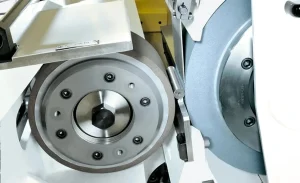
How can buyers choose a reliable CNC grinding service provider?
Selecting a CNC grinding supplier goes beyond a generic claim of “precision.” The real measure is how well the provider’s processes, metrology capabilities, and documentation align with the specific requirements of your parts.
Capability Checklist: Processes, Equipment, Automation, and Metrology
A practical approach is to use a scorecard-style checklist when issuing an RFQ or evaluating potential suppliers. It helps ensure technical alignment rather than relying solely on marketing claims.
| Category | What to Verify | Notes & Tips |
| Process Types | Surface grinding, cylindrical grinding (OD/ID), centerless, specialty methods | Ensure methods match your critical surfaces, tolerances, and production volume |
| Workholding & Datum Strategy | Ability to fixture parts without distortion; experience with similar geometries | Ask how primary/secondary datums will be established and protected throughout the process |
| CNC Grinding Machines & Maintenance | Machine precision and condition | Verify calibration and maintenance practices that support repeatable results |
| Metrology | Access to profilometers, form measurement tools, and CMM | Confirm the shop can measure all critical callouts according to your inspection requirements |
| In-Process Control | Use of in-process gauging or monitoring when justified | Helps maintain dimensional consistency for drift-sensitive parts |
| Documentation | Inspection records, material traceability, and process documentation | Align with your industry standards and compliance requirements |
| Automation Options | Automated handling or feeding | Especially valuable for high-volume production or when labor availability is a concern |
The goal is not to find a “perfect” shop but to avoid mismatches where a supplier can grind the part but cannot reliably demonstrate compliance with your quality system.
Certifications and Quality System Considerations
Depending on your industry and regulatory requirements, certain certifications may be relevant. The table below links common programs to why buyers request them:
| Certification / Program | Why It Matters for CNC Grinding Services |
| ISO 9001 | Establishes a baseline quality system and supports consistent documentation and corrective actions |
| AS9100 (Aerospace QMS) | Common in aerospace supply chains; enhances traceability and risk management |
| NADCAP (Special Processes) | Controls special processes, often required in aerospace; applicability depends on part and customer needs |
| ITAR Alignment | Necessary if parts or technical data are subject to export controls |
| Medical Quality Systems | Ensures documented process control and traceability for regulated medical markets |
Not every supplier needs every certification; the key is to match compliance requirements to the end-use of the part and your customer contract obligations.
Key Attributes to Look for in a Precision Grinding Shop
When evaluating a shop, consider:
- Grinding methods that suit your part geometry (surface, cylindrical OD/ID, centerless).
- Metrology capabilities that can measure your critical features accurately.
- Understanding and management of datum schemes, burn prevention, size drift, and distortion control.
- Alignment with your industry’s quality system requirements and documentation expectations before committing.
RFQ Package Essentials to Reduce Quoting Time and Rework
Providing complete and unambiguous information upfront accelerates the quoting process and reduces iterations. Include the following:
| RFQ Input | What to Include | Why It Matters |
| Drawings | Controlled PDF with GD&T and surface finish callouts | Defines acceptance criteria and prevents ambiguity about “grind where needed” |
| CAD Files | Native or neutral formats | Supports fixturing and access planning for complex geometries |
| Material & Condition | Alloy, heat treatment, hardness | Influences grindability, wheel selection, and thermal risk management |
| Stock Allowance | Specify which surfaces are to be ground and available stock | Prevents surprises when insufficient material remains for final grinding |
| Inspection Plan | Measurement methods and acceptance criteria | Ensures metrology alignment and reporting accuracy |
| Material Certification | Traceability and certification requirements | Avoids delays related to documentation gaps |
By carefully matching supplier capability, process control, and documentation to your part requirements, you can select a CNC grinding service provider that consistently delivers precise, high-quality parts.
What is the market outlook for CNC grinding services and what sourcing options are available?
Understanding the market outlook is crucial for buyers because it affects capacity availability, pricing trends, and supplier stability. Data inputs include general CNC market trends as well as grinding-specific projections, noting that variation exists due to differing market scopes.
Growth Drivers and Projection Ranges
Current research highlights steady demand for high-precision components across the automotive, aerospace, and medical sectors. Additional growth is supported by rising automation and the need for customized parts. However, reported growth rates vary depending on whether the scope covers only grinding services or the broader CNC machining market.
To address this uncertainty, growth is best discussed as a range:
- Grinding services: ~5% CAGR
- Broader CNC machining market: ~7.5%–9.9% CAGR, with the global market projected to reach approximately USD 100 billion by 2025
For sourcing purposes, the key takeaway is that demand pressure and automation adoption will continue to grow, even as skilled labor shortages and high capital costs remain constraints for suppliers.
Regional Dynamics
Regional trends highlight different implications for buyers:
- North America: Strong precision machining demand in automotive and aerospace drives lead-time sensitivity.
- Asia-Pacific: Rapid expansion of automation capabilities increases potential capacity, but supplier qualification, metrology, and documentation may need closer review.
On-Demand CNC Platforms vs Direct-to-Shop Sourcing
SMEs increasingly use on-demand CNC platforms to access grinding capacity without owning machinery. This model is useful for variable demand but requires careful review of supplier qualifications and traceability. Direct-to-shop sourcing, by contrast, allows buyers to maintain long-term process control but demands more effort to identify capable suppliers and buffer capacity constraints.
| Sourcing Route | Benefits | Risks / Considerations |
| On-demand CNC platform | Flexible capacity; lower overhead for variable demand | Less direct process control; supplier assignments may change; confirm inspection and compliance alignment |
| Direct-to-shop sourcing | Stable supplier relationships; direct discussion of process | More effort for supplier qualification; capacity limits may affect lead times |
The ideal sourcing approach depends on whether capacity flexibility or process continuity is the primary concern.
Consolidation and M&A Trends
Consolidation within the precision grinding industry is increasing, often creating suppliers with broader process coverage and stronger quality systems. Buyers should monitor continuity risks, including potential changes in staffing, equipment, or documentation. A practical approach is to verify process documentation, maintenance routines, and inspection record retention through organizational changes.
Feasibility Considerations
Precision CNC Grinding Services provide value when part function relies on tight geometry control, stable fits, and precise surface finish, particularly after heat treatment. The predictability of these services depends on clarity in datum strategy, stock allowance, and inspection methods. Clear inputs enable Precision CNC Grinding Services to remain a reliable finishing step; unclear requirements can result in repeated trial-and-error passes, driving up cost, lead time, and acceptance risk.
What CNC Grinding Services Does Welleshaft Offer in China?
At Welleshaft, our CNC grinding service in China is a key part of our precision engineering capabilities. We provide grinding solutions that achieve tight tolerances, consistent surface finishes, and reliable repeatability across a wide spectrum of materials — from hardened steels and superalloys to aluminium and specialty components.
Whether you are sourcing prototype parts, small-batch production, or high-volume manufacturing, Welleshaft’s CNC grinding solutions ensure both accuracy and efficiency. Integrated with our broader capabilities in CNC machining, laser cutting, and fabrication, Welleshaft offers a comprehensive manufacturing service to meet stringent industry standards.
FAQs on CNC Grinding Services
What is the difference between milling and grinding?
While both milling and grinding remove material, their purposes differ. Milling typically removes larger volumes using rotary cutting tools, making it ideal for shaping complex features or roughing out forms quickly. Grinding, in contrast, is a finishing process that employs abrasive wheels or belts to refine surfaces with high precision. CNC grinding can achieve extremely tight tolerances, superior flatness, roundness, and smooth finishes that milling alone may not reliably deliver. Additionally, abrasive grinding can reduce residual stresses and correct surface irregularities, ensuring parts meet exact functional geometry. Simply put, milling shapes the component, while grinding hones it to its final dimensions and surface quality.
What tolerances can CNC grinding achieve?
CNC grinding is capable of achieving very tight tolerances, often in the range of 0.0002–0.00025 inches (5–6 microns), depending on part geometry, wheel type, and fixturing. This process ensures workpieces meet both dimensional and surface finish requirements, which is critical for components like shafts, bearing journals, and sealing surfaces. Factors such as feed rates, coolant application, wheel dressing, and part mounting all influence the achievable accuracy. Some shops also integrate polishing or manual honing to further refine surfaces. Overall, CNC grinding remains a reliable, cost-effective way to maintain tight tolerances across small or large production runs.
When is grinding necessary after milling?
Grinding is typically used after milling when the milled surfaces cannot meet strict tolerance or surface finish requirements. This is especially important for parts needing high precision or post-heat-treatment stability. Minor tool marks, distortions, or roughness left by milling can be corrected with precision grinding, which ensures exact geometry, flatness, roundness, or sealing performance. In many cases, grinding serves as a finishing step before polishing, honing, or other surface treatments. Relying on milling alone may not suffice when parts require exact functional dimensions and high-quality surfaces.
What materials can be processed with CNC grinding?
CNC grinding services are compatible with a broad range of materials, including hardened steels, tool steels, stainless steels, carbides, ceramics, superalloys, and certain aluminum alloys. The process depends on selecting the correct wheel, feed strategy, and coolant system for the material’s hardness and heat sensitivity. Precision grinding is particularly useful for workpieces that are difficult to machine post-heat treatment. In some cases, abrasive grinding can be combined with manual finishing or polishing to optimize surface integrity. This versatility makes CNC grinding suitable for automotive, aerospace, medical, and industrial equipment components where exact specifications and functional performance are essential.
How does a CNC grinding machine differ from a CNC milling machine?
While CNC milling removes material using cutting tools, CNC grinding achieves ultra-fine finishes and micron-level accuracy using abrasive wheels. Grinding is particularly effective on hardened materials and for components requiring extremely tight tolerances and smooth surface finishes.
What types of CNC grinding machines are available?
Common CNC grinding machines include:
- Surface grinders– for flat surfaces and reference planes
- Cylindrical grinders– for shafts, rods, and tubular components
- Centerless grinders– for high-volume circular parts
- Jig grinders– for intricate and precise geometric features
- Internal grinders– for bores and complex internal surfaces
Each type is designed to address specific shapes, tolerances, and production requirements.
What is the typical lead time for CNC grinding services?
Lead times depend on material, part complexity, and order quantity. Shops providing CNC grinding services focus on efficiency without compromising precision, and can give clear timelines once drawings or part specifications are reviewed.
<p><p><p&gt;<p><p&amp;amp;gt;<h3><strong>Can I get a quote for a CNC grinding project?
Yes. By sharing your part drawings and specifications, you can receive a free, no-obligation quote and design review from a qualified CNC grinding service provider.
Can CNC grinding be combined with other manufacturing processes?
Absolutely. Many providers integrate CNC grinding with other services such as CNC milling, laser cutting, welding, and metal fabrication, allowing for complete end-to-end manufacturing solutions for complex components.
This blog was provided by the Welleshaft Engineering Team. Welleshaft is a leading CNC grinding and precision manufacturing provider in China, specializing in high-precision parts, tight tolerances, and advanced machining solutions for automotive, industrial, and mechanical applications.

 Español de Perú
  English
  Português do Brasil
  Deutsch (Österreich)
  Deutsch (Schweiz)
  English (UK)
  English (Australia)
  English (New Zealand)
  Deutsch
  Français du Canada
  Français
  Français de Belgique
  Italiano
  English (South Africa)
  Português
  Español
  Español de México
  Español de Colombia
  العربية
  日本語
日本語  Русский
  한국어
한국어  Tiếng Việt
  ไทย
ไทย