
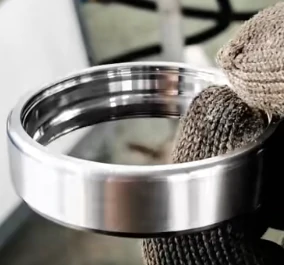
What Is bearing rings in mechanical engineering?
A bearing ring refers to the inner or outer race of a bearing that supports rolling elements and enables low-friction rotational movement. Bearing rings are fundamental components of a bearing structure, serving as key elements that support and guide rotational motion in mechanical systems. These rings are essential for ensuring stable operation, smooth performance, and consistent reliability under working loads.
In operation, bearing rings are responsible for carrying radial and axial loads, maintaining alignment, and ensuring stable movement between rotating components. By controlling contact between moving parts, they help reduce friction and minimize wear, which directly improves the efficiency and service life of the bearing system. At the same time, properly designed bearing rings also contribute to better resistance against corrosion and surface degradation in challenging environments.
Producing a bearing ring requires strict manufacturing accuracy, as even small dimensional deviations can affect performance and reliability.Manufacturers use high-precision machining processes and apply strict quality control standards to ensure the final component meets demanding mechanical and durability requirements.
What Are the Types of Bearing Rings?
Bearing rings are essential elements in mechanical systems because they provide structural support and help ensure smooth rotational or linear movement between components. Different operating conditions require different ring designs, which is why bearing rings are classified into several types based on function and structure.
The most common categories are inner rings and outer rings.Technicians install the inner ring on the shaft so that it rotates with the shaft, while they position the outer ring inside the housing to keep it fixed.
This arrangement helps achieve stable load transfer between components while reducing friction and wear during operation. In practical applications, both rings can differ in dimensions, material selection, and surface treatment depending on load requirements and working environments.
Engineers also design split rings and solid rings for specific engineering needs beyond the standard configurations. Split rings prove particularly useful in systems that require convenient installation or maintenance, because technicians can open and reassemble them without dismantling the entire setup. In contrast, solid rings provide a continuous structure with greater rigidity, making them more suitable for high-load or heavy-duty operating conditions where strength and durability are critical.
Which Materials Are Best for Bearing Rings in Mechanical Engineering?
| Tipo de material | Common Materials | Features and Applications |
| Bearing Steel (High-carbon chromium steel) | GCr15, 52100 | Offers excellent hardness, wear resistance, and fatigue strength. Widely used for standard bearing races. |
| Acero inoxidable | AISI 440C, AISI 304 | Provides superior corrosion resistance, making it suitable for applications in chemical, food processing, or humid environments. |
| Alloy Steel | Ni-Cr Alloy Steel | Enhances strength, wear resistance, and corrosion resistance, ideal for heavy-load or harsh operating conditions. |
| Tool Steel | M2, M42 (High-speed steel) | High hardness and wear resistance for specialized industrial bearings; less common in standard applications. |
| Ceramic Materials | Silicon Nitride, Aluminum Oxide | Resistant to high temperatures, corrosion, and wear; used in high-speed, high-temperature, or chemically aggressive environments. |
| Aluminum Alloy | Aluminum Alloys | Lightweight and easy to machine, suitable for low-load or lightweight bearing races where reduced mass is important. |
| Coating Treatments | Chrome plating, Nickel plating, Nitriding | Improves surface hardness, wear resistance, and corrosion protection; often applied to bearing steel or alloy steel surfaces. |
Choosing the correct material for a bearing race is essential to ensure long-term performance, reliability, and safety in the intended application, from industrial machinery to high-precision automotive and aerospace components.
How Are Bearing Rings Manufactured in precision machining processes?
The production of bearing rings involves a series of precise steps to ensure durability, accuracy, and performance under demanding conditions. Each stage is crucial for achieving the mechanical and operational characteristics required for high-quality bearings.
Material Selection
High-quality steel forms the backbone of bearing ring production, with alloy steels or specialized bearing steel like 100Cr6 commonly used. This steel contains roughly 1% carbon and 1.5% chromium, giving the rings excellent hardness, wear resistance, and long-term durability, which are critical for maintaining bearing performance over time.
Forging and Turning
The manufacturing process begins with forging to shape the raw steel into the preliminary ring form. Typically, manufacturers apply hot forging by heating the steel to high temperatures and pressing it into shape, which improves density and mechanical uniformity. For smaller bearing rings, they may use cold forging instead. After forging, technicians refine the rings on a lathe to achieve the required dimensions and prepare them for subsequent processes.
Heat Treatment
After shaping, heat treatment is applied to enhance hardness and wear resistance. Common techniques include quenching to harden the surface and tempering to relieve internal stresses while maintaining toughness. Proper heat treatment ensures the bearing ring can withstand high loads and rotational stresses.
Finishing
High-precision finishing is essential to achieve exact inner and outer diameters and smooth surfaces. Technicians use processes such as grinding, turning, and cylindrical grinding to refine the rings. The quality of this stage directly impacts the bearing’s efficiency, longevity, and ability to operate under precise tolerances.
Surface Treatment
To improve corrosion resistance and extend service life, bearing rings often undergo surface enhancement processes such as nitriding, chrome plating, or galvanizing. These treatments protect the rings in harsh environments and maintain smooth operation over time.
Final Inspection and Packaging
Before leaving the production line, technicians thoroughly inspect each bearing ring to confirm dimensional accuracy, surface quality, and overall compliance with industry standards. After passing these checks, they carefully package the rings and prepare them for shipment to customers.
This comprehensive manufacturing sequence ensures that bearing rings deliver reliable performance across automotive, industrial, and aerospace applications.
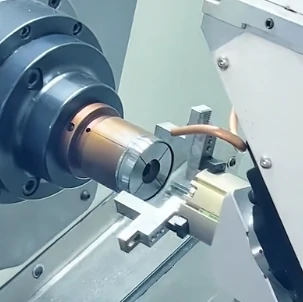
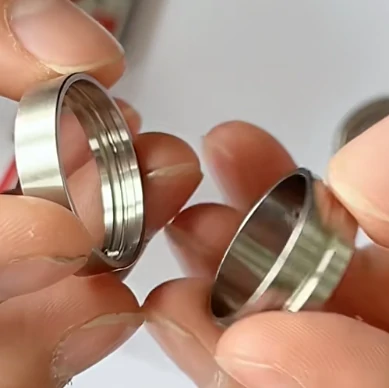
How Are Bearing Races Manufactured for durable and high-load performance?
The manufacturing of bearing races is closely related to the production of bearing rings, as both require high precision and strict material control. A bearing race serves as the guiding track that supports rolling elements such as balls or rollers, making its structural accuracy critical to overall bearing performance.
Raw Material Preparation
Production begins with selecting suitable high-quality materials, which may include steel tubes, stainless steel, aluminum alloys, or cast steel. The choice depends on the required load capacity, operating conditions, and manufacturing route. When steel tubes are used, they must be cut with high-precision equipment to achieve accurate lengths and consistent dimensional control before further processing.
Forging or Casting
Manufacturers commonly use two main forming methods. In casting, they pour molten metal into a pre-designed mold to form the complex geometry of the bearing race, which improves efficiency and reduces material waste. In contrast, they apply forging when higher strength and structural integrity are required.This method uses heat and pressure to reshape the material, resulting in improved density and more uniform mechanical properties.
Machining
Once the basic shape is formed, precision machining processes such as turning and milling are used to define the final structure of the inner and outer races. The raceway grooves, which guide the rolling elements, must be machined with high accuracy to ensure smooth movement and proper load distribution. Any deviation at this stage can directly affect bearing performance.
Heat Treatment
To enhance mechanical strength, heat treatment processes such as quenching, tempering, or annealing are applied after machining. These treatments increase hardness, improve wear resistance, and help the bearing race maintain stability under heavy loads and elevated temperatures.
Polishing
After heat treatment, the raceway surfaces are finely polished to remove microscopic irregularities. This step reduces friction during operation and ensures a smooth contact surface for rolling elements, contributing to quieter and more efficient performance.
Final Inspection and Packaging
Before shipment, each bearing race undergoes strict inspection to verify dimensional accuracy, surface quality, and compliance with technical requirements. After passing all quality checks, the components are cleaned, packaged, and prepared for delivery.
How to Inspect Bearing Rings and Ensure Compliance with Standards?
Quality inspection of bearing rings is critical to ensure long-term performance, reliability, and safety under operating loads. WelleShaft implements a structured inspection process aligned with international standards to guarantee every component meets strict engineering requirements.
Dimensional and Geometric Measurement
- Standards Referenced:ISO 1101 (Geometrical Product Specifications), ISO 492 (Rolling Bearings – Radial Bearings), DIN 620-1
- Key Checks:
- Inner and outer diameter tolerances (typically ±5–10 µm depending on application)
- Roundness and cylindricity of raceways
- Width and wall thickness uniformity
- Tools Used:Micrometers, calipers, CMM (Coordinate Measuring Machine), roundness testers
Surface Quality and Appearance
- Standards Referenced:ISO 4287 / ISO 1302 (Surface Roughness)
- Inspection Focus:
- Surface roughness (Ra values measured, typically 0.1–0.3 µm for precision bearings)
- Visual defects such as scratches, pits, cracks, or corrosion
- Burrs or uneven edges from machining
Hardness and Material Verification
- Standards Referenced:ASTM E18 (Rockwell Hardness Test), ISO 683-17 (Heat-Treated Steels)
- Inspection Focus:
- Surface and core hardness to ensure wear resistance and fatigue strength
- Material composition checks via spectrometry or chemical analysis to verify steel grade
Load and Performance Testing
- Standards Referenced:ISO 281 (Bearing Life Calculation), ISO 15243 (Failure Modes)
- Test Methods:
- Radial and axial load testing under simulated operating conditions
- High-speed rotation tests for noise, vibration, and heat generation
- Fatigue cycle tests to evaluate lifespan and identify potential weak points
Documentation and Traceability
Every bearing ring is accompanied by an inspection report documenting compliance with the relevant ISO/DIN/ASTM standards, measured tolerances, surface quality, hardness, and load test results. This ensures full traceability and supports customer quality audits.
By integrating standardized inspections and precision measurement tools, WelleShaft ensures that every bearing ring delivered can meet demanding applications in automotive, aerospace, and industrial machinery, reducing the risk of early failure and optimizing long-term reliability.
What Are the Typical Applications of Bearing Rings in Machinery?
Bearing rings are widely applied across multiple industrial fields due to their ability to support loads, reduce friction, and ensure stable mechanical motion. Their usage spans from transportation systems to heavy industrial machinery, where consistent performance and durability are essential.
In the automotive sector, bearing rings are commonly found in key assemblies such as engines, transmission systems, and wheel hubs. They help maintain smooth rotation between moving parts while minimizing friction and wear. The performance of these components directly influences vehicle stability, efficiency, and overall driving safety, making material quality and precision design especially important.
In aerospace applications, bearing rings are used in critical systems including aircraft engines and landing gear mechanisms. These environments demand components that can operate under extreme temperatures, high rotational speeds, and heavy loads. The precision and structural integrity of bearing rings ensure reliable operation in conditions where even minor failure is unacceptable.
Industrial manufacturing equipment also depends heavily on bearing rings to maintain continuous and efficient operation. They are widely integrated into conveyor systems, automated production lines, and robotic machinery. Proper selection of bearing ring types helps improve machine efficiency, reduce downtime, and extend equipment service life, making them a key factor in production stability.
Why Choose welleshaft Bearing Ring Manufacturer for Your Components?
The performance and service life of a bearing ring depend heavily on the consistency of its manufacturing process. Every stage—from raw material selection to final inspection—directly influences dimensional accuracy, surface quality, and long-term operational stability under load.
High-quality bearing rings require tightly controlled production processes. This includes the use of certified bearing steel, precise forging or machining operations, and carefully managed heat treatment cycles. When these processes are properly controlled, the result is improved hardness uniformity, stable microstructure, and strong resistance to wear and fatigue.
WelleShaft focuses on process stability across every production stage. Rather than relying on isolated improvements, the manufacturing system is built around consistent tolerance control, repeatable heat treatment parameters, and precision finishing techniques. This approach helps ensure that each bearing ring maintains stable geometry and smooth surface characteristics, which are critical for reducing friction and vibration during operation.
Before shipment, every component undergoes multi-stage inspection, including dimensional verification, surface condition evaluation, and material consistency checks. This quality control process helps ensure that each bearing ring meets required engineering specifications before entering real-world applications.
By maintaining strict process control and inspection discipline, WelleShaft delivers bearing ring components that support reliable mechanical performance, extended service life, and reduced maintenance requirements across automotive, industrial machinery, and precision equipment applications.
What Are Bearing Rings FAQs?
What Causes Bearing Ring Wear?
Bearing rings experience wear mainly due to friction, excessive impact loads, or inadequate lubrication. Common signs of wear include persistent rumbling or growling noises during operation, increased vibration, and the presence of metal particles or flakes in the grease. Continuous operation under these conditions can lead to reduced performance and premature failure.
Can Bearing Rings Be Reused?
In most cases, bearing rings should not be reused once removed. Reusing a bearing race can compromise performance and safety. If reuse is unavoidable in certain applications, a thorough inspection is required to check for cracks, pitting, or surface damage. Bearing races removed by pressing on the outer ring should never be reused, as this can lead to failure under load.
WelleShaft Engineering Team, led by Mr. Xu, provides this technical blog introducing bearing rings manufacturing, covering materials selection, precision machining processes, heat treatment, inspection methods, and industrial applications for automotive and machinery industries.

 Español de México
  English
  Português do Brasil
  Deutsch (Österreich)
  Deutsch (Schweiz)
  English (UK)
  English (Australia)
  English (New Zealand)
  Deutsch
  Français du Canada
  Français
  Français de Belgique
  Italiano
  English (South Africa)
  Português
  Español
  Español de Perú
  Español de Colombia
  العربية
  日本語
日本語  Русский
  한국어
한국어  Tiếng Việt
  ไทย
ไทย