
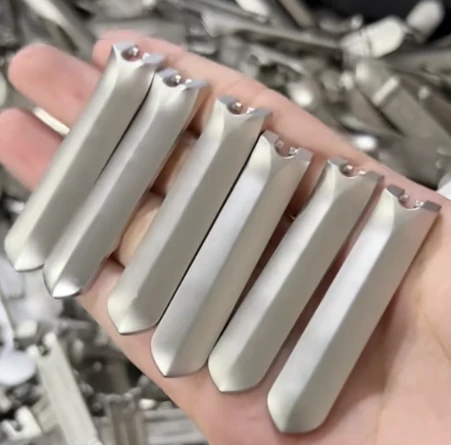
Why is MIM for Automotive Applications Important?
Metal Injection Molding (MIM) provides distinct advantages that make it an excellent choice for automotive applications. By merging the design flexibility of plastic injection molding with the strength and durability of metal, this method produces MIM automotive parts capable of withstanding the rigorous demands of modern vehicles. For manufacturers focused on delivering reliable MIM components, this approach simplifies assembly processes while preserving the mechanical performance needed in challenging operating conditions.
The trend toward lighter and more efficient vehicles has driven wider implementation of MIM automotive parts across both traditional internal combustion engine components and emerging electric vehicle platforms. This technique ensures consistent quality and repeatable results, even in high-volume automotive production, supporting the industry’s push for innovation without compromising part integrity.
Why is there a Need for MIM in the Automotive Sector?
Addressing Complexity in Vehicle Design with MIM
Metal Injection Molding (MIM) enables the production of complex and lightweight components that meet the increasingly stringent performance, durability, and fuel efficiency demands of the automotive sector. The global market for automotive MIM parts continues to expand, reflecting the industry’s growing reliance on MIM technology to produce high-precision, intricate components for both conventional and electric vehicles.
Enhancing Cost Efficiency and Production Performance
Automotive manufacturers constantly seek methods to balance cost efficiency with component performance and reliability. MIM automotive parts offer a near-net-shape production process that minimizes material waste and reduces the need for extensive post-processing. While initial tooling investment can be higher than traditional manufacturing methods, the overall cost-effectiveness of metal injection molding automotive components becomes apparent during large-scale production and over the lifecycle of the part.
MIM allows engineers to use various metals—stainless steel, low-alloy steel, copper alloys, and soft magnetic materials—tailoring each part to specific needs. Integrating multiple features into one component boosts assembly efficiency and supports high-performance vehicle design.
MIM automotive components are increasingly recognized as a strategic solution for modern vehicle manufacturing.
They help address key challenges such as complexity, precision requirements, and production efficiency.
What are the Key Advantages of MIM in Automotive?
- Complex geometry capability— MIM automotive parts allow the creation of intricate and detailed designs that would otherwise require multiple machining steps or separate assemblies using conventional methods.
- High-volume efficiency— After the tooling phase, MIM components can be manufactured in large quantities, reaching thousands of units per day while maintaining uniform quality.
- Material versatility— A broad selection of metals, including stainless steel, low-alloy steel, copper, and soft magnetic alloys, can be tailored to meet diverse automotive applications.
- Excellent mechanical properties— MIM parts can achieve 95–99% of their theoretical density, offering mechanical strength comparable to traditionally wrought materials.
- Weight reduction— The freedom to produce complex geometries enables optimized material usage, often lowering component weight by up to 30% compared with machined alternatives.
- IATF 16949 compliance— Many MIM automotive parts manufacturers adhere to this standard, ensuring traceability and quality control across production lines.
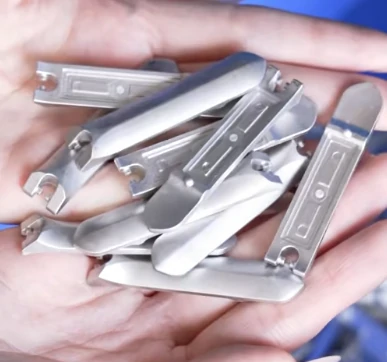
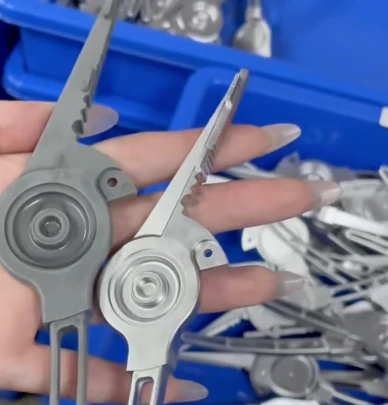
What are the Common MIM Automotive Parts and Applications?
The use of MIM automotive parts extends throughout nearly every major vehicle subsystem. Metal injection molding enables highly detailed near-net-shape automotive components, improving design flexibility, reducing assembly needs, and ensuring consistent performance. These precision metal parts support modern automotive systems, from powertrains to electronics and safety mechanisms.
| Application Area | Component Examples | Typical Material | Key Requirement |
| Engine Systems | Turbocharger vanes, fuel injector nozzles, sensor housings | 17-4 PH Stainless Steel | High-temperature performance |
| Transmission Systems | Shift forks, synchronizer rings, parking pawls | Low-Alloy Steel (Fe-2Ni) | Wear resistance |
| Locking Systems | Lock bodies, cylinder shells, tumblers, spring components | 316L Stainless Steel | Corrosion resistance |
| Electronic Systems | Sensor enclosures, ECU housings, connector terminals | 316L / 17-4 PH Stainless Steel | Electromagnetic shielding |
| Chassis & Body Systems | Seat adjustment components, hinges, mirror brackets | Low-Alloy Steel | Structural durability |
As vehicle technologies continue to evolve, the demand for precision MIM automotive parts continues to increase. The process supports both traditional vehicle platforms and next-generation electric mobility solutions by delivering complex metal components with excellent dimensional accuracy and repeatability.
Engine Components
Many critical MIM automotive parts are used within engine assemblies, including valve train hardware, camshaft-related components, actuator parts, and precision sensor housings. The process enables the production of complex geometries while maintaining the strength required for demanding engine environments.
Transmission Systems
Modern transmissions rely on numerous precision-engineered metal components. Metal injection molding automotive applications are commonly used to manufacture synchronizer elements, shift mechanisms, engagement parts, and wear-resistant transmission hardware that require tight tolerances and consistent performance.
Fuel Injection Systems
High-precision fuel injection components benefit significantly from MIM technology. Parts such as injector tips, metering elements, and internal fuel system components require accurate dimensions and reliable material properties to support efficient fuel delivery and combustion performance.
Electrical Connectors and Electronics
As vehicles incorporate more electronic control systems, the need for durable electrical connector components continues to grow. MIM automotive components are widely used in sensor housings, connector terminals, shielding structures, and electronic module hardware where dimensional precision is essential.
Interior and Exterior Hardware
Various automotive accessories can be produced using MIM, including door handle mechanisms, mirror mounting components, latch systems, and decorative hardware. The process supports complex designs while reducing secondary machining operations.
Safety System Components
Safety-critical MIM automotive parts are commonly found in restraint systems and vehicle monitoring equipment. Components used in seatbelt mechanisms, airbag assemblies, locking devices, and sensor housings benefit from the process’s combination of precision and mechanical strength.
Turbocharger Components
High-performance engine systems frequently utilize MIM turbocharger components such as variable vane mechanisms, actuator parts, and airflow control elements. These components must withstand elevated temperatures while maintaining dimensional stability under continuous operation.
Suspension and Chassis Parts
Lightweight yet durable suspension components can be produced through MIM. Brackets, linkage parts, mounting hardware, and adjustment mechanisms benefit from optimized geometries that help reduce overall vehicle weight without sacrificing structural integrity.
Exhaust System Components
Several exhaust system components are suitable for MIM manufacturing, including mounting brackets, flanges, sensor housings, and support hardware. These parts require good resistance to heat, vibration, and corrosive operating conditions.
Cooling System Components
Within vehicle thermal management systems, MIM automotive applications include water pump elements, thermostat housings, flow-control components, and impeller-related parts. The process enables intricate internal features that help improve coolant circulation efficiency and temperature control.
MIM automotive parts consolidate multiple components into near-net-shape designs, reducing assembly complexity while maintaining accuracy. This process efficiently produces complex, high-performance parts for electrified and compact vehicle systems.
How do EV MIM Components Meet the Demands of Electric Vehicles?
The transition to electric mobility has created growing opportunities for EV MIM components. Unlike conventional internal combustion engine vehicles, electric vehicles require specialized MIM automotive parts designed for high electrical performance, thermal management, and compact, precision geometries. Metal injection molding is particularly well-suited to meet these evolving demands.
Battery and Powertrain Applications
EV MIM components play a critical role in battery systems and electric powertrains. Key parts such as battery cell connectors, busbar terminals, and current collector plates demand both excellent electrical conductivity and mechanical strength. MIM technology enables these complex geometries to be produced in a single operation, reducing assembly complexity and lowering production costs.
Electric motor systems also increasingly rely on MIM automotive parts. Components like rotor and stator elements manufactured with metal injection molding can incorporate intricate magnetic structures using soft magnetic alloys, which provide high permeability and minimal core loss—directly improving motor efficiency. As global EV production scales, the need for cost-effective, high-precision MIM components in powertrain applications continues to grow.
Thermal Management and Sensor Systems
Efficient thermal control is essential for electric vehicles. MIM automotive parts are widely used in cooling and thermal management systems, including heat sink fins, coolant valve bodies, and thermal interface components, where precise, thin-walled structures are required to optimize heat dissipation and maintain battery and motor performance.
Similarly, EV sensor systems benefit from MIM components. Proximity sensors, temperature probes, and pressure transducers require high-precision housings and structural parts. The process delivers tight tolerances, smooth surface finishes, and reliable structural integrity, ensuring optimal sensor function throughout the vehicle.
The versatility and precision of EV MIM components make metal injection molding a crucial enabler for the next generation of electric vehicles, combining performance, efficiency, and manufacturability in high-volume production.
How does MIM Contribute to LiDAR Components in Automotive Applications?
One of the key strengths of metal injection molding (MIM) in LiDAR automotive applications is its capability to produce highly complex three-dimensional metal structures that are difficult to achieve through conventional machining. These intricate geometries support the growing design requirements of advanced sensing systems used in modern and autonomous vehicles. By enabling the consolidation of multiple elements into a single integrated structure, MIM automotive parts improve structural integrity while simplifying assembly and enhancing scalability.
In LiDAR system manufacturing, MIM technology is commonly applied to produce precision sensor housings and internal metallic structures. The design flexibility of MIM automotive components allows for the formation of parts with multi-channel internal pathways, complex cavities, and fine structural details that are essential for accurate signal transmission and sensor protection within compact LiDAR modules.
Another important advantage is the ability of MIM automotive parts to support high-volume, cost-efficient production without sacrificing quality. As autonomous driving technologies continue to evolve, demand for reliable and repeatable manufacturing processes increases. Metal injection molding LiDAR components provide excellent dimensional consistency and material stability, ensuring that each part meets strict functional and safety requirements.
Through its combination of precision, repeatability, and design freedom, MIM technology plays a critical role in enabling scalable production of advanced LiDAR automotive components, supporting the continued development of autonomous vehicle systems and next-generation sensing technologies.
What are the Materials for MIM Automotive Parts?
Choosing the appropriate material is crucial for ensuring optimal performance of MIM automotive parts. The selection affects not only mechanical strength and corrosion resistance but also the long-term reliability and durability of metal injection molding automotive components in demanding vehicle environments. Engineers must evaluate factors such as operating temperature, mechanical load, and environmental exposure when specifying materials for MIM automotive applications.
| Material | Tensile Strength | Density | Ideal Applications |
| 316L Stainless Steel | ≥ 520 MPa | 7.9 g/cm³ | Corrosion-prone environments, high-precision and medical-grade components |
| 17-4 PH Stainless Steel | ≥ 1100 MPa | 7.8 g/cm³ | High-stress engine and transmission parts |
| Fe-2Ni Low-Alloy Steel | ≥ 550 MPa | 7.8 g/cm³ | Structural MIM automotive components, magnetic applications |
| CuZn30 Brass | ≥ 350 MPa | 8.4 g/cm³ | Electrical connectors, decorative trim, interior hardware |
| Fe-50Ni Soft Magnetic Alloy | ≥ 300 MPa | 8.0 g/cm³ | Sensor housings, solenoids, and electric motor components |
Selecting the right material ensures that MIM automotive parts meet the performance and longevity requirements of modern vehicles. By leveraging metal injection molding with the appropriate alloys, engineers can produce components that combine precision, durability, and functional efficiency across powertrain, electronics, structural, and thermal applications.
What are the Quality Standards for Automotive MIM Production?
The automotive industry requires exceptional levels of quality and traceability. Manufacturers producing MIM automotive parts must adhere to strict international standards to guarantee the reliability and safety of every component. From raw material qualification to final inspection, each stage of metal injection molding automotive components is governed by rigorous process controls and comprehensive documentation, distinguishing automotive-grade MIM parts from general industrial applications.
IATF 16949 Compliance and Process Control
IATF 16949 is the globally recognized quality management standard for the automotive supply chain. Certified producers of MIM automotive parts implement robust quality systems covering every phase of production, including incoming powder evaluation, in-process monitoring, and final part validation. Key practices include statistical process control (SPC), capability studies (Cpk analysis), and complete lot traceability. Maintaining IATF 16949 certification demonstrates a consistent focus on defect prevention, process optimization, and continuous improvement for MIM automotive components.
Additional Standards and Compliance Requirements
Beyond IATF 16949, many automotive MIM applications must meet supplementary standards, such as ISO 13485 for medical-adjacent components, and RoHS and REACH for environmental and chemical compliance. Additionally, OEM-specific requirements often demand enhanced testing and documentation. Adhering to these standards ensures that metal injection molding automotive parts meet stringent performance, safety, and regulatory expectations across all vehicle systems.
By following these quality standards, manufacturers of MIM automotive parts can deliver consistent, high-performance components that satisfy the rigorous demands of modern vehicles while maintaining full traceability and compliance.
What is the Role of MIM in Automotive Manufacturing Services?
Extensive Applications Across Vehicle Systems
Applications of injection-molded metal components span a wide range of vehicle systems, including safety, powertrain, and electronic modules. For safety-critical components, MIM produces complex features such as sensor housings, braking system elements, ABS components, and seat belt mechanisms, ensuring compliance with stringent performance and reliability standards.
In fuel system and powertrain applications,Metal injection molding plays a key role in meeting regulatory and efficiency requirements in the automotive industry, including emissions standards such as Euro 6.These components help manufacturers improve performance while maintaining compliance.
Components such as injector nozzles, armatures, and fuel housings enhance fuel efficiency and control emissions, while turbocharger vanes, hydraulic spools, and rocker arms support optimal engine performance and efficiency.
Streamlining Production and Reducing Costs
One of the key advantages of MIM technology is its ability to consolidate multiple elements into a single, near-net-shape part. This approach reduces manufacturing steps, lowers material waste, and minimizes energy consumption. It also shortens lead times while improving overall production efficiency, and makes precision MIM assemblies an economically viable solution for high-volume vehicle component manufacturing.
These advantages make MIM an efficient, cost-effective solution for producing complex automotive components at scale.
How are Advancements in MIM Technology Enhancing Automotive Innovation?
Continuous progress in metal injection molding (MIM) has significantly expanded the capabilities of producing high-performance MIM automotive parts. Improvements in binder systems and feedstock formulations, combined with more controlled and efficient sintering processes, now allow manufacturers to process advanced alloys and composite materials that were previously difficult to apply in traditional MIM production.
These developments have also strengthened the role of MIM automotive parts in supporting vehicle lightweighting strategies. By utilizing engineered low-density materials such as tungsten-copper alloys for thermal expansion control (CTE applications), automotive manufacturers can achieve a balance between reduced weight and maintained structural integrity. This directly contributes to improved fuel efficiency, lower emissions, and sustained mechanical performance in demanding operating conditions.
At the same time, emerging metal injection molding automotive technologies are enabling the production of components with enhanced functional integration. New process developments make it possible to incorporate multi-functional features, supporting the next generation of intelligent automotive systems. These components can integrate sensor interfaces, electronic pathways, and structural functions within a single part, improving system compactness and reliability.
As a result, MIM automotive parts are increasingly being used in applications that require higher levels of connectivity, automation, and safety integration. These technological advancements continue to expand the boundaries of what is possible in modern automotive design, supporting the evolution toward smarter, lighter, and more efficient vehicles.
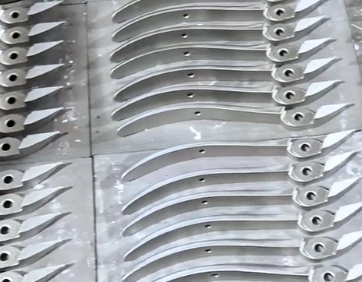
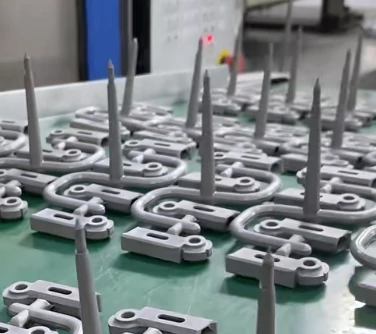
What is the Future of MIM in Automotive Parts Manufacturing Companies?
The evolution of metal injection molding (MIM) continues to reshape how advanced MIM automotive parts are designed and produced. Its capability to form highly complex geometries, internal cavities, and integrated inserts enables entirely new design approaches focused on lightweight structures, improved thermal performance, and enhanced mechanical efficiency. These design freedoms are increasingly important as the automotive industry shifts toward more energy-efficient and electrified platforms.
In next-generation vehicles, MIM automotive components are optimized for better heat dissipation and system integration. Consolidating multiple parts into one structure reduces assembly complexity while improving thermal efficiency, especially in electronics- and sensor-heavy systems.
As the industry shifts toward electric and autonomous mobility, demand for specialized MIM components continues to grow. Applications such as lightweight battery housings, electric motor parts, and compact sensor enclosures highlight the role of MIM technology in precision manufacturing at scale.
Looking ahead, MIM automotive manufacturing will play a greater role in on-demand production and customized supply chains. Faster tooling and shorter cycles enable more flexible production while maintaining quality and reliability, positioning metal injection molding as a key enabler of agile automotive manufacturing.
Why is Welleshaft a Reliable Partner for MIM Automotive Parts?
As a supplier of MIM automotive parts, Welleshaft offers not only manufacturing expertise but also reliable, efficient, and scalable solutions for the automotive industry.
Core Manufacturing Capabilities
Welleshaft provides end-to-end metal injection molding automotive components production, covering powder preparation, injection molding, debinding, sintering, and final inspection. This vertical integration ensures consistent quality and stability in high-volume production.
The company works with a variety of materials, including stainless steel, low-alloy steel, and specialty alloys, to meet the performance requirements of engine systems, transmission, electronic systems, and electric vehicle applications. Welleshaft is also capable of producing complex geometries, including internal channels, multi-functional structures, and other intricate designs.
Quality and System Assurance
With compliance to automotive standards such as IATF 16949, Welleshaft maintains traceability and strict control throughout the production process. Every MIM automotive part undergoes systematic inspection and process monitoring to ensure it meets industry requirements for safety and reliability.
Customer Benefits
Working with Welleshaft provides more than just components—it delivers measurable value:
- Reduced supply chain riskthrough end-to-end control
- Stable mass productionsuitable for high-volume automotive needs
- Shorter lead timeswith integrated manufacturing
- Support for innovationthrough lightweight, complex, and multi-functional parts
- Cost efficiencyby minimizing material waste and reducing secondary operations
Role in the Automotive Industry
Welleshaft serves not only as a MIM automotive parts manufacturer but also as a technical partner throughout the development and production process. By supporting design optimization and mass production, Welleshaft helps automotive customers deliver high-performance, efficient, and reliable components.
Frequently Asked Questions About MIM Automotive Parts?
What is the ideal production volume for MIM automotive parts?
MIM automotive parts are generally most economical when annual production volumes range from approximately 10,000 pieces to more than 1 million units. Although tooling development requires an upfront investment, the cost per component decreases significantly as production quantities increase. This makes metal injection molding automotive components particularly suitable for large-scale vehicle manufacturing programs.
Can MIM automotive parts be used in safety-critical applications?
Yes. Many MIM automotive parts are utilized in applications where reliability is essential, including locking mechanisms, restraint systems, and selected braking-related components. To support these demanding requirements, manufacturers perform extensive validation procedures such as tensile strength testing, fatigue evaluation, dimensional verification, and material analysis to ensure long-term performance and consistency.
What tolerances can MIM achieve for automotive components?
Standard MIM automotive parts typically achieve dimensional tolerances between ±0.3% and ±0.5% of the nominal dimension. For features requiring greater precision, secondary operations such as coining, sizing, grinding, or CNC machining can further refine dimensions, achieving tolerances as tight as ±0.05 mm for critical EV MIM components and high-precision automotive assemblies.
How does MIM compare with CNC machining for automotive parts?
When manufacturing complex geometries in medium- to high-volume production, MIM automotive parts often provide a more cost-efficient solution than conventional machining. While CNC machining remains advantageous for prototypes, low-volume production, and simple geometries, metal injection molding can significantly reduce material waste and minimize secondary processing. For production quantities above several thousand units, MIM frequently delivers a more competitive cost-to-performance ratio.
Are MIM automotive parts suitable for high-temperature environments?
Yes. Certain materials used in MIM automotive parts, including 17-4 PH stainless steel and other heat-resistant alloys, can perform reliably in operating temperatures approaching 400°C. For EV MIM components, engineers must also consider thermal conductivity, electrical properties, and long-term thermal cycling performance when selecting materials for battery and power electronics applications.
How do MIM automotive parts contribute to vehicle lightweighting?
One of the major strengths of MIM automotive parts is the ability to create optimized geometries that use material only where it is structurally necessary. This design flexibility allows engineers to reduce component mass while preserving mechanical strength, supporting vehicle lightweighting initiatives that improve energy efficiency and overall performance.
This article was prepared by the Welleshaft Engineering Team, specializing in metal injection molding (MIM) and precision automotive components. The team focuses on explaining MIM technology, applications, and material selection for automotive manufacturing.

 Español de Colombia
  English
  Português do Brasil
  Deutsch (Österreich)
  Deutsch (Schweiz)
  English (UK)
  English (Australia)
  English (New Zealand)
  Deutsch
  Français du Canada
  Français
  Français de Belgique
  Italiano
  English (South Africa)
  Português
  Español
  Español de México
  Español de Perú
  العربية
  日本語
日本語  Русский
  한국어
한국어  Tiếng Việt
  ไทย
ไทย