
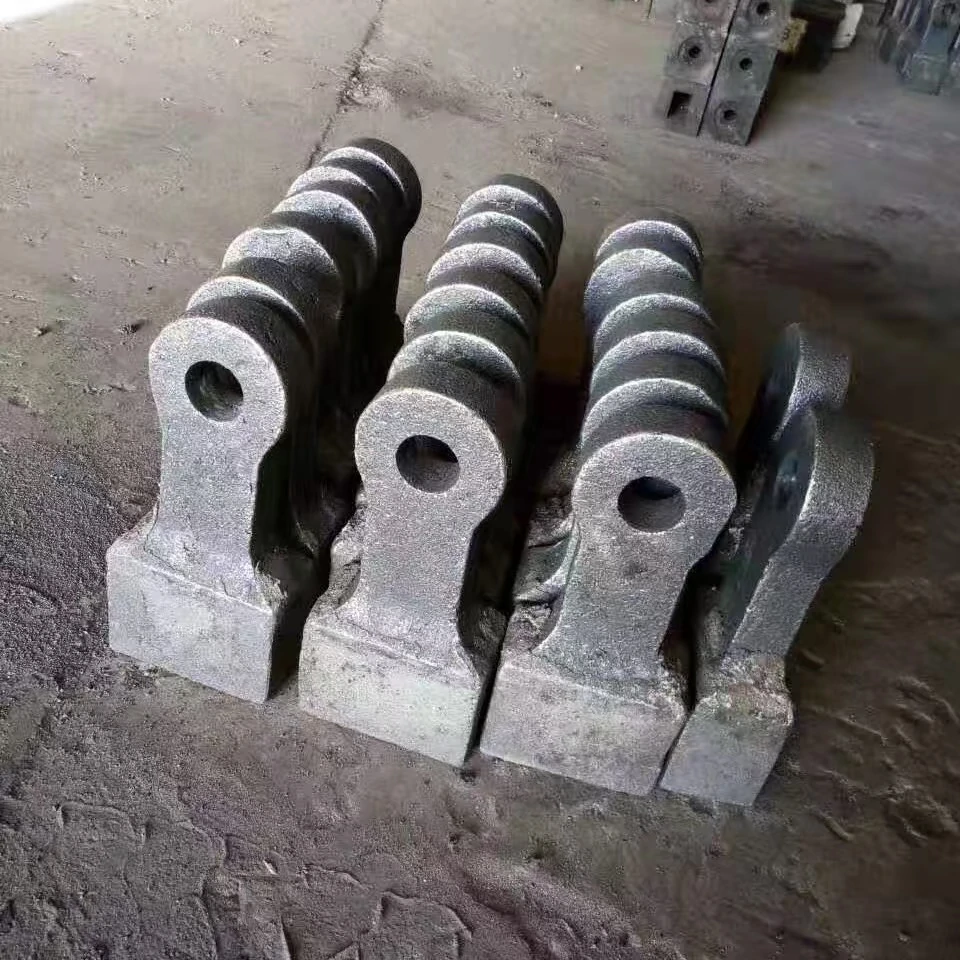
What is Wear Resistant Custom Parts?
Wear resistant custom parts are components designed to withstand continuous friction, impact, and surface wear during machine operation. Instead of allowing the entire system to degrade, these parts absorb most of the stress and gradually wear out to protect core equipment.
Wear occurs slowly over time due to friction, heat, or chemical exposure. Although early signs may seem minor, it can eventually cause misalignment, reduced efficiency, sealing issues, or even equipment failure if not addressed.
These custom wear parts are installed in high-stress areas, making maintenance more efficient. Rather than replacing whole machines or assemblies, only the worn components are replaced, offering a more cost-effective and practical solution for maintaining stable equipment performance.
To slow down wear and extend service life, engineers usually focus on three main things: choosing materials with better wear performance, improving surface hardness through heat treatment, and reducing friction with proper lubrication. In more demanding environments, surface coatings or specialized treatments are also used to further improve durability.
These parts can be made in different shapes and materials depending on the application, and they’re widely used across industries such as:
- Medical devices like surgical instruments and implants
- Industrial machinery including gears, shafts, fixtures, and structural parts
- Hardware products such as fasteners, hinges, and tools
- Automotive and aerospace systems where reliability is critical
- Robotics components like joints, grippers, and drive systems
- Consumer products including appliances and mechanical housings
Wear resistant custom parts help break that cycle. By taking the damage first, they keep machines stable, extend service life, and reduce the need for frequent maintenance — especially in tough working conditions where equipment can’t afford to stop.
What Are the Types of Wear Mechanisms and Their Unique Challenges?
Here’s a clearer way to compare the main wear mechanisms, how they happen, and what challenges they bring in real applications:
| Wear Mechanism | How It Happens | Typical Environments / Components | Main Challenge |
| Abrasive wear | Hard particles or rough surfaces scrape and cut material during contact | Mining equipment, construction machinery, earthmoving tools | Surface damage accelerates once roughness starts |
| Erosive wear | Fast-moving fluid or gas carrying particles impacts surfaces repeatedly | Pumps, valves, pipelines | Continuous “sandblasting” effect leads to thinning and weakening |
| Adhesive wear (galling) | Two metal surfaces bond at micro level under load, then tear apart during movement | Gears, bearings, metal sliding interfaces | Rapid increase in friction once material transfer begins |
| Fretting wear | Very small repeated micro-movements between contacting surfaces | Bolted joints, fitted connections, assemblies | Hidden damage that can trigger fatigue failure |
| Fatigue wear | Repeated cyclic loading creates micro-cracks that grow over time | Shafts, rotating parts, structural components | Sudden failure after long unnoticed crack growth |
| Corrosive wear | Chemical attack combined with mechanical action damages the surface | Marine equipment, chemical systems, offshore structures | Dual damage from both corrosion and mechanical wear |
| Impact wear | Repeated sudden forces cause chipping or cracking | Crushers, hammers, high-impact machinery | Surface fractures and material breakage under shock loads |
In real-world operation, these wear types often don’t happen alone. A single part can face a mix of abrasion, fatigue, and corrosion at the same time. That’s why understanding the dominant wear mechanism is the first step before selecting the right wear parts—it directly affects material choice, surface treatment, and overall service life.
What Are the Key Performance Indicators for Wear Parts?
Assessing the performance of wear components relies on a set of Key Performance Indicators for Wear Parts that help determine their real-world efficiency and suitability in demanding applications.
Wear resistance remains the most critical indicator, reflecting how well a component can resist surface degradation caused by abrasion, erosion, and other mechanical wear processes. Closely related is durability, which describes the overall service life of the part when operating under standard working conditions.
Another essential metric is impact resistance, which evaluates the ability of wear parts to absorb sudden forces, shocks, or heavy load impacts without cracking or failing prematurely. This is especially important in high-load or dynamic operating environments.
From a lifecycle perspective, cost-effectiveness goes beyond initial procurement cost. It considers the total value delivered over time, including service life, maintenance frequency, and replacement intervals.
Ease of replacement also plays a practical role in performance evaluation. Components that are quicker and simpler to install help reduce downtime and improve operational efficiency during maintenance cycles.
Increasing attention is also being placed on environmental compatibility, where materials are assessed based on recyclability, reduced environmental impact, and sustainability in production and disposal stages.
By analyzing these Key Performance Indicators for Wear Parts, operators can make more informed decisions, optimizing the balance between performance reliability, operational cost, and environmental responsibility.
How to Select the Right Wear Parts for Heavy Equipment Applications?
Choosing appropriate wear components for heavy machinery is not just a replacement decision—it is a performance-driven process that requires understanding working environments, failure risks, and lifecycle economics.
Analyzing Operating Conditions
The nature of processed materials is a primary factor. Highly abrasive substances, mixed particle sizes, or sharp-edged materials can significantly accelerate surface wear, meaning standard components may fail prematurely. Different industries also impose different demands—equipment used in mining, for example, experiences far more aggressive abrasion than machinery in light material handling.
Environmental exposure is equally important. High heat, freezing temperatures, moisture, and chemically aggressive surroundings can all alter wear behavior and reduce material stability. These conditions often intensify corrosion and surface fatigue, especially in long-duty cycles.
Mechanical stress patterns must also be evaluated carefully. Repeated impact loads, vibration, and continuous particle erosion contribute to different wear mechanisms occurring simultaneously. Understanding whether abrasion, impact, or erosion is dominant allows for more accurate material and coating selection.
By aligning wear part selection with actual field conditions, engineers can reduce unexpected failures and significantly improve component lifespan under real operating stress.
Cost-Benefit Analysis
Although lower-cost parts may seem attractive initially, they often result in higher long-term expenses due to frequent replacement, increased maintenance labor, and unplanned downtime. High-performance wear parts, on the other hand, are designed to extend service intervals and maintain stable operation for longer periods.
Maintenance-related costs should be carefully included in the evaluation. Every replacement involves labor, machine stoppage, and potential disruption to production schedules. In continuous operations, even short downtime periods can lead to significant output losses.
It is also important to consider system-level effects. When wear components degrade too quickly, they can accelerate damage in surrounding parts, such as seals, housings, or rotating assemblies. This chain reaction increases total repair complexity and cost.
Operational efficiency is another hidden cost factor. Excessive wear can reduce mechanical efficiency, increase friction, raise operating temperatures, and lead to higher energy consumption. Over time, this not only increases operating expenses but may also impact sustainability targets due to higher emissions and material waste.
A well-structured cost-benefit approach therefore evaluates durability, maintenance frequency, system protection, and performance stability together. This ensures wear parts are selected not only for affordability but for long-term operational efficiency and reliability.
What Are the Material Selection Criteria for Wear Parts?
Selecting appropriate materials for wear parts is a fundamental step that determines overall durability, operational efficiency, and service life. When defining material selection criteria for wear parts, engineers must evaluate multiple performance factors in combination rather than isolation.
Hardness plays a key role in resisting abrasive and erosive wear, especially in high-friction environments. However, relying solely on hardness can lead to brittleness. That’s why toughness is equally important—it allows the material to absorb impact energy without cracking or catastrophic failure. In practice, achieving optimal wear resistance often requires balancing hardness with sufficient toughness.
For applications exposed to repeated mechanical shocks or dynamic loading, impact resistance becomes a critical consideration. Materials used in these conditions must maintain structural integrity under sudden stress.
In high-temperature operating environments, heat resistance is another essential factor. Materials must retain their mechanical properties without softening, oxidizing, or degrading. Similarly, corrosion resistance is vital when wear parts are exposed to moisture, chemicals, or saline conditions, as corrosion can accelerate material loss and reduce component lifespan.
Weight is also an important parameter, particularly in mobile or transport-related equipment where reducing mass contributes to improved fuel efficiency and operational performance. In addition, engineers must consider material cost and availability, ensuring the selected option aligns with both budget constraints and supply chain stability.
By systematically analyzing these material selection criteria, it becomes possible to choose wear-resistant materials that deliver the most effective balance of performance, durability, and cost for specific industrial applications.
Key Features of Wear Parts
- High Hardness & Toughness
Manufactured using advanced materials such as carbide alloys, hardened steels, and engineered ceramic coatings to achieve superior wear resistance while maintaining structural strength. - Anti-Corrosion Properties
Designed to withstand oxidation, rust formation, and chemical exposure, ensuring stable performance in harsh environments. - Optimized Surface Treatment
Surface enhancement technologies—including thermal spraying, nitriding, and PVD coatings—are applied to improve durability, reduce friction, and extend service life. - Precision Machining Capability
Components can be produced in both standardized and custom specifications, enabling accurate fit and seamless integration into complex assemblies. - Shock & Impact Resistance
Engineered to perform reliably under heavy loads, cyclic stress, and high-impact operating conditions.
Benefits to End Users
- Extended Equipment Lifespan
Improved material performance reduces wear rates and delays component failure. - Reduced Maintenance & Downtime
Longer service intervals help minimize operational disruptions and maintenance frequency. - Consistent High Performance
Maintains stability in abrasive, high-load, and high-friction environments. - Cost Efficiency Over Time
Lower replacement frequency and reduced repair costs contribute to better lifecycle economics.
Typical Application Industries
- Construction & Heavy Machinery
Wear components used in excavators, drilling systems, and protective wear plates. - Mining & Material Processing
Critical parts such as crusher liners, conveyor components, and mill internals. - Manufacturing & Industrial Equipment
Includes cutting tools, die components, and precision motion elements. - Automotive & High-Performance Engineering
Applications such as braking systems, engine parts, and protective surface layers.
Performance Advantage
Wear parts developed with advanced material engineering, surface technologies, and flexible manufacturing capabilities offer a strong advantage in demanding environments. Their ability to maintain durability, reliability, and efficiency under extreme conditions makes them a practical solution where performance consistency is essential.
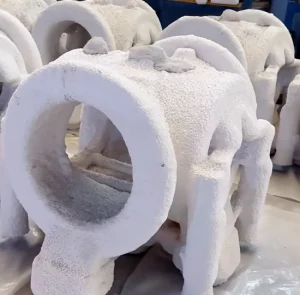
How Are Wear Resistant Custom Parts Fabricated?
Wear-resistant custom parts are manufactured through a mix of metal and plastic processing methods. The exact route depends on the material, part geometry, and required durability. In most cases, production combines precision machining, forming processes, and surface treatments to improve hardness and service life.
Custom Metal Component Fabrication
Metal wear parts are typically produced using subtractive machining or forming methods, followed by heat or surface treatment to enhance performance.
Subtractive manufacturing processes
Sheet metal fabrication
Sheet metal fabrication involves cutting and forming flat metal sheets into functional parts. It is commonly used for housings, brackets, and structural wear components.
Typical materials include:
- Alloy steel
- Stainless steel
- Aluminum
The process is valued for its flexibility and cost efficiency in medium-volume production.
Tube bending
Tube bending is used to reshape straight metal tubes into curved or complex geometries. Depending on the requirement, it can be performed using cold or hot forming methods.
Round tubes are most common, but square and rectangular profiles are also used. In many cases, deburring is required after forming. Tube bending is often combined with laser cutting to add holes, slots, or edge features.
CNC machining
CNC machining is a computer-controlled process used to produce high-precision wear parts. It integrates multiple operations such as milling, turning, and drilling within a single workflow.
Common materials include:
- Titanium
- Stainless steel
- Aluminum
- Nickel alloys
- Cobalt
- Copper
It is widely used when tight tolerances and consistent quality are required.
Milling
Milling removes material using a rotating cutting tool while the workpiece remains fixed. It is suitable for flat surfaces, grooves, and complex 3D shapes.
Both horizontal and vertical milling setups are used depending on part structure.
Turning
Turning is used mainly for cylindrical parts. The workpiece rotates at high speed while a cutting tool removes material layer by layer.
For long components, additional support is used to prevent vibration and deformation during machining.
Drilling
Drilling creates holes in metal components. While most holes are perpendicular to the surface, angled drilling is possible with specialized tooling.
Additional operations include:
- Tapping (thread creation)
- Counterboring
- Countersinking
These are commonly required for assembly-ready parts.
EDM (Electrical Discharge Machining)
EDM uses electrical discharges to remove material without mechanical contact. The process relies on controlled sparks that erode the workpiece.
Two main types are used:
- Wire EDM for profile cutting
- Sinker EDM for cavity shaping
It is especially effective for hard metals and complex geometries.
Formative manufacturing
Die casting
Die casting involves injecting molten metal into a hardened steel mold under high pressure. Once cooled, the part is ejected in near-final shape.
It is mainly used for medium to high-volume production, where consistency and dimensional accuracy are critical.
Surface and heat treatments
To improve wear resistance, metal parts often undergo post-processing treatments that modify surface hardness or internal structure.
Heat treatment
Heat treatment changes the mechanical properties of metal through controlled heating and cooling. Depending on the cycle, the material can become harder, tougher, or more ductile.
This process is widely used to improve overall wear performance.
Coating
Coating adds a protective layer to the surface, often using ceramic or resin-based materials. The surface is first cleaned, then coated and cured to form a hardened layer.
It helps reduce friction, corrosion, and surface wear.
Carburizing
Carburizing introduces carbon into the surface layer of low-carbon steel. After diffusion and heat treatment, the surface becomes significantly harder while the core remains tough.
It is commonly applied to:
- Gears
- Shafts
- Bolts
- CNC-machined parts
Nitriding
Nitriding diffuses nitrogen into the surface of metal components to improve hardness and fatigue resistance. Unlike carburizing, it does not require quenching.
Typical applications include:
- Bearings
- Piston rings
- Feed screws
- Dies
- Gear components
Custom Plastic Part Fabrication
Plastic wear parts are produced through machining or molding processes, depending on volume and performance requirements.
Subtractive manufacturing
CNC machining for plastics
CNC machining for plastics uses controlled cutting tools to shape polymer materials with high accuracy. It includes milling, drilling, and contour cutting.
CNC turning
Plastic turning rotates the workpiece while a cutting tool shapes cylindrical forms. It is commonly used for bushings, rollers, and sleeves.
CNC milling
CNC milling removes material from fixed plastic blocks using rotating cutters. It is suitable for complex geometries and precision components.
Common plastic materials
- CPVC
- HDPE
- LDPE
- Polycarbonate (PC)
- Polypropylene (PP)
- PVC
- Polystyrene (PS)
- PEI
- PET
- PMMA (Acrylic)
- PTFE
- Nylon
Each material is selected based on wear resistance, friction behavior, and chemical stability.
Formative manufacturing
Injection molding
Injection molding melts plastic pellets and injects them into a steel mold under high pressure. After cooling, the part is ejected in its final shape.
It is the most common method for large-scale production of plastic wear components.
Liquid silicone rubber (LSR) molding
LSR molding injects liquid silicone into a heated mold where it cures into an elastic solid. It is widely used for flexible and high-temperature resistant parts.
Typical applications include seals, gaskets, and soft wear components.
Finishing and secondary processing
After forming, parts often undergo finishing to improve performance or appearance:
- Surface texturing (smooth or matte)
- Thread insertion
- Pad printing
- Laser engraving
- Welding or bonding
- Clear coating
- Plating
- Assembly
- Functional testing
These steps ensure dimensional accuracy, durability, and usability.
Cutting processes
For both metals and plastics, additional cutting methods may be used:
- Waterjet cutting (cold, high-pressure cutting)
- Laser cutting (high-precision thermal cutting)
- Plasma cutting (fast metal cutting method)
Each method is selected based on material type and required precision.
What Are the Advantages of Wear Resistant Custom Parts?
Wear-resistant custom parts offer several practical advantages compared to standard mass-produced components, especially when performance, flexibility, and cost control matter in real applications.
- High level of customization
One of the key benefits of Wear Resistant Custom Parts is the ability to fully tailor the design to specific working conditions. Instead of being limited to off-the-shelf solutions, parts can be engineered based on load requirements, wear environment, and functional demands. This allows better material matching and structural optimization, making the final component more suitable for its intended use. - Cost efficiency in development and production
Although the unit price of custom parts may be higher than high-volume standardized production, the overall cost can be more efficient in many cases. This is mainly because it reduces the need for large-scale tooling investment and complex mass-production setups. In addition, production can be adjusted to smaller batch quantities, helping control inventory risk and upfront capital commitment. - Suitable for startups and small-scale operations
Wear Resistant Custom Parts are particularly useful for startups and small businesses that are still validating product ideas. They make it possible to convert concepts into functional prototypes without committing to full-scale manufacturing. This flexibility allows businesses to test market response, refine designs, and gradually scale production based on real demand rather than assumptions.
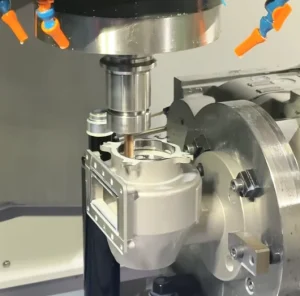
Why Can Traditional Coatings Fail in Wear Resistance Applications?
In many industrial applications, traditional coatings for wear resistance—such as Hard Chrome Plating (HCP), HVOF, and PVD—are still widely used. While these methods can provide surface hardness or basic corrosion protection, they often come with inherent limitations that affect long-term performance.
For example, Hard Chrome Plating (HCP) typically contains a network of microscopic cracks formed during the plating process. These micro-cracks can become pathways for moisture and corrosive agents, and may also act as stress concentration points under load, increasing the risk of premature failure.
Similarly, HVOF coatings rely on metallic binders like cobalt or nickel to hold the coating structure together. Under severe abrasion or corrosive exposure, these binders can deteriorate, leading to surface breakdown. In some cases, the resulting texture becomes excessively rough, which can accelerate wear on mating components and reduce overall system reliability.
PVD coatings, while known for their high hardness and smooth finish, are generally applied in very thin layers. This limited thickness can restrict their ability to provide effective wear protection under high load or continuous friction, especially in heavy-duty applications.
Across these coating types, common challenges include brittleness, inconsistent surface coverage, porosity, and weak adhesion to the base material. In demanding environments, these factors can contribute to coating delamination, cracking, or rapid degradation, ultimately limiting their effectiveness in improving wear resistance.
How Do Wear Parts Material Innovations Affect Performance Factors?
Advanced Alloys and Composites
Recent progress in material science has significantly transformed the development of wear parts, especially through the use of advanced alloys and composites engineered for demanding operating conditions. These materials are specifically designed to improve wear resistance, structural stability, and long-term durability.
For example, high-chromium white iron alloys are widely applied in abrasive environments due to their strong resistance to material loss, particularly in mining and bulk material handling systems. Nickel-based hard alloys provide a balanced combination of hardness and impact resistance, making them suitable for components subjected to both abrasion and heavy loading, such as crushing equipment.
In high-wear applications, tungsten carbide composites stand out for their exceptional hardness and ability to perform under extreme abrasion. Meanwhile, ceramic-metal composites (cermets) integrate the hardness of ceramics with the ductility of metals, delivering a unique combination of toughness and wear resistance. Additionally, nano-structured materials are gaining attention for their refined microstructure, which enhances mechanical strength and resistance to surface degradation.
These material innovations in wear parts enable components to operate reliably in harsher environments, extend service intervals, and improve overall equipment efficiency.
Surface Treatment Technologies
Beyond base material selection, surface treatment technologies for wear parts play a crucial role in improving performance characteristics without compromising the core material properties. These technologies are widely used to enhance surface hardness, reduce friction, and increase resistance to wear mechanisms.
Thermal spraying methods, including High-Velocity Oxygen Fuel (HVOF), deposit dense and highly adherent coatings that perform well under abrasive and erosive conditions. Plasma nitriding is another widely adopted technique that modifies the surface layer of steel components, significantly increasing hardness and fatigue resistance.
Laser cladding offers localized reinforcement by applying wear-resistant alloys precisely where degradation is most likely to occur. In addition, advanced coating processes such as chemical vapor deposition (CVD) and physical vapor deposition (PVD) create ultra-thin but extremely hard protective layers, improving both wear resistance and surface integrity.
By integrating these advanced surface treatment technologies, wear parts can achieve enhanced durability, reduced maintenance requirements, and more consistent performance in high-stress industrial environments.
Environmental and Sustainability Considerations
With growing emphasis on sustainability, environmental considerations in wear parts design have become increasingly important. Manufacturers and engineers are now focusing on reducing environmental impact while maintaining high performance standards.
One approach involves selecting materials that support recyclability or reduced environmental burden, including recycled metals and emerging bio-based composites for less intensive applications. Another key factor is extending the service life of wear parts, which directly reduces waste generation and lowers resource consumption associated with frequent replacements.
The concept of remanufacturing is also gaining traction, where used wear components are restored and reused instead of discarded. This approach not only minimizes waste but also improves cost efficiency across the product lifecycle.
Furthermore, modern production techniques such as additive manufacturing enable more precise material usage and optimized component geometries. These innovations help enhance wear resistance while reducing unnecessary material consumption.
By incorporating these sustainability factors into wear parts selection, industries can achieve a balance between operational performance and environmental responsibility, aligning with long-term sustainability goals.
How Do Specific Design and Operating Factors Impact Durability?
Many industrial systems rely on components that operate under continuous stress and wear, making durability a key factor in maintaining consistent output. Understanding how different variables influence performance is essential when selecting and designing wear parts for demanding environments.
Take spring-loaded mechanisms as an example. These components are often used to improve automation and reduce the need for manual adjustments in systems such as robotic actuators. However, their long-term performance depends heavily on the operating environment. Factors like humidity, temperature fluctuations, and exposure to corrosive conditions can directly affect both the base material and any protective surface finish.
Although springs are widely regarded as reliable, they are still subject to gradual degradation. Over time, fatigue, corrosion, and vibration can lead to a loss of tension and reduced functionality. Evaluating the expected service life of these components—and how site-specific conditions may accelerate wear—helps ensure that equipment continues to perform as intended.
Beyond environmental influences, material design itself plays a major role in durability. Researchers have explored how modifying steel through the addition of carbon, nitrogen, and various alloying elements can enhance performance. By analyzing a wide range of alloy combinations, studies have shown that processes like nitriding can significantly improve surface strength and resistance to wear.
These insights are particularly valuable for components exposed to high-speed motion or repeated mechanical stress, such as motor parts. A deeper understanding of how material composition and environmental factors impact durability allows engineers to develop more reliable, wear-resistant materials, ultimately extending the service life of critical equipment in challenging industrial conditions.
How Can You Prevent the Progression of Strain-Related Changes in Wear Parts?
Enhancing wear resistance in rubber components has become an important focus in material engineering, particularly for applications such as tires, hoses, and gaskets that are constantly exposed to deformation and cyclic loading. One key challenge is limiting the growth of micro-cracks that develop under repeated stress.
To address this, researchers have explored reinforcing rubber with fillers like silica and carbon black. While these additives can increase stiffness, they also play a critical role in improving durability by slowing down crack propagation. This is especially relevant when evaluating fatigue resistance, which measures how well rubber performs after repeated stretching and relaxation cycles.
Studies have shown that incorporating silica particles into highly entangled rubber structures can significantly enhance fatigue performance. In controlled testing, materials subjected to tens of thousands of strain cycles demonstrated minimal crack growth, even when pre-existing damage was introduced.
The mechanism behind this improvement lies in how silica particles redistribute stress around crack tips. By reducing localized stress concentration, they help prevent cracks from expanding further. This ability to prevent the progression of strain-related damage contributes directly to better wear performance and longer service life.
These findings have practical implications for improving wear-resistant rubber materials used in high-demand environments. By extending durability and reducing material degradation, such innovations can also help minimize the release of particulate matter during normal use, supporting both performance and environmental considerations.
How Can Wear Resistant Parts Unlock Better Productivity for Equipment Technicians?
Improving productivity for equipment technicians starts with reducing the frequency of unplanned maintenance. One effective approach is the use of wear-resistant materials, which help limit both sudden failures and gradual component degradation. Since unplanned downtime is costly and disruptive, minimizing these events is a priority for most operations.
While technologies like condition monitoring and connected sensors can provide early warnings of potential failures, selecting wear parts that resist premature wear remains a more direct and reliable way to maintain stable operations. Durable components reduce the need for constant intervention and help keep equipment running efficiently.
A practical example can be seen in mining applications, where wear-resistant plates are used in areas such as skirt liners, feed chutes, and load-handling systems. These components often incorporate cemented carbide materials, known for their exceptional abrasion resistance. Compared to traditional materials like quenched steel or white iron, these solutions can deliver significantly longer service life, reducing the frequency of replacements.
This extended lifespan directly benefits technicians by lowering the number of routine service calls. With fewer breakdowns to address, maintenance teams can focus more on critical tasks rather than repetitive repairs. In addition, reduced downtime helps prevent excessive workloads, allowing technicians to work more efficiently and with greater attention to detail, which ultimately supports safer and more reliable operations.
How Can Wear Resistant Components Improve the Lives of People With Disabilities?
Enhancing wear-resistant equipment for people with disabilities plays an important role in removing physical barriers that affect daily mobility, work, and recreational activities. Globally, it is estimated that around 1 in 6 people live with some form of disability, highlighting the importance of reliable assistive technologies.
In mobility-related products such as wheelchairs, rollators, brakes, and control cables, the use of wear-resistant materials is critical. These components are often used continuously throughout the day, and any premature wear can directly affect safety and independence. In some cases, unexpected failure may even leave users stranded or unable to move freely, creating serious practical challenges.
Because of this, designers and manufacturers of assistive devices must place strong emphasis on user feedback. When users report insufficient durability, it becomes necessary to improve material selection and structural design to ensure that wear parts used in disability equipment can withstand long-term, repetitive use.
A clear example can be seen in adaptive sports equipment. For instance, wheelchair racing athletes rely heavily on specialized gloves to maintain grip and control during high-speed, repetitive motion. Traditional glove designs, even when reinforced, may fail under intense competitive conditions due to rapid material degradation.
To address this issue, newer solutions have adopted advanced manufacturing methods such as 3D printing combined with carbon fiber-reinforced composites. These materials offer a strong balance of low weight and high wear resistance, significantly improving durability while keeping the equipment lightweight and responsive.
As a result, users gain greater confidence in their assistive and sports equipment, knowing that it is designed to withstand continuous stress. Improvements in wear-resistant solutions for disability support equipment ultimately contribute to greater independence, safety, and quality of life for users in everyday and high-performance scenarios.
What Does Welleshaft Capability in Wear Resistant Solutions Include?
Welleshaft’s capability in China covers the full process from material selection and design optimization to precision manufacturing and final assembly, ensuring each wear-resistant solution matches the demands of its application.
Advanced material selection plays a key role in performance. Depending on the wear conditions, different alloys, engineering ceramics, polymers, and composite materials are applied to balance strength, toughness, and wear resistance. To further enhance durability, surface treatments such as hardfacing, nitriding, and advanced coating technologies like PVD and CVD are used to improve resistance against abrasion and corrosion.
In terms of manufacturing, Welleshaft in China relies on precision processes including CNC machining, milling, turning, grinding, honing, and wire EDM. These processes ensure tight tolerances and consistent quality, even for complex geometries. Alongside machining, forming, welding, and finishing operations are integrated to support full production requirements.
Design optimization is another key focus. Component structures are engineered to reduce wear concentration and improve service life under specific working conditions. In many cases, Welleshaft in China also delivers fully assembled components or sub-assemblies, enabling direct installation and reducing additional processing steps for customers.
Manufacturing Capabilities
Welleshaft supports both prototyping and large-scale production through a wide range of manufacturing services:
- CNC Machining (milling, turning, grinding, honing)
- Wire EDM Machining
- Precision Metal and Plastic Parts
- Wear-Resistant Components
- Custom Industrial Parts
- Rapid Prototyping
- High-Volume Production
- Contract Manufacturing
- Assembly Services
- Sheet Metal Fabrication
- Precision Cutting (laser, plasma, waterjet)
- 3D Printing and Additive Manufacturing
This integrated capability allows flexible production for both small batches and high-volume industrial demands.
Key Advantages of Welleshaft Solutions
Welleshaft focuses on delivering parts designed for real operational challenges rather than standard mass production components.
Components are engineered for extended service life in high-wear environments, helping reduce frequent replacement and maintenance costs. This directly contributes to lower equipment downtime and improved operational efficiency.
Each solution is tailored to specific working conditions, ensuring the final product matches mechanical load requirements, environmental exposure, and performance expectations. This customization approach is widely applied in industries where reliability and consistency are critical.
Production Capacity and Supply Chain Support
In addition to internal manufacturing capabilities, Welleshaft collaborates with a network of qualified suppliers across CNC machining, sheet metal processing, 3D printing, injection molding, and casting services.
This extended production system allows scalability across different order sizes and supports stable delivery schedules. It also helps reduce risks associated with supply chain disruptions, material shortages, and production delays, improving overall sourcing stability for global customers.
Engineering and Process Development
Welleshaft integrates engineering development with manufacturing execution to improve efficiency across the entire production process. Design and manufacturing feedback loops are used to refine component geometry, improve manufacturability, and reduce unnecessary production complexity.
Digital engineering tools and structured workflow systems are applied to support product development, enabling better coordination between design, materials, and production stages. Data from production processes is also used to improve consistency and reduce variability in output quality.
Sustainability Approach
Welleshaft promotes responsible manufacturing practices by encouraging energy-efficient production methods and collaboration with environmentally compliant suppliers. The focus is on reducing material waste and improving resource efficiency throughout the production lifecycle.
Quality Management – ISO 9001:2015
Welleshaft operates under the ISO 9001:2015 quality management system, ensuring structured control across all production and engineering processes.
The quality system is built around consistent process control, customer requirement alignment, and continuous improvement of manufacturing efficiency. This framework ensures that every stage—from material sourcing to final inspection—meets defined quality standards and maintains stable performance.
FAQs
How do I know if my equipment needs upgraded wear parts?
If your equipment frequently requires maintenance, shows inconsistent performance, or experiences repeated downtime in specific components, it is usually a sign that standard parts are not suitable for your operating conditions. A technical evaluation of failure patterns can help determine whether upgraded wear solutions are needed.
Can wear parts be improved without changing the entire machine design?
Yes. In most cases, wear performance can be significantly improved through localized component upgrades without modifying the main equipment structure. This approach is commonly used to enhance reliability while controlling cost and downtime.
What causes premature failure in wear components even when high-quality materials are used?
Premature failure is often not caused by material quality alone. It can result from:
- Mismatch between design and actual operating conditions
- Unexpected load variations
- Installation or alignment issues
- Combined stress from multiple operating factors
This is why application analysis is critical before selection.
Is it better to standardize wear parts or keep them application-specific?
Standardized parts are cost-efficient for stable environments, but application-specific designs perform better in complex or harsh conditions. In industrial systems with variable stress or mixed wear conditions, customization usually provides longer service life and lower total cost.
How often should wear components be reviewed or re-evaluated?
Wear components should be reviewed whenever:
- Maintenance frequency increases
- Production efficiency drops
- Operating conditions change
- New failure patterns appear
Regular re-evaluation helps prevent repeated failures and unexpected downtime.
This blog was provided by the Welleshaft Engineering Team, led by Mr. Xu, a senior quality and manufacturing engineer with over 10+ years of experience in industrial inspection, precision machining, and wear-resistant component development. Welleshaft delivers advanced engineering solutions for wear-resistant custom parts, supporting global industries such as heavy machinery, mining, automotive, and industrial manufacturing with end-to-end design, production, and quality assurance capabilities.

 English (New Zealand)
  English
  Português do Brasil
  Deutsch (Österreich)
  Deutsch (Schweiz)
  English (UK)
  English (Australia)
  Deutsch
  Français du Canada
  Français
  Français de Belgique
  Italiano
  English (South Africa)
  Português
  Español
  Español de México
  Español de Perú
  Español de Colombia
  العربية
  日本語
日本語  Русский
  한국어
한국어  Tiếng Việt
  ไทย
ไทย