
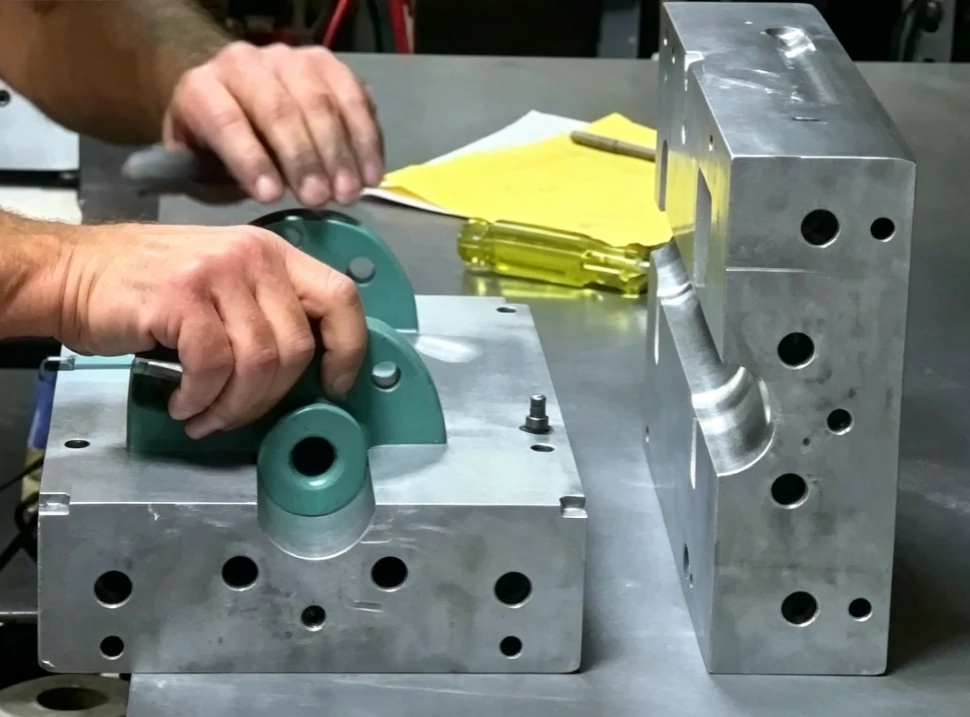
Why Consider Investment Casting for Semiconductor Equipment Parts?
Semiconductor equipment manufacturing is widely recognized as one of the most demanding engineering areas. The components used here aren’t just “precise”—they have to stay stable under long operating hours, meet ultra-clean requirements, and perform reliably in environments like vacuum chambers, wafer transfer systems, and high-accuracy motion assemblies. Even small deviations can affect yield, so the expectations are extremely strict.
When it comes to manufacturing methods, investment casting (lost-wax casting) is not usually the first choice for highly critical semiconductor parts. Processes like CNC machining or precision fabrication are more commonly used for core functional components. That said, investment casting still has its place. It’s often used in a more selective way, mainly for structural parts or non-critical components where complex shapes are needed but ultra-tight tolerances aren’t the main concern.
So, instead of replacing other processes, investment casting tends to work alongside them. In many real production setups, it’s combined with CNC machining or other finishing processes to improve accuracy and surface quality. This hybrid approach allows manufacturers to balance cost, design flexibility, and performance requirements without overengineering every single part.
What Are the Real Advantages of Investment Castings in Semiconductor Equipment Components?
Investment casting is widely used because it produces complex metal parts in near-net-shape form, reducing the need for heavy post-machining. This is especially useful for structural components where ultra-tight tolerances are not required.
A key advantage is the ability to form complex geometries—such as ribs, curves, cavities, and variable wall thickness—directly during casting. In semiconductor equipment, this suits brackets, housings, and support frames where structural design matters more than micron-level precision.
It also reduces material waste compared to subtractive machining. Since parts are cast close to final shape, less metal is removed, which is particularly valuable when using high-cost alloys.
Investment casting is suitable for medium-volume production. Once tooling is established, it enables consistent and repeatable production at lower per-part cost than full machining from solid stock.
The process offers good production stability for structural parts, with acceptable dimensional variation within controlled limits, though it cannot match precision machining accuracy.
It is also compatible with stainless steel and high-performance alloys commonly used in semiconductor environments due to corrosion resistance and strength.
However, in semiconductor applications, it is mainly limited to non-critical structural parts. High-precision components such as motion systems, wafer handling mechanisms, or vacuum sealing interfaces still require tighter-tolerance manufacturing methods.
How Is Investment Casting Applied in Semiconductor Equipment Parts Manufacturing?
In semiconductor equipment systems, investment casting is mainly used for supporting and structural components. It’s not usually chosen for ultra-precision or direct process-contact parts. In real production environments, it’s more about balancing complex shapes, mechanical strength, and cost efficiency.
Common Application Examples
- Equipment frame brackets
Used to support and stabilize machine structures. They help maintain rigidity of the overall equipment during operation. - Mounting supports for subassemblies
Fixed positioning parts for internal modules, ensuring assemblies stay aligned and securely installed. - Structural housings (non-vacuum sealing areas)
Protective housings for mechanical sections that are outside vacuum or sealing requirements. - Mechanical linkage components
Parts used for motion transfer between different assemblies, often benefiting from the shape flexibility of investment casting. - Auxiliary fixture parts
Supporting fixtures used during assembly, calibration, or maintenance processes.
Not Typically Used For
- Wafer handling arms
These require extremely high precision, smooth motion control, and tight tolerances, so other manufacturing methods are preferred. - Vacuum chamber sealing interfaces
Not suitable due to strict airtightness and surface finish requirements in vacuum environments. - Ultra-precision alignment structures
These parts demand very tight dimensional accuracy where casting tolerance is usually not enough. - High-cleanliness particle-sensitive components
Areas requiring strict contamination control usually rely on processes with better surface purity and lower particle risk.
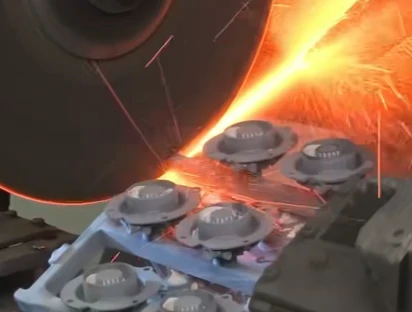
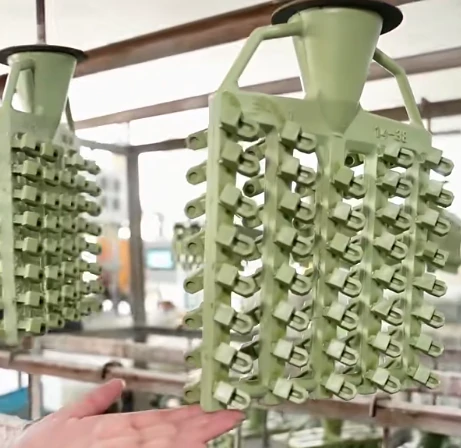
What Functional Capabilities Do Investment Cast Semiconductor Components Offer?
When it comes to investment cast semiconductor components, the focus is usually not on ultra-fine precision, but more on mechanical reliability and structural performance. In semiconductor equipment, these parts are often used where stability matters more than tight tolerance accuracy.
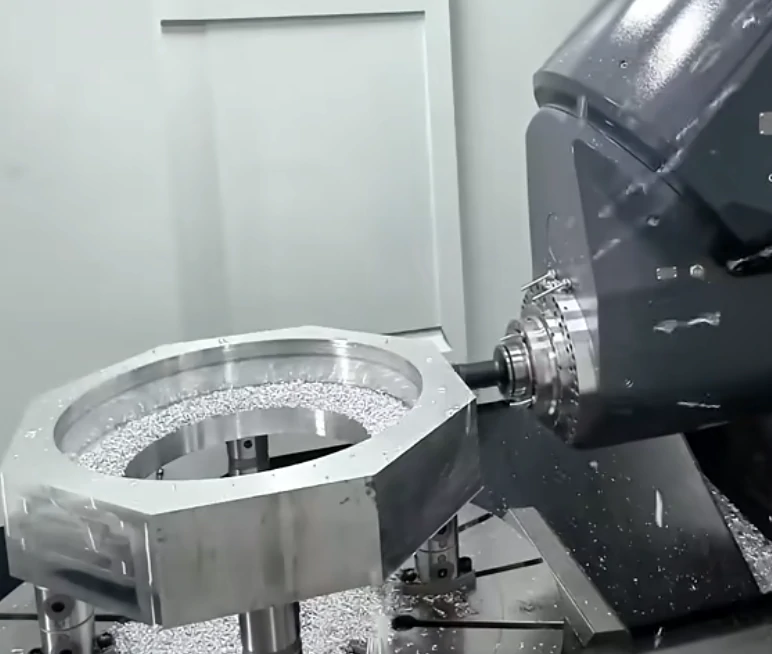
In practical terms, investment casting is good at producing complex shapes, but most parts still need secondary CNC machining if they’re going into functional assemblies.
Key Functional Capabilities
| Capability | Real-World Performance | Relevance in Semiconductor Equipment |
| Structural strength | High | Works well for frames, brackets, and load-bearing supports |
| Dimensional precision | Medium | Usually needs secondary CNC machining to meet final tolerances |
| Surface finish | Medium | Often requires polishing or post-processing depending on usage area |
| Cleanliness level | Moderate | Not ideal for ultra-clean or particle-sensitive zones |
| Complexity shaping | High | One of the main advantages of investment casting |
From a real manufacturing point of view, investment casting semiconductor components are more about getting a near-net shape first. That helps reduce material waste and machining time, especially for parts with complicated geometry.
However, the trade-off is clear—while the shape flexibility is strong, the final functional tolerances usually can’t be achieved directly out of casting. That’s why secondary CNC machining is almost always part of the process when these components are used in actual semiconductor equipment.
In short, these parts are reliable for structural use, but they still depend on post-processing to meet the strict demands of semiconductor-grade applications.
How Can Quality and Cleanliness Be Ensured in Semiconductor Investment Cast Parts?
Even for semiconductor investment cast parts, quality control isn’t something you can treat lightly. These components might not always sit in the most critical zones, but once they go into equipment systems, consistency and cleanliness still matter a lot.
In real production, control usually starts right after casting and continues all the way to final packaging.
Key Inspection and Control Methods
To keep quality stable, manufacturers typically rely on a mix of inspection steps:
- Dimensional inspection (CMM measurement)
Used to check whether key features stay within tolerance after casting and machining. This is usually where deviations show up first. - X-ray or CT inspection for internal porosity
Helps detect hidden issues like shrinkage or pores inside the casting that aren’t visible from the outside. - Surface roughness evaluation
Checks whether the surface meets the required finish level, especially before any sealing or assembly use. - Material composition verification
Confirms the alloy matches specification and performs consistently under operating conditions. - Deburring and cleaning processes
Removes sharp edges, casting residues, and leftover particles from machining or finishing. - Contamination control (oil, particles, residues)
Focuses on eliminating anything that could introduce contamination into sensitive equipment environments.
Cleanliness Considerations in Real Use
Semiconductor environments are extremely sensitive, so even “non-critical” parts still need a clean approach. In practice, cleanliness control for semiconductor investment cast parts usually includes a few extra steps:
- Ultrasonic cleaning
Used to remove fine particles and oil residues from complex internal surfaces. - Controlled packaging
Parts are sealed and packed in clean conditions to avoid dust or airborne contamination during transport. - Surface finishing (passivation or polishing)
Helps reduce surface roughness and lowers the chance of particle generation during operation. - Strict handling procedures
Operators typically follow glove handling, clean storage, and controlled environment rules to avoid re-contamination.
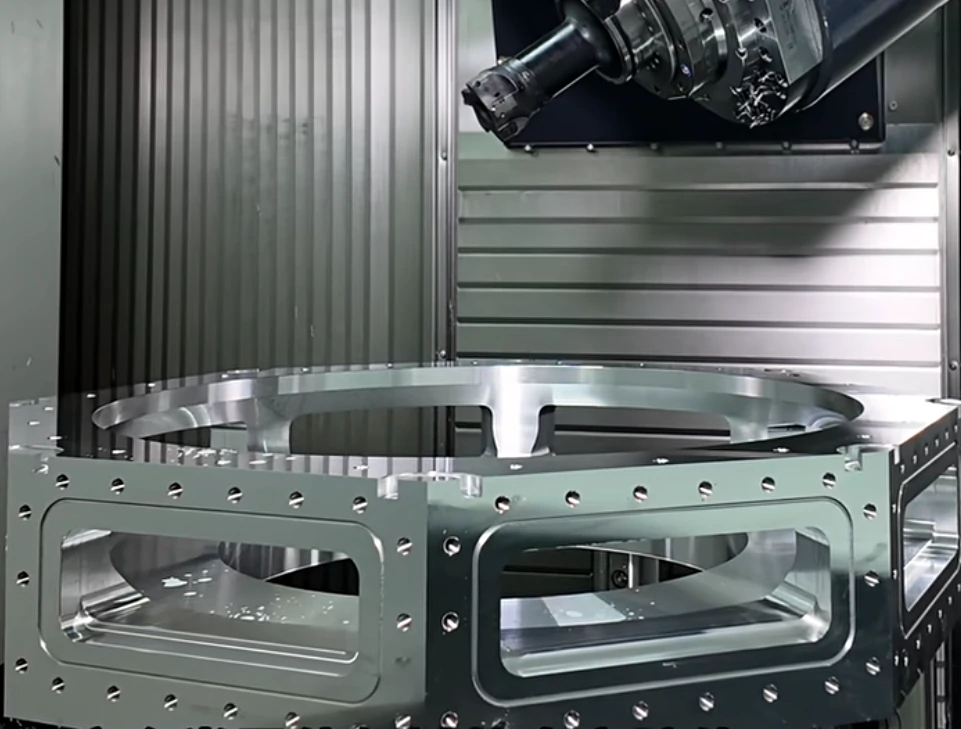
What Are the Key Challenges and Design Limitations of Investment Casting in Semiconductor Equipment Parts?
Even though investment casting in semiconductor equipment parts is flexible and works well for complex shapes, it still has some very real limitations. In actual production, it’s rarely used for high-end functional areas because of these process constraints.
Key Challenges You’ll Commonly Run Into
- Porosity risk (internal defects)
Small internal pores can form during solidification. Even if they’re not visible from the outside, they may affect long-term reliability in certain applications. - Limited ultra-high precision capability
Investment casting can get you close, but it’s not designed for the kind of tight tolerances needed in semiconductor-grade functional zones. - Surface roughness variability
The surface finish can vary from batch to batch, so it’s not always consistent enough without additional finishing work. - Shrinkage control complexity
During cooling, material shrinkage isn’t always uniform, which makes dimensional control more challenging than machining-based processes. - Not suitable for ultra-clean critical interfaces
In sensitive semiconductor environments, even tiny residues or surface irregularities can be a problem, so casting alone is usually not enough.
Design Limitations You Should Keep in Mind
- Thin-wall precision structures are difficult to achieve
Very thin and delicate geometries are hard to maintain accurately during casting. - Tight tolerance features require machining anyway
If a part needs high accuracy, secondary CNC machining is almost unavoidable. - Critical sealing surfaces cannot be cast directly
Any area involved in vacuum sealing or airtight performance usually needs post-machining rather than direct casting.
In practice, these limitations are exactly why investment casting semiconductor equipment parts are mostly used in supporting or structural roles, rather than core functional components. It’s a good process for shaping complex geometry, but when it comes to precision, cleanliness, or sealing performance, other manufacturing methods still take priority.
How Do Different Manufacturing Processes Work Together in Semiconductor Parts?
In real supply chains, especially for semiconductor equipment parts, it’s pretty rare to rely on investment casting alone. Most of the time, where different processes work together to hit both shape complexity and precision requirements.
In practice, the process usually follows a fairly clear sequence:
- Investment casting creates the near-net shape base
This is where the part gets its overall geometry. Complex shapes can be formed early without heavy machining cost. - CNC machining refines critical dimensions
Once the basic shape is ready, precision CNC machining steps in to bring key features into tight tolerance. This is where accuracy really gets locked in. - Surface finishing improves cleanliness and corrosion resistance
Processes like polishing, passivation, or coating help reduce surface roughness and improve suitability for controlled environments. - Final inspection ensures compliance
Every batch goes through dimensional and quality checks to confirm it meets required specs before moving into assembly or shipment
| Process | Main Role in Manufacturing |
| Investment casting | Forms the base geometry and complex shape |
| CNC machining | Delivers precision and tight tolerance control |
| Surface treatment | Improves cleanliness, surface quality, and durability |
| Inspection | Confirms dimensional accuracy and quality consistency |
How Does Welleshaft Provide Precision Manufacturing Solutions for Semiconductor Equipment Parts?
In semiconductor equipment production, Welleshaft focuses on one practical goal: making sure semiconductor equipment parts are manufacturable, dimensionally stable, and consistent from batch to batch.
Instead of relying on a single process, the solution is built around a controlled combination of investment casting, CNC machining, surface finishing, and quality inspection.
Core Manufacturing Capability
For complex structural components, investment casting is used to form the basic geometry. It’s especially useful for parts with complicated shapes where direct machining would be inefficient.
After casting, CNC machining takes over to refine all critical features. This step ensures key dimensions, assembly interfaces, and functional surfaces meet required tolerances.
Then comes surface finishing, which improves both appearance and surface condition, helping reduce roughness and making parts more suitable for controlled equipment environments.
Quality Control Focus: Dimensions, Materials, Appearance
To keep production stable, Welleshaft emphasizes three key control areas:
- Dimensions: checked through precision measurement to ensure consistency across batches
- Materials: verified for composition stability and performance reliability
- Appearance: inspected to avoid defects, surface marks, or finishing issues
These checks are directly linked with machining and finishing, not treated as separate final steps.
Inspection and Delivery Assurance
Before shipment, each batch goes through structured quality inspection, focusing on:
- Dimensional accuracy
- Surface quality after finishing
- Visual appearance consistency
- Functional fit verification
At the same time, controlled handling and packaging are used to maintain part condition during delivery, preventing contamination or damage before installation.
What Are the Most Common Questions About Investment Cast Semiconductor Equipment Parts?
Can investment casting meet semiconductor-grade precision?
Not on its own. Casting can get you close in terms of shape, but when it comes to final tolerances, precision CNC machining is still needed to bring parts up to semiconductor-grade requirements.
Are cast parts suitable for vacuum environments?
Only in limited cases. They might be used in supporting structures, but anything related to sealing or maintaining vacuum integrity is usually handled with more precise manufacturing methods.
Why not use CNC for everything?
CNC machining is definitely more precise, but it’s not always the most practical option. For parts with complex geometry or larger volumes, relying only on CNC can push costs and machining time quite high. That’s why casting is often used first, then refined later.
What is the main risk of using cast parts?
The key concerns usually come down to porosity, surface roughness, and contamination control. If these aren’t managed properly through inspection and post-processing, they can affect performance in sensitive semiconductor environments.
This blog was provided by the Welleshaft Engineering Team, led by Mr. Xu, specializing in precision manufacturing solutions for semiconductor equipment parts, including investment casting, CNC machining, and hybrid production with strict quality control.

 English
  Português do Brasil
  Deutsch (Österreich)
  Deutsch (Schweiz)
  English (UK)
  English (Australia)
  English (New Zealand)
  Deutsch
  Français du Canada
  Français
  Français de Belgique
  Italiano
  English (South Africa)
  Português
  Español
  Español de México
  Español de Perú
  Español de Colombia
  العربية
  日本語
日本語  Русский
  한국어
한국어  Tiếng Việt
  ไทย
ไทย