
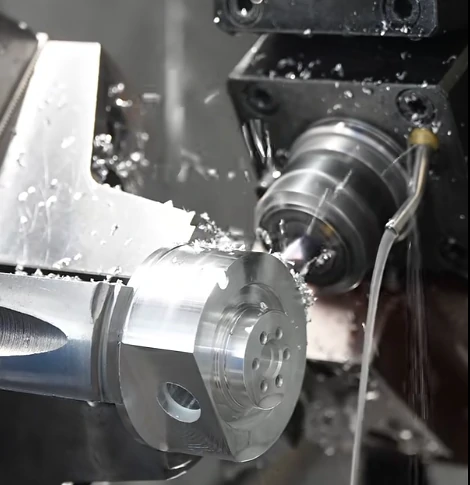
What Is CNC Precision Machining?
CNC precision machining is a manufacturing method controlled by computer programs that precisely remove material from a workpiece according to a digital design. By automating the movement of cutting tools, this process achieves far tighter tolerances than traditional machining techniques. Typically, precision machining maintains tolerances within ±0.1 to 0.2 mm. Achieving this level of accuracy relies on advanced machinery, fine-tuned machining parameters, and skilled operators.
The main purpose of CNC precision machining is to produce consistent, high-accuracy components for industries such as automotive, medical, and defense. Production often involves multiple types of equipment, including milling machines, lathes, and EDM setups, to manufacture high-quality precision machined parts.
Additionally, software tools like CAD and CAM are integral to the process. CAD provides the detailed 3D design, while CAM translates this model into step-by-step machining instructions. The CNC machine then follows these instructions precisely, guiding the cutting tools along the programmed path to achieve the exact shape and specifications required.
How Does the CNC Precision Machining Process Work?
Design and CAD Modeling
Once the final part specifications are defined, engineers create a detailed 3D CAD model that includes dimensions, tolerances, geometric features, and scaling information. Software such as AutoCAD or SolidWorks is commonly used for this purpose. During this stage, Design for Manufacturability (DFM) principles are applied to ensure the model is fully compatible with CNC Precision Machining techniques. A well-prepared design reduces errors and ensures high accuracy in the subsequent machining steps.
CAM and CNC Programming
The next stage involves generating CNC programming instructions. Using CAM software, tool paths are created from the CAD model and translated into G-code and M-code, which CNC machines can interpret. This simulation of tool trajectories helps minimize rounding errors and ensures precision in material removal. Reviewing these programs before machining prevents tolerance stack-ups and reduces the risk of costly rework.
Setup of CNC Machine
Proper CNC machine setup is critical for achieving precision. This includes installing the correct cutting tools (end mills, drill bits, face cutters) and securely fixing the workpiece on the machine bed or chuck. Many CNC systems also feature Automatic Tool Changing (ATC) to streamline operations. Accurate alignment of tools and stable workholding are essential; any misalignment can result in defects in the final parts.
Machining the Part
During the CNC machining process, the machine follows the programmed instructions to remove material from the workpiece. Operators input key machining parameters such as spindle speed, feed rate, and cutting depth to optimize performance. Continuous monitoring and fine-tuning ensure the part meets the required dimensional accuracy. This stage is the core of the CNC Precision Machining process, where the raw material transforms into the intended component.
Post-Processing and Finishing
After machining, components often require post-processing to remove burrs, tool marks, or chips that affect both functionality and aesthetics. Techniques like grinding, deburring, and polishing refine the dimensions and surface quality. Finishing strategies such as sandblasting, electroplating, or polishing further enhance appearance and performance, particularly for parts used in low-friction or high-wear applications like hydraulic rods or rotating components. Completing these steps ensures the final product meets both precision and surface quality standards.
What Are the Types of Precision CNC Machines?
CNC precision machining encompasses a variety of specialized machines, each designed for specific manufacturing tasks. These machines provide high accuracy, enable the production of complex parts, and are essential in industries like automotive, aerospace, medical, and industrial applications. Understanding the functions of each type helps in selecting the right machine for particular designs and part features.
CNC Milling Machines
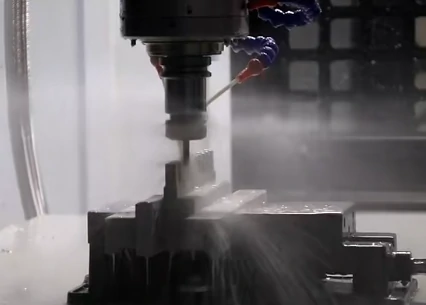
CNC milling is a versatile process used to create complex shapes, contours, and detailed features from flat or plane workpieces. The machine employs a rotating cutting tool that moves along multiple axes, while the workpiece may have linear feed motions. Spindles can reach high speeds—up to 2400 rpm—while maintaining precision of ±0.0025 mm. Milling machines come in horizontal, vertical, or hybrid spindle orientations, making them suitable for parts that require intricate surface details, flat surfaces, and three-dimensional contours.
CNC Turning and Lathes
CNC turning machines, or lathes, are ideal for producing cylindrical and axially symmetrical components such as shafts, sleeves, and disks. In this process, the workpiece rotates while the cutting tool moves linearly to shape the material. This method allows for high precision in creating detailed geometries, with tight tolerances and excellent repeatability. The stationary tool can craft intricate patterns, providing a cost-effective solution for high-volume cylindrical parts.
CNC Drilling Machines
CNC drilling machines create accurate holes in various materials, often in combination with other machining techniques. The drill bit rotates while the workpiece remains stationary, removing material to achieve the desired hole size. Common techniques include:
- Spot drilling: creating shallow guide holes before deep drilling, especially for hard materials.
- Peck drilling: retracting the drill bit periodically during deep-hole drilling to clear chips and reduce heat buildup.
These methods are widely applied in mechanical assemblies across automotive, aerospace, and medical industries.
Electrical Discharge Machines (EDM)
EDM is a non-contact precision machining process that removes material using controlled electric discharges. Both the tool and workpiece act as electrodes immersed in dielectric fluid, allowing intricate cuts with minimal mechanical stress. EDM excels in shaping hard metals and alloys, including titanium and tungsten, and is commonly used for dies, molds, and components requiring fine details and high repeatability.
CNC Plasma Cutting Machines
CNC plasma cutting employs a high-temperature ionized gas beam to cut thermally conductive materials with exceptional precision. The plasma torch focuses energy onto the workpiece, melting material along the desired path. This method achieves tighter tolerances than conventional cutting, down to 0.001 inches, and is effective for complex sheet metal components.
CNC Precision Grinding Machines
CNC grinding serves as a post-processing step in high-precision manufacturing. Rotating grinding wheels remove surface irregularities and refine dimensions, producing smooth or mirror-like finishes. Precision grinders can achieve surface roughness (Ra) values between 0.8–3.2 μm, making them indispensable for applications where both dimensional accuracy and surface quality are critical.
Which Materials Are Suitable for CNC Precision Machining?
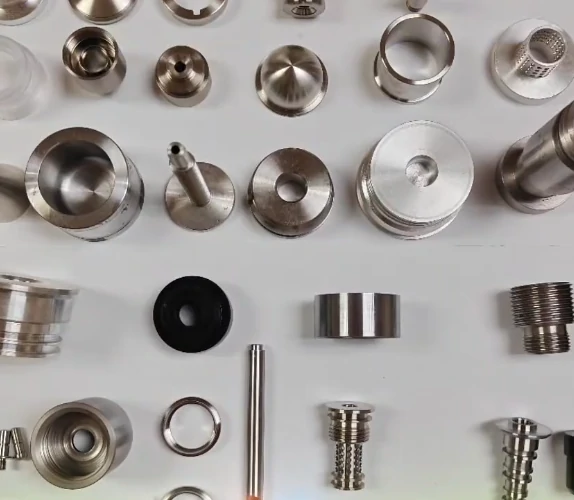
CNC Precision Machining is compatible with a wide range of materials, including metals, plastics, and composites, though most precision applications focus on metals and engineering plastics. The choice of material directly affects tooling selection, machining parameters, and the quality of the finished parts. Selecting the right material also depends on the component’s intended functionality and operating environment, as material properties influence both performance and precision.
Metals
Machining metals requires hard precision tools, often diamond-coated or carbide-based, to handle their strength and hardness. Managing thermal expansion and heat buildup through proper cooling is essential for maintaining tolerances and surface quality. Material selection also impacts overall project cost, since metals vary in price and machinability. Common metals used in CNC precision machining include:
- Aluminum: 6061, 7075, 2024
- Steel: 1018, 4140, 1045, A2, D2
- Stainless Steel: 304, 316, 17-4 PH
- Titanium: Ti-6Al-4V
- Copper: C101, C110
- Brass: C360, C260
- Bronze: C932, C954
- Inconel 718
- Monel 400
Plastics
Plastic materials require careful attention to heat sensitivity, which often leads to slower production speeds compared with metals. Despite this, plastic CNC machining provides high dimensional accuracy and smooth as-machined surfaces. Standard carbide cutting tools are commonly used. Popular plastics for CNC precision parts include:
- Nylon6, Nylon 6/6, Oil-filled Nylon
- ABS
- Polycarbonate (PC)
- Polyethylene (PE)
- Polyoxymethylene (POM)or Acetal
- PTFE & filled PTFE(glass, carbon, bronze)
- Polyether Ether Ketone (PEEK)
- Acrylic (PMMA)
Aluminum
Aluminum CNC parts are favored for their lightweight, corrosion resistance, and high machinability. They also offer good electrical conductivity and can be anodized to improve durability and surface appearance.
Steel
CNC steel components provide exceptional strength and durability, making them suitable for automotive, industrial, and heavy-duty applications where robust performance is required.
Stainless Steel
Parts made with CNC stainless steel machining combine corrosion resistance, mechanical strength, and long-term durability. These are commonly used in industries demanding hygiene, reliability, and longevity, such as medical, automotive, and precision engineering.
Brass
CNC brass parts are valued for their excellent electrical conductivity and ease of machining. They are often used in electrical contacts, hardware, and decorative components. Different grades of brass can also undergo surface treatments, including plating, to enhance functionality and appearance.
What Are the Key Components in CNC Machining?
Spindles
Spindles serve as the central element of CNC machines, holding and rotating the workpieces during machining. Their performance directly affects processing speed, accuracy, and the overall quality of precision machined parts.
Machine Shafts
Long cylindrical machine shafts transmit power between different sections of the equipment. These components are essential for smooth motion and reliable operation in a wide range of CNC machining applications.
Housing Enclosures
Housing enclosures protect internal machine elements from dust, debris, and external impacts. By preventing interference with delicate components, they contribute to the longevity and stable performance of CNC machines.
Suspension Arms
In automotive applications, suspension arms are critical precision parts that control wheel movement. These components can be tailored to meet specific vehicle requirements while maintaining strict tolerances for optimal performance.
What Are the Applications of Precision Machined Parts?
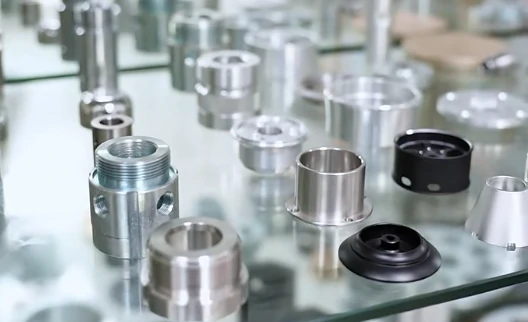
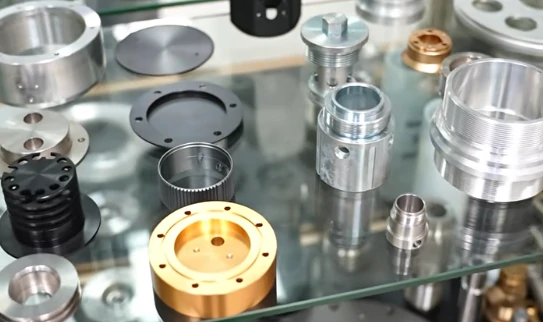
CNC machined parts are widely applied in industries where high precision and tight tolerances are critical. Their usage spans sectors that demand exacting standards for surface finish, dimensional accuracy, and component reliability. Plastic materials are often utilized in precision prototyping machining, while metals dominate in the production of durable industrial components.
| Industry | Application Scenario | Examples |
| Automobilindustrie | Custom parts and prototypes | Engine components, transmission parts, shock absorber mounts, custom brackets, prototype dashboards, specialized assemblies |
| Aerospace | Components with stringent tolerance requirements | Turbine blades, landing gear elements, avionics housings, fuel nozzles, heat shields, satellite structures |
| Medizinische | Devices requiring extreme precision | Surgical instruments, orthopedic implants, dental prosthetics, cardiovascular stents, diagnostic device components |
| Electronics | Compact, high-precision components | PCB enclosures, connectors, heat sinks, sensor housings, camera modules |
Industry-specific applications and precision requirements
- Aerospace: Components demand precision up to ±0.001 mm, including engine parts and structural assemblies.
- Automotive: High-accuracy parts such as suspension systems, transmission components, and engine assemblies.
- Medical: Ultra-precise manufacturing (down to ±0.01 mm) for surgical tools, implants, and diagnostic instruments.
- Electronics: Detailed components for PCBs, connectors, and switches, manufactured with advanced machining technologies.
Key sectors for precision machined parts
- Aerospace and defense: critical structural components and engine parts
- Automotive: precision-engineered engine, chassis, and transmission parts
- Medical: surgical devices, implants, and diagnostic equipment
- Industrial machinery: high-precision assemblies and heavy equipment components
- Custom engineering prototypes: bespoke parts and assemblies for R&D projects
What Are the Advantages of High Precision CNC Machining?
Enhanced Accuracy and Consistency
The primary advantage of CNC precision machining over standard machining is its superior accuracy. Precision equipment follows the same program repeatedly, ensuring consistent results across multiple production batches. This high repeatability guarantees that every precision machined product meets exact specifications, even at large-scale production volumes.
Reduced Material Waste and Improved Efficiency
By using optimized cutting tools and precise machining parameters, material is utilized efficiently, minimizing scrap and off-cuts. This not only reduces raw material costs but also enhances production efficiency. Automation and controlled processes ensure fewer defective parts, faster cycle times, and smoother workflow, leading to significant gains in overall manufacturing productivity.
Capability for Complex Shapes with Tight Tolerances
High-precision CNC machining enables the creation of intricate components such as turbine blades, medical implants, and specialized molds. Multi-axis control, real-time adjustments, and advanced tooling systems allow the production of complex geometries while maintaining tight dimensional tolerances, making precision machined products suitable for highly demanding applications.
Wide Material Compatibility
CNC precision machining can accommodate a broad range of materials, from hard metals like titanium to soft aluminum and various plastics. Thermoset composites and certain specialty alloys are also machinable, providing flexibility in selecting the ideal material for each specific application.
Production Flexibility
Techniques such as milling, turning, drilling, and EDM offer adaptability for both small prototype runs and large-scale production. This versatility supports just-in-time manufacturing, reducing setup time, tooling adjustments, and machining duration for custom parts while maintaining high precision standards.
Why Source CNC Machined Parts from China?
Sourcing CNC machined parts from China offers multiple benefits, making it a top choice for manufacturers worldwide:
- Cost-effective productionwhile maintaining high quality standards, enabling competitive pricing for both small and large orders.
- Access to advanced manufacturing capabilitiesand modern CNC machinery, supporting complex geometries and precise tolerances.
- Rapid prototyping and efficient production cycles, allowing faster time-to-market for new products.
- Flexible customization optionsto meet the specific requirements of diverse industries, including automotive, aerospace, and medical applications.
- A skilled and experienced workforce in CNC machining, capable of handling intricate designs and ensuring consistent output.
Why Choose Welleshaft as Your CNC Precision Machining Partner?
When selecting a reliable CNC precision machining partner for your components or products, two critical factors are technical capabilities and industry experience. The manufacturer must possess advanced CNC machines and comprehensive quality control equipment to meet your precision machining requirements. Additionally, confirming the achievable machining tolerances is essential to ensure your parts meet exact specifications.
Welleshaft offers extensive experience across industries including automotive, aerospace, electronics, medical, and industrial applications worldwide. Our services provide CNC machining tolerances as tight as 0.002 inches, ensuring highly accurate components for both prototyping and production runs.
Key Features of Welleshaft’s CNC Machining Services
- Multi-axis CNC machines(3, 4, and 5 axes)
- Advanced EDMand CNC plasma cutting capabilities
- Skilled engineers and operators with hands-on industry expertise
- Strict quality controlprocesses with ISO 9001 or AS9100 certifications
- Flexible prototyping and small batch production with scalable options
- Over 100 material choices for diverse industrial needs
- Client-focused communication and rapid production lead times
Materials and Machining Capabilities
| Material | Anwendungen | Key Notes |
| Aluminum | Lightweight mechanical parts, automotive, aerospace | Excellent machinability; suitable for complex geometries and tight tolerances |
| Stainless Steel | Medical devices, food processing, marine components | Superior corrosion resistance; precise surface finishes for performance-critical parts |
| Carbon & Alloy Steel | Heavy machinery, industrial components | High strength; can be heat-treated for durability and wear resistance |
| Plastics & Composites | Electronic housings, lightweight components | Easy to machine with high precision; ideal for prototypes and low-volume production |
Precision and Tolerance in CNC Machining
Our CNC precision machining processes ensure consistently high accuracy, with tolerances often within ±0.01 mm, depending on material and geometry. Utilizing multi-axis machines, optimized tooling, and stringent quality inspection protocols, every precision machined part is crafted to meet the exact specifications required for your industrial application.
CNC Precision Machining FAQ
What is the difference between CNC machining and precision machining?
CNC machining involves computer-controlled operation of cutting tools, while precision machining emphasizes achieving extremely tight tolerances and high accuracy in part production. Essentially, CNC provides automation, whereas precision machining ensures exact specifications.
Is CNC precision machining expensive?
Due to its advanced technology and ability to maintain tight tolerances, it can be costlier than traditional machining. However, the high efficiency and consistency reduce the per-part cost for large-scale production, making it economically viable over time.
What is the difference between CNC, NC, and DNC machining?
- NC (Numerical Control): Uses fixed programs or punched tapes, with limited flexibility and manual adjustments required.
- CNC (Computer Numerical Control): Programs are stored and executed via computer, enabling faster setup, higher precision, and improved repeatability.
- DNC (Direct Numerical Control): Connects multiple CNC machines to a central system for real-time program updates, ideal for multi-machine, high-mix production environments.
What tolerances can be achieved for machined parts?
Standard CNC machining tolerances follow international norms like ISO 2768. For critical applications, custom tight tolerances can be specified to meet exact performance and assembly requirements.
Schlussfolgerung
CNC precision machining enables the production of complex designs with exceptional dimensional accuracy and tight tolerances. Its automated operation minimizes manual intervention, ensuring consistent precision across parts. In addition to accuracy, this approach provides speed, efficiency, and flexible customization options, helping reduce production time and overall costs.
This method is ideal for diverse applications, including medical components, electronic devices, and industrial parts. Balancing cost considerations with the need for high precision ensures both operational reliability and longevity of the components.
China has become a global leader in CNC machining, offering high-quality, precision components for industries such as aerospace, automotive, medical, and electronics. Advanced technologies, a skilled workforce, and cost-effective processes enable China’s CNC machining capabilities to meet complex specifications efficiently.
By leveraging CNC precision machining, manufacturers can streamline production, achieve exact specifications, and implement advanced manufacturing techniques. Whether producing high-volume CNC components or specialized precision parts, this approach delivers reliable, efficient, and scalable solutions for diverse industrial needs.
This blog was provided by the Welleshaft Engineering Team, led by Mr. Xu, showcasing over 10+ years of expertise in CNC precision machining, custom component manufacturing, and high-accuracy industrial solutions for automotive, medical, and electronics sectors.

 Deutsch
  English
  Português do Brasil
  Deutsch (Österreich)
  Deutsch (Schweiz)
  English (UK)
  English (Australia)
  English (New Zealand)
  Français du Canada
  Français
  Français de Belgique
  Italiano
  English (South Africa)
  Português
  Español
  Español de México
  Español de Perú
  Español de Colombia
  العربية
  日本語
日本語  Русский
  한국어
한국어  Tiếng Việt
  ไทย
ไทย