
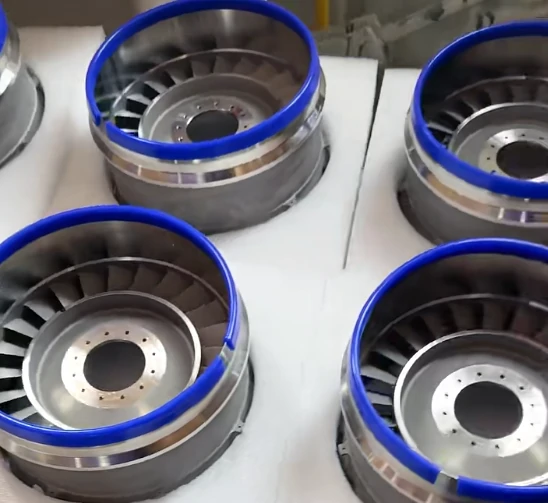
What Is Superalloy Vacuum Investment Casting Technology?
-
Precision Wax Pattern Formation: High-accuracy wax injection into precision-machined molds replicates aerospace geometries with ±0.02 mm tolerance, ensuring consistency for downstream casting.
-
Ceramic Shell Mold Development: 6–8 layers of ceramic slurry and refractory sand form durable molds capable of withstanding ~1450°C casting temperatures.
-
Controlled Dewaxing Process: Autoclave dewaxing at ~150°C removes wax while maintaining mold integrity and dimensional stability.
-
High-Temperature Mold Firing: Firing at ~1000°C eliminates contaminants and stabilizes mold structure for aerospace-grade components.
-
Vacuum Melting of Superalloy: Vacuum melting at ~1450°C (10⁻³ Pa) ensures metallurgical purity, controlled composition, and reduced inclusions.
-
Controlled Casting and Solidification: Optimized solidification produces fine-grain microstructures (≤1 mm), improving strength and creep resistance.
-
Shell Removal and Surface Finishing: Mechanical and chemical removal preserves geometry and achieves surface finish up to Ra ≤1.6 μm.
- Post-processing and Inspection: Advanced heat treatment, precision CNC machining, and thorough quality inspections(CMM and X-ray) ensure that all components meet stringent aerospace standards and reliability requirements.
What Are Aerospace Superalloy Material Characteristics?
We select advanced aerospace superalloys for vacuum investment casting because they retain strength, dimensional stability, and corrosion resistance under extreme operating conditions.
Inconel 718
One of the most widely used aerospace superalloys, Inconel 718 offers tensile strength ≥1240 MPa and reliable operation up to ~704°C. Its excellent fatigue and creep resistance make it suitable for highly stressed turbine and engine components.
Rene N5
Designed for extreme high-temperature environments, Rene N5 maintains thermal stability up to ~1150°C. We select this alloy for its exceptional creep rupture life exceeding 1000 hours at 1100°C under 137 MPa, making it ideal for critical hot-section components.
IN713LC
IN713LC provides balanced mechanical and environmental performance, with creep strength exceeding 200 MPa after 1000 hours at 760°C. Its strong corrosion and oxidation resistance extend service life in harsh conditions.
CMSX-4 (Single Crystal)
CMSX-4 is a single crystal superalloy that we design to eliminate grain boundary weaknesses and improve high-temperature durability. It maintains tensile strength ≥1200 MPa at ~1100°C, making it ideal for advanced turbine blades and engine components.
Material Selection Summary
We select these aerospace superalloys for vacuum investment casting because they combine high-temperature strength, creep resistance, oxidation resistance, and long-term reliability required for modern aerospace systems.
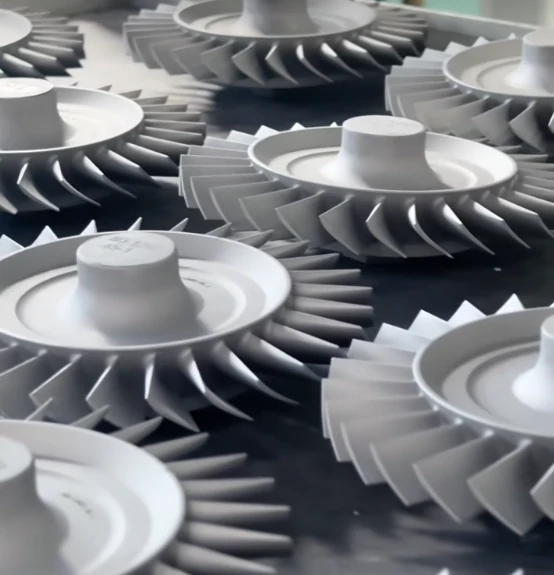
What Are the Main Manufacturing Challenges and Solutions in Superalloy Vacuum Investment Casting?
Producing high-performance aerospace components via superalloy vacuum investment casting involves several technical challenges. Ensuring precision, reliability, and compliance requires addressing these key issues:
Challenges
- Maintaining tight dimensional tolerances in CNC machining of aerospace parts, where even minor deviations can affect engine performance.
- Reducing common casting defects, including microporosityand shrinkage voids, which can compromise mechanical integrity.
- Achieving consistent mechanical propertiesand uniform microstructures across each component batch.
- Meeting stringent aerospace standardsfor quality, performance, and reliability, which govern material selection, tolerances, and testing procedures.
Solutions
- Utilizing precision wax patterns combined with meticulous ceramic mold design ensures faithful replication of intricate geometries.
- Implementing vacuum melting under controlled environmentsminimizes impurities and significantly reduces the occurrence of casting defects.
- Applying advanced solidification control techniquesenables uniform grain structures, lowers internal stresses, and optimizes mechanical performance.
- Conducting thorough quality inspections and testing protocols, such as ultrasonic evaluation, X-ray analysis, and dimensional checks using CMM, ensures full compliance with all relevant aerospace certifications.
These manufacturing strategies collectively address the inherent complexities of superalloy vacuum investment casting, delivering components that meet the rigorous demands of modern aerospace engineering.
What Are the Aerospace Applications of Vacuum Investment Cast Superalloys?
The combination of superalloy vacuum investment casting and advanced aerospace materials enables the production of complex, high-performance components capable of operating under extreme thermal and mechanical loads. Typical aerospace applications include the following:
Gas Turbine Blades and Vanes
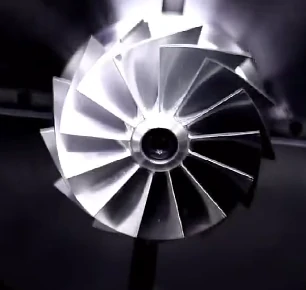
Among the most demanding aerospace components, gas turbine blades and vanes must withstand prolonged exposure to temperatures exceeding 1000°C while maintaining structural integrity. Their performance directly influences engine efficiency, fuel consumption, and operational reliability.
Engine Structural Components
We manufacture various engine structural components, including support structures, casings, and housings, to achieve high strength while minimizing overall weight.These parts often require precise dimensional control, excellent corrosion resistance, and the ability to withstand cyclic mechanical loads.
Turbine Nozzle Segments
Turbine nozzle segments feature intricate internal and external geometries that help regulate airflow and thermal distribution within the engine. Accurate casting of these components contributes to improved aerodynamic performance and effective heat management.
Combustion Chambers and Liners
Critical combustion chambers and liners are designed to operate in environments where temperatures can exceed 1200°C. These components require exceptional heat resistance, oxidation resistance, and long-term durability to ensure stable combustion and extended service life.
Through vacuum investment casting for aerospace components, manufacturers can produce complex shapes with excellent dimensional accuracy, making the process particularly suitable for advanced gas turbine components, engine structural components, and other mission-critical aerospace systems.
How Are Turbine Blades Manufactured by Vacuum Investment Casting?
Component Design and Technical Requirements
Turbine blades for aerospace applications require precise engineering control to withstand extreme thermal and mechanical loads. Key design considerations include single crystal structure formation, internal cooling efficiency, and strict aerodynamic profile control.
Single crystal structures eliminate grain boundary-related failures and improve creep and fatigue resistance at high temperatures. Internal cooling passages are precisely formed to ensure thermal stability, while aerodynamic profiles are controlled within ±0.02 mm to maintain consistent engine performance.
Controlled Manufacturing Process
The production of CMSX-4 turbine blades uses a tightly controlled vacuum investment casting process, where each stage directly impacts final component quality.
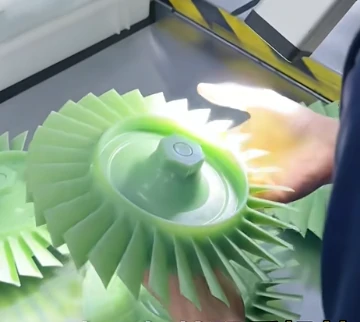
High-precision wax injection ensures geometric repeatability before ceramic shell formation.We build multi-layer ceramic shells under controlled drying conditions to maintain strength during high-temperature exposure.
We melt CMSX-4 alloy under vacuum to minimize oxidation and impurities, followed by directional solidification to promote single crystal growth and stable microstructure formation.
After casting, heat treatment (solution and aging) optimizes strength and high-temperature performance. CNC machining achieves final aerodynamic geometry, while EDM is used to form internal cooling channels without affecting structural integrity.
Quality Verification and Inspection
Each turbine blade undergoes a multi-stage inspection system to ensure compliance with aerospace requirements.
We use X-ray inspection to evaluate internal structural integrity and verify single crystal formation quality. We apply ultrasonic testing to detect subsurface discontinuities, while we use CMM measurement to ensure tight dimensional control across all critical features.
Mechanical testing confirms that the final components meet required performance standards, including tensile strength exceeding 1200 MPa and fatigue resistance suitable for long-term aerospace service conditions.
Why Choose Welleshaft for Aerospace Vacuum Casting Parts?
Welleshaft is a specialized aerospace vacuum investment casting manufacturer focused on delivering high-integrity superalloy components for turbine systems and engine applications where performance, reliability, and dimensional accuracy are critical.
Compared with conventional foundries, we provide stronger control over process stability, defect reduction, and long-term material consistency through a fully integrated manufacturing system.
Key advantages include:
- Stable aerospace-grade process control ensuring consistent casting quality across production batches and minimizing variability in critical components
- High-precision dimensional capability supporting complex geometries and tight tolerances required in turbine and engine assemblies
- Advanced superalloy expertise in materials such as CMSX-4, Inconel 718, and René series alloys for high-temperature environments
- Low-defect vacuum casting process with controlled melting, solidification, and microstructure formation to improve fatigue and creep resistance
- Full in-house production chain from wax pattern tooling to ceramic shell building, vacuum casting, machining, and finishing
- Comprehensive inspection system including CMM measurement, X-ray inspection, and ultrasonic testing to ensure structural integrity and compliance.
What Are Common Questions About Aerospace Superalloy Vacuum Casting?
What Advantages Does Vacuum Investment Casting Provide for Aerospace Superalloy Components?
Vacuum investment casting enables the production of aerospace superalloy components with exceptional material integrity and repeatable performance. By melting and pouring metals under a vacuum, the process minimizes oxidation and contamination—critical for nickel-based and cobalt-based superalloys used in high-temperature environments. It also supports the creation of complex geometries with tight dimensional accuracy and high surface quality, reducing the need for extensive post-casting machining.
Which Aerospace Components Are Most Commonly Produced Using Vacuum Investment Casting?
We widely apply this technique to aerospace components that operate under extreme thermal and mechanical conditions and feature intricate designs.Typical parts include turbine blades, turbine vanes, nozzle guide vanes, combustion chamber components, engine casings, and auxiliary power unit (APU) parts. These components demand precise shapes and consistent performance at elevated temperatures.
How Is the Integrity of Vacuum Investment Cast Superalloy Parts Verified?
To ensure quality and reliability, vacuum investment cast superalloy parts undergo multiple inspection techniques. These often include visual inspections, dimensional verification using CMM equipment, X-ray testing to detect internal defects, and fluorescent penetrant inspection (FPI) to identify surface flaws. Depending on application requirements, manufacturers may also perform chemical analysis, metallurgical evaluation, and mechanical testing to confirm that components meet aerospace specifications.
Which Superalloys Are Typically Used in Aerospace Vacuum Investment Casting?
High-performance superalloys commonly cast for aerospace applications include Inconel 718, Inconel 713C, René 80, René 77, and MAR-M 247. We choose these materials for their ability to retain strength, oxidation resistance, and structural stability at high temperatures.Selection depends on the component’s operating environment, thermal load, and required performance.
What Materials Are Favored for Specific Performance Requirements?
- Nickel-based alloys(e.g., Inconel) are preferred for high-temperature creep resistance.
- Cobalt-based alloysoffer superior wear and corrosion resistance.
- Titanium alloysare used for components where a high strength-to-weight ratio is essential.
Dieser Blog wurde bereitgestellt von der Welleshaft Ingenieurteam. Led by Mr. Xu, we specialize in aerospace superalloy vacuum investment casting, precision machining, and quality inspection for high-performance engine components.

 Deutsch (Schweiz)
  English
  Português do Brasil
  Deutsch (Österreich)
  English (UK)
  English (Australia)
  English (New Zealand)
  Deutsch
  Français du Canada
  Français
  Français de Belgique
  Italiano
  English (South Africa)
  Português
  Español
  Español de México
  Español de Perú
  Español de Colombia
  العربية
  日本語
日本語  Русский
  한국어
한국어  Tiếng Việt
  ไทย
ไทย