
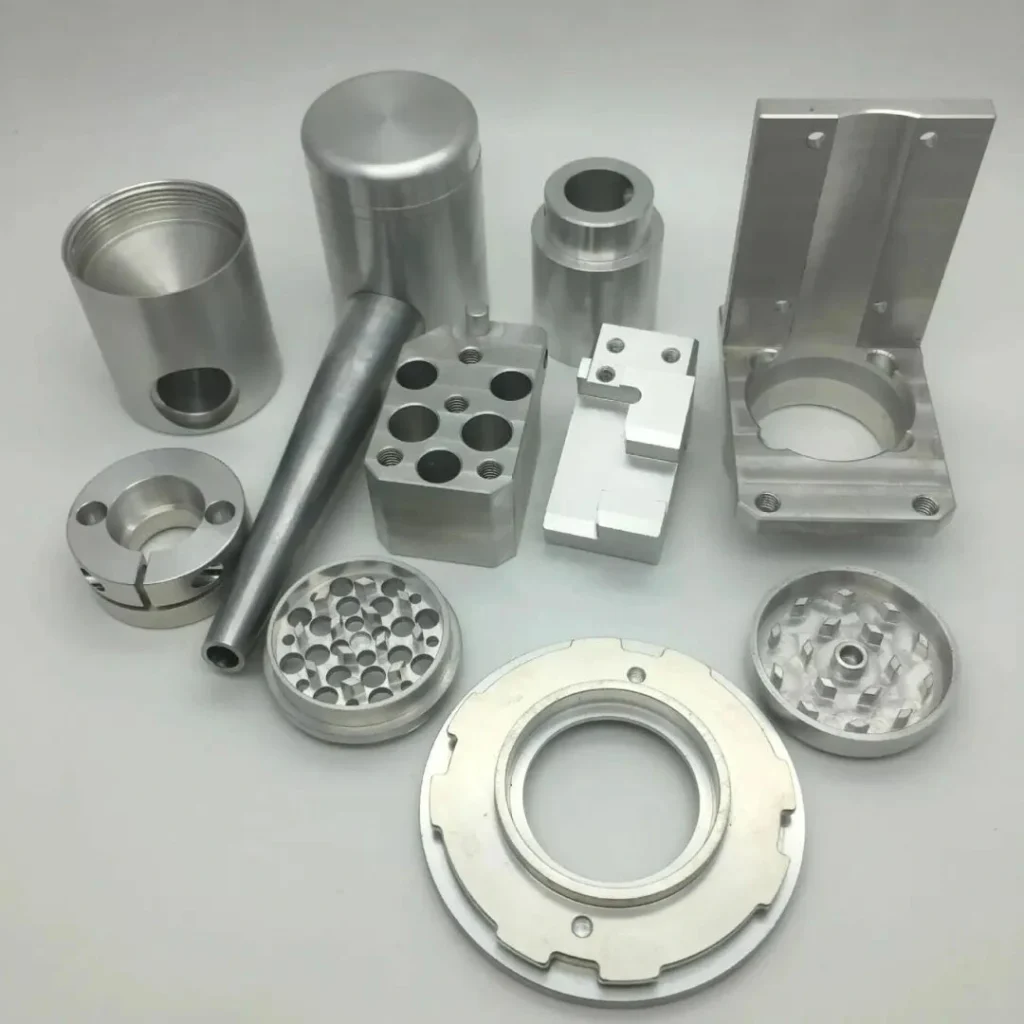
Small Batch CNC Machining: A Complete Guide to Low-Volume Production
What is Small Batch Gia công CNC?
Small Batch CNC Machining is not simply a variation of traditional machining; it represents a strategic innovation in manufacturing and supply chain management. At its core, it transforms physical molds into digital models, shifting production from a capital-intensive, long-cycle predictive approach to a capital-light, fast-response, on-demand manufacturing model. This approach bridges the gap between prototyping and mass production, delivering precise parts in small quantities without costly tooling or excess inventory. It is especially suitable for projects where customization, intricate design, and high precision are paramount.
Why It Matters for Modern Manufacturing and Product Innovation?
Accelerating Innovation and Flexibility
Ever felt trapped by high tooling costs and long lead times for a small batch CNC machining project, stalling your product development and innovative drive? Low volume CNC machining offers unmatched manufacturing flexibility, rapid turnaround, and cost-effectiveness for small batches. It empowers businesses to accelerate design iterations, reduce time-to-market, minimize inventory risks, and swiftly adapt to market demands, becoming a cornerstone of modern product development.
The modern manufacturing landscape demands speed and agility. Gone are the days when companies could spend months developing a single prototype or commit to a massive production run based on unproven assumptions. Low volume CNC machining acts as a bridge between initial concepts and market-ready products, fundamentally changing how we approach product development.
Unleashing True Manufacturing Flexibility
Unlike injection molding, which requires significant upfront investment in molds, small batch CNC machining is a direct digital manufacturing process. A CAD file is the only tool needed to get started. This “tool-less” nature provides incredible flexibility.
1.Design Freedom: Minor tweaks or complete design overhauls can be made by simply updating the digital file. No costly mold modifications or write-offs are required.
2.Material Flexibility: The same equipment can switch between materials—such as aluminum for lightweight prototypes or PEEK for high-performance parts—without changing tooling. This adaptability is especially valuable during R&D phases.
Accelerating Time-to-Market
In today’s competitive environment, speed is critical. Low volume CNC machining significantly shortens the product development cycle, allowing prototypes or production-quality parts to reach stakeholders in days instead of weeks or months.
From Digital File to Physical Part:
Once a 3D model is ready, CAM software generates the toolpaths, and machines can start cutting material within hours. This rapid turnaround enables functional prototypes or small batches of precise parts quickly, creating a feedback loop for testing, validation, and iterative improvement.
3.What Are the Core Benefits and Advantages of Small Batch CNC Machining?
Advantages of Small Batch CNC Machining
Small Batch CNC Machining offers numerous strategic advantages that make it ideal for modern, agile manufacturing. One of its key benefits is faster time-to-market: unlike mold-based production, small-batch CNC skips tooling, cutting lead times by 30%–50%. Rapid turnaround enables projects requiring prototypes or urgent deliveries to move quickly, giving businesses a competitive edge.
Another major advantage is flexibility in design and process. Since the process relies on digital CAD files, minor tweaks or complete design overhauls can be implemented easily between batches. This ability to iterate quickly allows companies to validate designs, test market reactions, and adjust specifications without the high costs associated with mold modifications or die-casting dies.
Precision and consistency are inherent to small batch CNC machining. Advanced CNC machines can achieve tolerances within ±0.01 mm, ensuring that every part—whether the first or thousandth—meets stringent quality standards. Conditioned, well-maintained, and regularly calibrated machinery further guarantees high-quality output batch after batch.
Cost control is another key advantage. By eliminating expensive molds and tooling, upfront capital expenditures are significantly reduced. Low volume CNC machining allows businesses to allocate resources to marketing, R&D, or other strategic initiatives while avoiding the financial risks of overproduction.
The method also minimizes inventory risk and material wastage. On-demand production enables manufacturers to produce only the quantity required, preventing stockpiling of parts that may become obsolete, reducing cash flow pressure, and optimizing material use.
Finally, small batch CNC machining bridges the gap between prototype and production. It enables rapid creation of functional prototypes, pilot runs, or bridge tooling parts that can test market readiness while permanent tooling or high-volume production is being prepared. This iterative, lean approach ensures faster product validation, lower risk, and a seamless transition from design to full-scale manufacturing.
Comparison: Small Batch CNC Machining vs Traditional Mass Production
| Feature | Small Batch CNC Machining | Traditional Mass Production |
| Initial Tooling Cost | None / Very Low | High to Very High (Molds, Dies) |
| Lead Time (Prototype / First Article) | Days | Weeks or Months |
| Design Flexibility | High (Easily Modified) | Low (Costly to Change) |
| Precision & Consistency | ±0.01 mm tolerances, batch-to-batch identical | Moderate, may require post-processing |
| Ideal Batch Size | 1 – 10,000+ units | 10,000+ units |
| Inventory Risk | Low, on-demand production | High, stockpiling required |
| Material Efficiency | Minimal waste | Higher waste due to mass setup |
| Iteration & Innovation | Supports rapid design iteration and prototyping | Slow, expensive to modify |
Which CNC Processes Are Commonly Used for Small Batch Production?
Key Processes in Small Batch CNC Machining
Small Batch CNC Machining is a crucial subset of CNC machining that uses a variety of processes, each tailored to meet specific manufacturing needs with high precision and adaptability. Every process plays a unique role in producing high-quality components in limited quantities while balancing cost, accuracy, and lead time.
1.CNC Turning is essential for cylindrical parts such as shafts, pins, and bushings. The workpiece rotates while a stationary cutting tool shapes it, providing high efficiency and tight tolerances. Advanced setups like turn-mill combine multiple operations in one setup, reducing cycle times by ~25% in practice. Turning works effectively with a wide range of materials, including metals like aluminum and brass, and ensures superior surface finishes.
2.CNC milling handles complex parts with 3- to 5-axis machines, enabling rapid prototyping, high customizability, ±0.01 mm tolerances, and efficient material use, making it ideal for small-batch CNC production.
3.CNC drilling, tapping, and boring create precise holes and threads, ensuring accuracy and high pass rates—for example, 100+ M6 holes in an automotive project reached 98% yield.
4.EDM (sinker & wire-cut) machines hard metals like steel & titanium with ±0.005 mm accuracy, creating intricate 3D shapes while preserving surface integrity.
5.Surface, OD, and centerless grinding ensure flatness, thickness, and smoothness. Surface grinding reaches Ra 0.4 μm; OD suits shafts, centerless enables efficient batches with tight tolerances.
6.Multi-axis and fixtured parallel machining boost versatility and throughput. 3–5 axis setups reduce setups, and fixturing machines multiple parts simultaneously, raising small-batch output by up to 60% while ensuring consistent quality.
Secondary Processes and Surface Treatments further
- Bead Blasting: Provides uniform matte finishes and removes tool marks.
- Plating and Coatings: Anodizing, zinc plating, or powder coating increases wear resistance, corrosion protection, and aesthetics.
- Laser Marking: Adds serial numbers, QR codes, or identifiers for traceability, especially for medical or aerospace parts.
- Precision Surface Grinding: Ensures extreme flatness and smoothness where required.
Small batch CNC machining integrates turning, milling, drilling, EDM, grinding, and multi-axis processes with finishing to produce precise, customizable parts efficiently, minimizing setup, waste, and enabling rapid design iteration.
How to Choose Materials and Surface Treatments for Small Batch CNC Machining?
Materials and Surface Treatments in Small Batch CNC Machining
In small batch CNC machining, material selection directly affects precision, durability, cost, and performance. Unlike mass production, low-volume manufacturing allows materials to be chosen based on functional needs rather than tooling limits, improving flexibility and design optimization.
Aluminum is lightweight, machinable, and thermally conductive—ideal for aerospace, automotive, and electronics. Stainless and carbon steel offer strength and wear resistance; stainless resists corrosion but needs rigid tooling. Brass and copper alloys are favored for machinability and electrical conductivity, though copper needs sharp tools and coolant control. For high-performance applications, titanium and nickel alloys deliver superior strength and heat resistance but are harder to machine. Tungsten is selected for extreme temperature environments.
Plastics are equally important in low-volume CNC machining, especially for prototyping and functional testing.ABS is easy to machine for prototypes, PC offers toughness and clarity, POM suits low-friction parts, and PEEK resists heat and chemicals for industrial and medical use.
| Category | Material | Key Machining Characteristics |
| Metals | Aluminum | Lightweight, excellent machinability |
| Steel / Stainless Steel | High strength; stainless steel work-hardens | |
| Copper Alloys | High conductivity; soft, requires sharp tools | |
| Titanium / Nickel Alloys | Heat-resistant; difficult to machine | |
| Plastics | ABS / PC / POM / PEEK | Lightweight, corrosion-resistant, application-specific |
Surface treatments further enhance part performance and appearance. Anodizing improves aluminum corrosion resistance, sandblasting creates uniform matte finishes, and polishing achieves smooth or mirror-like surfaces. Plating, powder coating, and black oxide add protection or aesthetics, while heat treatment increases hardness and durability for load-bearing parts.
Optimized materials and finishing let small-batch CNC produce precise parts faster, with less waste and greater flexibility.
Design and Process Optimization Improve Small Batch CNC Machining Efficiency?
Design Optimization for Small Batch CNC Machining
Effective design for small batch CNC machining is the most powerful lever for controlling cost, lead time, and quality. By applying Design for Manufacturability (DFM) principles early, engineers can significantly reduce machining complexity while preserving functionality and precision.
Simplify geometry: use rounded internal corners (≥1/3 depth) and shallower, wider pockets to cut machining time and avoid costly EDM. Standardize holes, threads, and features; limit tight tolerances (±0.05 mm) to critical areas to lower small-batch CNC costs.
Material selection must balance performance with machinability. Free-machining materials such as Aluminum 6061 reduce cycle time and tooling wear compared to harder alloys like stainless steel 316. Faster cutting speeds translate directly into lower labor and machine costs for small batch production.
A modular design approach further enhances efficiency. Modular components simplify machining, inspection, and assembly, allowing partial redesigns without reworking the full system.
| Costly Design Choice | Optimized Alternative | Why It Reduces Cost |
| Sharp internal corners | Rounded internal corners | Eliminates EDM and secondary processes |
| Deep, narrow pockets | Wider, shallower pockets | Allows rigid tools and faster cutting |
| Thin walls | Thicker, reinforced walls | Reduces vibration and deformation |
| Complex 3D contours | 2.5D or prismatic features | Enables simpler 3-axis machining |
| Non-standard holes | Standard drill sizes | Avoids custom tooling |
Small batch CNC machining offers design flexibility and rapid iteration. Digital CAD/CAM enables instant changes without tooling, supporting fast prototyping, iterative testing, and mass customization, while optimizing geometry, tolerances, materials, and modularity for precise, low-risk, cost-efficient production.
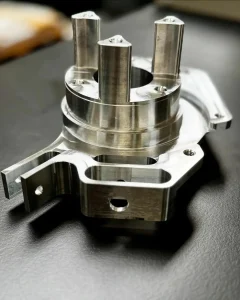
What Is the Cost Structure of Small Batch CNC Machining and How to Optimize It?
Cost Optimization in Small Batch CNC Machining
Several factors influence the cost of small batch CNC machining:
- Material Choice – Prices and machinability vary; Aluminum 6061 is fast to cut, Stainless Steel 304 moderate, Titanium/plastics increase time and tool wear.
- Design Complexity – Complex parts with deep pockets, fine engraving, or tight radii increase setup and machining time; applying DFM principles reduces labor and tool costs.
- Part Size and Machining Time– Larger or more detailed components require longer cutting times. Efficient CAM programming and optimized toolpaths help minimize machine runtime and maintain consistency.
- Quantity Ordered – CNC avoids costly molds, but setup/programming costs spread over fewer units make small orders pricier; unit cost decreases as quantity rises.
- Tolerances & Finishes – Tight specs, polishing, engraving, or coatings add cost; limiting them to critical areas ensures quality efficiently.
- Labor & QC – Skilled machinists and inspections add cost; optimized workflows and standard processes reduce errors and labor hours.
Table: Key Cost Drivers and Impacts
| Cost Factor | Impact on Small Batch CNC Machining | Cost-Saving Strategies |
| Material Choice | Machining speed, tool wear, unit cost | Select free-machining or alternative materials |
| Design Complexity | Setup time, machine runtime | Simplify geometry, follow DFM principles |
| Part Size & Machining Time | Longer cycles, higher labor | Optimize toolpaths, multi-axis machining |
| Quantity Ordered | Unit price higher for low volume | Batch scheduling, amortize setup cost |
| Tolerances & Surface Finish | Extra machining & inspection | Apply tight tolerances only where necessary |
| Labor & QC | Skilled workforce cost | Standardize processes, intelligent programming |
How Is Quality Assurance and Consistency Ensured in Small Batch CNC Machining?
In small-batch CNC machining, quality and consistency are as critical as precision. Each component is often vital for prototypes, specialized equipment, or low-volume production, leaving no room for error. Achieving high-quality output relies on a combination of advanced inspection, process control, and traceability.
Key Elements of Small Batch QA:
- First Article Inspection (FAI):The first part undergoes rigorous independent checks using precision-measuring equipment to verify all critical dimensions and specifications, establishing a benchmark for the full batch.
- In-Process Monitoring:Continuous measurement of critical features with CMMs, touch probes, or laser systems detects dimensional variability due to tool wear or material anomalies. SPC (Statistical Process Control) ensures real-time quality control.
- Final Inspection and Traceability:Every part is inspected for dimensional accuracy, surface finish, hardness, and cosmetic defects, with results documented for full traceability from raw material to finished product. Material certificates, machine parameters, and inspection reports ensure compliance and facilitate root-cause analysis.
Supporting Measures for Precision:
- Machine Calibration & Maintenance:Regular calibration of axes and spindle alignment maintains tolerances as tight as ±0.005 mm. Preventive maintenance avoids dimensional drift and unplanned downtime.
- Toolpath Validation & Simulation:CAM software validates cutting strategies, reduces collisions, and optimizes surface finish before machining, especially for complex geometries or hard materials like Rene 41 or titanium.
- Process Documentation:Detailed setup sheets, tooling lists, offsets, fixture designs, and inspection plans enable repeatable results and scalable production, ensuring consistency from initial small-batch runs to larger orders.
Advanced Inspection Tools:
| Tool | Best For | Advantage | Limitation |
| CMM | High-precision prismatic parts | Unmatched accuracy and repeatability | Slower for complex freeform surfaces |
| Laser Scanner | Complex surfaces, contoured shapes | High-density data capture quickly | Slightly less accurate than touch-probe CMMs |
| Calipers/Micrometers | Quick spot-checks, simple dimensions | Portable and easy to use | Operator-dependent, limited precision |
Industry Standards and Compliance:
| Industry | Standard | Key QA Requirement |
| Hàng không vũ trụ | AS9100 | Full traceability, FAI, material certs |
| Medical Devices | ISO 13485 | Process validation, risk management, sterile handling |
| Ô tô | IATF 16949 | SPC, PPAP documentation |
| General Manufacturing | ISO 9001 | Consistent processes, continuous improvement |
What Are the Applications and Industry Use Cases for Small Batch CNC Machining?
Small-batch CNC machining plays a pivotal role across diverse industries, delivering precision, flexibility, and cost-efficient production of high-quality components. Its versatility supports applications ranging from aerospace and medical devices to automotive, electronics, and industrial machinery, enabling rapid prototyping, customization, and on-demand manufacturing.
Key Industries and Applications:
- Aerospace & Defense:Components such as turbine blades, avionics housings, and landing gear parts demand extreme precision, strength-to-weight ratios, and compliance with tight tolerances. Small-batch machining allows for quick design iterations, production of specialized jigs/fixtures, and manufacturing from certified materials like Titanium, Inconel, or Aluminum 7075, ensuring predictable performance under stress.
- Medical Devices:Custom implants, surgical tools, and diagnostic components require biocompatibility, sterilizability, and high precision. Using materials like PEEK, Stainless Steel 316L, and Titanium, small-batch machining enables patient-specific implants and rapid prototyping for iterative design testing.
- Automotive:From performance parts and aftermarket kits to pre-production vehicle testing, low-volume CNC machining provides high-strength aluminum or steel components for custom brackets, intake manifolds, and suspension parts, bridging the gap before mass-production tooling is ready.
- Consumer Electronics & Telecommunications:Rapid development of custom enclosures, heatsinks, and electronic fittings benefits from precise surface finishes and small-volume flexibility, allowing startups and manufacturers to deliver functional prototypes and niche products efficiently.
- Industrial Machinery:Replacement parts, jigs, and fixtures for legacy or specialized machines can be reverse-engineered and machined on demand, reducing downtime and enabling custom automation components.
- Energy & Instruments:Components like valve systems, brackets, and turbine parts require durability, corrosion resistance, and heat tolerance, which small-batch CNC machining reliably delivers.
- Consumer Products & R&D:From custom sports equipment to rapid prototyping of new designs, small-batch machining offers high-quality, unique parts and fast iterative cycles without the investment of mass production.
Industry Examples and Key Features:
| Industry | Key Features | Example Components |
| Aerospace, Automotive & New Energy | Lightweight, high-strength, functional | Turbine blades, EV battery housings |
| Medical & Healthcare | High precision, customization, biocompatibility | Implants, surgical tools |
| Consumer Electronics & Telecom | Cosmetic finish, rapid iteration | Phone casings, heat sinks |
| Energy & Instruments | High-temp, corrosion-resistant, reliable | Inconel turbine parts, valve components |
| Startups & Custom Products | Fast prototyping, low-volume delivery | Custom audio knobs, hardware shells |
By leveraging small-batch CNC machining, industries gain agility, precise control over tolerances, and the ability to test or deliver specialized components quickly. It eliminates the need for expensive molds, reduces time to market, and supports high-quality production across sectors where innovation, reliability, and customization are critical.
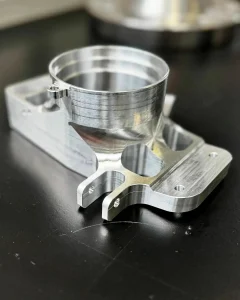
How to Choose the Right CNC Machining Partner?
Choosing the Right Supplier for Small-Batch CNC Machining
Selecting a capable supplier is critical to achieving both quality and cost-efficiency in small-batch CNC machining. Key evaluation factors include technical capabilities, industry experience, quality certifications, communication, and delivery performance.
Technical Capabilities & Engineering Support
Look beyond machines; a true partner offers 3/4/5-axis CNC, mill-turn centers, multi-material experience, advanced CAM, and skilled engineers. GD&T expertise and material knowledge (aluminum, steel, Inconel, titanium) ensure accurate, efficient machining. DFM feedback prevents rework and optimizes toolpaths, saving time and cost.
Quality Systems & Certifications
Delivery Performance & Pricing Transparency
Evaluate lead times, especially for high-mix, low-volume orders. Reliable suppliers typically deliver small batches in 5–7 days, with urgent runs possible in 48 hours. Pricing should be transparent, breaking down materials, machining, programming, surface treatments, inspection, and post-processing. Tiered pricing or batch discounts spread setup costs across multiple units, making low-volume production more economical.
Communication & Collaboration
Effective communication is essential. Look for suppliers with a dedicated point of contact, proactive feedback, and timely updates. A collaborative approach, including DFM suggestions and iterative design support, allows for flexible adjustments in fast-paced development environments.
Automation & Digitalization
Modern suppliers use MES for real-time tracking, ERP for material flow and cost control, and CAM simulation to reduce tool wear. Digitized workflows cut rework, speed delivery, and boost client satisfaction. Assessing expertise, experience, certifications, delivery, pricing, and communication helps select suppliers who deliver high-precision, low-volume CNC parts efficiently and cost-effectively.
What Are the Future Trends and Innovations in Low-Volume CNC Machining?
Small-batch CNC machining is evolving with digitalization, automation, and advanced tech. Multi-axis (3- to 5-axis) CNC enables single-setup operations, reducing time while handling complex geometries, undercuts, deep pockets, and contoured surfaces—vital for aerospace, medical, and electronics industries.
High-Speed Cutting (HSC) boosts efficiency and quality by using high spindle speeds and specialized tools, reducing thermal stress and finishing steps. Integrated CAD/CAM, digital workflows, and virtual simulation enable first-time-right production, optimize cycle times, and minimize scrap.
Sustainability and hybrid manufacturing merge 3D printing with CNC machining, enabling complex parts, reducing waste, and cutting costs. Recycling metal chips and efficient polycarbonate machining highlight eco-friendly practices..
Adopting multi-axis machining, high-speed cutting, simulation, and digital integration, small-batch CNC achieves high precision, flexibility, and efficiency. Engineers can rapidly iterate designs, produce complex parts without costly tooling, and enable prototyping and niche manufacturing across aerospace, medical, electronics, and renewable energy sectors.
Why Choose Welleshaft for Small-Batch High-Precision CNC Machining?
Low-volume CNC machining is a strategic solution for modern manufacturing, offering high precision, flexibility, and rapid turnaround for prototypes and small-batch production. At Trục giếng, we combine advanced CNC technology with optimized machining strategies to deliver high-quality parts efficiently and cost-effectively. Our capabilities include tight-tolerance CNC milling and turning, lean manufacturing practices, and material optimization, ensuring every part meets exacting standards. Using 3-, 4-, and 5-axis CNC machines, Hexagon CMM, and XRF analysis, Welleshaft ensures strict inspection and quality control, enabling fast design iterations, quick adaptations, and delivery within days—ideal for OEMs, R&D teams, and small-batch manufacturers., high-precision CNC machining solutions without excessive cost, long lead times, or material waste.
Small-Batch CNC Machining FAQs
Small-Batch CNC Machining: Cost, Lead Time & Order Size
The unit cost of small-batch CNC machining is higher due to setup, programming, and process planning amortized over fewer parts. Despite this, CNC machining is economical compared to mold making. Orders from single-piece prototypes to hundreds of parts are supported, with typical lead times of 5–10 business days and expedited options for urgent needs.
Material, Surface Treatment & Design Support
Small batches can use the same materials and surface treatments as mass production, including metals, engineering plastics, anodizing, or plating. DFM analysis at the quotation stage ensures optimized design, assembly, and production efficiency.
Why CNC Machining Fits Low-Volume Production
Small-batch CNC machining (typically under 500 units) avoids expensive molds, allows short lead times, supports design changes, and produces high-precision, complex parts, making it ideal for prototypes, R&D, and custom low-volume production.
This blog was provided by the Trục giếngEngineering Team, led by Mr. Xu, specializing in advanced manufacturing solutions. Welleshaft excels in small-batch CNC machining, precision milling and turning, and rapid prototyping, delivering high-quality components efficiently for aerospace, medical, and industrial applications.

 Tiếng Việt
  English
  Português do Brasil
  Deutsch (Österreich)
  Deutsch (Schweiz)
  English (UK)
  English (Australia)
  English (New Zealand)
  Deutsch
  Français du Canada
  Français
  Français de Belgique
  Italiano
  English (South Africa)
  Português
  Español
  Español de México
  Español de Perú
  Español de Colombia
  العربية
  日本語
日本語  Русский
  한국어
한국어  ไทย
ไทย