
Hollow Shafts: Types, Benefits & Applications
What is a hollow shaft?
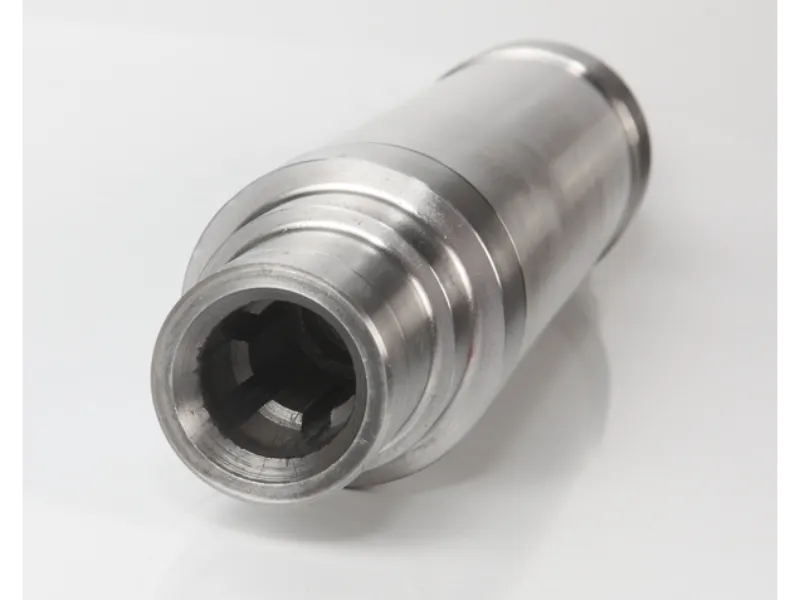
A hollow shaft is a cylindrical, rotating component with an empty core running along its axis. Unlike solid shafts, hollow shafts remove unused material from the center while keeping strength where stress matters most—on the outer diameter. As a result, they reduce weight, improve efficiency, and still handle torque reliably. In many designs, the inner space also routes cables, fluids, or cooling systems, making machines lighter, smarter, and more cost-effective.
Materials used for hollow shafts
Material choice plays a big role in how a hollow shaft performs in real-world applications. Manufacturers select materials based on strength, corrosion resistance, weight, and cost—each directly impacting torque capacity and service life. Common options include:
- Steel & alloy steel for heavy-duty industrial use
- Stainless steel for corrosive environments
- Aluminum alloys for lightweight designs
- Titanium or compositesfor high-performance systems
Characteristics of hollow shafts
Hollow shafts stand out for their smart balance of strength, weight, and flexibility. Compared to solid shafts, they offer reduced mass, lower rotational inertia, and better stress distribution at the outer diameter—where torque matters most. As a result, hollow shafts improve high-speed performance, absorb shock, and reduce noise. Plus, the inner channel can carry fluids, cables, or signals, making designs lighter, more compact, and cost-efficient across automotive, machinery, and automation systems.
Types of hollow shafts
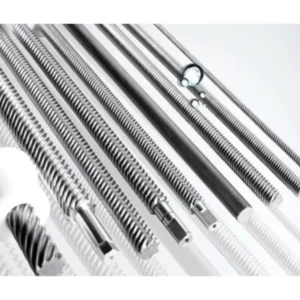
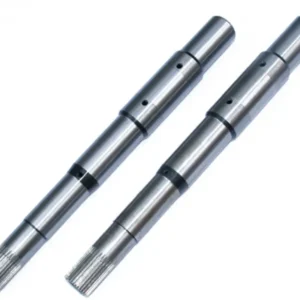
Hollow shafts come in multiple designs to match different performance and installation needs. Common options include straight, stepped, and splined versions, as well as hollow flexible shaft designs that handle misalignment smoothly. For precision systems, tight-tolerance hollow shafts ensure accuracy and stability. From seamless shafts with uniform strength to welded and composite designs that balance cost and weight, each type supports efficient, application-specific power transmission.
Benefits and advantages of hollow shafts
The biggest advantage of hollow shafts is performance efficiency. They reduce weight, save raw material, and improve system dynamics—all without major design compromises. For many machines, switching to hollow shafts directly improves energy efficiency and long-term reliability.
Hollow Shaft vs Solid Shaft – Advantages and Comparison
Why is a hollow shaft better than a solid shaft?
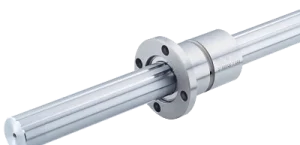
In rotating systems, stress builds up near the outer surface, so material at the center does little work. That’s why a hollow shaft removes this unused core without sacrificing strength. Compared to solid shafts of the same weight, hollow shafts are stiffer, offer higher natural frequency, and deliver better torque efficiency. Although they cost more to produce, their superior power-to-weight performance makes them the smarter long-term choice.
Weight reduction and comparison
When engineers compare shafts with the same outer diameter, a hollow design clearly stands out. It can cut weight by 20–40%, often around 25%. As a result, bearing loads drop, acceleration improves, and energy use decreases—especially in high-speed systems.
Of course, there’s a trade-off. While hollow design is ideal when weight matters, it may not suit applications demanding extreme rigidity. Still, for most industrial uses, the math is simple: less material, same performance, better efficiency. That’s why more buyers now choose hollow vs solid shafts to optimize cost, speed, and long-term reliability.
Strength-to-weight ratio
When it comes to efficiency, hollow designs really shine. Properly engineered, they deliver a superior strength-to-weight ratio, retaining about 93.75% of a solid shaft’s strength while weighing less. This makes them perfect for aerospace, robotics, and automation, where cutting weight without losing performance matters. True, they can be trickier and pricier to manufacture, but the payoff is smarter material use, better acceleration, and long-term energy savings—making them a smart choice for high-performance systems.
Stiffness comparison
Even though solid shafts can offer slightly higher bending stiffness, hollow shafts hold their own with excellent torsional stiffness—about 93.75% of a solid shaft of the same diameter and length. Engineers often tweak wall thickness to meet stiffness needs without adding extra weight, making hollow shafts ideal for applications where reducing mass matters. This approach not only saves energy but also improves acceleration and efficiency, giving high-performance systems a practical, cost-effective edge.
Material savings
Choosing hollow shafts can lead to real cost savings. By using less material—especially pricey alloys—production expenses drop, and over large volumes, the savings really add up. Sure, manufacturing hollow shafts can be a bit more complex and costly, but the reduced material use often outweighs this, making them a smart choice for companies aiming to cut costs, improve efficiency, and maintain high-performance standards without compromising quality.
Applications of Hollow Shafts
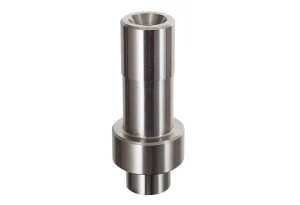
Hollow shafts are a game-changer across industries. In structural applications like off-road vehicle roll cages, they handle the same loads as solid shafts while weighing less. Their higher stiffness and rigidity make them ideal for load-bearing uses, from automotive drive shafts to aerospace rotors, industrial machinery rollers, and even wind turbines. Beyond that, hollow shafts appear in medical devices, marine propellers, sports gear, and construction, offering lightweight strength and performance wherever efficiency and durability matter most.
Applications for solid shafts
While solid shafts excel in power transmission—think driveshafts and crankshafts—thanks to their superior torsional stiffness, hollow shafts often win in applications where weight savings and overall efficiency matter. In cases with shallow critical bending moments, solids are ideal, but for most other uses, hollow shafts offer nearly the same strength and stiffness while cutting mass. Comparing both designs by weight, strength, and stiffness helps engineers choose the most cost-effective, high-performance solution.
How to make a hollow shaft
Manufacturing hollow shafts requires precision, from maintaining wall thickness to achieving concentricity and a smooth surface finish. Common methods include drilling smaller rods, extrusion for large-scale uniform shafts, casting complex shapes, and spinning/welding for custom designs. Each approach balances cost and performance. To ensure reliability, quality control uses NDT, ultrasonic testing, and X-ray inspection to catch internal defects, verify dimensions, and maintain consistent wall thickness—critical for high-performance applications.
| Manufacturing Method | Best For | Key Advantage |
| Drilling | Small diameters | Precision & control |
| Extrusion | Large-scale production | Uniform cross-section |
| Casting | Complex shapes | Cost-effective for volume |
| Spinning & Welding | Custom sizes | Flexible design |
This combination of smart manufacturing and rigorous inspection ensures hollow shafts deliver efficiency, strength, and long-term durability.
Other Shaft Types and Special Forms
Differences between shafts and axles
Understanding the difference between shafts and axles is key for mechanical design. While both support components, only shafts transmit torque, powering gears, drives, and other moving parts. Axles, on the other hand, mainly bear loads, support rotation, and handle bending forces without transmitting torque. Despite their similar rod-like appearance, choosing the right one—shaft or axle—impacts performance, efficiency, and reliability in everything from industrial machinery to automotive systems.
Other specialized shaft forms
Beyond hollow shafts, engineers often turn to specialized designs like splined shafts, tapered shafts, composite shafts, flexible shafts, crankshafts, and drive shafts to tackle unique mechanical challenges. Each type is tailored for specific tasks—flexible shafts handle misaligned power transmission in tools, crankshafts convert piston motion into torque in engines, and drive shafts ensure precise torque transfer across variable angles. Choosing the right shaft design boosts efficiency, durability, and overall system performance, making it a smart investment in any mechanical setup.
Why Choose Welleshaft – Benefits and Advantages
Choosing the right hollow shaft supplier means gaining more than just a component. You gain design support, material expertise, and manufacturing consistency. A reliable partner helps optimize performance, reduce lifecycle costs, and ensure long-term system reliability—especially for custom or high-precision shaft applications..
Hollow shaft FAQ’S
Can hollow shafts be used in high-torque or high-speed applications?
Yes. When properly designed, hollow shafts perform exceptionally well in both high-torque and high-speed environments.
What is meant by the hollow center of the shaft of a bone in biomedical applications?
It refers to the natural structure of long bones, which use hollow geometry to maximize strength while minimizing weight—a concept mirrored in mechanical hollow shafts.
How does a casting shaft compare to a machined hollow shaft?
A casting shaft is cost-effective for complex shapes and large batches, while machined hollow shafts offer higher precision and tighter tolerances.
This blog was provided by the เวลเลชาฟท์ Engineering Team. Mr. Wang and our experts deliver precision hollow shaft solutions, combining advanced manufacturing, material expertise, and quality inspection to ensure high-performance, durable, and cost-effective components for industrial applications
 ไทย
ไทย  English
  Português do Brasil
  Deutsch (Österreich)
  Deutsch (Schweiz)
  English (UK)
  English (Australia)
  English (New Zealand)
  Deutsch
  Français du Canada
  Français
  Français de Belgique
  Italiano
  English (South Africa)
  Português
  Español
  Español de México
  Español de Perú
  Español de Colombia
  العربية
  日本語
日本語  Русский
  한국어
한국어  Tiếng Việt
รีวิว
ยังไม่มีบทวิจารณ์