
The 8 Most Common Questions about metal injection molding – Asked and Answered
How does metal injection molding compare to other manufacturing methods?
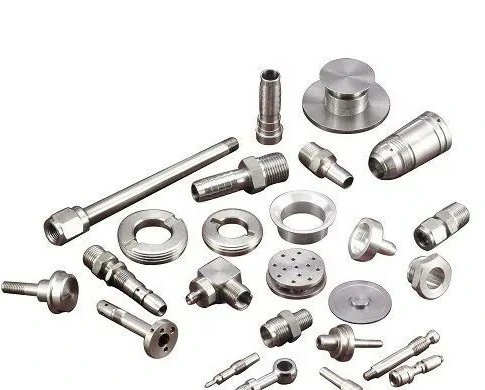
Metal injection molding (MIM) combines the design freedom of plastic injection molding with the strength of metals, making it perfect for high-precision parts that are tough to produce with CNC machining or die casting. It excels at producing complex, net-shape components—even sub-gram parts that fit in your palm. MIM delivers intricate shapes with strong mechanical properties and consistent quality at high volumes, while simpler parts remain cheaper with press-sinter, turning, or stamping. For businesses aiming to cut waste, boost efficiency, and reliably make precision components, MIM is often the most cost-effective choice—especially when addressing Common Questions about Metal Injection Molding.
When is metal injection molding the best-value solution?
MIM is the most cost-effective choice for producing small, intricate parts in medium-to-high volumes. Whether using stainless steel, titanium, or micro metal injection molding, MIM offers high repeatability, excellent dimensional accuracy, and reduced post-processing. Unlike traditional machining or casting, MIM relies on a single upfront investment in tooling, which can produce millions of components efficiently. The real value comes when annual volumes reach 5,000–10,000 pieces, depending on part size, as economies of scale kick in. Key cost drivers include equipment cycle times, furnace utilization, and any secondary operations, while material costs vary depending on alloy and specifications. For businesses aiming to combine precision, efficiency, and scalability, MIM delivers both quality and financial sense.
What makes a good MIM part?
High-quality MIM parts start with the right alloy—stainless steel, aluminum, or specialty metals—for strength, durability, and corrosion resistance. Typically small (under 100 g, often ~15 g), they feature consistent walls, rounded corners, and multi-axis designs to ensure precision, uniform density, and complex geometries for demanding automotive, medical, and industrial applications.
What is the typical lead time for MIM?
Typical lead times for MIM range from 6 to 14 weeks, depending on tooling complexity and component validation. This includes mold design, powder preparation, injection molding, debinding, sintering, and any necessary secondary operations. For average-complexity parts made in a two-cavity tool, first article qualification usually falls within 10–14 weeks. Compared to traditional machining, MIM speeds up high-volume production through near-net-shape manufacturing, minimizing material removal and post-processing while delivering tight tolerances and consistent quality—making it a smart, efficient choice for businesses aiming to bring precision metal components to market quickly.
How does MIM performance compare to wrought metals?
MIM parts deliver mechanical properties that rival wrought metals, including tensile strength, hardness, and corrosion resistance. Using advanced MIM materials like stainless steel powders, components can reach 96–97% density after sintering, with secondary processes such as hot isostatic pressing pushing it to 99% if needed.MIM combines near-wrought strength with design flexibility and cost efficiency, making it ideal for small, complex parts, while forged metals remain best for extreme load-bearing applications.
For businesses seeking precision, durability, and efficiency in high-volume production, MIM provides a reliable, scalable solution without compromising quality.
What materials and feedstock are used in MIM?
MIM uses materials from stainless and tool steels to titanium, nickel alloys, and select aluminum. The process begins with metal powder–thermoplastic feedstock for molding complex shapes. After molding, parts are debound and sintered for density, strength, and corrosion resistance. Many rely on off-the-shelf powders, limiting control. At Welleshaft, we make feedstock in-house, ensuring material quality, process consistency, and reliable supply, delivering MIM parts that meet strict specs for automotive, medical, and industrial applications.
What tolerance capability can the MIM process achieve?
MIM achieves tight tolerances (±0.02–0.1 mm; critical features ±0.1% of nominal) with ~20% shrinkage accounted for, making it ideal for small, intricate parts. Micro-MIM meets strict dimensional needs in medical, automotive, and electronics applications. While post-sinter machining may fine-tune features, MIM offers superior consistency over casting or machining for scalable, precise component production.
What secondary operations are required after MIM?
After sintering, MIM parts often undergo secondary operations to meet exact specifications, enhance performance, or improve surface finish. This can include machining, heat treatment, surface coating, plating, threading, or even hot isostatic pressing (HIP) for critical dimensions and mechanical strength. Some parts are near-net-shape and need minimal post-processing, while others require more detailed work. Partnering with an experienced metal injection molding company ensures these steps are handled efficiently, delivering parts with optimal strength, durability, and corrosion resistance—perfect for industries where precision and reliability are non-negotiable.
Why Choose Welleshaft?
This blog was provided by the Welleshaft Engineering Team. Led by Mr. Xu, with over 20 years of experience in metal injection molding and precision manufacturing, Welleshaft specializes in delivering high-quality MIM parts, advanced material solutions, and end-to-end process expertise. Our team helps businesses optimize production, reduce costs, and achieve consistent, reliable results across automotive, medical, and industrial applications.

 Français
  English
  Português do Brasil
  Deutsch (Österreich)
  Deutsch (Schweiz)
  English (UK)
  English (Australia)
  English (New Zealand)
  Deutsch
  Français du Canada
  Français de Belgique
  Italiano
  English (South Africa)
  Português
  Español
  Español de México
  Español de Perú
  Español de Colombia
  العربية
  日本語
日本語  Русский
  한국어
한국어  Tiếng Việt
  ไทย
ไทย