
Industrial Machinery and Manufacturing Equipment: Components, Types, and Applications
What is Industrial Machinery?
Industrial machinery is a collective term for a wide range of machine tools, industrial machinery components, and manufacturing equipment designed for use in manufacturing and industrial environments. In practice, manufacturers rely on industrial machinery in large-scale production settings to carry out specific operations and deliver consistent product output. As a result, it effectively replaces manual labor when handling heavy, complex, or high-risk tasks, while simultaneously improving production efficiency and overall quality.
Moreover, industrial machinery plays a critical and irreplaceable role in modern industrial production. It covers everything from basic mechanical tools to highly automated production lines and robotic systems. At its core, industrial machinery enables production automation, thereby streamlining workflows, lowering labor costs, enhancing product consistency, and significantly improving workplace safety throughout the manufacturing process.
What are the Advantages of Using Industrial Machines in the Manufacturing Industry
Driven by continuous investment in industrial machinery components and manufacturing equipment, the manufacturing industry has achieved a significant leap in productivity, precision, and operational capability. Today, manufacturers increasingly rely on industrial machinery to optimize plant performance and maintain competitiveness in fast-changing markets.
Below, we outline the key advantages of adopting industrial machinery components and manufacturing equipment in a manufacturing facility, moving beyond basic benefits to highlight their direct impact on efficiency, cost control, quality assurance, safety, and scalability.
Increased Efficiency
First and foremost, automated machinery such as CNC milling machines and robotic assembly lines dramatically streamline production workflows. By reducing cycle times and accelerating task execution, these systems shorten the path from raw material to finished product. In addition, equipment like conveyor systems and automated sorting solutions significantly reduce dependence on manual labor, further boosting overall operational efficiency.
Cost Savings
At the same time, advanced manufacturing equipment, especially energy-efficient machines, helps manufacturers lower both energy consumption and day-to-day operating costs. As automation replaces repetitive manual tasks, companies can also reduce labor expenses while maintaining consistent output levels.
Consistency and Quality
Equally important, precision machinery such as lathes and laser cutting systems ensures uniform production standards across every batch. Meanwhile, automated inspection and testing equipment verifies product specifications in real time, ensuring each unit meets defined quality requirements before shipment.
Improved Safety
Modern industrial machinery integrates advanced safety systems that actively reduce workplace risks. By allowing robots and automated equipment to manage hazardous materials and dangerous operations, manufacturers protect human workers while creating a safer production environment.
Operational Flexibility
In addition, today’s manufacturing machines support rapid reprogramming and retooling. Technologies such as CNC machining and 3D printing enable manufacturers to switch between product types quickly, respond to shifting market demand, and deliver customized solutions without disrupting production schedules.
24/7 Continuous Operation
Unlike manual processes, automated production systems operate around the clock. As a result, manufacturers can increase output capacity, meet tight delivery timelines, and handle high-volume orders more effectively.
Environmental Sustainability
Many modern industrial machines are designed with sustainability in mind. By reducing material waste, improving energy efficiency, and optimizing resource usage, these systems help manufacturers lower their environmental footprint while supporting long-term compliance goals.
Enhanced Supply Chain Management
Furthermore, advanced technologies such as RFID tracking systems and automated storage and retrieval systems improve visibility and control across the supply chain. This leads to faster inventory turnover, fewer errors, and improved logistics efficiency.
Scalability for Business Growth
Finally, advanced manufacturing equipment enables manufacturers to scale production up or down with minimal disruption. Whether responding to market fluctuations or expanding capacity, scalable machinery provides the flexibility needed to support sustainable business growth.
What are Industrial Machinery Components?
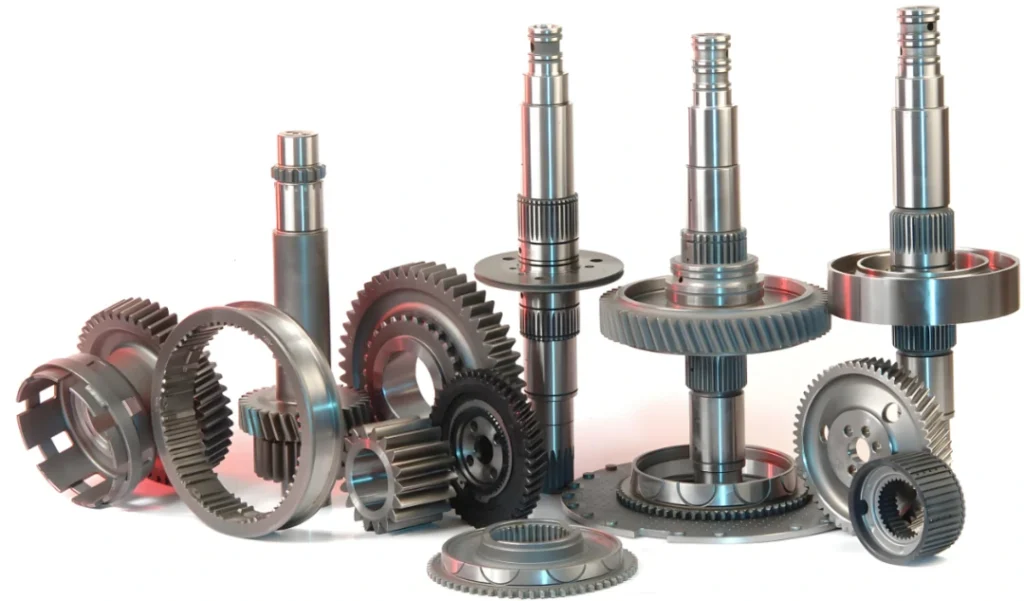
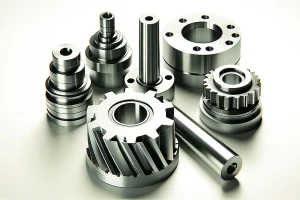
Industrial machinery components and manufacturing equipment encompass the essential individual parts and sub-assemblies that form complete mechanical systems. These components serve as the fundamental building blocks that enable machinery to operate reliably and efficiently. In practice, industrial machinery components and manufacturing equipment include transmission parts, support structures, connectors, sealing elements, and other functional units. Together, they are widely applied across a broad range of industrial equipment and remain indispensable to the manufacturing industry.
From a functional perspective, components act as independent units within a larger mechanical system. Manufacturers can produce, store, replace, and use these parts separately, which improves maintenance efficiency and production flexibility. At the same time, each component performs a specific mechanical function. When assembled and integrated, these industrial machinery components work in coordination to deliver the overall performance, stability, and functionality required for industrial machinery to operate as intended.
What Types of Industrial Machinery Parts Are Commonly Used?
Based on their functions and applications, industrial machinery parts are commonly classified into the following categories. Each type plays a distinct role in ensuring the stable and efficient operation of industrial equipment.
Transmission Parts
First, transmission parts—including gears, belts, chains, and reducers—actively transfer power and motion between mechanical components, enabling machines to operate smoothly and consistently.
Supporting Parts
Next, supporting parts such as bearings and brackets provide structural support and positioning. By stabilizing moving and stationary components, they help maintain mechanical accuracy and reduce wear during operation.
Connectors
In addition, connectors—including bolts, nuts, washers, and pins—securely join individual parts together. These components ensure proper alignment, fastening strength, and overall mechanical integrity.
Sealing Parts
Meanwhile, seals such as sealing rings and gaskets prevent fluid, gas, or dust leakage. As a result, they protect internal components and improve system reliability.
Control Parts
Furthermore, control parts, including sensors, controllers, and actuators, support real-time monitoring and automation control. These elements allow machinery to respond accurately to operational commands and process changes.
Other Industrial Machinery Parts
Finally, additional industrial machinery parts—such as valves, motors, and hydraulic components—provide specialized functions that support power transmission, fluid control, and motion execution across various industrial applications.
What is Manufacturing Equipment?
Industrial Machinery Components and Manufacturing Equipment serve as the foundation of modern production processes, enabling manufacturers to efficiently transform raw materials into finished goods. In essence, industrial machinery components and manufacturing equipment encompass a wide range of specialized machines, tools, and systems—from basic hand-operated devices to highly complex, capital-intensive industrial machinery designed for specific production tasks. These systems actively support every stage of the production line by cutting, shaping, assembling, and packaging components with a high level of precision and consistency.
Moreover, advanced manufacturing machines such as CNC milling systems, injection molding equipment, conveyor lines, and robotic welding units play a critical role in keeping production operations fast, safe, and cost-effective. While the ideal combination of equipment varies depending on the product and industry, all manufacturing equipment shares a common objective: to enhance production efficiency, maintain consistent product quality, and help manufacturers respond quickly to changing market demands.
What Counts as Industrial Manufacturing Equipment?
Industrial equipment refers to a broad range of machinery and tools used across manufacturing, production, construction, and industrial operations. These systems support critical functions such as material handling, machining, assembly, automation, and quality control. Typical examples of industrial equipment include CNC machines, conveyor systems,injection molding machines, industrial robots, welding machines, and other specialized production tools. By categorizing equipment according to functions—such as cutting, forming, assembling, or finishing—manufacturers can better optimize workflows while ensuring efficiency, precision, and operational safety.
CNC Machines
Among all equipment types, CNC machines play a central role in precision manufacturing. By automating processes such as cutting, drilling, and milling, these systems deliver consistent accuracy while significantly improving productivity. As a result, CNC machining has become indispensable in modern production lines that demand tight tolerances and repeatable results.
Key capabilities include high precision and repeatability, broad material compatibility (metals, plastics, composites), and automated operations that reduce human error. Consequently, CNC machines are widely applied in aerospace components, automotive engine and transmission parts, and electronic enclosures. Across industries, ongoing developments now focus on hybrid CNC systems that combine additive and subtractive manufacturing technologies.
3D Printers
In parallel, 3D printers, also known as additive manufacturing systems, are reshaping how products are designed and produced. By building components layer by layer, 3D printing enables complex geometries that traditional methods cannot easily achieve, thereby accelerating innovation and customization.
These systems support rapid prototyping, product customization, and the use of diverse materials such as plastics, metals, and ceramics. As adoption expands, 3D printers now serve industries ranging from healthcare and jewelry to footwear manufacturing, with the sector advancing toward faster print speeds and production-grade materials.
Injection Molding Machines
For high-volume plastic production, injection molding machines remain essential. These machines combine speed, consistency, and repeatability, making them ideal for mass production of complex plastic components.
They support a wide range of thermoplastics and resins, while delivering stable quality at scale. As a result, injection molding equipment is widely used in consumer goods, automotive interior and exterior parts, and medical disposables. Industry trends increasingly emphasize bio-based materials and fully automated molding systems.
Conveyor Systems
Meanwhile, conveyor systems play a vital role in material handling and production flow management. By transporting materials efficiently between workstations, they reduce manual handling and improve overall line efficiency.
Modern conveyor equipment offers flexible layouts, scalability, and integration with sensors and automation controls. These systems are indispensable in food and beverage processing, e-commerce fulfillment centers, and pharmaceutical logistics, with innovations focusing on energy efficiency and modular designs.
Industrial Robots
At the core of automated manufacturing, industrial robots handle repetitive, high-precision tasks with speed and consistency. By automating operations such as welding, assembly, and material handling, they significantly improve productivity while enhancing workplace safety.
Today’s robotic systems feature advanced programming, precision motion control, and human-robot collaboration capabilities. As technology evolves, collaborative robots (cobots) and AI-driven automation are enabling wider adoption, including among small and medium-sized manufacturers.
Press Machines
In heavy-duty manufacturing, press machines remain fundamental for forming and shaping materials under high force. These systems—including hydraulic, mechanical, and pneumatic presses—are capable of processing high-strength metals and alloys.
They are widely used in automotive body panels, aerospace alloy forming, and construction steel components. Recent advancements focus on smart press systems, real-time monitoring, and improved energy efficiency.
Laser Cutting Machines
For applications demanding extreme precision, laser cutting machines offer unmatched accuracy and material efficiency. By delivering clean cuts with minimal waste, they support intricate designs and high-value production.
These systems process materials such as metals, plastics, and wood, serving industries including automotive manufacturing, electronics, and jewelry fabrication. Currently, fiber laser technology leads the market due to faster cutting speeds and lower operating costs.
Grinding Machines
When surface finish and dimensional accuracy are critical, grinding machines provide essential finishing capabilities. These machines remove material with high precision, producing smooth surfaces and tight tolerances.
They support various shapes and hardened materials, making them indispensable in tool manufacturing, automotive engine components, and construction material finishing. Increasingly, CNC-integrated grinding systems are improving consistency and throughput.
Packaging Machines
In downstream operations, packaging machines ensure speed, consistency, and product protection. By automating filling, sealing, labeling, and wrapping, they reduce labor dependency while supporting branding and compliance requirements.
Welding Machines
Finally, welding machines remain indispensable for joining materials across manufacturing and construction sectors. By applying heat, pressure, or both, these systems create strong and reliable joints in metals and other materials.
From structural steel fabrication and automotive chassis assembly to shipbuilding, modern welding equipment continues to evolve. Key trends include robotic welding systems, AI-assisted quality control, and more portable, energy-efficient welders.
What Are Examples of Industrial Machinery and Equipment?
Manufacturing Machinery
First, manufacturing machinery forms the core of industrial production by supporting precision processing, assembly, and finishing operations. CNC machines, including lathes, milling machines, and routers, enable accurate shaping and cutting of components. In addition, assembly line equipment such as conveyor belts, robotic arms, and pick-and-place systems streamlines high-volume production. For plastic component manufacturing, injection molding machines deliver speed and consistency. Meanwhile, printing machines, welding machines (including MIG, TIG, and arc welders), laser cutters, and packaging equipment support marking, joining, finishing, and final product preparation.
Construction Equipment
Next, construction equipment supports large-scale infrastructure and building projects. Earthmoving machinery—such as excavators, bulldozers, and backhoes—handles excavation and site preparation. At the same time, lifting equipment including cranes, hoists, and forklifts enables safe material handling. Furthermore, paving machines, drilling and blasting equipment, and concrete mixers and pumps ensure efficient road construction, mining, tunneling, and concrete placement.
Agricultural Machinery
In agricultural operations, agricultural machinery improves productivity across every stage of farming. Tractors perform multiple tasks such as plowing, tilling, and hauling, while harvesters—including combine harvesters—enable efficient crop collection. Additionally, irrigation equipment, seeders and planters, and balers support crop growth, planting accuracy, and post-harvest processing.
Energy and Power Equipment
Meanwhile, energy and power equipment plays a critical role in electricity generation and distribution. Generators powered by diesel, gas, or solar energy provide reliable backup and primary power. Turbines—including wind, gas, and hydroelectric systems—drive large-scale power generation. In parallel, transformers, solar panels, and inverters regulate voltage and enable renewable energy integration.
Heavy Industrial Equipment
For high-temperature and high-force applications, heavy industrial equipment remains essential. Kilns and furnaces support ceramic production and metal processing, while compressors manage air and gas pressure. At the same time, hydraulic presses shape and form materials for demanding industrial uses.
Other Industrial Equipment
Finally, miscellaneous industrial equipment supports a wide range of auxiliary functions. Pumps—such as centrifugal, diaphragm, and peristaltic types—handle fluid transfer. HVAC systems maintain controlled environments within industrial facilities. In addition, robotics systems enable automation, while testing equipment like spectrometers and tensile testers ensures consistent quality control across production processes.
What Types of Production Equipment Are Used in Modern Manufacturing?
Production equipment spans from heavy-duty fabrication machines to precision inspection tools, ensuring that every product meets strict quality standards. Modern factories rely on automated assembly systems in automotive lines, high-speed packaging equipment in food plants, and robotic arms in electronics manufacturing—each tailored to specific workflows to boost efficiency and consistency. Beyond traditional machinery, digital integration is transforming production, as sensors, IoT connectivity, and predictive maintenance analytics allow teams to monitor performance in real time. This proactive approach to maintenance prevents small issues from escalating into costly downtime, ensuring uptime, safety, and reliability across operations.
Selecting and maintaining the right production equipment goes beyond output—it builds reliability into every step. For example, CNC machines enable high-precision milling, lathing, drilling, cutting, engraving, and etching across industries from aerospace and automotive to renewable energy. Injection molding machines mass-produce plastic and metal parts, while lathe and milling machines create cylindrical and complex shapes with precision. Press machines shape or stamp metals and plastics under high pressure, and welding machines join components to form durable structures.
Meanwhile, conveyor systems streamline material handling, and robotic arms automate repetitive tasks, reduce labor costs, and enhance safety. Specialized equipment like heat treatment furnaces modify metal properties, forklifts handle logistics, and grinders provide finishing precision. Laser-cutting machines achieve intricate designs with minimal waste, while packaging machines automate sealing, labeling, and filling for consistent results. Supporting systems like chillers, cooling systems, and air compressors maintain optimal operating conditions for machinery across production lines.
By implementing preventive maintenance, such as regular lubrication, inspection, calibration, and cleaning, manufacturers ensure every piece of production equipment operates efficiently and safely. Combining advanced machines with structured maintenance protocols enables factories to maximize productivity, maintain consistent quality, and adapt quickly to changing market demands, making modern manufacturing both scalable and resilient.
How Is Industrial Machinery and Equipment Classified?
Classification of Industrial Machinery
Industrial machinery can be categorized based on its function and application, helping manufacturers and operators select the right equipment for their needs.
- Heavy machinery includes large-scale production line equipment, CNC machine tools, cranes, excavators, and similar systems. These machines play a crucial role in demanding industrial sectors such as construction, mining, crushing, and metallurgy, where they handle high loads and complex operations efficiently.
- Industrial automation equipment encompasses industrial robots, automated production lines, sensors, and other smart systems. By enabling real-time automatic control and monitoring of production processes, these machines enhance efficiency, precision, and consistency across manufacturing operations.
- Engineering machinery features equipment like rollers, graders, and forklifts, primarily applied in civil construction projects to support infrastructure development and material handling.
- Agricultural machinery, including tractors, harvesters, and related equipment, significantly boosts farm productivity, reducing manual labor while increasing operational efficiency.
- General machinery refers to versatile equipment such as pumps, fans, and compressors, which find broad applications across multiple industrial sectors to maintain smooth and continuous operations.
- Basic machinery components, including bearings, hydraulic parts, and seals, form the foundation of various mechanical systems. These components ensure that all types of industrial machinery operate reliably, safely, and with optimal performance.
Different Types of Equipment and Machines Used in Manufacturing
| Equipment / Machine Type | Function / Purpose | Key Applications |
| Industrial Storage Tanks | Safely store liquids and gases, hold raw materials or finished products, often include temperature and pressure control | Storing chemicals, holding water or oil, temporary storage for food & beverages, containing raw materials in pharmaceuticals |
| Centrifuges | Separate components based on density using centrifugal force, ensuring product purity | Purification in pharmaceuticals, quality control in food & beverage, material separation in chemicals, wastewater treatment |
| Industrial Mixers | Blend materials uniformly for consistency and quality | Mixing ingredients in food, combining chemicals in pharmaceuticals, blending paint, creating plastic compounds |
| Electric Generators | Provide essential power to maintain operations | Backup power in plants, powering remote sites, supporting mining & drilling, ensuring continuous operation in data centers |
| Compressors | Generate high-pressure air or gas, operate pneumatic tools | Operating pneumatic machinery, powering hand tools, plastic/rubber molding, food & beverage processing |
| Packaging Equipment | Efficiently and securely package products, from manual to automated systems | Automated bottling, wrapping/sealing in food, box packaging in electronics, pharmaceutical packaging |
| Shredders | Reduce material size for processing, recycling, or waste management | Recycling operations, waste management, raw material size reduction in metal, processing scrap in automotive |
| Material Handling Equipment | Transport and manage materials efficiently | Moving raw materials, handling finished goods, assembly line support, heavy component handling in automotive & aerospace |
| Conveyor Belts | Move materials efficiently across production stages | Assembly line transport, moving raw materials, baggage handling, transferring goods in warehouses |
| Weight-lifting Machines | Lift and move heavy loads safely | Moving large automotive parts, handling construction materials, loading/unloading in shipping yards, transferring equipment |
| Paper-cutting Machines | Precisely cut paper and cardboard | Book publishing, packaging cardboard, printing industry, custom paper products |
| Press Brakes | Bend and shape sheet metal | Automotive components, electronics panels, construction frames, custom machinery components |
| Quality Testing Machines | Ensure products meet standards and specifications | Dimensional checks in automotive, material strength testing, product durability assessment, pharmaceutical quality control |
| Embroidery Machines | Apply precise decorative stitching | Branded apparel, fashion embroidery, home textiles, customizing bags and hats |
| Shears | Accurately cut metal, fabric, plastic | Sheet metal cutting, fabric trimming, plastic shaping, metalworking components |
| Grinders | Cut, grind, and polish materials | Smoothing metal edges, surface preparation, tool sharpening, polishing finished products |
| Overhead Cranes | Lift and move heavy materials efficiently | Steel plants, heavy machinery assembly, loading/unloading, construction projects |
| Surface Treatment Machines | Prepare, clean, and finish surfaces | Electroplating metal, sandblasting for paint prep, polishing consumer goods, aluminum anodizing |
| Boring Machines & Tools | Enlarge holes with precision | Engine blocks in automotive, aerospace component machining, heavy machinery assembly, specialized manufacturing |
| Drilling Machines & Tools | Create holes in various materials | Metal parts, construction materials, electronics production, plastic components |
| Cutting Machines & Tools | Cut materials with high precision | Laser cutting in automotive, electronics, textiles, aerospace; oxy-fuel, plasma, waterjet for heavy/complex materials |
| Drill Press | Fixed drilling machine for accurate holes | Automotive metal components, woodwork/furniture, aerospace parts, electronic assemblies |
| Milling Machines & Tools | Shape and cut materials, especially metals | Metal part shaping, aerospace components, slot/thread milling, electronics production |
| Turning Machines & Tools | Produce cylindrical components | Automotive cylinders, aerospace parts, defense equipment, general metal fabrication |
| Swiss Turning Machines | High-precision lathes for intricate small parts | Medical components, watches, electronics, micro-machining |
| EDM Machines | Shape complex materials with electrical discharge | Toolmaking molds, aerospace components, medical devices, automotive intricate parts |
| ECM Machines | Shape metal with electrochemical machining, high precision | Aero-engine parts, defense components, turbine blades, medical implants |
| EBM Machines | Remove material using electron beams | Semiconductor features, aerospace parts, medical equipment, precision engineering tools |
| Horizontal Machining Centers | Multi-function machines (drilling, milling, tapping) with horizontal spindle | High-volume automotive parts, aerospace precision components, industrial machinery, defense parts |
| Vertical Machining Centers | Multi-function machines with vertical spindle | Consumer electronics parts, medical devices, tool & die industry, small/medium manufacturing |
What Are the Main Manufacturing Processes ?
Casting
Casting remains a fundamental manufacturing process for producing machinery parts. This method involves pouring molten metal or other materials into a mold and letting it solidify. The outcome is a part that meets the desired shape and dimensions. Casting excels at creating complex components with intricate details and is ideal for large-scale production, offering efficiency and consistency.
Machining
Machining is a subtractive manufacturing process in which material is removed from a workpiece to achieve precise shapes and dimensions. Techniques such as milling, turning, drilling, and grinding transform raw materials into finished parts. By leveraging machining, manufacturers gain high precision, flexibility for customization, and the ability to fine-tune components according to specifications.
Forging
Forging involves shaping metal by applying compressive forces using machinery such as mechanical or hydraulic presses. The material is typically heated to high temperatures before being hammered or pressed into the desired form. Parts produced through forging offer exceptional strength, durability, and fatigue resistance, making them ideal for applications that demand high load-bearing capability and reliability under stress.
Additive Manufacturing
Also known as 3D printing, additive manufacturing has rapidly gained traction in modern machinery production. This method builds parts layer by layer using metal powders or polymers, allowing for highly complex geometries, rapid prototyping, and customized designs. Additive manufacturing proves especially valuable for producing specialized, low-volume components where flexibility and precision are essential.
How Do Industrial Machinery and Components Work Together?
Industrial machinery and industrial machinery components share a close, interdependent relationship. Components play a crucial role in the performance, reliability, and efficiency of industrial machinery.
| Machine Item | Industrial Machinery | Industrial Machinery Components |
| Définition | Mechanical equipment designed specifically for industrial production, featuring complex structures and specialized functions | The components that make up industrial machinery, such as gears, bearings, bolts, and other essential parts |
| Classification | Processing machinery, power machinery, transportation machinery, special machinery, etc. | Standard accessories (come with the machine) and optional accessories (enhance functions, improve performance, purchased separately) |
| Function | Replaces manual labor to complete heavy, complex, or hazardous tasks, boosting production efficiency and product quality | Each component serves a specific purpose, working together to enable the overall function of industrial machinery |
| Relationship | A complex system built from multiple components | The performance and durability of components directly determine the overall efficiency and reliability of industrial machinery |
| Importance | Essential tools for modern industrial production | The design and manufacturing quality of components are critical to achieving high performance and long-term reliability |
| Examples | Metal cutting machine tools, electric motors, forklifts, textile machinery, concrete mixing plants, crushers, Powder Grinding Mills, Concrete Mixer Pumps | Gears (transmit power and torque), bearings (support and reduce friction), bolts (connect and secure parts), Jaw Plates, Ball Mill Liners, etc. |
What Are the Latest Trends in Industrial Machinery and Manufacturing Equipment?
The ongoing advancements in industrial machinery and industrial machinery components have dramatically reshaped the manufacturing industry. Technologies such as automation, robotics, IoT connectivity, 3D printing, advanced sensors, and AI-driven systems are transforming production workflows, enhancing efficiency, and fostering innovation.
As these technologies evolve, the opportunities to further optimize industrial machinery are vast. Manufacturers who adopt these innovations gain a clear competitive advantage, boost productivity, and remain at the forefront of the rapidly changing manufacturing landscape.
How Welleshaft Adds Value to Your Manufacturing Operations
The manufacturing industry, with its wide array of sophisticated industrial machinery and manufacturing equipment, showcases human ingenuity and the relentless drive for progress. Modern equipment, from stamping machines and advanced EDM machines to multi-functional machining centers, demonstrates the industry’s adaptability to evolving market demands and technological innovations. Understanding the various types of manufacturing equipment is essential for selecting the right tools that meet your production goals—whether focused on automation, precision, or scalability. By staying informed about emerging trends, maintenance best practices, and the latest advancements in industrial machinery components, manufacturers like Welleshaft can optimize efficiency, ensure long-term sustainability, and pave the way for a more productive and technologically advanced future in manufacturing.
FAQs
What counts as manufacturing equipment?
Manufacturing equipment includes any machinery, tools, or systems that transform raw materials into finished products. Common examples are CNC machines, injection molding machines, and conveyor systems. These manufacturing machines form the backbone of modern production lines, boosting efficiency, consistency, and safety at every stage.
How do manufacturing machines differ from production equipment?
While often used interchangeably, manufacturing machines typically perform a specific task—like cutting, shaping, welding, or assembling—whereas production equipment refers to the broader systems that keep the line running, such as conveyors, chillers, and forklifts. Together, they create a complete production ecosystem.
This blog was provided by the Welleshaft Engineering Team. Led by Mr. Xu, a senior manufacturing engineer with 10+ years in precision parts and industrial machinery, Welleshaft delivers high-quality custom components, CNC machining, and equipment integration to ensure consistent quality, efficient workflows, and scalable production.

 Français
  English
  Português do Brasil
  Deutsch (Österreich)
  Deutsch (Schweiz)
  English (UK)
  English (Australia)
  English (New Zealand)
  Deutsch
  Français du Canada
  Français de Belgique
  Italiano
  English (South Africa)
  Português
  Español
  Español de México
  Español de Perú
  Español de Colombia
  العربية
  日本語
日本語  Русский
  한국어
한국어  Tiếng Việt
  ไทย
ไทย