
Non-Standard Precision Parts: Materials, Processing, Applications & Supplier Guide
What are Non-Standard Precision Parts?
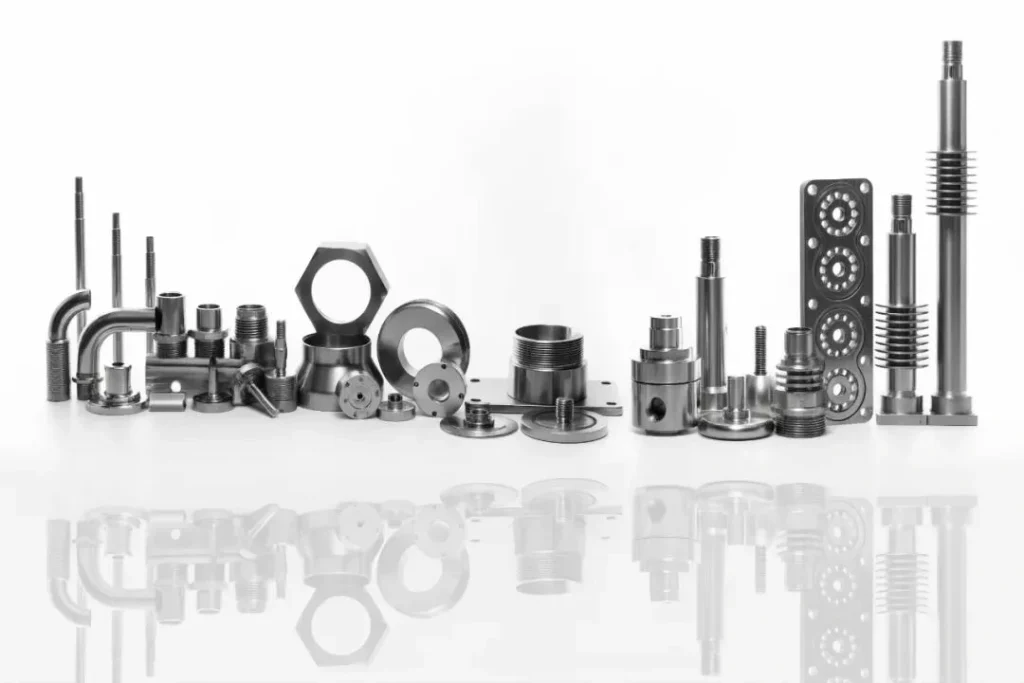
Non-standard parts are components without strict industry standards, with specifications primarily controlled by manufacturers or defined by customers. They can be broadly divided into metal and non-metal categories. Metal non-standard parts are typically made to customer drawings, with molds, tolerances, and finishes tailored to project needs. Their manufacturing process is complex—from casting to finishing—and generally more costly than standard parts. Non-metal parts, such as those made from plastic, wood, or stone, have benefited from technologies like injection molding and CNC programming, enabling tighter tolerances and more sophisticated designs. Non-standard precision parts meet specific requirements beyond standard offerings, often achieving tolerances as fine as ±0.001 mm. Produced in small batches, they usually feature complex shapes, advanced materials, and custom finishes, offering greater adaptability but also higher production complexity and cost.
What Are the Differences Between Standard Parts and Non-Standard Parts?
What Are Standard Parts?
Standard parts are components whose structure, size, drawings, tolerances, and markings have been completely standardized. They are widely used in industry because they comply with national or international standards, such as ISO, DIN, ANSI, or JIS. Standard parts can be categorized into:
Broad Sense of Standard Parts
Broadly, standard parts include fasteners, connectors, transmission parts, seals, hydraulic components, pneumatic components, bearings, springs, and other mechanical components. These parts are highly versatile and are often referred to as general-purpose parts due to their wide applicability across multiple industries.
Narrow Sense of Standard Parts
In a narrower sense, standard parts usually refer to standardized fasteners, such as screws, washers, rivets, and welding studs. These connecting components are used extensively because of their universality. Industry-specific standard parts, such as automotive standard parts or mold standard parts, also fall under the broad category of standard parts.
Differences Between Standard and Non-Standard Precision Parts
Understanding the differences is critical for design, production, and procurement. The table below summarizes the main distinctions:
| Criteria | Non-Standard Precision Parts | Standard Precision Parts |
| Design Parameters | Personalized designs based on specific functional demands; no predetermined standards | Complies with industry protocols (DIN, ISO, ANSI); predetermined tolerances & dimensions |
| Lead Time & Availability | Longer lead times; requires prototyping, custom design, and production | Short lead times; mass-produced and readily available |
| Manufacturing Complexity | Intricate processes requiring precise engineering and special tooling | Basic large-scale production; lower complexity |
| Application Specificity | Critical for advanced sectors such as medical devices, aerospace, and automotive | Suitable for common industrial and general-purpose uses |
| Cost Implications | Higher manufacturing costs justified by specialized use and performance | Lower unit cost due to economies of scale |
What Are Non-Standard Materials and How Are They Selected?
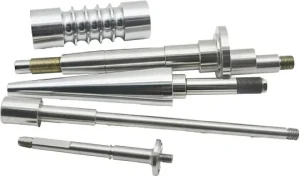
Non-standard precision components often require materials with specialized properties to meet unique application needs. Some of the most commonly used non-standard materials include titanium, nylon, bronze, brass, Delrin, and high-temperature alloys.
Titanium
Titanium is a lightweight metal with the highest strength-to-density ratio among metals, offering tensile strength ranging from 30,000 psi to 200,000 psi. It features excellent elasticity, high melting point, low thermal expansion, good heat transfer, and high electrical resistance. Titanium is widely used in aerospace, missiles, rockets, springs, and medical devices due to its biocompatibility and non-toxicity.
Nylon
Nylon is a versatile engineering plastic with high abrasion resistance, good thermal stability, excellent machinability, fatigue resistance, and noise-dampening properties. Common grades include Nylon 66, 11, 12, 46, and 6. Its advantages include low internal stress, reduced water absorption, high mechanical strength, and elevated melting temperature, making it suitable for durable mechanical components.
Bronze
Bronze, a copper-tin alloy, is ductile, low-friction, and produces a patina when oxidized. It is commonly used in bearings, electrical contacts, coins, ship propellers, shaft collars, and architectural components. Bronze offers advantages over steel wool, including resistance to rust, reduced broken filaments, and non-magnetic properties.
Brass
Brass is a gold-colored copper-zinc alloy with excellent electrical conductivity, low friction, and machinability. It is widely used in gears, locks, pipe fittings, musical instruments, and architectural elements. Various finishes such as electroplating, powder coating, painting, and polishing are available. Standard tolerances typically range from ±125 μm, with tighter tolerances down to ±50 μm achievable.
Delrin
Delrin is a high-performance plastic alternative to metal, providing dimensional stability, machinability, and fatigue endurance. Key properties include:
- Tensile strength: 6,000–22,000 psi
- Impact strength: 0.75–2 ft-lb/in
- Heat deflection: 180–300ºF
- Chemical resistance to fuels and solvents
- Low moisture absorption and excellent wear resistance
- Superior impact and creep resistance
Delrin is commonly used for gears, bearings, bushings, shaft collars, rollers, fittings, and electrical insulators.
High-Temperature Alloys
High-temperature alloys are designed to withstand extreme conditions above 500ºC. They are widely applied in aerospace, military, medical, electronics, and industrial systems such as conveyors, furnaces, ovens, and oil & gas equipment. Although costly and difficult to machine, these alloys are essential for demanding applications and are available in various component designs, including single-piece, two-piece, hinged, and flanged configurations.
How Is Non-Standard Parts Processing Done and What Equipment Is Used?
Non-standard parts processing is a manufacturing method that produces components according to specific customer requirements and design specifications, rather than adhering to general industry standards. Non-standard parts are not listed in national catalogs and often involve higher development costs and longer production cycles compared to standard parts. The process typically involves removing excess material through machinery such as CNC lathes, milling machines, or specialized manual and semi-automatic tools, to achieve the desired shape, size, and functionality.
Key Advantages of Non-Standard Parts Processing
1.High Degree of Customization
Non-standard processing allows components to fully meet special requirements for size, shape, material, or function, solving technical challenges that standard parts cannot address.
Examples: Special interface components in medical equipment, uniquely shaped structural parts in aerospace.
2.Adaptability to High Precision and Complex Structures
Capable of producing parts with micron-level tolerances and intricate geometries, such as curved surfaces or multi-feature integrations.
Examples: Precision molds for semiconductor chips, aspheric profiles of optical lenses.
3.Flexible Material Selection
Supports a variety of metals and composites suitable for extreme conditions, including high temperature, pressure, or corrosive environments.
Examples: Corrosion-resistant housings for deep-sea detectors, lightweight aluminum parts for electric vehicles.
4.Small-Batch Production Flexibility
Ideal for prototype development or low-volume production, reducing inventory and allowing rapid verification of new designs.
Examples: Custom maintenance parts for industrial equipment or niche-market products.
5.Functional Integration Optimization
Reduces part count and improves overall performance through integrated designs.
Example: Integrated cylinder designs in automotive engines.
Key Disadvantages of Non-Standard Parts Processing
1.High Cost: Large initial investment in design, tooling, and mold opening; small-batch production increases unit costs.
Example: Custom mold costs may exceed 30% of total production costs.
2.Long Production Cycles: Processes such as drawing design, trial production, and adjustment extend lead times compared to standard parts.
Example: Aerospace component certification may take several months.
3.High Technical Threshold: Requires precise machinery (e.g., five-axis machining centers, slow-wire cutting) and experienced technicians.
Example: Complex surface programming demands highly skilled engineers.
4.Supply Chain Complexity: Custom materials and processes increase procurement uncertainty.
Example: Special alloy materials may require weeks-long procurement cycles.
5.Maintenance and Replacement Challenges: Damaged components must be re-manufactured, delaying equipment downtime recovery.
Example: Non-standard gears in specialized equipment require full reprocessing.
Applicable Scenarios
1.Prefer Non-Standard Processing:
When standard parts cannot meet functional, precision, or environmental requirements.
During R&D phases requiring rapid design verification.
In specialized industries like medical or aerospace, where compliance and safety are critical.
2.Use Standard Parts When:
Cost-sensitive projects can utilize standard alternatives.
Large-scale production or rapid delivery is required.
Processing Equipment and Methods
Non-standard parts are manufactured using dedicated machinery, which can include manual, semi-automatic, or fully automated tools. Common equipment includes:
CNC Drilling Machines: Workpieces are fixed on the drill table, and rotary cutting with linear feed produces precise holes and depths.
File Machines: Linear cutting motion is applied to fixed workpieces using blades mounted on punch holders.
CNC Machining Centers: Feature automatic tool changers that allow multiple machining functions in a single setup.
Metal non-standard parts often undergo multiple forming operations during production, guided by metal forming theory to optimize efficiency and accuracy. The entire process requires professional expertise to ensure that the finished components meet the required specifications and performance standards.
What Is the Manufacturing Process of Non-Standard Precision Parts?
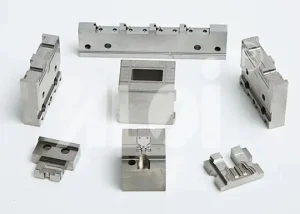
Non-standard parts often require specialized manufacturing techniques and strict quality control to meet precise design requirements. Common methods include Electrical Discharge Machining (EDM), CNC machining, additive manufacturing, and rigorous inspection processes.
Electrical Discharge Machining (EDM)
EDM is used to produce fine internal features and sharp corners that traditional machining cannot achieve. This process typically achieves tolerances between ±0.005 mm and ±0.0025 mm, with some conditions allowing even tighter precision depending on the material and complexity of the part. EDM is ideal for creating intricate geometries in metal components where conventional tools cannot reach.
CNC Machining
Computer Numerical Control (CNC) machining forms custom precision parts with high accuracy, often achieving tolerances up to ±0.0025 mm. Advanced multi-axis CNC systems can produce complex geometries with multiple curved surfaces and are capable of manufacturing precision molds for subsequent production of non-standard components.
Additive Manufacturing (3D Printing)
Additive manufacturing builds non-standard parts layer by layer, making it suitable for rapid prototyping and small-scale production. Standard tolerances for this process are around ±0.1 mm, though modern high-resolution systems can achieve even stricter accuracy. This approach allows fast iteration and testing of custom designs without extensive tooling.
Quality Control and Inspection
Ensuring the accuracy and reliability of non-standard parts requires rigorous quality control. Coordinate Measuring Machines (CMM) are used to verify dimensional accuracy at the micron level, ensuring that each feature matches the intended design. Surface finish is evaluated using optical systems or profilometers, capable of measuring roughness values as low as Ra 0.1 μm for demanding applications. These inspection methods confirm that each component meets stringent specifications and performs reliably in its intended use.
By combining advanced manufacturing methods with precise quality control, non-standard parts can achieve the exact specifications required for complex industrial, medical, aerospace, and high-tech applications.
What Are the Uses of Non-Standard Precision Parts in Industry?
Non-standard precision parts are essential when standard components cannot meet specific performance, design, or environmental requirements. These parts are widely used in various industries, providing high accuracy, reliability, and adaptability for complex applications.
Medical Industry
Precision components are critical in the medical field, where they are used in ear implants, artificial joints, small screws, and pacemaker parts. These components must withstand cleaning chemicals, maintain dimensional stability, and comply with strict biocompatibility standards to ensure patient safety and long-term functionality.
Aerospace
In aerospace, non-standard precision parts are vital for both aircraft and spacecraft. They are used in landing gear components, custom turbine blades, and intricate engine parts designed to endure extreme loads, high temperatures, and harsh operational conditions.
Industrial Machinery
Special tooling, robotic arms, fixtures, and complex assembly systems rely on non-standard components. These parts enhance reliability and efficiency, allowing engineers to adapt quickly to evolving manufacturing requirements and maintain product uniqueness.
Automoción
Non-standard precision manufacturing is crucial for custom suspension systems, prototype components for testing, and specialized engine parts. These components enable manufacturers to evaluate new designs and innovations before scaling up to mass production.
How to Choose Suppliers for Non-Standard Precision Parts and Ensure Quality?
Selecting the right supplier for non-standard precision components is crucial to ensure quality, reliability, and timely delivery. Consider the following factors when evaluating potential partners:
Key Factors to Consider
- Advanced Manufacturing Capabilities:The supplier should have modern in-house equipment and the ability to perform multiple processes such as EDM, CNC machining, and additive manufacturing.
- Precision Expertise:They must be skilled in producing intricate components with tight tolerances, often down to ±0.001 mm.
- Material Versatility:Experience with a wide range of materials, including metals, plastics, and composites, is essential.
- Quality Control Standards:Strong quality assurance processes, supported by certifications such as ISO 13485, ISO 9001, or AS9100, help guarantee consistent performance.
- Proven Track Record:Reliable suppliers demonstrate versatile manufacturing capabilities and a history of on-time delivery.
- Effective Communication:Clear, responsive communication and detail-oriented project management are vital for complex projects.
- Transparent Documentation and Pricing:Complete documentation and straightforward cost structures help avoid misunderstandings.
Questions to Ask Potential Suppliers
- Can you provide case studies or references?
Look for documented examples of previous projects that demonstrate the supplier’s ability to deliver high-quality custom parts. - What is your experience with similar projects?
Suppliers should have several years of relevant expertise and examples of custom precision parts they have successfully produced. - What quality control procedures do you follow?
Ensure the supplier uses rigorous inspection protocols, such as surface finish verification, CMM measurements, and ISO-certified quality management systems.
By selecting a supplier that meets these criteria, you can ensure that your non-standard precision parts will meet the exact requirements of your application, from design specifications to material performance and delivery schedules.
Where to Get the Best Non-Standard Precision Parts at Welleshaft?
Welleshaft produces high-quality non-standard precision parts using advanced manufacturing technologies. Our experts complete production up to 30% faster than the industry average while maintaining a 99.8% accuracy match rate. We utilize modern CNC machining, 3D printing, and other precision processes, all under strict ISO 9001:2015 quality control standards, ensuring every component meets exact specifications. Non-standard precision parts are critical for advancing applications in medical, aerospace, and automotive industries, where personalized designs demand rigorous quality control and cutting-edge manufacturing methods. Partnering with Welleshaft ensures premium, custom components tailored to your specific requirements—turning challenging designs into reliable, high-performance parts.
Non-Standard Precision Parts FAQS?
What Risks Arise from Using Non-Certified Manufacturers?
Sourcing non-standard components from uncertified manufacturers can lead to financial, legal, or operational problems. Potential issues include product malfunctions, unexpected failures, safety hazards, and insufficient traceability of components.
Is Custom Tooling Necessary for Non-Standard Precision Parts?
Yes. Producing non-standard precision components typically requires personalized tooling to achieve exact geometries, tight tolerances, and specific surface finishes that standard tools cannot provide.
How Does Digital Manufacturing Support Personalized Component Production?
Digital manufacturing technologies, including Industry 4.0 solutions, enable efficient large-scale customization. Tools such as IoT sensors, smart factories, additive manufacturing, and real-time data analysis allow engineers to produce highly tailored components with lower costs, improved accuracy, and greater design versatility.
This blog was provided by the Welleshaft Engineering Team. Led by Mr. Xu, with over 10+ years of experience in precision components and industrial manufacturing, the team specializes in non-standard precision parts for medical, aerospace, automotive, and industrial applications, ensuring high-accuracy, custom-engineered solutions.

 Español de México
  English
  Português do Brasil
  Deutsch (Österreich)
  Deutsch (Schweiz)
  English (UK)
  English (Australia)
  English (New Zealand)
  Deutsch
  Français du Canada
  Français
  Français de Belgique
  Italiano
  English (South Africa)
  Português
  Español
  Español de Perú
  Español de Colombia
  العربية
  日本語
日本語  Русский
  한국어
한국어  Tiếng Việt
  ไทย
ไทย