
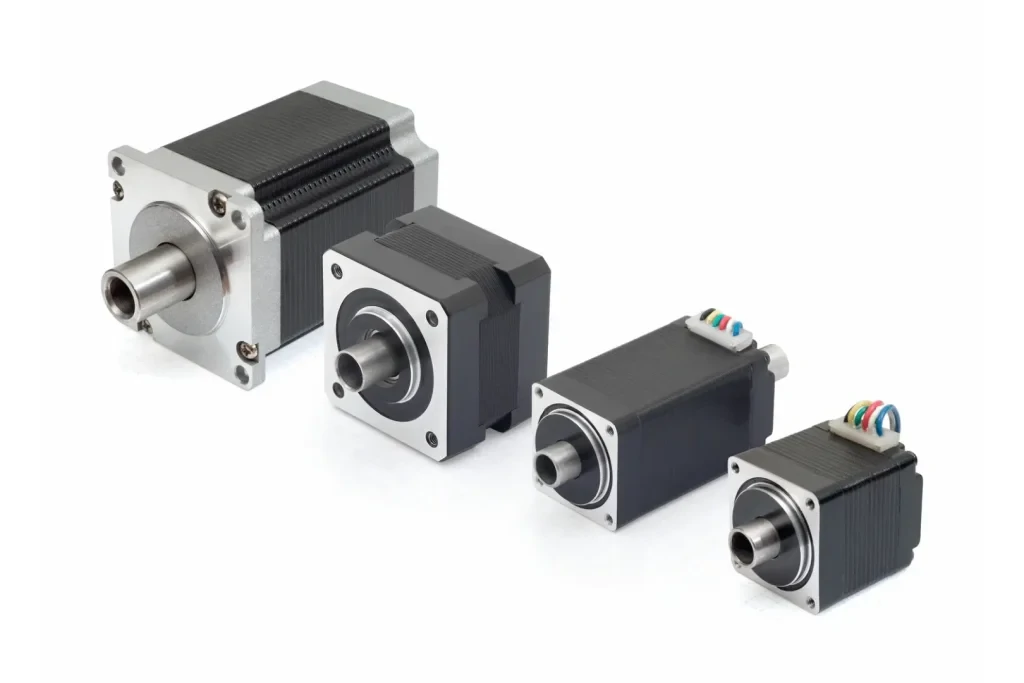
NEMA 8 Bore Shafts: High-Precision Hollow Shafts for Stepper Motors
What is a NEMA 8 Bore Shaft?
A NEMA 8 bore shaft is a precision-engineered component designed to comply with the NEMA standard for motor mounting dimensions. The term “NEMA 8” refers to the motor frame size it connects to, featuring standardized outer diameters and mounting holes. Its defining hollow core allows for routing cables, integrating internal sensors, or connecting inline gearboxes for efficient torque transmission in automation systems. Key characteristics include NEMA 8 compliance for standardized mounting, a hollow core for weight reduction and component integration, availability in steel, aluminum, or stainless steel, precision machining to ensure tight tolerances and high-performance motion control, and customization options such as varying lengths, bore sizes, and specialized coatings to meet application-specific requirements.
Why Use a NEMA 8 Hollow Shaft with a Stepper Motor?
Using a hollow shaft stepper motor provides several unique benefits, particularly in compact industrial automation, robotics, and precision CNC systems:
Cable Routing: Wires, sensors, or fluid lines can pass through the shaft, simplifying installation and protecting delicate components—critical when pairing NEMA 8 stepper motors with inline gearboxes.
Weight Reduction: Hollow shafts reduce system weight, ideal for portable devices, compact automation equipment, and lightweight robotics.
Specialized Applications: Hollow cores accommodate sensors, encoders, or miniature actuators.
Cooling: Circulating cooling fluids through the hollow shaft improves motor performance and longevity.
How Does Precision Affect NEMA 8 Bore Shaft and Stepper Motor Performance?
Precision is of utmost importance when selecting a NEMA 8 bore shaft. The accuracy of the shaft directly impacts the performance of the stepper motor system.
Dimensional Tolerances: Ensure precise fit with bearings, couplings, and gearboxes.
Surface Finish: A smooth surface finish minimizes friction and wear, improving efficiency and extending the lifespan of the system.
Concentricity: Proper concentricity of the bore with respect to the outer diameter is crucial for accurate alignment and smooth rotation.
Material Stability: The material used must be stable and resistant to deformation under load and temperature variations.
Straightness: Ensures balanced rotation, especially important when coupled with stainless steel gearboxes.
What Materials Are Used in NEMA 8 Bore Shafts and Hollow Shaft Stepper Motors?
Choosing the right material for NEMA 8 bore shafts and hollow shaft stepper motors is vital for precision, durability, and performance. Carbon and alloy steels offer high strength for heavy loads. Aluminum alloys (6061, 7075) are lightweight yet strong, ideal for compact or portable systems. Stainless steel provides excellent corrosion resistance, mechanical strength, and high concentricity, essential for robotics, medical devices, 3D printers, and lab automation.
In complete NEMA 8 stepper motors, additional materials enhance operational efficiency and longevity. Copper windings minimize energy loss, improve step accuracy, and prevent overheating. Stainless steel hollow shafts allow internal cabling or sensor integration while maintaining high rotational precision. Plastic composite gears reduce drivetrain inertia, noise, and maintenance needs. Aluminum housings combine lightweight construction with excellent thermal conductivity for effective heat dissipation, ensuring stable performance even under continuous load.
Choosing the right material for NEMA 8 bore shafts is key for precision and durability. Steel offers high strength for heavy loads, aluminum alloys (6061, 7075) are lightweight yet strong, and stainless steel ensures corrosion resistance, mechanical strength, and high concentricity for robotics, medical devices, 3D printers, and lab automation.
Material Overview Table for Reference:
| Material | Component | Key Properties | Functional Benefits |
| Copper | Windings | High conductivity, thermally stable | Reduces energy loss, improves torque, limits heat |
| Stainless Steel | Eje hueco | Corrosion-resistant, precise | Durable, supports internal cabling, integrates with stainless steel gearboxes |
| Plastic Composite | Gears | Lightweight, low friction | Reduces inertia, noise, and maintenance |
High-quality materials support compact, high-precision systems using NEMA 8 stepper motors, NEMA 08 stepper motors, and compatible gearboxes.
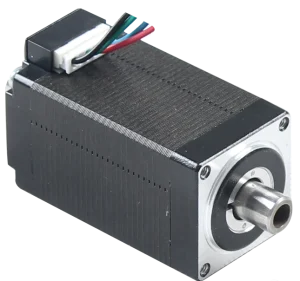
What Are the Different Types of NEMA 8 Hollow Shaft Stepper Motors?
NEMA 8 hollow shaft stepper motors are compact, high-precision electromechanical actuators widely used in automation, robotics, CNC systems, and industrial micro-mechanisms. Their hollow shaft design allows for internal wiring, sensor integration, or specialized mechanical coupling, making them ideal for space-constrained applications requiring high torque density. These motors are available in multiple inner bore diameters to match various mechanical requirements and performance needs.
NEMA 8 5mm Hollow Shaft
The 5mm hollow shaft model features a 1.8° step angle and is compatible with standard 5mm shaft components, including timing belt pulleys. Its ultra-compact design and lightweight construction (~70g) make it perfect for micro-positioning and low-load automation tasks.
Advantages:
Extremely compact footprint for tight installations
Lightweight and easy to integrate into small systems
Compatible with standard 5mm shaft accessories
Limitations:
Lower torque output than larger variants
Limited rigidity for heavy loads
Best suited for: miniature 3D printers, small CNC routers, lab automation, and educational robotics
NEMA 8 6mm Hollow Shaft
Upgrading to a 6mm bore increases shaft stiffness and improves torque transmission, while maintaining the NEMA 8 outer frame. This model is ideal for precision mini-CNC machines and automated optical systems.
Advantages:
Enhanced torque performance
Improved shaft stability compared to 5mm models
Maintains lightweight design for compact setups
Limitations:
Slightly reduced space efficiency
Slightly higher cost than 5mm variants
May require custom mounts in very tight installations
NEMA 8 8mm Hollow Shaft
The 8mm hollow shaft variant offers higher torque capacity and mechanical strength without enlarging the motor footprint. It supports a wider range of couplings and pulleys, making it suitable for high-precision engraving, industrial actuators, and robotic joints.
Advantages:
Increased torque and load-handling capability
Improved shaft rigidity for dynamic motion
Compatible with a wide range of mechanical interfaces
Limitations:
Higher rotational inertia
May require stronger support bearings
Increased power consumption under load
NEMA 8 10mm Hollow Shaft
The 10mm hollow shaft model delivers maximum torque and structural integrity for high-demand automation, medical devices, and precision prototyping in compact systems. Its design supports internal cabling and sensor integration through the hollow bore, enabling advanced motion control applications.
Advantages:
Highest torque output in the NEMA 8 class
Exceptional shaft strength and durability
Suitable for direct-drive and high-load applications
Limitations:
Premium pricing due to specialized design
Requires careful thermal management
May need firmware or system tuning for optimal performance
Specification Summary:
| Model | Shaft Diameter | Weight | Step Angle | Typical Applications |
| NEMA 8 5mm | 5mm | ~70g | 1.8° | Mini 3D printers, educational kits, light-duty automation |
| NEMA 8 6mm | 6mm | ~70g | 1.8° | Mini CNC, laser engravers, small robotics |
| NEMA 8 8mm | 8mm | ~70g | 1.8° | Precision machining, industrial micro-actuators |
| NEMA 8 10mm | 10mm | ~70g | 1.8° | High-torque automation, medical devices, aerospace prototypes |
What Are the Applications of NEMA 8 Precision Bore Shafts?
NEMA 8 precision bore shafts find application in various industries:
Robotics: Enabling precise joint movement and cable management in robotic arms. The small size of NEMA 8 components makes them ideal for compact robots.
3D Printing: Driving linear motion systems in 3D printers, allowing for accurate positioning of the print head.
Medical Devices: Providing precise control in medical instruments and equipment, such as syringe pumps and surgical robots.
Automation: Powering linear actuators, conveyors, and other automated machinery requiring precise motion control.
Laboratory Equipment:Driving pumps, valves, and other components in laboratory instruments.
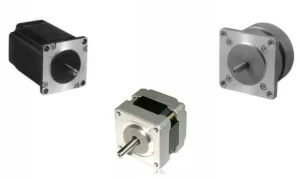
How Are NEMA 8 Hollow Shaft Stepper Motors Applied in Robotics, CNC, and 3D Printing?
The NEMA 8 hollow shaft stepper motor is a compact, high-precision solution widely applied across automation, robotics, CNC systems, medical devices, and IoT equipment. Its hollow shaft design allows engineers to route cables, sensors, or drive components directly through the motor, enabling space-efficient, high-accuracy system designs. These motors deliver consistent torque, smooth motion, and reliable operation, making them ideal for miniature machinery, micro-robotics, and compact industrial systems.
Robotics
NEMA 8 motors excel in robotic applications due to their precision, compact size, and excellent torque-to-size ratio. They are commonly deployed to control articulated joints, grippers, and small actuation mechanisms. The hollow shaft design allows wiring or pneumatic lines to pass through the motor, reducing clutter and improving system reliability.
Key Benefits:
Accurate angular positioning for robotic arms and miniature manipulators
Integration into confined spaces without compromising motion control
Smooth, repeatable movement critical for assembly, inspection, and pick-and-place tasks
Typical Torque Range: 15–45 oz-in
Integration Advantage: Internal cabling minimizes failure points and simplifies system assembly
CNC Machines
In compact CNC machines such as desktop mills, laser cutters, and engraving systems, NEMA 8 hollow shaft motors provide precise incremental motion for X, Y, and Z axes. Coupled with encoders or anti-backlash couplings, these motors ensure high positional accuracy for detailed machining and micro-manufacturing tasks.
Key Benefits:
Consistent step accuracy for clean cuts and precise engravings
Compact footprint allows integration into miniaturized CNC platforms
Supports high-performance closed-loop control when paired with feedback devices
Typical Torque Range: 20–50 oz-in
Integration Advantage: Small form factor enhances tool placement and motion stability
3D Printers
NEMA 8 motors drive filament extrusion and motion systems in desktop and specialty 3D printers, especially delta and core-XY architectures. Their hollow shaft enables easy integration with lead screws or timing belts, eliminating additional adapters. These motors also reduce vibration and noise, improving print quality and dimensional accuracy.
Key Benefits:
Precise filament feed and synchronized head movement
Smooth, low-vibration operation for high-quality prints
Compatibility with compact motion systems and direct-drive setups
Typical Torque Range: 25–60 oz-in
Integration Advantage: Direct drive compatibility enhances layer alignment and print consistency
Medical Devices
In medical diagnostics and treatment equipment, NEMA 8 hollow shaft stepper motors provide reliable and precise control. They are commonly used in automated pipetting systems, sample handling devices, and imaging instruments. The hollow shaft accommodates optical fibers, fluid lines, or sensors, supporting sterile and cleanroom-compliant designs.
Key Benefits:
High positional accuracy for delicate medical operations
Compact, clean design suitable for lab automation and imaging devices
Hollow shaft allows integration of essential internal components
Typical Torque Range: 10–40 oz-in
Integration Advantage: Sterilization-friendly integration reduces contamination risk
IoT and Smart Devices
As IoT and smart automation devices become more prevalent, NEMA 8 motors provide precise actuation in compact, connected systems. Applications include camera gimbals, environmental sensors, automated valves, and positioning modules. Their low power consumption and quiet operation make them ideal for consumer-facing IoT and smart home systems.
Key Benefits:
Remote actuation and precise mechanical response
Compact design fits miniaturized sensors and devices
Hollow shaft enables seamless integration with feedback and monitoring systems
Typical Torque Range: 15–35 oz-in
Integration Advantage: Supports autonomous, real-time mechanical control
Emerging and Specialized Applications
Beyond traditional uses, NEMA 8 hollow shaft motors are increasingly used in wearable robotics, drones, augmented reality devices, and research instrumentation, providing high precision in tight spaces. Their design supports integration of sensors, wiring, or specialized shafts, enabling advanced micro-mechanical applications.
Key Benefits:
Powers exoskeleton joints and assistive robotics
Controls drone payload release mechanisms and sensor stabilization
Adjusts optical components in AR/VR hardware
Drives micro-positioning stages and lab automation setups
uture Trend: Growing demand for edge computing and localized mechanical intelligence in compact devices
Additional Considerations for Optimal Performance
Thermal Management: Ensure proper ventilation or heatsinks to prevent torque loss under continuous operation
Driver Compatibility: Use microstepping drivers for smoother motion and higher resolution
Backlash Minimization: Incorporate anti-backlash gears or preloaded couplings for precision applications
Environmental Protection: Select motors with coatings or seals for dusty or humid environments
Customization Options: Many manufacturers offer custom shaft lengths, connectors, or mounting configurations to optimize integration
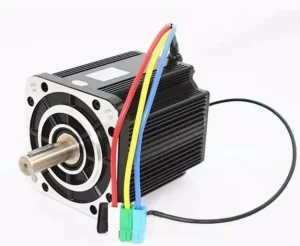
What Are the Customization Options for NEMA 8 Bore Shafts?
To meet specific application requirements, NEMA 8 bore shafts can be customized in several ways:
Length: Cut to precise lengths.
Bore Diameter: The inner diameter can be customized to accommodate specific cables, sensors, or other components.
Material: Selection of the appropriate material.
Coatings: Applying coatings to improve corrosion resistance, wear resistance, or reduce friction. Examples include anodizing (aluminum) and plating (steel).
Machining: Adding features like keyways, flats, threads, and holes.
Surface Finish: Achieving specific surface roughness for optimal performance.
How to Choose the Right NEMA 8 Hollow Shaft Stepper Motor?
When sourcing NEMA 8 hollow shaft stepper motors for industrial automation, robotics, CNC systems, or medical devices, selecting the appropriate model is critical for long-term reliability, performance, and cost-efficiency. Making an informed choice ensures your systems maintain precise motion control, minimize downtime, and optimize energy usage. This guide highlights essential factors for evaluating these motors, focusing on efficacy, cost-effectiveness, quality, and integration considerations.
Match Motor Specifications to Application Needs
Performance begins with choosing motors that align with your system requirements. Consider these specifications carefully:
- Inner Shaft Diameter:Select based on mechanical compatibility. The 5mm hollow shaft suits lightweight applications like micro CNC machines, camera gimbals, or lab automation. For higher torque demands, the 10mm hollow shaft provides greater rigidity and load-handling capacity, ideal for industrial actuators, medical devices, or compact robotic arms.
- Winding Material:Motors with copper windings deliver superior conductivity, reduce resistive losses, and maintain cooler operation, ensuring precise step accuracy even under continuous operation.
- Shaft Material:Stainless steel hollow shafts enhance durability, resist corrosion, and extend service life, particularly in high-cycle or harsh environments.
- Thermal Management:Efficient heat dissipation maintains performance and prevents thermal degradation, demagnetization, or torque loss during extended use.
Balance Performance and Cost-Effectiveness
While upfront cost is important, long-term value comes from reliability, low maintenance, and versatile performance. Optimize ROI by considering:
- Voltage Flexibility:Motors that support multiple voltages (e.g., 12V–24V) integrate seamlessly with diverse power supplies and driver configurations.
- Step Accuracy:High precision (e.g., 1.8° or 0.9° per step) ensures smooth motion and repeatable positioning—crucial for 3D printing, optical alignment, or micro-dispensing applications.
- Torque Rating:Ensure holding torque (typically 0.2–0.5 Nm for NEMA 8) matches your load to prevent missed steps or stalling.
- Weight and Size:Lightweight motors (<200g) reduce inertia in portable devices, drones, and robotic arms, improving responsiveness.
- Environmental Resilience:Aluminum housings improve heat dissipation compared with plastic casings, enhancing reliability under high-temperature conditions.
- Current Rating:Match rated current (e.g., 1.0–1.5A per phase) with your driver to avoid overheating or reduced torque performance.
Ensure Long-Term Quality and Reliability
High-quality construction and rigorous testing are critical for mission-critical applications:
- High-Torque Models:Maintain synchronization and step accuracy under heavy loads, reducing the risk of system errors in precision machinery.
- Durability Testing:Reputable manufacturers perform thermal cycling, vibration analysis, and extended life testing to guarantee consistent performance over thousands of hours.
- Consistent Manufacturing:Automated winding and quality control minimize variability between units, ensuring reliability when purchasing in bulk.
- Precision Bearings:Reduce friction and wear, extending motor life and enabling quieter operation.
Operational Considerations for Optimal Integration
Beyond core specifications, consider factors that influence system performance:
- Low Vibration:Smooth rotation minimizes stress on connected components, vital for 3D printers, microscopes, and medical instruments.
- Quiet Operation:Optimized winding patterns and balanced rotors reduce noise for labs, office equipment, and consumer-facing devices.
- EMI Reduction:Shielded windings or ferrite cores prevent interference with sensors, communication lines, and control electronics.
- Hollow Shaft Utility:Enables routing of cables, sensors, or shafts for feedback systems, rotary encoders, or custom couplings.
Recommended Specifications for NEMA 8 Hollow Shaft Motors
| Selection Factor | Recommended Specification | Best For | Avoid If |
| Shaft Diameter | 5mm or 10mm hollow | Compact systems, internal cabling | Shaft doesn’t match coupling/load |
| Holding Torque | 0.3–0.5 Nm | Precision actuators, micro robotics | Below 0.2 Nm for heavy loads |
| Current Rating | 1.0–1.5A per phase | Stable torque under load | Incompatible with your driver |
| Construction | Aluminum housing, stainless shaft | Heat dissipation, durability | Plastic casing or brass shafts |
| Step Angle | 1.8° (200 steps/rev) | High-precision motion | 0.9° without microstepping support |
Final Recommendations
- Purchase from reputable suppliers with datasheets and technical support.
- Verify compliance with standards (e.g., RoHS, CE) for safety and regulatory adherence.
- Consider future scalability: choose motors compatible across multiple projects.
- Request performance test reports or thermal imaging for critical applications.
- Store unused motors in dry, temperature-controlled environments to maintain winding insulation and bearing lubrication.
By prioritizing efficacy, quality, cost-efficiency, and operational compatibility, businesses can select high-performance NEMA 8 hollow shaft stepper motors that deliver reliable precision, minimize downtime, and enhance overall system efficiency. Proper motor selection drives productivity, enables innovation, and ensures long-term ROI across automation, robotics, medical devices, and compact industrial systems.
What Are the Benefits of Precision Bore Shafts in Stepper Motors?
Utilizing precision bore shafts in stepper motor systems results in several advantages:
Enhanced Accuracy: Minimizing errors in motion control, resulting in more precise positioning.
Improved Reliability: Reducing wear and tear on components, leading to longer system lifespan.
Increased Efficiency: Lowering friction and improving energy transfer, resulting in more efficient operation.
Optimized Performance: Achieving smoother and more controlled motion.
Example Related Informations Sheet table
| Property | Steel (AISI 1045) | Aluminum (6061-T6) | Stainless Steel (304) |
| Tensile Strength | 600 MPa | 310 MPa | 520 MPa |
| Yield Strength | 340 MPa | 276 MPa | 210 MPa |
| Density | 7.85 g/cm³ | 2.70 g/cm³ | 8.00 g/cm³ |
| Corrosion Resistance | Low | Medium | High |
| Cost | Low | Medium | High |
| Common Bore Sizes | 5mm, 4mm, 3mm | 3mm, 4mm, 5mm | 3mm, 4mm, 5mm |
Why Choose Welleshaft for Your NEMA 8 Bore Shaft Needs?
Welleshaft is a trusted global supplier and contract manufacturer based in China, specializing in high-quality NEMA 8 precision bore shafts. Focusing on precision, reliability, and customer satisfaction, Welleshaft provides solutions for businesses worldwide, offering a wide range of materials including steel, aluminum, and stainless steel, expert custom machining capabilities for precise dimensions, bore sizes, and surface finishes, and utilizing state-of-the-art equipment for consistent high-precision production. With stringent quality control, experienced engineering support for material selection and design optimization, competitive pricing for both small and large production runs, and efficient global shipping, Welleshaft delivers standard or fully customized NEMA 8 bore shafts on time and within budget, helping clients meet their technical and operational requirements.
FAQ
Is a NEMA 8 stepper motor suitable for heavy industrial use?
No, NEMA 8 stepper motors are designed for compact, precision applications rather than heavy-duty industrial loads. With a small body diameter (~20mm), they deliver moderate torque, ideal for light-load tasks such as 3D printers, benchtop CNC machines, small robotics, and medical lab automation. For high-torque, continuous-operation systems, consider larger motors like NEMA 17 or NEMA 23.
What materials are used in NEMA 8 stepper motors?
These motors combine materials for performance, durability, and thermal efficiency:
- Stainless Steel Shaft: Corrosion-resistant, strong, and precise for long-term reliability.
- Copper Windings: High conductivity reduces energy loss, improves torque delivery, and limits heat generation.
- Aluminum Housing: Lightweight and durable, dissipates heat effectively, and minimizes electromagnetic interference (EMI).
Are NEMA 8 motors suitable for 3D printers?
Yes. Their compact size and high step accuracy make them excellent for small-format and desktop 3D printers. Benefits include precise filament feeding, smooth motion, minimized vibration, and efficient use of tight spaces, ensuring detailed, high-resolution prints.
Can NEMA 8 motors be customized?
Yes. Common options include:
- Shaft Variations: Different diameters (4–10mm), lengths, D-shapes, or threaded ends.
- Winding Configurations: Voltage, current, and inductance tailored to driver electronics.
- Lead Wires & Connectors: Choice of length, insulation, and connector type.
- Special Coatings: Protection against moisture, dust, or chemicals.
- Integrated Components: Encoders, brakes, or gearboxes for advanced control.
Do NEMA 8 motors provide sufficient torque for their size?
Yes. With holding torque typically 0.2–0.6 Nm, they deliver reliable torque for low-inertia, precision systems, optimized for micro-positioning, smooth motion, low vibration, and energy efficiency. They pair well with microstepping drivers for ultra-fine movement resolution.
Can NEMA gearboxes be used in harsh or washdown environments?
Yes. Stainless steel and electropolished gearboxes resist corrosion, water ingress, and contaminants, making them suitable for food, pharmaceutical, automotive, and industrial automation applications requiring frequent cleaning or exposure to moisture.
This blog is provided by the Welleshaft Engineering Team, led by Mr. Xu, with 10+ years’ experience in stepper motors and precision shafts. Welleshaft specializes in high-precision NEMA 8 bore shafts, hollow shaft stepper motors, and custom solutions for robotics, CNC machines, 3D printers, and medical devices, delivering reliable global supply and expert support.

 Español de México
  English
  Português do Brasil
  Deutsch (Österreich)
  Deutsch (Schweiz)
  English (UK)
  English (Australia)
  English (New Zealand)
  Deutsch
  Français du Canada
  Français
  Français de Belgique
  Italiano
  English (South Africa)
  Português
  Español
  Español de Perú
  Español de Colombia
  العربية
  日本語
日本語  Русский
  한국어
한국어  Tiếng Việt
  ไทย
ไทย