
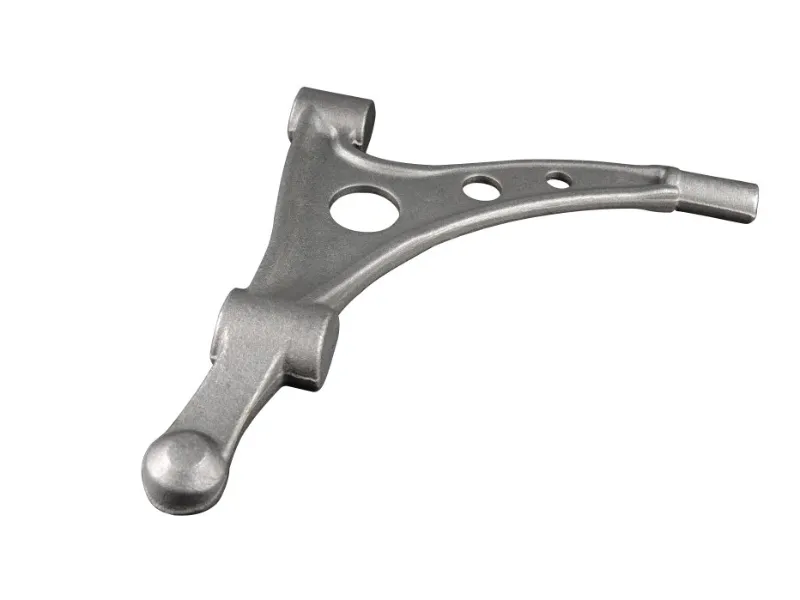
What Is Aluminum Forging and How Does It Work?
Aluminum forging is a manufacturing method that transforms aluminum alloys into strong, precisely shaped components suitable for diverse industrial applications. By applying controlled stress and heat, the process alters the internal structure of the metal, enhancing its strength, toughness, and reliability for engineering use.
Aluminum forging combines heat and mechanical pressure to form metals into complex geometries while maintaining superior strength and structural integrity. This technique combines traditional metalworking expertise with modern forging technology to produce durable parts for sectors such as aerospace, automotive, marine, and machinery.
The process of aluminum forging involves careful selection of the alloy, heating to optimal temperatures, and shaping under high pressure, which refines the grain structure and improves performance. Understanding the fundamentals of aluminum forging, its various types, and the benefits it offers is crucial for engineers and designers seeking reliable, high-performance forged aluminum parts.
What Are the Advantages of Aluminum Forging?
Aluminum forging offers a range of benefits that make it a preferred method for producing high-performance forged aluminum parts across multiple industries, including aerospace, automotive, and industrial machinery. Its advantages include:
- Enhanced Mechanical Properties: Forged components exhibit superior strength, toughness, and fatigue resistancecompared to cast or machined alternatives. This ensures reliability in critical structural applications.
- Precision and Surface Quality: The forging process allows for higher dimensional accuracyand smoother surface finish, making it suitable for parts with intricate geometries and tight tolerances.
- Material Efficiency: By closely following the final shape of the component, aluminum forgingreduces material waste, resulting in cost savings and optimized resource use.
- Cost-Effectiveness in Production: For medium to large-scale manufacturing, aluminum forgingcan lower production costs through efficient use of materials and streamlined processing.
- High Strength-to-Weight Ratio: Forged aluminum partsare lightweight yet maintain excellent strength, making them ideal for applications that require durability without added weight, such as automotive and aerospace components.
What Are the Main Aluminum Forging Industry Applications and Solutions?
The combination of excellent strength-to-weight ratio, outstanding corrosion resistance, and reliable mechanical performance makes aluminum forging a preferred manufacturing solution across a wide range of industries. Compared with many conventional manufacturing methods, forged aluminum parts provide improved structural integrity, longer service life, and enhanced resistance to fatigue loading.
As a result, industries that require lightweight design, durability, and operational reliability widely use aluminum forgings.
Aerospace and Defense Applications
The aerospace and defense sectors place extremely high demands on material performance. Engineers commonly select forged aluminum components for structural systems that require high strength while minimizing overall weight..
Typical applications include:
- Aircraft landing gear components
- Wing and fuselage structural connectors
- Engine support structures
- Hydraulic and fuel system housings
- Radar and antenna mounting brackets
- Missile and defense system components
Engineers frequently use high-strength 2xxx and 7xxx series aluminum alloys for these applications because they offer excellent fatigue resistance and load-bearing capability.
Key benefits include:
- High structural strength
- Reduced aircraft weight
- Improved fatigue performance
- Reliable dimensional stability
Automotive and Transportation Solutions
In modern transportation systems, aluminum forging supports vehicle lightweighting while maintaining structural safety and durability. Manufacturers produce many critical chassis and suspension components using forged aluminum parts because they can withstand repeated dynamic loading.
Common applications include:
- Control arms
- Steering knuckles
- Suspension mounts
- Tie rods
- Brake system brackets
- Wheel hubs and rim rings
- Structural frame connectors
Commonly used materials include 6061 aluminum forging alloy, 6082 aluminum forging alloy, and 7075 aluminum forging alloy.
Advantages for transportation applications:
- Reduced vehicle weight
- Improved fuel efficiency
- Enhanced handling performance
- Increased component lifespan
Rail Transit Equipment
Rail transportation systems require components capable of handling long-term cyclic loading while minimizing maintenance requirements.
Typical aluminum forging applications include:
- Bogie structural components
- Rail suspension connectors
- Coupling systems
- Brake assembly components
- Structural support brackets
The use of lightweight forged aluminum parts contributes to lower operating costs and improved energy efficiency.
Construction Machinery and Heavy Equipment
Heavy-duty equipment often operates under harsh environmental and loading conditions. Manufacturers increasingly use aluminum forgings in selected structural and mechanical systems where weight reduction and corrosion resistance are important.
Applications include:
- Structural connectors
- Equipment brackets
- Rotating assemblies
- Bearing support rings
- Hydraulic system housings
These components benefit from the combination of durability and weight savings provided by forged aluminum components.
Energy and Fluid Control Systems
In fluid handling and energy-related industries, reliability and sealing performance are essential. Aluminum forging provides dense material structures that improve pressure resistance and reduce the likelihood of leakage.
Typical products include:
- Pump bodies
- Valve housings
- Pipe fittings
- Pressure flanges
- Quick-connect couplings
- Hydraulic connectors
The excellent corrosion resistance of many aluminum alloys makes them particularly suitable for challenging operating environments.
General Industrial Machinery
Custom forged aluminum parts are widely used throughout industrial equipment manufacturing. These components often require a balance of mechanical performance, machining accuracy, and cost efficiency.
Examples include:
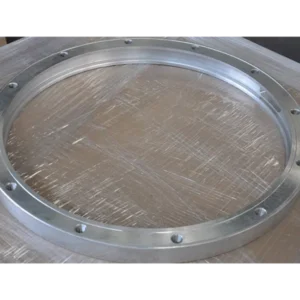
Flange rings、Couplings、Connecting rods、Fixture bases、Structural supports、Equipment mounting brackets
The forging process helps improve grain flow and structural consistency, resulting in more reliable long-term performance.
New Energy Vehicle Applications
The rapid growth of electric mobility has increased demand for lightweight structural components. Aluminum forging plays an important role in reducing vehicle mass while maintaining safety requirements.
Typical applications include:
- Battery pack support structures
- Electric motor housings
- Suspension systems
- Steering components
- Chassis connectors
Both hot-forged and precision-forged aluminum components are commonly used throughout electric vehicle platforms.
Electric Bicycle and Electric Motorcycle Components
For electric two-wheel vehicles, lightweight construction directly affects range and performance. Forged aluminum parts are frequently used for:
- Frame connectors
- Suspension linkages
- Wheel hubs
- Brake system components
- Steering assemblies
The combination of low weight and high strength makes aluminum alloy forging particularly attractive for these applications.
Agricultural, Forestry, and Recycling Equipment
Agricultural and forestry machinery often operates in demanding environments involving shock loads, vibration, and continuous use.
Common forged components include:
- Harvester structural parts
- Tractor connection systems
- Forestry equipment attachments
- Recycling machine assemblies
The enhanced durability of aluminum forgings helps extend service life while reducing maintenance requirements.
Hardware, Fasteners, and Precision Components
Many small mechanical products benefit from precision cold forging and warm forging processes.
Typical products include:
- Custom fasteners
- Mechanical connectors
- Hardware fittings
- Precision mounting components
These manufacturing methods provide excellent dimensional consistency while minimizing material waste.
Electrical Equipment and Motor Systems
Electrical products frequently require lightweight, high-precision components with excellent dimensional stability.
Examples include:
- Motor end covers
- Electrical housings
- Connector bodies
- Cooling system components
- Precision mounting structures
For these applications, cold forging aluminum can provide tight tolerances and excellent surface quality while maintaining production efficiency.
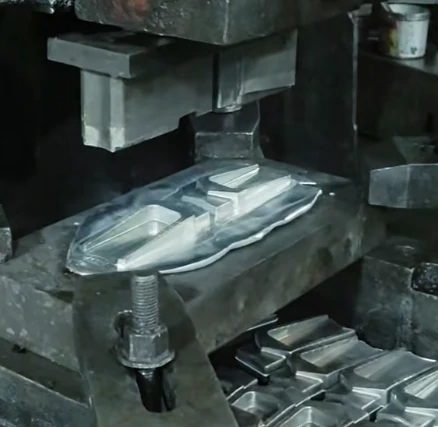
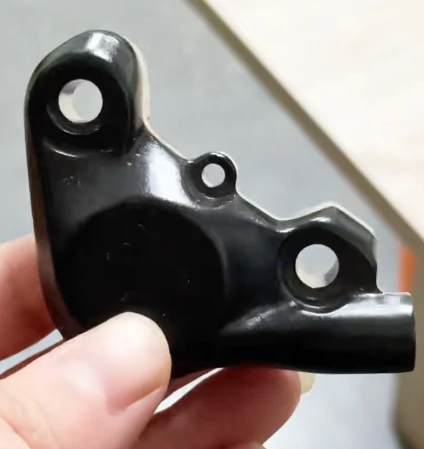
What Are the Different Types of Aluminum Forging?
Aluminum forging encompasses several specialized methods, each suited for specific performance requirements, component shapes, and dimensional tolerances. By selecting the appropriate forging type, engineers can optimize strength, precision, and surface quality for different applications. The main types of aluminum forging include:
Cold Forging
Cold forging involves shaping aluminum alloys at room temperature. This method enhances strength, maintains tight dimensional tolerances, and improves surface finish. It is particularly useful for small components or areas requiring high precision.
Typical applications:
- Connectors and flange seats
- Small shaft ends
- Cold-forged fastener blanks
- Parts where appearance, fit, or concentricity are critical
Cold forging is ideal as a finishing or sizing step after initial hot or warm forging when tight tolerances and surface accuracy are required.
Hot Forging
Hot forging uses elevated temperatures to deform aluminum alloys, improving plasticity and reducing deformation resistance. This approach is well-suited for medium to large parts, where controlled grain flow and internal integrity are essential.
Suitable for:
- Large structural components
- Open-die and closed-die forgings
- Ring-rolled forgings
Engineers recommend hot forging when applications require high strength, ductility, and reliable forming, with final dimensions achieved through subsequent machining.
Warm Forging
Warm forging operates at temperatures between hot and cold forging, offering a compromise between plasticity and reduced oxidation or forming load. It is commonly applied to small or medium-sized components that require improved dimensional accuracy and surface quality.
Suitable for:
- Small to medium structural parts
- Closed-die forgings
- Shafts and flanges with tighter tolerances
Warm forging, or a combination of hot forging followed by warm sizing, can enhance dimensional control while maintaining material integrity.
Forja por estampación
Drop forging shapes aluminum alloys using mechanical or gravitational force. This method produces components with high strength and precise geometry, suitable for complex structural parts.
Rolled Ring Forging
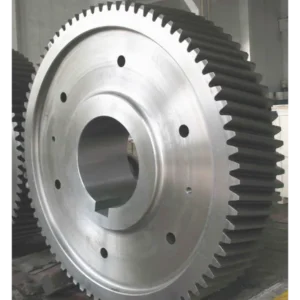
Rolled ring forging transforms a single aluminum billet into a ring through rolling and forming operations. This method ensures uniform grain structure and enables high-precision dimensional control.
Applications:
- Gears
- Bearings
- Circular structural components
Open-Die Forging
Open-die forging uses flat or simple-shaped dies to form aluminum alloys into large or irregular shapes. It is versatile and allows for the production of custom geometries with controlled mechanical properties.
Closed-Die Forging
Closed-die forging, also called impression-die forging, involves shaping aluminum within a predefined die cavity. This technique achieves highly accurate and complex geometries with consistent mechanical performance.
What Is the Aluminum Forging Process?
The aluminum forging process is a precision manufacturing technique that shapes aluminum alloys into strong, reliable components by applying controlled pressure and heat. This process refines the metal’s internal structure, enhancing mechanical properties such as strength, toughness, and durability, making it ideal for industries like aerospace, automotive, and defense.
Pre-Forging Preparation
Preparation is critical for a successful aluminum forging. Key tasks include:
- Aluminum Alloy Selection: Choosing the appropriate aluminum alloyensures the forged part meets performance requirements, such as corrosion resistance, machinability, and strength.
- Billet Cleaning and Sizing: The raw material, or billet, should be free of impurities and cut to a size suitable for the intended forging.
- Billet Heating: The billet is heated to a controlled temperature, typically between 500°C and 700°C (930°F–1290°F), depending on the alloy. Proper heating improves formabilityand reduces the risk of cracks during forging.
Forging Operation
The forging stage involves shaping the heated billet into the desired geometry:
- Die Design and Selection: Custom dies define the final shape, considering material flow, part complexity, and tolerances.
- Temperature Control: Maintaining optimal temperatures ensures proper material flowand preserves the mechanical properties of the aluminum alloy. Forging can be performed as hot forging, warm forging, or cold forging depending on the part requirements.
- Application of Pressure: The heated billet is placed in a hydraulic or mechanical press. Controlled pressureplastically deforms the aluminum, allowing it to conform to the die shape without defects.
Plastic Deformation of Aluminum
During forging, aluminum alloys undergo plastic deformation. This process realigns the metal’s grain structure, enhancing strength, fatigue resistance, and durability. Properly controlled plastic deformation ensures that the forged component maintains structural integrity while achieving the desired form.
Post-Forging Operations
After forging, several post-processing steps improve the quality and performance of the forged aluminum part:
- Heat Treatment: Processes like quenching and tempering enhance strengthand toughness.
- Surface Treatment: Machining, shot blasting, or polishing improves dimensional accuracy, surface finish, and corrosion resistance.
- Inspection and Quality Control: Ensures that the forged aluminum partsmeet specifications and performance requirements.
Machining and Finishing
Machining and finishing are essential for precision components. Operations may include cutting, drilling, or shaping, followed by protective coatings or polishing to enhance appearance and durability. These steps ensure the final forged aluminum part meets both functional and aesthetic requirements.
Tips for Effective Aluminum Forging
To achieve high-quality results in aluminum forging:
- Select the appropriate aluminum alloybased on mechanical and thermal requirements.
- Maintain precise temperature controlduring heating and forging stages.
- Use suitable forging equipmentto apply uniform pressure.
- Follow post-forging treatment proceduresto optimize strength, corrosion resistance, and surface quality.
What Are the Advantages of Hot Die Forging and Cold Forging?
Advantages in Hot Die Forging
- Precision control at elevated temperatures: Advanced hot die forgingtechniques allow accurate control of metal flow during high-temperature deformation, producing forged components with excellent mechanical strength and stable physical performance.
- Wide material adaptability: Hot die forgingis suitable for multiple materials such as steel, aluminum, and nickel-based alloys. Material selection can be optimized based on application needs to ensure reliable hot die forging parts performance.
- Capability for complex geometries: Through hot die forging, complex and highly detailed shapes can be achieved, supporting demanding applications such as automotive systems and energy equipment. This includes intricate structural parts and high-precision functional components with strict design requirements.
Advantages in Cold Forging
- Improved material utilization: Cold forgingreduces material waste by eliminating the need for extensive heating, making it a more efficient forming method and supporting cost-effective cold forging production efficiency.
- High dimensional accuracy: The cold forging processenables tight tolerance control, making it suitable for components that require high precision and consistent dimensional stability across batches.
- Enhanced mechanical strength: Without changing the base metal structure, cold forgingimproves work hardening effects, resulting in parts with higher strength, better wear resistance, and longer service life, ideal for demanding industrial applications.
Which Aluminum Alloy Is Best for an Aluminum Forging Part?
Selecting the right aluminum forging alloy is one of the most important decisions in any aluminum forging part project. Different alloys provide distinct combinations of strength, corrosion resistance, weldability, machinability, and thermal performance. The ideal material depends on the operating environment, mechanical loading requirements, manufacturing processes, and cost targets.
Because no single alloy can satisfy every engineering requirement, understanding the characteristics of commonly used forging aluminum alloys is essential before finalizing a design.
Common Aluminum Forging Alloys and Their Applications
Several grades are widely used in the production of forged aluminum parts, each designed for specific performance requirements.
6061 Aluminum Forging Alloy
6061 aluminum forging alloy remains one of the most versatile materials in the aluminum forging industry.
Key characteristics include:
- Good mechanical strength and toughness
- Excellent corrosion resistance
- Outstanding weldability
- Easy machining and finishing
- Suitable for heat treatment
Typical applications include:
- Automotive suspension components
- Industrial machinery parts
- Structural brackets
- Marine hardware
- General engineering forgings
For many manufacturers, 6061 is often the first choice when a balance of performance and cost is required.
6063 Aluminum Forging Alloy
6063 aluminum forging alloy is known for its superior surface finish and thermal conductivity.
Main advantages:
- Excellent appearance after finishing
- Good corrosion resistance
- High thermal conductivity
- Easy extrusion and forming
Common uses include:
- Heat dissipation components
- Architectural products
- Decorative structural parts
- Tubes and profiles
When appearance and heat transfer performance are priorities, 6063 can be a suitable option.
6082 Aluminum Forging Alloy
Among European-grade alloys, 6082 aluminum forging alloy is frequently selected for demanding structural applications.
Benefits include:
- Higher strength than 6061
- Excellent load-bearing capability
- Good corrosion resistance
- Reliable weldability
- Suitable for heavy-duty structures
Typical applications:
- Transportation equipment
- Cranes and lifting systems
- Construction machinery
- Structural engineering components
For projects requiring increased strength without moving to aerospace-grade materials, 6082 is often considered.
7075 Aluminum Forging Alloy
7075 aluminum forging alloy is recognized for its exceptional strength-to-weight ratio.
Major properties:
- Extremely high tensile strength
- Excellent fatigue resistance
- Lightweight performance
- Suitable for critical structural applications
Common industries include:
- Aerospace
- Defense equipment
- Motorsport
- High-performance sporting products
Although 7075 delivers outstanding mechanical properties, it generally requires more careful processing and offers lower weldability compared with 6xxx series alloys.
Additional Forging Aluminum Alloys for Specialized Applications
Beyond the commonly used 6061, 6063, 6082, and 7075 grades, several other forging aluminum alloys are widely used in specialized industries.
5083 Aluminum Forgings for Marine and Welded Structures
5083 aluminum forgings are highly valued in marine environments due to their exceptional resistance to seawater corrosion.
Typical applications:
- Offshore equipment
- Shipbuilding components
- Marine connectors
- Welded structural forgings
- Cryogenic systems
Its excellent weldability makes it a preferred choice for structures requiring extensive fabrication.
7050 Aluminum Forgings for Aerospace Structures
Compared with 7075, 7050 aluminum forgings provide improved resistance to stress corrosion cracking while maintaining high strength.
Advantages include:
- Superior fracture toughness
- Better thick-section performance
- Enhanced durability under cyclic loading
Applications include:
- Aircraft structural components
- Aerospace fittings
- Large load-bearing forgings
2024 Aluminum Forgings
2024 aluminum alloy combines high strength with excellent fatigue resistance.
Common uses:
- Aircraft structures
- Aerospace fasteners
- High-performance mechanical components
Its ability to withstand repeated loading makes it suitable for fatigue-sensitive applications.
High-Temperature Aluminum Forging Alloys
Certain industries require aluminum forging parts capable of operating under elevated temperatures.
Popular choices include:
2014 Aluminum Forgings
- High strength
- Good machinability
- Suitable for pressure-bearing structures
2219 Aluminum Forgings
- Excellent high-temperature stability
- Suitable for aerospace tanks and pressure vessels
2618 Aluminum Forgings
- Outstanding thermal fatigue resistance
- Frequently used for forged pistons and engine components
4032 Aluminum Forgings
- Low thermal expansion
- Excellent wear resistance
- Ideal for precision forged pistons
Comparison of Common Aluminum Forging Alloys
| Alloy Grade | Strength | Corrosion Resistance | Weldability | Machinability | Typical Applications |
| 6061 | High | Excellent | Excellent | Excellent | General structural forgings |
| 6063 | Medium | Good | Excellent | Good | Architectural and thermal applications |
| 6082 | Very High | Excellent | Good | Good | Heavy-duty structural components |
| 5083 | Medium-High | Outstanding | Excellent | Moderate | Marine and welded structures |
| 7075 | Extremely High | Moderate | Limited | Moderate | Aerospace and defense |
| 7050 | Extremely High | Good | Limited | Moderate | Aerospace structures |
| 2024 | High | Moderate | Limited | Good | Fatigue-resistant aerospace parts |
| 2618 | High | Moderate | Limited | Good | Engine and high-temperature applications |
How to Choose the Right Aluminum Forging Alloy
When selecting an aluminum forging alloy, engineers typically evaluate several critical factors.
Consider Load and Strength Requirements
For highly stressed components, 7075 aluminum forgings, 7050 aluminum forgings, or 6082 aluminum forgings are often preferred because of their superior mechanical strength.
Evaluate Corrosion Exposure
If the part will operate in humid, chemical, or marine environments, alloys such as 6061 aluminum forging alloy, 6082 aluminum forging alloy, and 5083 aluminum forgings generally provide better long-term corrosion resistance.
Determine Welding Requirements
For welded assemblies, alloys such as 6061, 6063, and 5083 offer excellent weldability and fabrication flexibility.
Review Machining Requirements
If extensive machining is required after forging, 6061 aluminum forgings y 2024 aluminum forgings are often selected because of their favorable cutting characteristics.
Analyze Thermal Conditions
For applications involving heat dissipation, 6063 aluminum forging alloy offers excellent thermal conductivity. For elevated operating temperatures, alloys such as 2219, 2618, and 4032 are better suited.
Balance Cost and Availability
Material cost, lead time, and regional availability can significantly affect project economics. In many industrial applications, 6061 aluminum forgings remain one of the most cost-effective solutions due to their broad availability and versatile performance.
Which Forging Process Is Best for Your Part?
In aluminum forging design and production, choosing the appropriate forging process depends on part geometry, overall size, material flow requirements, and batch volume. Common methods include open-die forging, closed-die forging, ring rolling, and backward extrusion. The following guidance helps identify the most suitable forging process for specific aluminum components.
Open-Die Forging (Free Forging)
Open-die forging is ideal for medium to large aluminum forgings with relatively simple geometries. It provides multi-directional deformation, creating continuous grain flow for enhanced mechanical properties. This method is flexible and suitable for small to medium batch production with multiple part varieties.
- Typical Part Types:Forging discs, blocks, aluminum rings, shaft forgings, hollow or cylindrical forgings.
- Project Profile:Large overall dimensions or single-piece weight, simple contours, and generous machining allowances.
Closed-Die Forging
Closed-die forging uses precision dies to form near-net shape components, reducing material waste and machining time. It is best for complex aluminum forgings requiring high consistency in mass production.
- Typical Part Types:Aluminum forged control arms, steering knuckles, brackets, lugs, aerospace structural parts, aluminum forged flanges, engine accessory brackets.
- Project Profile:Three-dimensional parts with intricate contours, local ribs or stiffeners, safety-critical or key load-bearing components, typically with medium to high annual production volumes.
Ring Rolling
Ring rolling is optimized for ring-shaped aluminum forgings, enhancing fatigue performance by aligning grain flow circumferentially while reducing weight and improving material utilization.
- Typical Part Types:Aluminum forged rings, wheel rims, gear rings, aluminum alloy flange rings, housing end rings, bearing races.
- Project Profile:Parts where outer diameter exceeds thickness or width, with uniform sections, and requirements for fatigue life, impact resistance, and material efficiency.
Backward Extrusion
Backward extrusion forging is suitable for tubular, cup-shaped, or cylindrical aluminum components, enabling deep-cavity formation in a single or few blows while ensuring uniform wall thickness and internal/external integrity. It is commonly applied to components with pressure and sealing requirements.
- Typical Part Types:Backward-extruded aluminum tubes, cup-shaped forgings, cylindrical housings, aluminum alloy cylinders, valve bodies, pressure vessel nozzles.
- Project Profile:Deep-cavity or closed-bore components sensitive to internal pressure, sealing performance, and internal soundness, where alternatives like deep-hole drilling or welded cylinders are less desirable.
Aluminum Forging vs Aluminum Die Casting: What Are the Key Differences?
Aluminum forging and aluminum die casting are two prominent methods for manufacturing aluminum components, but they differ significantly in process, performance, and application.
Heat and mechanical pressure shape aluminum alloys in aluminum forging, refining their internal grain structure and producing parts with superior mechanical properties, including higher strength, toughness, and fatigue resistance.This makes forged aluminum parts ideal for load-bearing applications where structural integrity is critical.
In contrast, aluminum die casting involves injecting molten aluminum into precisely designed molds. This method excels at producing highly complex geometries and components with excellent dimensional accuracy and surface finish. Die casting is particularly suitable for high-volume production of intricate components where exact shape replication is required.
Key differences at a glance:
| Feature | Forja de aluminio | Aluminum Die Casting |
| Process | Deformation under heat & pressure | Molten aluminum injection into molds |
| Mechanical Strength | High – superior grain structure and durability | Moderate – depends on alloy and casting quality |
| Dimensional Accuracy | Good, may require post-machining | Excellent – high repeatability and complex shapes |
| Surface Finish | Moderate, can be improved by machining | High as-cast, minimal post-processing |
| Typical Applications | Aerospace structural parts, automotive load-bearing components, defense equipment | Consumer products, housings, brackets, intricate machinery parts |
| Production Volume | Low to medium | Medium to high |
Choosing the right process depends on component requirements, including mechanical strength, dimensional complexity, production volume, and cost considerations. Forged aluminum parts are preferred for high-load applications demanding strength-to-weight efficiency, while die-cast aluminum components are optimal for parts with tight geometric tolerances and high-volume needs.
What Forging Types, Sizes, and Capabilities Are Available?
In the field of aluminum forging, different forging methods accommodate various component types, dimensions, and weight capacities. The following provides an overview of common forging types, along with their typical size and capability ranges:
Free Forging
Free forging is used to shape aluminum blocks, discs, rings, cylinders, and long shafts without the constraints of a die. Typical capabilities include:
- Forging Blocks: Maximum weight up to 9T; dimensions: length ≤ 7000 mm, width ≤ 2000 mm, height ≤ 500 mm; diameter ≤ φ2500 mm.
- Forging Discs: Maximum weight up to 5T; quenched discs: outer diameter ≤ φ2500 mm; unquenched discs: outer diameter ≤ φ4000 mm, height ≤ 500 mm.
- Forging Rings: Maximum weight up to 5T; small-to-medium rings: outer diameter φ200–φ800 mm, length ≤ 2000 mm; larger rings: outer diameter φ810–φ2000 mm, length ≤ 1500 mm.
- Forging Cylinders: Maximum weight up to 5T; length ≤ 7000 mm, diameter ≤ 800 mm.
- Long Shafts: Maximum weight up to 8T; outer diameter ≤ φ830 mm, inner diameter ≤ φ650 mm, length ≤ 1800 mm.
Reverse Extrusion
Reverse extrusion forging is mainly used for forging tubes. It allows the formation of hollow cylindrical parts with controlled wall thickness. Typical capability: projected area ≤ 3.0 m² (diameter ≤ φ1950 mm).
Die Forging
Die forging is used for both general and complex shapes that require precise tolerances:
- General Die Forgings: Projected area ≤ 1.5 m² (diameter ≤ φ1400 mm).
- Complex Die Forgings: Maximum diameter ≤ φ2500 mm; suitable for high-precision structural components and load-bearing applications.
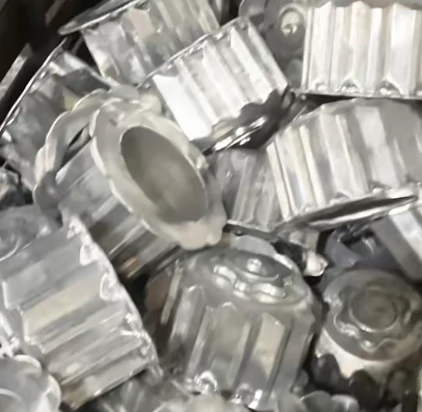
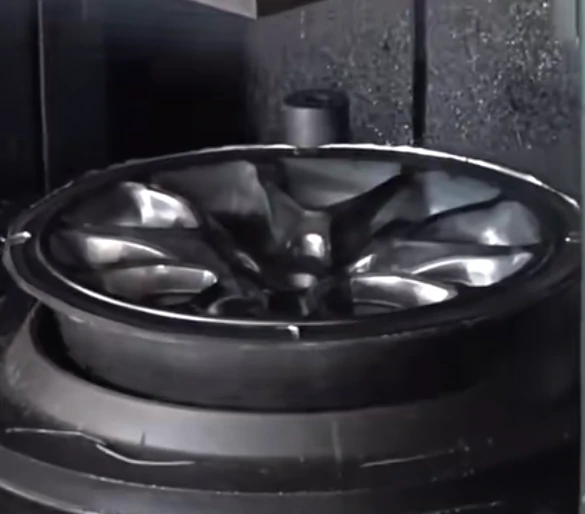
What Forging Equipment and Production Capacity Are Required for Aluminum Forging?
Modern aluminum forging production relies on a combination of high-tonnage open-die forging, closed-die forging, ring rolling, and specialized aluminum alloy heat treatment lines. These systems support a broad spectrum of aluminum forgings, including discs, blocks, rings, shafts, and hollow/cylindrical parts. Key equipment capabilities are summarized below.
Open-Die Forging Equipment
High-tonnage open-die hydraulic presses in the range of 25–60 MN (2,500–6,000 T) are employed. For instance, a 60 MN open-die press offers:
- Daylight: ~5,000 mm
- Stroke: ~3,000 mm
- Worktable: ~2,600 × 7,000 mm
- Forging speed: adjustable 0–50 mm/s
These presses are suitable for both pre-forging and final forging of medium to large aluminum billets, blocks, shafts, and hollow/cylindrical forgings.
Closed-Die Forging Lines
Closed-die forging presses cover 40–500 MN (4,000–50,000 T). Typical vertical presses feature:
- Daylight: ~4,000 mm
- Stroke: ~2,000 mm
- Worktable sizes: ~2,300 × 4,000 mm to 4,000 × 7,000 mm
- Forging speed: 0.05–50 mm/s
These lines excel at mass production of aluminum forged chassis parts, connectors, brackets, wheel components, and other structural closed-die aluminum forgings.
Ring Rolling and Hollow Forging
- Equipment Platform:Large radial–axial ring rolling lines can produce rings up to φ9,000 mm in outer diameter, with maximum radial and axial forces of ~900 T and ~600 T, respectively. Pre-forging is performed using 4,000–5,000 T hydraulic presses.
- Typical Capabilities:Quenched aluminum alloy rolled rings up to φ2,500 mm outer diameter; non-quenched rings up to φ4,000 mm and ≤5 T per piece. Cylindrical and backward-extruded hollow aluminum forgings typically range from φ200–830 mm outer diameter and ≤1.8–2.0 m in length. Exact capacities are verified based on engineering drawings.
Aluminum Alloy Heat Treatment Capacity
Specialized vertical quench furnaces and box-type ageing furnaces accommodate aluminum alloy heat treatment with working zones like φ3 × 7 m and 5 × 3 × 1.2 m, supporting single-furnace loads of 5–15 T. Temperature uniformity is maintained within ±3 °C to meet quenching requirements.
- Common temper conditions for 2xxx / 5xxx / 6xxx / 7xxx series aluminum forgingssuch as T6 and T651 can be implemented according to project specifications and standards like AMS 2750.
What CNC Machining Capabilities Are Available for Aluminum Forgings?
Beyond the forging process, CNC machining can be applied to aluminum forgings, covering operations from rough shaping to precision finishing.
Common machining operations include CNC turning, milling on vertical or horizontal machining centers, drilling, tapping, boring, keyway cutting, grooving, and chamfering.
Typical applications feature aluminum forged flanges, aluminum forged shafts, valve bodies and housings, connector blocks, fixture bases, as well as aluminum forged rings and stepped shaft forgings.
Dimensional precision & fits are carefully maintained, ensuring critical tolerances, concentricity, and parallelism according to design specifications. Surface roughness is controlled appropriately for mating surfaces, sealing faces, and fit bores, providing reliable assembly and optimal performance.
What Surface Treatment and Protection Options Are Available for Aluminum Forgings?
To meet varying service conditions and appearance requirements, aluminum forgings can undergo a range of surface treatment processes that improve corrosion resistance, wear resistance, or enhance decorative effects.
- Anodizing: Provides general-purpose corrosion protectionwhile offering a decorative finish. Both color and film thickness can be customized according to project specifications.
- Hard anodizing: Applied to components experiencing higher friction, wear, or requiring increased surface hardness, such as bushings, guide surfaces, and other heavily loaded structural parts.
- Blasting, shot peening, or brushing: Used to create a uniform matte texture, remove minor surface flaws, or produce an optimal base profile for subsequent coatings.
- Powder coating and painting: Ideal for housings, flanges, and structural partsthat demand enhanced aesthetics and improved weathering resistance.
These surface treatments not only protect the aluminum forgings but also extend service life and ensure consistent performance under harsh operating conditions.
What Inspection and Quality Documentation Should Be Provided for Aluminum Forgings?
Depending on project requirements, aluminum forgings can undergo comprehensive inspection prior to delivery, with supporting quality documentation provided to facilitate drawing approval, third-party inspections, or system audits.
- Routine inspections: Include verification of dimensional and geometric tolerances, mechanical propertiesand hardness testing, as well as surface quality checks, all performed according to the drawings and relevant standards.
- Non-destructive testing (NDT, as needed): Techniques such as UT ultrasonic testing, RT radiographic testing, and PT penetrant testingare applied. The inspection coverage and intensity are determined based on part criticality and contractual requirements.
- Special verifications (if required): May include leak testing, balance testing, surface roughness measurements, hardness distribution analysis, or other checks specified in the technical agreement.
- Quality documents: Can include material test certificates (MTCs), heat treatment records, test and inspection reports, and certificates of conformance (COC), with content and format adaptable to project or customer system standards.
For efficient planning, provide inspection requirements and desired report types along with the drawings at the RFQ stage. This ensures an appropriate inspection plan and cost scope are configured to meet project objectives.
How Should You Submit Drawings and RFQ Guidelines for Aluminum Forging Projects?
To properly assess a custom aluminum forging project and prepare suitable process routes and quotations, it is important to provide clear and complete information in the RFQ stage. This helps ensure accurate evaluation of aluminum forging manufacturing feasibility and cost.
Drawings and Requirements:
- 2D/3D drawings: Include units, key dimensions, tolerances, datum references, locating surfaces, surface roughness, and cross-sections.
- Alloy & heat treatment: Specify grades like 6061-T6, 6082-T6, 7075-T73, or acceptable alternatives.
- Standards: List applicable standards (ASTM B247, EN 586, AMS-A-22771, or internal).
- Usage & supply: Indicate annual demand, batch sizes, and production type (sample, small batch, or mass production).
- Delivery condition: State if parts are forged blanks, forged + heat-treated + rough-machined, or fully machined, and if surface treatment is required.
- Tests & quality documents: Include dimensional checks, UT/NDT, hardness, mechanical testing, leak testing, balance tests, MTC, COC, etc.
- Operating conditions: Provide service environment, temperature, pressure, medium exposure, fatigue targets, and safety factors.
Evaluation Process:
-
- Manufacturability & process assessment: Choose forging method (open-die, closed-die, ring rolling, cold forging) and check size/alloy compatibility.
- Process & solution proposal: Recommend forging route, heat treatment, machining scope, delivery condition, and inspection items.
- Quotation development: Provide preliminary pricing, tooling costs, and lead times for prototypes and mass production.
Why Choose Welleshaft as Your Aluminum Forging Supplier?
Coverage of Mainstream Sizes and Process Windows
With capabilities in open-die forging, closed-die forging, ring rolling, and aluminum alloy heat treatment, welleshaft can handle a wide spectrum of aluminum forging requirements. From small and medium precision closed-die parts to large rings, shafts, and cylindrical forgings, our process range aligns with typical size windows and batch patterns in automotive, aerospace, and general industrial applications.
Design-for-Manufacturing Drawing and Process Review
For projects in the prototype or design stage, welleshaft conducts detailed manufacturability reviews on your 2D/3D drawings. Recommendations include optimized section and radius designs, forging allowances, tolerance adjustments, datum and locating structures, as well as selection of alloy grades and heat treatment conditions. This ensures a balance between performance, cost, and production stability from the early design phase.
One-Stop Machining and Inspection Support
Depending on your requirements, we can provide as-forged blanks, forging plus heat treatment and rough machining, or fully machined finished parts. In-house coordination of machining, surface treatment, and inspection allows us to deliver complete material test certificates (MTC), dimensional inspection reports, NDT reports, heat treatment records, and certificates of conformance (COC), reducing the risks of schedule delays and quality issues caused by managing multiple suppliers.
Standards and Certification System Support
All aluminum forgings are manufactured and inspected according to standards such as ASTM B247, EN 586, and aerospace-specific AMS-A-22771. Operations are conducted under AS9100 quality management with relevant NADCAP approvals for special processes, and can also comply with IATF 16949 automotive quality management requirements when projects demand it.
Frequently Asked Questions About Aluminum Forging
What are the limitations of forged aluminum?
Aluminum forgings have a lower melting point compared to metals like steel, making them unsuitable for extreme high-temperature applications. Additionally, the need for custom tooling and specialized forging presses can make the initial production setup more costly.
Can aluminum be hand forged?
Yes, aluminum can be forged by hand or using open-die forging. It must be carefully heated to a precise temperature (just below its melting point) and shaped quickly before the metal cools, hardens, or loses ductility.
Why is aluminum forging more expensive than casting or machining?
The higher cost of aluminum forging stems from several key factors:
- High Tooling Costs: Forging diesmust withstand extreme pressure and thermal stress. They are made from high-strength, heat-resistant steels (e.g., H13), and require precise CNC machining and heat treatment, resulting in high upfront expenses.
- Significant Equipment Investment: Aluminumhas high resistance to deformation. Forging it requires hydraulic or friction presses ranging from several thousand to tens of thousands of tons, contributing to substantial equipment depreciation and energy use.
- Complex Process Flow: Forging is rarely a single-step process. Typical operations include cutting, pre-heating, pre-forging, final forging, trimming, heat treatment (e.g., T6 solution and aging), and surface finishing. This extended production chain increases labor and time costs.
What are common surface defects in aluminum forgings, and how can they be prevented?
Improper control of process parameters can cause several defects:
- Laps / Folding: Occurs when metal layers fold without proper fusion. Solution: Optimize die design with smooth transition radii to improve natural metal flow.
- Cracking: Aluminum is highly temperature-sensitive. Too low a temperature causes hardening and cracking; too high melts grain boundaries. Solution: Strictly monitor pre-heating furnaceand die temperatures.
- Underfilling: Metal fails to fully fill the die cavity. Solution: Increase billet volume, press tonnage, or improve lubrication.
How does forging aluminum differ from forging steel?
Though the principles are similar, aluminum requires a distinct approach:
- Narrow Temperature Window: Aluminum is forged at 380°C–480°C, whereas steel can be forged across 900°C–1200°C. Deviations lead to melting, embrittlement, or cracking.
- Mandatory Die Pre-heating: Aluminum conducts heat rapidly. Cold dies can chill and harden the billet instantly. Dies should be pre-heated to 300°C–400°C.
- High Friction and Stickiness: At high temperatures, aluminum becomes viscous and adheres to dies. Specialized lubricants (e.g., water-based graphite) are critical, more so than in steel forging.
This article was provided by the Welleshaft Engineering Team and reviewed by Mr. Xu, who has over 10+ years of experience in metal forging and precision manufacturing. Welleshaft specializes in custom aluminum forgings, CNC machining, and quality-focused production solutions for global industrial customers.

 Español de Colombia
  English
  Português do Brasil
  Deutsch (Österreich)
  Deutsch (Schweiz)
  English (UK)
  English (Australia)
  English (New Zealand)
  Deutsch
  Français du Canada
  Français
  Français de Belgique
  Italiano
  English (South Africa)
  Português
  Español
  Español de México
  Español de Perú
  العربية
  日本語
日本語  Русский
  한국어
한국어  Tiếng Việt
  ไทย
ไทย
Valoraciones
No hay valoraciones aún.