
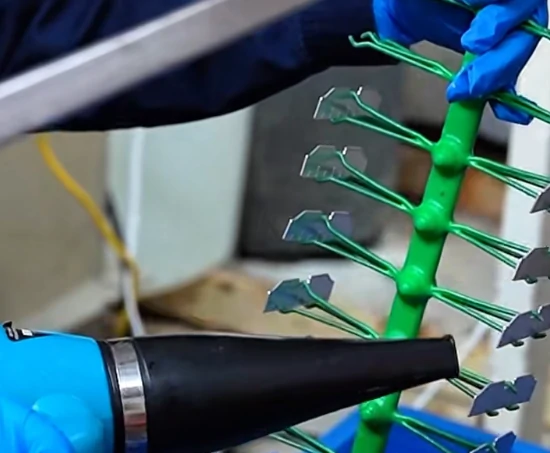
How Can Surface Treatment Improve the Performance, Durability, and Appearance of parts components?
What Is a Surface Treatment Process in Precision Machining Services?
Surface treatment processess services use mechanical, chemical, electrochemical, or physical methods to enhance a material’s surface performance, appearance, and durability.In manufacturing and precision machining services, surface treatment processess services play a crucial role in achieving multiple objectives, such as:
- Removing contaminants and surface defects
- Improving corrosion resistance and durability
- Enhancing product appearance and texture
- Providing functional properties such as wear resistance or electrical insulation
In simple terms, surface finishing can be compared to refining or enhancing the outer layer of a material, transforming a raw component surface into one that performs better and looks more attractive.
The Role of Surface Finishing in Precision Components
In modern manufacturing, surface finishing technologies are widely applied to give prototype parts or production components a specific visual appearance and functional performance. By leveraging different treatment techniques, manufacturers can create surfaces with unique textures, colors, and protective properties.
services, choosing the right surface treatment processess services can significantly enhance product value and competitiveness. For instance, die casting surface treatment not only improves the aesthetic appeal of components but also boosts their durability and long-term reliability in demanding operating conditions.
High-quality surface finishing helps manufacturers produce components that stand out in competitive markets while meeting strict industrial standards.
Working Principle of the Surface Treatment Process
Most metals naturally react with oxygen present in the air. When exposed to oxygen and moisture, the metal surface may gradually undergo oxidation or corrosion, which can weaken the mechanical and physical properties of the material.
The working principle of metal surface treatment is to create a protective barrier on the surface of the material. This barrier may consist of:
- Oxide layers
- Polymer coatings
- Metal films or plating layers
By forming these protective layers, the surface treatment process prevents direct contact between the base metal and environmental elements such as oxygen, humidity, or chemicals.
As a result, the treated surface can achieve several improvements, including:
- Increased corrosion resistance
- Enhanced mechanical strength and durability
- Improved wear resistance
- Better surface appearance and texture
Once the surface treatment process is completed, the finished component gains stronger protection against environmental damage while maintaining its functional integrity during long-term use.
Surface Treatment Capabilities for Different Materials
Modern precision machining services support surface treatment for a wide range of engineering materials, including:
- Aluminum and aluminum alloys
- Brass and copper
- Carbon steel and stainless steel
- Magnesium and titanium alloys
- Powder metallurgy materials
- Precious metals such as silver
These materials are commonly used in industries such as automotive manufacturing, industrial machinery, electronics, and precision equipment, where reliable metal surface treatment is essential to ensure product performance and longevity.
Importance of Surface Treatment for Die Casting and Precision Parts
For components produced through die casting or precision machining, surface finishing is not only a cosmetic improvement but also a critical functional process.
Proper die casting surface treatment can:
- Increase corrosion resistance
- Improve product appearance and texture
- Enhance mechanical durability
- Extend the service life of precision components
By integrating suitable surface treatment processes into the manufacturing workflow, manufacturers can significantly improve the performance and reliability of finished products while maintaining competitive advantages in the global market.
What Comprehensive Surface Treatment Services Are Available?
Anodizing
Anodizing is a widely used electrochemical method in surface treatment processess services for light metals such as aluminum, magnesium, titanium, and their alloys. Through this process, the metal surface is transformed into a durable oxide layer that significantly enhances the material’s performance, durability, and corrosion resistance.
During the anodizing process, the metal component—commonly aluminum—acts as the anode in an electrolyte solution. When electrical current flows through the system, oxidation occurs at the metal surface, producing a dense oxide coating such as aluminum oxide.
This protective film improves several surface characteristics, including:
- Corrosion resistance
- Wear resistance
- Surface hardness
- Decorative appearance through coloring
Because of these advantages, anodizing is commonly used to improve the durability and visual finish of aluminum and aluminum alloy components in many industrial applications.
Chrome & Galvanized
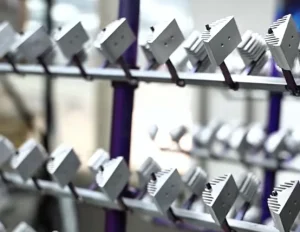
Chrome plating involves depositing a thin layer of chromium onto the surface of a base metal using electroplating, chemical plating, or vapor deposition technologies. The chromium coating provides excellent wear resistance, improved hardness, and a distinctive metallic shine.
Zinc plating, often referred to as galvanized coating, is another widely used surface protection method. In this process, a zinc layer is applied to metals or alloys through techniques such as electroplating or hot-dip galvanizing.
The zinc coating acts as a sacrificial layer, protecting the base material from corrosion while also improving the product’s visual appearance and durability.
Black Oxide
Black oxide treatment is a chemical conversion process that forms a thin black film on metal surfaces. The primary compound produced is magnetite (Fe₃O₄).
This coating provides several functional benefits:
- Improved corrosion resistance
- Reduced light reflection
- Enhanced lubricity
- Minimal dimensional change
Because the coating is extremely thin, it maintains tight tolerances while improving the surface finish, making it suitable for precision components.
TiN & TiCN Coatings
TiN (Titanium Nitride) is a ceramic coating known for its distinctive gold-colored appearance and high hardness. It is typically applied using Physical Vapor Deposition (PVD) techniques such as magnetron sputtering or arc ion plating.
By forming a thin titanium nitride layer on the workpiece surface, TiN coatings significantly enhance:
- Wear resistance
- Surface hardness
- Tool life
TiCN (Titanium Carbonitride) is an advanced variant of TiN. By incorporating carbon into the coating structure, TiCN offers improved hardness and better resistance to abrasion, making it particularly effective for cutting tools and high-friction applications.
DLC & TiAlN Coatings
DLC (Diamond-Like Carbon) coatings are amorphous carbon films with properties similar to diamond. These coatings are usually deposited using PVD or PECVD technologies.
Key characteristics of DLC coatings include:
- Extremely high hardness
- Very low friction coefficient
- Excellent wear resistance
Because of these features, DLC coatings are commonly used in high-performance mechanical and automotive components.
TiAlN (Titanium Aluminum Nitride) is another high-performance ceramic coating created through PVD deposition. By adding aluminum to the titanium nitride structure, TiAlN significantly improves:
- Oxidation resistance
- Thermal stability
- High-temperature machining performance
This makes TiAlN ideal for cutting tools and high-speed machining environments.
Shot Blasting
Shot blasting is a mechanical surface treatment that propels small metallic pellets onto the surface of a workpiece using a high-speed rotating impeller.
The pellets—typically ranging from 0.2 to 3.0 mm in diameter—impact the surface with centrifugal force, producing several effects:
- Surface cleaning
- Controlled roughness
- Residual compressive stress
By transforming tensile stress into compressive stress, shot blasting can improve fatigue resistance and extend the service life of components.
Laser Engraving
Laser engraving, sometimes called laser marking, uses a focused laser beam to create permanent markings on a material surface.
This optical-based process can engrave text, patterns, serial numbers, or logos with high precision. Laser engraving is commonly applied in:
- Industrial part identification
- Product branding
- Traceability marking
For example, the engraved characters on watch backs or electronic components are often produced using this technology.
Sandblasting
Sandblasting is a surface preparation process that cleans or roughens a material by directing a high-speed stream of abrasive particles onto the surface.
Compressed air is used to propel abrasive materials such as:
- Quartz sand
- Emery
- Iron sand
- Copper slag
The impact removes contaminants and creates a uniform texture, which improves coating adhesion and surface appearance.
Powder Spraying
Powder spraying, also known as powder coating, is an environmentally friendly coating process widely used in industrial manufacturing.
In this process, powdered coating materials are applied to the workpiece surface through electrostatic attraction or fluidized bed techniques. After application, the coated parts are heated to cure the powder and form a durable protective layer.
Powder coatings provide:
- Strong corrosion resistance
- High durability
- Uniform surface finish
This method is commonly used for automotive components, outdoor equipment, and industrial hardware.
Painting
The painting process is a conventional surface finishing technique that applies liquid paint to a component to achieve decorative and protective effects.
The coating is formed by atomized spray application followed by solvent evaporation, resulting in a thin paint film covering the surface.
Painting is widely used for:
- Consumer electronics housings
- Decorative parts
- Industrial components requiring aesthetic finishes
Electroplating
Electroplating enhances the surface quality of metal parts by depositing a thin metallic layer using an electric current.
This coating improves:
- Corrosion resistance
- Surface brightness
- Wear protection
Electroplating processes can be categorized into:
- Rack plating
- Barrel plating
- Vacuum plating
These methods are often applied to decorative products, hardware accessories, and precision components.
Grinding and Polishing
Grinding and polishing are finishing processes used to improve surface smoothness and visual appearance.
Two common polishing methods include:
Mechanical polishing
- Produces a high-gloss surface
- Offers excellent flatness
Chemical polishing
- Faster processing speed
- Good corrosion resistance
- Suitable for complex shapes
These processes are widely used to enhance both the functional performance and visual quality of die-cast components.
Additional Surface Treatment Processes
Besides the treatments listed above, several other comprehensive surface treatment methods are commonly used in precision manufacturing:
- Electroless Plating:A chemical deposition process that applies coatings such as nickel-phosphorus without using electric current.
- Passivation:Acid-based treatment that removes free iron and enhances corrosion resistance, commonly used for stainless steel.
- Chromating:A conversion coating that forms a protective chromate layer, often producing yellow or clear finishes.
- Electropolishing:An electrochemical polishing process that smooths surfaces and removes micro-burrs.
- Mechanical Surface Treatments:Including vibratory finishing, manual polishing, buffing, stress relieving, and Teflon spray coatings.
These comprehensive surface treatment solutions can be carried out either in-house or through qualified external partners, ensuring flexibility while maintaining consistent quality standards for different manufacturing requirements.
What Are the Benefits of a Metal Surface Treatment Process?
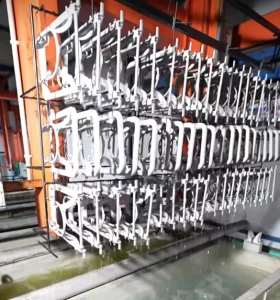
The benefits of metal surface treatment processess services extend far beyond simple cosmetic improvements. In modern manufacturing, these surface finishing technologies play a crucial role in enhancing the performance, durability, and functional properties of metal components. By modifying the outer layer of a material, manufacturers can significantly improve product reliability, longevity, and long-term operational efficiency.
Below are the major advantages achieved through metal surface treatment processes.
Improved Corrosion Resistance
One of the most important benefits of metal surface treatment process is the ability to protect materials from corrosion. Treatments such as anodizing, plating, and passivation create a protective layer that isolates the metal from moisture, oxygen, and corrosive chemicals.
This protection helps extend the service life of components operating in harsh industrial or outdoor environments.
Enhanced Wear Resistance and Surface Hardness
Surface treatments offered through surface treatment processess services, such as PVD coatings, DLC coatings, and nitriding processes, can significantly increase the hardness of metal surfaces. A harder surface improves resistance to abrasion, friction, and mechanical stress, making components more durable and reliable in demanding industrial applications.
This is particularly important for precision mechanical components, molds, and cutting tools that experience continuous contact or friction.
Improved Appearance and Surface Texture
Another key advantage of metal surface treatment processes is the ability to enhance the visual quality of products. Techniques such as polishing, anodizing, electroplating, and powder coating can create attractive finishes with different colors, gloss levels, or textures.
These treatments help manufacturers produce high-quality commercial and industrial products with refined aesthetics and consistent surface finishes.
Better Processing Compatibility
Certain surface treatment processes improve compatibility with subsequent manufacturing steps. For example, treatments like sandblasting or chemical etching can remove surface contaminants and improve adhesion.
This preparation step is important before processes such as:
- Painting
- Coating
- Bonding
- Electroplating
By improving surface adhesion, manufacturers ensure stronger bonding between coatings and the base material.
Enhanced Electrical or Thermal Properties
Some metal surface treatment processes are specifically designed to adjust the electrical or thermal characteristics of materials.
For instance:
- Certain coatings can improve electrical conductivityfor electronic components.
- Other treatments can create insulating surfacesor enhance thermal resistance.
These capabilities are essential in industries such as electronics, electrical equipment, and precision engineering.
Functional Surface Protection
Surface finishing can also provide functional protective layers that reduce environmental damage and mechanical degradation.
These protective layers may:
- Prevent oxidation
- Reduce surface friction
- Increase chemical resistance
As a result, treated components maintain stable performance even in demanding operational environments.
Reduced Maintenance and Replacement Costs
Because metal surface treatment processes enhance corrosion resistance, durability, and wear performance, treated parts generally require less frequent maintenance or replacement.
This leads to lower lifecycle costs for industrial equipment and mechanical systems, making surface finishing a cost-effective solution in long-term manufacturing strategies.
Cleaning the Parts and Surface Preparation
Another critical role of metal surface treatment is cleaning the parts and preparing surfaces for further processing. Pre-treatment processes such as degreasing, pickling, or sandblasting remove oils, oxidation layers, and other contaminants.
Proper surface cleaning ensures that subsequent treatments—such as coatings, plating, or painting—can achieve optimal adhesion and uniformity.
Key Functions of Metal Surface Treatment
The core functions of metal surface treatment processes can be summarized as follows:
- Improve overall surface appearance
- Add decorative colors or finishes
- Adjust gloss levels or surface texture
- Enhance chemical and corrosion resistance
- Increase wear resistance and durability
- Reduce friction between moving components
- Remove surface defects or imperfections
- Clean and degrease parts prior to further processing
- Provide primer layers for coatings or paints
- Maintain dimensional accuracy and engineering tolerances
By integrating the appropriate metal surface treatment process, manufacturers can significantly improve both the functional performance and visual quality of precision components, ensuring reliable performance across various industrial applications.
What Types of Metal Finishes Are Used in Surface Treatment Services?
Do you want your die casting parts to achieve stronger corrosion resistance or a specific surface appearance? Choosing the right surface treatment processess services is essential for achieving both functional performance and the desired visual effect in precision components. At Welleshaft in China, we provide professional surface treatment processess services designed to enhance durability, surface protection, and the overall quality of industrial metal parts.
As an experienced manufacturer of precision components and finished parts, Welleshaft offers advanced precision die casting services together with a wide selection of metal surface finishing solutions. Our engineering team and skilled technicians apply proven finishing technologies to ensure consistent quality, improved material performance, and reliable long-term protection.
Our metal finishing services in China include a wide range of commonly used industrial surface treatments, such as:
- Aluminum anodizingfor enhanced corrosion resistance and improved surface hardness
- Industrial paintingto achieve customized colors and protective coatings
- Passivationto improve corrosion resistance of stainless steel components
- Electroplatingfor decorative and functional metal coatings
- Powder coatingfor durable and environmentally friendly surface protection
- Metal polishingto create smooth, high-quality surface finishes
- Black oxide treatmentfor improved wear resistance and appearance
- Conversion coatingto increase adhesion and corrosion protection
- Abrasive blastingfor surface preparation and texture control
These different types of metal finishes help optimize component performance across a variety of industrial applications, including precision machinery, mechanical assemblies, and engineered metal parts.
If you would like to learn more about surface treatment services available at Welleshaft in China or need assistance selecting the most suitable finishing method for your project, feel free to contact our engineering team for detailed technical support.
How to Choose the Best Surface Treatment Process?
When reviewing different surface treatment processess services, it is important to choose the most suitable process based on several practical factors. These include production lead time, cost efficiency, part tolerance requirements, durability expectations, and the final application of the component. Selecting the right surface treatment processess services ensures that both functional performance and visual quality meet design specifications.
For high-tolerance CNC milling and CNC turning parts, applying an additional metal surface finish may not always be recommended. Many finishing techniques involve either removing a thin layer of material or depositing a coating on the surface. Even minor dimensional changes can affect the precision of tight-tolerance parts, potentially impacting assembly fit or mechanical performance.
Process Introduction
In manufacturing, surface treatment generally refers to a range of processes used to modify the outer layer of a material in order to improve its appearance, corrosion resistance, wear resistance, or functional characteristics. These treatments help extend component lifespan and enhance overall product quality.
Among the various options available, electroplating remains one of the most widely adopted surface treatment processes in industrial production. This technique applies a thin metallic coating onto the surface of a component through an electrochemical reaction. The process provides uniform coating coverage, improved corrosion protection, and relatively high cost-effectiveness, making it suitable for many types of metal parts used in mechanical and industrial applications.
How Do Coating Properties Compare in Surface Treatment?
The following Coating Properties Comparison Table outlines the key characteristics of several widely used industrial coatings, including TiN, TiCN, DLC, and TiAlN. These coatings are commonly applied to enhance surface durability, hardness, heat resistance, and wear performance in precision components and cutting tools.
| Coating Type | Primary Material Composition | Appearance / Color | Hardness (HV) | Temperature Resistance | Wear Resistance | Oxidation Stability | Common Industrial Applications |
| TiN | Titanium Nitride | Metallic gold finish | ~2000 HV | Up to ~500°C | Good | Moderate | Standard metal machining tools, decorative surface coatings |
| TiCN | Titanium Carbonitride | Blue-gray to violet-gray | 3000+ HV | Around ~400°C | Very high | Good | High-speed cutting tools, dry machining environments |
| DLC | Diamond-Like Carbon | Black or dark gray | 2000–5000 HV | Up to ~350°C | Exceptional | Moderate | Precision mechanical parts, medical instruments, decorative finishes |
| TiAlN | Titanium Aluminum Nitride | Dark gray to violet-black | 2500–3300 HV | ~500–900°C | Very high | Excellent | High-temperature machining, mold and die manufacturing |
Key Insights from the Coating Properties Comparison Table
From the Coating Properties Comparison Table, several important performance differences can be observed:
- TiN coatingsprovide balanced performance and are widely used for general machining and decorative surface finishes.
- TiCN coatingsoffer significantly higher hardness and wear resistance, making them suitable for high-speed cutting and dry machining applications.
- DLC coatingsstand out for their extremely low friction coefficient and excellent wear resistance, making them ideal for precision parts and medical tools.
- TiAlN coatingsexhibit the best thermal stability and oxidation resistance, making them particularly effective for high-temperature cutting operations and mold machining.
Selecting the appropriate coating depends on factors such as operating temperature, friction requirements, machining speed, and tool life expectations.
How Do Comprehensive Surface Treatment Methods Compare?
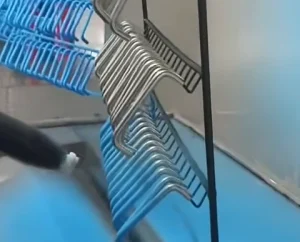
The following Comparison Service Table of Comprehensive surface treatment processess services summarizes common surface finishing technologies used in industrial manufacturing. These processes vary in terms of applicable materials, visual appearance, durability, and functional performance, making them suitable for different engineering and product requirements.
Surface Finishing Methods and Material Compatibility
| Surface Finishing Method | Suitable Materials | Typical Appearance / Color Options |
| Anodizing | Aluminum, aluminum alloys, and certain non-ferrous metals | Various colors such as black, red, green, and other dyed finishes |
| Chrome Plating / Galvanizing | Carbon steel, stainless steel, alloy steel | Bright metallic silver |
| Powder Coating | Most metal substrates | Multiple color choices including black, blue, yellow, and red |
| Polishing | Metals and some engineering plastics | Natural metallic shine with no fixed color |
| Sandblasting | Almost all metal materials | Matte surface; may be combined with colored coatings |
| PVD Coating | Metals, especially stainless steel and titanium alloys | Gold, silver, gray, and decorative multi-color finishes |
| Wire Drawing | Stainless steel, aluminum, and similar metals | Brushed metallic texture with natural color |
| Passivation | Stainless steel, aluminum, copper alloys | Typically no color change; natural metallic appearance |
| DLC Coating | Stainless steel, carbon steel, titanium alloys | Black or dark gray coating |
| TiN Coating | Steel, carbide cutting tools | Gold-colored ceramic coating |
| TiCN Coating | Steel and cemented carbide materials | Blue-gray or violet-gray appearance |
| TiAlN Coating | High-speed steel (HSS) and carbide tools | Dark gray or black-violet finish |
Functional Comparison of Surface Treatment Categories
In addition to specific finishing techniques, comprehensive surface treatment methods can also be categorized based on processing principles. The following table compares typical treatment groups, materials, applications, and performance benefits.
| Treatment Category | Representative Processes | Applicable Materials | Typical Industry Applications | Main Purpose / Advantages | Estimated Cost & Lead Time |
| Mechanical Surface Treatments | Polishing, Grinding, Sandblasting | Steel, aluminum, brass, plastics | Automotive, electronics, machinery manufacturing | Improve surface smoothness, remove burrs, and prepare parts for coating or plating | Low–Medium cost / approx. 1–3 days |
| Chemical Surface Treatments | Pickling, Chemical Polishing, Phosphating, Black Oxide | Steel, stainless steel, aluminum | Automotive components, industrial tools, mechanical equipment | Improve corrosion resistance and surface uniformity while preventing oxidation | Medium cost / approx. 2–5 days |
| Electrochemical Treatments | Anodizing, Electroplating, Electropolishing | Aluminum, steel, stainless steel, copper | Electronics, automotive, medical devices, precision manufacturing | Increase hardness, corrosion resistance, wear resistance, and surface aesthetics | Medium–High cost / approx. 3–7 days |
| Coating Treatments | Painting (Spray Coating), Powder Coating | Steel, aluminum, plastics | Consumer products, automotive parts, industrial equipment | Provide protective layers, improve durability, and enhance product appearance | Medium cost / approx. 2–5 days |
Key Considerations When Selecting Comprehensive Surface Treatment Methods
When comparing different comprehensive surface treatment methods, several factors should be evaluated:
Material compatibility (e.g., aluminum vs. steel)
Functional requirements such as corrosion resistance or wear resistance
Surface appearance and decorative requirements
Production cost and processing lead time
Operating environment, including temperature and friction conditions
By carefully reviewing the Comparison Service Table of Comprehensive Surface Treatment Methods, manufacturers can determine the most appropriate finishing process for specific product designs and performance requirements.
What Other Surface Finishing Methods Are Used for Metal Parts?
In addition to primary coating technologies, several other surface treatment processess services are widely used to enhance the appearance, durability, and functional performance of metal components. These processes include sandblasting, polishing, shot blasting, wire drawing, passivation, and PVD coating, each serving specific manufacturing and performance requirements.
For example, sandblasting and shot blasting are commonly applied to clean surfaces and create a controlled roughness that improves coating adhesion. Polishing and wire drawing are often used to refine surface texture and achieve a consistent decorative finish. Meanwhile, passivation enhances corrosion resistance for metals such as stainless steel, and PVD coating provides advanced wear resistance and improved surface hardness.
A wide variety of surface finishing solutions are available depending on the material, performance requirements, and application environment. Selecting the appropriate process ensures optimal durability, corrosion protection, and visual quality for finished components.
If you are evaluating other surface finishing methods for your parts or products, consulting experienced engineers can help identify the most suitable treatment based on your design specifications and operational needs.
Why Choose Welleshaft for Surface Finishing Services in China?
Selecting Welleshaft for Surface Finishing Services in China means working with a manufacturing partner that combines advanced technology, strict quality control, customized engineering solutions, and competitive production costs. Our surface treatment capabilities are designed to support a wide range of industrial components and precision parts.
The following strengths highlight why many global customers rely on Welleshaft’s surface finishing services in China.
Advanced Technology for Diverse Surface Finishing Requirements
Comprehensive Surface Finishing Capabilities
Welleshaft provides a broad portfolio of surface finishing services, including PVD coatings, electroplating, anodizing, sandblasting, passivation, and other coating technologies.
These processes can be applied to a variety of materials such as metals, plastics, and ceramic components, enabling multiple functions including:
- Corrosion protection
- Surface strengthening
- Wear resistance enhancement
- Decorative finishing effects
By integrating multiple surface finishing methods, we can support complex product requirements across different manufacturing sectors.
High-Precision Process Control
Our facilities utilize advanced automated equipment, including CNC shot peening machines and magnetron sputtering systems, allowing precise control over critical parameters such as:
- Coating thickness
- Process temperature
- Particle velocity during blasting or peening
For example, PVD coating thickness can be controlled within ±1 μm, ensuring consistent coating adhesion, durability, and uniform surface performance.
High Precision: All surface treatments are executed to meet strict engineering tolerances and quality specifications.
Reliable Quality Assurance System
End-to-End Inspection Procedures
Quality control is implemented throughout every stage of the surface finishing process, from pretreatment to final coating inspection. Our inspection methods include:
- Salt spray corrosion testing
- Coating thickness measurement
- Hardness testing
- Surface adhesion verification
For instance, zinc-plated coatings produced through our electroplating processes can withstand up to 500 hours of salt spray testing without corrosion, demonstrating strong protective performance.
Quality Assurance: Cooperation with qualified external finishing partners ensures stable and consistent surface treatment results.
Environmentally Responsible Processes
Welleshaft adopts environmentally compliant technologies such as non-chromium passivation and water-based coatings, ensuring alignment with international environmental regulations including:
- RoHS compliance
- ISO-related quality standards
These environmentally friendly processes help customers meet global export and sustainability requirements.
Material Versatility: Our surface finishing solutions support metals, alloys, and composite materials, with optimized treatment selection for each application.
Customized Engineering Solutions and Fast Production Turnaround
Tailored Surface Finishing Strategies
Every industry has unique performance demands. Welleshaft develops customized surface finishing solutions based on the material, product design, and application environment.
For example, DLC (Diamond-Like Carbon) coatings can be applied to precision molds or mechanical components, improving wear resistance by three to five times compared with conventional coatings.
Efficient Production and Lead Times
With standardized production lines and integrated finishing processes, we can efficiently manage large-volume orders while maintaining stable quality.
Even for complex finishing requirements—such as multi-layer electroplating or specialized PVD coatings—production cycles in surface treatment processess services can often be reduced to approximately 70% of typical industry lead times, making these services ideal for urgent projects and fast product launches.
Cost Efficiency and Long-Term Value
Competitive Cost Performance
Through optimized manufacturing workflows and scalable production capacity, Welleshaft Surface Finishing Services in China offer highly competitive pricing.
In many cases, our finishing solutions are 10–15% more cost-effective than comparable processes, while delivering longer coating life. For example, ceramic thermal spray coatings may extend service life by up to two additional years compared with standard coating solutions.
Engineering Support and After-Sales Assistance
Our technical team provides additional value through services such as:
- Sample coating tests
- Surface treatment process consultation
- Coating failure analysis
This engineering support helps customers optimize product designs, improve durability, and reduce long-term maintenance and replacement costs.
Key Advantages of Welleshaft Surface Finishing Services in China
- Professional Expertise:Extensive experience in advanced surface finishing technologies including PVD coatings, electroplating, and anodizing.
- Comprehensive Solutions:Integration of mechanical, chemical, electrochemical, and coating treatments within a unified manufacturing workflow.
- Global B2B Standards:Surface finishing services suitable for automotive, electronics, industrial machinery, and precision engineering industries
Capabilities
Welleshaft provides comprehensive electroplating and metal finishing solutions through professional surface treatment processess services, supporting a wide range of industrial components and precision metal parts. As a full-service metal finishing provider, our technical capabilities cover multiple surface treatment technologies designed to enhance corrosion resistance, durability, and overall surface performance.
Our process capabilities include a variety of commonly used electroplating and surface finishing processes, such as:
- Chrome platingfor improved hardness and wear resistance
- Nickel platingfor corrosion protection and decorative finishes
- Zinc–Nickel platingfor high-performance corrosion resistance in demanding environments.
- Cadmium platingfor specialized industrial applications requiring reliable protection
- Copper platingfor enhanced electrical conductivity and surface preparation
- Zinc platingfor economical corrosion protection of metal components
- Tin–Zinc platingfor improved environmental compliance and surface protection
- Zinc–Iron platingfor durable coating performance in industrial assemblies
- Electroless Nickel platingfor uniform coating on complex geometries
- Anodizingfor aluminum components requiring enhanced surface hardness and corrosion resistance
- Chem-Film (conversion coating)to improve corrosion resistance and coating adhesion
- Passivationfor stainless steel parts to strengthen corrosion resistance
- Phosphate coatingfor improved wear resistance and paint adhesion
- Electropolishingto achieve smooth surfaces and improved cleanliness for precision parts
Through these advanced metal finishing capabilities, Welleshaft supports manufacturers in optimizing the performance and reliability of metal components used in mechanical assemblies and industrial equipment. Our finishing solutions are designed to meet strict quality standards while delivering consistent and cost-effective results for various production needs.
Typical Products
A variety of industrial components can benefit from professional surface treatment processess services, depending on their operating environment and functional requirements. At Welleshaft, our metal finishing processes are commonly applied to precision parts used in demanding industrial applications.
Typical products receiving surface treatment processess services include nickel-plated parts, zinc-plated components, zinc-nickel coated parts, and zinc-iron plated components widely used in automotive applications, where enhanced corrosion resistance and long-term durability are essential.
For hydraulic equipment, chrome-plated parts are frequently utilized because chrome coatings provide excellent wear resistance and improved surface hardness, helping hydraulic systems operate reliably under high pressure and friction conditions.
In marine applications, components are often treated with cadmium plating or anodizing to increase corrosion resistance and withstand harsh environments such as saltwater exposure and high humidity.
These typical products demonstrate how selecting the appropriate metal surface treatment can significantly improve component performance, extend service life, and ensure reliable operation in specialized industrial environments.
Integrated Quality Control Systems
At Welleshaft, our surface treatment processes are performed in modern production facilities equipped with advanced finishing technology and operated by experienced technical personnel. To maintain consistent performance and reliability, every stage of the metal finishing process is monitored through a structured integrated quality control system.
We follow strict quality control procedures in our surface treatment processess services to verify coating performance, durability, and dimensional consistency. Our inspection capabilities include specialized testing and measurement equipment such as salt spray chambers for corrosion resistance testing, X-ray fluorescence (XRF) analyzers for non-destructive coating thickness measurement, digital coating thickness gauges, surface roughness testers, and hardness testing equipment.
By combining advanced inspection technology with systematic process monitoring, Welleshaft ensures that every finished component meets rigorous surface treatment quality standards and performs reliably in demanding industrial applications.
How Is Surface Engineering Used in Automotive and Motorsport Components?
The automotive and motorsport industries rely on advanced manufacturing, precise design, and high-accuracy machining to ensure performance, durability, and safety. Strict quality standards and ongoing validation are essential.
Vehicles contain thousands of parts that must function within tight tolerances. Engine components like pistons, valves, and crankshafts need precise surfaces for optimal operation. Professional surface treatment processess services improve surface quality, reduce wear, maintain efficiency, and prevent premature failure. Even structural or non-contact parts benefit from high-precision finishing for overall vehicle performance.
Motorsport parts face extreme speeds, loads, and temperatures, making surface quality critical to prevent friction, overheating, and mechanical failure. Advanced machining and metal finishing enhance performance, efficiency, and service life, with high-performance racing components often receiving specialized finishes for added durability.
Key automotive and motorsport components that require precision surface engineering and finishing include:
- Engine components:camshafts, crankshafts, tappets, valves, pistons, and rocker arms
- Braking systems:brake discs, brake pads, and drums
- Transmission components:clutches, gears, differentials, and pressure plates
- Steering system components
Even after precision machining operations, metal surfaces typically contain microscopic irregularities often described as peaks and valleys. Although these features are extremely small and usually invisible to the naked eye, they can affect performance when two surfaces interact under load. For high-precision automotive components, these microscopic surface imperfections must be minimized.
To achieve ultra-smooth and highly accurate surfaces, manufacturers often apply lapping, a specialized finishing process that improves surface flatness and surface finish quality. Lapping helps remove microscopic irregularities, resulting in smoother contact surfaces, reduced friction, and improved operational stability—critical factors for both automotive engineering and motorsport performance.
How Does Precision Surface Finishing Improve Automotive Parts?
The performance of an automotive engine relies on extremely accurate manufacturing and precision finishing of automotive parts. Modern engines are assembled from components that must operate within very tight tolerances. Even microscopic surface roughness can affect mechanical interaction between parts, potentially leading to reduced efficiency or premature component failure. Professional surface treatment processess services play a critical role in providing high-precision surface finishing, ensuring reliability, durability, and consistent engine performance.
Many vehicle components require a very fine surface finish to ensure smooth mechanical movement and proper power transmission. The transmission system, for example, contains parts such as the flywheel, clutch plate, and pressure plate, which work together to transfer power from the engine to the drivetrain. The contact surfaces between these components must be carefully finished so that engagement and disengagement occur smoothly. Processes such as lapping are often used to achieve the required surface precision.
Similarly, brake discs and other braking components depend on a consistent surface finish to maintain stable friction characteristics and predictable braking performance.
The Role of Lapping in Engine Components
The lapping process is particularly important for smaller yet critical engine components that require highly accurate contact surfaces. For example:
- Valve seat rings and valve wedgesare lapped to ensure tight sealing and prevent gas leakage.
- Camshafts, which control the opening and closing of intake and exhaust valves, require a smooth surface finish to operate efficiently with continuous lubrication.
- Pistons and piston pinsmust maintain precise contact surfaces to enable smooth conversion of linear piston motion into rotational crankshaft movement.
If excessive roughness exists on these surfaces, the engine may experience increased friction, unstable operation, or inefficient power transfer.
Other precision components—including fuel injectors, spray nozzles, hydraulic pumps, and impellers—also rely on high-quality finishing processes such as lapping to maintain smooth fluid flow and consistent mechanical operation.
Typical Surface Finish Standards for Engine Components
The table below outlines commonly accepted surface roughness standards for several engine and vehicle components. These values serve as typical industrial references, but actual requirements may vary depending on manufacturer specifications and application conditions. Applying professional surface treatment processess services ensures that components consistently meet or exceed these surface quality standards for optimal performance and durability.
| Component | Acceptable Roughness (Micro inches) | Manufacturing Process |
| Cylinder bore | 16–20 | Honing |
| Tappet bore | 60–75 | Reaming |
| Main bearing bore | 60–80 | Boring |
| Cylinder head surface | 40–50 | Milling |
| Piston skirt | 45–55 | Lapping |
| Piston bore | 30–38 | Lapping |
| Piston pin | 9–12 | Lapping |
| Crankshaft main journal bearing | 4–6 | Lapping |
| Crankshaft connecting rod journal bearing | 4–6 | Lapping |
| Camshaft journal bearing | 4–6 | Lapping |
| Camshaft | 15–20 | Lapping |
| Rocker arm | 14–20 | Lapping |
| Intake valve stem | 34–38 | Lapping |
| Intake valve seat | 25–40 | Lapping |
| Exhaust valve stem | 18–20 | Lapping |
| Exhaust valve seat | 34–45 | Lapping |
| Tappet face | 4–5 | Lapping |
| Hydraulic lifter | 22–25 | Lapping |
For high-performance engines, such as those used in racing or performance vehicles, the surface finish requirements often become even more stringent. In some diesel engine applications, for instance, piston pins finished at 6–5 micro inches have been shown to wear prematurely, whereas improving the finish to approximately 4 micro inches significantly enhances durability. In comparison, gasoline engines may require piston pin finishes closer to 9 micro inches depending on the design and operating conditions.
Surface Finish Requirements for Transmission and Drivetrain Components
Surface finish standards also apply to automatic transmission, clutch systems, and braking components, where consistent contact and load distribution are essential for long-term performance.
| Automobile Driven Components | Acceptable Roughness (Micro inches) | Manufacturing Process |
| Front pump journal shaft | 18–22 | Lapping |
| Front pump shaft thrust surface | 11–14 | Lapping |
| Reverse gear drum braking surface | 150–170 | Turning |
| Intermediate shaft journal No.1 | 6–7 | Lapping |
| Intermediate shaft journal No.2 | 50–60 | Lapping |
| Central main shaft journal | 23–27 | Lapping |
| Central main shaft thrust surface | 20–30 | Lapping |
| Output shaft journal No.1 | 14–16 | Lapping |
| Output shaft journal No.2 | 10–15 | Lapping |
| Output shaft journal No.3 | 27–32 | Lapping |
| Front drum braking surface | 90–110 | Turning |
| Clutch plate | 16–24 | Turning |
| Main shaft journal No.1 | 20–25 | Lapping |
| Main shaft journal No.2 | 25–30 | Lapping |
| Low range reaction member thrust surface 1 | 35–40 | Lapping |
| Low range reaction member thrust surface 2 | 65–75 | Lapping |
| Brake drum (front) | 65–75 | Turning |
| Brake drum (rear) | 75–85 | Turning |
| Clutch pressure plate | 40–50 | Turning / Lapping |
| Kingpin | 6–8 | Grinding |
| Universal spider race | 14–16 | Grinding |
Maintaining these precision finishing standards for automotive parts is critical because premature failure of moving components is often linked to inadequate surface quality or insufficient inspection during production. By implementing strict surface inspection and finishing processes, manufacturers can improve durability, reduce friction, and ensure reliable operation across engine, transmission, and braking systems.
Why Is Deburring Important for Automotive Components?
Deburring automotive components is a critical finishing step in precision manufacturing. Deburring refers to the removal of small unwanted projections or sharp edges—commonly called burrs—that remain on metal surfaces after machining or fabrication processes. These burrs often appear after operations such as turning, milling, grinding, welding, casting, or drilling.
If not properly removed, burrs can negatively affect component quality, dimensional accuracy, and functional performance. In automotive assemblies where parts must interact precisely, even small protrusions may lead to increased wear, assembly issues, or mechanical failure. Therefore, deburring processes within comprehensive surface treatment processess services are essential for improving the reliability, durability, and service life of machined parts.
Common Deburring Methods Used in Automotive Manufacturing
Manufacturers use several techniques for removing burrs from automotive components, depending on part geometry, material type, and production scale.
Manual Deburring
This traditional method involves skilled technicians using hand tools to remove burrs from machined parts. Although manual deburring is flexible and suitable for small batches or complex geometries, it can be relatively slow and may produce less consistent results compared with automated processes.
Machine Deburring
In machine deburring, automated equipment such as grinding machines or CNC systems removes burrs with higher efficiency and improved consistency. While this method typically involves higher equipment costs, it provides better repeatability and higher-quality finishes for production parts.
Thermal Deburring
The thermal deburring process eliminates burrs by exposing components to extremely high temperatures and pressure inside a controlled chamber. The burrs are rapidly burned away while the main part remains intact. This method is especially effective for removing burrs located in difficult-to-reach areas.
Electrochemical Deburring
Electrochemical deburring (ECD) removes burrs using controlled electrochemical reactions. The process dissolves unwanted material with electrical energy and an electrolyte solution, making it suitable for hard metals or complex internal geometries.
Why Deburring Is Essential in Automotive Manufacturing
The automotive industry involves numerous manufacturing operations such as casting, forging, machining, and milling, all of which can generate burrs on metal surfaces. In critical systems—especially the transmission system—there is almost no tolerance for surface irregularities. If burrs remain on components, they may detach during operation and circulate through the system, potentially causing damage to gears, bearings, or other moving parts. Implementing professional surface treatment processess services, including precise deburring, helps eliminate these risks and ensures the long-term reliability and performance of automotive components.
For example, engine blocks, which are typically produced through casting, often contain rough edges or residual burrs that must be removed before assembly. Proper deburring of engine components ensures both structural integrity and improved surface quality.
Other automotive components that commonly require precision deburring include:
Axle shafts、Differential components、Valves、Transmission housings、Engine components、Hydraulic system parts
Typical Deburring Applications in Automotive Parts
The following examples illustrate common deburring processes for automotive components using specialized deburring tools.
Transmission Case
Tool: Surface deburring brush
Processing detail: Deburring the mating surface after face milling
Spindle speed: ~2160 min⁻¹
Table feed: ~7000 mm/min
Depth of cut: ~0.5 mm
Injector Body (Nozzle)
Tool: Surface deburring brush with floating holder
Processing detail: Removing burrs along the edge after drilling
Spindle speed: ~2000 min⁻¹
Depth of cut: ~4 mm
Cylinder Head
Tool: Surface deburring brush
Processing detail: Deburring of mating surfaces after face milling
Spindle speed: ~1350 min⁻¹
Table feed: ~2000 mm/min
Depth of cut: ~0.5 mm
Reduction Gear
Tool: Cross-hole deburring brush
Processing detail: Cross-hole deburring after drilling operations
Spindle speed: ~10800 min⁻¹
Table feed: ~300 mm/min
Through proper deburring of automotive components, manufacturers can significantly improve surface quality, assembly reliability, and operational safety, ensuring that critical automotive systems operate smoothly and efficiently.
How Is Non-Destructive Testing Used for Automotive Parts?
Ensuring the quality of automotive components before assembly is critical, as detecting defects after a vehicle is fully assembled can be extremely difficult and costly. To maintain high standards, components undergo rigorous inspection and testing prior to integration into assemblies. One of the most reliable methods for this purpose is Non-Destructive Testing (NDT), which evaluates the integrity of parts without causing any damage to the workpiece.
With advances in materials science and engineering, automotive manufacturers now commonly rely on several NDT techniques to verify component quality, durability, and safety:
- Penetration Testing (PT)
- Eddy Current Testing (ECT)
- Magnetic Particle Inspection (MPI)
- Ultrasonic Testing (UT)
- Laser Holographic Inspection
Penetration Testing (PT) is widely used to detect surface defects on non-porous components. In the automotive sector, PT is particularly effective for identifying small cracks in rims, suspension parts, and steering components. The process typically begins with an ultrasonic cleaning to remove contaminants, followed by applying a colored penetrant liquid. Due to capillary action, the liquid penetrates into any cracks or voids on the component surface. After allowing sufficient dwell time, excess penetrant is removed, and a developer is applied to highlight any defects, making them visible for inspection.
By implementing NDT methods throughout the production and pre-assembly stages, automotive manufacturers can ensure that each component meets high precision and safety standards. This approach reduces the risk of assembly failures, enhances reliability, and guarantees that vehicles perform safely and efficiently on the road.
What Cleanliness Standards Apply in the Automotive Industry?
The overall quality and reliability of a vehicle are directly linked to the quality of its individual components. Automotive manufacturers must adhere to strict cleanliness and precision standards to ensure each part performs as intended and contributes to the durability and longevity of the final assembly. Factors such as fitting tolerances, surface finish, and cleanliness are critical, as even minor contaminants can compromise component performance.
During manufacturing and machining processes, small residues or foreign particles may remain on surfaces, which can interfere with precise mechanical operation and reduce structural integrity. For example, contaminants can affect crankshafts, camshafts, cylinder walls, pistons, injectors, valves, and hydraulic system components, potentially leading to premature wear or failure. Therefore, implementing rigorous cleaning and surface finishing procedures is essential to maintain high-quality standards in automotive production.
To guide these practices, the automotive industry relies on internationally recognized standards, such as ISO 16232 and VDA 19, introduced in the early 2000s. These standards provide clear protocols for evaluating and controlling component cleanliness across systems including engines, transmissions, suspensions, and steering mechanisms.
Cleaning methods typically involve the use of specialized cleaning fluids combined with ultrasonic cleaning technology, which ensures that even microscopic particles and residues are effectively removed. By adhering to these cleanliness standards, manufacturers can guarantee that components meet precision and performance requirements, enabling smooth operation and extending the service life of vehicles.
What Does Effective Surface Finishing Process Control Look Like in Workshops?
Workshops that consistently achieve high-quality surface finishes and minimize defects often share several practical strategies for process control:
- Visual management tools:Use charts, reference samples, or process boards to make standards clear at a glance.
- Default workflows:Standardize critical steps so they are automatic rather than optional, reducing variation.
- Specialized roles:Assign tasks to trained specialists rather than expecting every worker to perform all operations.
- Micro-routines:Break processes into repeatable sequences, e.g., put on gloves → wipe component → check lighting → apply coating.
- Peer accountability:Encourage team members to monitor each other’s work rather than relying solely on supervisory enforcement.
For example, a small fabrication workshop once improved its coating quality dramatically by posting a simple reminder: “Smooth surfaces start before the coating.” While seemingly trivial, this type of visual cue and routine reinforcement cut defect rates by half in just a few months, demonstrating how structured, human-centered process control can elevate surface finishing quality in real-world production environments.
What Causes Common Surface Finishing Defects in Production?
Surface finishing defects can appear unexpectedly, even when all processes seem to be under control. Issues such as tiny pits, uneven coating, or ripples often emerge during production, impacting both the aesthetic quality and functional performance of metal components. The underlying causes typically include:
- Inadequate surface preparation:Residual oils, dirt, or uneven surfaces can prevent coatings from adhering properly.
- Environmental variations:Changes in temperature, humidity, or airborne contaminants can affect the consistency of the finish.
- Improper application technique:Errors in spray, plating, or coating processes may produce uneven surfaces.
- Undetected contamination:Foreign particles or residues left on the surface can create localized defects.
- Inconsistent curing or drying conditions:Variations in time, heat, or airflow during curing can lead to defects in the coating or finish.
From a process management perspective, many defects are influenced by human behavior. In technical production environments, workers often rely on established habits or “fast-track” methods, which can inadvertently introduce errors. These shortcuts are usually not due to negligence but are a natural tendency to favor speed over meticulous checks, highlighting the importance of strict quality control protocols in surface finishing operations.
Why Does Uneven Coating Occur in Surface Finishing?
Achieving a flawless metal or component surface finish can be challenging, as uneven coating often manifests as thin spots, thick patches, visible overlaps, or an “orange peel” texture. These imperfections not only affect the appearance but can also compromise the functional performance of the finished part.
Common Causes of Uneven Coating
- Inconsistent spray distance or angle:Variations in operator technique can create uneven layers.
- Incorrect viscosity of paints or chemicals:Too thick or too thin coatings lead to streaks or runs.
- Improper line speed:Moving parts too fast or too slow can produce non-uniform coverage.
- Worn, clogged, or poorly maintained application nozzles:This affects atomization and layer consistency.
- Insufficient operator training:Lack of experience or procedural knowledge increases the likelihood of defects.
How to Prevent Uneven Coating
- Monitor viscosity closely:Conduct checks at least twice per batch to ensure consistent application.
- Use jigs or distance guides:Maintain a consistent spray angle and distance for each part.
- Rotate and maintain nozzles regularly:Replace or clean worn nozzles proactively rather than reacting to defects.
- Control line speeds with margin:Avoid pushing equipment to extremes; slight reductions can improve coating uniformity.
- Standardize operator routines:Following predictable procedures consistently reduces errors, leveraging the principle that routine and consistency drive quality improvements.
By combining controlled application processes, proper equipment maintenance, and operator discipline, uneven coating defects can be minimized, ensuring both aesthetic excellence and reliable performance in surface-finished components.
What Causes Pitting in Surface Finishing?
Pitting appears as small holes, dimples, or bubble-like imperfections on a coated or plated surface. These defects not only compromise the aesthetic quality but can also affect corrosion resistance and surface durability. In many cases, pitting is entirely preventable with proper surface preparation and finishing control.
Common Causes of Pitting
- Trapped air pocketsduring coating or plating application.
- Surface contaminantssuch as dust, oil, or residual moisture.
- Inadequate pre-treatmentof the component before finishing.
- Over-agitation or excessive mixingof coatings or chemical baths.
How to Prevent Pitting
- Implement a thorough two-step cleaning processcombining chemical and mechanical methods to remove all contaminants.
- Adjust air pressurein spraying or coating systems to minimize bubble formation.
- Control the environmentby relocating finishing operations away from areas with unpredictable airflow or high foot traffic.
- Ensure full dryingbetween pre-treatment stages to avoid moisture entrapment.
Even minor environmental disturbances—such as a sudden gust of air near the finishing line—can introduce defects if proper precautions are not taken. By focusing on cleanliness, controlled application, and proper pre-treatment, manufacturers can significantly reduce pitting and maintain high-quality, durable surface finishes.
Why Does Peeling or Flaking Occur After Surface Finishing?
Peeling or flaking is a common surface finishing defect where the coating lifts or detaches from the substrate, often appearing days or weeks after application. This issue can affect both the appearance and long-term durability of the component, making it critical to understand the root causes and preventive measures.
Common Causes of Peeling or Flaking
- Insufficient mechanical adhesiondue to inadequate pre-treatment of the surface.
- Incorrect curing conditions, such as improper time or temperature settings.
- Chemical incompatibilitybetween primer, intermediate, or topcoat layers.
- Residual surface oils or contaminantsthat were not fully removed before coating.
How to Prevent Peeling or Flaking
- Prioritize surface preparation: Ensure cleaning, degreasing, and abrasion steps are thoroughly executed—skipping or rushing these steps often leads to adhesion failure.
- Use controlled curing programs: Automated timers and precise temperature control help achieve consistent layer bonding.
- Verify layer compatibility: Always cross-check primer, intermediate, and topcoat data sheets to ensure chemical and mechanical compatibility.
- Final surface wipe-down: Use a neutral cleaning agent to remove any lingering oils or residues before applying coatings.
Adhering to expert guidance, technical data, and recognized standards reinforces team compliance, helping prevent defects caused by shortcuts or assumptions. Proper preparation and careful process control ensure strong adhesion, long-lasting finishes, and high-quality automotive or industrial components.
How Does Contamination Enter Production Lines?
Contamination in surface finishing and metal parts production often occurs due to human interaction, even in highly controlled environments. Small lapses—like touching components with bare hands or handling tools that haven’t been fully cleaned—can introduce particles or residues that compromise finish quality, adhesion, and performance.
Common Sources of Contamination
- Fingerprints and natural skin oilsleft on parts during handling.
- Residual chemicalsfrom previous finishing operations.
- Lint or fibersfrom cleaning cloths or wipes.
- Environmental dust and debrisgenerated by nearby machines.
- Improper storagebetween production stages, exposing parts to airborne particles.
How to Prevent Contamination
- Use disposable gloves, such as nitrile, and enforce scheduled glove changes to minimize oil transfer.
- Store components in covered racksor containers rather than leaving them on open benches.
- Restrict cleaning materialsto certified lint-free wipes and keep them away from finishing zones unless needed.
- Introduce a short “resting zone”for parts to stabilize in temperature, moisture, and residual chemicals before finishing.
From a process behavior standpoint, making the correct action the easiest option encourages compliance. For example, placing glove dispensers at every workstation ensures operators consistently use gloves, drastically reducing contamination risks. These measures help maintain high surface finish standards and improve the reliability of finished automotive or industrial components.
What Causes Colour Inconsistency in Surface Finishing?
Colour inconsistency in surface finishing is immediately noticeable when parts are placed side by side. It can appear as slight variations in shade, dull patches, or coatings that don’t match the approved standard, affecting both aesthetic appeal and perceived quality of the component.
Common Causes of Colour Variation
- Batch-to-batch pigment differences, which occur if raw materials vary slightly.
- Uneven pigment mixing or settling, leading to inconsistent colour distribution in the coating.
- Fluctuations in curing temperature, which can alter the final hue.
- Incorrect coating thickness, affecting how the colour reflects light.
- Differences in lighting during inspection, which can make colours appear mismatched.
How to Prevent Colour Inconsistency
- Implement batch controls and pigment logsto track and minimize colour drift between lots.
- Standardize mixing proceduresto ensure pigments are blended for the same duration every time.
- Maintain precise curing conditions, keeping ovens within tight temperature tolerances.
- Use consistent lighting for inspection, ideally in the 500–1000 lux range, to accurately assess colour.
- Provide physical reference samples, such as colour tiles, so operators have a tangible standard to match.
While many teams assume colour inconsistency stems from the supplier, it is more often a result of internal process variations. Addressing these factors ensures uniform, high-quality finishes that meet design and customer expectations.
FAQs
Are there any material limitations for your services?
Our capabilities cover a broad spectrum of materials and manufacturing techniques. In most cases, there are no strict material restrictions, and we are able to process common industrial metals and alloys used in precision components and machined parts.
Why do machined parts require surface finishing?
Surface finishing enhances the function and appearance of machined components, improving corrosion resistance, hardness, durability, and overall quality.
Can you help if I’m unsure which surface finish is suitable for my part?
Absolutely. Our engineering team can provide technical recommendations based on your part design, material type, and application requirements, helping you determine the most appropriate surface finishing process.
Do you provide after-sales support if the surface finishing result does not meet expectations?
We provide reliable after-sales support. If a finished surface fails to meet specifications, our team offers refinishing, process adjustments, or corrective actions to ensure quality.
Why do surface finishing defects sometimes reappear even after corrections?
Recurring surface finishing defects usually result from unresolved causes, such as poor surface preparation, unstable conditions, or inconsistent chemical concentrations.
How frequently should surface finishing equipment be calibrated?
A monthly calibration is usually enough for most production, but high-precision surface finishing may require biweekly checks to maintain consistent quality.
What is the quickest way to improve surface finishing quality?
Optimizing surface preparation often delivers the fastest quality improvement. Proper cleaning removes contaminants and creates a stable base for finishing at low cost.
This blog is by the Welleshaft Engineering Team, a China-based precision components and surface finishing provider. Specializing in PVD, electroplating, anodizing, and machining, we enhance durability, corrosion resistance, and performance for automotive, industrial, and precision parts.

 English (South Africa)
  English
  Português do Brasil
  Deutsch (Österreich)
  Deutsch (Schweiz)
  English (UK)
  English (Australia)
  English (New Zealand)
  Deutsch
  Français du Canada
  Français
  Français de Belgique
  Italiano
  Português
  Español
  Español de México
  Español de Perú
  Español de Colombia
  العربية
  日本語
日本語  Русский
  한국어
한국어  Tiếng Việt
  ไทย
ไทย