
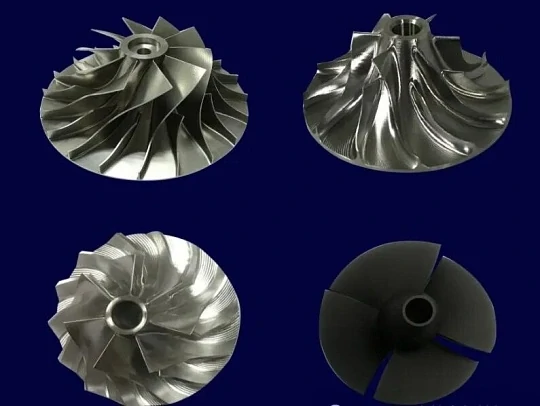
What Is Precision Custom Multi-Axis Machining Manufacturing?
Precision Custom Multi-Axis Machining Manufacturing delivers tailored solutions for complex components by integrating advanced 3, 4, and 5-axis CNC technologies into one seamless production strategy. Unlike basic machining methods, Multi-Axis CNC Machining actively enhances flexibility, improves geometric accuracy, and achieves tight tolerances required for high-performance industries such as aerospace, medical devices, and automotive systems.
To begin with, 3 Axis CNC Machining provides reliable precision for simple to moderately complex components, including standard milled parts and precision CNC milling parts. It ensures consistent dimensional accuracy and excellent surface finishes, making it a cost-effective option for many structural and mechanical parts. However, when designs demand additional complexity, 4 Axis CNC Machining introduces rotational capability around an extra axis. As a result, manufacturers can machine multiple sides of a component in a single setup, improving efficiency while maintaining high precision.
Furthermore, for highly intricate geometries and complex surface contours, 5 Axis CNC Machining offers superior flexibility and advanced accuracy. By allowing simultaneous movement across five axes, it reduces repositioning errors, shortens production cycles, and achieves tighter tolerances. This capability is particularly valuable when producing CNC precision turning parts or precision CNC turned parts, where high concentricity and fine surface finishes are critical. Consequently, engineers can design more sophisticated milled and turned components without compromising manufacturability.
Overall, Multi-Axis CNC Machining empowers precision-driven manufacturing by combining accuracy, efficiency, and geometric freedom. Whether producing milled parts, precision CNC milling parts, or high-tolerance mechanical components, this approach optimizes production workflows and supports demanding industrial applications. For buyers and engineers seeking scalable, high-precision machining solutions, adopting advanced multi-axis capabilities not only improves product quality but also strengthens supply chain competitiveness in today’s global manufacturing market.
What Are Custom Multi Axis CNC Machining Applications?
Custom Multi-Axis CNC Machining Applications drive high-precision manufacturing across demanding global industries. By leveraging advanced multi-axis capabilities, manufacturers actively produce complex components with tight tolerances, intricate geometries, and superior structural integrity. As a result, engineers can design performance-critical parts without compromising strength, dimensional stability, or efficiency. From turbine blades and surgical instruments to transmission components and control housings, Custom Multi-Axis CNC Machining Applications consistently support projects where accuracy and reliability directly impact operational success.
Moreover, multi-axis machining significantly reduces repositioning errors, shortens production cycles, and improves surface finish quality. This advantage becomes essential in industries where component failure is not an option. Consequently, procurement managers and product designers increasingly rely on Custom Multi-Axis CNC Machining Applications to secure dependable supply chains, improve product performance, and enhance competitive positioning in global markets.
Industries and Typical Custom Multi-Axis CNC Machining Applications
| Industry | Typical Applications |
| Aerospace and Aviation | Turbine blades, aircraft structural components, engine housings |
| Power Generation | Steam turbine rotors, generator components, gas turbine blades |
| Oil and Gas | Valve bodies, drill collars, pump impellers |
| Consumer Products | Appliance housings, precision gears, motor shafts |
| Medical Device | Surgical instruments, implant components, medical device housings |
| Agricultural Machinery | Hydraulic cylinder components, gear housings, engine blocks |
| Automotive | Cylinder heads, transmission components, brake calipers |
| Robotics | Actuator housings, robotic arm joints, precision gears |
| Automation | Pneumatic valve bodies, actuator components, control system housings |
| Industrial Equipment | Gearbox housings, pump casings, machine tool components |
| Nuclear | Reactor components, control rod assemblies, fuel rod housings |
In high-performance sectors such as aerospace, energy, and medical manufacturing, Custom Multi-Axis CNC Machining Applications enable manufacturers to achieve complex surface contours and strict tolerance control in a single setup. Similarly, industries like robotics, automation, and automotive benefit from enhanced repeatability and dimensional consistency, which directly improves assembly efficiency and product lifespan. This includes production of precision CNC turned parts and precision CNC milling parts, which are critical for automotive, industrial, and robotics assemblies.
Ultimately, investing in advanced Custom Multi-Axis CNC Machining Applications empowers organizations to manufacture sophisticated components at scale while maintaining uncompromising precision. For companies seeking to enhance production quality, reduce machining variability, and meet international performance standards, multi-axis technology provides a strategic advantage in today’s competitive industrial landscape.
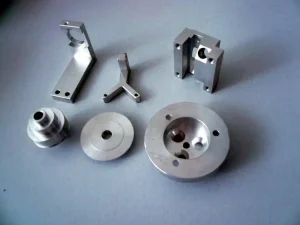
What Materials Are Used in Multi Axis CNC Machining?
Multi-Axis CNC Machining delivers exceptional versatility by supporting a wide spectrum of high-performance materials, enabling manufacturers to meet strict engineering and industrial requirements. Because different industries demand specific mechanical, thermal, and chemical properties, Multi-Axis CNC Machining actively accommodates superalloys, titanium, aluminum, copper alloys, carbon steels, stainless steels, engineering plastics, and advanced ceramics. As a result, engineers can select materials based on strength, corrosion resistance, heat tolerance, weight reduction, or dimensional stability—without sacrificing machining precision or geometric complexity.
For example, aerospace and power generation projects frequently rely on superalloys and titanium due to their superior heat resistance and strength-to-weight ratio. Meanwhile, automotive and industrial manufacturing sectors often prefer aluminum and carbon steel for structural efficiency and cost optimization. In medical device and precision equipment applications, stainless steel, high-performance plastics, and ceramics provide biocompatibility, wear resistance, and tight tolerance control. Consequently, Multi-Axis CNC Machining not only enhances design flexibility but also strengthens supply chain capability for high-performance component production, including milled parts and CNC precision turning parts.
Common Materials for Multi-Axis CNC Machining
| Material Category | Common Grades |
| Superalloy | Inconel 625, Inconel 718, Monel 400, Hastelloy C22, Stellite 6, Nimonic 80A, Rene 41, Hastelloy X |
| Titanium | TA1, TA2, Ti-6Al-4V, Ti5553, Grade 23, Grade 20, TA15, TC11 |
| Aluminum | 6061, 7075, 2024, 5052, 5083, 1100, 6082, ADC12 |
| Copper | C101, C102, C103, C110, C175, C194, Beryllium Copper, Chromium Copper |
| Brass | C360, C377, C385, C260, C270, C220, C628, C624 |
| Bronze | C510, C521, C608, C630, C836, C863, C954, C907 |
| Carbon Steel | 1018, 1020, 1040, 1045, 1060, 1215, 4130, 4140 |
| Stainless Steel | 304, 304L, 316, 316L, 410, 416, 420, 17-4PH |
| Plastic | ABS, PA (Nylon), POM (Acetal), UHMW, PTFE, PC, PEEK, PP |
| Ceramic | Alumina, Zirconia, Silicon Carbide, Aluminum Nitride, Mullite |
By combining advanced machine kinematics with material-specific tooling strategies, Multi-Axis CNC Machining ensures dimensional accuracy even when processing heat-resistant superalloys or brittle ceramics. Furthermore, simultaneous multi-axis movement reduces setup changes and improves surface finish consistency across complex geometries. This capability becomes especially valuable for industries such as aerospace, automotive, medical, and high-end manufacturing, where component performance directly affects safety, efficiency, and regulatory compliance. It also supports integrated production of precision CNC milling parts and precision CNC turned parts, enabling one-stop machining solutions.
How Are Multi-Axis CNC Machined Parts Manufactured in Real Projects?
A Multi-Axis CNC Machined Parts Case Study clearly demonstrates how advanced machining technology transforms complex component manufacturing into a precision-driven, efficiency-focused process. By applying simultaneous multi-axis movement, manufacturers actively produce intricate geometries with tighter tolerances while minimizing setup changes and human error. As a result, production cycles shorten, surface finishes improve, and dimensional consistency increases across batches.
More importantly, a real-world Multi-Axis CNC Machined Parts Case Study highlights measurable performance gains in critical industries, where component accuracy directly affects reliability and safety. Whether manufacturing structural housings, high-speed rotating parts, or CNC precision turning parts, multi-axis machining enhances structural integrity and operational performance. Consequently, engineers gain greater design freedom, and procurement teams secure more predictable lead times and quality control outcomes.
By showcasing tangible improvements in efficiency, tolerance control, and overall part performance, a well-documented Multi-Axis CNC Machined Parts Case Study not only validates technical capability but also builds buyer confidence—making it a powerful tool for attracting high-value industrial projects and increasing organic search visibility in competitive manufacturing markets.
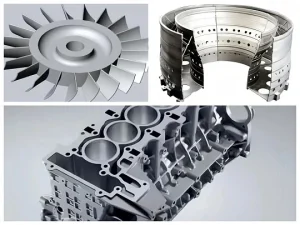
What Tolerances Are Achievable in Multi-Axis CNC Machining?
Multi-Axis CNC Machining Tolerance Suggestions help engineers and buyers achieve precise dimensional accuracy when manufacturing complex components. Because tolerance capability depends on material selection, part geometry, and machining strategy, manufacturers must define realistic specifications that balance performance, cost, and production efficiency. By applying structured Multi-Axis CNC Machining Tolerance Suggestions, teams can improve fit and function, reduce assembly errors, and enhance long-term part reliability.
Moreover, selecting the right machining configuration—3 axis, 4 axis, or 5 axis—directly impacts achievable tolerances, surface finish quality, and maximum part size. For example, while 3 Axis and 4 Axis machining provide excellent stability for standard precision components, 5 Axis machining enables tighter tolerances, smoother surface finishes, and larger complex structures. As a result, companies producing high-performance mechanical parts, including milled parts and precision CNC turned parts, can shorten development cycles while maintaining strict dimensional control.
Multi-Axis CNC Machining Capability Overview
| Specification | 3-Axis CNC | 4-Axis CNC | 5-Axis CNC |
|---|---|---|---|
| Maximum Dimensions | Up to 1000 × 500 × 500 mm | Up to 1000 × 500 × 500 mm | Up to 4000 × 1500 × 600 mm |
| Minimum Dimensions | As small as 5 × 5 × 5 mm | As small as 5 × 5 × 5 mm | As small as 5 × 5 × 5 mm |
| Standard Tolerances | ISO 2768-M or ±0.05–0.1 mm | ISO 2768-M or ±0.05–0.1 mm | ISO 2768-M or ±0.02–0.05 mm |
| High-Precision Tolerances | ISO 2768-F or ±0.02 mm | ISO 2768-F or ±0.02 mm | ISO 2768-F or ±0.01 mm |
| Typical Surface Finish | Ra 3.2 µm or Ra 1.6 µm | Ra 3.2 µm or Ra 1.6 µm | Ra 1.6 µm to Ra 0.8 µm |
| Enhanced Surface Finish | Ra 0.8 µm | Ra 0.8 µm | Ra < 0.4 µm |
| Estimated Lead Time | Simple components delivered in 1 day | Most projects completed within 5 business days | Most projects completed within 5 business days |
By following clear Multi-Axis CNC Machining Tolerance Suggestions, manufacturers actively minimize rework, improve production predictability, and strengthen quality consistency across batches. Consequently, procurement managers gain better cost control, while engineers maintain tighter dimensional stability for mission-critical components. In competitive industrial markets, defining accurate tolerance expectations early not only reduces manufacturing risks but also accelerates project timelines and improves overall product performance. This applies equally to precision CNC milling parts and CNC precision turning parts.
What Are the Design Guidelines for Multi-Axis CNC Machining?
Multi-Axis CNC Machining Design Guideline helps engineers create complex parts with higher precision, better efficiency, and controlled manufacturing costs. By optimizing tool accessibility, part orientation, tolerance planning, and material selection, designers can reduce machining errors, prevent structural weakness, and improve first-pass yield rates. As a result, projects move faster from prototype to production while maintaining dimensional stability and surface quality.
To achieve optimal results, designers should follow clear structural and dimensional recommendations. Proper internal radii improve cutter movement, controlled wall thickness prevents deformation, and realistic hole depth ratios protect tooling life. In addition, defining appropriate tolerances early ensures functional fit without unnecessary cost increases. Applying these Multi-Axis CNC Machining Design Guideline principles directly improves manufacturability and overall part performance.
Multi-Axis CNC Machining Design Recommendations
| Design Element | Suggested Standard | Purpose |
| Internal Radius | ≥ 1 mm | Improve tool access and reduce stress concentration |
| Threads & Tapped Holes | < Φ5 mm: depth = 3× diameter; > Φ5 mm: depth = 4–6× diameter | Prevent tool breakage and ensure thread strength |
| Minimum Wall Thickness | Aluminum ≥ 2 mm; Titanium/Steel ≥ 3–4 mm | Maintain rigidity and prevent deformation |
| Text Engraving | Font height ≥ 1 mm; depth ≤ 0.5 mm | Ensure readability without weakening structure |
| Hole Depth | ≤ 5× diameter | Maintain drilling accuracy and surface quality |
| Hole Tolerance | Standard ±0.1 mm; Precision ±0.02 mm | Balance fit accuracy and cost efficiency |
By implementing structured Multi-Axis CNC Machining Design Guideline standards, manufacturers actively shorten machining cycles, reduce rework risk, and maintain consistent part quality. Consequently, optimized designs enhance production efficiency and strengthen competitiveness in precision-driven industrial markets, including production of milled parts, precision CNC milling parts, and precision CNC turned parts.
Why Choose Welleshaft for Precision Custom Multi-Axis CNC Machining Manufacturing?
Welleshaft is a professional CNC turning parts manufacturer and precision components machining supplier based in China, specializing in custom multi-axis CNC machining solutions for global industrial clients. With advanced 3-axis, 4-axis, and 5-axis equipment, we manufacture complex, tight-tolerance mechanical parts with accuracy up to ±0.01 mm. As a China-based parts processing manufacturer, Welleshaft leverages a mature local supply chain, competitive production costs, and strong engineering support to deliver high-quality precision CNC turned parts, precision CNC milling parts, and milled parts in aluminum, titanium, stainless steel, superalloys, and engineering plastics.
Serving industries such as automotive, automation, robotics, and industrial equipment, Welleshaft combines precision manufacturing capability with stable export experience—making us a reliable long-term machining partner for overseas buyers seeking high-performance custom components from China.
Frequently Asked Questions
What materials are suitable for 3 Axis CNC Milling?
3 Axis CNC Milling can handle a wide range of materials, including aluminum, stainless steel, carbon steel, brass, plastics, and engineering ceramics. Material choice depends on strength, machinability, and the required surface finish, allowing manufacturers to produce durable and precise milled parts and precision CNC milling parts for automotive, medical, and industrial applications.
What are the common surface finishing options after 3 Axis CNC Milling?
After 3 Axis CNC Milling, common surface finishes include Ra 3.2 µm, Ra 1.6 µm, and Ra 0.8 µm. Post-processing options such as polishing, anodizing, or coating further enhance appearance, wear resistance, and functional performance.
How do I select the right CNC Milling service provider for my project?
Choose a CNC Milling service provider based on experience with your material type, machining complexity, tolerance capabilities, and production volume. Providers with multi-axis capabilities and quality certifications ensure faster lead times, consistent precision, and cost-effective manufacturing of milled parts, precision CNC milling parts, and precision CNC turned parts.
This blog was provided by the Welleshaft Engineering Team. Mr. Zhang, with 10+ years of experience in precision CNC machining, leads our team to deliver high-quality multi-axis CNC turned and milling parts for global industrial clients.

 English (South Africa)
  English
  Português do Brasil
  Deutsch (Österreich)
  Deutsch (Schweiz)
  English (UK)
  English (Australia)
  English (New Zealand)
  Deutsch
  Français du Canada
  Français
  Français de Belgique
  Italiano
  Português
  Español
  Español de México
  Español de Perú
  Español de Colombia
  العربية
  日本語
日本語  Русский
  한국어
한국어  Tiếng Việt
  ไทย
ไทย