
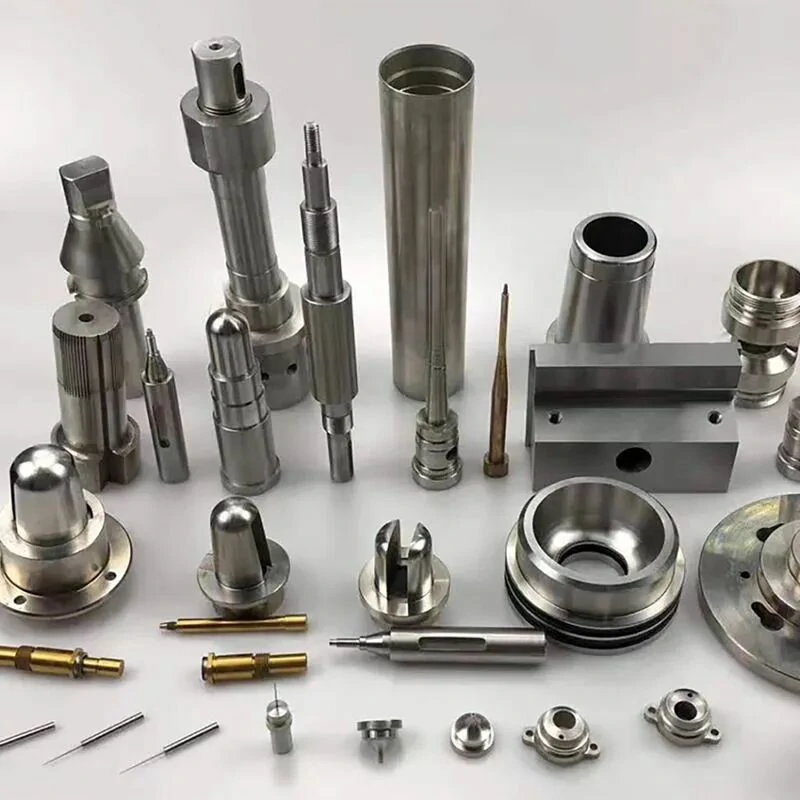
Tight Tolerance Machining: How to Achieve High-Precision CNC Parts
What is Tight tolerance machining ?
In modern manufacturing, machining tolerance refers to the allowable variation in a part’s physical dimensions, usually expressed as plus or minus values from the nominal size. When components are produced with extremely minimal deviation—often within thousandths of an inch or even microns—they are considered to have tight tolerances. In CNC machining, this level of precision means dimensional variations can be as small as ±0.001 inches (25 microns) or even tighter, depending on the application, material, and part geometry.
Achieving tight machining tolerances requires advanced CNC equipment, skilled operators, and strict process control, but the payoff is significant. Precision parts fit together more easily, simplify assembly, and deliver smoother surfaces and more reliable performance. From a business perspective, tight tolerance CNC machining improves overall product quality, reduces rework and material waste, and shortens production cycles—saving both time and cost. Most importantly, consistently meeting exact specifications boosts customer confidence and satisfaction, helping manufacturers gain a clear competitive advantage and attract more qualified traffic from buyers searching for high-precision machining solutions.
How Do Material Properties Affect Tight Tolerance CNC Machining Accuracy?
Ensuring Precision and Reliability
In precision manufacturing, selecting the right material is foundational for achieving tight machining tolerances. Different materials respond uniquely to CNC machining operations, and factors such as machinability, thermal expansion, and dimensional stability directly affect whether a part can maintain precise dimensions throughout production. Choosing the wrong material can result in warping, excessive tool wear, or failure to hold tolerances, costing both time and money.
Aluminum alloys like 6061-T6 and 7075-T6 are ideal for tight tolerance CNC machining due to their excellent machinability, favorable thermal properties, and dimensional stability. Steel alloys, including 4140 and 4340, offer high strength and stability but require robust tooling and careful control of work hardening during cutting. Stainless steel, such as 304 or 316L, can achieve precise tolerances when machined with sharp tools and proper strategies. Materials like titanium alloys or engineering plastics present additional challenges due to low thermal conductivity, high tool wear, warping, or moisture absorption, necessitating specialized strategies.
The interaction between material properties and tight tolerance machining can be summarized through three core considerations:
- Machinability – Determines cutting speed, tool life, and surface finish. Materials with high machinability, like Aluminum 6061, allow faster cutting with minimal tool wear. Difficult-to-machine metals such as Titanium or Inconel generate heat and wear tools quickly, making precise tolerances harder to maintain.
- Thermal Expansion – The coefficient of thermal expansion (CTE) affects dimensional accuracy. Materials that expand or contract significantly during machining, such as plastics, may appear in-tolerance on the machine but fail specifications after cooling.
- Dimensional Stability – Ensures a part retains its size and shape over time. Metals generally provide higher stability, while plastics may warp due to internal stresses or moisture absorption.
Common Materials and Their Tolerance Considerations
| Material | Machinability | Thermal Expansion (CTE, µm/m-°C) | Key Tolerance Considerations |
| Aluminum 6061-T6 | High | 23.6 | Excellent stability; may be “gummy” during cutting |
| Stainless Steel 304 | Medium | 17.3 | Work hardening requires sharp tools and rigid setups |
| Titanium Ti-6Al-4V | Low | 8.6 | Poor thermal conductivity; high tool wear; slower cutting |
| Copper Alloys | High | 16–18 | Thermal expansion may affect dimensional stability |
| PEEK | Medium | ~55 | Sensitive to heat; stress relief and cooling required |
| Engineering Plastics (Nylon, Delrin) | Medium | 50–80 | Warping, internal stress, and moisture absorption need management |
Selecting the right material for tight tolerance CNC machining allows manufacturers to produce parts that assemble easily, perform reliably, and reduce rework and material waste. Proper material choice not only ensures precision but also improves production efficiency, reduces costs, and increases customer satisfaction, giving a strong competitive advantage.
By understanding how material properties influence tolerance capabilities, manufacturers can proactively mitigate challenges, optimize machining strategies, and consistently deliver high-precision components that meet even the most demanding specifications.
Which Industries Require Tight Tolerance Machining for Precision Components?
Tight tolerance CNC machining is essential in industries where precision is critical and even minor deviations can have severe consequences. Medical device manufacturing, aerospace, defense, and electronics are prime examples where micron-level tolerances ensure safety, functionality, and performance.
medical device manufacturing
In medical device manufacturing, components like surgical instruments, implantable devices, diagnostic equipment, and drug delivery systems often require tolerances as precise as ±0.001″ (±0.025 mm). Surgical instruments rely on exact cutting edges and joint mechanisms, implants must maintain perfect fits to avoid tissue damage, diagnostic optics demand precise alignment, and dosing mechanisms in drug delivery systems require high accuracy to ensure patient safety. Leading manufacturers can hold tolerances down to 1–3 microns for life-critical procedures such as laser eye surgery, where perfect positioning and clearances are mandatory.
aerospace industry
The aerospace industry similarly demands the highest precision. Aircraft components, jet engine parts, spacecraft elements, and structural assemblies frequently require tolerances of ±0.0005″ (±0.013 mm) or tighter. Factors such as weight reduction, performance requirements, and regulatory compliance make micron-level accuracy non-negotiable. Suppliers capable of consistently machining at these tolerances differentiate themselves from general machining shops.
defense sector
In the defense sector, precision machined parts are used in military vehicles, naval systems, and firearms, where even slight deviations could have catastrophic consequences. Maintaining tight tolerances ensures reliability and safety under the most demanding conditions.
pharmaceutical and electronics industries
The pharmaceutical and electronics industries also benefit from tight tolerance machining. Components for pharmaceutical dosing, sanitizing, or bottling systems must meet strict dimensional standards to prevent errors, while electronic and semiconductor applications—such as RF shielding, heat sinks, and precision enclosures—require tight tolerances for functionality as devices shrink and performance demands increase.
Across these industries, achieving tight tolerances is more than a technical requirement—it’s a business advantage. Precision parts enhance product reliability, reduce waste and rework, improve assembly efficiency, and build trust with end users. By investing in high-precision CNC machining capabilities, manufacturers can capture high-value contracts, meet regulatory standards, and differentiate themselves in competitive markets.
What Design Considerations Ensure Successful Tight Tolerance CNC Components?
Smart Design Practices for Tight Tolerance CNC Machining
Effective tight tolerance CNC machining starts at the design stage. Smart design strategies can reduce the need for unnecessarily tight tolerances while still ensuring critical features perform as required. Applying geometric dimensioning and tolerancing (GD&T) principles allows engineers to specify only the tolerances that truly affect a part’s function, avoiding costly over-tolerancing.
The “Less is More” Philosophy in Tolerancing
Over-tolerancing can significantly increase production costs, cycle times, and inspection complexity. Every unnecessarily tight tolerance adds steps, requires specialized equipment, and drives up manufacturing expenses. The key is to focus on critical features—such as mating surfaces, bearing bores, and alignment pin holes—while applying standard tolerances to non-critical surfaces like outer housings. Asking whether a dimension truly impacts assembly performance can save both time and money.
Geometry and Material Selection
A part’s geometry greatly affects machinability. Common challenges include:
- Thin walls: Prone to vibration, chatter, and warping. Maintaining an appropriate wall thickness-to-height ratio ensures stable machining.
- Sharp internal corners: Standard end mills create radii, making sharp 90-degree corners difficult without secondary processes like Electrical Discharge Machining (EDM). Designing a small radius matching standard tooling reduces cost and simplifies tight tolerance machining.
Material choice also plays a critical role. Thermal stability, hardness, and machinability determine how easily a material can maintain high precision. Materials with predictable thermal behavior, like aluminum alloys, are easier to machine, while some plastics require special considerations due to anisotropy or moisture absorption.
| Material Group | Machinability for Tight Tolerances | Dimensional Stability | Common Examples |
| Aluminum Alloys | Excellent | Good | 6061, 7075 |
| Stainless Steels | Good to Moderate | Excellent | 304, 316, 17-4 PH |
| Tool Steels | Difficult | Excellent | A2, D2 |
| Engineering Plastics | Moderate | Varies | PEEK, Delrin (Acetal) |
From CAD to CNC: Ensuring Fabrication Accuracy
A robust design begins with a digital CAD model, which ensures the part geometry and fabrication process are sound. This model is transferred to CAM software, generating precise instructions for CNC machines, including:
- Turning and positioning the manufacturing blank
- Following programmed tool paths to achieve final geometry
- Controlling cutting speed, depth, and feed rates
- Coordinating movements across three or five axes
Three-axis machines handle X, Y, and Z directions simultaneously, while five-axis machines add A and B axes, allowing complex geometries to be machined accurately with minimal setup.
By integrating smart design practices, proper material selection, and CAD/CAM-driven processes, manufacturers can minimize unnecessary tight tolerance requirements, reduce production costs, and improve efficiency. This approach ensures that critical features maintain precision while non-critical features are economically fabricated, ultimately enhancing product quality and market competitiveness.
Which Manufacturing Methods Best Achieve Tight Tolerance CNC Machining?
Selecting the Right Manufacturing Method for Tight Tolerance CNC Machining
Modern manufacturing increasingly relies on automation to achieve tight tolerance CNC machining. CNC machines, robotic arms, and multi-axis equipment enable precise material removal at high speeds, ensuring parts meet exacting specifications. Achieving tight tolerances begins in the design stage, where Design for Manufacture and Assembly (DFMA) and CAD/CAM software help engineers create digital models that support accurate machining of complex geometries.
CNC Machining vs. 3D Printing
While additive manufacturing is popular, it cannot match CNC machining in precision for functional components.
| Feature | CNC Machining | 3D Printing (FDM/SLA) |
| Typical Tolerance | ±0.025 mm (±0.001″) | ±0.1 mm (±0.004″) |
| Surface Finish | Excellent (as-machined) | Good (often requires post-processing) |
| Material Strength | Excellent (Isotropic) | Moderate (Anisotropic) |
| Best Use Case | Functional prototypes, production parts | Form/fit prototypes, complex internal geometries |
CNC machining is subtractive, carving parts from solid blocks to maintain material integrity and isotropic strength, while 3D printing layers can introduce weaknesses and internal stresses.
CNC Machining vs. Injection Molding
Injection molding is ideal for high-volume plastic parts, but requires costly molds. CNC machining is more economical for prototyping and low-to-mid volume production, offering excellent precision without high upfront tooling costs.
| Scenario | Recommended Method | Why? |
| 1–10 Functional Prototypes (Metal) | CNC Machining | Fast turnaround, production-level precision, excellent material properties |
| 1–10 Form/Fit Prototypes (Plastic) | 3D Printing | Quick verification of shape and fit at low cost |
| 50–5,000 Production Parts (Metal/Plastic) | CNC Machining | Cost-effective before tooling costs of injection molding become justified |
| 10,000+ Production Parts (Plastic) | Injection Molding | High upfront mold cost offset by extremely low per-part cost |
| One-off Simple Part/Repair | Manual Machining | Quickest for simple geometries without programming |
CNC Machining vs. Manual Machining
Manual machining still has value for simple, one-off parts or R&D prototypes, but it cannot match the repeatability, precision, or complexity achievable with CNC machines. Multi-axis CNC systems can efficiently produce intricate geometries with consistent tolerances across hundreds or thousands of parts.
Specialized Equipment for Tight Tolerance Machining
Achieving high-precision tolerances requires more than standard CNC equipment. Specialized tooling, fixtures, and machine features are critical:
| Component | Standard Precision | Tight Tolerance Requirements | Quality Impact |
| Cutting Tools | Standard carbide inserts | Ground carbide or diamond tools | ±0.002 mm improvement |
| Tool Holders | Standard collets | Precision shrink-fit holders | Reduced runout by 50% |
| Workholding | Standard vises | Precision fixtures with repeatability | ±0.005 mm repeatability |
| Measurement | Dial indicators | Coordinate measuring machines | 10:1 accuracy ratio |
High-precision spindles, thermal management systems, vibration isolation, and advanced control technologies all contribute to maintaining tight tolerances during machining. Although these investments increase upfront costs, they ensure consistent, reliable, and high-quality results, giving manufacturers a competitive advantage in industries requiring precision components.
By understanding the trade-offs between CNC machining, 3D printing, injection molding, and manual machining, and investing in specialized equipment and tooling, manufacturers can select the optimal method for each project, balancing tolerance, volume, material, and cost. This approach maximizes efficiency, maintains quality, and strengthens market competitiveness.
How Can You Make High-Precision CNC Machining Parts with Tight Tolerances?
Achieving tight tolerances in CNC machining requires more than advanced equipment—it demands a combination of proper design, precise tools, skilled operators, and controlled manufacturing environments. Modern CNC machines use sophisticated programming and high-precision cutting tools to produce parts with minimal deviation, but success also depends on attention to detail throughout the entire process.
Optimizing the Workshop Environment
The physical environment significantly impacts tight tolerance machining. Workshops should ideally be located on the ground floor to reduce vibration, which can compromise precision. Temperature control is equally critical; fluctuations of even 10°C between day and night can cause expansion or contraction in materials, making it impossible to maintain consistent tolerances. Installing air conditioning ensures both dimensional stability and operator comfort, reducing human errors caused by fatigue or stress.
Investing in High-Quality CNC Machines and Tooling
CNC machine accuracy sets the foundation for achieving tight tolerances. Machines must be capable of exceeding the required precision—for example, achieving ±0.01 mm tolerance on a part requires a machine with even tighter baseline capability. Similarly, tool holders must be dynamically balanced to prevent jitter, with high-end shrink-fit or adjustable holders reducing runout to less than ±0.005 mm. Cutting tools must also be sharp and appropriate for the material, as dull tools increase surface radius, generate heat, and reduce machining accuracy.
| Component | Standard Practice | Tight Tolerance Recommendation | Quality Impact |
| CNC Machine | Standard precision | High-accuracy multi-axis | ±0.01 mm achievable |
| Tool Holders | Basic collets | Heat-shrink or adjustable | Runout ≤ ±0.005 mm |
| Cutting Tools | Standard inserts | Sharp carbide/diamond | Minimized surface deviation |
| Workpiece Material | Generic suppliers | Certified, heat-treated alloys | Consistent dimensional stability |
Material Selection and Supplier Reliability
Selecting the right material is crucial for precision CNC parts. Even high-grade metals like aluminum 6082 can perform poorly if heat-treated incorrectly or sourced from unreliable suppliers. Establishing trusted supplier relationships and verifying material properties ensures consistency, reducing variability and scrap rates.
On-Machine Inspection and Quality Control
Integrating on-machine inspection systems, such as high-end Renishaw probes, allows continuous verification of part dimensions during machining. These systems can automatically correct offsets, ensuring each component meets specifications without waiting for post-production inspection. Complementing this, a robust quality control department guarantees that only parts within tolerance are delivered, protecting brand reputation and reducing rework costs.
Human Expertise and Workflow Optimization
Even the best equipment cannot replace skilled personnel. Experienced engineers optimize tool paths and fixture setups for both efficiency and precision, while trained operators select appropriate tools, program machines, and maintain part integrity during handling. Using high-end CAM software, such as HyperMill or SurfaceMill, ensures efficient, precise tool paths that fully leverage the capabilities of modern CNC machines. Centralized machine shop management systems streamline workflow, preventing rushed jobs and supporting meticulous machining practices.
Communication and Collaboration
Clear communication with customers and within the workshop is essential for tight tolerance CNC machining. Understanding the client’s functional requirements and providing realistic feedback on achievable tolerances ensures alignment between design expectations and manufacturing outcomes. This collaborative approach reduces errors, improves quality, and strengthens customer satisfaction.
By combining controlled workshop environments, high-precision machinery, optimized tooling, reliable materials, skilled personnel, and robust inspection systems, manufacturers can consistently achieve tight tolerances, reduce waste, and improve operational efficiency—ultimately creating high-quality CNC machined parts that meet exact specifications and satisfy demanding markets.
What Inspection and Quality Control Strategies Guarantee Tight Tolerance CNC Parts?
Advanced Strategies for Tight Tolerance CNC Machining and Quality Control
Achieving tight tolerance CNC machined parts goes beyond precision equipment—it requires a combination of advanced inspection techniques, robust process control, and data-driven methods to guarantee part quality. Simply measuring parts after production is no longer sufficient; manufacturers must build quality into the process from design to final inspection.
Measurement and Inspection: The Foundation of Precision
For tight tolerance CNC parts, measurement capabilities must exceed the required specification by at least ten times, a principle often called the “ten-to-one rule”. This ensures measurement uncertainty does not compromise part acceptance decisions. Advanced metrology tools are critical:
| Inspection Tool | Best For | Key Advantage | Limitation |
| CMM (Coordinate Measuring Machine) | Complex geometries, prismatic parts | Unmatched precision and repeatability; verifies full GD&T callouts | Slower, requires controlled environment |
| Laser/3D Scanner | Freeform surfaces, reverse engineering | Rapid surface analysis; creates detailed color maps of deviations | Slightly lower point accuracy than CMM |
| Optical Comparator | 2D profiles, threads, chamfers | Fast visual inspection on the shop floor | Limited to 2D measurements; operator dependent |
Using tools like CMMs, laser scanners, and optical comparators ensures every part matches the original CAD design, especially for mission-critical applications in aerospace, medical, and defense industries.
Proactive Quality: Process Control and Traceability
Inspection alone is reactive; the goal of tight tolerance CNC machining is defect prevention. This requires:
- Process Control: Actively monitoring all manufacturing variables, including machine calibration, tool wear, coolant consistency, and environmental conditions, ensures a stable and predictable process.
- Documentation: Detailed records, from material certificates to first article inspection reports, provide a verifiable trail for each production run.
- Traceability: Linking every finished part to its material batch, machine, operator, and production date enables rapid root-cause identification and minimizes risk.
- Statistical Process Control (SPC): Using control charts and real-time data analysis identifies trends before parts exceed specifications, allowing timely adjustments to maintain tight tolerances.
| Quality Element | Purpose | Practical Example |
| Process Control | Minimize variation, ensure stability | Calibrating CNC axes every 6 months |
| Documentation | Create verifiable production records | Attaching material certification to work order |
| Traceability | Link part to full production history | Engraving serial numbers on machined components |
| SPC | Prevent defects proactively | Using X-bar charts to track critical dimensions |
Integration of Technology and Materials
Advanced technology and process optimization are essential when machining complex or exotic materials. Specialized equipment, such as high-precision spindles, vibration-isolated foundations, and thermal management systems, is required to consistently meet tight tolerances. Coupled with optimized tooling, heat-treated alloys, and exotic plastics, this approach ensures parts achieve exact specifications while maintaining material integrity and performance.
By combining advanced inspection techniques, rigorous process control, data-driven methods, and specialized manufacturing technology, manufacturers can produce tight tolerance CNC parts that consistently meet even the most stringent industry standards. This strategy ensures reliability, safety, and performance for critical applications—delivering peace of mind for customers in aerospace, medical, defense, and high-performance industrial markets.
How Do Tight Tolerances Affect Cost, Lead Time, and Project Planning?
Understanding the economic impact of tight tolerance requirements is essential for engineers and manufacturers aiming to balance precision, cost, and production efficiency. Tight tolerances significantly increase manufacturing complexity, following an exponential cost relationship: the smaller the allowed margin of error, the greater the investment in time, equipment, tooling, and quality control.
Key Factors Driving Cost in Precision Manufacturing
Several elements contribute to higher costs in tight tolerance CNC machining:
- Extended cycle times:Reduced cutting speeds and shallower passes are required to maintain precision, increasing machining time.
- Specialized tooling and fixturing:High-performance cutting tools and custom fixtures are necessary to achieve stability and repeatability.
- Enhanced quality control:Advanced inspection equipment and additional verification steps increase labor and operational costs.
- Higher scrap rates:Narrow tolerance windows make parts more susceptible to rejection due to minor deviations or material inconsistencies.
- Premium equipment requirements:Machines with high thermal stability, precise spindles, and vibration isolation systems command higher operational costs.
| Factor | Standard Tolerance (±0.1mm) | Tight Tolerance (±0.01mm) |
| Machining Time | Normal | 2–4× Slower |
| Inspection Method | Calipers, Micrometers | CMM, Laser/3D Scanners |
| Typical Scrap Rate | <2% | 5–15%+ |
| Tooling Needs | Standard | High-Performance / Custom |
| Operator Skill | Skilled Machinist | Senior Specialist |
Root Causes of Cost Increases
The connection between tight tolerances and high costs is not arbitrary. Shrinking acceptable margins of error impacts every stage of production:
- Slower machining cycles:CNC machines must operate at reduced feed rates and depths of cut to minimize vibration, tool deflection, and heat, dramatically increasing cycle times.
- Specialized fixturing and tooling:Custom clamps and high-performance cutting tools ensure parts remain immobile and precise, but add non-recurring engineering (NRE) costs.
- Inevitable higher scrap rates:Small deviations in temperature, tool wear, or material consistency can render a part unusable, requiring scrap considerations in budgeting.
Strategies to Balance Precision, Cost, and Lead Time
Applying tight tolerances only where functionally critical can reduce costs without compromising part performance. Key approaches include:
- Functional dimensioning:Reserve tight tolerances for mating surfaces, bearing bores, and alignment features, while using standard tolerances for non-critical surfaces.
- Early collaboration:Engaging manufacturing partners during the design phase enables Design for Manufacturability (DFM) feedback, optimizing material selection, tool paths, and tolerance allocation.
- Intelligent use of GD&T:Applying Geometric Dimensioning and Tolerancing (GD&T) strategically controls critical features while allowing more variation elsewhere, improving machinability and reducing cost.
| Tolerance Approach | Pros | Cons | Best For |
| Standard Tolerances | Low cost, fast production, simple inspection | Not suitable for precision fits or assemblies | General components, non-mating surfaces |
| Selective Tolerancing | Balances cost with performance, efficient | Requires careful DFM analysis | Most mechanical assemblies with critical interfaces |
| Uniformly Tight Tolerances | Guarantees precision across entire part | Extremely expensive, long lead times | Mission-critical aerospace, medical implants, optical instruments |
Commercial Takeaways
Tight tolerances are a direct driver of higher costs and longer lead times due to slower cycles, specialized tooling, advanced inspection requirements, and increased scrap. The most effective strategy is strategic tolerance allocation, backed by early collaboration with manufacturing partners. By applying tight tolerances only where necessary, businesses can optimize costs, reduce production risks, and ensure functional performance, turning precision engineering challenges into profitable outcomes.
What Are the Benefits and Business Value of Tight Tolerance CNC Components?
Tight tolerance machining is essential in precision manufacturing, producing components that meet exact specifications for aerospace, medical, and automotive applications. Though it can increase costs, scrap rates, and production time, the benefits—perfect fit, fewer assembly issues, reduced rejects, and reliable performance—often outweigh the drawbacks. It also enables high-performance plastics, lighter designs, and improved efficiency in demanding industries. With advanced tooling, secondary operations, and strict quality control, tight tolerance machining ensures precision, reliability, and optimal performance for critical parts.
What Are the Future Trends and Innovations in Tight Tolerance CNC Machining?
The demand for tight tolerance CNC machining continues to grow as precision manufacturing evolves. Modern CNC machines are not just faster—they are smarter and more stable, achieving micron-level precision. Thermal compensation systems automatically adjust tool paths to counteract temperature changes, while advanced spindles and drive systems reduce vibration and backlash, ensuring smooth tool motion and superior surface finishes. Real-time process monitoring and in-situ metrology now allow defect prevention rather than post-process inspection, reducing scrap and guaranteeing parts meet specifications from the first cut.
AI and Machine Learning (ML) enhance quality control by predicting maintenance needs and enabling automated inspections, comparing parts to CAD models with unmatched accuracy. Meanwhile, machining exotic and complex materials like titanium alloys, Inconel, carbon composites, and advanced ceramics requires specialized tooling and innovative techniques to maintain tight tolerances. Careful material selection and optimized machining ensure high performance without compromising manufacturability.
| Material | Examples | Challenge | Solution |
| Titanium Alloys | Ti-6Al-4V | Low thermal conductivity, tool wear | Thermal compensation, diamond tooling |
| Superalloys | Inconel | Heat generation, work hardening | Coatings, controlled cutting speeds |
| Composites | CFRP | Delamination | Ultrasonic-assisted machining, diamond tools |
| Ceramics | Zirconia, Silicon Nitride | Hardness, brittleness | Laser-assisted machining, precision grinding |
| Metal Matrix | Al/SiC | Abrasive particles | Polycrystalline diamond tools |
The future of tight tolerance machining is intelligent and interconnected. Smarter machines, real-time monitoring, AI inspection, and advanced material processing enable engineers to produce complex, high-performance components with precision, reliability, and efficiency, giving manufacturers a competitive edge in aerospace, medical, automotive, and energy sectors.
Why Choose Welleshaft for Precision Machining Excellence
Precision is a strategic advantage. Welleshaft helps manufacturers achieve tight tolerance machining by balancing performance, cost, and risk. Using functional analysis, critical dimensions are identified, while cost-benefit evaluation ensures precision adds real value. Supplier capability checks, risk assessment, and industry standards review guarantee consistent, reliable results.
Advanced technology, optimized processes, and high-quality execution enable Welleshaft to handle tight tolerances and exotic materials with unmatched accuracy and repeatability. This ensures mission-critical components in aerospace, medical, and high-spec industries meet exacting standards, reduce scrap, and improve productivity.
Partnering with Welleshaft gives manufacturers confidence in every part produced. Leveraging tight tolerance machining expertise ensures competitive advantage, cost efficiency, and high-performance, reliable products.
Tight tolerance machining FAQS
What Tolerance Ranges Are Common for Metals and Plastics?
Tolerance capability varies by material:
Metals (aluminum, brass) typically achieve ±0.01 mm or better.
Engineering plastics may need ±0.02–0.05 mm due to thermal expansion, though PEEK can reach ~±0.01 mm.
Ultra-precision methods like micro-EDM or laser machining can reach ±0.001 mm.
What Happens If Tolerances Are Too Tight?
Setting tolerances unnecessarily tight—beyond what functional fit or performance requires—can dramatically increase machining time, production cost, inspection difficulty, and scrap rates. Unless required for function, such tolerances reduce efficiency and provide little added value.
This blog was provided by the Welleshaft Engineering Team, led by Mr. Zhang, a precision manufacturing specialist with over 10 years of experience in tight tolerance CNC machining and high-performance materials. Welleshaft focuses on delivering high-precision components, process optimization, and engineering solutions for industries such as aerospace, medical devices, defense, and automotive.

 English (New Zealand)
  English
  Português do Brasil
  Deutsch (Österreich)
  Deutsch (Schweiz)
  English (UK)
  English (Australia)
  Deutsch
  Français du Canada
  Français
  Français de Belgique
  Italiano
  English (South Africa)
  Português
  Español
  Español de México
  Español de Perú
  Español de Colombia
  العربية
  日本語
日本語  Русский
  한국어
한국어  Tiếng Việt
  ไทย
ไทย