
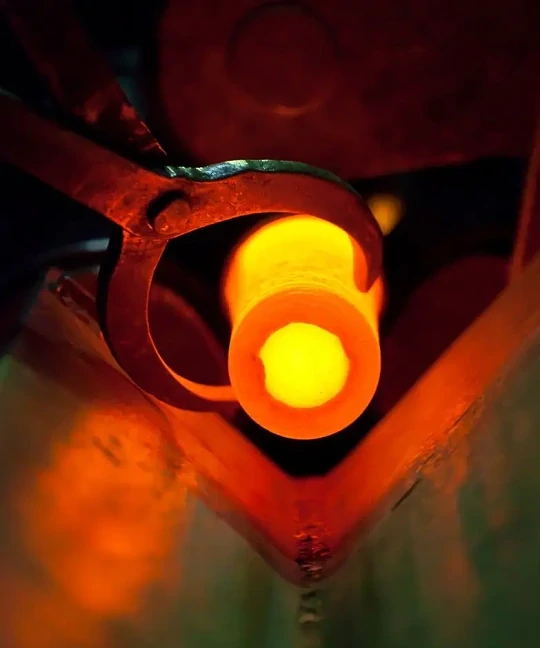
Heat Treatment for Motion Control Parts: Precision Solutions for EV and Industrial Components
What Are Powdered Metal Components for Motion Control Systems?
The electric vehicle industry is growing rapidly, with a projected 29% CAGR over the next decade. However, EV technology continues to evolve, and manufacturers must focus on efficiency by designing vehicles that are lightweight, thermally optimized, and energy-efficient, while ensuring a smooth driving experience.
To achieve this, engineers rely on lightweight motion control components and compact actuated auxiliary systems that minimize noise and vibration. Moreover, components with advanced thermal management directly affect real-world EV performance. By using powder metallurgy parts and optimizing them through heat treatment for motion control parts, manufacturers can produce efficient and reliable vehicles.
Consequently, investing in advanced motion control components and powdered metal parts allows EV makers to accelerate innovation, enhance performance, and gain a competitive edge in this fast-growing market.
Why Do Electric Vehicles Need Motion Control Components?
While electric vehicles may resemble traditional cars externally, the components under the hood are fundamentally different. Electric motors are far more compact than internal combustion engines, opening new possibilities for innovative vehicle designs. Their design reduces vibration, as motor components rotate around a central axis for smoother, controlled motion.
However, these design advantages also create specific challenges for engineers and designers:
- Fuel Efficiency:Electric vehicles require lightweight components that efficiently direct heat, ensuring optimal performance and energy use.
- Compact Design:The smaller size of electric motors demands that auxiliary components and systems also be compact, allowing the entire vehicle to maintain its streamlined form.
- Noise, Vibration, and Harshness (NVH):Designers must engineer assemblies and configurations that minimize noise and vibration, enhancing the driving experience and overall comfort.
Optimizing EV design with advanced motion control and precision powdered metal parts improves efficiency and competitiveness. Heat treatment for motion control parts plays a key role in ensuring durability and performance.
What Are the Advantages of Motion Control Components in EVs?
Well-engineered actuators and motion control systems directly address challenges in electric vehicle design. By carefully optimizing the design and material composition of components, manufacturers can significantly reduce weight, vibration, noise, and poorly managed or misdirected heat.
One increasingly popular solution for EV-specific components is sintered metals. Sintering is a specialized heat treatment for motion control parts applied to powder metals. After forming a powdered metal component, the part is heated just below its melting point to harden and strengthen it. This process allows designers to use lighter metals without sacrificing durability while enabling increasingly complex and precise parts for electric vehicles.
Advantages of Powdered and Sintered Motion Control Components
- Quiet Performance
Traditional automotive components often contain laminations, seams, scratches, or unintended inclusions that generate uneven wear, noise, and vibration. Powdered metal components processed through sintering eliminate these imperfections. The compacted and heated powders form a seamless finish, and the natural porosity provides inherent sound-dampening, resulting in smoother and quieter EV motion control systems. - Compact and Lightweight
The sintering process hardens and strengthens powdered components, allowing lightweight parts to achieve the same strength, durability, and hardness as heavier metals. This enables developers to create engine configurations and motion control systems that are more compact and lighter, improving fuel efficiency and overall electric vehicle performance. - Enhanced Magnetic Performance
Powdered and sintered parts can integrate magnetic and non-magnetic metals according to functional requirements. This flexibility enhances electromagnetic efficiency in electric vehicle components, boosting energy transfer and system performance.
Advanced powdered metal and sintered motion control parts with heat treatment boost efficiency, cut NVH, and drive EV innovation.
Why Is Modern Heat Treatment Essential for Motion Control Parts?
Components in mechanical and automotive engineering today face unprecedented mechanical, thermal, and corrosive loads. Without precise heat treatment for motion control parts, these parts struggle to achieve the necessary structural strength, toughness, and dimensional stability required for high-performance applications.
Optimizing furnace atmosphere, holding time, and quenching allows manufacturers to meet strict OEM specs and extend component life.
Managing the full production process—from raw parts to wear-resistant finished components—ensures consistent quality and operational efficiency. Real-time documentation of every step minimizes downtime, enables accurate production planning, and supports smooth series launches.
Advanced heat treatment for motion control parts enhances durability, boosts efficiency, lowers maintenance costs, and improves overall manufacturing performance.
How Does Heat Treatment Improve Precision Machined Motion Control Parts?
Beyond primary manufacturing, heat treatment for motion control parts on precision-machined components ensures products meet exact specifications. Controlled heating and cooling increases hardness, strength, and wear resistance.
Heat treatment can be tailored to improve machinability, electrical/magnetic properties, ductility, or relieve internal stress, giving designers and manufacturers maximum flexibility.
The process typically follows three essential steps: heating, soaking, and cooling. During heating, the metal reaches the temperature necessary to achieve the desired structural change. In the soaking phase, the part is maintained at this temperature to ensure uniform heat penetration. Finally, controlled cooling returns the metal to room temperature while locking in the enhanced properties.
While steel and its alloys are most common for heat treatment of motion control parts, certain aluminum grades also benefit. Precise heat treatment produces durable, high-performance components that meet strict industry standards and extend part lifecycles.
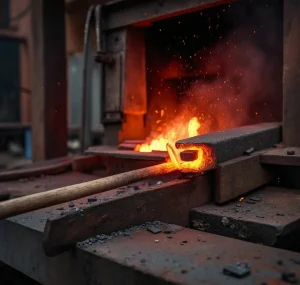
What Types of Heat Treatment Are Used for Motion Control Parts?
Each application in mechanical and automotive engineering requires precise control over surface hardness, toughness, and distortion. Advanced heat treatment for motion control parts ensures that components meet these demands while maximizing durability and performance. Common methods include:
- Hardening:Strengthens metal by heating, soaking, and rapidly cooling in oil or water. While it increases strength, it can also make parts brittle, which may require additional tempering.
- Tempering:Relieves internal stresses from hardening. The process follows the same three-step method but uses lower temperatures, with cooling usually performed in air.
- Annealing:Softens metal to reduce cracking. The material is heated gradually, soaked, and slowly air-cooled for uniform structure.
- Normalizing:Eliminates internal stresses from machining. Parts are heated, soaked, and quickly air-cooled outside the furnace.
- Solution treatment of stainless steel:Heats materials to a high-temperature single-phase zone to dissolve excess phases, then rapidly cools to form a pure austenitic structure. This enhances toughness and corrosion resistance.
Modern production integrates multiple furnace types into continuous process chains, linking upstream casting, hardening, controlled quenching, and downstream machining under one roof. Central batch control ensures temperature profiles, atmospheres, and holding times precisely match the material and geometry of each part.
Specialized processes include:
- Direct hardening: Pinpoint induction hardening for shafts, pins, and gears.
- Tempering: Austenitizing, quenching, and tempering to achieve high yield strength with excellent toughness.
- Soft annealing & normalizing: Creates machinable structures before CNC processing.
- Stress-relief annealing: Reduces residual stresses after welding or casting.
By applying precise heat treatment for motion control parts, manufacturers can deliver high-performance, durable components that meet strict OEM standards while improving production efficiency and reliability.
Which Heat Treatment Processes and Equipment Are Needed for Motion Control Parts?
To manufacture high-performance precision machined parts, manufacturers combine advanced heat treatment for motion control parts equipment with streamlined production and supply chain management. Automated, CNC-controlled heat treatment lines operate 24/7, moving components seamlessly through multiple stations while maintaining strict process control.
Key equipment and processes include:
- Furnaces: Capable of reaching specified temperatures and handling loads up to 1200 kilograms.
- Carburizing Treatment: Increases carbon content on steel surfaces, enhancing hardness and wear resistance.
- Vacuum Heat Treatment: Removes air from the furnace to create a vacuum, allowing heating with or without inert gas for surface protection and improved material properties, followed by rapid cooling.
- Cryogenic Processing: Exposes workpieces to extreme low temperatures (down to -80°C) to boost hardness, impact toughness, corrosion resistance, and reduce deformation and cracks.
- Aluminum Alloy Heat Treatment: Heats aluminum parts at controlled rates, transforms internal structure, and enhances mechanical properties, wear resistance, machinability, and dimensional stability.
- Annealing and Stress Relieving: Improves ductility, reduces brittleness, and eliminates internal stresses from casting, forging, welding, or machining.
- Gas Nitriding: Creates a hard, wear- and corrosion-resistant surface on steel parts at 500–540°C with precise penetration depth.
- Induction Heat Treating: Targets specific areas of a part to achieve controlled surface hardening while keeping the core untreated.
Supporting these processes, integrated services optimize the entire production chain: procurement, engineering, logistics, and documentation.
By leveraging advanced heat treatment for motion control parts equipment, manufacturers can deliver durable, high-performance components, reduce internal coordination costs, and guarantee consistent quality across every production batch.
What Certifications Ensure Quality in Heat Treatment for Motion Control Parts?
In precision heat treatment, maintaining zero-defect tolerance is essential at every stage—from batch entry to the generation of a digital inspection report. Adhering to rigorous certifications and compliance standards ensures that components consistently meet industry regulations and customer expectations.
Key certifications include:
- ISO 9001 – Proven quality management system since 2001.
- ISO 14001 – Robust environmental management, with annual energy reporting and sustainability tracking.
- ISO 45001 – Strict occupational safety standards, achieving zero reportable accidents in 2024.
- EN 15085-2 CL1 – Welding certification for safety-critical assemblies.
- EN 1090-2 EXC3 – Compliance with structural standards for highly stressed components.
All test cycles are validated using thermocouples, CT scanning, and ISO-certified methods to guarantee precision and traceability. By implementing fully transparent processes, responsible resource management, and continuous improvement strategies, manufacturers can demonstrate reliable, audit-ready heat treatment for motion control parts operations — giving customers and partners confidence in the performance and safety of every precision machined part.
Why Choose Welleshaft as a Heat Treatment for Motion Control Parts Manufacturer?
Welleshaft, based in China, provides advanced heat treatment for motion control parts for a wide range of components, including bearings, valves, drive shafts, pistons, flanges, butterfly plates, and diffusers, as well as specialized EV motion control components.
By combining NADCAP-certified processes with precision manufacturing in China, we ensure that parts meet the highest standards for dimensional accuracy, strength, fatigue resistance, and thermal management—critical for aerospace, energy, medical, and electric vehicle applications.
Our controlled processes and engineering expertise in China enable manufacturers to produce high-performance, reliable components that optimize compactness, noise reduction and durability. For tailored solutions or more information on precision heat treatment for motion control parts and EV motion components, contact the Welleshaft engineering team today.
FAQ
Which materials can be hardened?
We process alloyed, unalloyed, and stainless steels, gray and ductile cast iron, and selected aluminum alloys. Providing a material datasheet allows us to define the optimal cycle and guarantee microstructure, surface hardness, and dimensional stability for heat treatment for motion control parts.
How quickly are inspection reports delivered?
Every batch includes digitally signed hardness curves, temperature profiles, and atmosphere data. After release, a secure download link provides access for ten years, supporting both internal and customer audits.
Can tempered parts also be machined?
Yes. Our CNC centers handle hardened surfaces up to 62 HRC. Using high-performance carbide tools, internal cooling, and inline 3D measurement, we deliver ready-to-install parts with complete documentation.
This blog was provided by the Welleshaft Engineering Team, led by Mr. Xu, a specialist in precision heat treatment for motion control parts. Welleshaft delivers high-performance, custom EV and industrial components with certified quality and reliability.

 English (UK)
  English
  Português do Brasil
  Deutsch (Österreich)
  Deutsch (Schweiz)
  English (Australia)
  English (New Zealand)
  Deutsch
  Français du Canada
  Français
  Français de Belgique
  Italiano
  English (South Africa)
  Português
  Español
  Español de México
  Español de Perú
  Español de Colombia
  العربية
  日本語
日本語  Русский
  한국어
한국어  Tiếng Việt
  ไทย
ไทย