
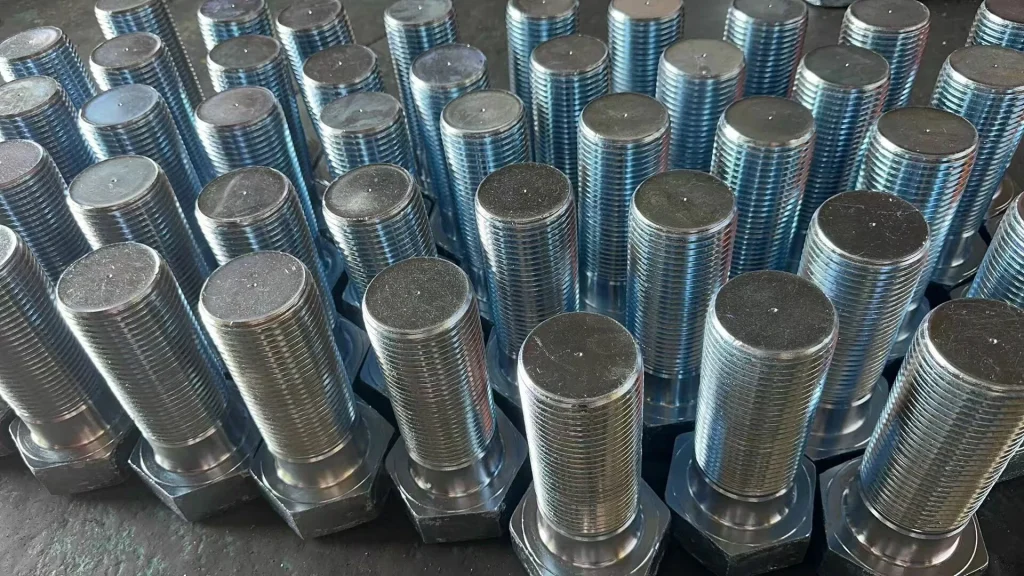
What Are the Benefits of Using Custom Bolts and Fasteners in Industrial Applications?
What Are Custom Bolts and Custom Made Bolts Used For in Industrial Applications?
Custom bolts and custom made bolts are essential when standard fasteners can’t meet performance, size, or material requirements. In industrial settings—like structural steel, heavy machinery, automotive assemblies, or energy projects—engineers often need bolts designed for specific loads, installation conditions, and environments. Custom bolts and fasteners make a big difference here. With precise diameters, thread pitches, lengths, and head types, these components can handle specialized applications, from large diameter bolts to aluminum metric bolts and hardened steel bolts. For lightweight and corrosion-resistant solutions, aluminum bolts and fasteners are especially popular.
Fasteners, which include bolts, screws, rivets, and other mechanical components, play a crucial role in keeping assemblies secure.custom or bespoke fasteners become necessary. Custom fasteners ensure Many manufacturers rely on off-the-shelf fasteners with standard dimensions, but when a part has unique requirements, a precise fit, improving reliability and reducing the risk of failure. By sourcing from a trusted custom bolt manufacturer, businesses can maintain product safety, extend service life, and meet stringent industry standards while streamlining assembly processes.
Many businesses today use three key categories of bolts. First, manufacturers design custom bolts to fit specific mechanical parts. Second, they produce custom OEM bolts exclusively for their products or partners, enabling reliable replacements during repairs and giving technicians confidence that the bolts fit perfectly. Third, machined bolts involve shaping metal workpieces to exact specifications, ensuring both strength and precision. Together, these options provide flexible solutions for industrial applications, giving companies confidence in product performance and safety while meeting specialized operational needs.
What Are Bolts and How Do Different Kinds of Bolts Work?
Bolts join two or more components using a threaded shaft and a matching nut or threaded hole, serving as essential mechanical fasteners.While the concept is simple, bolts vary widely in type, material, and application. Standard bolts often serve general purposes, but industrial projects require specialized designs. Hex head bolts, square head bolts, socket head cap screws, and carriage bolts each serve different installation needs. Stainless hex head bolts provide strength and corrosion resistance, while aluminum carriage bolts are perfect for lightweight assemblies. Choosing the right bolt—whether for aluminum, structural steel, or high-temperature applications—ensures secure fastening, long-term reliability, and safety.
Traditionally, manufacturers design bolts as part of a two-component system called ‘male’ and ‘female,’ with male parts carrying threads or ribs and female parts providing receptacles or nuts. This terminology simplifies assembly and prevents errors. Unlike screws, which may self-thread into a material, bolts typically require a nut to secure them. The bolt head, often square, circular, or hexagonal, resembles a rivet and allows tightening after insertion through two aligned holes. Modern bolts join materials ranging from metal and wood to concrete and plastic, offering versatile, strong, and dependable fastening solutions for industrial and commercial applications.
What Types of Bolts Are Available for Custom and Industrial Use?
There are many bolt types available for custom and industrial use, each designed to handle specific loads, environments, and installation methods. Choosing the right bolt starts with understanding the application and conditions it must withstand. Common options include hex bolts, socket head cap screws, square headed bolts, and stud bolts. Structural projects often require large industrial nuts and bolts or high strength stainless steel bolts. Industries widely use U-bolts—such as small U bolts, threaded U bolts, and galvanized steel U bolts—in piping, automotive, and support systems. Specialty bolts and nuts, including eye bolts, anchor bolts, shoulder bolts, and custom U-bolts, are essential for unique assemblies. Aluminum bolts and fasteners are popular for lightweight, corrosion-resistant solutions, while high temperature bolts and heat resistant screws are vital in extreme environments.
Inventors have designed an impressive variety of bolts and nuts. Many perform specialized tasks, and some are essential for particular mechanical assemblies. Some of the most popular bolts include:
Rock Bolt: Strong bolts that attach supports to retaining walls or tunnels.
Anchor Bolt: Enables builders to embed items securely in concrete.
U-Bolt: Formed in a “U” shape with ribbed male projections, these bolts hold a metal plate in place with two female nuts, often securing pipes.
Carriage Bolt: Round-headed bolts with a square shaft to prevent twisting during use.
Ribbed Bolt: Designed to resist loosening under vibration, tapping into place like a rivet.
Hex Bolt: Thick hexagonal heads used in mechanical assemblies or large infrastructure projects.
Eye Bolt: Circular heads for threading ropes, cables, or chains.
Lag Bolt: Exterior-threaded bolts ending in a tapered point, similar to wood screws.
Socket Screw Bolt: Hexagonal recess in the head allows easy tightening or removal.
Elevator Bolt: Thick round head and long neck for fastening conveyor belt assemblies.
Which Bolt Materials and Applications Are Best for Custom Bolts and Fasteners?
Manufacturers have developed a wide variety of bolts to meet diverse industrial needs. From standard steel bolts to specialized fasteners, choosing the right bolt design ensures secure assembly and reliable performance across applications.
Selecting the right material is just as crucial. Different materials—like stainless steel, aluminum, or alloy steel—offer varying strength, corrosion resistance, and temperature tolerance, making material choice essential for durability and long-term reliability in any project.
Materials
Bolts are typically made from carbon steel, stainless steel, aluminum, or alloy steel, with stainless steel bolts offering excellent corrosion resistance for outdoor or chemical environments. Aluminum bolts and fasteners are lightweight, oxidation-resistant, and ideal for automotive or electrical applications, while alloy steels like 17-4 stainless steel provide high strength for industrial projects.
Around 90% of bolts rely on steel or stainless steel, but manufacturers also use specialized materials like bronze, titanium, plastic, or iron for decorative or niche applications. Choosing the right material ensures durability, safety, and optimal performance, whether for standard assemblies or custom fasteners in demanding industrial environments.
Applications
Bolts and nuts, including custom bolts and custom fasteners, are essential across industries like construction, transportation, agriculture, and manufacturing. Choosing the right industrial bolts ensures secure assemblies, reliable performance, and reduced downtime for your operations.
Applications vary widely: structural bolts strengthen steel frameworks, custom machine screws and zip bolts handle precision assemblies, and high temperature bolts protect exhaust systems, power plants, and industrial furnaces. Matching the right bolt materials to each application improves safety, performance, and long-term durability.
How Are Custom Bolts and Nuts Manufactured to Meet Industry-Specific Safety and Durability Requirements?
Many buyers ask, “How are bolts made?” or “How is a bolt made to meet industrial standards?” The process starts with raw material selection, often in the form of bolt blanks. These blanks are then forged or machined into shape, depending on tolerance and performance needs.
Machined bolts are commonly used for tight tolerances and custom threaded parts. After shaping, threads are rolled or cut to ensure strength and consistency. Heat treatment may follow, especially for hardened steel bolts or high strength stainless steel bolts. Surface finishes such as galvanizing, plating, or coating help improve corrosion resistance.
Quality control is critical throughout the process. Dimensional checks, torque testing, and material verification ensure every bolt meets specifications. For industries like automotive, construction, and energy, safety and durability are non-negotiable. That’s why working with experienced custom bolt manufacturers helps reduce risk, improve compliance, and ensure every custom bolt and nut performs exactly as intended.
Why Choose Welleshaft for Custom Bolts and Nuts?
Choosing the right custom fasteners manufacturer can directly impact product quality, safety, and delivery timelines. Welleshaft focuses on precision manufacturing, consistent quality control, and flexible production capabilities for custom bolts and nuts.
From aluminum bolts and stainless steel stud bolts to large diameter bolts and specialty fasteners, Welleshaft supports a wide range of industrial requirements. The team understands that many customers need more than standard bolts—they need reliable solutions tailored to exact drawings and performance needs.
In addition, Welleshaft supports low-volume prototypes as well as high-volume production. This flexibility helps buyers reduce sourcing complexity and improve supply chain stability. For companies searching for custom bolts near me or a dependable bolt manufacturer, working directly with a specialized manufacturer ensures better communication, faster problem-solving, and consistent results.
About Custom Bolts and Nuts FAQ’s
Are Exhaust Manifold Bolts Special Compared to Standard Bolts?
Yes, exhaust manifold bolts are special. They are typically made from heat resistant bolts or high temperature alloys designed to withstand extreme thermal cycling. Standard bolts may loosen or fail under these conditions, while specialized bolts maintain clamping force and durability.
Do I Need Special Bolts for an Exhaust System Installation?
In most cases, yes. Exhaust systems require bolts that resist heat, vibration, and corrosion. Using the correct high temperature screws or stainless steel bolts helps prevent leaks, breakage, and costly rework over time.
This blog was provided by the Welleshaft Engineering Team. Mr. Xu, a senior quality engineer with over 20 years of experience in industrial fasteners, oversees custom bolt and nut production, ensuring precision, safety, and reliability for clients worldwide. Welleshaft specializes in custom bolts, aluminum fasteners, and high-temperature screws, supporting both prototype and high-volume industrial needs.

 English (UK)
  English
  Português do Brasil
  Deutsch (Österreich)
  Deutsch (Schweiz)
  English (Australia)
  English (New Zealand)
  Deutsch
  Français du Canada
  Français
  Français de Belgique
  Italiano
  English (South Africa)
  Português
  Español
  Español de México
  Español de Perú
  Español de Colombia
  العربية
  日本語
日本語  Русский
  한국어
한국어  Tiếng Việt
  ไทย
ไทย