
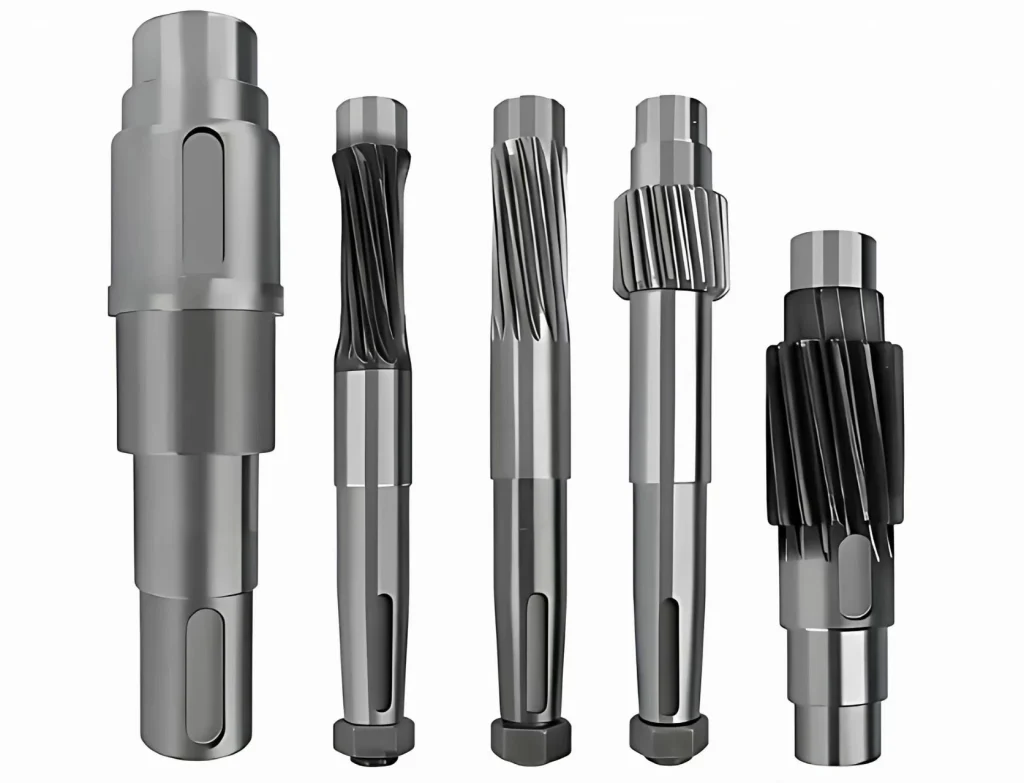
What Is CNC Grinding in Precision Manufacturing?
Precision CNC grinding in China uses rotating abrasive wheels to achieve tight tolerances and ultra-fine finishes on high-performance mechanical components.
A CNC (Computer Numerical Control) system automatically controls movements—including wheel positioning, feed rates, and tool paths—ensuring every operation follows an exact, repeatable pattern. CNC grinding for automotive shafts in China and other critical components excels with hardened materials like steel or ceramics, where traditional tools wear rapidly. Its combination of automation, high-precision CNC machining, and digital control ensures consistent quality, even for complex geometries or high-volume production in modern CNC machiningfacilities in China.
Related processes: CNC Millingand CNC machining services in China complement CNC grinding in advanced production environments, enabling engineers to select the optimal method for each component.
What Is a CNC Grinding Machine and What Role Does It Play?
CNC grinding machines in China actively shape, sharpen, and finish workpieces using controlled abrasive removal, improving dimensional accuracy and surface quality. Manufacturers rely on these machines to meet strict tolerances in high-performance applications across aerospace, automotive, energy, and medical industries. With advanced manufacturing technology, China’s CNC grinding solutions support high-volume production while delivering cost-effective, precise, and reliable results for international manufacturers.
What Types of CNC Grinding Machines Are Used for Precision Parts?
CNC grinding providers in China and worldwide choose methods by geometry, material, and finish to produce precision components.
| Grinding Method | Workpiece Feature | Typical Applications | Key Advantage |
| OD Grinding | External surface | Shafts, rollers, cylindrical parts | Precise diameters, smooth finishes, ideal for CNC grinding for automotive shafts |
| ID Grinding | Internal surface | Bushings, bearing races, sleeves | High internal tolerance accuracy |
| Surface Grinding | Flat surfaces | Reference planes, tool plates, parts requiring flatness | Tight thickness & flatness tolerances |
| Centerless Grinding | Cylindrical parts without centers | Pins, rods, shafts, bearings | Continuous high-volume production |
| Vertical Grinding | Large/heavy components | Face surfaces, ID/OD features | Gravity-assisted stability, multi-process capability |
| Jig Grinding | Precision holes, complex contours | Tool & die, molds | Micron-level accuracy for intricate geometries |
| Universal Internal Grinding | Various internal geometries | Precision sleeves, bushings, hollow components | Flexible internal machining in one setup |
| Specialised Grinding | Specific profiles | Gears, threads | Extreme precision for high-performance components |
| Hybrid Grinding Approaches | Complex geometries | EDM + grinding applications | Reduced setup time, integrated machining |
How Does the CNC Grinding Process Work?
Understanding the CNC Grinding Process for Precision Manufacturing
The CNC grinding process combines abrasive grinding wheels with advanced computer automation to achieve tight tolerances and superior surface finishes. This process is widely used in CNC grinding services in China and global manufacturing operations.
Programming
Engineers use CAD/CAM software to create a digital blueprint. The software defines the grinding path, tool movements, feed rates, and other critical parameters, ensuring accuracy and repeatability. This step is essential for high-precision CNC machining and CNC grinding manufacturing in China.
Setup
The workpiece is clamped, and the grinding wheel is mounted, balanced, and aligned. Proper setup keeps CNC grinding machines in China stable and prevents errors for automotive and industrial components.
Grinding Operation
The wheel rotates at high speeds, gradually removing small amounts of material for ultra-fine tolerances. CNC grinding for automotive shafts in China ensures precise dimensions, surface smoothness, and durability.
Precision & Control
Modern CNC grinders have sensors monitoring force, wheel wear, and part alignment in real time. These systems automatically adjust wheel movement and feed rates, providing consistent results for precision CNC grinding services in China.
Finishing
The result is a component with precise geometry, smooth surfaces, and minimal post-processing. CNC grinding machines in China and globally ensure parts meet industry-critical standards for automotive, energy, and industrial machinery.
Core Components of a CNC Grinding Machine
Most CNC grinding machines include key components that ensure precise, repeatable, and high-quality finishes. Understanding these parts helps engineers and manufacturers optimize grinding operations for maximum efficiency and accuracy.
Grinding Wheel
The grinding wheel is the primary cutting tool, made from abrasive materials like aluminium oxide, silicon carbide, or diamond. Rotating at high speeds, it removes material in microscopic increments. Choosing the right wheel ensures precise finish, tight tolerances, and material compatibility for CNC grinding automotive shafts and precision components.
Splash Guard
Surrounds the work area to contain coolant and debris, keeping the workspace clean and enhancing operator safety.
Column
Supports the spindle and grinding wheel assembly, providing vertical movement (Z-axis). A rigid column reduces vibrations and ensures stable contact between the wheel and workpiece.
Coolant Nozzle & Coolant Tank
Delivers coolant to the grinding zone, minimizing heat, preventing surface damage, and flushing away chips.
X-, Y-, and Z-Axis Handwheels & Saddle
Manual adjustments allow precise positioning along each axis.
Electrical Cabinet & Controls
Houses electronics and drives, enabling high-precision CNC machining.
Grinding Wheel & Coolant Controls
Adjust wheel speed, feed rates, and coolant flow for different materials and surface finishes.
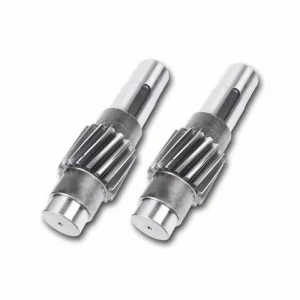
Key Features and Benefits of CNC Vertical Grinding Machines
| Feature | Benefit |
| Gravity-Assisted Stability | Heavy components supported naturally |
| Multi-Process Capability | ID, OD, face grinding in one setup |
| Space Efficiency | Requires less floor space than horizontal grinders |
| Precision Spindles | Maintains roundness and surface finish |
| Intuitive CNC Control | Simplifies setup, reduces operator training |
| Customization | Adaptable spindle speed, Z-axis travel, automation |
What Materials Can Be Processed with CNC Grinding?
CNC grinding stands out for its versatility in machining a wide range of challenging materials. This capability is widely used in China CNC grinding services and precision manufacturing worldwide.
Precision CNC grinding in China machines metals, ceramics, plastics, composites, and precious metals efficiently, delivering smooth finishes, exact dimensions, and minimal waste.
| Material Type | Examples | Typical Applications | CNC Grinding Advantage |
| Metals | Hardened steel, stainless steel, titanium alloys, aluminium, superalloys (Inconel) | Aerospace, automotive, energy systems | High durability, tight tolerances, excellent surface finish |
| Ceramics | Alumina, zirconia, silicon carbide | Aerospace, semiconductors, biomedical | Precision cuts without cracking, smooth surfaces |
| Plastics | PEEK, PTFE, acrylics | Medical devices, electronics, precision components | Accurate shaping, prevents heat-induced deformation |
| Composites | Carbon fibre, fiberglass | Aerospace, automotive | Clean, precise edges without fraying, lightweight and strong |
| Precious Metals | Gold, silver, platinum | Electronics, medical devices, luxury items | High precision machining, minimal material waste |
Which Industries Rely on CNC Grinding for Precision Parts?
CNC grinding serves industries requiring tight tolerances and flawless finishes. In automotive and motor manufacturing, it grinds gears, shafts, camshafts, bearings, brakes, rotors, and stators with precision, ensuring smooth surfaces, low friction, and long service life.
In tool, die, electronics, and medical manufacturing, it produces punches, molds, dies, micro components, wafers, connectors, surgical tools, and implants with micron-level accuracy.
Defense and military sectors rely on CNC grinding for mission-critical components, while the energy industry uses it to enhance durability and reliability of wind turbine shafts, power plant equipment, and nuclear parts.
Precision engineering, robotics, custom machinery, and one-off designs also leverage CNC grinding for accuracy, flexibility, and repeatable performance.
Wherever precise parts are needed, CNC grinding delivers consistent, reliable, and high-quality surfaces, making it a cornerstone of modern manufacturing.
What Industries Use CNC Vertical Grinding Machines?
CNC vertical grinding machines play a critical role in industries where large circular components require high accuracy. Many vertical CNC grinding machines in China are designed for heavy-duty industrial applications.
Key Industries and Components
- Aerospace: Components such as turbine rings, bearing housings, and engine casesrely on CNC grinding for precision, durability, and flawless surface finishes.
- Automotive: Brake discs, clutch components, and drive shaftsare machined with CNC grinding to achieve smooth finishes, reliable performance, and extended service life.
- Energy: Wind turbine hubs, generator housings, and valve partsbenefit from CNC grinding’s ability to deliver high strength, tight tolerances, and long-lasting performance.
- Heavy Machinery: Molds, dies, bearing rings, and machine framesare finished with CNC grinding for dimensional accuracy, surface smoothness, and repeatable quality.
By applying CNC grinding in these industries, manufacturers can ensure consistent precision, enhanced durability, and optimal performance, making it a cornerstone for producing high-performance components across multiple sectors.
What Are the Advantages and Effectiveness of CNC Grinding?
CNC grinding drives modern manufacturing and serves precision factories in China and engineering industries worldwide.
Chinese CNC grinding services achieve micron-level tolerances for high-performance parts like automotive shafts, industrial molds, and precision components.
Automation-ready CNC grinders in China use loaders, tool changers, and real-time monitoring to ensure stable quality and continuous production.
| Feature | Benefits | Applications |
| Extreme Accuracy | Micron-level tolerances, reliable performance | Aerospace, medical devices, automotive parts |
| Repeatability | Identical parts, reduced waste, predictable production | High-volume manufacturing, precision engineering |
| Versatility | Multiple operations in one setup, time-saving, fewer errors | OD/ID/Face grinding, molds, dies |
| Automation-Ready | Loader/tool changer integration, real-time feedback, continuous operation | Mass production, high-throughput manufacturing |
| Surface Finish | Burr-free, polished surfaces, enhanced durability and aesthetics | Medical implants, marine components |
| Hard Material Capability | Machines hardened steels, ceramics, exotic alloys | High-performance components, dies, molds |
| Tool Sharpening & Cost Savings | Extends tool life, reduces labor/material costs | End mills, drills, lathe tools |
| Mass Production Consistency | Identical parts at high speed, reduced defects | Camshafts, crankshafts, transmission parts |
By integrating precision, automation, and versatility, CNC grinding machines are indispensable in modern manufacturing, enabling consistent, cost-effective, and high-quality production across diverse industries.
What Design and Operational Tips Improve CNC Grinding Results?
To achieve the best results with CNC grinding, following best practices is essential for manufacturers using CNC grinding machines in China or other advanced machining environments.
These guidelines improve efficiency, reduce manufacturing costs, and ensure high-quality precision parts produced by professional CNC machining suppliers in China.
Design for Manufacturability
Simplify part geometries whenever possible. Avoid unnecessary complexity, as simpler designs reduce grinding time, minimize errors, and improve repeatability.
Specify Appropriate Tolerances
Set tolerances only as tight as necessary. Overly strict tolerances increase production time and tool wear without adding value, whereas realistic tolerances maintain efficiency and accuracy.
Communicate Surface Finish Requirements
Clearly define surface finish expectations before production. This prevents rework, ensures component performance, and supports consistent quality across large production runs.
Optimize Workholding
Secure and stable setups are critical. Proper workholding reduces vibration, prevents errors, and allows grinding machines to achieve precise, repeatable results.
Choose the Right Tool or Grinding Wheel
Select abrasives tailored to the material. Using the correct grinding wheel enhances cutting efficiency, extends tool life, and produces superior surface finishes.
Integrate with CAD/CAM Workflows
Ensure that your CNC grinding system works seamlessly with CAD/CAM software. Proper system integration streamlines programming, reduces setup time, and supports automated, high-precision production.
How Are Automotive Motor Shafts Manufactured with CNC Machining?
CNC Machining of Automotive Motor Shafts
Motor shafts are essential drivetrain components in modern vehicles, responsible for transmitting torque and rotation under dynamic load conditions. To perform reliably, these shafts must exhibit exceptional roundness, straightness, surface integrity, and fatigue strength.
By utilizing CNC turning and CNC grinding, combined with advanced heat treatment processes, manufacturers can produce motor shafts that meet the stringent demands of automotive applications. These processes enhance durability, wear resistance, and dimensional accuracy, ensuring consistent performance in electric motors, internal combustion engines, and transmission systems.
Machining 1040 medium-carbon steel produces precision motor shafts with required hardness, straightness, and fatigue strength, ideal for high-performance vehicles and demanding conditions.
Why 1040 Steel Is Chosen for Automotive Shaft Components
1040 steel provides an excellent balance of strength and machinability, making it ideal for high-performance components like motor shafts. With a tensile strength of ~620 MPa, 1040 steel responds well to heat treatment, improving surface hardness, toughness, and fatigue resistance while remaining machinable for precise shafts. Its uniform microstructure and carbon content suit induction or flame hardening. After hardening, 1040 steel maintains dimensional stability, enabling tight-tolerance CNC grinding of bearing journals, press-fit zones, and spline interfaces, ensuring reliable, durable performance in automotive and industrial applications.
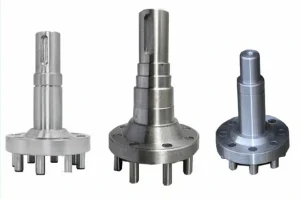
How Does CNC Turning and Grinding Produce Precision Motor Shafts?
CNC turning shapes shaft profiles, forming journals, keyways, chamfers, and threads with high precision. High-rigidity lathes achieve ±0.01 mm diameter tolerance, 0.02 mm concentricity, and Ra 1.6–3.2 µm surface finish before grinding. After heat treatment, CNC grinding refines critical surfaces to ±0.005 mm tolerance, Ra ≤ 0.4 µm on bearing zones, and 0.01 mm roundness/straightness along the shaft. These processes ensure vibration-free rotation, low friction, and long-lasting performance for demanding automotive and industrial applications.
Why Is Heat Treatment Important for Motor Shaft Strength?
1040 steel shafts undergo induction hardening to a case depth of 0.8–1.2 mm, achieving surface hardness of HRC 50–55 while retaining core toughness for impact resistance. This process significantly enhances wear resistance in critical sliding and rotational interfaces.Each batch undergoes hardness and distortion checks before CNC grinding, ensuring precise, durable shafts for demanding automotive and industrial applications.
Quality control for precision shafts and components relies on advanced measurement and testing methods. CMMs and dial indicators verify runout, concentricity, and diameters, while calibrated profilometers ensure smooth surface finishes. After heat treatment, Rockwell C hardness tests verify mechanical properties.
Each batch includes COC, material traceability, and heat treatment records, ensuring compliance, reliability, and high performance for automotive, industrial, and precision engineering applications.
What CNC Services Are Used for Automotive Motor Shaft Manufacturing?
Precision motor shaft manufacturing demands high accuracy, strength, and durability, and modern CNC solutions deliver exactly that. By combining CNC turning and CNC grinding, manufacturers achieve exceptional straightness, balance, and dimensional control for rotating shafts. Using 1040 steel CNC machining, shafts are optimized for hardness, toughness, and precise tolerances, while in-house heat treatment ensures reliable hardening without distortion. Together, these processes provide scalable, high-quality production of precision motor shafts, meeting the stringent requirements of automotive and industrial applications.
Why Choose welleshaft for CNC Machined Motor Shafts?
Welleshaft in China specializes in CNC machining and CNC grinding services in China for carbon steel shafts and precision components used in high-performance mechanical systems.
By combining heat treatment with advanced grinding services, Welleshaft CNC grinding solutions in China ensure wear resistance, tight tolerances, and smooth surface finishes across materials like hardened steels, superalloys, aluminium, and specialty alloys.
Whether you need one-off prototypes, small batches, or high-volume production, our China CNC machining and grinding services deliver consistent accuracy, reliable repeatability, and cost-efficient scalability.
FAQ
What is the purpose of grinding in manufacturing?
Grinding is used to achieve precision, ensuring tight tolerances and accurate dimensions for components that fit perfectly within assemblies. It also enhances surface finish, producing smooth and polished surfaces for both functionality and aesthetics, while efficiently removing material to reduce waste and manufacturing costs..
How does CNC grinding differ from CNC milling?
While CNC milling removes larger amounts of material for shaping and feature creation, CNC grinding relies on abrasive grinding wheels to deliver micron-level accuracy, ultra-smooth finishes, and tight tolerances, especially on hardened materials or difficult-to-machine surfaces.
What materials can CNC grinding handle?
CNC grinding works with a wide range of materials including hardened steels, superalloys, aluminium, ceramics, plastics, composites, and precious metals, making it suitable for demanding industries like aerospace, automotive, medical devices, energy, mold & die, and heavy machinery.
Can CNC vertical grinding perform multiple operations in one setup?
Yes, many vertical grinders support ID, OD, and face grinding in a single clamping. Their design stabilizes heavy circular workpieces, saves floor space, and delivers high-tolerance, precision-critical results.
What are the benefits of CNC grinding?
The main advantages include extreme precision, consistent repeatability, improved surface finish, versatility in material handling, and the ability to integrate with other processes like milling, laser cutting, and fabrication for end-to-end manufacturing solutions.
This blog was written by the Welleshaft Engineering Team and technically reviewed by Mr. Xu, a specialist in CNC machining and precision grinding. Welleshaft provides high-precision CNC machining and grinding services in China for automotive, industrial, and precision engineering components.

 English (UK)
  English
  Português do Brasil
  Deutsch (Österreich)
  Deutsch (Schweiz)
  English (Australia)
  English (New Zealand)
  Deutsch
  Français du Canada
  Français
  Français de Belgique
  Italiano
  English (South Africa)
  Português
  Español
  Español de México
  Español de Perú
  Español de Colombia
  العربية
  日本語
日本語  Русский
  한국어
한국어  Tiếng Việt
  ไทย
ไทย