
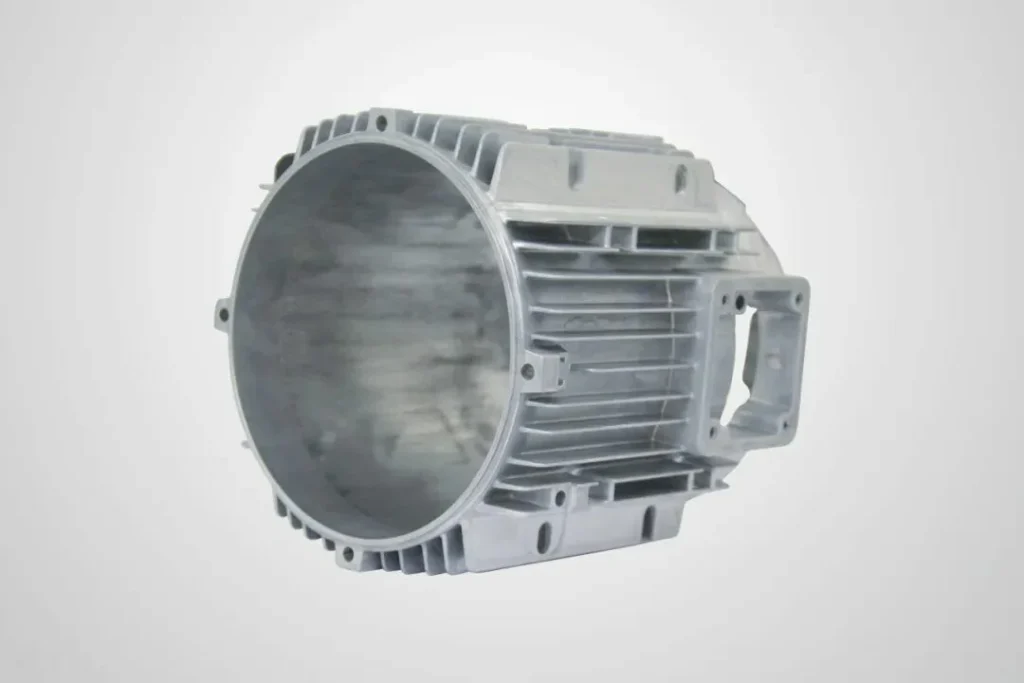
Aluminum Motor Housing for Motion Control: Custom Manufacturing Solutions
What is a Motor Housing?
A motor housing is the external enclosure of an electric motor, designed to protect key components such as the rotor, stator, bearings, windings, and commutator while maintaining precise alignment for optimal performance.An Aluminum Motor Housing for Vehicle & Motion Control further enhances efficiency by offering lightweight strength and superior heat dissipation, making it ideal for automotive and precision motion applications.
A high-quality motor housing delivers several critical benefits:
- Precision Tolerance:Maintains exact alignment of internal components for consistent operation.
- Durability:Resists vibration, mechanical stress, and temperature fluctuations to prolong motor life.
- Sealing Performance:Prevents oil leakage and shields components from dust or contaminants.
- Smooth Surface Finish:Minimizes internal friction, reducing wear and boosting efficiency.
Common materials for motor housing include aluminum and steel, prized for their strength-to-weight ratio, corrosion resistance, and excellent thermal conductivity. Choosing the right material and design can enhance energy efficiency, reduce maintenance costs, and extend overall motor lifespan, making it a critical investment for manufacturers and system integrators.
Why Aluminum for Motor Housings?
When selecting materials for motor housings, aluminum stands out for its balance of performance, durability, and cost-efficiency. An Aluminum Motor Housing for Vehicle & Motion Control is widely preferred in EVs, industrial equipment, and advanced machinery.
Its lightweight structure improves energy efficiency and design flexibility without compromising strength. At the same time, high thermal conductivity allows it to act as an effective heat sink, protecting internal components and maintaining stable operating temperatures.
Aluminum also forms a natural oxide layer that resists corrosion, reducing maintenance costs and ensuring long-term reliability even in harsh environments.
Furthermore, aluminum offers unmatched manufacturing versatility. Custom aluminum die casting allows for intricate parts with tight tolerances and integrated features, while custom-machined aluminum components provide precision solutions for highly specialized applications.
Finally, aluminum is a sustainable and recyclable material, supporting eco-friendly manufacturing practices. Its recyclability ensures that high-performance aluminum motor housings can be reused indefinitely without losing their inherent properties, aligning with global sustainability goals.
By leveraging the advantages of aluminum, companies can develop high-performance, durable, and efficient motors tailored to their specific needs—while simultaneously optimizing costs, enhancing design flexibility, and supporting sustainable production.
What Are the Key Advantages of Aluminum Motor Housings for High-Performance Motors?
- Lightweight:By reducing the overall weight of the motor or vehicle, aluminum motor housings enhance fuel efficiency and increase battery range for electric vehicles, while maintaining structural integrity.
- Thermal Conductivity:Aluminum efficiently dissipates heat generated by the motor, acting as a natural heat sink that keeps internal components at optimal operating temperatures.
- Corrosion Resistance:Its natural protective oxide layer prevents rust and chemical damage, ensuring longer lifespan even in harsh or demanding environments, and reducing maintenance costs.
- Machinability:Aluminum motor housings are CNC-machinable and can be custom die-cast for intricate geometries, providing flexible solutions for specialized applications.
- Strength-to-Weight Ratio:Aluminum delivers excellent structural strength without adding heavy mass, allowing designers to maximize performance while keeping weight low.
How Do Functional and Structural Requirements Influence Aluminum Motor Housing Design?
Designing High-Performance Aluminum Motor Housings
Designing a motor housing requires balancing functional demands with structural constraints. A high-quality Aluminum Motor Housing for Vehicle & Motion Control not only protects internal components but also ensures precise alignment, efficient heat dissipation, and, when required, electromagnetic shielding.
Understanding these critical design factors is essential to achieving reliable, efficient motor performance.
Core Functions
Mechanical Protection: A motor housing must withstand impacts, vibrations, and external loads without deforming. For example, in electric vehicle traction motors, lateral forces during cornering can exceed 2 kN. Maintaining rigidity ensures that the rotor, stator, and bearings stay perfectly aligned, preventing performance loss or component failure.
Alignment & Sealing: The precise air gap between rotor and stator—often just 0.1–0.3 mm—directly affects torque ripple and efficiency. Meanwhile, housing surfaces must seal against contaminants and retain lubricants under pressures up to 5 bar. Achieving this requires tight machining tolerances of ±0.02 mm on sealing faces, ensuring consistent performance.
Thermal Management: Effective heat dissipation keeps winding temperatures below 120 °C, protecting insulation systems and extending motor life. Integrated fins or cooling channels can increase surface area by up to 50%, lowering thermal resistance to 0.1 K/W and maximizing aluminum motor housing efficiency.
Electrical & Magnetic Considerations: While steel housings often require insulation layers or non-magnetic inserts to reduce eddy-current losses, aluminum housings naturally avoid these issues. However, conductive gaskets may be added to meet electromagnetic compatibility (EMC) standards.
Design Challenges
Balancing Strength and Weight: Engineers must carefully select between aluminum (2.7 g/cm³) and steel (7.85 g/cm³) based on application needs. Switching from a 10 kg steel housing to aluminum can reduce mass by 65%, improving system efficiency, while steel’s higher stiffness (210 GPa vs. 70 GPa) better resists deformation in heavy-duty settings.
Thermal Expansion: Metals expand under heat, with aluminum expanding at 23 × 10⁻⁶/K versus steel at 12 × 10⁻⁶/K. Without compensation, a 100 mm bore can shift by 0.2 mm across a 100 °C temperature rise, potentially disrupting the rotor-stator air gap.
Vibration and Resonance: Motors operating at speeds up to 15,000 rpm generate vibrations near 250 Hz. To avoid resonance, housing natural frequencies must exceed 1,500 Hz, achieved through optimized wall thickness and ribbing patterns.
Engineering Best Practices
To ensure precision, engineers apply GD&T principles to critical features:
- Concentricityof the stator bore relative to the outer flange, typically within 0.01 mm
- Flatnessof mounting surfaces held to 0.02 mm, ensuring uniform sealing and smooth assembly
Additionally, finite element analysis (FEA) guides rib placement and wall thickness, allowing custom motor housings to meet both static and dynamic load requirements without unnecessary material or weight.
By integrating these functional and structural considerations from the design stage, aluminum motor housings reliably deliver the precision, durability, and efficiency that modern industrial, automotive, and robotics applications demand.
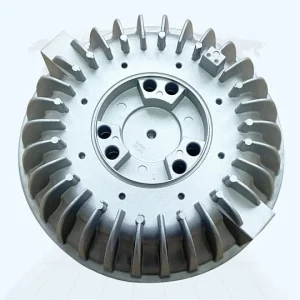
Components of Motor Housing Parts
A motor housing is more than just an external shell; it integrates multiple mechanical and thermal features to meet modern performance demands. High-quality aluminum motor housings combine precision engineering with tailored design to optimize efficiency, reliability, and longevity.
- Outer Shell:Serves as the primary enclosure, protecting the motor assembly from mechanical impacts, dust, and contaminants.
- Cooling Fins:Integrated fins enhance heat dissipation by increasing surface area, keeping internal components at optimal operating temperatures for improved performance and longer lifespan.
- Mounting Flanges:Allow the motor housing to be securely attached to machinery or vehicles, ensuring stable operation under dynamic loads.
- Bearing Seats:Precisely machined areas that support bearings, enabling smooth rotational motion and reducing wear over time.
- Connector Ports:Provide dedicated openings for power and control connections, ensuring easy integration into electrical systems.
- Custom Aluminum Components:Every part of the motor housing assembly is engineered to tight tolerances, offering high-performance solutions for vehicles, industrial motors, and motion control systems.
By combining these features, aluminum motor housings not only protect and support internal components but also enhance thermal management, structural integrity, and overall system efficiency, making them a critical choice for manufacturers seeking reliable and high-performance motors.
Material Selection Strategy
Selecting the right material for a motor housing impacts performance, heat dissipation, and cost. Compared with steel or plastics, aluminum offers lightweight strength, high thermal conductivity, and corrosion resistance.
An Aluminum Motor Housing for Vehicle & Motion Control reduces weight (2.7 g/cm³), improves energy efficiency and EV range, and functions as a natural heat sink for stable operation. Its self-forming oxide layer enhances corrosion protection, while die casting and CNC machining enable complex designs with tight tolerances.
Although steels like LCC and Stainless Steel 304 provide high stiffness and EMI shielding, their higher density (7.85–8.0 g/cm³) and lower thermal conductivity can limit efficiency where weight and heat management are critical.
| Material | Density (g/cm³) | Tensile Strength (MPa) | Thermal Conductivity (W/m·K) | Typical Cost ($/kg) | Machinability | Corrosion Resistance | EMI Shielding | Key Benefit |
| A380 Aluminum Die-Cast | 2.70 | 280 | 120 | 2.50 | Excellent | Moderate | None | Fast casting, fine surface finish |
| 6061-T6 Aluminum Wrought | 2.70 | 310 | 167 | 3.50 | Excellent | High (anodized) | None | Superior machinability and corrosion resistance |
| Low-Carbon Cast Steel (LCC) | 7.85 | 420 | 60 | 1.80 | Good | Low (coated) | Excellent | High stiffness, vibration damping |
| Stainless Steel 304 | 8.00 | 515 | 16 | 2.70 | Moderate | Excellent | Excellent | Corrosion resistant, natural EMI shielding |
For optimal performance, a custom Aluminum Motor Housing for Vehicle & Motion Control must deliver high precision, reliable sealing, and smooth wear-resistant surfaces.
Tight tolerances (e.g., ±0.02 mm for stator bores, ±0.03 mm for bearing seats) ensure stable air gaps, smooth rotation, and improved efficiency by 3–5%. Airtight sealing, verified through pressure-decay and helium tests, protects internal components and extends bearing life by over 20%. Meanwhile, smooth internal finishes (Ra ≤ 0.8 μm) reduce friction and help maintain long-term torque stability.
By choosing aluminum motor housings, manufacturers and system designers can maximize efficiency, reduce energy consumption, and ensure long-term reliability while benefiting from sustainable, recyclable materials and flexible manufacturing solutions.
Surface Treatment & Corrosion Protection
Ensuring long-term durability and environmental resilience requires more than precision machining—it demands advanced surface treatments. For an Aluminum Motor Housing for Vehicle & Motion Control, tailored coatings enhance corrosion resistance, reduce wear, and improve thermal and electrical performance.
Proper surface protection extends service life, lowers maintenance costs, and ensures stable, high-efficiency operation in demanding environments.
Powder Coating
Powder coating creates a uniform, durable barrier against moisture, chemicals, and UV exposure:
- Typical Thickness:80–120 µm
- Salt Spray Resistance:1,000+ hours (ASTM B117)
- Adhesion Rating:5B (ISO 2409 cross-hatch test)
Additionally, powder coatings offer an attractive, low-VOC finish and withstand temperatures up to 150 °C. In electric motors, they prevent corrosion in humid or saline environments, extending aluminum or steel motor housing service life by up to 30% compared to uncoated parts.
Anodizing (For Aluminum Housings)
Hard anodizing enhances aluminum surface hardness and corrosion resistance while providing electrical insulation:
- Film Thickness:15–25 µm (Type III hard anodize)
- Hardness:300–400 HV
- Corrosion Test:500+ hours salt spray (ASTM B117)
The anodic layer also isolates the housing from electronics (breakdown voltage >100 V/µm), supporting motors that require electrical protection.
Electroplating (For Steel Housings)
Steel housings benefit from zinc-nickel or epoxy electroplating, combining corrosion protection with EMI shielding where necessary:
- Zinc-Nickel Coating:8–12 µm thick; 600+ hours salt spray
- Epoxy Powder Coat:100–150 µm; 1,500+ hours salt spray
- EMI Shielding Paints:>90 dB attenuation at 1 GHz
These treatments enable steel motor housings to withstand harsh marine or industrial environments while maintaining electromagnetic compatibility.
Functional Coatings
Beyond basic protection, functional coatings add specialized capabilities to motor housings:
- Thermal Barrier Ceramics:2–0.5 mm films reduce heat flux by up to 40%, prolonging winding life
- EMI/RFI Shielding Layers:Conductive polymers attenuate >80 dB across 10 kHz–1 GHz
- Chemical-Resistant Liners:Fluoropolymer sprays resist acids and bases (pH 1–13) up to 80 °C
- Friction-Reducing Coatings (PTFE):Lower static friction to <0.1, improving rotor startup and reducing energy loss
Process Integration & Quality Assurance
High-performance motor housings achieve reliable coating results through a controlled workflow:
- Pre-treatment:Degreasing, grit blasting (aluminum) or phosphating (steel) to ISO 8501-1 Sa 2.5 surface profile
- Coating Application:Automated spray or dip processes with inline thickness monitoring (±5 µm)
- Curing & Sealing:Optimized bake cycles (150–200 °C for powder, 120 °C for epoxy) and seal baths for anodized parts
- Final Testing:Salt spray (ASTM B117), humidity chambers (ISO 6270), adhesion, and dielectric tests
By integrating these surface treatments into a structured quality system, aluminum and steel motor housings consistently meet or exceed durability, appearance, and functional performance standards, delivering reliable, long-lasting solutions for electric vehicles, industrial motors, and robotics applications.
What Manufacturing Processes and Capabilities Are Essential for Aluminum Motor Housings?
Custom Aluminum Die Casting
The custom aluminum die casting method enables efficient, high-precision production of complex motor housing components. It is ideal for creating durable, reliable Aluminum Motor Housing for Vehicle & Motion Control used in vehicles, industrial equipment, and robotics.
The process starts with precision steel molds that define all critical dimensions, surface finishes, and complex geometries. Molten aluminum alloy is then injected under high pressure, filling every cavity to capture fine details while enhancing density and strength for superior motor performance.
After solidification, the mold opens to release the freshly cast aluminum motor housing, which then undergoes CNC machining and finishing processes such as trimming, surface correction, and, if required, custom machining of aluminum parts. These steps achieve tight tolerances and precise dimensions essential for high-performance applications.
By integrating value-added services such as CNC machining, painting, and powder coating into the workflow, manufacturers can manage the entire production chain, from initial design to final assembly. This system improves efficiency while maintaining the highest quality standards, ensuring consistent performance across every batch.
Additionally, the use of reusable die molds allows manufacturers to reproduce thousands of units, guaranteeing high-speed production, precise results, and efficient material utilization. This makes custom aluminum die casting ideal for modern industrial and automotive requirements, delivering robust, lightweight, and durable motor housings that meet the evolving demands of today’s high-performance motors.
Integrated Casting, Machining & Finishing
Integrating casting, machining, and finishing into a single workflow ensures a seamless production pipeline for Aluminum Motor Housing for Vehicle & Motion Control used in robotics and automation. Consolidating all processes under one roof guarantees precise dimensions, tight tolerances, and high-quality finishes, meeting the strict standards of advanced motion control systems.
Advanced Machining Capabilities
To achieve exceptional precision, modern facilities utilize a variety of high-speed CNC machining centers, including:
- Horizontal Machining Centers:8 × DMG Mori NH6300, 7 × DMG Mori NHX6300, 7 × OKK 800, plus 5 × 400–500 mm HMCs
- CNC Turning Center:For complex rotational parts
- High-Speed Vertical Machining Centers:14 units for detailed features
- 6-Axis Robotic Loading:Automates part handling across multiple machining centers
These capabilities allow manufacturers to maintain consistent precision across both small and large components, supporting low-volume prototypes as well as high-volume production—from 300 to 600,000 units per year.
Finishing Options for Performance and Aesthetics
Post-machining finishing treatments ensure each aluminum motor housing meets functional and visual standards:
- Anodizing:Enhances corrosion resistance and surface hardness
- Powder Coating:Provides durable, uniform protective layers for industrial environments
- Pad Printing:Adds branding or functional markings for visible automation equipment
By combining high-precision machining with custom finishing, manufacturers deliver robust, visually consistent, and high-performance motor housings that align with both technical and aesthetic requirements. This integrated approach not only reduces lead times but also enhances product reliability, making it ideal for demanding robotics and automation applications.
The Rise of Custom-Machined Aluminum Parts
After initial custom aluminum die casting, manufacturers use precision finishing to create high-performance Aluminum Motor Housing for Vehicle & Motion Control components. Combining die casting with CNC machining improves accuracy, reliability, and mechanical performance, meeting the strict demands of modern motors.
CNC machining fine-tunes critical features that casting alone cannot achieve, ensuring functional dimensions and surface quality meet exact specifications. Key enhancements include:
- Bearing Pockets:Precisely machined to exact dimensions, ensuring perfect bearing fit, smooth motor rotation, and reduced wear.
- Mounting Holes:Correct placement and dimensions provide secure housing attachment and prevent failures caused by misalignment or vibration.
- Connector Slots:Complex geometries for mechanical and electrical connections are achievable through specialized machining processes.
- Surface Flatness:Critical areas are finished to flat, smooth surfaces, enhancing sealing performance and overall motor quality.
By integrating custom machining into castings, manufacturers achieve tighter tolerances, improved surface finish, and superior mechanical precision. This allows aluminum motor housings to deliver consistent performance in harsh environments, exceeding typical industry standards.
For example, in vehicle motors, these custom machined aluminum parts ensure components withstand demanding operational conditions while maintaining reliability and efficiency. This approach enables innovative designs to transform into fully functional, high-performance motor housings that satisfy both technical and commercial requirements.
Importance of Mold Housing
Successful die-casting operations rely on a carefully engineered mold housing, which forms the foundation for producing high-quality aluminum motor housings. The mold not only defines the final component shape but also establishes all critical performance and cosmetic standards for modern motors.
Key considerations in mold design include:
- Meticulous Mold Design:Every mold must be engineered with precision to eliminate production defects and ensure consistent quality.
- Structural Integrity:The mold housing must withstand repeated high-pressure aluminum injections without deformation, maintaining dimensional accuracy throughout production.
- Custom Designs for Each Project:Each manufacturing run requires specialized molds tailored to the unique specifications of the motor housing, accommodating complex geometries and functional features.
- High-Performance Applications:For electric vehicles and industrial motors, custom mold housing solutions enable the production of aluminum motor housings that meet both strict functional requirements and design expectations, ensuring durability, reliability, and precision.
By investing in precision mold housing, manufacturers can optimize die-casting efficiency, reduce defects, and deliver high-performance aluminum motor housings that satisfy the most demanding applications in vehicle, robotics, and industrial motor markets.
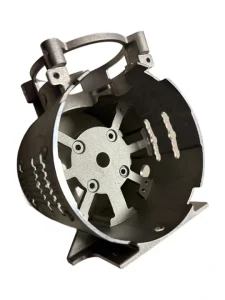
Selecting Manufacturing Processes by Application
Choosing the right manufacturing process for motor housings depends on production volume, part complexity, tolerance requirements, and cost targets. By understanding the strengths of each method, manufacturers can optimize efficiency, quality, and cost-effectiveness. Below, we explore five core methods and provide key data to guide your selection.
Die Casting
For high-volume, geometrically complex aluminum housings requiring tight tolerances, die casting delivers unmatched speed and precision:
- Annual volumes:10,000 to over 1 million parts
- Cycle time:15–30 seconds per shot
- Dimensional accuracy:±0.05 mm on non-critical features; ±0.1 mm on thin walls
- Surface finish:As-cast Ra 1.6–3.2 μm, ready for minimal post-machining
- Typical wall thickness:5–5 mm for optimal fill and cooling
This process ensures consistent high-quality production, making it ideal for automotive, industrial, and high-performance electric motors.
Low-Pressure & Permanent Mold Casting
For mid-volume production where mechanical integrity and low porosity are critical, low-pressure and permanent mold casting offer a reliable solution:
- Annual volumes:2,000–50,000 parts
- Filling pressure:05–0.1 MPa, reducing trapped gas by up to 50% versus gravity casting
- Tolerances:±0.05–0.1 mm on critical bores and walls
- Fatigue life:Up to 30% longer than sand-cast parts
These methods yield denser, stronger housings, perfect for industrial servo motors and medium-duty pump drives.
Sand Casting & Lost Foam Casting
When design flexibility or large, irregular geometries dominate, sand and lost foam casting provide cost-effective solutions:
- Tooling costs:$2,000–$5,000 per mold, versus $50,000+ for permanent tooling
- Annual volumes:10–5,000 units
- Dimensional accuracy:±0.3 mm typical; as fine as ±0.1 mm with resin-bonded sand
- Surface finish:Ra 3.2–6.3 μm for green sand; Ra 1.6–3.2 μm for lost foam
These processes are ideal for prototyping and large-frame motor housings, balancing design freedom with manageable costs.
Sheet Metal Forming & Deep Drawing
For thin-walled, lightweight enclosures, particularly in compact motors, sheet metal forming and deep drawing excel:
- Materials:Stainless steel or aluminum sheets, 0.5–2 mm thick
- Tolerances:±0.1 mm on drawn features; ±0.2 mm on bends
- Production rate:30–60 parts/hour per press
- Surface finish:Ra 0.8–1.6 μm after trimming
These methods are cost-effective, repeatable, and precise, making them ideal for servo drives, small appliance motors, and electric vehicle components.
Aluminum Extrusion
When your design requires uniform cross-sections and integrated cooling channels, aluminum extrusion provides a unique advantage:
- Length capability:Profiles up to 6 meters long
- Tolerances:±0.02 mm on critical dimensions; ±0.1 mm on overall length
- Thermal performance:Extruded fins increase surface area by 40–60%, reducing thermal resistance to 0.1 K/W
- Batch sizes:Economical from 100 to 100,000 pieces
High-power motors, such as wind turbine pitch drives or industrial high-performance motors, rely on extruded aluminum housings to maintain consistent thermal paths and structural integrity.
Which Industries Rely on Aluminum Motor Housings and How Are They Applied?
Electric Vehicles (EVs) and Mobility Solutions
Aluminum Motor Housing for Vehicle & Motion Control is essential for EVs, reducing weight to boost battery efficiency and overall performance. Lightweight housings—often under 8 kg—maintain rigidity under high torque loads. Integrated cooling fins or channels can lower peak stator temperatures by up to 30%, while tight tolerances (bore concentricity ±0.02 mm) minimize torque ripple and ensure quiet operation. Custom aluminum die casting enables high-performance housings for traction motors, e-bikes, and scooters.
Industrial Automation & Robotics
In robotics and factory automation, engineers demand compact, high-precision aluminum motor housings capable of withstanding continuous duty cycles and frequent start-stop operations. Low-pressure permanent mold castings and deep-drawn aluminum components deliver fine tolerances (±0.01 mm on critical bores) and leak-proof designs (IP65/IP67), ensuring reliable performance under vibration and high-cycle conditions.
Renewable Energy & Utilities
Motors in wind turbines, solar trackers, and hydroelectric systems operate under harsh outdoor conditions. Aluminum motor housings provide superior corrosion resistance and thermal stability, maintaining air-gap integrity during thermal cycling and exposure to chemicals or brine. Custom housings extend equipment life by 20–30% and reduce maintenance downtime for utility operators.
Marine, Aerospace & Defense Applications
Specialized aluminum, stainless steel, and titanium motor housings meet extreme environmental and performance demands. Marine propulsion systems require saltwater-resistant housings, aerospace actuators rely on lightweight aluminum-lithium or titanium alloys under 5 kg, and defense motors use EMI-shielded housings with conductive coatings or integrated gaskets. Each application demands tailored alloys and processes to achieve regulatory compliance and operational reliability.
Consumer Appliances & HVAC
Aluminum motor housings in HVAC units, home appliances, and power tools combine cost-effectiveness, noise reduction, and aesthetic appeal. Annual volumes range from 50,000 to 200,000 units. Powder-coated finishes with smooth textures (Ra ≤ 1.6 μm) enhance visual appeal while ribbing and internal structures reduce acoustic transmission by 5–10 dB.
How Does Quality Assurance Ensure Precision and Reliability in Aluminum Motor Housings?
Ensuring Precision and Reliability in Automation & Robotics
In automation and robotics, reliability is essential. Every component must perform flawlessly under continuous operation and tight duty cycles. Aluminum motor housings and related parts undergo rigorous testing and inspection protocols to guarantee precision, durability, and system performance.
- Advanced In-House Testing Capabilities
Our comprehensive testing ensures motor housingsand components meet exact specifications:
- Helium Leak Testing– verifies airtight seals for actuators and pneumatic systems.
- Pressure Decay Testing– ensures fluid and air system components remain leak-free.
- X-Ray Testing– detects internal voids, porosity, and structural inconsistencies.
- Vision Inspection Systems– confirm dimensional accuracy and precision alignment.
These procedures maintain tight tolerances, ensuring robotic movement, automation accuracy, and system calibration remain consistent, even under high-load, high-speed cycles.
ISO 9001:2015-Compliant Quality Assurance
We integrate ISO 9001:2015 standardsacross procurement, production, and inspection to safeguard quality and traceability:
- Incoming Material Inspection– spectrographic analysis confirms alloy chemistry within ±0.02% of specifications.
- In-Process Monitoring– real-time logging of pressure and temperature during casting ensures uniform microstructure.
- Final Inspection– includes:
CMM verification for all GD&T callouts.
Radiographic testing (ISO 12537) to detect internal defects.
Surface roughness mapping to maintain Ra thresholds.
Leak and pressure tests on sealed housings.
Full Traceability and Digital Records
Each batch of custom aluminum motor housingsis fully traceable, with digital record-keeping enabling fast root-cause analysisand regulatory compliance. This traceability guarantees confidence for OEMs and system integrators, ensuring components perform consistently in demanding automation and robotics applications.
Case Examples of Precision Motor Housings
- High-Performance Servo Motors: Precision CNC-machined aluminum housingsprovide tight tolerances that enable accurate motion control and consistent performance in demanding automation systems.
- Industrial Pumps: Robust cast and machined motor housingswithstand high temperatures and heavy-duty operation, ensuring reliability and minimal maintenance in industrial environments.
- Automotive Electric Motors: Lightweight die-cast aluminum housingsfeature integrated heat dissipation fins, improving thermal management, efficiency, and overall vehicle performance.
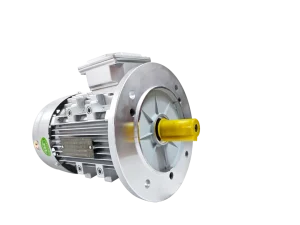
Why Is Choosing the Right Manufacturing Partner Critical for Aluminum Motor Housings?
Advantages of Custom Solutions Over Standard Housings
Tailored Design Integration
In today’s specialized industries, custom motor housing solutions outperform standard alternatives by precisely aligning with specific motor geometries, mounting points, and system interfaces. This tailored approach ensures seamless mechanical and electrical integration:
Exact Fit: Features such as bolt patterns, bearing pockets, and electrical pass-throughs are engineered with micrometer-level accuracy, eliminating secondary adaptations or brackets.
System Compatibility: Custom GD&T specifications guarantee precise alignment of stator bores, air gaps, and rotor axes, improving magnetic efficiency and reducing mechanical wear.
Compact Packaging: Engineers can shrink the motor envelope by up to 20%, ideal for space-constrained applications like robotics, medical devices, or aerospace systems.
In contrast, standard housings often force compromises, leading to inefficient layouts or overstressed components.
Performance Optimization
Custom motor housings unlock higher performance by tailoring materials, geometry, and surface finishes to operational needs:
Thermal Management: Optimized cooling fins or internal channels improve heat dissipation by 25–40%, boosting motor lifespan and stability.
Weight Reduction: Switching to aluminum or magnesium alloys can cut housing weight by up to 60% without sacrificing strength, critical for electric vehicles and aerospace.
Noise & Vibration Control: Custom rib structures and damping features reduce mechanical vibrations by 10–15 dB, resulting in quieter operation.
These enhancements translate into energy savings, longer equipment life, and measurable competitive advantages.
Enhanced Durability and Protection
Custom manufacturing allows targeted protection that extends housing and motor longevity:
Environmental Sealing: Precision machining and tailored gasket grooves support IP65, IP67, or IP69K ratings, safeguarding against water, dust, and chemicals.
Wear Resistance: Critical surfaces can achieve Ra ≤ 0.8 µm and be treated with hard anodizing or ceramic coatings to withstand abrasion.
Corrosion Resistance: Material selection and coatings ensure corrosion rates remain below 0.01 mm/year, even in harsh marine, desert, or arctic environments.
Standard housings rarely deliver this level of protection or service life.
Cost Efficiency Across the Lifecycle
Although custom housings require higher upfront engineering and tooling investment, the total cost of ownership (TCO) often decreases:
Reduced Downtime: Superior heat management and fewer failures cut maintenance needs and operational interruptions.
Lower Assembly Costs: Built-in alignment features reduce assembly time by up to 30%.
Extended Component Lifespan: Improved thermal and structural properties reduce replacement frequency, delivering long-term savings.
For OEMs, these efficiencies compound into significant operational and financial benefits.
Strategic Differentiation and Intellectual Property
Custom-designed motor housings allow companies to stand out and protect proprietary innovations:
Brand Identity: Custom finishes, engravings, or design motifs enhance visual appeal for consumer electronics and premium appliances.
Functional IP: Unique elements like integrated ducts, EMI shielding, or dual-purpose mounting flanges can be patented or kept as trade secrets.
Market Agility: Rapid prototyping enables fast iterations, offering a competitive edge in dynamic sectors like EVs, smart devices, and automation.
By contrast, off-the-shelf housings provide no exclusivity or product-level customization.
Tips for Selecting a Reliable Supplier
Choosing the right manufacturing partner is crucial for producing high-quality Aluminum Motor Housing for Vehicle & Motion Control and custom machined aluminum parts. Success depends on a partner that ensures precision, efficient production, and strict compliance with industry standards. Long-term performance and reliability require careful evaluation of potential partners against these key criteria.
Key Factors to Evaluate:
- Expertise and Experience:Collaborating with an experienced manufacturer of custom aluminum die casting products provides invaluable technical knowledge. The ideal partner understands both the design of aluminum motor housings and the production of all types of high-precision aluminum components. They must also grasp the specific demands of industries such as automotive, aerospace, and industrial machinery.
- Advanced Production Capabilities:Leading manufacturers invest in state-of-the-art equipment, including advanced CNC machining centers and high-precision die casting machines. These tools ensure parts are produced to exact tolerances and high-quality standards, supporting efficient scale-up from prototyping to high-volume manufacturing without compromising quality.
- Quality Assurance:Consistent delivery of superior motor housings requires rigorous quality control throughout the production process. Top-tier partners combine real-time testing, dimensional inspections, X-ray analysis, and thermal simulations to guarantee components meet demanding performance standards.
- Design Flexibility and Functional Adaptation:Modern motor housing production often requires specialized features and added functional elements. The best manufacturers offer custom die casting and precision machining adjustments to accommodate unique designs and varying production scales.
- Sustainable Manufacturing Practices:Environmental responsibility is increasingly critical. Selecting a partner who employs eco-friendly production methods, such as material recycling and energy-efficient processes, reinforces your commitment to sustainable manufacturing.
By thoroughly assessing these factors, OEMs can select a custom die casting manufacturer that not only meets technical specifications and quality standards but also supports long-term business objectives, ensures market competitiveness, and delivers reliable, high-performance aluminum motor housings.
How Does Welleshaft Ensure High-Performance Aluminum Motor Housings for OEMs?
Aluminum motor housings are widely used for their lightweight strength, durability, and thermal performance. At Welleshaft, we provide custom aluminum die casting and precision machining to produce high-quality motor housings with tight tolerances and superior surface finishes.
Our solutions support electric vehicles, industrial equipment, renewable energy systems, and other high-performance applications, ensuring reliability even in demanding environments. By combining advanced materials expertise, modern production technology, and strict quality control, Welleshaft helps OEMs achieve efficient, cost-effective, and long-lasting motor solutions.
FAQ
What is the primary advantage of using aluminum for motor housings?
Aluminum motor housings combine lightweight strength, high moisture resistance, and excellent thermal conductivity, making them ideal for durable and high-performance motors. They reduce overall weight without compromising mechanical endurance or environmental protection, while improving heat dissipation and system efficiency under demanding conditions.
How does custom die casting differ from traditional casting methods?
Custom die casting uses high-pressure injection of molten aluminum to produce precise, high-performance parts with minimal material waste. Unlike traditional casting, it allows tighter dimensional control and smoother surface finishes, ensuring the motor housing meets exact design specifications and performance requirements.
Why is precision machining essential for aluminum motor housings?
While die casting forms the basic shape, precision machining ensures critical features like bearing pockets, mounting holes, and connector slots meet tight tolerances. Machining enhances surface quality, dimensional accuracy, and enables complex geometries, which are essential for optimal motor operation.
What should I look for in a custom die casting manufacturer?
A reliable manufacturer should demonstrate expertise in aluminum die casting, maintain tight tolerance control, and have scalable production capabilities. Modern CNC machining, rigorous testing, and consistent quality assurance ensure that each custom motor housing meets performance and durability standards for any application.
This blog was provided by the Welleshaft Engineering Team. Led by Mr. Xu, with 10+ years in motor design and precision manufacturing, the team specializes in custom aluminum motor housings, delivering high-performance, durable, and efficient solutions for EVs, industrial automation, and robotics.

 English
  Português do Brasil
  Deutsch (Österreich)
  Deutsch (Schweiz)
  English (UK)
  English (Australia)
  English (New Zealand)
  Deutsch
  Français du Canada
  Français
  Français de Belgique
  Italiano
  English (South Africa)
  Português
  Español
  Español de México
  Español de Perú
  Español de Colombia
  العربية
  日本語
日本語  Русский
  한국어
한국어  Tiếng Việt
  ไทย
ไทย