
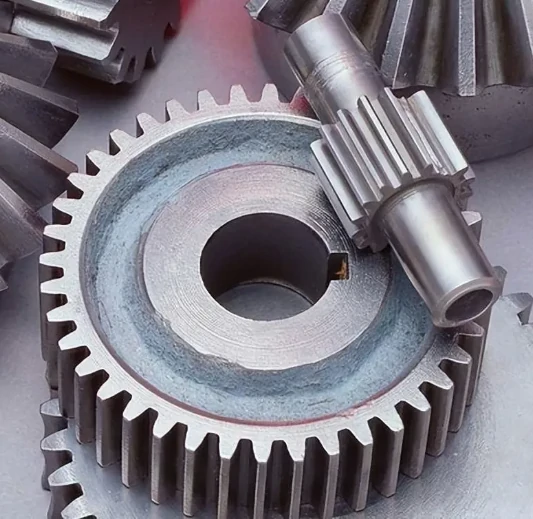
What Is a Spur Gear?
A spur gear is a cylindrical gear with straight teeth parallel to the gear axis. It transmits motion and torque between parallel shafts, with the gear ratio mainly determined by tooth count and pitch diameter. A smaller driving gear reduces speed and increases torque, while the opposite arrangement increases speed and reduces torque.
Although spur gears have a simple tooth design, reliable performance depends on accurate dimensions and manufacturing quality. Key factors such as pitch diameter, tooth profile, face width, bore, backlash, runout, material, and heat treatment influence noise, wear, accuracy, and service life.
For applications requiring higher accuracy, precision spur gears need tighter control of tooth profile, bore, pitch diameter, and runout to ensure proper engagement and load distribution.
Standard gears meet many general applications, but OEM equipment often requires custom spur gears with specific tooth counts, dimensions, materials, hardness levels, or mounting features. Custom spur gear manufacturing allows gears to be produced according to mechanical drawings and actual assembly requirements.
What Types and Configurations of Spur Gears Are Available?
Spur gears can be distinguished by where the teeth are located and how the gear is integrated into a mechanical assembly. The most common configurations include external and internal gears, while rack and pinion systems use the same basic straight-tooth principle to convert rotary motion into linear movement. For OEM applications, the gear geometry and mounting features can also be modified to meet specific design requirements.
External Spur Gears
External spur gears have straight teeth machined around the outside diameter and are typically used to transmit motion between parallel shafts. Two mating gears engage through their external teeth, with the tooth count and pitch diameter determining the transmission ratio. This configuration is widely used in industrial machinery and other mechanical drive systems because the gear geometry is relatively simple and can be manufactured in a broad range of sizes and materials.
Internal Spur Gears
Manufacturers machine internal spur gear teeth on the inside diameter rather than the outside surface. Their compact design allows engineers to integrate the pinion inside the gear, making them suitable for space-limited and coaxial transmission systems. Engineers commonly use internal gears in planetary gear mechanisms, where precise matching with other gears is critical for reliable operation.
Rack and Pinion Systems
A rack and pinion system combines a circular spur gear, known as the pinion, with a straight toothed rack. The pinion converts rotary motion into linear movement through engagement with the rack, or the reverse. Rack and pinion systems are used in positioning equipment, automation machinery, steering mechanisms, and other applications where controlled linear movement is required.
Shaft-Mounted and Integrated Spur Gears
A spur gear can be manufactured as a separate component mounted on a shaft or integrated with the shaft as a single part. Separate gears offer easier replacement and assembly, while integrated designs reduce components and simplify the structure.The choice depends on factors such as shaft geometry, alignment, load requirements, available space, and the overall manufacturing method.
Custom Spur Gear Configurations
Standard gear dimensions are not suitable for every OEM application. Custom spur gears may require specific tooth counts, pitch diameters, pressure angles, bores, keyways, face widths, materials, hardness levels, or tolerances to match the application. These gears are typically manufactured from engineering drawings or custom specifications rather than standard catalogs.
It is also important to distinguish spur gears from other gear geometries. Helical gears and double-helical gears have angled teeth and therefore different tooth engagement and operating characteristics. They should be treated as related gear types rather than as classifications of spur gears.
How to Select Materials for Spur Gears?
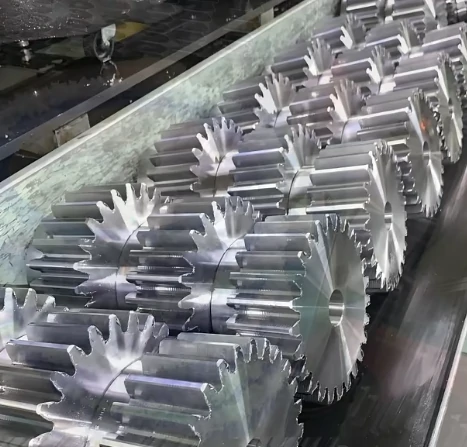
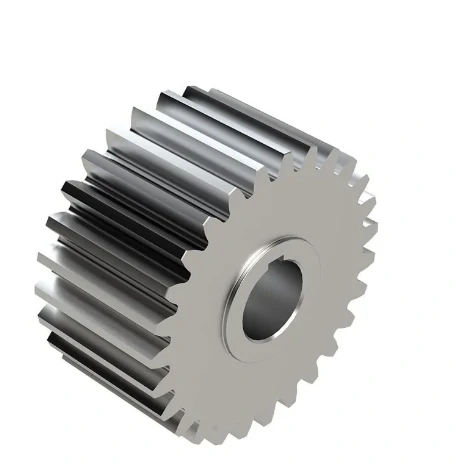
Material selection directly affects the load capacity, wear resistance, hardness, corrosion resistance, and service life of a spur gear. The right choice depends on the torque, speed, operating environment, and expected service life of the transmission system.
Common spur gear materials include alloy steel, carbon steel, stainless steel, cast iron, brass, bronze, and engineering plastics. Alloy steel is widely used for high-load and continuous-operation applications, while carbon steel suits general mechanical transmission.Stainless steel offers corrosion resistance, bronze and brass suit wear applications, and engineering plastics provide lightweight, low-noise solutions.
For custom spur gears, material selection should match actual working conditions. Load, speed, temperature, corrosion exposure, hardness requirements, and service life all influence the final material choice. Heat treatment processes such as hardening and tempering may further improve strength and wear resistance.
The material grade, heat-treatment condition, operating requirements, and inspection standards should be considered together during manufacturing. For OEM projects, providing these details in the drawing or RFQ helps manufacturers define suitable materials and production processes.
What Spur Gear Dimensions and Tolerances Should Be Specified?
A complete spur gear specification requires more than outside diameter and tooth count. Tooth geometry, mounting dimensions, and tolerances must match the mating gear and shaft for proper assembly and reliable operation. Key spur gear dimensions include tooth count, module, pitch diameter, outside diameter, root diameter, face width, bore, and keyway. Parameters such as pressure angle, tooth thickness, tooth profile, backlash, runout, and concentricity also influence transmission performance.
For custom spur gear manufacturing, specifications are usually defined through engineering drawings, CAD models, samples, or technical requirements. The drawing should include critical dimensions, material grade, heat-treatment condition, surface requirements, tolerances, and inspection standards.
Spur gear tolerance should be selected according to the application. General industrial gears may require standard tolerances, while precision transmission components need tighter control of tooth accuracy, bore size, runout, and concentricity to reduce noise and wear.
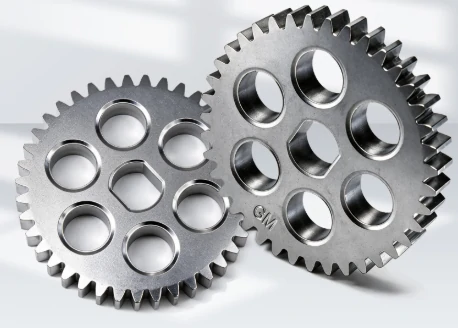
What Is the Spur Gear Manufacturing Process?
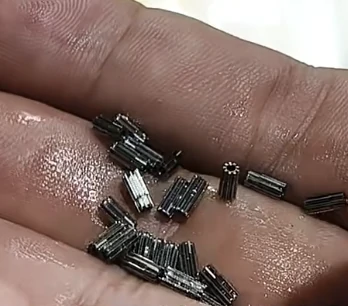
The spur gear manufacturing process varies according to the gear material, dimensions, tooth geometry, production quantity, and required accuracy. A typical production route may include material preparation, CNC machining, tooth cutting, heat treatment, finishing, and final inspection. Not every gear requires all of these operations, and the sequence may change for non-standard designs.
CNC Turning
CNC turning is commonly used to prepare the gear blank and machine key rotational features such as the outside diameter, bore, end faces, and mounting surfaces. For custom spur gears, turning provides a controlled starting geometry before the gear teeth and other features are machined. Welleshaft also provides precision CNC turning services for OEM mechanical components requiring accurate dimensions and reliable machining consistency.
CNC Milling
CNC milling is used for features that cannot be produced through turning or tooth cutting. Depending on the drawing, these may include keyways, slots, mounting surfaces, holes, or other non-standard geometries. This makes CNC milling particularly useful when CNC machined spur gears require additional features for integration with shafts or other components.
Gear Hobbing
Gear hobbing is a common method for producing external spur gear teeth. It uses a rotating hob to generate tooth spaces and create consistent tooth geometry efficiently, particularly when multiple gears with the same specification are required. The selected hobbing parameters need to match the gear module, tooth count, pressure angle, and material requirements. Welleshaft supports OEM projects with China OEM gear hobbing solutions for precision industrial components.
Gear Shaping
Gear shaping uses a reciprocating cutting tool to generate the gear teeth and can be selected for gear configurations or production requirements where shaping provides a suitable manufacturing route. It can be useful when the component geometry or available machining access makes hobbing less practical.
Heat Treatment
Heat treatment may be applied when the gear requires higher hardness, strength, or wear resistance. The appropriate treatment depends on the material and operating conditions. Because heat treatment can affect dimensional stability, the process should be considered together with the required gear tolerances and any subsequent finishing operations.
Gear Grinding and Finishing
After heat treatment, gear grinding can be used when tighter tooth accuracy, improved surface quality, or more consistent gear engagementis required. Additional finishing processes may also be applied where the application requires specific surface characteristics, friction performance, or corrosion resistance.
Final Inspection
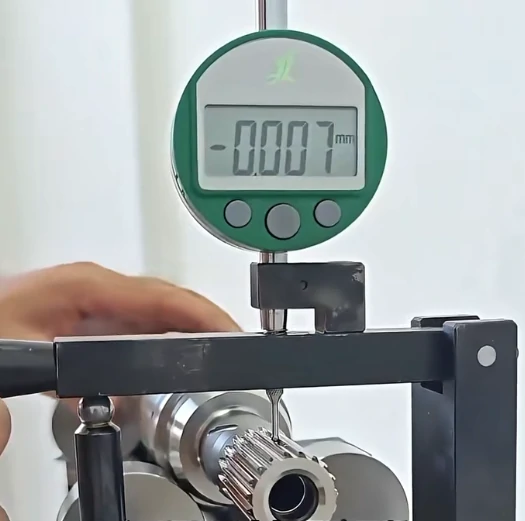
The completed gear is inspected against the engineering drawing or technical specification. Depending on the requirements, inspection may cover dimensions such as the bore, outside diameter, face width, tooth thickness, runout, concentricity, and tooth geometry. The inspection level should correspond to the functional requirements of the finished gear rather than applying the same criteria to every component.
For custom spur gear manufacturing, these operations are selected as a complete process rather than as isolated machining steps. The material, tooth geometry, production volume, tolerances, heat-treatment condition, and final application all influence the most suitable manufacturing route.
How Does CNC Machining Support Custom Spur Gear Manufacturing?
Spur gear machining involves more than CNC machining. Depending on the design and accuracy requirements, manufacturers may combine turning, milling, tooth cutting, heat treatment, and grinding processes.
CNC turning and milling prepare the gear blank and machine features such as bores, keyways, mounting surfaces, and holes. For CNC machined spur gears, these processes ensure dimensional accuracy and proper fit with shafts or other components.
CNC machining is especially suitable for custom spur gears with non-standard features, prototypes, and small-batch production. For larger volumes, manufacturers optimize tooling, cycle time, process capability, and inspection methods to improve efficiency and consistency.
The right manufacturing process depends on the gear design, accuracy requirements, material, and production volume.
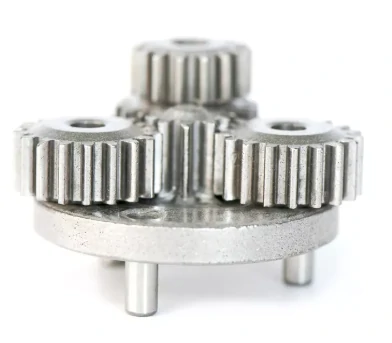
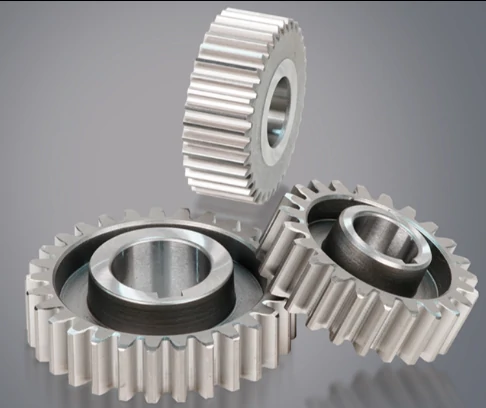
How Are Custom Spur Gears Inspected?
Quality control is critical in precision spur gear manufacturing because dimensional and tooth-profile deviations can affect gear meshing, backlash, noise, wear, and transmission accuracy. Bore and mounting feature accuracy also influence proper assembly.
A typical spur gear inspection checks key dimensions such as outside diameter, bore, face width, tooth thickness, pitch, pressure angle, tooth profile, runout, and concentricity. The inspection scope depends on the required tolerance, gear size, material, and application.
Material and surface requirements may also require verification, including material certificates, hardness testing, surface condition checks, and heat-treatment confirmation.
For OEM orders, inspection records can include dimensional reports, material certificates, and test results. Defining inspection requirements before custom spur gear manufacturing helps manufacturers control critical features and verify the finished gear meets the approved specifications.
Custom Spur Gear Manufacturing for OEM Projects
OEM projects often require spur gears that do not match standard catalog specifications. Requirements may include non-standard tooth counts, pressure angles, pitch diameters, bores, face widths, materials, hardness levels, or dimensional tolerances. Custom spur gear manufacturing allows the production process to be adapted to the actual engineering drawing and assembly requirements.
For different gear sizes and accuracy requirements, manufacturing capabilities can include grinding accuracy up to DIN Class 3 and gear production with a maximum pitch diameter of 2500
mm. A MOQ of 1 piece can support prototype and small-batch requirements where a standard production run is not practical. Customized pressure angles and other non-standard tooth or mounting features can also be produced according to the gear design.
The manufacturing process may include CNC turning, CNC milling, gear hobbing, shaping, polishing, forging, heat treatment, and finishing, depending on the material, gear design, volume, and accuracy requirements. The appropriate process is selected for the specific component rather than applying the same production route to every gear.
For OEM projects, spur gears may also need to work with shafts, bushings, housings, brackets, or other non-standard mechanical parts. Coordinating these related components according to the same project specifications can help maintain dimensional compatibility and simplify production control.
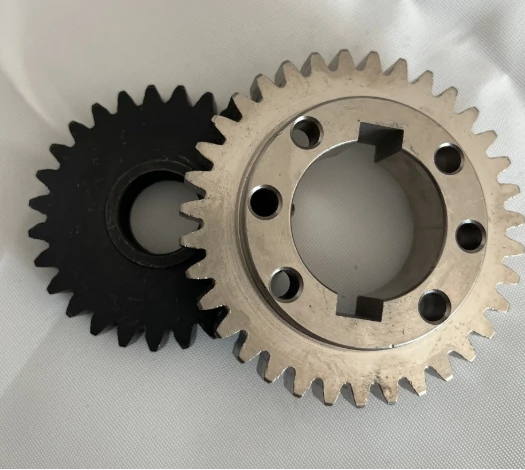
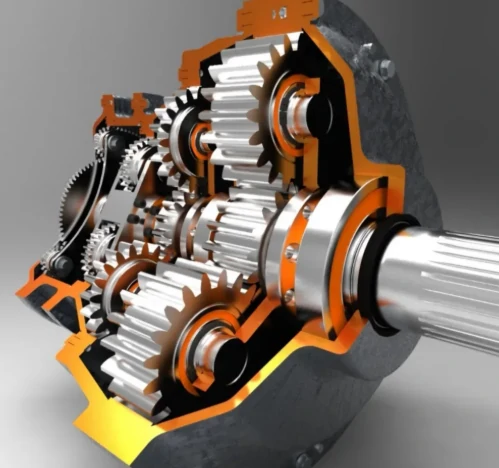
When Do You Need Custom Spur Gear Manufacturing?
Standard catalog gears are suitable when their dimensions, materials, and performance meet the application requirements. However, OEM equipment often involves specific shaft interfaces, space limits, loads, or assembly conditions that require custom spur gear manufacturing.
Custom gears are needed when standard products cannot meet requirements for tooth count, pitch diameter, pressure angle, tooth profile, bore, keyway, face width, material, or hardness. These factors are especially important for applications involving specific loads, speeds, temperatures, wear conditions, or operating environments.
Production volume also affects the manufacturing approach. Prototypes and small batches may require flexible customization, while high-volume OEM projects require repeatable processes, controlled tolerances, and consistent accuracy.
Custom spur gears may also need to integrate with shafts, bushings, housings, or complete assemblies. A capable manufacturer should work from engineering drawings, CAD models, samples, or specifications to define the correct gear design, materials, and production requirements.
Send Us Your Spur Gear DrawingCustom Mechanical Components and One-Stop Contract Manufacturing
Spur gear production may be only one part of an OEM component project. A complete assembly can also include shafts, bushings, housings, brackets, and other custom mechanical components, each requiring different machining, heat treatment, finishing, and inspection processes. Managing these parts through multiple suppliers can increase procurement and quality-control requirements.
A one-stop contract manufacturing approach can coordinate these requirements within one supply chain. Depending on the project, the manufacturing scope may include engineering drawing review, material sourcing, CNC machining, gear production, heat treatment, surface finishing, inspection, and final assembly or delivery. The exact combination of processes is determined by the component drawings and project requirements.
This approach is useful for buyers looking for OEM component manufacturing rather than a standard catalog gear. Coordinating the spur gear with related mechanical parts can help maintain compatible dimensions, materials, surface requirements, and inspection criteria across the assembly.
Welleshaft provides custom manufacturing solutions for non-standard mechanical components, with spur gear production available as part of a broader contract manufacturing process when required.
How to Choose a Spur Gear Manufacturer?
When selecting a spur gear manufacturer or spur gear supplier, buyers should look beyond the product catalog. For OEM projects, the more important question is whether the supplier can understand the gear specification, provide the required manufacturing processes, control critical dimensions, and support the required production volume.
| What to Evaluate | What to Check |
| Engineering capability | Drawings, CAD files, gear specifications, materials, tolerances, and application requirements |
| Manufacturing capability | CNC turning, CNC milling, hobbing, shaping, grinding, heat treatment, and finishing |
| Quality control | Dimensional inspection, tooth geometry, runout, hardness, material verification, and inspection reports |
| Customization | Non-standard tooth counts, pressure angles, bores, keyways, dimensions, and materials |
| Production flexibility | Prototype, MOQ 1, small-batch, and high-volume OEM production |
| Component capability | Shafts, bushings, housings, brackets, and other custom mechanical components |
For custom spur gears, engineering capability is particularly important. The supplier should be able to work from engineering drawings, CAD models, samples, or technical specifications and understand requirements for tooth geometry, material, hardness, tolerances, and mounting features.
Quality control should be considered together with manufacturing capability. Buyers can check how the supplier verifies critical dimensions, tooth geometry, runout, concentricity, hardness, and material requirements, as well as what inspection documentation is available. Production flexibility is also relevant when a project moves from a prototype or MOQ 1 requirement to repeated small-batch or high-volume OEM production.
For projects involving multiple components, broader manufacturing capability can also simplify sourcing and help maintain dimensional compatibility across the assembly.
Sourcing Custom Spur Gears from China
For overseas buyers sourcing custom spur gears from China, supplier selection should go beyond basic gear-making capability. A reliable spur gear manufacturer in China should be able to understand engineering drawings and technical specifications, communicate production requirements clearly, and maintain consistent quality against the approved requirements.</p>
For projects involving shafts, bushings, housings, or other custom mechanical components, a supplier with broader manufacturing capabilities can also simplify procurement and help coordinate dimensional requirements across the complete assembly.
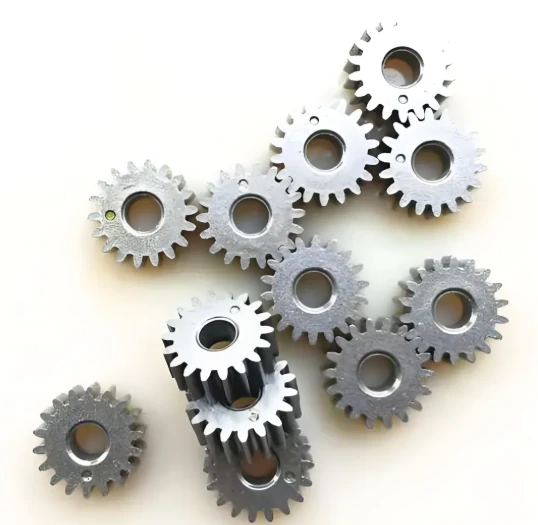
What Information Should Be Included in a Spur Gear RFQ?
To quote custom spur gears accurately, buyers should provide a complete spur gear drawing or CAD file whenever possible. The drawing should define the key gear geometry, including the number of teeth, module or diametral pitch, pressure angle, pitch and outside dimensions, bore, keyway, face width, and applicable dimensional tolerances. Material grade, heat-treatment and surface-treatment requirements should also be specified when they affect strength, hardness, wear resistance, or the operating environment.
The RFQ should also state the required quantity and indicate whether the order is for a prototype, small batch, or ongoing OEM production. Any specific gear accuracy, inspection, or documentation requirements should also be included. These details allow a custom spur gear manufacturer to assess the production method, tooling, machining and finishing requirements, inspection scope, lead time, and overall cost.
Depending on the gear design and production requirements, the manufacturing route may involve CNC turning or milling for the gear blank and mounting features, followed by hobbing or shaping for the teeth. Heat treatment, grinding, forging, or other finishing processes may be added where required. Providing complete technical information at the RFQ stage helps the manufacturer select an appropriate custom spur gear manufacturing process and reduces clarification during production.
Request a Quote for Your Custom GearApplications of Custom Spur Gears
Custom spur gears are used in mechanical systems that transmit rotational motion and torque between parallel shafts. Their relatively simple tooth geometry makes them suitable for different types of equipment, while dimensions, materials, hardness, and accuracy can be adapted to specific operating conditions.
Industrial Machinery
In industrial machinery, spur gears are used in conveyors, machine tools, production equipment, and mechanical transmission systems. When standard gear sizes do not match the required shaft spacing, bore, tooth count, or load capacity, custom spur gear manufacturing allows the gear to be produced according to the equipment’s actual requirements.
Automotive Equipment
In automotive equipment, spur gears can be used in selected transmission and actuation mechanisms where parallel-shaft power transmission is required. Depending on the application, the gear may need specific dimensions, material properties, hardness, and dimensional tolerances to achieve reliable operation.
Robotics and Automation
Robotics and automated machinery may use precision spur gears for positioning, actuation, and controlled movement. These applications can place greater emphasis on tooth geometry, backlash, runout, and mounting accuracy, particularly where repeated motion and consistent positioning are required.
Agricultural Machinery
Agricultural equipment can incorporate spur gears into mechanical transmission and drive systems. Because operating conditions may involve variable loads, dust, moisture, and extended working cycles, custom spur gears may be specified with suitable materials, heat treatment, and surface finishing according to the equipment’s working environment.
Mining and Construction Equipment
Mining and construction machinery can place higher demands on gear strength, wear resistance, and service life. Fo
r these applications, a custom spur gear manufacturer may select appropriate materials and heat-treatment processes based on the transmitted load, operating conditions, and required gear hardness.
Power Transmission Equipment
Spur gears are widely used in industrial power transmission applications</strong> where torque, speed, shaftarrangement, and installation space determine the gear design. When these requirements fall outside standard catalog specifications, custom spur gears can be manufactured with the required tooth configuration, dimensions, material, and accuracy.
Why Choose Welleshaft for Custom Spur Gear Manufacturing?
Choosing a custom spur gear manufacturer involves more than confirming whether a supplier can produce the gear itself. The manufacturer should be able to understand the engineering requirements, select suitable manufacturing processes, control critical dimensions, and coordinate inspection according to the application.
Welleshaft provides custom spur gear manufacturing for OEM projects involving non-standard tooth geometries, dimensions, materials, tolerances, and production requirements. Depending on the project, manufacturing can include CNC turning, CNC milling, gear hobbing, gear shaping, heat treatment, grinding, finishing, and inspection.
For projects that require more than a single gear, Welleshaft can also support the production of non-standard mechanical parts, including shafts, bushings, housings, brackets, and other custom components. This broader manufacturing capability allows related components to be coordinated within the same project requirements rather than treating the spur gear as an isolated part.
Contact Our Engineering Team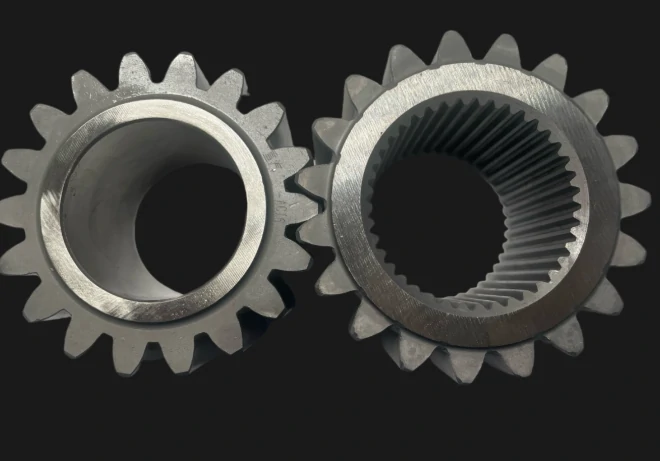
Frequently Asked Questions About Spur Gears
What Are Spur Gears Used For?
Spur gears transmit motion and torque between parallel shafts. They are commonly used in industrial machinery, power transmission equipment, automation systems, agricultural machinery, and other mechanical equipment. Custom spur gears are used when standard gear sizes or configurations do not fit the application.
What Materials Are Used for Spur Gears?
Common materials include alloy steel, carbon steel, stainless steel, cast iron, brass, bronze, and engineering plastics. The choice depends mainly on the load, speed, wear, operating environment, and required service life. Material selection may also be combined with heat treatment when higher hardness or wear resistance is required.
What Is the Difference Between a Standard and Custom Spur Gear?
A standard spur gear is made to a defined size or specification. A custom spur gear is made to the requirements of a specific project, such as a different tooth count, pressure angle, bore, face width, material, or tolerance. Custom gears are often used for OEM equipment with non-standard shaft or space requirements.
Can Custom Spur Gears Be Manufactured in Small Quantities?
Yes. Custom spur gear manufacturing can cover prototypes, small batches, and production orders. For low quantities, the process can be planned around the actual gear design and required accuracy without using the same production approach as a large-volume order.
What Manufacturing Processes Are Used for Spur Gears?
The process depends on the gear design and production requirements. CNC turning and milling are commonly used for gear blanks, bores, keyways, and other features, while hobbing or shaping is used to produce the teeth. Heat treatment, grinding, polishing, forging, or other finishing processes may be added when required.
What Should I Provide When Ordering Custom Spur Gears?
A technical drawing or CAD file is the best starting point. The drawing should show the main dimensions, tooth parameters, pressure angle, material, tolerances, hardness or heat treatment, and other special requirements. Quantity and inspection requirements should also be included if applicable.
Welleshaft provides custom manufacturing for OEM mechanical components in China, including spur gears, shafts, bushings and housings. Our capabilities cover CNC machining, gear production, heat treatment, finishing and inspection.

 English
  Português do Brasil
  Deutsch (Österreich)
  Deutsch (Schweiz)
  English (UK)
  English (Australia)
  English (New Zealand)
  Deutsch
  Français du Canada
  Français
  Français de Belgique
  Italiano
  English (South Africa)
  Português
  Español
  Español de México
  Español de Perú
  Español de Colombia
  العربية
  日本語
日本語  Русский
  한국어
한국어  Tiếng Việt
  ไทย
ไทย