
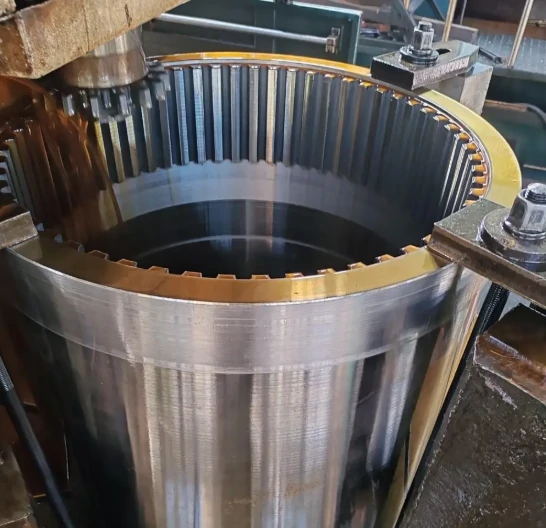
Custom Gear Hobbing Services for Industrial OEM Applications
Welleshaft provides custom gear hobbing services and OEM contract manufacturing support for companies requiring precision transmission components and non-standard mechanical parts.
Based on customer drawings, specifications, and application requirements, we support the complete manufacturing process from engineering review and material selection to CNC machining, gear hobbing, heat treatment, finishing, and final inspection.
Unlike suppliers that only provide individual machining operations, Welleshaft integrates multiple manufacturing capabilities into one coordinated manufacturing process. This approach helps OEM customers simplify supplier management while maintaining consistent quality for customized gear components.
Custom Gear Hobbing Manufacturing Capabilities
Our manufacturing capabilities support OEM customers requiring reliable transmission components and precision mechanical parts.
Our manufacturing capabilities include:
– Custom spur gears and helical gears
– External gear hobbing for industrial applications
– CNC machining for gear bores, shafts, and mounting features
– Forged and machined gear blank preparation
– Heat treatment coordination for improved hardness and wear resistance
– Final inspection according to customer specifications
The manufacturing approach supports prototype development, low-volume production, and repeat OEM supply programs based on customer requirements.
Send Your Gear Drawing for Engineering Evaluation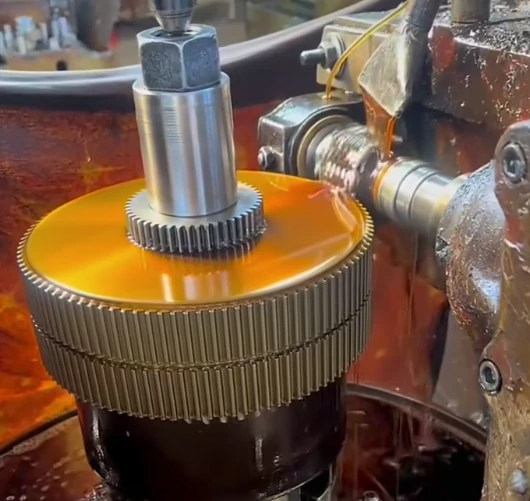
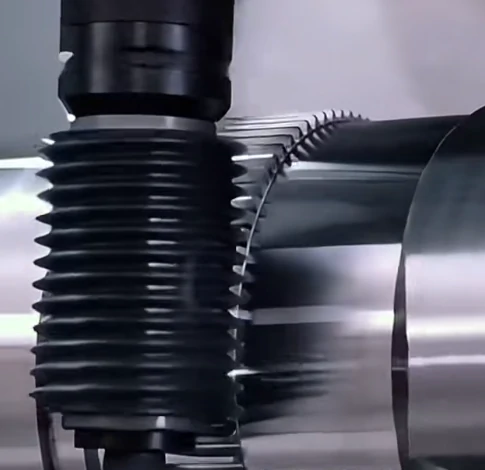
What Is Gear Hobbing?
Gear hobbing is a precision gear cutting method that uses a rotating tool called a hob to generate tooth profiles on cylindrical workpieces. As an efficient and repeatable machining process, it is widely used for producing precision gear components that require consistent accuracy and reliable mechanical performance.
During the gear hobbing process, the hob cutter and gear blank rotate simultaneously according to a specific transmission ratio. The cutting edges of the hob gradually remove material from the workpiece, forming the required tooth geometry with controlled spacing, profile accuracy, and surface quality.
Compared with traditional form cutting methods, gear hobbing uses a continuous generating motion to produce multiple gear teeth during each machining cycle. This makes it suitable for external gear manufacturing where production efficiency, dimensional consistency, and repeatable quality are important factors.
The process is commonly applied to manufacture:
- Spur gears for general power transmission applications
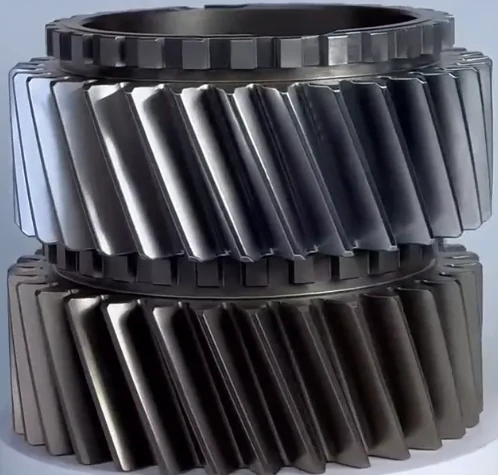
- Helical gears requiring smooth and efficient operation
- External transmission gears used in industrial machinery and automotive systems
- Worm gears and related components for specialized mechanical applications
For OEM manufacturing projects, gear hobbing is selected not only based on gear design but also according to production volume, material requirements, accuracy expectations, and final application conditions.
Selecting the right machining process during the early engineering stage helps manufacturers achieve stable production quality and reliable gear performance.
Gear Hobbing Process for Precision Gear Manufacturing
The gear hobbing process requires accurate coordination between the hob cutter, workpiece, machining parameters, and production conditions. The final quality of a gear depends not only on cutting accuracy but also on factors such as material selection, gear blank preparation, tooling condition, and process control.
For custom gear manufacturing, a reliable hobbing process typically includes several key stages, from initial gear blank preparation to final inspection. By controlling each step, manufacturers can produce precision gear components with consistent tooth accuracy, reliable performance, and stable production quality.
Engineering Factors Affecting Gear Hobbing Quality
Successful gear hobbing depends on more than the machining operation itself. The manufacturing process requires evaluation of multiple engineering factors before production, including gear design, material selection, blank accuracy, tooling requirements, machining parameters, and inspection standards.
Proper process planning helps improve tooth accuracy, production consistency, and long-term component reliability.
Gear Blank Preparation
Before the hobbing operation begins, the gear blank must be prepared according to the required gear dimensions and machining requirements. The blank geometry directly affects the accuracy and stability of the final gear tooth profile.
Important preparation factors include:
- Outside diameter
- Bore dimensions
- Face width
- Reference surfaces
For heavy-duty applications involving high loads, impact forces, or continuous operation, forged gear blanks are often selected because forging improves material density, internal structure, and mechanical strength.
Proper blank preparation provides a stable machining foundation and helps achieve accurate tooth generation during the precision gear hobbing process.
Hob Selection and Machine Setup
Selecting the correct hob cutter is an important step in producing accurate gear components. The hob design and machining parameters must match the gear specifications, material characteristics, and application requirements.
Key considerations include:
- Module
- Pressure angle
- Number of teeth
- Helix angle
- Gear material
During machine setup, the hob cutter and workpiece are carefully aligned to achieve the required tooth spacing and profile accuracy. Proper setup is especially important for CNC gear hobbing, where machining parameters directly influence repeatability and production consistency.
Synchronized Cutting Operation
During CNC gear hobbing, the hob cutter and gear blank rotate simultaneously according to a controlled gear ratio. This synchronized movement allows the cutting edges of the hob to continuously generate the required tooth profile.
The relationship between the hob and workpiece controls critical gear features, including:
- Tooth spacing
- Tooth profile
- Cutting accuracy
Unlike intermittent cutting methods, gear hobbing uses a continuous generating process, making it suitable for efficient production of custom gear components and OEM transmission parts.
Tooth Generation and Machining Control
As the hob moves across the rotating workpiece, its cutting edges gradually remove material to form the required tooth depth and geometry.
Modern gear hobbing machines use CNC control systems to maintain stable machining conditions and improve production repeatability. Through accurate control of cutting speed, feed rate, and machine movement, manufacturers can achieve consistent results across different production batches.
For OEM gear manufacturing, process stability is essential because gear components must meet specific requirements for accuracy, load capacity, and long-term operating performance.
Finishing Processes and Gear Inspection
After the hobbing operation, additional processes may be required to achieve the final performance requirements of the gear component. Depending on the application, secondary operations may include:
- Deburring
- Shaving
- Grinding
- Heat treatment
Heat treatment is often applied after machining to improve hardness, wear resistance, and fatigue performance, especially for gears used in demanding industrial applications.
Before delivery, gear inspection verifies critical quality characteristics, including:
- Tooth profile accuracy
- Pitch accuracy
- Runout
- Tooth thickness
- Surface finish
Through comprehensive inspection and process control, manufacturers can ensure that precision gear components meet customer drawings, technical specifications, and application requirements.
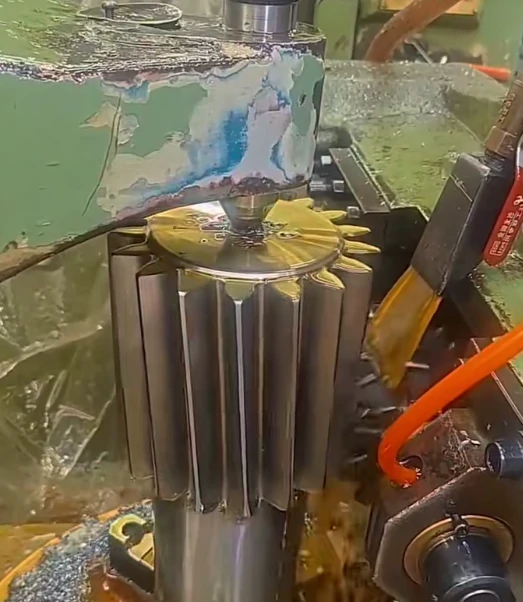
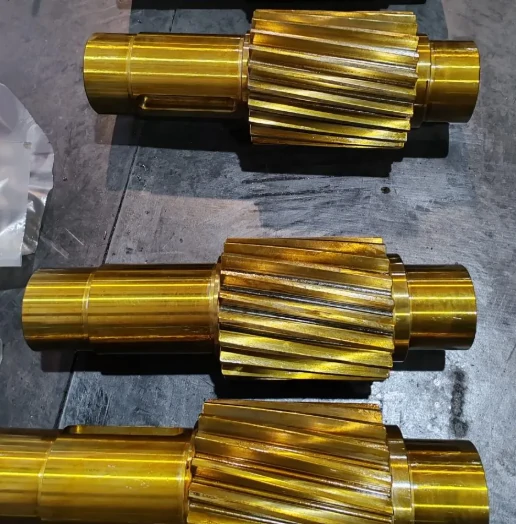
CNC Gear Hobbing Machines and Manufacturing Accuracy
Modern CNC gear hobbing machines play an important role in producing precision gear components by controlling the cutting movement between the hob tool and workpiece with high accuracy. Compared with traditional mechanical equipment, CNC-controlled hobbing systems offer improved control over machining parameters, setup repeatability, and production consistency, making them suitable for demanding custom gear manufacturing projects.
During the CNC gear hobbing process, machine settings such as cutting speed, feed rate, tool position, and workpiece alignment directly influence tooth profile accuracy and surface quality. Advanced hobbing equipment allows manufacturers to process gears with different design requirements, including various modules, tooth numbers, face widths, and helix angles.
For OEM customers requiring high precision gear manufacturing, selecting suitable equipment is only one part of achieving reliable results. A capable gear hobbing manufacturer must also manage the complete production process, including gear blank accuracy, cutting tool condition, fixture stability, material selection, and heat treatment control.
At Welleshaft, CNC gear hobbing capability is integrated with machining expertise, material management, finishing processes, and inspection procedures to support customized gear component production for industrial applications.
Advantages of Gear Hobbing for Industrial Gear Manufacturing
Gear hobbing services are widely used in industrial gear production because the process offers a practical balance of machining efficiency, tooth accuracy, and production flexibility. For OEM customers requiring precision gear components, gear hobbing provides a reliable solution for manufacturing external gears used in transmission systems, machinery, and other power transmission applications.
Compared with other gear cutting methods, gear hobbing is particularly suitable for projects that require consistent quality across repeated production cycles. By combining CNC-controlled machining with proper tooling and process management, manufacturers can achieve stable gear performance for both standard and custom gear manufacturing services.
High Production Efficiency for OEM Gear Projects
One of the main advantages of gear hobbing is its continuous cutting capability. Unlike intermittent cutting methods, the hob generates multiple gear teeth during each machining cycle, which improves production efficiency and reduces machining time.
This makes precision gear hobbing services suitable for:
- Medium-volume manufacturing
- High-volume production
- Repeat OEM supply programs
For customers requiring long-term production of industrial gear components, a stable hobbing process helps maintain consistent output while controlling manufacturing costs.
Consistent Tooth Accuracy and Reliable Performance
Gear accuracy directly affects transmission efficiency, operating noise, and service life. CNC-controlled hobbing equipment helps maintain consistent tooth geometry by controlling cutting movements, tool positioning, and machining parameters.
This is especially important for transmission gear components and industrial applications where gears operate under continuous loads. Maintaining stable tooth accuracy helps reduce variation between production batches and supports reliable assembly performance.
Flexible Capability for Different Gear Designs
A major advantage of gear hobbing is its ability to manufacture various external gear designs based on customer requirements.
Common applications include:
- Spur gears
- Helical gears
- Transmission gears
- Industrial drive gears
By adjusting tooling and machining parameters, gear hobbing manufacturers can support different gear specifications, including various modules, tooth numbers, and gear dimensions.
This flexibility makes gear hobbing suitable for customized projects where OEM customers require specific designs rather than standard catalog components.
Cost-Effective Manufacturing for Custom Gear Components
For many external gear applications, gear hobbing offers an efficient production method compared with alternative gear cutting processes. Its combination of machining speed, repeatability, and process stability makes it suitable for both standard and customized gear production.
When integrated with CNC machining, heat treatment, and inspection processes, gear hobbing becomes part of a complete custom gear manufacturing solution that supports customers from prototype development to volume production.
Gear Hobbing vs Other Gear Manufacturing Processes
Selecting the right gear manufacturing process depends on several factors, including gear structure, required accuracy, material properties, production volume, and final application requirements. For OEM customers sourcing precision gear components, choosing the appropriate manufacturing method is important for balancing performance, production efficiency, and overall cost.
Different processes are used for different gear designs. While gear hobbing is widely applied for external gears due to its efficient cutting method and repeatable quality, other methods such as gear shaping, gear milling, and gear grinding are selected when specific design or accuracy requirements need to be achieved.
| Manufacturing Process | Key Advantages | Typical Applications |
| Gear Hobbing | Continuous cutting process with high production efficiency and consistent tooth accuracy | External spur gears, helical gears, transmission gears, and industrial gear components |
| Gear Shaping | Suitable for producing internal gears and components with limited cutting access | Internal gears and complex gear structures |
| Gear Milling | Flexible machining method for special gear designs and customized requirements | Low-volume production and special gear applications |
| Gear Grinding | Provides high precision finishing and improved surface quality | High-accuracy gears requiring tight tolerances |
When to Choose Gear Hobbing?
Among various custom gear manufacturing methods, gear hobbing is commonly selected for external gear production because it provides an effective combination of machining efficiency, accuracy, and repeatability.
The process is especially suitable for:
- Medium-volume gear production
- High-volume OEM manufacturing programs
- Transmission components requiring consistent performance
- Industrial gear applications with repeated operating cycles
Compared with gear shaping, which is often preferred for internal gears, gear hobbing offers higher efficiency for external gear production. Gear milling provides greater flexibility for specialized designs but is generally more suitable for lower-volume projects, while gear grinding is mainly used as a finishing process when extremely high accuracy is required.
For precision gear manufacturing, the most suitable process depends on the complete application requirements. At Welleshaft, engineering evaluation considers gear design, material selection, production quantity, and performance expectations to determine the appropriate manufacturing approach for each custom gear component project.
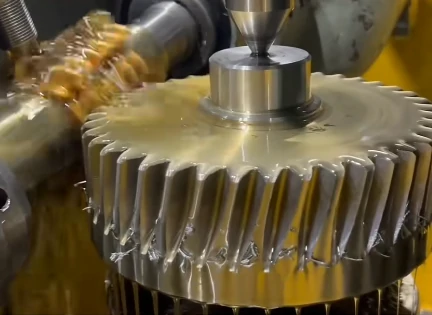
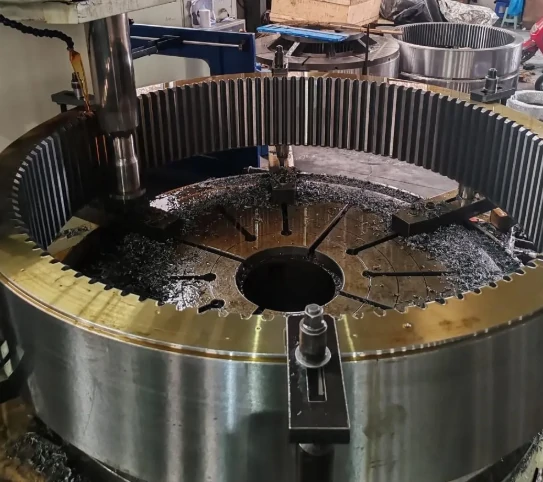
Custom Gear Manufacturing Process at Welleshaft
As a custom gear manufacturer, Welleshaft supports OEM customers with integrated manufacturing capabilities beyond individual machining operations.
This integrated approach allows Welleshaft to manufacture precision gear components according to customer drawings, application requirements, and performance expectations. From prototype development to repeat production programs, our custom gear manufacturing services help customers achieve reliable quality, consistent performance, and efficient supply management.
Engineering Review and Manufacturing Planning
Before production begins, Welleshaft reviews each project to understand the technical requirements and identify the most suitable manufacturing approach. The evaluation process considers:
- Customer drawings and specifications
- Gear design requirements
- Operating conditions
- Load and performance expectations
Based on this engineering review, Welleshaft determines appropriate materials, machining processes, and production methods for each application. This early-stage planning helps optimize manufacturing efficiency while ensuring that the finished gear components meet functional requirements.
For OEM customers requiring customized transmission parts, engineering collaboration is an important part of successful custom gear manufacturing.
Material Selection for Custom Gear Components
Material selection has a direct impact on gear strength, wear resistance, fatigue performance, and service life. Welleshaft evaluates material options based on operating conditions, load requirements, and environmental factors.
Common materials used for custom gear components include:
Carbon Steel
Carbon steel is widely selected for general industrial applications where balanced strength, machinability, and cost efficiency are required. It is suitable for many standard transmission components and mechanical systems.
Alloy Steel
For heavy-duty applications, alloy steel is commonly used because it provides improved mechanical properties, including:
- High load-bearing capability
- Wear resistance
- Better fatigue performance
These characteristics make alloy steel suitable for industrial gears, transmission components, and other demanding applications.
Stainless Steel
Stainless steel is selected for applications requiring corrosion resistance, durability, and stable performance in challenging environments.
Engineering Plastics
Engineering plastics can be used for lightweight applications where reduced noise, lower friction, and corrosion resistance are important considerations.
By selecting the right material at the beginning of the project, Welleshaft helps customers achieve the required balance between performance, durability, and manufacturing cost.
Forging and Gear Blank Manufacturing
For applications requiring high strength and impact resistance, forged gear blanks are often selected as the starting point for gear production.
Compared with conventional materials, forged blanks provide improved internal structure and mechanical properties, making them suitable for heavy-load transmission applications.
Welleshaft combines forging capabilities with subsequent machining processes, including CNC machining and gear hobbing, to produce durable gear components with accurate dimensions and reliable performance.
This integrated approach supports OEM projects requiring strong and consistent transmission components for industrial machinery, automotive systems, and other power transmission applications.
CNC Machining and Gear Hobbing Services
Welleshaft integrates CNC machining and gear hobbing services to manufacture precision gear components based on customer drawings and technical requirements.
CNC machining is used to achieve critical dimensional features, mounting surfaces, and assembly requirements, while gear hobbing creates accurate tooth profiles for reliable gear operation.
Combining these processes allows better control over:
- Dimensional accuracy
- Tooth geometry
- Assembly compatibility
- Production consistency
For customers looking for a reliable OEM gear components supplier, integrated machining and hobbing capabilities reduce production complexity and improve overall project efficiency.
Heat Treatment and Surface Enhancement
Heat treatment plays an important role in improving gear performance, especially for components exposed to high loads, repeated operation, or wear conditions.
Depending on application requirements, Welleshaft supports different heat treatment processes, including:
Carburizing
Carburizing creates a hardened surface layer that improves wear resistance and load-carrying capability while maintaining a tougher core structure.
Nitriding
Nitriding improves surface hardness and wear resistance while minimizing dimensional changes during treatment.
Induction Hardening
Induction hardening strengthens specific areas such as gear teeth while maintaining the toughness of the internal material structure.
By combining suitable materials with appropriate heat treatment methods, Welleshaft helps produce gears with improved durability and long-term operating reliability.
Gear Inspection and Quality Control for OEM Manufacturing
Quality control is an important part of Welleshaft’s custom gear manufacturing process.
Before shipment, finished gear components are inspected according to customer requirements to verify dimensional accuracy, tooth geometry, and manufacturing consistency.
Inspection support includes:
– Dimensional measurement
– Tooth profile inspection
– Pitch accuracy verification
– Runout checking
– Surface finish evaluation
– Material and heat treatment documentation when required
These quality control procedures help OEM customers confirm component reliability before assembly and final application.
Applications of Custom Gear Components
Custom gear components are widely used in industrial systems where reliable power transmission, dimensional accuracy, and long-term durability are required.
Depending on application requirements, gear components are commonly used in automotive systems, industrial machinery, agricultural equipment, construction equipment, and other mechanical transmission applications.
Automotive and EV Systems
Automotive and electric vehicle applications require gear components that can withstand continuous operation, repeated loading, and strict performance requirements.
Customized transmission-related components are manufactured for applications including:
- Transmission gears
- Drive system components
- Mechanical power transmission parts
For automotive and EV manufacturers, reliable gear performance is essential for efficient power transfer, smooth operation, and long service life. Our experience in precision gear manufacturing helps OEM customers develop components that meet specific design and application requirements.
Industrial Machinery and Automation Equipment
Industrial machinery relies on durable gear components to transfer power efficiently and maintain stable operation under different working conditions.
Welleshaft supplies industrial gear components for applications such as:
- Gear reducers
- Industrial drive systems
- Automation equipment
- Mechanical transmission systems
Through integrated capabilities including CNC machining, gear hobbing services, heat treatment, and inspection, Welleshaft supports customers requiring consistent quality for customized industrial transmission components
Agricultural Equipment
Agricultural machinery often operates in challenging environments where gears are exposed to heavy loads, vibration, and long working cycles.
Welleshaft manufactures custom gear components for agricultural applications, including:
- Tractor gears
- PTO drive components
- Agricultural transmission parts
For these applications, material selection, heat treatment, and manufacturing accuracy are important factors affecting gear durability and service life. Our custom gear manufacturing services help agricultural equipment manufacturers develop reliable transmission solutions.
Construction Equipment
Construction equipment requires heavy-duty gear components capable of handling high loads, impact forces, and demanding operating conditions.
Welleshaft supports construction machinery applications including:
- Lifting systems
- Traveling mechanisms
- Rotation systems
- Heavy-duty transmission assemblies
By combining suitable materials, precision machining, gear hobbing, and quality inspection, Welleshaft provides durable gear components for equipment manufacturers requiring dependable performance in harsh working environments.
Supporting Diverse OEM Gear Applications
Beyond these industries, Welleshaft also supports customized gear projects for various mechanical and power transmission applications. Our engineering team works with OEM customers to evaluate component requirements, select appropriate manufacturing processes, and deliver precision gear components from prototype development through production.
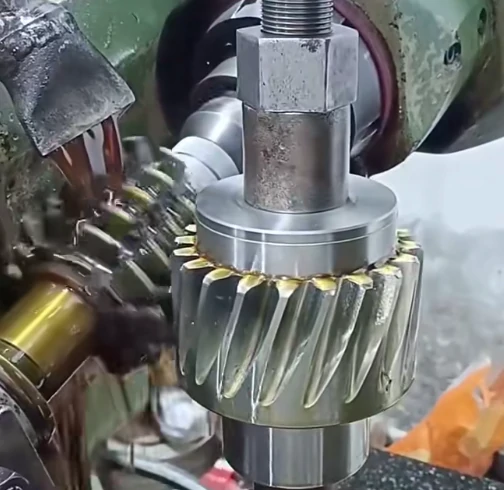
Why Choose Welleshaft for Custom Gear Hobbing and Manufacturing Solutions?
Welleshaft works with global OEM customers as a China-based custom manufacturing partner, providing integrated production capabilities for precision mechanical components and customized gear projects. Rather than outsourcing different processes to multiple suppliers, customers can rely on Welleshaft for coordinated manufacturing support from engineering review and material selection to machining, gear hobbing, finishing, and inspection.
With experience in custom component manufacturing and non-standard mechanical parts, Welleshaft helps customers convert drawings, prototypes, and engineering concepts into reliable production components. Our manufacturing approach is designed for companies looking for a dependable OEM gear components supplier with flexible production capability and consistent quality control.
One-Stop Manufacturing Support
Managing multiple suppliers for a single gear component project can increase communication complexity and quality risks. Welleshaft integrates key manufacturing processes under one supply chain, helping customers simplify project management and improve production efficiency.
Our integrated capabilities include:
- Engineering review and process planning
- Material selection and sourcing coordination
- CNC machining
- Gear hobbing services
- Heat treatment coordination
- Final inspection and quality verification
By combining these processes, Welleshaft provides a complete one-stop manufacturing solution for customers requiring precision gear components and customized mechanical parts.
Custom Component Manufacturing Experience
Welleshaft specializes in manufacturing non-standard mechanical components based on customer-specific drawings, technical specifications, and application requirements.
Unlike standard catalog suppliers, we focus on customized projects where factors such as component design, material performance, machining accuracy, and operating conditions need to be carefully evaluated.
Our experience in custom gear manufacturing enables us to support various applications, including transmission components, industrial machinery parts, and other precision mechanical systems.
OEM Project Support from Prototype to Production
Welleshaft supports OEM customers throughout different stages of product development, from initial prototypes to long-term production programs.
Depending on project requirements, we can support:
- Prototype development for design validation
- Trial production for process verification
- Batch manufacturing for ongoing supply
- Long-term OEM production programs
This prototype to production manufacturing capability allows customers to work with one experienced supplier throughout the product lifecycle, reducing supplier transition risks and improving production continuity.
Flexible Manufacturing Solutions Based on Project Requirements
Every custom component project has different requirements regarding design complexity, performance expectations, production volume, and cost targets. Welleshaft evaluates each project individually and recommends suitable manufacturing processes based on the specific application.
Our flexible approach allows customers to optimize:
- Component design and manufacturability
- Material selection
- Manufacturing processes
- Production quantity
- Overall project cost
By combining engineering support with multi-process manufacturing capability, Welleshaft delivers practical custom manufacturing solutions for global OEM customers requiring reliable precision components.
How We Support OEM Gear Projects
Welleshaft supports OEM customers through different stages of custom gear manufacturing, from initial engineering review to production delivery.
The typical workflow includes:
– Drawing and specification review
– Manufacturing process evaluation
– Material and process selection
– Prototype development
– Batch production
– Final inspection
This structured approach helps customers work with one manufacturing partner throughout the product development and production cycle.
Start Your OEM Gear Component Project with WelleshaftCustom Gear Hobbing Services FAQs
Can Welleshaft manufacture gears based on customer drawings?
Welleshaft manufactures custom gear components based on customer drawings, specifications, and application requirements.
Customers can provide 2D drawings, 3D models, or existing samples. Our team reviews the design details, material requirements, machining processes, and inspection requirements before production.
What information is required for a custom gear manufacturing project?
To evaluate a custom gear manufacturing project, Welleshaft reviews customer drawings, CAD models, material requirements, gear specifications, production quantity, and inspection requirements.
Based on these details, our engineering team determines suitable manufacturing processes and production solutions.
Does Welleshaft provide CNC machining and gear hobbing together?
Welleshaft combines CNC machining and gear hobbing services for customers requiring complete gear component manufacturing.
CNC machining handles critical dimensions, bores, mounting surfaces, and other machining features, while gear hobbing produces the required tooth profile. Combining these processes helps maintain dimensional accuracy and production consistency.
Can Welleshaft support prototype and mass production?
Yes. Welleshaft supports projects from prototype development to batch production and long-term supply.
Customers can work with one manufacturing partner during different stages, including design verification, trial production, and repeat orders for OEM gear components.
What materials are commonly used for industrial gears?
The material selection depends on load conditions, operating environment, wear requirements, and expected service life.
Common materials for custom gear manufacturing include:
- Carbon steel for general industrial applications
- Alloy steel for high-load and wear-resistant applications
- Stainless steel for corrosion-resistant environments
- Engineering plastics for lightweight and low-noise applications
Welleshaft works with customers to select suitable materials based on the actual working conditions of the gear component.
What inspection support is available for custom gears?
Welleshaft performs inspection according to customer specifications and project requirements.
Typical inspection includes:
- Dimensional inspection
- Tooth profile checking
- Pitch accuracy verification
- Runout measurement
- Surface finish evaluation
Inspection reports and quality records can be provided for OEM projects when required.
Does Welleshaft provide complete gear manufacturing solutions?
In addition to custom gear hobbing services, Welleshaft handles related manufacturing processes including CNC machining, forging, heat treatment, finishing, and inspection.
This allows customers to source customized gear components through a single manufacturing partner instead of coordinating multiple suppliers.
Welleshaft is a China-based contract manufacturer providing precision mechanical components, CNC machining, gear processing, and integrated manufacturing solutions for global OEM customers.Partner with Welleshaft for Your Custom Gear Manufacturing Project.

 English
  Português do Brasil
  Deutsch (Österreich)
  Deutsch (Schweiz)
  English (UK)
  English (Australia)
  English (New Zealand)
  Deutsch
  Français du Canada
  Français
  Français de Belgique
  Italiano
  English (South Africa)
  Português
  Español
  Español de México
  Español de Perú
  Español de Colombia
  العربية
  日本語
日本語  Русский
  한국어
한국어  Tiếng Việt
  ไทย
ไทย