
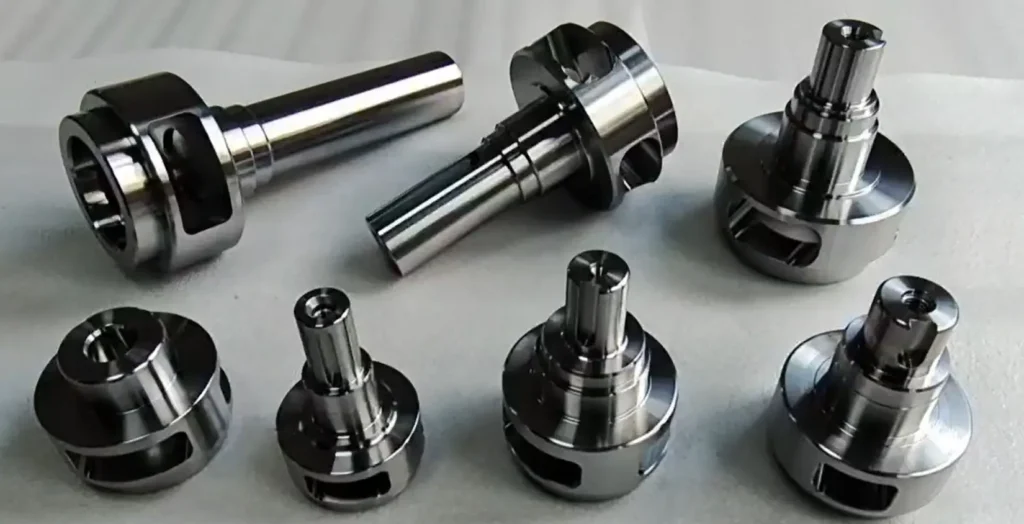
Custom Stub Shaft Manufacturing for OEM Mechanical Applications
OEM machinery uses custom stub shafts for accurate torque transmission, compact installation, and reliable integration.Engineers develop each shaft to meet specific load, material, dimensional, connection, and operating requirements.
Welleshaft provides custom stub shaft manufacturing in China for OEM customers requiring non-standard mechanical components. Based on engineering drawings, CAD models, and technical specifications, we support CNC machining, spline machining, heat treatment coordination, and quality inspection from prototype development to repeat production.
What Is a Stub Shaft?
A stub shaft is a short mechanical shaft that transfers torque between connected components or supports rotating assemblies in machinery.
Unlike full-length shafts, stub shafts fit specific areas of a machine to provide a compact structure, accurate positioning, and reliable torque transfer.
Common functions include:
- connecting shafts, hubs, and gears
- transferring rotational force between components
- supporting rotating assemblies
- integrating with gearboxes and drivetrain systems
OEM engineers often require custom stub shafts because they design them around specific equipment requirements rather than standard catalog dimensions.
Common Types of Stub Shafts
Engineers design stub shafts based on the connection method, torque requirements, and operating environment. In many OEM applications, engineers develop stub shafts as custom machined parts around the structure and requirements of the final equipment.
Mechanical systems commonly use the following stub shaft designs.
Axle Stub Shaft
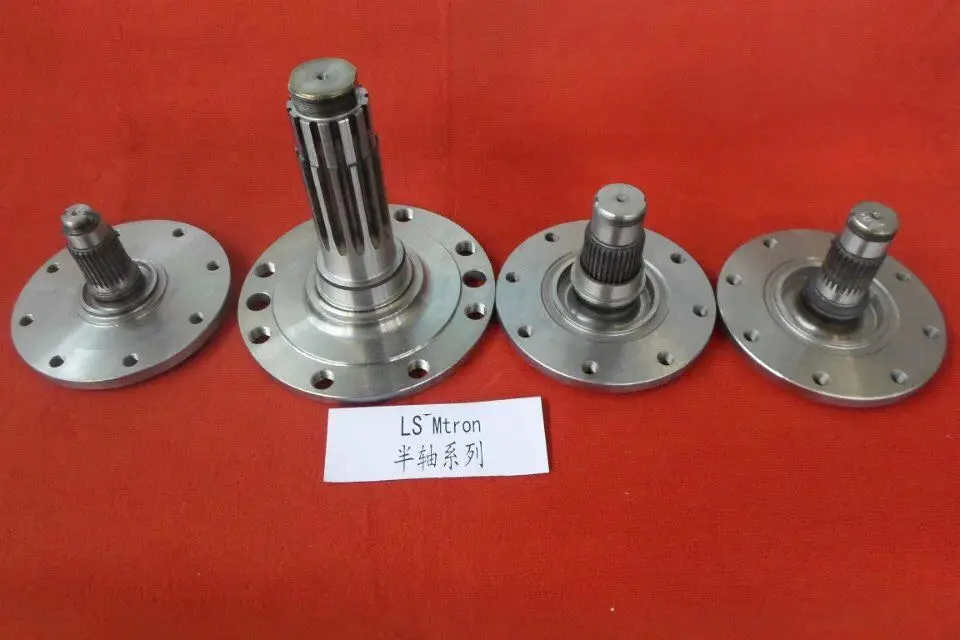
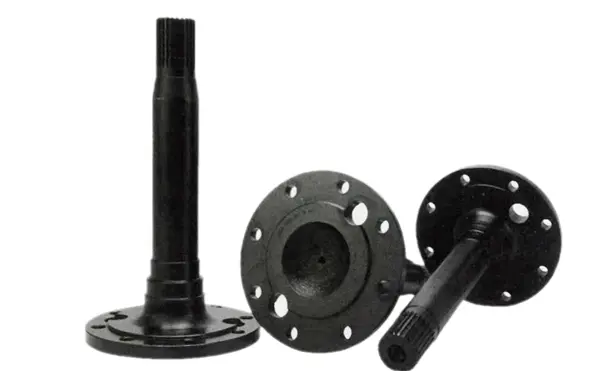
Automotive and mobile equipment assemblies commonly use axle stub shafts to connect rotating components to the axle system. During operation, these shafts withstand torque, bending loads, and repeated mechanical stress, making strength and dimensional accuracy essential.
In drivetrain and agricultural applications, engineers design axle stub shafts around specific equipment requirements, including shaft dimensions, material selection, and connection design.
Typical applications include automotive drivetrain systems, agricultural machinery, and off-road equipment.
PTO Stub Shaft
Tractors and industrial equipment commonly use PTO (Power Take-Off) stub shafts to transfer power from an engine or transmission to external machinery. The shaft provides a mechanical connection between the power source and driven equipment, allowing one system to operate additional attachments.
Engineers customize PTO stub shafts based on the connected equipment, rotational speed, torque requirements, and installation conditions. Reliable machining accuracy is important to ensure proper fit and stable power transmission.
Typical applications include tractors, agricultural implements, pumps, generators, and other powered equipment.
Spline Stub Shaft
Spline stub shafts use spline teeth or profiles to connect with matching hubs or internal spline components. Compared with traditional keyed connections, spline designs provide multiple contact points for torque transmission and improve alignment between mating parts.
Engineers can manufacture spline stub shafts with external splines, internal splines, or customized spline profiles to meet specific application requirements. Key factors such as spline geometry, fit tolerance, and surface condition directly affect torque capacity, assembly accuracy, and service life.
Gearboxes, transmission systems, industrial machinery, and agricultural equipment commonly use spline stub shafts for reliable power transmission and precise positioning.
For OEM projects requiring specific spline dimensions, Welleshaft provides custom spline stub shaft machining based on customer drawings and technical specifications. Manufacturing capabilities include CNC machining of external splines, internal splines, and customized spline connections for shafts and hubs, with inspection support to verify dimensional accuracy.
Key Design Considerations for Custom Stub Shafts
The design of a custom stub shaft is determined by the equipment requirements, operating conditions, and connection method. During the engineering review stage, manufacturers typically evaluate the following factors:
Torque and Load Requirements
Stub shafts must be designed to handle the required torque, bending loads, impact forces, and operating cycles without premature failure.
Connection and Dimensional Accuracy
Critical features such as shaft diameter, spline profile, keyway dimensions, and alignment tolerance must match the connected components to ensure proper assembly and reliable power transmission.
Installation Requirements
Stub shafts are often used in compact mechanical assemblies where space limitations require a customized design rather than a standard shaft solution.
Material and Service Conditions
Engineers should select the material grade, heat treatment, and surface finish based on the operating environment, load conditions, and expected service life of the component.
Stub Shaft Materials Selection
Material selection directly affects the strength, fatigue resistance, wear performance, and service life of a stub shaft.For OEM applications, engineers select stub shaft materials based on torque, load, corrosion exposure, operating conditions, and service life.
Common options include carbon steel, alloy steel, stainless steel, and heat-treated steel. The choice depends on the required mechanical performance and application conditions.
| Material | Characteristics | Typical Applications |
| Carbon Steel | Good balance of strength, machinability, and cost efficiency | General mechanical assemblies and standard industrial applications |
| Alloy Steel | Higher strength, toughness, and fatigue resistance compared with carbon steel | Heavy-duty machinery, drivetrain components, and high-load applications |
| Stainless Steel | Excellent corrosion resistance and suitable for demanding environments | Equipment exposed to moisture, chemicals, or corrosive conditions |
| Heat-treated Steel | Improved hardness, wear resistance, and load-bearing capability through heat treatment processes | High-load shafts, transmission components, and wear-critical applications |
Engineers often choose alloy steel stub shafts for higher torque capacity and fatigue resistance, while stainless steel suits applications that require greater corrosion resistance. In high-load systems, engineers can also use heat treatment to increase surface hardness and extend service life.
For OEM projects, engineers evaluate material selection together with machining processes, dimensional tolerances, and operating requirements.
How Are Custom Stub Shafts Manufactured?
Custom stub shaft manufacturing starts with reviewing the engineering requirements of the component.Engineers determine the production process based on drawing specifications, material grade, tolerance requirements, connection features, and application conditions.
At Welleshaft, engineers evaluate each stub shaft project using customer drawings, CAD models, and technical specifications.
This review helps confirm critical dimensions, machining feasibility, and suitable manufacturing processes before production.
Engineering Review and Design Evaluation
A complete manufacturing review usually covers the available design information, including 2D drawings, 3D models, material requirements, dimensional tolerances, and surface finish specifications.
For non-standard mechanical components, early engineering evaluation is important because small design details can affect machining efficiency, assembly accuracy, and final component performance.
Reviewing the design before production helps identify machining challenges, tolerance requirements, and potential assembly issues at an early stage.
CNC Machining Process
A typical custom stub shaft manufacturing process includes engineering review, CNC machining, secondary processing, heat treatment, and final inspection.
Manufacturers commonly use CNC machining to produce custom stub shafts because it provides precise control over shaft geometry, concentricity, and surface quality.
The machining route depends on the final design. Typical operations may include CNC turning for the main shaft profile, CNC milling for additional features, drilling, keyway machining, and spline machining for specialized connections.
For applications requiring spline connections, custom spline stub shaft machining requires accurate control of spline dimensions and fit conditions to ensure proper torque transmission between mating components.
Welleshaft produces CNC machined stub shafts based on customer drawings and technical specifications for non-standard industrial applications.
Heat Treatment and Surface Finishing
For stub shafts used in high-load or wear-intensive applications, additional treatments may be required after machining.
Heat treatment processes, such as quenching and tempering, can increase hardness and improve fatigue performance, while surface finishing treatments can enhance wear resistance or provide additional corrosion protection.
The final treatment method is selected according to the material grade, operating environment, and expected service conditions of the component.
Inspection and Quality Control
Inspection plays a critical role in custom stub shaft manufacturing, especially for components used in gearboxes, drivetrain systems, and industrial machinery where dimensional accuracy affects assembly performance.
Quality control typically covers dimensional inspection, tolerance verification, surface finish measurement, hardness testing, and final inspection reports based on customer drawings and technical specifications.
Welleshaft integrates quality inspection throughout the manufacturing process to verify finished stub shafts against customer drawings and specifications before shipment.
Applications of Custom Stub Shafts
OEM engineers use custom stub shafts in mechanical systems that require compact installation, accurate positioning, and reliable torque transmission. Unlike standard shafts, engineers design and manufacture OEM stub shafts around the equipment design, connection method, load requirements, and operating conditions.
Common applications include industrial machinery, construction equipment, agricultural machinery, and automotive drivetrain systems.
Industrial Equipment
Industrial machinery commonly uses stub shafts in gearboxes, rotating assemblies, conveyors, and automation equipment to transfer torque between connected components.
These applications often require custom shaft dimensions, keyways, spline profiles, and tight tolerances to ensure proper assembly and consistent operation.
Typical applications include:
- Gearbox assemblies
- Conveyor systems
- Automation equipment
- Manufacturing machinery
Construction Machinery
Construction and heavy equipment require stub shafts that can withstand high loads, vibration, and repeated mechanical stress.
Custom designs are commonly used in hydraulic systems, drive mechanisms, and heavy-duty machinery where material strength, heat treatment, and machining accuracy are critical.
Agricultural Machinery
Agricultural equipment uses stub shafts to transfer power between tractors, transmissions, and external attachments.
PTO stub shafts are a common example, connecting tractors with pumps, generators, and agricultural implements. These components are often customized with specific spline configurations, dimensions, and torque requirements.
Automotive Applications
In automotive and mobile equipment, stub shafts are commonly used in axle systems, transmissions, and drivetrain assemblies.
Automotive stub shafts must maintain accurate alignment and withstand repeated loads, vibration, and dynamic operating conditions. Depending on the vehicle design, manufacturers may customize shaft geometry, materials, and surface treatments.
Typical applications include:
- Axle assemblies
- Transmission components
- Drivetrain systems
- Off-road vehicles
Benefits of Custom Stub Shafts for OEM Applications
Custom stub shafts allow OEM manufacturers to develop components that match the specific requirements of their equipment, including dimensions, connection methods, torque capacity, and installation conditions.
Compared with standard shaft components, custom stub shafts provide several advantages:
Better Fit with Equipment Design
Manufacturers can produce custom dimensions, spline profiles, keyways, and connection features from customer drawings to ensure proper assembly and reliable operation.
Optimized Mechanical Performance
Material selection, heat treatment, surface treatment, and machining accuracy can be adjusted based on load requirements, operating conditions, and expected service life.
Consistent Production for OEM Projects
Drawing-based manufacturing enables suppliers to control critical dimensions and maintain production consistency during prototype development, small-batch manufacturing, and repeat orders.
How to Choose a Custom Stub Shaft Manufacturer in China?
Because stub shafts are often application-specific components, OEM buyers usually evaluate suppliers based on engineering capability, machining experience, and quality control processes rather than price alone.
A suitable manufacturing partner should be able to support the complete process, including engineering review, process planning, CNC machining, and inspection. Experience with critical dimensions and repeat production is especially important for non-standard mechanical components.
Manufacturing Capability
A capable stub shaft manufacturer should have experience in CNC machining, material processing, and customized production for different shaft designs and application requirements.
For OEM projects, buyers should evaluate whether the supplier can manage the complete manufacturing process, including CNC turning, milling, keyway machining, spline machining, heat treatment coordination, and precision inspection. The ability to support prototype development, small-batch production, and repeat orders is also important for non-standard mechanical components.
Engineering Support
For drawing-based manufacturing, engineering review before production helps confirm design requirements, machining feasibility, and assembly conditions.
An experienced OEM stub shaft supplier should be able to analyze technical drawings, confirm critical dimensions and tolerances, and recommend suitable materials or process adjustments when required.
Quality Management
Quality control is closely related to the performance and service life of custom stub shafts.
During production, manufacturers need to verify key requirements such as dimensions, tolerances, surface finish, and material properties. Inspection methods may include dimensional measurement, hardness testing, surface inspection, and final quality documentation.
For overseas OEM customers, production records and inspection reports help verify that manufactured components meet the agreed specifications before shipment.
Why Choose Welleshaft for Custom Stub Shaft Manufacturing?
Welleshaft works with global OEM customers requiring customized mechanical components that cannot be sourced from standard catalogs.
Our team supports projects from initial drawing review to final production, helping customers evaluate manufacturing feasibility, select suitable processes, and develop components according to specific equipment requirements.
As a China-based custom mechanical components manufacturer, Welleshaft provides:
- Drawing-based manufacturing for non-standard parts
- CNC machining for precision mechanical components
- Process coordination including machining, heat treatment, and finishing
- Inspection documentation for OEM requirements
Whether you require prototype development, small-batch production, or repeat manufacturing, Welleshaft provides custom stub shaft manufacturing based on your drawings and application requirements.
Request a QuoteFAQ About Custom Stub Shafts
What information is needed to quote a custom stub shaft?
To prepare a quotation for a custom stub shaft, manufacturers usually need engineering drawings, 3D CAD files, material requirements, dimensions, tolerances, surface finish specifications, and expected production quantity.
For OEM projects, application information such as load conditions and connection requirements can also help determine suitable manufacturing methods.
Can stub shafts be manufactured according to customer drawings?
Custom stub shafts are commonly produced based on customer drawings or CAD models. Before production, the manufacturer reviews the design requirements, critical dimensions, and machining feasibility to confirm the appropriate production process.
Welleshaft supports drawing-based manufacturing for non-standard mechanical components used in industrial equipment and OEM applications.
What materials are commonly used for custom stub shafts?
Common materials include carbon steel, alloy steel, stainless steel, and heat-treated steels.
The material selection depends on factors such as load requirements, operating environment, corrosion conditions, and required service life. Engineers often choose alloy steel for high-load applications and stainless steel for applications that require corrosion resistance.
What tolerances can be achieved for CNC machined stub shafts?
The achievable tolerance depends on the component design, material, machining process, and inspection requirements.
For precision applications, manufacturers typically control key features such as shaft diameter, concentricity, length, spline dimensions, and surface finish to ensure proper assembly with mating components.
Can you manufacture prototype and low-volume custom stub shafts?
Yes. Many OEM projects begin with prototypes or small-batch production to verify design performance and assembly requirements before moving to larger production volumes.
A manufacturer with flexible CNC machining capability can support prototype development, trial production, and repeat manufacturing.
What is a spline stub shaft?
A spline stub shaft is a stub shaft with external or internal spline profiles designed to connect with a matching component. The spline structure allows torque transfer through multiple contact points and provides accurate positioning in mechanical assemblies.
Gearboxes, transmission systems, agricultural machinery, and industrial equipment commonly use spline stub shafts.
This article was provided by the Welleshaft Engineering Team. Welleshaft is a China-based manufacturer of custom mechanical components, providing CNC machining and OEM manufacturing solutions for stub shafts and other non-standard industrial parts. We help global OEM customers develop reliable components from drawings to final inspection.

 English
  Português do Brasil
  Deutsch (Österreich)
  Deutsch (Schweiz)
  English (UK)
  English (Australia)
  English (New Zealand)
  Deutsch
  Français du Canada
  Français
  Français de Belgique
  Italiano
  English (South Africa)
  Português
  Español
  Español de México
  Español de Perú
  Español de Colombia
  العربية
  日本語
日本語  Русский
  한국어
한국어  Tiếng Việt
  ไทย
ไทย