
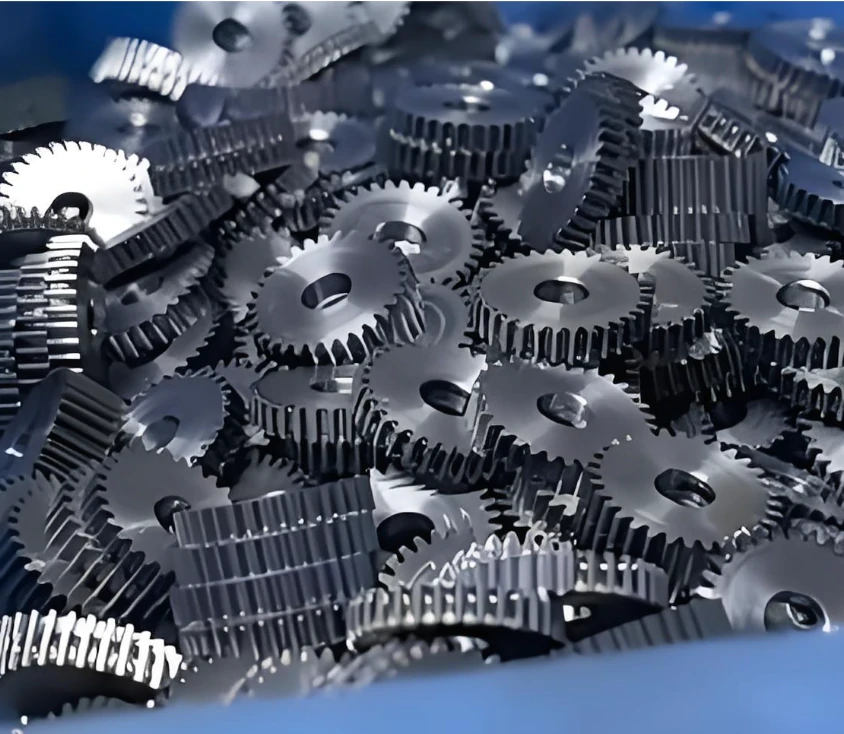
What Is an Aluminum Gear?
Aluminum gears are widely used in lightweight mechanical systems because aluminum offers excellent machinability, low density, and good casting performance. These properties allow manufacturers to produce gears with complex tooth profiles while maintaining reduced weight and reliable performance.
The main manufacturing processes for aluminum gears include die casting, forging, and CNC machining. Die casting forms aluminum gears by injecting molten aluminum into steel molds under high pressure, making it suitable for producing gears with consistent shapes and dimensions. Forging applies compressive force to heated aluminum billets to improve the internal grain structure and enhance gear strength. CNC machining creates precision aluminum gears by removing material from aluminum blanks through operations such as milling, turning, and hobbing to achieve accurate tooth profiles and tight tolerances.
These aluminum gear manufacturing methods help gear manufacturers produce components that meet specific requirements, including module, pressure angle, and backlash, while providing cost-effective solutions for various mechanical applications. The combination of lightweight characteristics and efficient processing makes aluminum a practical material choice for custom gear production.
what Are the Material Properties and Benefits of Aluminum Gears?
The material properties of aluminum gears are mainly influenced by the alloy composition, with elements such as magnesium and silicon added to improve mechanical performance and processing characteristics. Selecting the appropriate aluminum alloy allows engineers to achieve the required balance of strength, machinability, durability, and weight reduction for different gear applications.
Aluminum alloys provide excellent machinability, making aluminum gears easier to manufacture through processes such as CNC machining while reducing processing time and production costs. Their good recyclability and non-magnetic properties also make them suitable for various gear manufacturing environments and specialized mechanical systems.
The lightweight characteristics of aluminum materials help reduce machining requirements and support efficient mass production of aluminum gears. By choosing the right aluminum alloy grade, engineers can optimize gear performance, manufacturing efficiency, and overall system reliability based on specific application needs.
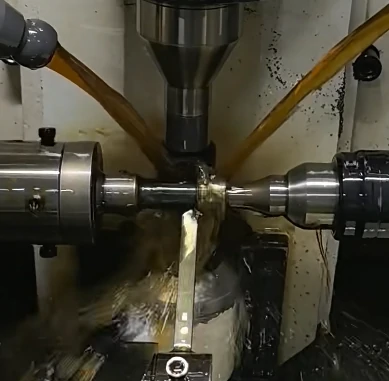
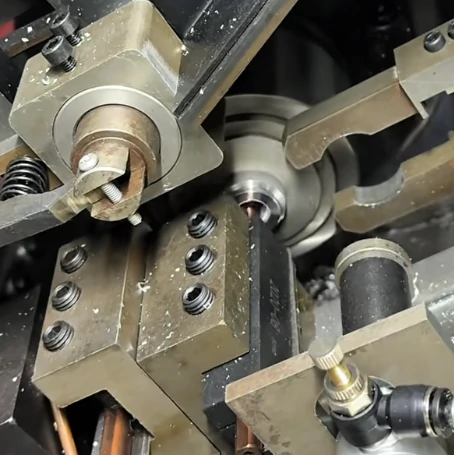
Why Are Aluminum Gears Used for Lightweight and High-Performance Applications?
Aluminum gears are widely selected for mechanical systems because they combine lightweight properties, corrosion resistance, and efficient power transmission performance. Compared with traditional steel gears, aluminum gears help reduce system weight while maintaining reliable operation in various industrial applications.
Durability of Aluminum Gears
The durability of aluminum gears depends on material selection, alloy composition, and surface treatment. Aluminum alloys such as 6061 and 7075 provide improved mechanical strength after heat treatment, allowing gears to handle repeated loading conditions.
The oxide layer naturally formed on aluminum surfaces helps improve wear resistance and reduce friction between gear teeth during operation. Additional surface treatments, such as anodizing, can further enhance protection against surface damage, including pitting and galling, which improves the service life of aluminum gears in applications with frequent cycling.
Although aluminum gears provide good durability, they generally have lower fatigue strength than steel gears, which may limit their use in heavy-load environments requiring maximum load capacity.
Weight Reduction
One of the key benefits of aluminum gears is their lightweight design. With a density of approximately 2.7 g/cm³, aluminum is significantly lighter than steel, allowing aluminum gears to reduce overall component weight and system inertia.
The reduced mass of aluminum gears improves acceleration response in dynamic machinery and helps increase energy efficiency. In automotive and high-speed applications, lightweight aluminum gears contribute to lower vehicle weight, improved fuel efficiency, and reduced energy consumption.
Corrosion Resistance of Aluminum Gears
Aluminum gears provide excellent corrosion resistance due to the protective oxide film that forms naturally on the material surface. This self-protective layer helps prevent oxidation and reduces the risk of corrosion when gears operate in humid, marine, or chemical environments.
Because of this corrosion resistance, aluminum gears can maintain stable tooth geometry and performance over long operating periods, making them suitable for applications such as marine equipment, chemical processing systems, and other environments where moisture exposure is common.
Thermal Conductivity
The high thermal conductivity of aluminum gears allows heat to dissipate quickly during operation, helping control temperature buildup in enclosed gear systems. Compared with materials with lower thermal conductivity, aluminum can transfer heat more efficiently, which supports stable lubrication performance and reduces thermal stress on connected components.
This heat dissipation capability makes aluminum gears a suitable choice for applications where lightweight construction and effective thermal management are important factors.
What Types of Aluminum Gears Are Available for Different Applications?
The type of aluminum gear selected depends on the gear structure, tooth design, transmission requirements, and operating conditions. Different aluminum gear types provide specific advantages in motion transfer, speed control, and mechanical efficiency. Factors such as gear ratio, load capacity, operating speed, and installation space are important when choosing the suitable gear design.
Common types of aluminum gears include spur gears, helical gears, bevel gears, and worm gears. Each design serves different applications, from lightweight transmission systems to precision motion control equipment.
Aluminum Spur Gears
Aluminum spur gears feature straight teeth positioned parallel to the gear axis, making them simple to manufacture and suitable for applications requiring direct power transmission between parallel shafts. Their simple structure provides efficient operation, low production costs, and reliable performance in lightweight mechanical systems.
Applications of aluminum spur gears include:
- Automotive transmissions:Aluminum spur gears help reduce transmission system weight while efficiently transferring torque between parallel shafts, supporting improved fuel efficiency and overall vehicle performance.
- Robotics actuators:The lightweight design of aluminum spur gears reduces the load on robotic joints while maintaining accurate positioning and repeatable movement.
- Conveyor systems:Aluminum spur gears are suitable for high-speed, low-load conveyor applications because of their low weight, wear resistance, and ability to operate in environments requiring frequent cleaning.
Aluminum Helical Gears
Aluminum helical gears use angled teeth that engage gradually during operation, providing smoother power transmission and reduced operating noise compared with spur gears. Their design improves contact between gear teeth, making them suitable for applications that require stable operation and continuous motion.
Applications of aluminum helical gears include:
- Automotive gear systems:Aluminum helical gears help achieve smooth torque transmission while reducing rotating weight in vehicle drive systems.
- Industrial machinery:These gears support quieter and more efficient operation in equipment where consistent power transfer is required.
- Precision mechanical systems:The smooth engagement characteristics of aluminum helical gears make them suitable for applications requiring reduced vibration and stable performance.
Aluminum Bevel Gears
Aluminum bevel gears feature a tapered tooth design that allows power transmission between intersecting shafts, commonly at a 90-degree angle. They are available in different configurations, including straight, spiral, and hypoid bevel gears, depending on transmission requirements.
Applications of aluminum bevel gears include:
- Differential assemblies:Aluminum bevel gears transfer torque between vehicle axles while reducing component weight and improving driving efficiency.
- Hand tools:Lightweight aluminum bevel gears reduce rotational mass in power tools, helping improve handling comfort and reduce operator fatigue.
- Marine propulsion systems:The corrosion resistance of aluminum bevel gears allows them to perform reliably in marine environments exposed to moisture and saltwater.
Aluminum Worm Gears
Aluminum worm gears use a screw-shaped worm that meshes with a gear wheel to achieve high reduction ratios and controlled motion. Their compact structure and self-locking capability make them suitable for applications requiring precise positioning and slow-speed transmission.
Applications of aluminum worm gears include:
- Elevator hoists:Aluminum worm gears provide compact and controlled lifting motion with reliable load positioning in vertical movement systems.
- Tuning mechanisms:These gears enable precise adjustment in audio equipment by providing accurate movement control and reduced backlash.
- Solar trackers:Aluminum worm gears support slow, high-torque positioning movements while benefiting from aluminum’s lightweight properties and heat dissipation capability.
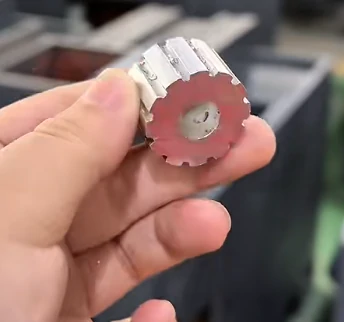
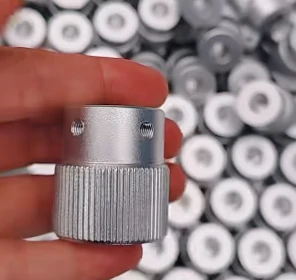
How Are Custom Aluminum Gears Designed for Industrial Applications?
The design of custom aluminum gears focuses on achieving accurate motion transmission, reliable performance, and compatibility with the complete mechanical system. The design process involves defining gear parameters, selecting suitable aluminum alloys, and using CAD modeling and simulation tools to optimize gear geometry according to operating loads, environmental conditions, and material characteristics.
Select Geometric Parameters
Choosing the correct gear geometry is a critical step in aluminum gear design. Parameters such as module, tooth number, pressure angle, and helix angle for helical gears directly affect gear ratio, tooth contact, load distribution, and transmission efficiency. Proper selection of these factors ensures stable operation and accurate power transfer.
Optimize Tooth Profile
The tooth profile of custom aluminum gears should be designed to achieve smooth engagement and balanced load distribution. Involute tooth geometry with profile modification helps prevent undercutting, especially in pinions with a lower number of teeth. Maintaining an appropriate contact ratio improves gear strength and reduces uneven stress during operation.
Select Aluminum Alloy and Surface Treatments
Material selection plays an important role in custom aluminum gear performance. Aluminum alloys such as 6061-T6 are commonly used for general gear applications due to their good machinability and balanced mechanical properties. For applications requiring higher strength, 7075 aluminum alloy provides improved load-carrying capability.
Heat treatment processes, including solution treatment and aging, can further enhance the mechanical properties of aluminum gears, allowing them to achieve higher yield strength and improved durability.
Perform Strength Calculations
Strength analysis helps ensure that custom aluminum gears can withstand operating loads. Engineering calculations, including Lewis bending stress analysis and Hertzian contact stress evaluation, are used to assess tooth strength, surface contact conditions, and material performance. These calculations consider aluminum’s elastic modulus to predict gear durability under different working conditions.
Simulate and Prototype
CAD modeling, finite element analysis (FEA), and simulation tools are commonly used to evaluate stress distribution, deformation, and gear performance before production. After design verification, CNC machining can be used to manufacture aluminum gear prototypes for testing and further optimization.
Meet Custom Gear Requirements
Custom aluminum gears can be designed with application-specific features such as keyways, splines, lightweight hubs, and other structural modifications. Maintaining accurate backlash control and surface finish requirements ensures proper assembly, smooth operation, and long-term reliability in precision mechanical systems.
How Do You Calculate Load and Select the Right Aluminum Gear?
The load calculation and gear selection process for aluminum gears requires accurate evaluation of operating conditions, mechanical loads, and material limitations to ensure reliable performance. Proper analysis helps determine suitable gear dimensions, materials, and safety factors for different transmission applications.
Determine Service Factors
The first step in aluminum gear selection is identifying the operating conditions and applying the appropriate service factor. Factors related to load variation, operating environment, and shock levels are considered to calculate the actual working load from the nominal torque. A suitable safety factor helps ensure that aluminum gears can withstand expected operating stresses.
Calculate Tangential Force
The tangential force acting on the gear tooth is calculated based on the transmitted torque and pitch diameter. For helical gears, the helix angle must also be considered because it affects the normal force and overall load distribution between gear teeth.
Accurate force calculations provide the foundation for evaluating gear strength and selecting proper gear dimensions.
Evaluate Bending Strength
Bending strength analysis is used to determine whether aluminum gear teeth can withstand repeated loading without failure. The Lewis bending stress equation considers factors such as tooth force, face width, module, and tooth form to estimate bending stress.
For aluminum alloys such as 6061-T6, the calculated bending stress should remain within the allowable strength range to maintain long-term gear durability.
Check Surface Durability
Surface durability evaluation focuses on preventing tooth surface damage, including pitting and excessive wear. Hertzian contact stress analysis is commonly used to assess the contact pressure between meshing gear teeth.
The calculation considers gear geometry, material properties, and contact conditions to ensure that surface stress remains within acceptable limits during operation.
Select Gear Geometry and Material
Choosing the correct gear geometry and aluminum alloy is essential for achieving reliable performance. Important factors include tooth number, pressure angle, module, and material grade. A proper tooth design helps avoid interference, while suitable backlash control ensures smooth engagement and reduces operating issues.
The selection of aluminum alloys depends on the required strength, weight requirements, and application conditions.
Optimize Design Through Simulation
Gear design software and simulation tools can be used to analyze load distribution, tooth deformation, and operating performance before manufacturing. By considering aluminum’s elastic properties, simulation helps optimize gear geometry and improve the reliability of custom aluminum gears.

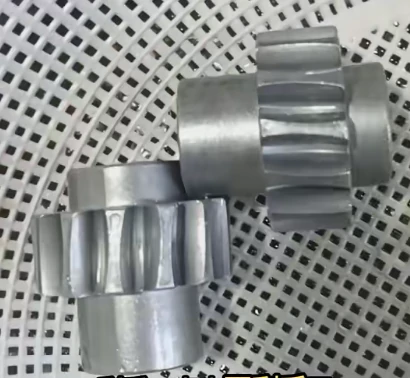
How Are Aluminum Gears Made?
Aluminum gears are manufactured through different production processes depending on the required design complexity, production quantity, and accuracy requirements. Common aluminum gear manufacturing methods include subtractive machining, forming processes, and additive manufacturing, with each method selected based on the application needs and performance expectations.
CNC machining is often used for aluminum gear prototypes and low-volume production because it provides high precision and allows flexible customization. With advanced machining processes, aluminum gears can achieve tight tolerances, including dimensional accuracy requirements around ±0.01 mm.
For high-volume production, manufacturing methods such as forging and die casting are commonly preferred. These processes can produce aluminum gears with near-final shapes, reducing the amount of secondary machining required and improving production efficiency for large-scale applications.
What Is CNC Machining Aluminum Gears for Precision Manufacturing?
CNC machining aluminum gears uses computer-controlled equipment to remove material from aluminum blanks and produce precise gear geometries with customized dimensions. This manufacturing process is widely used for custom aluminum gears because it provides high accuracy, flexible design options, and consistent surface quality. Proper coolant application during machining helps reduce heat buildup and prevents built-up edges caused by aluminum’s ductile characteristics.
CNC Milling Aluminum Gears
CNC milling is commonly used to create aluminum gear tooth profiles through end mills or face mills on 3-axis and 5-axis machining centers. This process allows complex tooth geometries to be produced in a single setup while maintaining accurate positioning.
For spur gears and helical gears, optimized cutting parameters help achieve stable machining performance. The tool path can produce precise involute profiles and support helical gear designs with different helix angles, while proper fixture design helps control cutting forces and axial movement during machining.
CNC Turning Aluminum Gears
CNC turning is typically performed before gear cutting operations to prepare the basic shape of aluminum gear blanks. The process creates accurate cylindrical features, including hubs, bores, and outer diameters, providing a stable foundation for subsequent gear machining.
Using carbide cutting tools and optimized cutting speeds, CNC turning aluminum gears can achieve tight dimensional control and maintain concentricity between the gear body and mounting features. After turning, the components can proceed to hobbing or other tooth-forming processes.
Gear Hobbing
Gear hobbing is a widely used process for producing aluminum gear teeth through continuous cutting with a rotating hob cutter. The hob and workpiece rotate together to generate tooth profiles accurately and efficiently.
The hobbing process is suitable for producing gears with different modules and tooth configurations. Proper cutting conditions help reduce burr formation and improve tooth surface quality before final deburring and finishing operations.
Gear Shaping
Gear shaping uses a reciprocating cutter that follows the required tooth profile to manufacture external and internal aluminum gears. This method is especially useful for producing internal gears, gear clusters, and custom aluminum parts with complex tooth structures.
With suitable cutting tools and machining parameters, gear shaping can achieve accurate pitch diameter control and consistent tooth geometry for small-batch and customized aluminum gear production.
Gear Grinding
Gear grinding is a finishing process used to improve tooth accuracy and surface quality after rough machining or heat treatment. Abrasive grinding wheels remove small amounts of material to correct surface irregularities and improve the final gear profile.
For high-precision aluminum gears, gear grinding helps achieve smoother tooth surfaces, lower friction, and improved performance in applications requiring better wear resistance and dimensional accuracy.
Drilling and Finishing Operations
Manufacturers complete the CNC machined aluminum gear process with drilling and finishing operations. They create mounting holes and bores through precision drilling, while deburring, polishing, and anodizing improve surface quality and performance.
These final treatments remove sharp edges, enhance corrosion resistance, and help aluminum gears meet specific assembly and operating requirements.
What Are Forged Aluminum Gears?
Forging aluminum gears is a manufacturing process that uses high pressure and controlled heat to shape aluminum alloys into strong, durable gear components. By applying compressive forces to heated aluminum billets, the forging process improves grain structure alignment and enhances fatigue resistance compared with cast aluminum gears. This method is commonly used for high-load applications where improved mechanical strength and material efficiency are required.
Billet Preparation
The forging process begins with selecting suitable aluminum alloys, such as 2024 and 7075 aluminum. The billets are cut to the required size and cleaned to remove surface oxides and contaminants, ensuring consistent material flow and uniform deformation during forging.
Heating
Before forging, aluminum billets are heated within a controlled temperature range to improve material flexibility and formability. Proper temperature control helps achieve optimal plasticity while preventing overheating, excessive grain growth, or material degradation.
Preforming
During the preforming stage, initial compression is applied through blocker dies to distribute the aluminum material and create a preliminary gear shape. This step improves material flow, reduces excess flash formation, and prepares the part for final forging.
Finish Forging
Finish forging uses precision dies to form the final aluminum gear geometry, including the required tooth profile and overall shape. The high-pressure forming process produces near-net-shape aluminum gears while minimizing material waste and reducing the need for extensive machining.
Heat Treatment
Heat treatment is applied after forging to improve the mechanical properties of aluminum gears. Processes such as solution treatment, quenching, and aging (including T6 temper treatment) enhance strength, hardness, and fatigue performance by optimizing the alloy structure.
Trimming and Finishing
After forging, excess flash is removed through trimming operations to achieve the required gear dimensions. Additional machining, grinding, and surface finishing processes can be performed to improve accuracy, surface quality, and final tolerance. Inspection procedures are also carried out to identify defects and ensure the forged aluminum gears meet performance requirements.
What Are Die Casting Aluminum Gears?
Die casting aluminum gears is a high-volume manufacturing process that uses molten aluminum injected into precision steel molds to produce complex gear shapes with consistent dimensions. This process is suitable for mass production because it provides high production efficiency, low material waste, and the ability to create near-net-shape aluminum gears with minimal secondary machining.
During the die casting process, aluminum alloys are melted and injected into molds under high pressure to form detailed gear geometries. Alloys such as A380 aluminum are commonly used because of their good fluidity, allowing the production of complex structures and thin sections while maintaining stable casting quality.
Mold Design and Preparation
The die casting process begins with the design and preparation of steel molds that accurately reproduce the required aluminum gear geometry. Mold cavities, ventilation channels, and cooling systems are designed to control filling, heat removal, and dimensional stability.
Before casting, the die surface is cleaned and lubricated to improve release performance, reduce sticking, and extend mold service life.
Metal Preparation
Aluminum ingots are heated until they reach a molten state, typically around 660–700°C, before being prepared for injection. Degassing is performed to remove trapped hydrogen and reduce internal porosity, while alloy elements such as silicon may be added to improve fluidity and casting performance.
Injection
During injection, molten aluminum is forced into the steel die cavity under high pressure. The rapid filling process allows aluminum to flow into detailed gear features and thin sections while minimizing defects such as incomplete filling or cold shuts.
Cooling and Solidification
After injection, the molten aluminum cools and solidifies inside the mold cavity. Controlled cooling systems, including water-cooled channels, help regulate heat removal and improve the dimensional accuracy and structural consistency of the cast aluminum gears.
Ejection
Once the aluminum gear has solidified and reached a suitable temperature, ejector pins remove the finished part from the die. Proper ejection control helps prevent deformation and maintains the accuracy of the gear shape.
Trimming and Finishing
After casting, excess material such as gates and flash is removed through trimming operations using presses or CNC machining tools. Additional finishing processes, including tooth profile machining and surface treatments, can improve gear accuracy, surface quality, and functional performance. These secondary operations help achieve the required tolerances for precision aluminum gears.
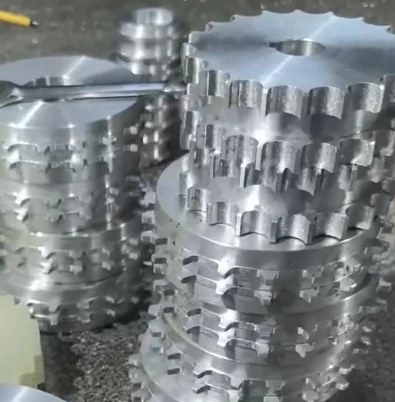
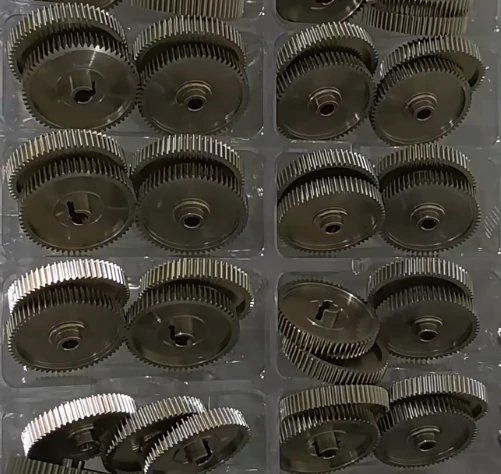
Aluminum vs Stainless Steel Gears: Which Gear Material Is Better?
Aluminum gears and stainless steel gears are widely used in power transmission systems, but their material properties make them suitable for different applications. The selection depends on factors such as weight, load capacity, corrosion resistance, thermal performance, and cost.
Aluminum gears have a density of approximately 2.7 g/cm³, much lower than stainless steel gears at 7.9–8.0 g/cm³. This weight advantage can reduce component weight by 60–70%, making aluminum gears ideal for lightweight systems requiring lower inertia.
Stainless steel gears generally provide higher tensile strength (500–1000 MPa), while aluminum gears typically offer 200–500 MPa depending on alloy and heat treatment. Therefore, stainless steel is preferred for heavy-load applications, while aluminum suits lightweight and efficient mechanical systems.
Both materials provide corrosion resistance through different mechanisms. Aluminum forms a natural oxide layer, while stainless steel uses chromium passivation for protection.
Aluminum gears offer higher thermal conductivity (150–250 W/m·K) than stainless steel gears (15–20 W/m·K), enabling faster heat dissipation. However, aluminum has higher thermal expansion, which requires careful design under temperature changes.
From a manufacturing perspective, aluminum gears are easier to machine and more cost-effective due to higher cutting speeds and shorter processing times. Stainless steel gears provide better fatigue resistance and longer service life for demanding applications.
| Immobilie | Aluminum Gears | Stainless Steel Gears |
| Density (g/cm³) | 2.7 | 7.9–8.0 |
| Tensile Strength (MPa) | 200–500 | 500–1000 |
| Korrosionsbeständigkeit | Good (natural oxide layer) | Excellent (chromium passivation) |
| Thermal Conductivity (W/m·K) | 150–250 | 15–20 |
| Coefficient of Thermal Expansion (×10⁻⁶/°C) | 23 | 17 |
| Relative Cost (per kg) | Lower | Higher |
| Fatigue Limit (MPa) | 100–150 | 250–400 |
Selecting between aluminum gears and stainless steel gears requires balancing weight, strength, durability, thermal performance, and manufacturing requirements to achieve the best solution for the specific application.
Why Choose Welleshaft for Custom Aluminum Gear Manufacturing?
Welleshaft specializes in custom aluminum gears manufacturing, providing integrated solutions from gear design and material selection to precision machining and final production. With experience in CNC machining, aluminum gear prototyping, and custom gear manufacturing, Welleshaft supports both low-volume prototypes and batch production for complex aluminum gear applications.
The manufacturing capabilities cover multiple processes, including CNC machining, die casting, and forging aluminum gears. By selecting the appropriate process based on gear structure, production volume, and performance requirements, Welleshaft helps achieve precise dimensions, reliable tooth profiles, and consistent quality. Advanced machining capabilities enable the production of custom aluminum gears with tight tolerances and complex geometries.
Welleshaft also provides various aluminum surface treatments and finishing options to enhance corrosion resistance, wear performance, and service life. Combined with proper aluminum alloy selection and strict quality control, these manufacturing solutions support lightweight and durable gear components for automotive, robotics, aerospace, renewable energy, and other industrial applications.
Through comprehensive aluminum gear manufacturing capabilities, Welleshaft delivers customized gear solutions that balance performance, efficiency, and cost requirements for different mechanical systems.
What Are the Most Common Questions About Aluminum Gears?
Are aluminum gears strong enough for industrial applications?
Yes, aluminum gears can be used for many industrial applications when the correct alloy, design, and manufacturing process are selected. Although aluminum gears generally have lower strength than steel gears, aluminum alloys such as 6061-T6 and 7075-T6 provide good mechanical performance for lightweight transmission systems.
The strength of aluminum gears depends on factors such as gear size, tooth design, load conditions, heat treatment, and surface finishing. For high-strength applications, 7075 aluminum gears are often selected due to their higher tensile strength and improved load-bearing capability.
How much weight can aluminum gears reduce compared with steel gears?
Aluminum gears can significantly reduce weight compared with steel gears because aluminum has a much lower density. Aluminum has a density of approximately 2.7 g/cm³, while steel is around 7.8 g/cm³.
This lightweight advantage makes aluminum gears suitable for applications where reducing rotational inertia and overall system weight is important, including automotive components, robotics, aerospace equipment, and high-speed mechanical systems.
Are aluminum gears durable and wear resistant?
Aluminum gears can provide reliable durability when designed and manufactured properly. However, aluminum has lower surface hardness and wear resistance compared with steel, especially under heavy loads or high-friction conditions.
To improve the wear resistance of aluminum gears, surface treatments such as hard anodizing, anodizing, and protective coatings are commonly applied. Proper lubrication, load control, and material selection also help extend aluminum gear service life.
What aluminum alloy is best for gears?
The best aluminum alloy for gears depends on the application requirements, including strength, weight, machinability, and operating environment.
- 6061-T6 aluminum gears:Provide a good balance of strength, corrosion resistance, and machinability, making them suitable for general applications.
- 7075-T6 aluminum gears:Offer higher strength and are often used for aerospace, high-performance, and load-sensitive applications.
- 2024 aluminum gears:Provide good fatigue resistance for applications requiring repeated loading performance.
Selecting the right aluminum alloy helps achieve the required gear performance and service life.
Can aluminum gears replace steel gears?
Aluminum gears cannot replace steel gears in every application. The choice between aluminum gears and steel gears depends on operating requirements.
Aluminum gears are preferred when lightweight design, corrosion resistance, and high machining efficiency are important. Steel gears are generally better for applications requiring extremely high load capacity, impact resistance, and maximum wear resistance.
For lightweight mechanical systems, robotics, and high-speed applications, aluminum gears can be an effective alternative to steel gears.
Can aluminum gears be CNC machined?
Yes, aluminum gears are highly suitable for CNC machining due to aluminum’s excellent machinability.
CNC machining aluminum gears allows manufacturers to produce complex tooth profiles, custom designs, and precision components with tight dimensional control. Processes such as CNC milling, CNC turning, gear hobbing, and finishing operations can be used to manufacture high-quality aluminum gears.
Do aluminum gears need surface treatment?
Surface treatment is often recommended for aluminum gears, especially when improved wear resistance and durability are required.
Common aluminum gear surface treatments include:
- Hard anodizing
- Anodizing
- Protective coatings
These treatments improve surface hardness, corrosion resistance, and overall service life, making aluminum gears more suitable for demanding environments.
How do you choose between aluminum spur gears, helical gears, and worm gears?
The choice of aluminum gear type depends on the required motion transmission, load conditions, and installation space.
- Aluminum spur gears:Suitable for simple parallel shaft transmission with easy manufacturing and cost efficiency.
- Aluminum helical gears:Provide smoother operation, lower noise, and better load distribution.
- Aluminum worm gears:Suitable for applications requiring high reduction ratios and compact designs.
This blog was provided by the Welleshaft Engineering Team, sharing insights into aluminum gear design, material selection, and manufacturing processes. Welleshaft specializes in custom aluminum gears, CNC machining, and precision gear solutions for industrial applications.

 Deutsch
  English
  Português do Brasil
  Deutsch (Österreich)
  Deutsch (Schweiz)
  English (UK)
  English (Australia)
  English (New Zealand)
  Français du Canada
  Français
  Français de Belgique
  Italiano
  English (South Africa)
  Português
  Español
  Español de México
  Español de Perú
  Español de Colombia
  العربية
  日本語
日本語  Русский
  한국어
한국어  Tiếng Việt
  ไทย
ไทย