
CNC Machining Quality Testing and Inspection: Standards, Equipment, and Best Practices
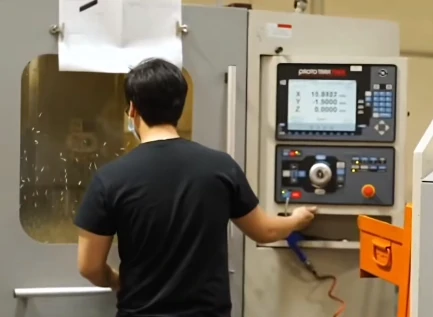
Quality testing and inspection play a crucial role in CNC machining and Metal Fabrication Contract Manufacturing, directly impacting product reliability, functionality, and customer satisfaction. Understanding the tools, techniques, and inspection stages involved ensures consistently high-quality output. This article offers a detailed guide to CNC machining and Metal Fabrication quality testing and inspection practices.
In Metal Fabrication Contract manufacturing, especially CNC machining, Cold Forging,Die Casting, Metal Welding and Mechanical Assembly maintaining exceptional quality is non-negotiable. Every part must meet strict specifications, ensuring reliability and performance. Comprehensive Engineering and inspection form the backbone of quality management, helping manufacturers produce flawless components consistently.
What is Quality Testing and Inspection in CNC Machining?
Quality testing and inspection involve examining machined components to verify their compliance with specified criteria—such as dimensions, tolerances, material properties, and surface quality. The objective is to detect and eliminate defects before the product reaches the end user, ensuring optimum functionality and reliability.
Quality Control vs. Quality Inspection vs. Quality Assurance
Quality Control (QC): Making Sure Everything Goes Right
During production, teams carry out a range of activities to maintain consistent product quality by monitoring processes, identifying issues early, and correcting them promptly to prevent defects downstream. In this context, Quality Control acts as a systematic approach that ensures consistency at every stage of production. In practice, QC is similar to carefully following a recipe every time you cook, ensuring each result is consistently well-prepared.
Quality Inspection: Checking the Finished Product
Quality Inspection involves carefully examining finished parts or materials to make sure they match the required specifications. This step focuses on measuring dimensions, checking surfaces, and visually looking for any flaws or defects. Imagine inspecting fruit at a market—you pick each piece up and make sure it’s ripe, unbruised, and good enough to buy.
Quality Assurance (QA): Planning to Prevent Problems
Quality Assurance is about planning and improving processes so that problems don’t happen in the first place. It includes creating guidelines, setting standards, and training employees. QA helps everyone know exactly how to do their jobs properly, ensuring the final products meet quality standards consistently. It’s like practicing good hygiene to stay healthy instead of just treating illnesses after they happen.
Testing vs. Inspection: Understanding the Key Differences
This is a crucial distinction. While both are verification tools, they serve different purposes:
Inspection primarily evaluates visual and dimensional attributes. It answers: Does the product look right? Are the parts assembled correctly? Are the materials as specified? It often relies on checklists, calipers, and gauges.
Testing evaluates performance and functional attributes. It answers: Does the product work as intended? How long will it last under stress? Does it meet safety standards? Testing involves subjecting the product to conditions that simulate real-world use, such as electrical safety tests, drop tests, or lifecycle testing.
A comprehensive quality assurance inspection protocol will include both elements: inspecting for visible defects and testing for functional reliability.
How QA, QC, and Inspection Work Together in a System
These elements are not silos; they form an integrated, cyclical system for guaranteed outcomes. According to the difference between a test and an inspection, you can know:
- QA Sets the Stage: Your quality assurance process defines the product requirements and selects a capable supplier.
- QC Executes the Plan: The supplier’s quality control team implements in-process checks based on the QA framework.
- Inspection Provides Proof: A pre-shipment inspection (often conducted by a third party) verifies that the finished goods match the QA specifications before they leave the factory.
- Feedback Drives Improvement: Findings from QC and inspection are fed back into the QA system. If inspections repeatedly find a specific defect, the QA team reviews and updates the process—perhaps by revising designs, improving worker training, or sourcing better raw materials—to prevent it from recurring.
This synergy transforms quality from a final checkpoint into a continuous loop of planning, doing, checking, and acting. It’s the difference between hoping for a good batch and systematically engineering one.
The Engineering Inspection Lifecycle: A Step-by-Step Guide
Now that we’ve clarified the distinct roles of quality assurance and quality control, let’s see how they come together in a practical, systematic process. A successful quality inspection is not a single event; it follows a structured journey that catches issues early and ensures the final product meets every specification. This lifecycle approach transforms reactive checking into proactive risk management, providing you with consistent, reliable results.
Pre-Inspection Planning and Document Review
All effective quality assurance inspections begin long before an inspector sets foot on the factory floor. This foundational stage is about alignment and preparation. We work with you to define the critical-to-quality (CTQ) characteristics of your product, referencing your technical drawings, purchase orders, and approved samples. The inspector then reviews the supplier’s internal quality control plans, material certifications, and process documentation. This upfront clarity ensures everyone—you, the supplier, and our team—is working from the same playbook, preventing costly misunderstandings later.
In-Process Inspection and Surveillance
This is where the real-time oversight happens, typically when 20-80% of the production run is complete. The inspector doesn’t just check finished items; they monitor the manufacturing process itself. Key activities include:
Verifying assembly lines to ensure correct procedures are followed.
Checking raw materials and components against approved samples.
Performing initial dimensional, functional, or safety tests on semi-finished goods.
Assessing the factory’s production environment and equipment calibration.
This stage is the heart of preventive quality assurance. Identifying a faulty component or a misaligned machine at this point allows for immediate correction before thousands of defective units are produced, saving significant time and money.
Final Inspection and Testing Protocols
Conducted when 100% of the order is packed and ready for shipment, the Final Random Inspection (FRI) is the last gatekeeper. Using internationally recognized statistical sampling methods like ANSI/ASQ Z1.4, the inspector randomly selects units from the completed batches. They perform a comprehensive check against the agreed AQL (Acceptable Quality Level), covering:
Workmanship & Aesthetics: Surface finish, color, logos, and packaging.
Function & Performance: Does the product work as intended?
Dimensions & Specifications: Precise measurements against your drawings.
Packing & Labeling: Compliance with shipping and destination market requirements (e.g., proper voltage labels for the US market).
This stage provides the definitive verification that the bulk shipment conforms to all requirements.
Reporting, Non-Conformance, and Corrective Action
Why Quality Control Is Critical in CNC Machining
Even minor deviations in a CNC-machined part can lead to functional failure, poor fit, or safety risks. Precision tolerances, consistent finishes, and geometric conformity are essential to ensure:
Seamless assembly with mating components
Consistent product performance and safety
Compliance with industry standards such as ISO 2768, ASME Y14.5, and DIN ISO 286
Reduced rework and warranty claims
Certification for regulated industries like aerospace and medical
At Welleshaft, every part undergoes a structured quality control process from raw material traceability to final inspection. We provide precision CNC machining services with full inspection reports, CMM measurements, and first article documentation upon request.
What Are Quality Control Standards in CNC Machining?
Quality control requirements in CNC machining define a systematic set of methods and criteria to ensure that machined components meet specific dimensional, mechanical, and aesthetic specifications. These standards cover all components of material inspection, right from raw material to the final product.In industrial CNC machining, quality control goes beyond a system; it operates as a continuous process integrated throughout the entire manufacturing workflow. This guarantees that the components meet the engineering specifications and enterprise standards while decreasing defects and waste.
Organizations usually develop quality control standards in accordance with globally accepted certifications such as ISO 9001 or AS9100, depending on the industry.
The Role of Precision in CNC Manufacturing
Accuracy is the important thing to a successful CNC operation. Precision CNC machining emphasizes precision in attaining close tolerances, reliable results, and top-notch surface finish. Modern CNC machines enable producers to produce parts with micron-accuracy, making sure that the components work precisely as designed. Precision is specifically vital in applications that contain moving components or high-stress conditions, in which the slightest deviation in dimensions can impact performance.
Precision additionally allows decrease rework and scrap, making production extra efficient and much less expensive. Quality control systems are always tracking machining parameters to ensure that precision is done in every manufacturing cycle.
How Advanced CNC Technologies Improve Quality Control
Technological advancements have improved quality assurance in CNC machining to a great extent. Automation, software, and multi-axis machining are some factors that have increased consistency and accuracy, thereby reducing human error.
Quality Benefits of 5-Axis CNC Machining
5-axis CNC machining enables the machine to move towards the different directions in a single operation. This eliminates the need for repositioning, thereby reducing the chances of misalignment. This further results in faster production and increased accuracy, which is why 5-axis machining is perfect for high-precision parts requiring high-quality standards.
Automation and Software in Quality Assurance
Integrated CAD/CAM software, simulation, and automated toolpath verification can eliminate mistakes before machining. Automation also provides consistency in high-volume production, which is ideal for scalable and high-quality production.
Key Quality Control Parameters in CNC Machining
Dimensional Accuracy and Tolerance
Dimensional accuracy and tolerance are at the heart of CNC machining quality. In your journey as a machinist or a manufacturer, you’ll find that the essence of quality lies in how accurately machined parts meet their specified dimensions.
This accuracy is not just about hitting the right measurements; it’s about adhering to the tight tolerances that define the functionality and integration of parts in their intended applications.
CNC equipment, known for its precision, plays a crucial role in achieving this. Dimensional accuracy isn’t just a measure; it’s a testament to the quality and reliability of the machining process.
Surface Finish and Roughness
Surface finish and roughnesssignificantly impact the performance and aesthetic appeal of CNC machined parts. When you assess a part, the surface finish tells a story of the manufacturing process’s finesse.
High-quality parts often require a smooth finish, free from unwanted ridges or marks, ensuring they perform as intended in their operational environment.
Traditional machining techniques have evolved, allowing for greater control over surface finish, making this parameter a critical aspect of quality control in the machining process.
Surface Finish Standards
Engineers most commonly measure surface roughness as Ra (roughness average), which quantifies the average deviation from a mean line in micrometers or microinches.
Typical Ra values:
1.Ra 6.3 µm: Standard for as-machined surfaces
2.Ra 3.2 µm: Common finish for general-purpose functional parts
3.Ra 1.6 µm: Suitable for mating components and medium-precision assemblies
4.Ra 0.8 µm or lower: Required for sealing surfaces, medical parts, or high-performance components
Material Hardness and Strength
The hardness and strength of materials used in CNC machining are crucial factors that you must consider.
Different applications demand materials with varied hardness and strength levels, influencing the choice of raw materials and machining processes. For instance, a component destined for a high-stress environment will require a material that withstands such conditions without compromising integrity.
Therefore, comprehensive inspection of material hardness and strength becomes an integral part of the quality inspection process, ensuring that the final product not only looks right but performs exceptionally under the intended use conditions.
Key elements include:
Material Test Reports (MTRs) compliant with EN 10204 3.1
Positive Material Identification (PMI) for critical alloys
Heat lot tracking for serialized or regulated components
Hardness testing per ASTM E18 or ISO 6508
Certification to RoHS, REACH, or FDA when required
Geometric Tolerancing (GD&T)
Geometric tolerancing is a sophisticated aspect of CNC machining quality control. It involves the application of specific tolerances on geometric features of a part, such as flatness, straightness, or roundness.
Tools like Coordinate Measuring Machines (CMMs) and practices in geometric dimensioning and tolerancing (GD&T) are indispensable in this realm. They provide the accuracy and precision required to assess and verify complex geometries, ensuring that the parts you produce meet not just dimensional accuracy but also geometric perfection.
Common Geometric Tolerances
Defined using GD&T symbols per ASME Y14.5 or ISO 1101:
Flatness: Limits deviation of a surface from a theoretical plane (e.g., ≤0.03 mm across 100 mm)
Parallelism: Controls how uniformly two surfaces or features align
Perpendicularity: Ensures accurate 90° angles for precision mating
Cylindricity: Controls the roundness and straightness of cylindrical surfaces
True position: Specifies allowable variation from theoretical center locations
Machining Process Control
Machining process control is about maintaining a constant vigil over the entire CNC machining process. This includes:
Monitoring and Adjusting: It’s essential to continuously monitor aspects like cutting speed, feed rate, and tool wear.Operators make real-time adjustments to sustain the quality of the output. For instance, if they detect tool wear, they may need to change cutting parameters or even replace the tool itself to avoid process-related errors.
Statistical Process Control (SPC): Utilizing statistical methods to oversee and manage the machining processes is key. SPC helps in identifying trends and deviations in the process, allowing for preemptive adjustments. This statistical approach ensures consistency and high quality in every CNC machined part.
Tool Wear and Life
Tool wear and life significantly influence the quality of machined parts. A worn tool can lead to dimensional inaccuracies and poor surface finish. Regular checks and maintenance of tools are essential.
By monitoring tool life and wear patterns, you can preemptively replace or maintain tools, ensuring that they perform optimally throughout their lifecycle, thus maintaining consistent machining quality.
Assembly and Fit
In the assembly and fit phase, the focus is on how individual components come together. Precision in machining ensures that parts fit together perfectly, adhering to the design requirements. This is where aspects like dimensional and geometric tolerances play a significant role.
A comprehensive inspection process is vital here to ensure that each component not only fits but functions as intended in the final assembly.
Environmental Factors
Environmental factors like temperature and humidity can dramatically affect the properties of materials and the precision of machining operations. Controlled environments are often necessary for high-precision tasks.
This includes maintaining the temperature and humidity levels within the machining area to prevent material expansion or contraction, which could lead to inaccuracies.
Compliance with Standards and Regulations
Compliance with industry standards and regulations is an integral part of quality control in machining. This ensures that machined parts are not only of high quality but also safe and reliable.
ISO 9001 Certification
ISO 9001 certification is a global benchmark for quality management systems. It’s a testament to an organization’s commitment to maintaining product quality, enhancing customer satisfaction, and striving for continuous improvement.
AS9100 for Aerospace Industry
Specific to the aerospace industry, the AS9100 standard incorporates all ISO 9001 requirements with additional quality and safety measures.
Compliance with AS9100 is crucial for manufacturers in the aerospace supply chain, emphasizing the importance of quality assurance in every aspect of the machining process.
Essential Quality Control Techniques and Tools
Dimensional Measurement Tools
Calipers and Micrometers
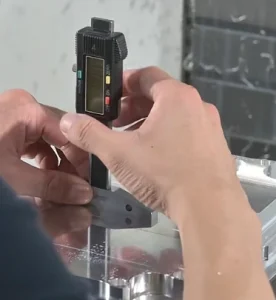
These are the quintessential tools in any machinist’s arsenal. Calipers and micrometers provide you with the ability to measure the external and internal dimensions of parts with high precision. Whether it’s a digital caliper measuring a CNC part’s thickness or a micrometer gauging the diameter of a small hole, these tools are indispensable for ensuring parts meet their dimensional specifications.
Coordinate Measuring Machine (CMM)
it performs high-precision dimensional inspection of CNC machined parts. Utilizing tactile or optical probing, CMM captures exact geometries and verifies tolerance conformance. It ensures CNC components meet stringent dimensional, form, and positional requirements, supporting first-article inspection, process validation, and quality assurance in aerospace, automotive, and industrial applications.
Gauge Blocks and Thread Gauges
These are the quintessential tools in any machinist’s arsenal. Calipers and micrometers provide you with the ability to measure the external and internal dimensions of parts with high precision. Whether it’s a digital caliper measuring a CNC part’s thickness or a micrometer gauging the diameter of a small hole, these tools are indispensable for ensuring parts meet their dimensional specifications.
Contour Measuring Instrument
Contour Measuring Instrument performs ultra-precise surface profile and contour analysis of CNC machined parts. It evaluates form accuracy, waviness, and step heights with micron-level resolution. Ensures critical surfaces and functional profiles meet stringent design specifications, supporting quality assurance in aerospace, automotive, and high-precision industrial machining applications.
Height Gauge
Height Gauge provides high-precision vertical dimensional measurement of CNC machined parts. It verifies heights, step depths, and vertical distances with micron-level accuracy. Essential for first-article inspection, process control, and quality assurance in aerospace, automotive, and precision industrial machining of critical components.
3D Scanning Measuring Instrument
3D Scanning Measuring Instrument performs high-precision, non-contact dimensional inspection of CNC machined parts. Captures complete surface geometry with micron-level accuracy. Essential for validating complex geometries, detecting dimensional deviations, and ensuring conformance to CAD models in aerospace, automotive, and precision industrial applications.
Surface Roughness Testers
Profilometers: These are the quintessential tools in any machinist’s arsenal. Calipers and micrometers provide you with the ability to measure the external and internal dimensions of parts with high precision. Whether it’s a digital caliper measuring a CNC part’s thickness or a micrometer gauging the diameter of a small hole, these tools are indispensable for ensuring parts meet their dimensional specifications.
Optical Comparators: These are the quintessential tools in any machinist’s arsenal. Calipers and micrometers provide you with the ability to measure the external and internal dimensions of parts with high precision. Whether it’s a digital caliper measuring a CNC part’s thickness or a micrometer gauging the diameter of a small hole, these tools are indispensable for ensuring parts meet their dimensional specifications.
Hardness Testing Equipment
Operators commonly use Rockwell hardness testers to measure the hardness of metals.The Rockwell test assesses the depth of penetration of an indenter under a large load compared to the penetration made by a preload. Engineers and technicians widely use this method because it quickly and accurately determines material hardness.
Operators commonly use Brinell hardness testers to measure the hardness of metals.The Rockwell test assesses the depth of penetration of an indenter under a large load compared to the penetration made by a preload. Engineers and technicians widely use this method because it determines material hardness with speed and accuracy.
Non-Destructive Testing (NDT)
Ultrasonic Testing: Ultrasonic Testing Equipment enables non-destructive evaluation of internal defects in CNC machined parts. Using high-frequency sound waves, it detects subsurface flaws such as cracks, inclusions, and delamination. Essential for quality assurance and structural integrity verification in aerospace, automotive, and critical industrial machining applications.
X-ray Inspection: X-ray Inspection Workshop conducts non-destructive internal defect analysis for CNC machined parts. Utilizing high-energy X-rays, it visualizes internal structures to detect porosity, cracks, inclusions, and dimensional inconsistencies. Critical for quality assurance, structural validation, and process control in aerospace, automotive, and precision industrial machining applications.
Magnetic Particle Inspection: Surface and sub-surface defect detection in ferrous materials.
Statistical Process Control (SPC) Software
Data Collection and Analysis Tools: These tools monitor process stability and control through statistical analysis. By analyzing data collected from various stages of the CNC machining process, these tools help in identifying trends, variations, and potential areas of improvement.
Real-Time Monitoring Systems: These systems are critical for tracking and analyzing production data in real-time. They enable the identification of trends and deviations, facilitating immediate corrective actions to maintain the quality standards.
Tool Condition Monitoring
Wear Measurement Devices: These devices assess tool wear and predict tool life. By accurately gauging the wear of cutting tools, they help in determining the optimal time for tool replacement, thus preventing defects caused by tool degradation.
Environmental Monitoring Equipment
Temperature and Humidity Sensors: These sensors are crucial in ensuring the machining environment stays within optimal operating conditions. Fluctuations in temperature and humidity can affect material properties and machining precision. Controlled environments, monitored by these sensors, are essential for high-precision tasks, avoiding process-related errors and ensuring consistent quality.
Geometric Dimensioning and Tolerancing (GD&T) Tools
Specialized Gauges and Fixtures: These tools are used for measuring and verifying geometric tolerances of machined parts. They play a vital role in ensuring that the parts meet specific design requirements. This includes checking for flatness, straightness, roundness, and other geometric properties, which are essential for the part’s functionality and fit in the final assembly.
Visual Inspection Tools
Magnifying Glasses and Microscopes: For detailed visual inspection of parts, these tools are indispensable. They allow for a closer examination of the surface and structure of the machined parts, detecting any imperfections or deviations from the specified quality standards.
Inspectors use borescopes to examine internal features of components that are not visible to the naked eye. They insert borescopes into small openings to view internal surfaces and identify any internal defects or inconsistencies.
Material Analysis Equipment
Inspectors use spectrometers to verify material composition. By analyzing the material’s elemental makeup, they ensure that manufacturers use the correct materials and that these materials comply with the specified standards.
Engineers and technicians use microstructure analysis tools to assess the grain structure and integrity of metals. They help in understanding the material’s properties and predicting its behavior under various conditions, which is crucial for determining its suitability for specific applications.
Metallographic Microscopy: Metallographic Microscopy provides high-resolution microstructure analysis of CNC machined parts. It reveals grain structure, phase distribution, and surface defects through polished cross-sections. Essential for validating machining processes, heat treatment outcomes, and mechanical property correlations in aerospace, automotive, and high-precision industrial components.
Assembly and Fit Testing Tools
Go/No-Go Gauges: These are simple yet effective tools for quick pass/fail testing of dimensions. They are essential in verifying whether parts meet the specified tolerances and are particularly useful in high-volume production where quick validation is necessary.
Functional Testing Rigs: These rigs simulate working conditions to test assembled parts. They are crucial for ensuring that the parts not only fit together but also function correctly under the conditions they will be subjected to in their actual use.
Documentation and Traceability Systems
Quality Management Software: This software is used for maintaining records of inspections, tests, and compliance with standards. It ensures that all quality control processes are documented, providing traceability and accountability, which is crucial for continuous improvement and meeting regulatory requirements.
Stages of Machining Quality Testing and Inspection
Raw Material Inspection
Raw material inspection is the first and fundamental step in the machining process. It involves meticulously checking and assessing the quality and properties of the materials before commencing any machining operations.
This step is crucial as the quality of the raw material significantly impacts the final product’s quality. During raw material inspection, manufacturers verify that the materials meet the required specifications in terms of composition, hardness, and other relevant properties.
First Article Inspection (FAI)
First Article Inspection, often referred to as FAI, is a critical quality control process. It serves as a preliminary check to ensure that the initial produced part aligns with design and quality requirements.
Manufacturers examine the first article produced in a production run to confirm that it meets the specified dimensional and functional criteria. FAI is essential to identify and rectify any issues early in the production process.
In-Process Inspection
In-process inspection involves conducting inspections at various stages of the machining process. The goal is to monitor dimensions, tolerances, and surface finish continuously.
This real-time monitoring helps identify and correct issues as they arise, preventing the production of defective parts and reducing the need for rework.
Dimensional Inspection
Dimensional inspection is a meticulous process that uses precision measuring instruments such as calipers, micrometers, and gauges to verify that the dimensions of machined parts align with design specifications. Maintaining dimensional accuracy is critical to ensure that the final product functions as intended.
Surface Finish Inspection
Surface finish inspection evaluates the surface roughness and finish of machined parts. This inspection can be performed using specialized tools like surface roughness testers or through visual inspection. Achieving the specified surface finish is essential for both functionality and aesthetics.
Visual Inspection
Visual inspection is a crucial step in quality control. It involves a thorough visual examination of machined parts to detect surface defects, cracks, burrs, scratches, or any imperfections that may impact their quality or functionality.
Non-Destructive Testing (NDT)
Non-destructive testing techniques, including ultrasonic testing, magnetic particle testing, dye penetrant testing, and radiographic testing, are employed to detect hidden defects within machined parts without causing any damage.
NDT is especially valuable for identifying internal flaws that may compromise the part’s integrity.
Hardness Testing
Hardness testing is used to measure the hardness of materials, ensuring they meet specified hardness requirements. Techniques such as Rockwell, Brinell, or Vickers hardness testing are employed to assess material hardness accurately.
Functional Testing
Functional testing assesses the machined part’s functionality, including its fit, form, and performance within the intended application. This stage ensures that the part functions as expected.
Assembly and Fit-Up Inspection
Assembly and fit-up inspection verify the fit and alignment of machined components during the assembly process. This is essential to ensure that the final product functions correctly and that tolerances are within acceptable limits.
Final Inspection
Final inspection is a comprehensive evaluation of fully machined parts. It ensures that all quality standards and specifications are met before the parts are released for use or shipment. This stage is critical for delivering high-quality products to customers.
Statistical Process Control (SPC)
Statistical Process Control (SPC) techniques are used to monitor and control the machining process, ensuring it remains within acceptable limits and minimizing variations. SPC helps maintain consistency and quality throughout production.
Documentation and Record Keeping
Maintaining detailed records of all inspections and testing results is essential for traceability and quality control.
Proper documentation ensures that the manufacturing process complies with quality standards and provides a valuable reference for future quality assessments.
Post-Machining Treatments
In cases where post-machining treatments like heat treatment or plating are applied, inspection is crucial to verify that these treatments meet specified requirements. This ensures that the treated parts meet quality standards.
Packaging and Shipping Inspection
The final step involves checking the quality and condition of machined parts before packaging and shipping to customers. This inspection prevents any damage during transit, ensuring that customers receive products in optimal condition.
In-Process vs Final Inspection
Effective quality control is not a one-time activity. It is integrated into every manufacturing stage to reduce scrap, minimize rework, and ensure conformity.
- In-process inspection: Performed after each critical operation (e.g., rough milling, drilling)
- Tool life and offset monitoring: Ensures tool wear does not cause gradual drift
- SPC (Statistical Process Control): Used in batch runs to identify trends and deviations
- Final inspection: Includes full CMM validation, surface checks, and dimensional reports
Welleshaft implements quality control systems per ISO 9001 and performs FAI (First Article Inspection) per AS9102 on request for aerospace-grade projects.

Importance of Personnel Training
Skilled personnel are critical to machining quality. Regular training ensures operators understand and effectively apply the latest quality control methods and standards. Training covers:
- Proper use of measurement tools.
- Interpretation of specifications and tolerances.
- Implementation of quality assurance practices.
The role of skilled personnel in machining quality control cannot be overstated. Well-trained staff are essential for operating any complex CNC machine tool and implementing quality control procedures effectively. They bring an understanding of the nuances of machining processes and can swiftly adapt to changes, ensuring consistent quality in production.
Training programs focusing on the latest machining techniques, quality standards, and inspection processes are vital in upskilling personnel to meet the dynamic demands of CNC machining.
Quality Inspection and Assurance at WelleShaft
At WelleShaft, our commitment to delivering precision in our Contract CNC Machining Manufacturing servicesand parts is backed by a comprehensive quality inspection and assurance process.
Quality Management System
All production and quality processes are managed through an online system and operated under an SGS-certified ISO 9001 quality management framework, ensuring timely execution, efficient process control, and consistent manufacturing quality.
- RFQ Submission:Project requirements and drawings are submitted for engineering evaluation.
- Engineering Review:Drawings, tolerances, materials, and technical notes are reviewed to identify critical features and manufacturing risks.
- DFM Feedback (If Required):Manufacturability feedback is provided when design features may affect cost, quality, or lead time.
- Process Planning & Control:Machining strategies, setups, tooling, and control parameters are defined to ensure stable production.
- In-Process Inspection:Key dimensions and critical features are inspected during machining to monitor process stability.
- Final Inspection & Validation:Completed parts are verified against drawings and quality requirements before release.
- Documentation & Traceability:Inspection records and production files are stored in an online system and retained for a minimum of one year.
- Packaging & Delivery:Parts are securely packed and shipped via UPS, DHL, or other approved logistics providers.
- Continuous Improvement:Production and inspection feedback is reviewed to improve quality and repeatability for future orders.
- After-Sales Support:Technical support is available after delivery to address quality feedback and repeat order needs.
Incoming Material Inspection
Incoming raw materials are verified through our online quality system using internal spectrometer testing, along with material inspection reports provided by the material supplier, to confirm material grade and chemical composition accuracy before production.
Inspection Equipment:Calibrated inspection equipment used for incoming material verification.
Inspection Process:Incoming material inspection performed before production release.
Spectrometer Analysis:Internal spectrometer analysis used to verify material chemical composition.
Material Inspection Report:Material inspection reports provided by the supplier to confirm material specifications.
In-Process Quality Control
Quality is monitored during machining operations through defined inspection points and real-time measurements to ensure process stability and dimensional consistency throughout production.
Machining Setup
First-Article Check
Defined Inspection Points
Critical Dimension Monitoring
Tool Offset / Process Adjustment
Continue Production
Final Inspection & Validation
Final inspection is performed using calibrated precision measuring equipment to verify dimensional tolerances, geometric features, surface finish, and other specified parameters before release.
This process is meticulously designed to ensure each project not only meets but exceeds your requirements. Let’s delve into our inspection and testing procedures.
- Cutting-Edge Measuring and Testing Equipment: We leverage the latest in technology for our quality control system. This approach covers the entire manufacturing process – from incoming materials inspection to the final inspection and testing before shipping.
- X-RAY Material Tester: With this advanced tool, we identify all kinds of metal within 30 seconds. This rapid identification guarantees the correct material usage, preventing potential losses in mass production and ensuring safety in prototype testing.
- On-Machine Inspection System: This system enhances the precision and speed of finding material block positions, especially beneficial for post-machining on inconsistent die casting parts or extrusion profiles. It also adjusts cutting paths automatically based on inspection results, saving both time and cost.
- Projector: Our projector is equipped to measure various geometrical features with high accuracy. It’s integrated with data processing functions, exporting measurement data directly for statistical analysis. This tool is particularly useful for ensuring the straightness of workpieces.
- Coordinate Measuring Machine (CMM): The CMM allows us to define the parameters of complex shapes through a series of points in three-dimensional space. This device is crucial for ensuring the parts conform to their designed geometries with a high degree of accuracy and repeatability.
Tolerance Capability
Our tolerance capability is determined by part geometry, material, machining process, and inspection method. Final achievable tolerances are confirmed during engineering review.
| Manufacturing Process | Typical Tolerance Range |
| CNC Milling / Turning | ±0.005 mm (±0.0002 in) |
| Precision Features / Tight Fits | Down to ±0.002 mm* |
| Bores & Shafts | ISO fit classes upon request |
| Sheet Metal Fabrication (General) | ±0.10 – ±0.30 mm (material & thickness dependent) |
| Sheet Metal Bending / Forming | ±0.20 – ±0.50 mm (bend angle & material dependent) |
| Surface Finish | Ra 0.8 – 3.2 μm (process-dependent) |
Factors Affecting Tolerance Capability
- Part geometry and feature accessibility
- Material type, thickness, and mechanical properties
- Manufacturing process and setup stability
- Inspection method and measurement resolution
Engineering Note
Tighter tolerances may increase machining complexity, inspection time, and cost. All tolerance requirements are reviewed during quotation to ensure manufacturability, quality stability, and production efficiency.
Traceability & Documentation
Production and quality records are managed through an online system to support traceability, controlled documentation, and post-delivery review.
Documentation & Record Control
- Online Quality System
Inspection data, production records, and quality documents are stored and managed through a centralized online system. - Inspection & Measurement Records
Dimensional inspection results, final inspection reports, and measurement data are recorded for reference and review. - Material Documentation
Supplier material inspection reports and internal verification records are retained to support material traceability. - Production Records
Job records, process parameters, and revision history are maintained for manufacturing reference.
Record Retention Policy
Quality and production records are retained for a minimum of one year in accordance with internal quality control procedures.
Purpose of Traceability
- Support quality review and root cause analysis
- Enable repeat production with consistent quality
- Provide documentation upon customer request
- Align with ISO 9001 documentation and control requirements
Conclusion
Achieving and maintaining high-quality CNC machined parts requires diligent application of robust inspection techniques, skilled personnel, and advanced equipment. By understanding these practices and continually improving upon them, manufacturers can reliably produce precision components, fostering customer trust and industry reputation.
FAQs
Why is dimensional accuracy critical in CNC machining?
Dimensional accuracy ensures parts fit and function correctly, avoiding assembly problems and functional failures.
How does surface finish affect component performance?
Surface finish impacts aesthetics, friction, wear resistance, and fatigue life.
What is non-destructive testing (NDT)?
NDT methods detect internal or external defects without damaging the component, essential in safety-critical industries.
Why is compliance with ISO and aerospace standards important?
Meeting these standards ensures parts meet universally recognized quality and safety criteria.
How frequently should inspection occur during machining?
Regular inspections should occur at critical stages including initial material check, first article inspection, in-process monitoring, and final validation.
What is the core difference between Quality Assurance (QA) and Quality Control/Inspection (QC)?
This is a fundamental distinction. Think of Quality Assurance as the proactive system of processes designed to prevent defects. It’s the strategic framework, including planning, training, and process design, that ensures quality is built into the product from the start. Quality Control and quality inspection are the reactive tools within that system. They involve the specific activities of checking, measuring, and testing products to identify defects that have already occurred. In short, QA is about preventing problems, while QC is about finding them.
When should I schedule an inspection during my production run?
The timing of assurance inspections is critical for effective risk management. A best-practice approach involves a multi-stage schedule:
Pre-Production Inspection (PPI): Conducted before mass production begins. This verifies that all raw materials, components, and production samples meet your specifications.
During Production Inspection (DUPRO): Performed when 15-20% of the order is complete. This catches issues early in the process, allowing for corrections before significant cost and time are wasted.
Final Random Inspection (FRI): The most common type, conducted when 100% of the order is packed and at least 80% is ready for shipment. This final verification uses statistical sampling (like AQL) to determine if the entire batch is acceptable for shipment.
How do I choose the right Acceptable Quality Level (AQL) for my inspection?
The AQL is a statistical tool that defines the maximum number of defective items considered acceptable in a random sample. Your choice depends on product risk and your quality tolerance.
- General Consumer Goods (e.g., apparel, basic home goods): Often use AQL 2.5 for major defects and AQL 4.0 for minor defects.
- Electronics, Machinery, or Safety-Critical Items: Require a stricter standard, such as AQL 1.5 or even AQL 0.65 for critical defects.
- Simple, Non-Critical Items: May use AQL 4.0 or 6.5.
Consulting with a quality professional is recommended to align the AQL with your specific product requirements and risk profile.
Can a supplier’s ISO 9001 certification replace the need for my own inspections?
While a valuable indicator, an ISO 9001 certification should complement, not replace, your independent quality assurance inspections. The certification confirms the supplier has a documented QMS in place, but it does not guarantee that the system is being followed diligently for your specific order or that it aligns perfectly with your unique product specifications. Your inspections provide the objective, order-specific verification needed for confidence.
What happens if an inspection fails? What are the next steps?
A failed inspection is not an endpoint; it’s a critical data point for risk mitigation. A professional inspection report will detail all non-conformities with photographic evidence. The subsequent steps typically involve:
- Immediate Communication: The findings are shared with you and the supplier.
- Root Cause Analysis: Working with the supplier to determine why the defects occurred.
- Corrective Action Plan: Agreeing on specific steps (rework, sorting, or in severe cases, production restart) to rectify the batch.
- Re-inspection: A follow-up inspection is usually required to verify that the corrective actions were effective before authorizing shipment.
This process turns a quality failure into an opportunity for supply chain improvement and reinforces your standards.
What is the core difference between Quality Assurance (QA) and Quality Control/Inspection (QC)?
This is a fundamental distinction. Think of Quality Assurance as the proactive system of processes designed to prevent defects. It’s the strategic framework, including planning, training, and process design, that ensures quality is built into the product from the start. Quality Control and quality inspection are the reactive tools within that system. They involve the specific activities of checking, measuring, and testing products to identify defects that have already occurred. In short, QA is about preventing problems, while QC is about finding them.
How do modern technologies like AI or IoT integrate with traditional quality inspection?
Technology is transforming, not replacing, traditional methods. Tools like AI-powered visual inspection systems can perform high-speed, consistent checks for surface defects on production lines, augmenting human inspectors. IoT sensors can provide real-time data on machine performance and environmental conditions during production, feeding into the quality assurance framework for predictive analysis. These technologies enhance accuracy, provide continuous data streams, and free up human inspectors to focus on complex, judgment-based assessments, creating a more powerful and comprehensive quality control ecosystem.
What is quality control in metal fabrication?
Quality control in metal fabrication is a process that ensures every product meets set standards of quality, from design through to manufacturing and final inspection, ensuring safety, reliability, and performance.
Why is quality control crucial in industries like aerospace and construction?
In industries where precision and safety are critical, such as aerospace and construction, quality control is mandatory to ensure that structural components perform reliably under strict operational demands.
How does technology enhance quality control in metal fabrication?
Technology, such as CAD and 3D modeling, improves the precision of metal fabrication by allowing detailed design and analysis before production, leading to higher quality standards and fewer errors.
What role does the workforce play in maintaining quality standards in metal fabrication?
A skilled workforce in metal fabrication implements quality control protocols, with their expertise and continuous training vital to producing high-quality components that meet stringent standards.
What are the benefits of a robust quality control system in metal fabrication?
A robust quality control system in metal fabrication minimizes errors, reduces waste, controls costs, enhances customer satisfaction, and upholds a company’s reputation for quality and reliability.
Precision CNC Grinding Services in China
Small Batch CNC Machining | Low-Volume Manufacturing
Steel CNC Parts Machining Manufacturer in China
Heat treatments for CNC machined parts Services in China
High-Mix Low-Volume (HMLV) Manufacturing in China

 Deutsch (Schweiz)
  English
  Português do Brasil
  Deutsch (Österreich)
  English (UK)
  English (Australia)
  English (New Zealand)
  Deutsch
  Français du Canada
  Français
  Français de Belgique
  Italiano
  English (South Africa)
  Português
  Español
  Español de México
  Español de Perú
  Español de Colombia
  العربية
  日本語
日本語  Русский
  한국어
한국어  Tiếng Việt
  ไทย
ไทย